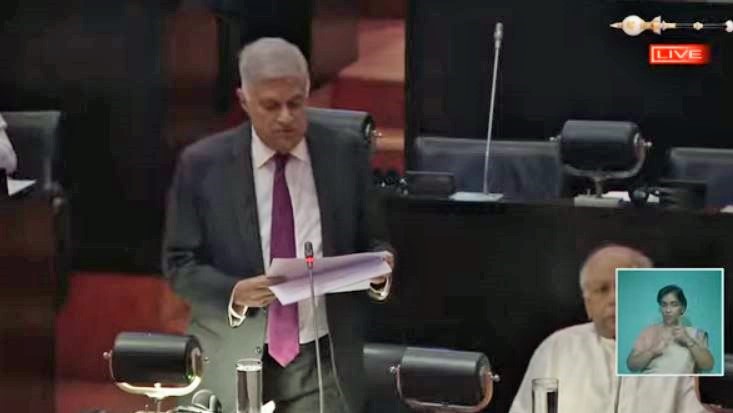
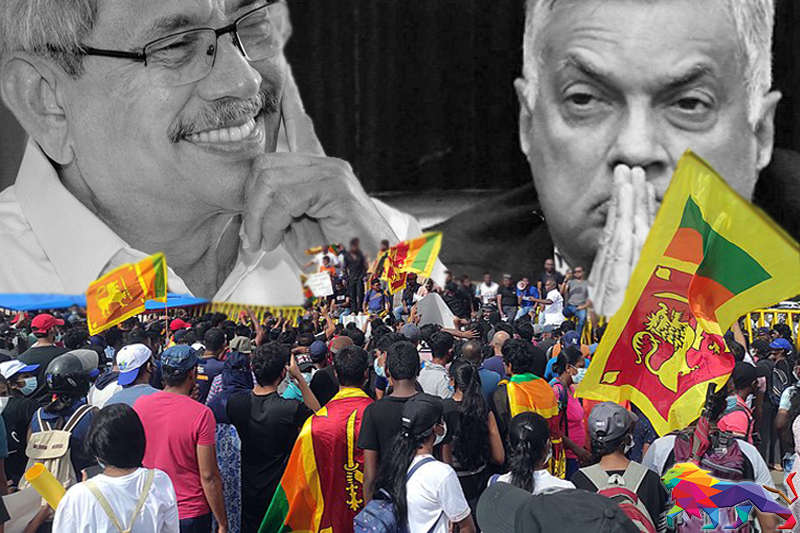
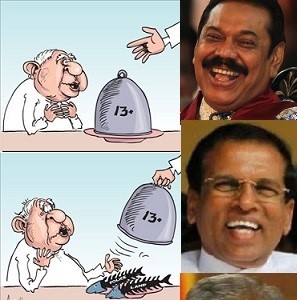
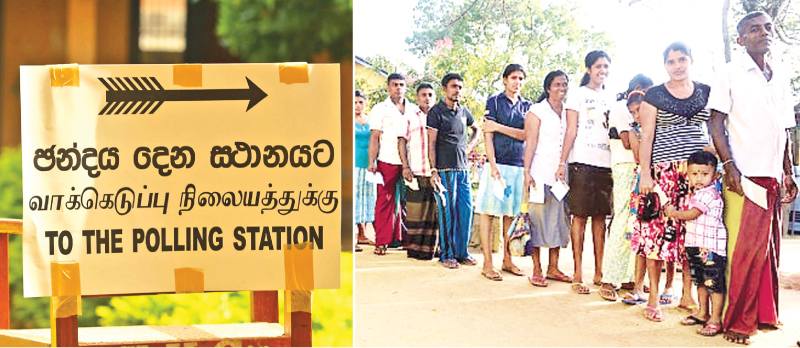
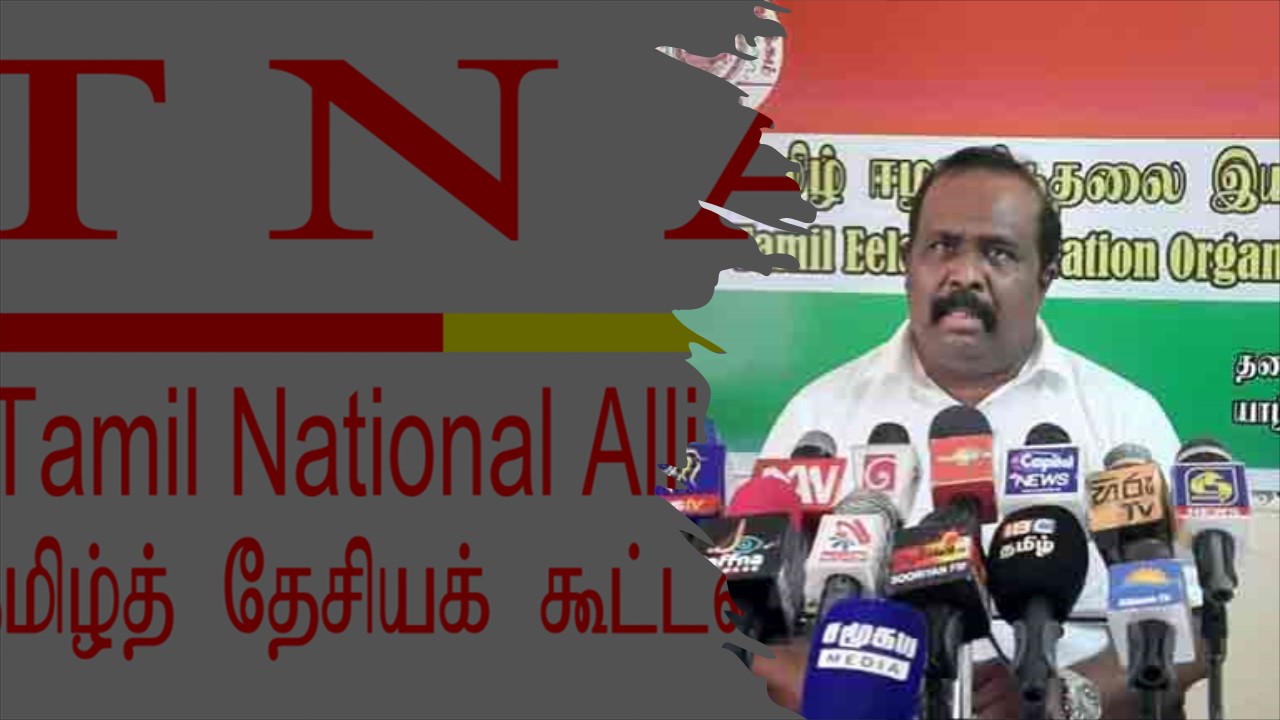
President Ranil Wickremesinghe while addressing Parliament on 10 November 2022 invited all Tamil MPs for a discussion on issues facing the Tamil people and about development plans for the North and East. Jaffna district MP and ITAK spokesperson, M.A. Sumanthiran responded positively by telling a morning newspaper that the TNA would cooperate. “We will fully cooperate. The resolution of the Tamil national question will be our main focus,” said Sumanthiran. Later Sumanthiran reiterated this viewpoint in the presence of President Ranil Wickremesinghe at a meeting held on 19 November on the occasion of the ceremonial opening of the Presidential Secretariat Northern Province Co-ordination Sub-Office in Vavuniya.
As is well-known the Tamil National Alliance is the premier political configuration representing the Sri Lankan Tamils of the Northern and Eastern Provinces. The TNA comprises the Ilankai Thamil Arasu Katchi (ITAK), the Tamil Eelam Liberation Organization (TELO) and the People’s Liberation Organization of Tamil Eelam (PLOTE). The TNA contesting under the ITAK symbol oh house won 10 seats – including one national list MP – in the 2020 Parliamentary elections. The 10 MPs are from the electoral districts of Jaffna (3), Wanni (3), Batticaloa (2), Trincomalee (1) and Amparai (1). The party-wise breakdown is ITAK – 6, TELO – 3 and PLOTE – 1.
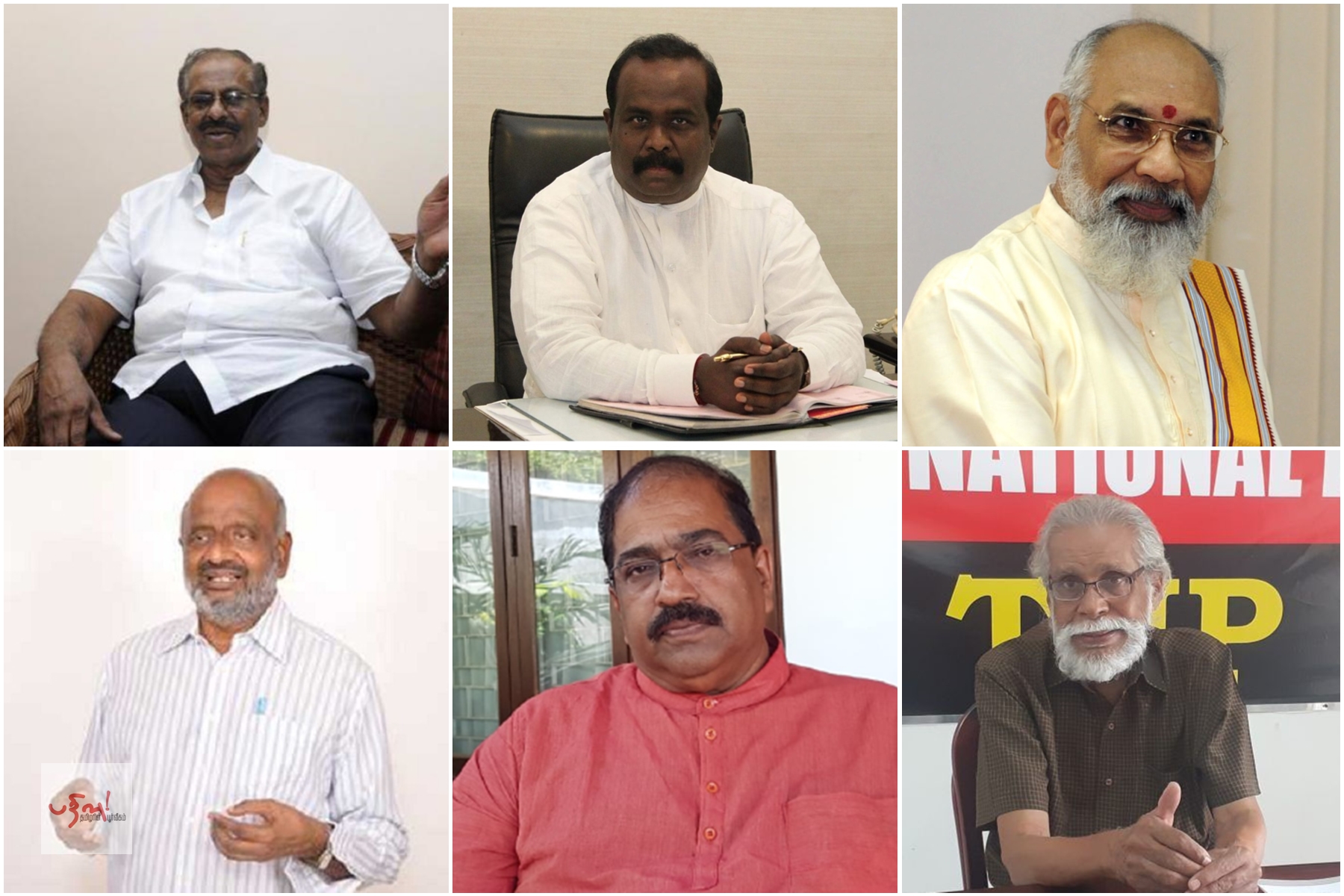
In a bid to present a common Tamil position in potential discussions with President Wickremesinghe the TNA issued an invitation last week to likeminded Tamil nationalist parties to meet at TNA leader Rajavarothayam Sampanthan’s Colombo residence and formulate a common approach seeking a political solution ‘within a federal set up in the North-East’. The meeting did not take place as planned last week. Subsequently it has been rescheduled for Friday 25 November at Sampanthan’s residence in Colombo.
Apart from the three constituents of the TNA namely the ITAK, TELO and PLOTE, invitations have been sent to the Tamil National People’s Front (TNPF), the Thamil Makkal Theseeyak Koottani (TMTK), Eelam People’s Revolutionary Liberation Front (EPRLF) and Thamil Theseeyak Katchi (TTK). The TNPF has two MPs in Parliament while the TMTK has one MP.
Given the inter-party rivalry among Tamil parties in general and the intra-party friction within Tamil parties in particular, it is unclear at present as to whether all invited parties will attend the meeting or consensus would be reached. However regardless of inter and intra-party differences the bottom line is that all Sri Lankan Tamil nationalist parties are firmly supportive of a power sharing arrangement based upon federal principles or the federal idea.
It is against this backdrop therefore that this column – with the aid of previous writings – focuses on the concept of federalism or the federal idea within both a national and international context. It is well-known that the words Federalism or Federal became dirty words in the Sri Lankan political milieu in the past. Sinhala hard-line opinion viewed federalism as a euphemism for secessionism or a stepping stone to a Separate State. Thus Federalism became the “F-word” in Sri Lankan politics. It is indeed a tragedy that the concept of federalism or the federal idea was so crudely and cruelly dismissed without any consideration of its merits or plus points.
It was perhaps the merit in what is called the federal idea which prompted former US president Bill Clinton to observe, “Maybe the federal idea isn’t such a bad idea after all.” This was in 1999 when he was the most powerful man on earth. It was at the end of the conference on federalism at Mont Tremblant in Quebec that Clinton made this remark. Incidentally former Sri Lankan cabinet minister G.L. Peiris also addressed this path-breaking conclave organised by the Forum of Federations based in Ottawa.
What is the federal idea?
What then is this federal idea? It is in one sense a concept that embodies various related things like federalism, federal systems, federations and federalist, etc. This is a world where the word “federal” has become almost the “F-word” in politics. Different countries and different entities for different reasons frown on this “F-word”. Therefore “federal idea” has become an indirect reference to this F-word. If a “rose by any other name would smell as sweet” then the word “federalism” too can be sanitised and discussed as the “federal idea”.
Let me quote Canada’s representative at the UN Bob Rae on this. The former Ontario NDP premier, ex-MP and Interim leader of the Liberal party is also a past president of the forum of federations located in Ottawa. In his foreword to the “Handbook of Federal Countries” published by the forum, Rae has this to say – “There has been a profound resurgence in interest in the federal idea in the last decade. I choose the phrase “federal idea” because the “ism” in federalism has a way of limiting debate and understanding”.
“In Spain the central government doesn’t like to use the “federal” word as it seems to indicate erosion of sovereign authority. Ironically Catalonians in Spain also frown on this because in their perception “federalism is not enough to articulate the unique Catalonian identity and right of self-government. In South Africa the earlier “apartheid” regime set up some federal structures to contain and diffuse pan-African yearning for freedom. So federalism became a dirty word to the blacks. When the African national congress attained power with its vision of “one South Africa” the ANC did not want to describe the new Constitution as “federalist”.
Sri Lankans are well aware of what Rae meant. In Lanka’s deeply polarised society federalism is certainly the “F-word” and worse. There is marked reluctance and trepidation on the part of many to espouse federalism openly. This is sad but quite understandable in a situation where “federalism” is seen as a conspiracy to break up the nation.
While many Sri Lankans look upon federalism with suspicion, the rest of the world is in ferment over the federal idea.
There was a time when federalism was seen as the ideal remedy for many of the world’s political maladies. It was perceived as the universal device to achieve unity in diversity. Experience has shown that this is not necessarily true in all situations. At the same time federal arrangements have certainly helped wield cohesiveness in many cases.
40% of the world’s population
Twenty-five countries today have federal or quasi-federal structures. These range from the sole superpower USA to tiny St. Kitts and Nevis; from Canada in the North to Micronesia in the South; from India in the East to Switzerland in the West. The population of these countries together amounts to more than 40% of the world’s total humanity. In addition there are some countries that are not federal but have special administrative arrangements amounting to de-facto quasi-federalism.
Let us proceed alphabetically. Argentina, Australia, Austria, Belgium, Bosnia and Herzegovina, Brazil, Canada, Comoros, Ethiopia, Germany, India, Malaysia, Mexico, the federated states of Micronesia, Nigeria, Pakistan, Russia, St. Kitts and Nevis, South Africa, Spain, Switzerland, United Arab Emirates, United States of America, Venezuela are Federal countries. While most are explicitly federal a few like Spain are not, but in actuality are federal in all but name. Incidentally, President Ranil Wickremesinghe in his Sita Jayawardena memorial oration decades ago, spoke of Austria as a potential model for Sri Lanka power sharing.
Though federally none of these countries share exactly the same system. Each country has different administrative arrangements and internal structures. They also vary greatly in size. Russia has republics and many types of regions within; India has states and union territories; Switzerland has cantons while Germany and Austria have landers. Belgium has three regions and three cultural communities while Spain has autonomous regions; the USA has states, confederacies, local home rule territories, unincorporated territories and native American domestic dependent nations while Canada has provinces, territories and aboriginal organisations. Venezuela has states, territories, federal dependencies, federal districts and many islands.
Apart from federal and quasi-federal states there are also countries having de-centralised unions with federal features. The United Kingdom comprising England, Scotland, Wales, Northern Ireland and five self-governing islands is the best known example of this kind. Italy with 15 ordinary and five autonomous regions is another; Netherlands has 11 provinces and one associated state; Japan has 47 prefectures; Fiji Islands is a consolidation of two ethnic communities; Colombia has 23 departments, four inter-dependencies and three commissaries. Ukraine has 24 oblasts, two metropolitan areas and the autonomous republic of Crimea; The People’s Republic of China has 22 provinces, 5 autonomous regions, four municipalities, and the special administrative regions of Hong Kong and Macao.
Federacies and associative states
Another phenomenon is that of countries with federacies and associative states. Bhutan is an associative state of India. Cook Islands is a self-governing associative state of New Zealand. Netherlands Antilles, San Marino, Liechenstein, Monaco are associative states of Netherlands, Italy. Switzerland and France respectively. Puerto Rico and Northern Marianas are federacies of the USA. Madeira and Azores Islands are Portuguese federates. Likewise Greenland and Faroe Islands are Danish federates. Britain has the federates of Jersey, Guernsey and the Isle of Man. Aaland Islands are a Federacy of Finland.
It could be seen therefore that the federal idea is not restricted to categorical federal or quasi-federal states alone. The federal idea is a free spirit permeating the body politic of many states. There is no “mono-principle” here. Each country has fashioned its own unique arrangement to suit its needs. Apart from the administrative convenience and the imperative to provide citizens with the best form of government these countries have also taken into account diversity of peoples, regional variety and imbalances, historic and geographic necessity, etc. as criteria to evolve systems of governance. There has been no rigorous dogma, stifling aspirations of constituent peoples.
Comparing federal systems
The federal idea has assumed a new importance and related vigour in recent times. There are a number of reasons for this. Ronald Watts of the Institute of Intergovernmental Relations at the Queens University in Kingston, Canada is the author of “Comparing federal systems.” An excerpt from it explains this global trend, “Modern developments in transportation, social communications, technology, and industrial organisation have produced pressures at one and the same time for larger political organisations and for smaller ones. The pressure for larger political units has been generated by the goals shared by most Western and non-Western societies today; a desire for progress, a rising standard of living, social justice and influence in the world arena and by a growing awareness of worldwide inter-dependence in an era whose advanced technology makes both mass destruction and mass-construction possible.”
“The desire for smaller self-governing political units has risen from the desire to make governments more responsive to the individual citizen and to give expression to primary group attachments-linguistic and cultural ties, religious connections, historical traditions and social practices-which provide the distinctive basis for a community’s sense of identity and yearning for self-determination. Given these dual pressures, more and more peoples have come to see some form of federalism, combining a shared government for specified common purposes with autonomous action by constituent units of government for purposes related to maintaining their regional distinctiveness as allowing the closest institutional approximation to the multi-national reality of the contemporary world.”
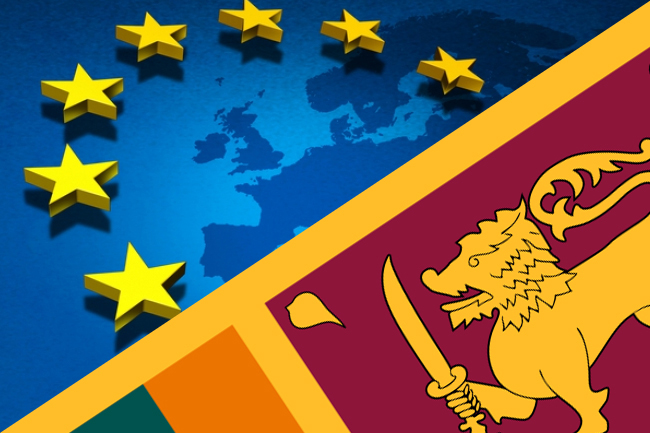
Ronald Watts sums up the essence of the federal idea. On the one hand there is the tendency to form larger entities including supra-national bodies like the European Union. On the other, there is the need to accommodate different intra-national aspirations of an ethnic nature. So Belgium reverts to federalism to satisfy the Flemish and the Walloons while Brussels is the seat of the EU parliament. The Union Jack flag may have the crosses of St. George, St. Andrew, St. David and St. Patrick but merry England cannot hold the United Kingdom together without devolving power to Scotland, Wales and Northern Ireland.
The Sri Lankan ethnic conflict has its genesis in colonialism. Modern Ceylon as Sri Lanka was known then is a British creation. The island was unified administratively but the people were divided politically through representation on communal lines. What was “united” to exploit was “divided” to govern. In the absence of adequate and equitable forms of power-sharing the island is wracked with post-Independence conflict within pre-Independence boundaries.
Reactive Tamil nationalism
Sri Lankan Tamil nationalism has been primarily reactive in nature. The Tamils thought of themselves as being on par with the Sinhala people as co-founders of the modern nation of Ceylon. Universal franchise and territorial representation reduced them to a principal minority. The Tamils still thought of themselves as belonging to the island in its entirety. So they wanted balanced representation and then adopted responsive cooperation as political strategies.
When these failed came the federal demand. Tamil self-perception now confined itself as a regional minority. Even here the political leaders were prepared to compromise far short of federalism and opted for alternatives like regional councils, district councils, etc. Finally came the desperate cry for separation and resultant armed struggle. The Indo-Lanka accord of 1987 resulted in the 13th Constitutional Amendment which enabled the creation of Provincial Councils. Federalism if adopted at the appropriate time may have prevented the bloodshed and carnage that ensued after the ethnic conflict escalated.
The proponents of federalism argue that adopting it will strengthen unity and territorial integrity. Switzerland, India, Malaysia, Belgium, Germany, Spain, etc. are cited as examples. But it cannot be denied that federalism has failed to prevent secession too. The disintegration of the Soviet Union and Yugoslavia are well-known examples. The Malaysia-Singapore and Pakistan-Bangladesh splits of the past as well as modern break-ups of Czech-Slovakia, Serbia and Montenegro are also lessons. In Canada, separatism flourished in Quebec despite federalism. Britain devolved power to Scotland and Wales but secessionism seems to have gained ground there. Nigerian federalism did not prevent the Biafran civil war.
Nuances to take into account
There are however many nuances to take into account when analysing the countries in question. At one end of the spectrum are Belgium and Spain willingly opting for federalism as a solution to curb separatist tendencies. Yet Belgium and Spain continue to have issues. In Canada the equation is changing with the separatist Parti Quebecois announcing that no referendum to facilitate secessionist “sovereignty” will be held in the near future. The main Quebec parties are now for greater autonomy and powers within a united Canada.
Recent amendments in Germany have strengthened federalism. India through its cooperative federalism model became more and more federal in practice. But the emphasis on centralisation and the “mono model” by the BJP government is troubling. This tendency is visible in Australia and USA where increasing “centralised” authority is slowly eroding the concept of pure federalism.
Federalism therefore provides no “one size fits all” type of solution. Each country has to examine and adopt arrangements conducive and suitable for individual needs.
Dynamic and constantly evolving
Sri Lanka too needs to explore the federal idea intensively and fully before deciding whether to accept or reject it or adopt it with appropriate innovation. The federal idea is dynamic and constantly evolving. What we in Sri Lanka need to do is to explore the federal idea and have an informed debate about its pros and cons and also on deciding whether we adopt or reject it.
Let us also not forget the prophetic words of S.W.R.D. Bandaranaike in 1926 when he stated, “A thousand and one objections could be raised against the (federal) system, but when the objections are dissipated, I am convinced that some form of Federal Government will be the only solution.”
In the words of Bob Rae
In spite of the heat generated in Sri Lanka by this ‘F-word’ there is no denying that the Federal idea is catching on in a world of ferment. The Federal idea is impacting greatly on a world changing fast. In the words of Bob Rae, “The resurgence of the federal idea has at its core many different causes. The vitality of the values of democracy, the revolutions in the politics of identity and human rights, the twin collapse of apartheid and bureaucratic communism, the impact of the technological revolution, the economic changes we associate with the word globalisation, all these have made their contributions.”
“This renewal is not at all confined to countries that have a federalist tradition. Countries have long had to struggle with the simple truth that geography is rarely synonymous with automatic homogeneity. Ethnic, linguistic, racial and religious conflicts have become the dominant issues facing the world order today.”
“Wars after 1945 have been as much within countries as between them, with disastrous consequences for peace and security. It is no longer soldiers dying in millions but civilians. From Rwanda to Cambodia, from the Balkans to East Timor the battleground was within countries that are unable to resolve the conflicts of what Michael Ignatieff has called, ‘blood and belonging’.
“It is in this context that the federal idea is re-emerging. Indeed, issues of federal governance are at the centre of active political and legal discussions in every part of the globe, particularly in areas where conflict resolution is a critical necessity. National sovereignty is not dead and the age of the nation-state is not over. But the notion that these are exclusive or all defining is clearly outmoded. Governance practices within countries are inevitably subject to the scrutiny of world political and economic opinion, and most important, to the rule of law itself.”
“The collapse of the one party state, the demands of identity, the urge to local empowerment, the insistence on greater openness and transparency in government, and the recognition that in a smaller and much more interdependent world sovereignty is no longer an absolute, has brought the federal idea to the fore again.”
This then is what the federal idea is all about!
(The writer can be reached at dbsjeyaraj@yahoo.com.)