EU puts focus on inclusive and peaceful society in Sri Lanka

An inclusive and peaceful society is one of the two priorities of the European Union’s (EU) cooperation with Sri Lanka from 2021 to 2027.

The EU Delegation in Sri Lanka and the Maldives together with its implementing partners have organized a series of activities under the broader campaign of ‘EU Support for a Peaceful & Inclusive Society’ at the Independence Arcade, Colombo 7 from 26 October till 11 November 2022. The exhibition space will be open to the public from 1pm to 6pm on weekdays and 9.30am to 6pm on Saturdays.

Speaking about the campaign, Denis Chaibi, EU Ambassador to Sri Lanka and the Maldives stated “for the European Union, inclusion, solidarity and human dignity are fundamental values, because they serve peace, our ultimate goal. Thus, an inclusive and peaceful society is one of the two priorities of the EU’s cooperation with Sri Lanka from 2021 to 2027. We hope this campaign, through art and dialogue will foster an enabling environment that promotes peace, solidarity and unity in diversity.”

Visitors can view the art exhibits of the winning entries including those shortlisted from the ‘Art for Peace’ children’s virtual art competition that was held in June this year, as part of Europe Day celebrations. This will be complemented by art workshops conducted by three renowned and talented artists.

The venue also hosts the EU-funded photographic exhibition ‘Thé Kahata’, organised by the Centre for Policy Alternatives (CPA), which features creative visual images captured by youth from the plantation community, and ‘Costumes Speak’, an exhibition that explores different social influences on Rukada puppetry and the role different communities play in shaping artistic traditions.

An interactive digital library consisting of audio and visual materials of the numerous initiatives of the EU funded projects is available for guests to access and indulge in.

The campaign on EU Support for a Peaceful & Inclusive Society, commenced with a jazz music tour across three key cities in Sri Lanka in celebration of European Day of Languages in partnership with the Embassy of Switzerland, Embassy of Italy, Embassy of France, Alliance Française, Goethe-Institut and the British Council.

This was followed by ‘Threads on Threads: An International Conference on Textiles in Sri Lanka, South Asia and Europe’, organized in partnership with the Threads of History Museum and Lanka Decorative Arts, as an initiative of the EU Cultural Heritage Series.

Posted in Uncategorized

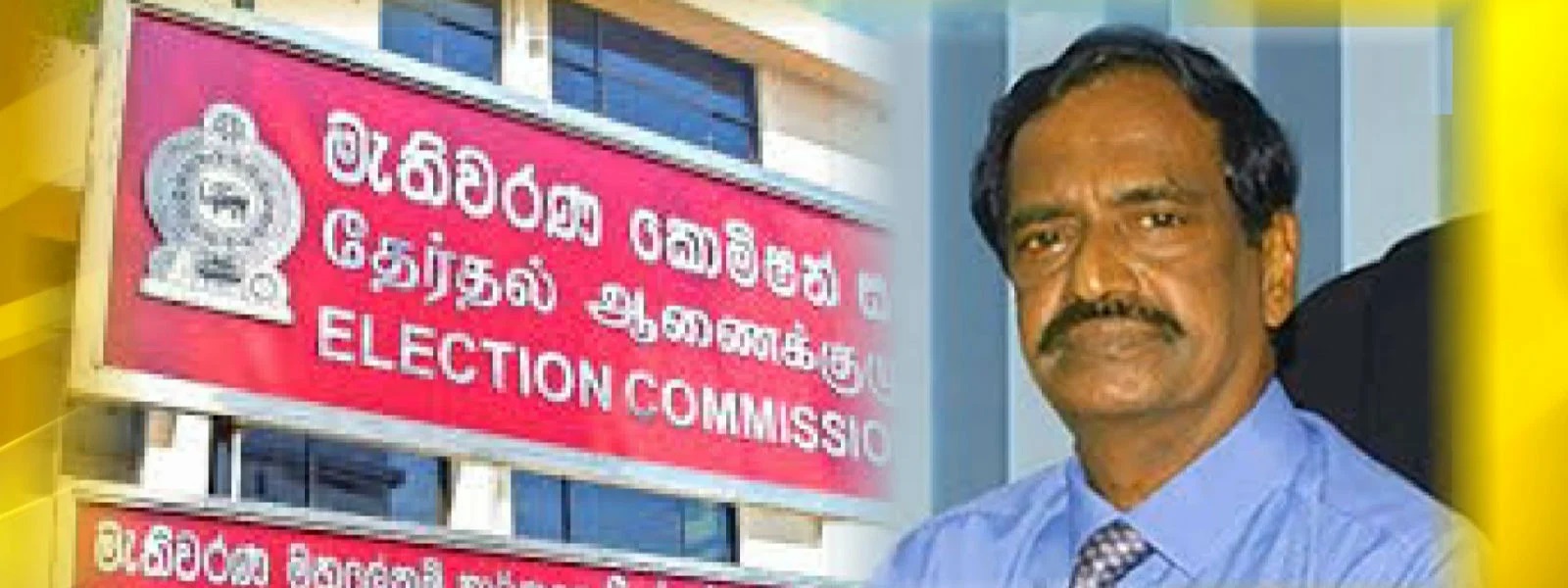
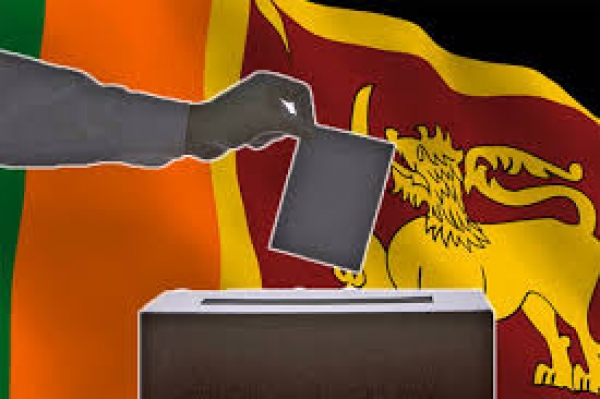
Wijeyadasa requests Speaker to appoint PSC to amend electoral system

Minister of Justice, Prison Affairs & Constitutional Reforms, Dr. Wijeyadasa Rajapakshe has requested Speaker Mahinda Yapa Abeywardena to appoint a Parliament Select Committee to amend the electoral system.

This committee, pursuant to the provisions of the Standing Order 101 of Parliament, should not consist of more than 21 members, Minister Wijeyadasa noted in a letter addressed to the Speaker.

Meanwhile, the Speaker should name the chairman and the members for this committee, the lawmaker said further.

According to him, the committee members should be vested with powers to summon any individual, request any document or report or obtain evidence verbally or in writing, in order to conduct an extensive study into amending the electoral system.

He also suggested authorizing the committee to determine its quorum and to seek the assistance of experts and veterans in the field.

UK help will be to review Easter Attack reports, no new investigation

The Government of Sri Lanka (GoSL)’s planned request for assistance from the UK Police with regard to the Easter Sunday terror attacks of April 2019 will be only for the review of the reports pertaining to the investigations that have already been conducted, and not for a fresh investigation into the attacks, which claimed over 260 lives.

When queried as to whether a request has been made by the Government from the UK police authorities with regard to the investigations into the said terror attacks, Secretary to the Ministry of Public Security S. Hettiarachchi told The Morning: “It has been decided to make a request to the relevant UK police authorities. However, it is not to carry out an investigation, but to review the reports pertaining to the investigations that have been given to them, and to see if there are any flaws. The IGP was told to make that request, and he will make it accordingly.”

Accordingly, the Ministry of Public Security has instructed Inspector General of Police (IGP) Chandana D. Wickramaratne to request the relevant UK police authorities to review the reports pertaining to the investigations carried out by foreign authorities and Sri Lankan authorities into the attacks.

Hettiarachchi added that the Police authorities of several countries such as the UK, the US, and Australia had been assisting the Sri Lankan authorities, including the Police, in carrying out investigations into the attacks, and that they have been given all the reports pertaining to the investigations that have been carried out.

Last week, UK’s Minister of State for Security Tom Tugendhat informed the UK Parliament that the Metropolitan Police Service, the territorial police force responsible for law enforcement in Greater London, has not deployed any officers to support the investigations into the 2019 Easter Sunday bombings in Sri Lanka.

However, he added, the UK would consider any request to support an overseas investigation where it is “proportionate, necessary, and legal” and that the Home Office works closely with policing partners to support requests from international partners across the full spectrum of policing.

“The Metropolitan Police counter-terrorism command dispatched a team of specialists to Sri Lanka in 2019, including family liaison officers, to support the families of British victims and assist with the repatriation of deceased British nationals. A programme run by Interpol involved the training of 30 Sri Lankan forensic specialists and police officers by UK experts in disaster victim identification,” the Minister added.

Making a statement on 18 July 2022, President Ranil Wickremesinghe said that he plans to obtain the assistance of the UK police authorities to complete the investigation into the Easter Sunday terror attacks, as the lack of a proper investigation has meant that this issue is yet to be fully resolved.

“One problem is the question we all are having about the Easter Sunday attacks. None of those procedures have been finalised yet. I am dedicated to resolving these problems. We don’t need to continue with these problems forever. We must ensure that this is brought to an end. There should be a full-scale impartial review of the material that is available. If everyone is willing, I would like to get the help of the UK and its police authorities. They are the best that we can find. In addition to the people from Sri Lanka who will be working on this issue, it is the responsibility of the Government to finalise this matter without any further delay,” he said.

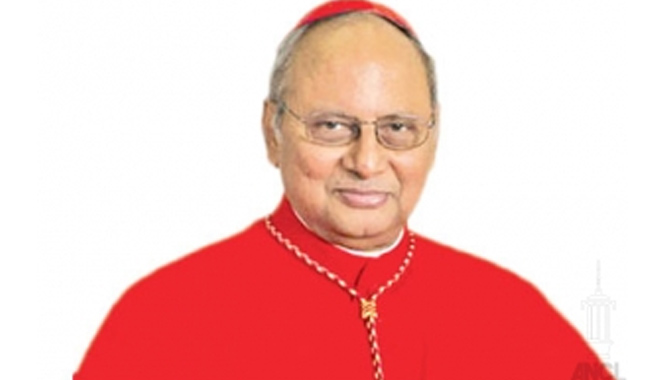
Meanwhile, Archbishop of Colombo Malcolm Cardinal Ranjith had recently told the media that there was no need to seek international assistance to probe the Easter Sunday terror attacks, and that all that is needed is to depoliticise the local investigation process.

On Easter Sunday, 21 April 2019, three churches (the St. Sebastian’s Church in Katuwapitiya, the St. Anthony’s Church in Kochchikade, and the Zion Church in Batticaloa) and three luxury hotels in Colombo (the Cinnamon Grand, The Kingsbury, and the Shangri-La) were targeted in a series of co-ordinated Islamist terrorist suicide bombings. Later that day, another two bomb explosions took place at a house in Dematagoda and the Tropical Inn Lodge in Dehiwala. Over 265 people were killed in the bombings, including at least 45 foreign nationals, while at least 500 were injured. All eight of the suicide bombers in the attacks were Sri Lankan citizens associated with the National Thowheed Jama’ath organisation founded by the suicide bomber at the Shangri-La Hotel, Mohamed Cassim Mohamed Zahran, alias Zahran Hashim.

Posted in Uncategorized

Successive govts. murdered student leaders & activists – IUBF convener

The Inter University Bhikku Federation (IUBF) has recalled how successive governments had murdered hundreds of student leaders and activists.

Its acting convener Ven. Udenigama Gunaratana Thera told the media that among them were 13 conveners of the Inter University Students’ Federation (IUSF) and 626 of its activists.

He also accused the CTID of ignoring the health of the remanded IUSF convener Wasantha Mudalige and IUBF convener Ven. Galwewa Siridhamma Thera.

The latter, suffering from fever for three days, was admitted to the Colombo National Hospital later yesterday (25).

Posted in Uncategorized

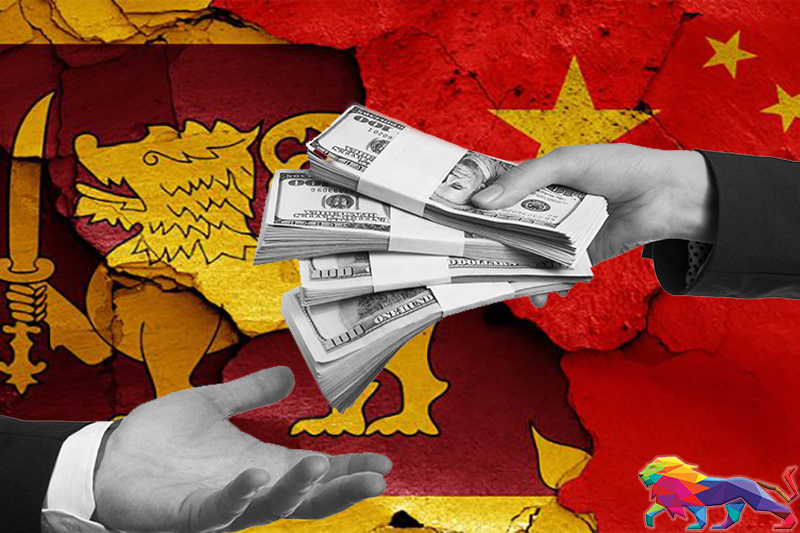
Loans on top of loans, and White Elephant projects – Sri Lanka’s fall

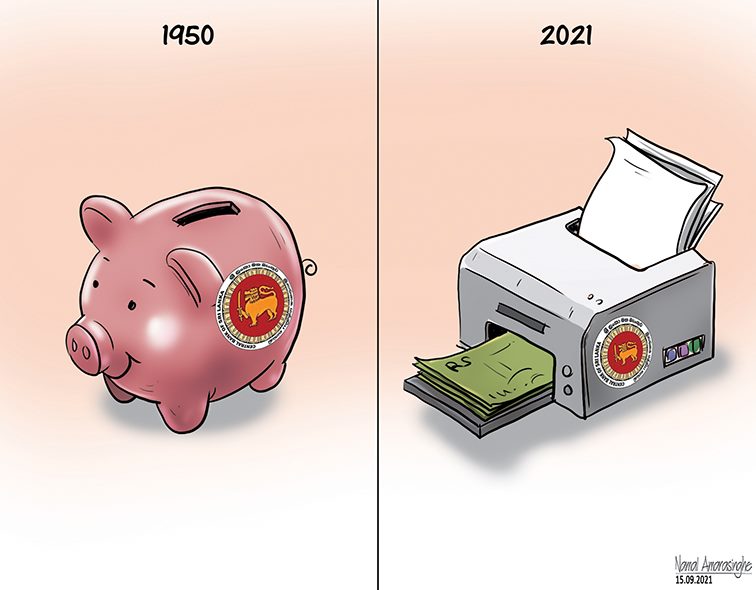
Sri Lanka’s Central Bank Governor Dr. Nandalal Weerasinghe, and the Finance Secretary have both echoed that the process to stabilize the economy is going to be a painful process.

However, the Minister of Mass Media, Dr. Bandula Gunawardena, pointed out that the economic growth of the country is expected to be negative seven or eight by the end of the year.

He stated that Sri Lanka has never had a negative economic growth post-independence, and now, the country has neither rupees nor dollars in its reserves.

“We do not have any expert with the required intellect and skills to solve the crisis that has been brewing for 62 years. Sri Lanka’s debt status currently depends on heavyweight financial services company Lazard. Sri Lanka cannot access loans internationally for any project until the debt crisis is solved. This is not a crisis that was created because of a decision by one politician,” he said.

He also mentioned that the Government obtained loans to repay previously obtained loans, however, the result of overdoing it led to the crisis in the country.

“It is the same with a single person because when you obtain a loan and are unable to pay it back, you obtain another at a higher interest rate. When you cannot pay that as well, the person writes a letter blaming himself, and commits suicide. The government cannot do that.”

——————————–

That was Sri Lanka’s Minister of Transport and Highways and Minister of Mass Media.

He had held various positions as Minister, and Deputy Minister since 1989.

He was once the Trade Minister, and the Deputy Finance Minister as well.

It is a matter of concern when he comments in a nature claiming that he was not present when decisions were being made to push Sri Lanka to the brink of total collapse.

So, who is responsible for the present status of Sri Lanka? Here’s an example.

At the end of 2005, Sri Lanka’s total debt was just over US $ 9, 367 Million, according to the Auditor General’s Special Report on Sri Lanka’s Financial Management and State Debt Control.

According to this report, as of 31st December 2021, Sri Lanka foreign debt was 245% greater than what it was in 2005.

Sri Lanka’s foreign debt which was US $ 9, 367 Million in 2005 increased to US $ 33,390 Million by the 31st of December 2021.

Why is Sri Lanka in so much debt to the world?

Did Sri Lanka divert funnel these funds into projects that generate revenue, or were they simply dumped on projects that generate no income but line up the pockets of the few?

——————————–

Mattala Airport

Sri Lanka boasts of an airport and a port, two projects that make headlines whenever a plane and ship arrive.

Sri Lanka obtained a loan of US $ 210 Million at a very high interest for the Mattala Airport, however, its return on investment is extremely low.

When the government changed this state-owned property was used for paddy storage, depicting a strategy of making policy decisions to allow airport infrastructure to decay.

Sri Lanka is now hunting for investors for Mattala Airport.

——————————–

Hambantota Port

The Hambantota Port was constructed at a cost of US $ 307 Million at an interest rate of 6.3% in 2008.

When Sri Lanka failed to service the debt, the best section of the port was offered to a Chinese Company in 2015 for US $ 1.12 Billion.

So, what Sri Lanka doing by offering the best section to foreigners and defaulting on the debt?

——————————–

Magampura International Convention Centre

The Magampura International Convention Centre was declared open in 2013 after construction cost US & 15.3 Million.

Has this convetion center served any purpose to-day?

——————————–

Lotus Tower

Sri Lanka obtained a loan of US $ 67 Million as a loan with a high interest rate for the construction of the Lotus Tower, which we today visit by obtaining tickets.

Later it was revealed that an advance of Rs. 2 Billion that was paid to a company for this project, and it had ceased to exist.

——————————–

Colombo Port City

The Colombo Port City is another massive project that does not have any clear form of investment.

What happened was that Sri Lanka was compelled to deliver lands rights for the sea area that was filled to create the Port City.

A separate law was introcuded awarding special benefits for the Colombo Port City.

——————————–

These are just a few projects in Sri Lanka that was launched after obtaining massive loans.

However, did the people ever ask for them? Or, were these projects implemented so that someone could make a quick buck?

Nevertheless, every single Sri Lankan is now compelled to pay for these laons.

When will necessary action be taken against those responsible for this situation?

Posted in Uncategorized

UN warns situation in Sri Lanka likely to worsen

The UN World Food Programme (WFP) has warned that the situation in Sri Lanka is likely to worsen.

WFP said that the intensifying economic crisis in Sri Lanka continues to be a threat to food security.

‘The situation is likely to worsen without continued assistance during the lean season from October 2022 to February 2023,” WFP said.

According to the WFP, prices in urban areas of Colombo continue to increase. Food inflation (year-on-year) rose to 94.9 percent in September from 93.7 percent in August, according to the Colombo Consumer Price Index.

Markets reported concerns around rising and unstable prices, threatening to impact food accessibility, according to WFP’s August Market Functionality Index.

Since the start of emergency operations in mid August, WFP has reached a total of 209,344 people with cash assistance. This came as a part of WFP’s scale-up to reach 3.4 million additional people in 2022, through unconditional food assistance (cash or in-kind), school meals and nutrition support.

To support 1 million children with school meals for a period of three months, WFP procured 1,475 mt of rice and 775 mt of iron-fortified rice and distribution will commence shortly. This will directly support schoolchildren through the Government’s national school meals programme.

The WFP is coordinating with the Government and donors to provide raw materials (maize and soya) to the Government’s Thriposha facility, to ensure continuity of nutrition support.

Tortured Under the PTA, the Scars Will Never Heal

Pranavan (name changed), a former militant, was arrested in Vavuniya in April 2009 by people dressed in civilian clothes. Neither he nor his family were given prior warning of his arrest, which was carried out like an abduction. Pranavan, along with several others, was detained in an underground bunker and continuously tortured at the Joseph camp or at a location nearby in Vavuniya for three months.

Pranavan was arrested under the Prevention of Terrorism Act (PTA) and released after nine years. He is not welcome in his community; his relatives do not talk to him because they suspect him of working with military intelligence.

“The security forces are able to abuse people who are arrested due to the unlimited powers provided by the PTA. Even those who are released are regarded as criminals,” he said.

This is the story of Pranavan who suffered, and continues to suffer, numerous hardships due to the PTA.

“I was arrested in October 2009. We believe we were detained and tortured on the premises of the Joseph camp in Vavuniya or a place somewhere near the camp. There were many others along with me at the torture camp. We were blindfolded and naked. They tortured me to the extent that I was not allowed to sleep for at least a month. Whenever I was about to fall asleep, they would assault me and wake me up. They kept a person specifically for this purpose. They tortured us by inserting pipes into our anuses, slamming our genitals on drawers or on tables and squeezing our testicles. They put petrol in polythene bags and shook them and, when the petrol liquid reached a gaseous state, they tied the bags tightly around our necks and we would faint due to suffocation.

“Several people questioned us. They hit us too. We did not know who would hit us or when they would hit us. We would be hit from the front and back. We were not prepared for these blows. They would put the petrol bags on from behind. I was taken by surprise when they did this to me the first time. I suffocated and eventually fainted. When I regained consciousness, they had already left but I was handcuffed.

“I was assaulted and tortured using poles, pipes and stumps. When I was produced in courts, the medical records pertaining to the torture I faced were also submitted to courts. I continued to face brutal torture for at least three months. We were detained in rooms that were below ground level. We were kept in separate cells. Sometimes we were tortured while our hands or legs were chained to a bed attached to the ground. We were naked. They brought us out of the cells, tortured us and then took us back to the cells. The bunkers were dark. I didn’t know whether it was day or night. On some days I drew lines on the walls using sticks or nails to note the number of days.

“As cases were filed and legal procedures commenced, I was transferred to police custody. I was continuously questioned by military divisions, police units, CID, TID, CIB and NIB. I was handed over to the TID after six months. It was only after this that I was able to see my family. Until then we did not see our family members.

“A bone in one of my hands was broken due to torture. My spine was badly injured. While I was in prison, I used to pass blood in my urine. I have the medical records to prove this. Even today, I am unable to go out in the sun because of the blows I received on my head. I have difficulties when travelling in the cold or during rain. I am unable to bend down and do something for a prolonged period of time. My back swells and I get a stiff neck. I continue to take medicines for these issues to ensure my health.

“After my arrest, my family was completely neglected and sidelined by the community. The police, military, intelligence unit and Tamil groups that operate with the government subject family members of those arrested under the PTA to agony. They are persecuted through sexual and other means. We have been labelled. This has ruined many families. I can say this because I am a person who has been badly affected and openly humiliated by the community. I have two children. I was compelled to be away from my family when I was in prison. The community has not accepted us. Family members are placed under much pressure by state intelligence and the police. They are compelled to come at night to face questions and have to respond to phone calls whenever they call.

“Women face sexual harassment. I brought this matter to the attention of the investigating officer. This has happened to many women according to my knowledge. Some people continue to live with their families despite these issues but many have split from their families. Those who are very close to us do support us but in general, if we go out, people usually keep away from us. We cannot go to a house and have a cup of tea because they fear they could fall into trouble because of us. We too avoid going to their homes so that they will not face any problems on our account.

“For a long time, we had to go to the TID frequently to sign. This was a time when we could not leave our district. We were frequently monitored and interrogated. Even after this ended, we would be called in for an inquiry whenever we were involved in issues pertaining to missing persons and political prisoners.

“If you ask me if we can express ourselves freely, I would say no but we are making efforts to speak on behalf of our community and get involved in activities for the betterment of our community but the truth is we are unable to put in our full effort.

“I got bail after nine years. There was a case filed against me even as I was about to be released. I was able to get bail through the kindness of the court and due to the ability of the lawyer. I was a completely free man only after 10 years.

“The PTA allows any case to be filed against a person and for him or her to be detained for any amount of time. Any person who is arrested under the PTA and returns to society is identified as a criminal. More than 95 percent of those who were arrested under the PTA were released after they had no other option but to admit wrongdoing.”

Posted in Uncategorized

Jaffna youths sucked into drug hell by the dozen, crimes rebound

Seventeen-year-old Mukunthan (not real name) never believed that he would have secured second place in 1,500 metres race in his school sports meet until he gave it a try in March. He was a talented football player in the local club, but then, a blood test report found him to be positive for narcotics use.
He had been ‘clean’ for a couple of weeks since the death of his uncle, from whom he picked up the habit of taking drugs ranging from methamphetamine (‘ice’) to heroin. His uncle, a bus conductor on the Jaffna-Colombo route, had forced Mukunthan to stop taking injections. Days later, he was referred for rehabilitation by school authorities and then he was ejected from school, a prominent institution. He is now in rehab.

“When he came to us, he wanted to get rid of this habit to start afresh, fearing the fate of his uncle, but it disrupted his school and personal life very badly,” said the senior probation officer and Atchuvely Certified School Principal Sittambalam Puvanendran, who had interviewed Mukunthan.

This month alone, Mr Puvanendran came across at least 34 people who are either severely addicted to drugs or in the formative period, through legal action and referrals from other state and non-state institutions.

“In a way, we have failed to act on time because most of them told us that they have been taking drugs from six months to over a year. As a society, we failed to take preventive steps at the time,” Mr Puvanendran told the Sunday Times, while indicating that this week alone, he interviewed at least 10 youths seeking help.

On Wednesday, a mother handed over her 17-year-old son to Kopay police station, pleading for help to save him from drug addiction. After being produced in court the following day, he was sent for rehab at a certified school in Jaffna.

In at at least two dozen drug related incidents reported in Jaffna district alone, most offenders are in the age group of 17 years to 30 years.

The Jaffna Police division’s crime prevention branch has carried out several operations in recent weeks against drug peddlers and dealers who are targeting school children and youths.

Most drug addicts in the North are street level heroin users, next to methamphetamine and Kerala cannabis. Most addicts who use multiple drugs also take ‘ice’ and are less likely to seek help, according to probation officials.

Crimes have increased. Minor and grave incidents such as house breaking, robbery, theft of property, domestic abuse, and rape have increased sharply.

According to the Handbook of Drug Abuse Information of 2021, by the National Dangerous Drugs Control Board (NDDCB), total drugs-related arrests made by various agencies in 2016 was 314 and by 2020, the number had risen to 2,299. In 2020, 1,398 were taken into custody for heroin, while 839 were booked for Kerala cannabis.

So far, at least 12 have died in the Jaffna district alone from drug overdose and other drug related sudden illnesses, triggering alarm.

Over 300 individuals are in Jaffna Prisons for drug related offenses and according to local prison officials, more than two dozen are hardcore drug users who need urgent medical help.

The prices of drugs have also increased sharply. One milligramme of heroin is sold at Rs 50,000-Rs 60,000, while methamphetamine is around Rs 25,000-Rs 35,000. The wholesale price of Kerala cannabis (1.5 kg) bundle is Rs 450,000 while, a one time use small dose is Rs 750 to Rs 3000 depending on the quantity.

Addicted youths in the suburbs of the North are also peddling drugs. The default mechanism to calculate a milligramme of heroin is to use the back end of a match and wrap the drugs in tiny polythene bags and then stuff them all into a tin similar to a Vicks Cough Ointment container.

Peddlers will be on streets pretending to be having a casual chat while they will do the business with known people only. If they sense any activity by authorities, they simply dump the narcotics and leave.

If a drug peddler manages to sell at least 10 such mini packets, he would be able to get one free for his use, according to testimonials from victims who had sought help for drug addiction.

Following the sudden surge in drug use, a district level drug prevention committee was set up.

“The economic crisis coupled with poverty and unemployment along with impacts of the COVID-19 pandemic play a key role in the sudden spike in drug use. We have taken several remedial steps, but we need support from people,’’ the Jaffna District Secretary K. Mahesan told the Sunday Times. He suspects a mafia network of drug peddlers and smugglers.

There is little support from people when it comes to sharing information, the police said.

“This cannot be done by the police alone. All relevant stakeholders such as parents, schools, civil society and community leaders should work together. Parents have a huge role to play by monitoring the behaviour patterns of their children,” the Senior Superintendent of Police (SSP) Jaffna Division A.L.U.N.P. Liyanage told the Sunday Times, while stressing that in recent arrests, most offenders have been either school-leavers or youths aged 18 to 30 years.

He said that except Kerala cannabis, other narcotics such as heroin, ‘ice’, are smuggled into the North from Colombo and elsewhere.

The national economic collapse has increased the jobless numbers and have pushed them into drugs and illicit alcohol. The unemployment rate in the Jaffna district has risen to 7.5% compared with the national rate of 5.1%, according to statistics from the District Secretariat.

“Many peddle drugs to earn quick money. It seems the locals just realised the grave situation now, but the police have been trying to tackle this for a long time,” a police officer of the crime unit of the Jaffna division said on condition of anonymity.

The National Dangerous Drugs Control Board (NDDCB), the principal state agency that works closely with other state and non-state actors, is considering a new therapeutic community approach rather than rehabilitation.

“We noticed an unusual increase of drug use not only in Jaffna alone, but all over the island as well. In Jaffna, there has been a sharp increase near the town area compared with rural areas,” the newly-appointed chairman of NDDCB, Mr Shakya Nanayakkara told the Sunday Times.

Under the new therapeutic community approach, he explained that the aim is to empower the wife or mother of the drug-addicted people so they can return to a normal environment. Co-dependent can then be the co-therapist.

Plans to name and shame dual citizenship MPs

Polls monitor People’s Action for Free and Fair Elections (PAFFREL) has made a Right to Information (RTI) request from the relevant authorities seeking to identify MPs who possess dual citizenship, and plans to publicise the names when the information is received, with the aim of forcing the MPs to resign.

PAFFREL yesterday (25) wrote to Speaker of Parliament Mahinda Yapa Abeywardana and the Department of Immigration and Emigration via an RTI request in regard to the issue of MPs who are dual citizens, since the newly adopted 21st Amendment to the Constitution, which is yet to be signed into the law by the Speaker, does not permit such members to be represented in Parliament.

PAFFREL Executive Director Rohana Hettiarachchi told The Morning yesterday that his organisation had written to the Speaker to take action in regard to MPs holding dual citizenship, while requesting the RTI officer at the Department of Immigration and Emigration to identify the MPs who are dual citizens. Once the information regarding MPs holding dual citizenship is obtained, it will be publicised for them to resign, failing which, legal action will be taken, he added.

“We have included the names of all 225 MPs in our RTI request and requested details of those holding dual citizenship. Once we get the information and publicise the details, I think that the MPs who have dual citizenship will decide to resign. In the event they fail to take the decision on their own, we will have to get a court order. We are awaiting evidence to take legal action,” he added.

Hettiarachchi also said: “We have now written to the RTI officer at the Department of Immigration and Emigration, and if that fails, we can appeal to a higher-level officer and if that too fails, we can appeal to the RTI Commission. They have to respond to us within 14 days.”

He also noted that it is unfair to make allegations against MPs without having adequate evidence, as such an act would be unfair to them.

“We would get the real picture only when we get the details, because we cannot make allegations without evidence – that is unfair to the rest of the MPs. There may be one or 10 or whatever, but the majority are not dual citizens. It is unfair for the MPs as it creates mistrust among the public regarding them,” he added.

He also noted that now that the 21st Amendment to the Constitution is passed, these MPs need to resign from Parliament.

“If they are not complying, they are unfit to be the people’s representatives. If the MPs are genuine enough, if they are functioning as lawmakers of this country, they should not contest elections. They are violating our Constitution.

“The Speaker needs to take action. I wrote to the Speaker asking to take action. This is not good for Parliament as well. During the past few months, everyone was criticising the politicians and the MPs. Now, it has reached another level, as some of these MPs are dual citizens,” he added.

Hettiarachchi further said: “It may be right or wrong, but there is no clear evidence or proof of the dual citizenship of MPs so far. On behalf of PAFFREL, I requested the Speaker that he needs to take action to check whether there is anyone of such. Otherwise, it is unfair to the entire Parliament. We cannot tell the Speaker what to do, but I’m just suggesting that an affidavit should be given to the Speaker by the MPs that are dual citizens.”

Meanwhile, Chief Opposition Whip and Samagi Jana Balawegaya MP and Attorney Lakshman Kiriella, speaking to The Morning, said that there are only rumours that so and so is a dual citizen, but that there is no solid information.

“You can speculate, but even then, one has to go to the courts to disqualify another. We do not have information, so we cannot just file action,” he added.

“Independent” Opposition MP Patali Champika Ranawaka claimed that it was rumoured that 10 MPs are now holding dual citizenship.

“This issue was initially pointed out by MP Prof. Channa Jayasumana. It is a cumbersome process in the Court of Appeal to suspend these MPs. Before filing a petition, the relevant details should be obtained. It is a very difficult task. If this is the case, these people must resign. They cannot hold office like State Minister Geetha Kumarasinghe, where the latter held office and the Court of Appeal suspended her position, but she returned after relinquishing her dual citizenship. I think that some members are dual citizens and that is very clear. So, they must resign – that’s it,” said Ranawaka, speaking to The Morning.

When queried as to whether he would be a petitioner, Ranawaka noted: “I am not going to be a petitioner, because I have much more important things to do. But MPs must be honest enough to go before the people and say, ‘I am a dual citizen’.”

Challenges facing the development of Trincomalee port and its environs By P.K.Balachandran

Whenever Ranil Wickremesinghe occupies a seat of power, there is talk of developing Trincomalee harbor and its environs to serve the Eastern and North Central Provinces that had been hard-hit by the 30-year war.

Whenever he was in power as Prime Minister he would initiate some moves to develop Trincomalee. In 2003, during his first stint as PM, he invited the Indian Oil Corporation (IOC) to develop the 99 giant British-era oil tanks jointly with the Ceylon Petroleum Corporation (CPC). The Lanka IOC (LIOC) refurbished and began using 14 of them. Between 2016 and 2019, when he was PM again, he launched a long-term development plan for Trincomalee (Trinco) and surrounding areas christened: “Eastern gateway to Sri Lanka by 2050”.

Trinco was to be developed as an export, tourism and leisure hub with the help of the Singapore infrastructure consultancy Surbana Jurong. Trinco was projected as a key export center in the Bay of Bengal region. Highways, transport, education, health and other facilities were planned to be built to generate more than a million new jobs.

“By the year 2050, the population in the Bay of Bengal region will be about three billion, and then there will be great improvements here. By that time, we need to develop Trincomalee as the Eastern Gateway to Sri Lanka,” Wickremesinghe had said.

But his plans languished due to political opposition, given his contradictions with President Maithripala Sirisena and anti-India feelings in the Sri Lankan polity. The political and communal unrest, the COVID 19 pandemic and his losing power in mid-2020, stopped all work.

Back in power in mid-2022 as President, Wickremesinghe revived his plans for Trinco with gusto. Recently, he announced a Trincomalee District Strategic Development Plan. Trinco Port should be developed as a “strategic port” with India’s assistance, he said. Recalling the objections raised when the oil tanks were to be handed over to India in 2003, he said that Sri Lanka “would not have faced a fuel crisis if the decision to provide the oil tanks had received the green light to be fully implemented.”

Trinco will not develop in a day, Wickremesinghe cautioned. “It will take another 10-15 years to develop Trincomalee and the Bay of Bengal region. Thailand’s development has yet to reach the Western Bay of Bengal. Development is yet to kick off in Myanmar and has just started in Bangladesh. And work is being done in Java and Sumatra in Indonesia. Therefore, Trincomalee will become a significant port only in the next 10-15 years. Our endeavor is to make a beginning now,” he said.

Referring to the strategic dimension of the development of Trincomalee, the President said that the port has to be developed as a naval hub. Here again, he preferred collaboration with India. “It is important that we work together with India when we plan these activities because India is located much closer to us.”

Wickremesinghe then went on to say that currently, India is discussing several programs with Sri Lanka including a 100 megawatt solar power plant in Sampur across the bay. He would prefer India’s involvement in the Trinco region’s development. “ Many objections were raised by the unions since 2003 against the provision of the oil tanks to India. Had the Trincomalee oil tank farm been given to India, we would have had fuel; we would have neither had to stay in queues nor to resort to riots. These problems arose because of the shortage of fuel. Such obstacles should not be allowed to transpire again,” he said.

Not to neglect the needs of the North and North Central Provinces, Wickremesinghe said: “We cannot limit the economic activities of this port solely to the Trincomalee District. This should be connected with the cities of Anuradhapura, Vavuniya and Dambulla. The districts of Wanni, Eastern and North Central are responsible for the bulk of our agricultural production. If we are to export agricultural produce, this region should be the starting point.”

“India has agreed to develop industries in this province. Therefore, we should create an industrial zone. I have proposed a joint mechanism between India and Sri Lanka towards this endeavor. Then, the port will also be connected to it and we are planning to establish a joint task force for this purpose.”

Although Trincomalee has an airport, it cannot accommodate large aircrafts, the President said and added that government would have to upgrade Hingurakgoda or Vavuniya into international airports. “There is an opportunity to develop the tourism industry from Trincomalee to Batticaloa,” he added.

Advantages and Drawbacks in Trinco harbor

The Asian Development Bank (ADB) had done a study of the development potential of the Trincomalee port and declared that it would be worthwhile developing it as a hub in the Bay of Bengal. Trincomalee is a large natural harbor with water depths ranging from CD -20 m to CD -40 m. It is the only entirely sheltered harbor in the South Asian sub-continent, the ADB noted.

Although the current port of Trincomalee has a limited number of berths, vessels of any size can be accommodated in the anchorage, it said. “The sheltered bay is ideal for calm water vessel operations such as ship-to-ship transfer, lay-up of vessels, loading and discharging submersible structures and other shipping-related services,” the ADB study said.

The port handled 3.2 million tons in 2016 with the main commodities being dry bulk cargoes (wheat, clinker, gypsum and coal), liquid bulk (refined products) and breakbulk or general cargo (project cargo, steel products).

The port has several dedicated port terminals – the Tokyo Cement facility, the Lanka IOC oil facility and Sri Lanka Ports Authority oil berth, the Prima Flour grain facility, and the TTA tea facility – and a common berth for general cargo and dry bulks – the Ashroff jetty. Additionally, the giant oil tanks are nearby waiting to be developed. Some ship repair services are provided at the Mud Cove facility.

Connectivity

The access channel to Trincomalee port passes through the natural deep-water bay. As such, the channel has a minimum depth of CD -22.0m and a width of 1,554m. The depth of the navigable waters within the harbor vary between CD -11.0m and CD -30.0 m. However, due to a lack of adequate lights, buoys, and lighthouses, vessels are only allowed to enter and exit the port during daytime, ADB document says.

In terms of landside connectivity, the port is connected to the nearby A6 and A15 highways. However, the roads connecting the port terminals to the highways pass through the city premises, due to a lack of dedicated port access roads. While the privately-operated Prima Flour and Tokyo Cement terminals have direct rail access; the Ashroff facility currently lacks direct rail access.

At present the capacity of the common quay is limited, modern warehouses are lacking, and the land for industrial development is not directly connected to the port. To upgrade the port and to maximize the deep sea port potential, expansion of the Ashroff quay is required as well as unlocking the land available by providing new access roads and rail connections. This will facilitate settlements of industrial and logistical enterprises. The service activities in the bay require modern facilities at a one-stop shop location, the report said. The tourism industry is expected to increase as well. A marina and a cruise berth should cater to developments in this respect.

Political Consensus Needed

But all these require three things: political consensus; management of extreme nationalistic and anti-India and anti-foreign sentiments; environmental and legal clearances, and wide consultations with civil society groups so that decisions are not stalled by protests, court cases. The government must guard against poor implementation and political changes stalling the project. These obstacles are endemic in Sri Lanka. Hopefully, Wickremesinghe has plans up his sleeve to tackle them.