No polls delay at any cost

While stressing that the universal suffrage is a part of the sovereignty of the people guaranteed under basic law, former Local Government and Provincial Councils Minister Faizer Musthapha PC, said the Election Commission (EC) is mandated to hold Local Government polls and constitute all 340 local government bodies on or before March 20th of 2023.

The Supreme Court in a judgement delivered in 2016 has ruled that delaying in conducting LG polls was a violation of the Fundamental Rights of the people, he added.

Granting relief to 18 petitioners of whom were chairmen or deputy chairmen of local government authorities in Galle and Matara Districts in the FR case no. 35/2016, filed against the EC, three other members, the Minister of Local Government and Provincial Councils among 31 other respondents, a three judge bench chaired by Chief Justice Priyasath Dep agreeing with two other judges, Justice Anil Gunaratne PC and Justice Nalin Perera PC, has ordered the EC to hold LG polls without further delay.

“This court is of the view that the state should take steps to hold elections. We direct Respondents to take necessary steps to ensure that the elections are held without further delay,” the Supreme Court has ruled in that FR case.

“I am confident that the EC as an independent statutory body will hold LG polls on time and take steps to safeguard the free franchise of the people,” Musthapha said.

If the government has a genuine desire to introduce electoral reforms to LG polls, it can be done in a couple of months’ time with the consent of all political parties in Parliament paving the way for the EC to hold LG polls in early 2023. But the best thing to do is to hold LG polls first and enact electoral reforms after the establishment of new LG bodies, he noted.

Commenting on the continuous failure of the government to hold Provincial Councils election, which was postponed while he was the Minister in Charge, Musthapha said all the political parties represented in Parliament during the Yahapalana regime voted unanimously against the delimitation committee report presented to Parliament in August 2018 making it impossible to conduct PC polls.

Posted in Uncategorized

CBK gives approval to release those who tried to assassinate her

According to Article 34 of the Constitution of Sri Lanka, the President Ranil Wickremesinghe has granted amnesty to eight Tamil prisoners who by the powers assigned to the President in connection with granting amnesty to a person convicted by a court of Sri Lanka.

As a result of several discussions between Tamil MPs and the President on several occasions, steps were taken to release these prisoners. Before their release, a preliminary investigation had been carried out on them with the intervention of the Ministry of Defence on the instructions of the President. This decision has been reached after consulting the Minister of Justice and through him the Attorney General about the consent report.

Three of the Tamil prisoners who were pardoned were those accused of attempting to assassinate former President Chandrika Bandaranaike Kumaratunga. Before proceeding with the process of releasing these prisoners, the President’s Secretary Mr Saman Ekanayake had sought the approval of former President Ms. Kumaratunga on the advice of the President, the relevant arrangements were made after obtaining her consent.

Accordingly, the four detainees with connections to the LTTE organization who were detained at the Colombo Magazine Prison were released after their sentence was reduced.

Two Tamil LTTE prisoners related to the organization are to be released after the cases filed by them in the Court of Appeal are withdrawn and two more Tamil prisoners are to be released soon under the presidential amnesty.

Three prisoners had been sentenced to 30 years in prison and had served 22 years, one prisoner who had been sentenced to 11 years and had served 14 years, one who has been sentenced to 10 years and had also served 14 years, two prisoners who were sentenced to five years but had served for14 years, were among those who received a presidential pardon. Another person who had been sentenced to 19 years in prison and had served 11 years of his sentence so far, was also among those who were pardoned.

Posted in Uncategorized

Coimbatore LPG cylinder explosion suspect linked to Zahran Hashim

The 25-year-old man who was killed in a car explosion in front of a temple in Coimbatore in Tamil Nadu Sunday was questioned by the National Investigation Agency (NIA) in 2019 for his ties to a radical network related to Zahran Hashim, the mastermind of the Easter Sunday blasts in Sri Lanka.

The death of Jameesha Mubin caused by an LPG cylinder blast on board a car has now sparked an investigation into a possible terror plot angle. Tamil Nadu Director General of Police C. Sylendra Babu hasn’t ruled out a terror plot despite the fact that the police are keeping quiet because the evidence surrounding the blast is still hazy. According to Babu, they are looking into every possibility because the materials taken from his home “may have been meant for a future plan.”

Was the explosion an unsuccessful attack on the temple? “Except for the location where it occurred, before the temple, there is no proof to support this claim right now,” a police officer probing the case said.

When Mubin was driving his car on Sunday at around 4 am with the two LPG cylinders and other materials, including nails, it exploded. After the police traced more details about Mubin, it had raised suspicions because the explosion occurred near a temple. Later, authorities raided Mubin’s home and discovered explosive components like potassium nitrate, aluminium powder, sulphur, and charcoal.

Mubin was “examined” by NIA in 2019, according to a source. “He was one among the five people we had to examine in 2019 since he had been attending Bayan classes at a Coimbatore mosque of the Tamil Nadu Thowheed Jamath (TNTJ). These classes were closely related to Mohammed Azarudeen, who had direct contact with Zahran Hashim, the mastermind and the leader of the suicide bombers in Easter Sunday blasts in Sri Lanka,” the source said.

Azarudeen was arrested on multiple charges after the Sri Lankan’s serial blasts for his alleged role in recruiting many youth from Tamil Nadu and Kerala. He was reported to have played a significant role in the Islamic State group’s Tamil Nadu division.

A CCTV footage retrieved from a building near Mubin’s house, had visuals from Saturday night. The video shows four men, reportedly Mubin too among them, lugging a large object out of his Ukkadam house. It was captured on camera at 11.25 pm. While the police are now looking for the three other people seen in the footage, investigators assume that the bulky object carried by the four of them, wrapped in a white bag, was a gas cylinder that exploded. One of the two LPG cylinders in the car is thought to have caused the explosion on Sunday morning.

According to an investigator with the Tamil Nadu Police, Mubin has never had a case filed against him except for an NIA investigation into his involvement in TNTJ prayer meets. “After the explosion, we gathered CCTV footage to identify the car’s origin, which led to his home and the confiscation of things including black powder, potassium nitrate, and matchboxes. Although Mubin was married, he and his wife, deaf and dumb, lived apart. Seven people who had contact with Mubin in the recent days by phone and in person are being questioned now,” added the investigator.

The body of Mubin, which was collected from the scene, was unrecognisable, and the car still had one unexploded commercial cylinder weighing 35 kg.

While six teams are working to find additional information about Mubin, including people who met him at his home, locations he visited in the recent past, and his social media activities, the Tamil Nadu Police are being cautious when attributing a terror plot.

After BJP state President K Annamalai tweeted Sunday night that the Coimbatore cylinder blast is no longer a “cylinder blast,” the incident also takes on a political colour.

“It’s a clear cut terror act with ISIS links. Will Chief Minister of Tamil Nadu come out in the open and accept this? Tamil Nadu government is hiding the info for 12 hours now. Is this not a clear failure of the state intelligence machinery and DMK government?” Annamalai asked.

The Indian Express

US reiterates commitment to ensuring respect for human rights

The United States reiterates that it is committed to ensuring respect for human rights.

The Deputy Chief of Mission at the U.S. Embassy in Colombo Doug Sonnek engaged in his first official visit to the Northern Province.

The US Embassy said during Sonnek’s visit he met with Tamil and Muslim civil society leaders.

The parties exchanged views and discussed the effects of the ongoing economic crisis in Sri Lanka.

They also exchanged views and ideas on creating a more inclusive society.

Parliament, Election Comm. claim no power to remove MPs with dual citizenship

While there are talks regarding the removal of MPs with dual citizenship following the passage of the 22nd Amendment to the Constitution, Parliament and the Election Commission (EC) have stated that any decision regarding such MPs should be taken through a judicial process as the matter is beyond their scope.

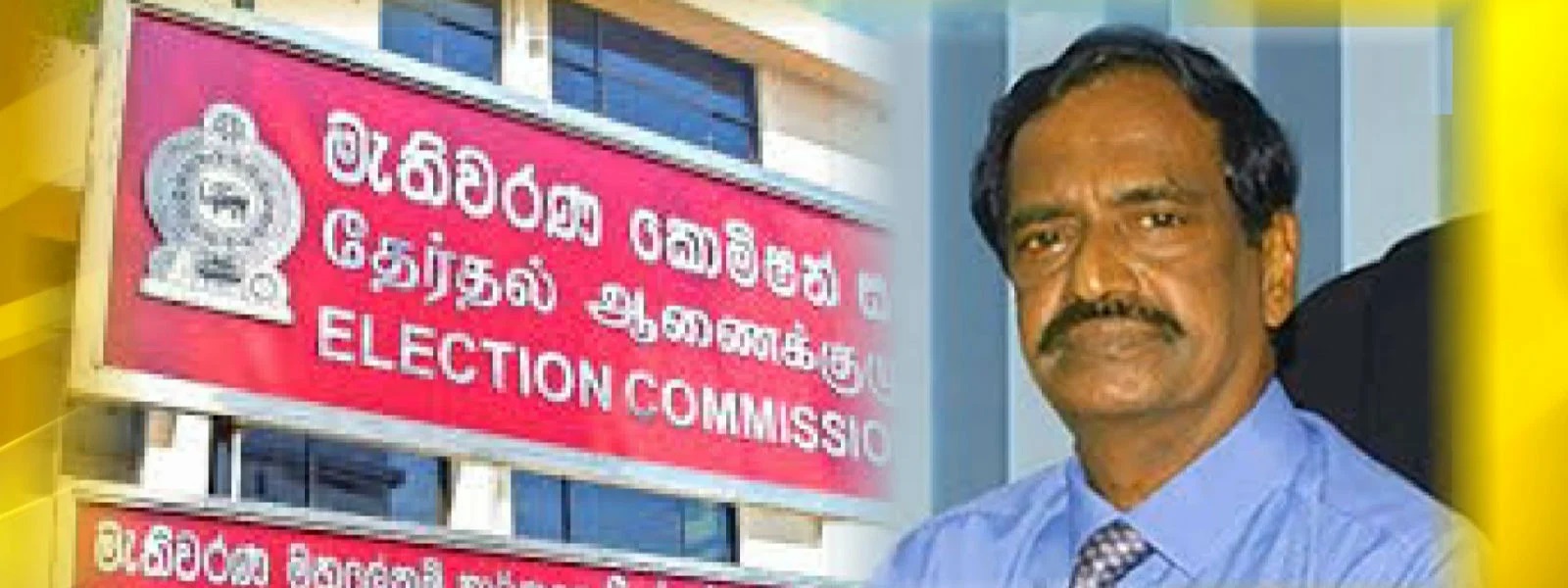
Speaking to The Morning, EC Chairman and Attorney-at-Law Nimal G. Punchihewa said: “The matter of dual citizens functioning as MPs is beyond the scope of the EC. Having dual citizenship is classified as a disqualification to become a MP, but the EC does not have the power to remove those who are disqualified. They can only be removed through a judicial process. When it comes to the EC, even if we know that an individual is a dual citizen and is handing over nominations for an election, we cannot reject that nomination under the existing laws.”

For instance, he said, although it was known that then-MP and incumbent State Minister Geetha Kumarasinghe was holding dual citizenship, the EC had not rejected her nomination some time ago, and that she had contested the General Election and even entered Parliament. He said that it was through a legal proceeding that her MP position was subsequently abolished. He said that it is clear through the said incident that the EC does not have the power to act in such matters involving dual citizens.

“New legislation should be introduced to enable the EC to reject nominations of dual citizens. Even if such legislation is introduced, it is difficult to know whether someone is a dual citizen unless they declare it themselves. This is because no country reveals personal information about a citizen. With the 22nd Amendment to the Constitution, it should also be looked into whether holding dual citizenship was a disqualification to become an MP at the time of the incumbent MPs’ appointment. All these matters are beyond the EC’s scope,” said Punchihewa.

Meanwhile, when contacted by The Morning, Parliament Assistant Secretary General (Legislative Services) K.A.T.K. Jayathilake said that Parliament is not in possession of information with regard to the MPs’ citizenship. He said that when the EC issued relevant gazette notifications declaring that a person has been elected an MP through an election or the National List, the Parliament accepts such persons as MPs.

“We don’t have any data on the matter of dual citizenship. We usually consider the gazette notification that is issued and then sent to us by the EC after the General Election. It stated that this particular person has become a MP from this electorate, or through a certain political party’s National List. After taking oaths, such persons who have been declared as MPs by the EC can function as MPs. If there is a need to make a decision regarding a MP based on the matter of their dual citizenship status, that has to be done through a court procedure,” he said.

Claiming that there are 10 MPs that hold dual citizenship, Opposition “independent” MP Patali Champika Ranawaka said on 23 October that all such MPs should resign in a respectable manner, given that dual citizens are not allowed to enter the Parliament, in line with the 22nd Amendment to the Constitution, which was passed in Parliament on 21 October. He charged that although there is no issue in persons holding dual citizenship in cases such as bringing in investments, developing business ventures, and providing technical advice, dual citizens should not be allowed to be involved in processes where the people’s sovereign power is exercised.

The 22nd Amendment to the Constitution was passed in Parliament last week with a two-thirds majority. One of the key provisions in the 22nd Amendment to the Constitution is disqualifying dual citizens from contesting elections.

Posted in Uncategorized

Rishi Sunak set to be UK’s next prime minister

Rishi Sunak is set to become the UK’s latest Prime Minister this week, replacing the country’s shortest-serving leader of all-time, Liz Truss.

He will become the third person to lead the country in seven weeks, and the fifth since 2016.

Sunak, 42, will become the first person of color to lead the UK, and the youngest to do so in more than 200 years.

It means yet more turnover at the heart of government – Boris Johnson and Truss both frantically reshuffled their Cabinets as they fought to save their jobs, and Sunak will be expected to bring in his own team this week.

But Sunak will face immediate calls for a general election from opposition parties, who will demand he seeks his own mandate in order to govern with any authority.

Britain’s King Charles III will be heading back to London from the private royal estate of Sandringham Monday afternoon, as had always been his plan, reported CNN.

CNN also reported that there has been no alteration to his schedule in light of this weekend’s events or Monday’s announcement.

It is not clear whether the King will host audiences at Buckingham Palace on Monday to accept the resignation of outgoing Prime Minister Liz Truss and appoint her successor Rishi Sunak, or whether that will happen later in the week.

When will Rishi Sunak formally become Prime Minister?

Rishi Sunak was the only person formally nominated to become the Conservative leader, meaning the planned week-long contest no longer needed to continue.

Instead, Sunak will spend Monday preparing to take over at Downing Street.

That will happen after outgoing Prime Minister Liz Truss visits King Charles III to formally resign.

Charles will accept her resignation, and then welcome Sunak for a meeting and ask him to form a government.

We don’t yet know whether those meetings will take place on Monday or on Tuesday.

Rishi Sunak has given his first speech as Conservative Party leader, telling the party he is “humbled and honored” to win their support.

“I’d like to pay tribute to Liz Truss for her dedicated public service to the country,” he said of the outgoing leader. “She has led with dignity and grace through a time of great change.”

“The United Kingdom is a great country, but there is no doubt we face a profound economic challenge,” he added. “We need stability and unity, and I will make it my utmost priority to bring our party and our country together.”

“I pledge that I will serve you with integrity and humility … I will work day in, day out to deliver for the British people,” he concluded at the end of a very brief speech.

The contest was staged after Liz Truss quit as prime minister, becoming Britain’s shortest-serving leader ever following a disastrous term.

MPs who holds dual citizenship asked to resign

The Elections Commission said that an announcement regarding the issue of MPs with dual citizenship cannot be made unless through a court determination.

With the passage of the 22nd Amendment to the Constitution, people with dual citizenship are no longer eligible to hold the position of Member of Parliament.

However, the Election Commission said that it is not in a position to immediately announce whether someone is an MP with dual citizenship.

In such a scenario, the commission said such individuals should immediately resign.

Commenting on this matter, MP Prof. Charitha Herath said that if there are MPs with dual citizenship, they should immediately step down before the laws are executed.

China to enhance ties with SLPP

China says it looks forward to enhancing ties with the Sri Lanka Podujana Peramuna (SLPP) led by former President Mahinda Rajapaksa.

The Chinese Embassy in Sri Lanka thanked former President Mahinda Rajapaksa after he congratulated Chinese President Xi Jinping on his re-election as the General Secretary of the Chinese Community Party (CPC).

“Thank you Your Excellency. We look forward to further enhancing the friendship and exchanges between the CPC and Podujana Party,” the Chinese Embassy tweeted.

Rajapaksa said that the re-election of Xi Jinping has confirmed the strength and courage his leadership holds for the people of China.

“My heartiest congratulations to H.E. Xi Jinping on his re-election as the CPC General Secretary. China has achieved great feats under his leadership & his re-election has confirmed the strenght & courage his leadership holds for the people of China,” Rajapaksa tweeted.

Xi Jinping secured a historic third term as China’s leader on Sunday and promoted some of his closest Communist Party allies, cementing his position as the nation’s most powerful leader since Mao Zedong.

The Central Committee of the Chinese Communist Party elected Xi as its General Secretary for another five-year term, Xinhua reported, tilting the country decisively back towards one-man rule after decades of power-sharing among its elite.

Posted in Uncategorized

22A and Basil’s Catch-22 -The Island Editorial

The passage of the 22nd Amendment to the Constitution (22A) cannot be considered a personal achievement of any individual politician. It was born out of a collective effort. Most of those who voted for the 22A Bill acted out of expediency rather than principle. Among those who backed it are some ardent supporters of the executive presidency. They voted for the 18th and 20th Amendments in 2010 and 2020 respectively to strengthen that institution. It was to settle political scores with their bete noire, Basil Rajapaksa, that they backed the 22A Bill overwhelmingly on Friday.

The problem with Sri Lanka’s supreme law as well as most amendments thereto is that they have been tailor-made to meet the needs of some power-hungry political leaders. The Constitution itself was created to enable J. R. Jayewardene to satiate his thirst for unbridled executive powers. His mighty hurry to introduce the presidential system resulted in numerous flaws in the Constitution, which we have had to live with.

The 13th Amendment, made in India, sought to solve Indian Prime Minister Rajiv Gandhi’s problems in Tamil Nadu rather than Sri Lanka’s ethnic issue. The 18th Amendment, made in Medamulana, helped President Mahinda Rajapaksa become a king in all but name. The 20th Amendment restored the executive powers of the President for the benefit of Gotabaya Rajapaksa. Only the 17th and 19th Amendments, introduced in 2001 and 2015 respectively, could be considered pro-people, but the latter unfortunately smacked of a move to further the interests of the then Prime Minister Ranil Wickremesinghe and place the Rajapaksa family at a disadvantage. The 22A also contains a section aimed at keeping Basil at bay; it has disqualified dual citizens from entering Parliament.

President Ranil Wickremesinghe has been praised in some quarters for the passage of 22A, which reduces his presidential powers, but he has only made a virtue of necessity. It was drafted on President Gotabaya Rajapaksa’s watch. President Wickremesinghe has neither gained nor lost anything significant due to 22A. He promised consensual governance and undertook to strengthen the independent commissions. He would not have been able to exercise the powers that the executive presidency has now been stripped of. With only a single MP on his side, he cannot do anything without the concurrence of the SLPP, which controls Parliament.

The outcome of Friday’s vote in Parliament could be thought to indicate the emergence of another dissident group in the SLPP with some more ruling party MPs apparently becoming responsive to public opinion, which is not in favour of the government. Basil has the habit of making himself scarce whenever things go wrong for his family and party. He rushed to the US after the 2015 regime change. He would have left the country last July as well but for protests at the BIA. He can always run away to the US, where he is safe. But most SLPP MPs cannot do so; they have to be here facing the people’s wrath.

Interestingly, even some members of the Rajapaksa family—Chamal, Namal and Shasheendra—voted for the 22A Bill; in so doing, they endorsed the ban on dual citizens like Basil from entering Parliament! Maybe they are running with the hare and hunting with the hounds.

It is said that Basil may renounce his US citizenship and re-enter Parliament. But it is doubtful whether he will take such a gamble, having witnessed the predicament of his brother, Gotabaya, a former US citizen, who tried to migrate to the US after his ouster, in July, only to be denied a visa. Finally, he had to take refuge in Thailand, of all places, before returning home. What the passage of 22A signifies is that President Wickremesinghe and the SLPP can extricate themselves from the Rajapaksas’ clutches, serve the interests of the people and perhaps even regain public support, if they pluck up the courage to do what is right and enlist the backing of the Opposition.