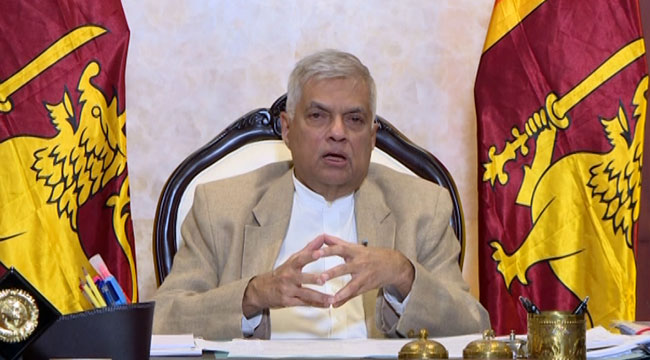
Gammanpila challenges Govt. to dissolve Parliament

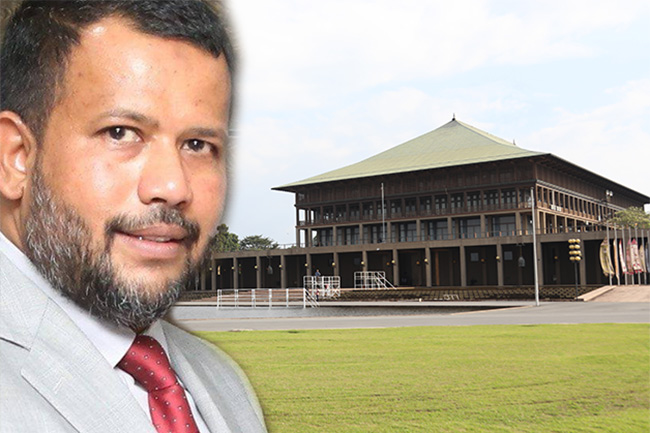
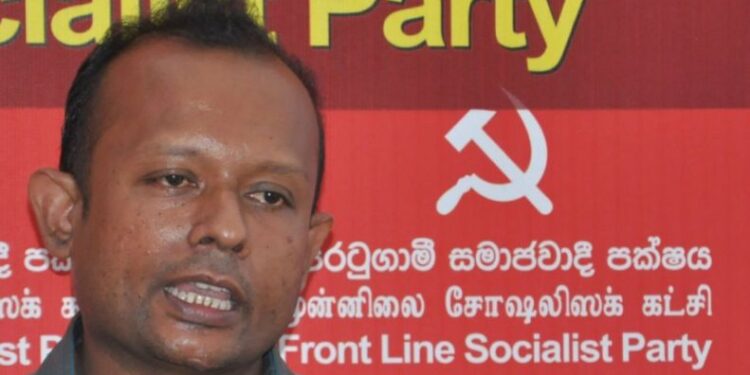
Parliamentarian Udaya Gammanpila has challenged the Government to dissolve Parliament if it is confident of a win at a forthcoming general election.

The MP, speaking at a press conference held yesterday, said the Parliament should be dissolved and elections called as it appears the Sri Lanka Podujana Peramuna (SLPP) led Government is agreeable to this suggestion and is confident of a resounding victory. “Those who claimed in Nawalapitiya that they would win at an election are the very ones who are against elections being held as scheduled,” he said in reference to the SLPP.

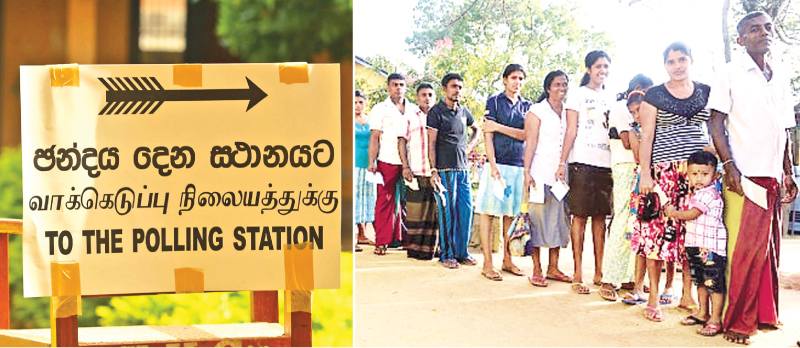
“If they are so confident of a win, then we urge them to dissolve Parliament and call for a parliamentary election immediately,” he said. Gammanpila also demanded to know who put forward the proposal to delay the local Government elections by claiming electoral reforms must be implemented prior to holding polls. “We ask the President to reveal the names of those who requested him to delay elections through this tactic in fear of facing a vote. Earlier we assumed it might be the SLPP group. However, since they have claimed they are not afraid to face elections, we ask who wants the polls to be delayed. It is the responsibility of the President to reveal this information to the country,” he said.

Japan to organize Sri Lanka creditors’ meeting over debt crisis

Japan is working to organize a meeting of Sri Lanka’s creditors by the end of this year in hopes of solving that country’s debt crisis, The Yomiuri Shimbun has learned.

The meeting, which will discuss such issues as finding ways to reduce debt payments, aims to curb China’s influence by helping Sri Lanka cope with its so-called debt traps, which arose after China provided huge loans to the country to fund infrastructure developments and other projects.

Sri Lankan President Ranil Wickremesinghe asked Japan for help during talks with Prime Minister Fumio Kishida and other people during a visit to Japan at the end of September to attend the funeral of former Prime Minister Shinzo Abe, according to Japanese government sources.

The meeting is expected to focus on measures to reduce debt payments and postpone repayment deadlines, among other related steps. Japan continues to urge other creditor countries to play a proactive role in dealing with the issue.

Sri Lanka’s economy has suffered due to sluggish tourism during the novel coronavirus pandemic and soaring food and resource prices following Russia’s invasion of Ukraine. In April, the Sri Lankan government introduced an emergency measure to suspend its repayment of external debts.

According to the Sri Lankan government, the nation’s external debt at the end of June stood at $46.6 billion (¥6.93 trillion), accounting for about 70% of its gross domestic product.

Sri Lanka has more than 20 creditors, with China topping the list at $7.3 billion (about ¥1.086 trillion), followed by Japan at $2.7 billion (about ¥402 billion) and India at $1.7 billion (about ¥253 billion).

While struggling to repay its debts, Sri Lanka in 2017 effectively transferred to China the operating rights of one of its ports.

China — which has come under criticism from the international community for causing Sri Lanka’s economic collapse — will not play a leading role in restructuring Sri Lanka’s debts, and the Japanese government will have to tread carefully in its efforts to reach agreement among creditors in a manner acceptable to Beijing.

Posted in Uncategorized

Sri Lanka’s draft ‘Rehabilitation Law’ would spur abuse – HRW

The Sri Lankan government should withdraw a draft law that would give the authorities broad powers to detain people in military-run “rehabilitation” centers, placing them at great risk of abuse, Human Rights Watch said today.

The Bureau of Rehabilitation Bill, submitted to parliament on September 23, 2022, would allow the compulsory detention in centers of “drug dependant persons, ex-combatants, members of violent extremist groups and any other group of persons.”

The Bureau of Rehabilitation Bill would establish a new administrative structure controlled by the Defense Ministry to operate “rehabilitation” centers staffed by military personnel. The proposed law, which human rights advocates have already challenged in the Supreme Court, does not describe the basis for being sent for “rehabilitation,” but other recent government policies provide vague and arbitrary powers to forcibly “rehabilitate” people who have not been convicted of any crime.

“The Sri Lankan government’s proposed ‘rehabilitation’ efforts appear to be nothing more than a new form of abusive detention without charge,” said Meenakshi Ganguly, South Asia director at Human Rights Watch. “The Rehabilitation Bill would open the door widely to more torture, mistreatment, and endless detention.”

The Sri Lankan government has previously used coercive “rehabilitation” centers to enable arbitrary detention and torture. Following the civil war, which ended in 2009, thousands of people whom the government identified as members of the defeated separatist Liberation Tigers of Tamil Eelam were detained in military-run “rehabilitation” centers, where some were allegedly tortured and subjected to other abuses, including sexual violence. The current bill seeks once again to “rehabilitate” “ex-combatants” 13 years after the war ended.

The Rehabilitation Bill is the latest measure in a long history of laws, such as the Prevention of Terrorism Act (PTA), that authorize arbitrary detention and torture in Sri Lanka. The law could be used to target minority communities or anti-government protesters whom President Ranil Wickremesinghe has labeled “extremists.”

Under the Rehabilitation Bill, which would allow prolonged detention without judicial oversight, government officials would be protected from criminal liability for their actions if they act “in good faith.” The bill also empowers officials to use undefined “minimum force” to “compel obedience” from detainees. Another provision provides that an official who “without reasonable cause” strikes, wounds, ill-treats, or willfully neglects anyone under rehabilitation can be punished by up to 18 months in prison, suggesting that there might be a “reasonable cause” to harm detainees. International law absolutely prohibits torture, and other cruel, inhuman or degrading treatment or punishment.

A separate bill to amend Sri Lanka’s Poisons, Opium and Dangerous Drugs Ordinance, which was presented to parliament on September 9, provides for the compulsory rehabilitation of alleged drug users. The legislation would worsen already abusive laws and practices under Sri Lanka’s “war on drugs,” which Sri Lankan military officers have repeatedly compared to the “war on terror.”

Sri Lanka already has a system of forced “rehabilitation” for alleged drug users, which is run by the armed forces at two sites previously used to “rehabilitate” former combatants. There have been allegations of forced labor and ill-treatment, including the collective punishment of inmates, who are denied access to medically appropriate treatment for drug dependency while undergoing coercive “de-addiction.” The death of an inmate at the Kandakadu rehabilitation center in June led to the arrest of four army and air force sergeants acting as “therapists.”

International standards for the treatment of addiction maintain that treatment should always be voluntary and addiction regarded primarily as a health condition. The abstinence-based “rehabilitation” programs operated by the military are not based on scientific evidence and provide no harm reduction services.

In 2017, the United Nations Working Group on Arbitrary Detention expressed concern at the involvement of the Sri Lankan military in drug treatment and at the lack of medical care, as well as irregularities in the judicial process. The detention of alleged drug users for coercive “rehabilitation” is incompatible with medically appropriate drug dependency treatment and contravenes international law, Human Rights Watch said.

The proposed amendment to the drug law contains provisions to weaken evidentiary standards and deny bail to suspects in some criminal cases related to the possession of drugs. Sri Lanka continues to impose the death penalty for some drug offenses, contrary to international law standards and despite a national moratorium on executions since 1976.

The Rehabilitation Bureau Bill and the proposed amendment to anti-narcotics legislation are only the latest measures in President Wickremesinghe’s assault on fundamental rights, Human Rights Watch said. An attempt to use the Official Secrets Act to restrict public gatherings in the capital, Colombo, was withdrawn earlier in October amid widespread objections that the action was unlawful.

On October 6, the United Nations Human Rights Council adopted a resolution expressing concern at the human rights situation in Sri Lanka and mandating enhanced UN monitoring, as well as renewing a mandate for the UN to collect and analyze evidence of past human rights violations for use in future prosecutions.

“President Wickremesinghe is pursuing abusive and repressive policies that make it difficult for Sri Lanka’s international partners to wholeheartedly back desperately needed economic measures,” Ganguly said. “Foreign governments should make clear that they will support the urgent needs of the Sri Lankan people, but they will also take action through targeted sanctions and other measures against those committing serious human rights violations.”

40 Govt. MPs to form new political entity

Around 40 MPS of the government will form a new political entity independent of Sri Lanka Podujana Peramuna(SLPP), a top source said. These MPS include some Cabinet Ministers such as Sports Minister Roshan Ranasinghe.

The proposed party will continue to support President Ranil Wickremesinghe. Minister Ranasinghe has already resigned from the Polonnaruwa district leadership of SLPP.

According to the source, some MPS such as Diana Gamage and Aravinth Kumara who joined the government from Samagi Jana Balawegaya (SJB) will team up with the new formation.

Two factions of MPS – one led by MP Dulles Alahapperuma and the other by MP Wimal Weerawansa – have already broken ranks with the government. These two groups now sit in the opposition, but the proposed party will continue to be part of the government.

Posted in Uncategorized

Paris Club assures fullest support to Sri Lanka – Semasinghe

The Paris Club has assured its fullest support to Sri Lanka in its ongoing efforts to find an early resolution to its debt crisis, said State Minister Shehan Semasinghe.

Paris Club is a group of officials from major creditor countries whose role is to find co-ordinated and sustainable solutions to the payment difficulties experienced by debtor countries.

State Minister Shehan Semasinghe said that he meet with William Roos, Co-Chairman of the Paris Club during the IMF/World Bank Annual Meetings.

“Mr. Roos assured The Paris Club’s fullest support for Sri Lanka’s ongoing efforts to find an early resolution to its debt crisis,” he tweeted.

What Is the Paris Club?

The Paris Club is an informal group of creditor nations whose objective is to find workable solutions to payment problems faced by debtor nations. The Paris Club has 22 permanent members, including most of the western European and Scandinavian nations, the United States, the United Kingdom, and Japan.

The Paris Club stresses the informal nature of its existence. As an informal group, it has no official statutes and no formal inception date, although its first meeting with a debtor nation was in 1956, with Argentina.

The objective of the Paris Club, an informal group of creditor nations that meets each month in the French capital, is to find workable solutions to payment problems faced by debtor nations.

The group is organized around the principles that each debtor nation be treated case by case, with consensus, conditionality, solidarity, and comparability of treatment.

In addition to the Paris Club’s 22 member nations, there are observers—often international NGOs—who attend but cannot participate in the meetings.

Understanding the Paris Club

The members of the Paris Club meet each month, except for February and August, in the French capital.

These monthly meetings may also include negotiations with one or more debtor countries that have met the Club’s preconditions for debt negotiation.

The main conditions a debtor nation has to meet are that it should have a demonstrated need for debt relief and that it should be committed to implementing economic reform.

In effect, that means the country must already have a current program with the International Monetary Fund (IMF) supported by a conditional arrangement.

Posted in Uncategorized

We don’t need your money, we want our children back’ – Tamil families of disappeared take their protest to Colombo

War-affected women from the north and the east have told the government that they are prepared to pay double of what it is offering to avoid revealing the fate of their missing children, if it finds them.

During a protest in front of the United Nations office in Colombo, they condemned a recent cabinet decision to pay Rs. 200,000 in lieu of each person who disappeared 13 years ago.

As they continued their protest for the 2,066th day, these women handed over a petition to the UN that sought international mediation to find their children.

A Tamil woman among them said in Sinhala that they did not want the government’s Rs. 200,000, but will give it Rs. 500,000 if the bones of their children are shown to them at least

They handed over similar petitions to several foreign diplomatic missions in Colombo.

During a recent media briefing, president of the association of missing persons in Mullaitivu Mariyasuresh Ishwari alleged a plot to disrupt their struggle for justice by bribing them.

She accused president Ranil Wickremesinghe of following in the footsteps of his predecessor Gotabaya Rajapaksa and scheming against them.

A series of Satyagraha began in February 2017 in Vavuniya, Kilinochchi, Jaffna, Mullaitivu, Trincomalee and Ampara demanding to know the whereabouts of the victims of enforced disappearances during the final stages of the war.

An Office of Missing Persons set up in 2018 has failed to find a single missing person, with its first head Saliya Peiris, presently president of the Bar Association, having said that the number of the missing was at least 20,000, most of them who had surrendered to the military.

Posted in Uncategorized

President optimistic that debt restructuring discussion will end successfully following talks with the Chinese Finance Minister

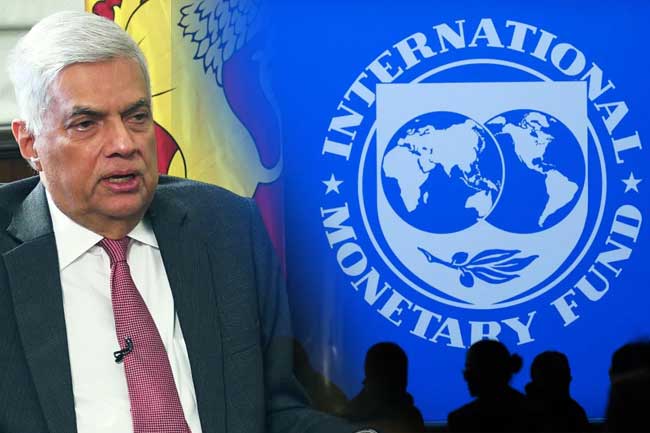
President Ranil Wickremesinghe stated that he had recently discussed Sri Lanka’s debt restructuring with the Chinese Finance Minister and he is optimistic that the discussions in this regard would be concluded successfully.

The President further mentioned that the delegation headed by the State Minister of Finance, who is currently in Washington, held initial discussions yesterday (15) with the International Monetary Fund and the three main countries, China, India and Japan that have given loans to the country. He said that the government is giving priority to immediately solve the problem of the country’s bankruptcy and to ensure food security.

President Ranil Wickremesinghe made these remarks following an observation tour of the cultivated lands in Rathumada-Weerakandawala area in Siambalanduwa Divisional Secretariat this morning (16).

The President also discussed the progress of the implementation of the food security program in Monaragala district with government officials.

He said that there is no problem with having debates and also recalled the statements made by some people that they would come forward and shed blood and said that one should live before shedding blood.

The President mentioned that if a proper program is not implemented to provide food to the people, they will not have to shed blood but will starve to death. The President also stressed that politics should be discussed only in Parliament and that everyone should unite in the program to fulfil the needs of the people.

While visiting the cultivated lands in Rathumada-Weerakandawala area in Siambalanduwa Divisional Secretariat, the President also engaged in open discussions with the farmers.

The farmers had the opportunity to discuss the issues they were facing directly with the President and he was also informed by the farmers about the lack of fertilizer, insecticides and pesticides as well as land problems, water problems and the threat of wild elephants in the area.

The President immediately called the relevant officials to the agriculture lands and directed them to take steps to provide immediate solutions to the problems faced by these farmers. While thanking the President for visiting them and looking into their problems the farmers mentioned that this is the first time that a President had visited their areas.

The President noted all the issues presented here by the farmers through an officer of the President’s Office and stated that he will appoint a separate Additional Secretary in the President’s Office and take measures to provide immediate solutions to all these problems in coordination with the District political authority and District Government officials.

Also, many problems of the people of the area were presented to the President and among them were the problems of education, roads and housing.

The President, who listened to all those problems, said that he will provide the necessary facilities to ensure that the children of the area who are engaged in education activities in the midst of many difficulties are given the opportunity to receive university education.

While returning from participating in this event, the President also visited a Daham Pasala held at Dharmashoka Pre-School, Siyambalanduwa Kaluobba, without prior notice, and inquired about the well-being of the students.
Even though he arrived at the place without prior notice, the students welcomed the President by singing Jayamangala Gatha.

Governor of the Uva Province A.J.M. Muzammil, State Ministers Shashendra Rajapakse, Vijitha Berugoda, Jagath Pushpakumara, Member of Parliament Dr. Gayashan Navanandana, President’s Senior Adviser on National Security and President’s Chief of Staff Sagala Ratnayake, former Member of Parliament Sumedha G. Jayasena, Former Deputy Speaker Ananda Kumarasiri, Secretary to the President Saman Ekanayake, Adviser to the President on National Food Security Dr. Suren Batagoda, Monaragala District Secretary Gunadasa Samarasinghe, Siambalanduwa Provincial Secretary Asanka Dayaratne and a group of District and Local Government officials participated at this occasion.

Bangladesh hopeful on Sri Lanka repaying USD 200Mn currency swap

Bangladesh remains hopeful that Sri Lanka will repay the debt of $200 million that it owes to the country by March 2023, the Governor of the Bangladesh Central Bank Abdur Rouf Talukder has expressed a positive outlook after meeting with the CBSL Governor, Dr. Nandalal Weerasinghe.

The two Governors met in Washington D.C. on the sidelines of the Annual Meetings of the International Monetary Fund and World Bank.

Speaking to reporters on Thursday, Talukder noted that Bangladesh granted a loan of USD $200 million under a currency swap deal to Sri Lanka, which it was supposed to return in three instalments in February and March 2023.

Although Sri Lanka was due to make the repayment earlier, Bangladesh extended the deadline for repayment in light of the crippling economic crisis which had plagued Sri Lanka.

On the talks with Weerasinghe, Talukder said, “We had a very good meeting. The governor assured me that they will meet the deadline for repayment. They are now restructuring their debts and have spoken to India, Japan and China about it.”

Last year, Bangladesh agreed to give Sri Lanka loans of at least $200 million from its foreign exchange reserves under a currency swap deal.

SLPP ‘confident’ to face an election

The Sri Lanka Podujana Peramuna says that they are ready for an election at anytime.

A public meeting in the series of public rallies of the Sri Lanka Podujana Peramuna, titled – ‘Let’s stand together’ – was held in Nawalapitiya on Sunday (16).

The public meeting was held under the chairmanship of SLPP Leader and the former Prime Minister Mahinda Rajapaksa.

Speaking at the event, former Prime Minister Mahinda Rajapakse admitted that although they may have made mistakes, there have been people in history who have made mistakes before.

“When something goes wrong, we have a chance to fix it. We don’t need to be ashamed,” he said.

He alleged that while many know the truth of what happened, many still act as if they do not know, and stick by their lies for the shame of not being able to take back their accusations.

Acknowledging the protest which took place at the same location today, the former Prime Minister said that it is unclear what they demand, and he has no idea as to what they expect.

“We know there is a section of this country against us. When we have an election, we know that we will have more. Even today, if there is an election, a general election, we will win. That is the truth,” he stressed.

Other speakers at the event included the Minister of Plantation Industries Dr. Ramesh Pathirana, who said that they were forced to take a difficult decision of banning chemical fertilizer imports with good intentions, however he admitted that the decision was hasty in being implemented.

The State Minister of Power and Energy, Indika Anuruddha said that what went wrong for the former administration was misunderstanding where professionals and scholars should be used or not.

Pointing out that the party frontline comprises of professionals such as doctors and lawyers, the State Minister said that they remain united with the party to carry on a political discourse.

However, he alleged that some who came from higher positions gave President the wrong advice, which painted a different picture, and the President allowed himself to be misled.

“We didn’t get enough time to come up with answers to the issues in the tea industry in the village, the agricultural industry,and the public infrastructure needs at villages,” he added.

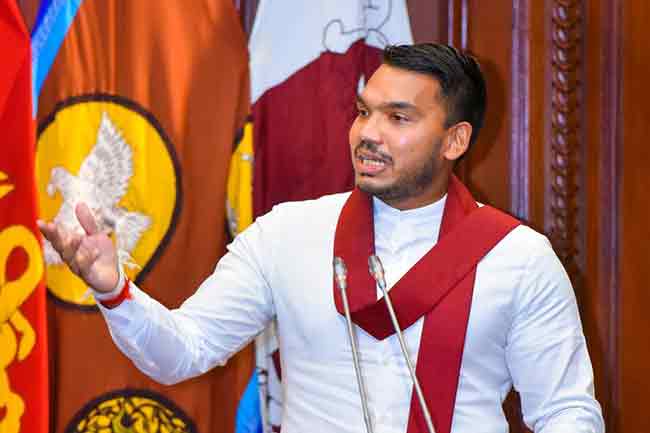
SLPP MP Namal Rajapakse said that all Government changes much take place in a democratic manner, and reiterated that the party is not afraid of an election.

“We are ready to face an election in any case, at any time. We know that the young generation has huge expectations, and as a party which has identified them, we hope to reform and move forward,” he said.

SLPP MP Mahindananda Aluthgamage, the former Agriculture Minister stressed that the party is ready to face an election at any time, and challenged the President to hold an election as soon as possible, may it be provincial council, local council or even Parliamentary elections.

“We are giving the message today in Nawalapitiya that we are ready for any election,” he said. He also challenged the Janatha Vimukthi Peramuna to win at least one division, and vowed to never engage in politics again if that is the case.

“That is how we made this constituency, Mr President,” Aluthgamage added.

The Minister of Health, Keheliya Rambukwella said that many people, including scholars and netizen rallied around former President Gotabaya Rajapaksa, whose manifesto contained important points, and was beautiful.

However, it must be admitted, the Minister said, that they were some shortcomings in the execution of the manifesto, he said, adding that these shortcomings must be admitted.

“I am sorry that he was not able to live up to the challenge which he received at that time. I should publicly emphasize that he did not face up to his challenges, I have no regrets about that,” Minister Rambukwella said.

Although many reasons contributed to this downfall, the Minister said that even today, he respects Gotabaya Rajapaksa as a person.

Posted in Uncategorized