Tamil Nadu worried over increased presence of Chinese Army in Sri Lanka

Tamil Nadu has flagged serious security concerns over the increased presence of the People’s Liberation Army (PLA) of China in Sri Lanka. An alert issued by the State’s intelligence agency a few days ago said the activities of the Chinese in the neighbouring country is a concern to national security and called for intensified vigil along the coastline.

The movement of PLA cadres and deployment of hi-tech gadgets such as satellites, drones and other communication equipment in northern Sri Lanka required constant surveillance in coastal districts, the advisory sent to all cities/districts in the State said. Citing sources, the alert claimed that the PLA deployed sophisticated gadgets in the garb of launching sea cucumber farming.

The security advisory comes days after an alert was issued by the same agency warning that a handful of Chinese nationals had clandestinely entered India via the sea route with the assistance of cadres belonging to a Sri Lanka-based political party.

The Tamil Nadu Coastal Security Group had also, citing a Central intelligence agency, issued an alert on the Chinese ship used to monitor satellites, rockets and inter-continental missile launches of China docked at Hanbanthota Port, and called for adequate security arrangements in view of vital installations such as nuclear establishments and seaports along the Tamil Nadu coast.

The free movement of Chinese nationals in many parts of northern Sri Lanka, including Mullaitheevu, Paruthitheevu, Analaitheevu, Meesalai, and Chavakkacheri, had triggered discontentment among Tamil fishermen. They had expressed the apprehension that the Chinese were exploiting the rich sea wealth, which is their only source of livelihood.

The fear of the local Tamils was that the prevailing situation might lead to a division among Sri Lankan nationals and curtail the influence of India on Tamils living in the northern and eastern parts of the island nation, the alert said.

Tamil Nadu had strengthened security arrangements along the southeastern coast after a Union government advisory on the arrival of Yuan Wang 5, a Chinese research vessel at Sri Lanka’s Hambantota Port on August 11. With the vessel equipped with space/satellite tracking and intercontinental ballistic missile launch facilities, the State activated its intelligence machinery at vital installations along the 1,076-km long coastal belt, sources said.

After Sri Lanka cleared the arrival of a Chinese satellite-tracking ship to its Chinese-funded Hambantota port in August this year, India expressed its concern over the visit. The Ministry of External Affairs said India was carefully monitoring developments that had a bearing on its security and economic interests.

Asked for his comments, Additional Director-General of Police and Chief of Tamil Nadu Coastal Security Group Sandeep Mittal said it was not a disputable fact that the presence of Chinese nationals was increasing in Sri Lanka. The frequent visits of the Chinese Ambassador to Sri Lanka to islands close to the International Maritime Boundary Line, and a drone survey conducted in the area in the guise of assessing prospects of harvesting sea cucumber, made the developments suspicious.

“While India is providing scholarships to Sri Lankan students pursuing undergraduate programmes in India, China is funding postgraduate Sri Lankan students studying in their own country. It is obvious that they [the Chinese] are trying to woo the youth in Sri Lanka to support their future plans,” he said.

Dr. Mittal, who is also the State Maritime Security Coordinator, said there is no guarantee that only Chinese would intrude into Indian waters. “Anybody cultivated by them to further their mission can also enter the porous border along the southeastern coast…Tamil Nadu has issued an alert to all coastal districts to activate their intelligence and intensify security along the coastline,” he said.

Security agencies in Tamil Nadu say there is an urgent need for the Union government to activate the Phase-III funding of the Coastal Security Scheme. After the Phase-II ended in 2020, funds and infrastructural support for the Coastal Security Group had stopped.

According to a senior police officer, the Centre should help Tamil Nadu raise a few Indian Maritime Reserve Battalions to be stationed at vantage points along the coast considering the increasing threat perceptions. Of the sanctioned strength of 800 personnel to the Tamil Nadu Coastal Security Group, there is almost 50% vacancy. The group was manning 42 Marine Police Stations, check-posts and territorial waters with limited manpower.

Preferring not to be quoted, the official said the Government of India was yet to approve the establishment of a Regional Maritime Coastal Security Training Academy though the Tamil Nadu Government had already allotted 240 acres of land near Rameswaram.

Courtesy The Hindu

Top US official to visit Sri Lanka next week

United States Assistant Secretary of State for South and Central Asian Affairs Donald Lu is expected to visit Sri Lanka next week.

A high-ranking delegation from the US government is also scheduled to visit the island along with Assistant Secretary Donald Lu.

Secretary Lu is likely to meet several senior Government and Opposition officials including the President during his visit to Sri Lanka, according to sources.

The visit comes in the wake of two high-profile visits by US Agency for International Development (USAID) Administrator Samantha Power and US Permanent Representative to the UN Food and Agriculture Agencies in Rome Ambassador Cindy McCain to Colombo last month.

Secretary Lu had led a delegation to India aimed at deepening the US-India Comprehensive Global Strategic Partnership last month, whilst the situation in Sri Lanka has also been taken up with the Indian authorities.

Political reforms: Govt. to move 22A for debate this week

The Government is to proceed with the debate and vote on the proposed 22nd Amendment Bill in Parliament this week, despite doubts over securing the required two-thirds majority in the House for its passage, The Sunday Morning learns.

Justice Minister Dr. Wijeyadasa Rajapakshe told The Sunday Morning that the Cabinet of Ministers had last week decided to proceed with the 22nd Amendment Bill debate and vote in Parliament regardless of the objections raised by a group of ruling Sri Lanka Podujana Peramuna (SLPP) MPs to the proposed piece of legislation. “The Cabinet decided to move ahead with the 22nd Amendment and go for a vote,” he said.

Accordingly, the 22nd Amendment Bill will be taken up for debate on Thursday (20) and for a vote on Friday (21).

When asked if the Government was confident of receiving the two-thirds majority in Parliament to pass the Bill, Rajapakshe noted that he was hopeful that the Members of Parliament (MPs) would support the first step of the political reforms programme. “If the MPs don’t vote in favour, the public will be able to see who is opposed to political reforms,” he added.

The Opposition political parties during the last parliamentary session had expressed concern over the possibility of moving ‘undemocratic’ amendments to the 22nd Amendment Bill during the committee stage of the debate when amendments are introduced to the Bill.

However, the Justice Minister observed that only the observations of the Supreme Court, as well as a few proposed by the Opposition, would be moved as amendments during committee stage.

However, a group of SLPP MPs, including the party’s General Secretary Sagara Kariyawasam, has stated publicly on several occasions that the SLPP could not support the Bill since some of its clauses were in violation of the party’s policies.

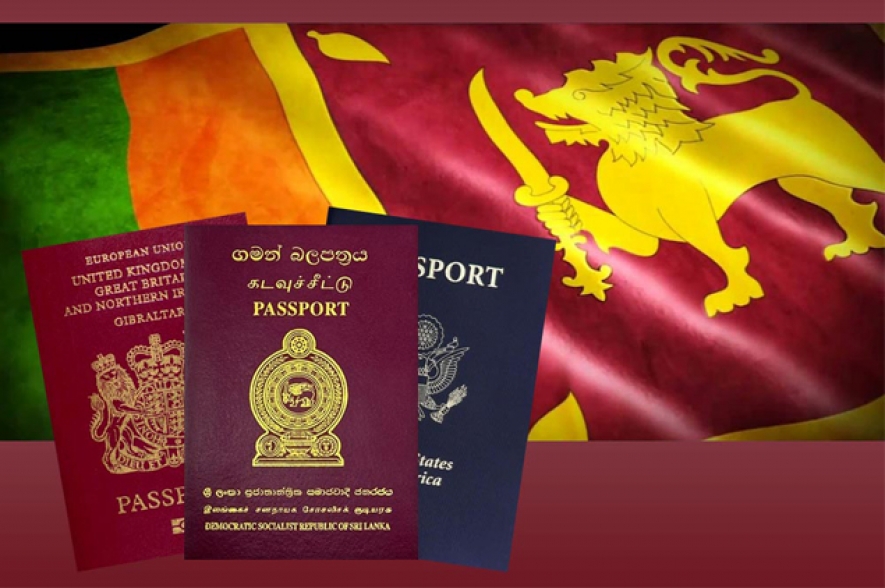
The SLPP group that is objecting to the 22nd Amendment has been identified in political circles as the pro-Basil Rajapaksa (BR) group. The group has called on the Government to remove the clause preventing dual citizens from holding public office and to extend the time for the dissolution of Parliament to four-and-a-half years. The Government, however, has objected to the two proposals by the pro-BR group.

The SLPP group, it is learnt, had informed the Government that they would move the two amendments sought by them at the committee stage of the Bill and would go for a vote if needed to get these included in the 22nd Amendment. However, the Government had informed the group that the amendment would require a two-thirds majority to be passed and not a simple majority of 113.

Posted in Uncategorized

Chinese airline eyes Sri Lanka

A major Chinese cargo airline operator has made inquiries about using Sri Lanka as a cargo hub, said Sri Lanka’s Ambassador to China, Dr. Palitha Kohona.

This will be for airlines operating on the Europe-China and Africa-China routes, he told the Sunday Observer Business. The Chinese cargo airline is exploring this possibility as it considers Sri Lanka to be a cheaper option than the Middle East. The Bandaranaike International Airport and the Mattala Mahinda Rajapaksa International Airport are options for them.

Commenting on the passenger segment, he said that all Chinese airlines have expressed interest in the potential of the Sri Lankan tourist market. “We have had direct discussions with provincial operators including Shandong, Chongqing, Nanjing, and Shanghai, and they responded positively.”

Sri Lanka will not be the final destination for Chinese travellers but also a jump off hub for India, the Maldives, Africa and the Middle East.

The Ambassador said that China Eastern Airlines is already operating flights to Colombo. The Airline also plans to increase its capacity to Colombo. “We hope that SriLankan Airlines will also prepare itself to meet the expected demand from China.

Commenting on the Chinese aviation industry, the Ambassador said, “The hard-nosed Chinese airlines are betting on a massive upsurge in post-Covid international travel. They have ordered 280 new wide bodied Airbus aircraft.

Chinese tourist arrivals to Sri Lanka were among the top three source markets during the three years of the pre Covid-19 era.

Posted in Uncategorized

Sri Lanka searches for missing navy boat with 6 sailors aboard

Sri Lankan authorities have stepped up a search for a navy boat that went missing a month ago along with six sailors while patrolling in the Indian Ocean off the island nation, an Associate Press report said.

Navy spokesman Capt. Indika de Silva said on Saturday that the sailors ventured out from Sri Lanka’s southern coast on Sept. 16 on a regular patrol and a day later, the navy had lost communication with the boat.

He said that since then, the navy had deployed vessels to find the boat and the search operation intensified with the deployment of air force aircraft.

Silva said they suspect the boat might have developed an engine trouble and drifted to the open sea after getting caught in a heavy current.

“So far, we have not been able to find the boat or the sailors,” AP quoted Capt. Silva.

Sri Lanka’s navy conducts regular patrols to crack down on smuggling. In recent months, the navy has successfully carried out several missions targeting narcotic and human traffickers. Dozens of people have been arrested while trying to illegally migrate mostly to Australia along with traffickers carrying large quantities of narcotics.

In May and April, the navy seized more than 1,000 kilograms (2,204 pounds) of heroin that was being smuggled in vessels.

Posted in Uncategorized

Charitha hits back: First culprit of Economic Crisis was Cabinet including Minister Sabry

The former Chairman of the COPE Prof. Charitha Herath today hit back at the former Minister of Justice and the current Foreign Affairs Minister Ali Sabry against his remarks that the Cabinet of Ministers was clueless with regard to the economic crisis.

Taking to twitter, the former COPE Chair released a document which included a Notice to the Cabinet by the former Finance Minister Basil Rajapaksa with regard to the country’s foreign currency outflows and the distribution of responsibility on foreign currency inflow.

The annexure attached to the document, which included the expected outflows and inflows during 2022, underlined the debt servicing payments, maturing sovereign bonds and expenses with regard to goods imports.

Minister Ali Sabry on Friday (14) said that the Cabinet of Ministers “thought everything was ok” and failed to recognise the depth of the economic crisis, and were more invested in their own subjects and portfolios.

The former COPE Chairman shared the documents and pointed out that such is evidence that the financial issue was discussed at the Cabinet though no solution was found.

“True, first culprit of this disaster is the Cabinet of which Ali Sabry was a part.” he tweeted.

Posted in Uncategorized

Forex shortage: $ 50 m weekly spending cap for energy

The Central Bank of Sri Lanka (CBSL) and the Treasury have informed the Ministry of Power and Energy that the State can only afford to make a $ 50 million payment for energy imports per week, Minister Kanchana Wijesekera revealed yesterday (15).

Wijesekera made this observation while explaining the challenges faced by the Government in importing fuel, in response to a question from media on whether the fuel quota would be increased.

“Due to the shortage of dollars in our banking system, the Central Bank has informed us that the State can only afford to issue a maximum of $ 50 million per week for the import of energy products. This now applies to coal imports as well, as we no longer have the credit line for coal. We will also have to allocate funds for coal from this $ 50 million. This is the difficult situation we are in,” Wijesekera told the media last afternoon (15).

He explained that an ordinary shipment of 35,000 MT of petrol or diesel would cost between $ 40-50 million while a 100,000 MT consignment of crude oil cost between $ 75-85 million to order.

“When I took over in April, the banking system at the time did not allow us to open Letters of Credit (LCs) from our banks. This was due to Sri Lanka being downgraded and later declaring bankruptcy. The arrears are from the LCs that were opened earlier.”

According to Wijesekera, in April the Ceylon Petroleum Corporation (CPC) owed fuel suppliers $ 751 million in arrears. Approximately $ 350 million in arrears has now been settled, leaving an outstanding $ 400 million.

Earlier this year, CBSL Governor Dr. Nandalal Weerasinghe informed the Government that Sri Lanka could only afford to import a maximum of $ 200 million worth of fuel for the second half of 2022, causing the Government to ration fuel and effect a fuel price hike.

Petroleum suppliers have been reluctant to bid for term and spot tenders issued by the CPC due to colossal unpaid dues from the State, an increase in risk insurance premium, and Sri Lanka’s declaration of bankruptcy.

Minister Wijesekera also said that a decision would have to be taken by the Cabinet on whether to reconsider a fuel price revision or increase the quota.

Posted in Uncategorized

Sri Lanka will remain a middle-income country despite GDP decline

The Deputy Director of the Asia and Pacific Department of the International Monetary Fund, Anne-Marie Gulde-Wolf has said that Sri Lanka will remain a middle-income country despite the decline in GDP.

Speaking at an IMF press conference on the Asia and Pacific Region’s Economic Outlook, the Deputy Director of the Asia and Pacific Department of the IMF responded to questions raised about Sri Lanka’s progress toward debt restructuring negotiation, the IMF’s program timeline, and whether Sri Lanka could be downgraded to low-income status.

She pointed out that it is difficult to predict a timeline because the process of debt negotiations takes time, and mentioned that timelines differ depending on who the creditors are and what is involved.

“We certainly are supporting the process as much as we can. And we hope that everybody can work expeditiously to get a process underway, and discussions have started, including with support of all bilateral creditors that are involved,” she said.

Anne-Marie Gulde-Wolf further speaking noted that with regard to the other multilateral lenders, the IMF is working very closely with the World Bank, the Asian Development Bank, the Asian Investment Bank, on programs for Sri Lanka, which would assist in closing the financing gap.

“But I want to say also very importantly that the policies under the other multilateral lenders in their areas of expertise will be important to resolve Sri Lanka’s longer term growth problems,” Anne-Marie Gulde-Wolf emphasized.

Posted in Uncategorized

SLAF rejects RTI request

The Sri Lanka Air Force (SLAF) rejected the Right to Information (RTI) request on the details of former President Gotabaya Rajapaksa’s visit to Maldives on an Air Force aircraft on 13 July.

The former President fled to the Maldives a few days after protesters occupied both the President’s House in Fort and the Presidential Secretariat on 9 July, following a mass protest in Colombo.

Both Information Officer and Designated Officer for RTI at Air Force Headquarters rejected the application and said requested details cannot be released as per the provision of Section 5 (1) (b) (i) of the Right to Information Act No. 12 of 2016.

SLAF confirmed on 13 July that former President Gotabaya Rajapaksa, his wife, and two bodyguards boarded an Air Force flight to the Maldives early that day. “In accordance with the powers vested in an Executive President in the Constitution of Sri Lanka, at the request of the existing Government, subject to the full approval of the Ministry of Defence, and subject to Immigration, Customs and all other laws at the BIA, the President along with the First Lady and two security guards departed on an Air Force aircraft to the Maldives early this morning,” the SLAF said in a statement, of its services to Rajapaksa, who held the positions of Minister of Defence and Commander-in-Chief, until his resignation.

Restructuring Sri Lanka’s debt talks – Author: Soumya Bhowmick, ORF

There is no doubt that International Monetary Fund (IMF) loans often come with a set of conditionalities that most countries find unfavourable to implement. With its ongoing economic crisis and complex multilateral debt negotiations between creditor nations, Sri Lanka is no exception.

Fumio Kishida, Japan’s Prime Minister, right, meets Ranil Wickremesinghe, Sri Lanka’s President, at Akasaka Palace state guest house in Tokyo, Japan, 28 September, 2022 (Kiyoshi Ota/Pool via Reuters).
The IMF extended a loan of US$2.6 billion to Sri Lanka in 2009 on the condition that Colombo reduces the country’s budget deficit to around 5 per cent of GDP. But the island nation failed to improve its exports or growth, so it requested another IMF debt facility of about US$1.5 billion in 2016. That was also ineffective due to internal issues ranging from multiple monsoon failures derailing agricultural productivity to the politically destabilising constitutional crisis of October 2018.

Between 2015 and 2019, the country’s growth rate fell from 5 per cent to 2.9 per cent and government revenue contracted from 14.1 per cent to 12.6 per cent of GDP. The bitter coincidence of falling output and revenue made Sri Lanka reluctant to seek an IMF bailout in the early stages of its 2022 sovereign debt crisis — diminishing its options to avert the current economic disaster.

The COVID-19 pandemic has been harsh for the entire South Asian region, with countries seeking hefty assistance from the IMF. Apart from Sri Lanka, the IMF has approved a loan tranche of US$1.17 billion to flood-hit Pakistan. Bangladesh formally requested an IMF loan of US$4.5 billion in June 2022 due to inflationary pressures, a volatile taka and depleted foreign exchange reserves.

Given the interconnectedness of global value chains and the regional economy, Sri Lanka’s recent economic woes cannot be understood in isolation.

In early April 2022, Sri Lanka declared it would default on its external debts comprising International Sovereign Bonds and syndicated and bilateral loans worth approximately US$51 billion. It then awaited a bailout from bilateral and multilateral creditors.

The subsequent months saw a humanitarian disaster and massive civil unrest that triggered the resignation of Sri Lankan government ministers, including the former president, Gotabaya Rajapaksa, and the former prime minister, Mahinda Rajapaksa. Sri Lanka reached a preliminary agreement with the IMF for a US$2.9 billion loan in early September 2022. It requires Sri Lanka to restructure all of its debt held by external and private creditors.

On the request of Sri Lankan President Ranil Wickremesinghe, Japan will lead the debt restructuring talks with creditor nations. Japanese Finance Minister Shunichi Suzuki emphasised the role that bilateral creditors like India and China should play in dragging Colombo out of its worst economic crisis since gaining independence in 1948.

The restructuring of Sri Lanka’s debt held by India and China provides Sri Lanka with a certain amount of leverage in the IMF negotiations. Interestingly, this also reflects the changing regional dynamics of the last few years. Sri Lanka is of strategic interest to China for its trade and infrastructure connectivity in the Indian Ocean region as part of the Belt and Road Initiative (BRI). It became more crucial after India announced its non-participation in the BRI.

China has been accused of engaging in debt-trap diplomacy with Sri Lanka, especially after the Hambantota Port incident in which the China Merchants Port Holdings Company paid $US1.12 billion for an 85 per cent share in the port on a 99-year lease in 2017. But in the post-pandemic world, the BRI, like China’s general dedication towards Sri Lanka, is losing steam.

India and Sri Lanka’s bilateral ties have seen an uptick in the recent past — they boast the largest trade relationship within the South Asian Association for Regional Cooperation. According to India’s Ministry of External Affairs, India provided Sri Lanka with unprecedented crisis support to the tune of US$3.8 billion in the first half of 2022, in line with its Neighbourhood First policy.

Japan’s unbiased leadership in the debt restructuring talks is crucial to achieving a positive outcome considering the diplomatic tensions between India and China. These tensions range from border skirmishes in Ladakh and Sikkim to the recent Indian crackdown on Chinese firms for ‘financial crimes detrimental to [India’s] financial security’.

India marginally surpassed China in 2022 to become Sri Lanka’s largest bilateral lender. But the resolution of Sri Lanka’s debt relief talks needs to spread the debt relief costs across all the creditor nations, with India now holding a larger stake in the process.

As Sri Lanka graduated from a low-income country to a low-middle-income country in the late 1990s, its access to concessionary loans declined. They were replaced by commercial loans with unfavourable conditions such as higher interest rates and shorter repayment durations.

Commercial loans, mostly denominated in International Sovereign Bonds, were often used to fund the economy’s current account deficits, adding to Sri Lanka’s macroeconomic vulnerabilities. Sri Lanka’s recovery efforts need to address the long-term precarity of this external debt structure.

While the world braves the macroeconomic impacts of the pandemic, the Russia–Ukraine conflict adds soaring fuel prices and food insecurity to the list of problems faced by the Global South. That volatility underscores the importance of a careful and swift recovery for Sri Lanka.

Soumya Bhowmick is an Associate Fellow at the Centre for New Economic Diplomacy, Observer Research Foundation.