Cardinal alerts Pope on Easter justice struggle

The Catholic church said yesterday (28 February) that Colombo Archbishop His Eminence Malcolm Cardinal Ranjith has met Catholic Church Head His Holiness Pope Francis yesterday, where the discussions were due to have been focused on the Sri Lankan Catholic people’s struggle for justice, following the Easter Sunday terror attacks.

“We have exhausted all options within Sri Lanka to find justice. Now, we are discussing all avenues through which we can find justice internationally. Our last remaining solution was to seek assistance from the international community. This is not because we do not love our country. The Archbishop is meeting the Pope after two years and he is especially focusing on informing him that we need help from the international community to seek justice for the victims of the Easter Sunday terror attacks,” National Catholic Social Communication Centre Director Rev. Cyril Gamini Fernando said at a press conference held yesterday.

Responding to media queries on whether the Archbishop is due to travel to the US, following his meeting with the Pope, Rev. Fernando said that the Archbishop’s plans after the visit to the Vatican cannot be officially announced yet.

“In our path to seeking justice from the international community, Sri Lanka may face sanctions. The Government and the relevant authorities should have thought about that in the past three years. If they had done what was required, which is to implement the recommendations of the Presidential Commission of Inquiry into the Easter Sunday terror attacks, nobody would have needed to get help internationally. The fact that justice has not yet been served is a Sri Lankan problem. People from all religions and communities and foreigners died in the attacks,” he added.

Archbishop Ranjith said last month that they were currently exploring the possibility of reaching out to the international community, including the UN, to seek justice for the said terror attacks. In an online meeting held recently, the Archbishop pointed out that they, as the Catholic church, have links all over the world, and that they would also try to influence some pertinent and powerful countries that are in contact with the church. In addition, he said that in case they would be reaching out to the international community, such efforts would also be supported by his fellow cardinals around the world.

On 21 April 2019, Easter Sunday, three churches (St. Sebastian’s Church in Katuwapitiya, St. Anthony’s Church in Kochchikade, and Zion Church in Batticaloa) and three luxury hotels in Colombo (Cinnamon Grand Colombo, The Kingsbury Colombo, and Shangri-La Colombo) were targeted in a series of co-ordinated suicide bombings. Later that day, another two bomb explosions took place at a house in Dematagoda and the Tropical Inn Lodge in Dehiwala. A total of 269 people excluding the bombers were killed in the bombings, including about 45 foreign nationals, while at least 500 were injured.

Protest in Vatican for Justice on Easter Attacks

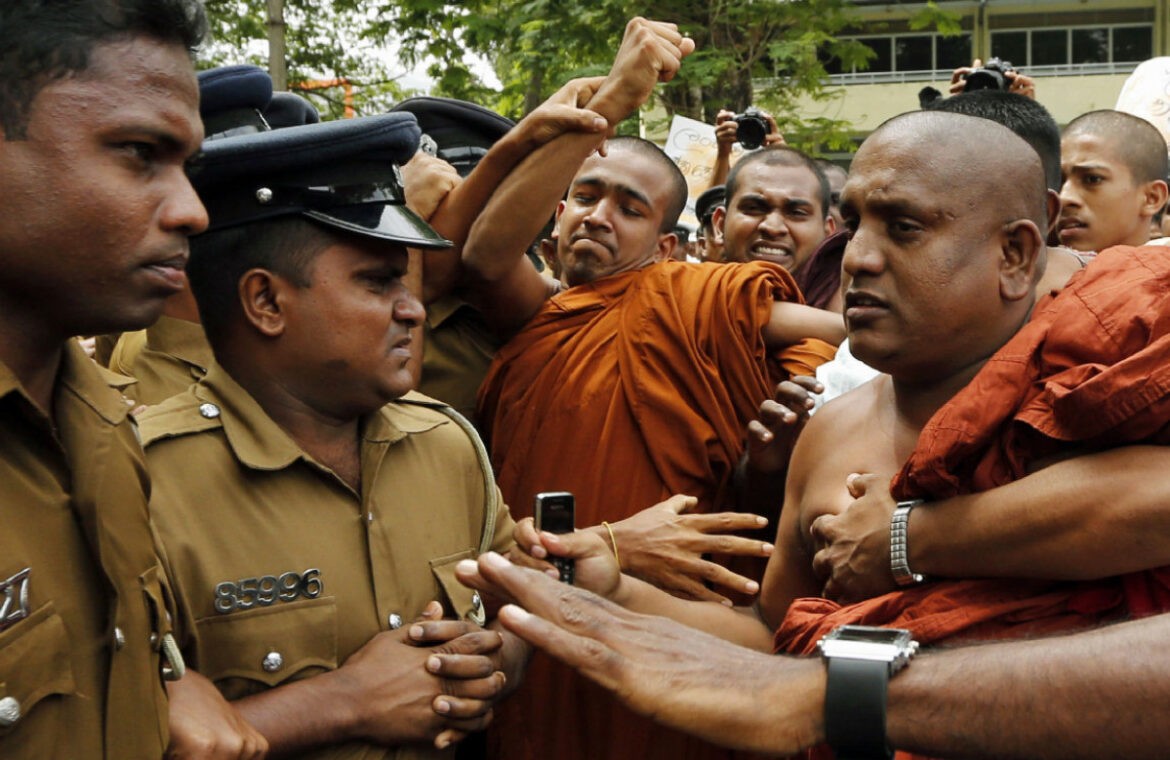
A group of families of the victims of the Easter attack staged a protest in the Vatican on Sunday.

The protest took place while Holy Mass was presided over by His Holiness Pope Francis at St. Peter’s Cathedral in the Vatican.

The protestors are demanding justice for the victims of the terror attacks.

The protest was organized by the Global Forum for Justice on the Easter Sunday Terrorist Attack.

His Holiness Pope Francis and Archbishop, Malcolm Cardinal Ranjith are scheduled to meet on Monday.

Today is Maha Shivarathri Shiva: Understanding that which is not

The word Shiva means that which is not. That which is, is existence and creation. That which is not is Shiva.

There are many gods in Hinduism. It is generally said to be 330 crores-that’s 3.3 billion. The crux of the issue is to see God in everything. The God or Bramman is one and seen as many life forms-countless forms, which is in a way saying the all-pervading almighty is formless. However, for simple minds keeping things and ideas simple is easier to comprehend. Hence, there are selected few that are seen in temples.

In every month there is a Shivarathri or the night of Shiva – on the day before the new moon. But once a year -in February/March-this night is called “Maha” Shivarathri – the Great Night of Shiva.

Light always comes from a source that is burning itself out. It has a beginning and an end. It is always from a limited source. Darkness has no source. It is a source unto itself. It is all-pervading, everywhere, omnipresent.

The Maha Shivarathri is mentioned in several Puranas, particularly the Skanda Purana, Linga Purana and Padma Purana. Different legends describe the significance of Maha Shivarathri. According to one legend in the Shaivism tradition, this is the night when Shiva performs the heavenly dance of creation, preservation and destruction. According to another legend, this is the night when Shiva and Parvati got married. According to the marriage of Shiva and Shakthi Shivrathri is the amalgamation of two strong forces in the universe -Shiva and Goddess Shakti. Shiva is known as the God of death and Goddess Shakti as a power who vanquishes evil and also as the Mother Goddess- the creative force.

In Sri Lanka the belief that is generally followed is found in the Shiva Purana: “Once upon a time Brahma and Vishnu were fighting among themselves that who is superior among the two. Other Gods were terrified and so they went to Lord Shiva to intervene in the war. To make them realise the futility of their fight, Shiva took the form of a massive cosmic pillar that spread across the length of the entire cosmos.

“By seeing the magnitude, both the Gods (Vishnu and Brahma) decided to find one end each to establish supremacy over the other. So, for this Brahma assumed the form of a swan and went one way on the other hand Vishnu assumed as Varaha and went in the opposite direction. But the cosmic pillar of light has no end and they searched and searched but couldn’t find the ends. Ignore the Gods involved in the dispute-it is about the unfathomable nature of the God Supreme or the Brahman. The concept could easily transcend religious boundaries- the day is set aside to realise the concept of almighty and all-pervasive God.

The metaphoric story above is also interpreted as the victory of real knowledge over ignorance. That the Brahman or the “Force” transcends the entire universe and all dimensions- from Space/time dimension to 11 or even more dimensions that humanity has known so far.

Importance of Maha Shivarathri

Stories apart, why this day and night are held with such importance in the yogic tradition is because of the possibilities it presents to a spiritual seeker.

Modern science has gone through many phases and arrived at a point today where they are out to prove to you that everything that you know as life, everything that you know as matter and existence, everything that you know as the cosmos and galaxies, is just one energy which manifests itself in millions of ways. Which is what Hinduism is all about.

“That which is not” means, if you open your eyes and look around, if your vision is for small things, you will see lots of creation. If your vision is really looking for big things, you will see the biggest presence in the existence is a vast emptiness

Spiritual leader Sadhguru Vasudev also provides a different perspective:

“Shivarathri is the darkest day of the month. Celebrating Shivarathri every month, and the particular day, Maha Shivarathri, almost seems like a celebration of darkness. Any logical mind would resist darkness and naturally opt for light. But the word “Shiva” literally means “that which is not.” “That which is,” is existence and creation. “That which is not” is Shiva.

“That which is not” means, if you open your eyes and look around, if your vision is for small things, you will see lots of creation. If your vision is really looking for big things, you will see the biggest presence in the existence is a vast emptiness. A few spots which we call galaxies are generally much noticed, but the vast emptiness that holds them does not come into everybody’s notice. This vastness, this unbounded emptiness, is what is referred to as Shiva.
“Generally, when people are seeking well-being, we talk of the divine as light. Light is a brief happening in your mind. Light is not eternal, it is always a limited possibility because it happens and it ends. But darkness is all-enveloping, everywhere. The immature minds in the world have always described darkness as the devil. But when you describe the divine as all-pervading, you are obviously referring to the divine as darkness, because only darkness is all-pervading. It is everywhere. It does not need any support from anything,” he says.
“Light always comes from a source that is burning itself out. It has a beginning and an end. It is always from a limited source. Darkness has no source. It is a source unto itself. It is all-pervading, everywhere, omnipresent. So when we say Shiva, it is this vast emptiness of existence. It is in the lap of this vast emptiness that all creation has happened. It is that lap of emptiness that we refer to as the Shiva,” he says

Maha Shivarathri is an opportunity and a possibility to bring yourself to that experience of the vast emptiness within every human being, which is the source of all creation.

Theological interpretations apart in the day-to-day life these religious observances gives hope to mankind and help the seeker as a stepping stone towards the greater realization.

Posted in Uncategorized

Chinese monks participate in Pirith ceremony to commemorate 65 th. anniversary of Sino-Lankan diplomatic relations

Chinese monks participated on-line in the Pirith ceremonies to commemorate the 65 th anniversary of Sino-Lankan diplomatic relations held in various places in Sri Lanka on February 26.

The Sri Lanka-China Buddhist Friendship Association in collaboration with the Buddhist Association of China conducted a Blessing/Pirith Ceremony at the Abhayagiriya Temple in Anuradhapura, and the Sri Lanka Vidyalaya, Maradana. The Buddhist Association of China had made arrangements for the Venerable Theros from the Lingguang Temple in Beijing and Putuao Temple in Guangdong to join the ceremony online.

The chanting ceremony by the Chinese Buddhist monks was led by the Most Ven. Chang Zhang Thero and Most Ven. Ming Sheng Thero.

After the formal ceremony, the Ambassador and the Embassy Officials were given the rare opportunity to worship the sacred tooth relic of Lord Buddha.

The Lingguang temple was originally built in the Tang Dynasty (618–907 AD). The temple had been designated a National Key Buddhist Temple of the Han Chinese by the State Council of China in 1983.
Ven. Fa’Xian Thero had spent two years at Abhayagiri Temple early in fifth century AD collecting and translating Sinhala language Buddhist texts. He later produced many records of his visits.

Despite the COVID-19 related restrictions in China, the Sri Lankan Ambassador in China, Dr. Palitha Kohona and four officers from the Embassy also attended the event at the Lingguang Temple, a historic shrine, where one of the two Tooth Relics of the Buddha is kept. The other is in Kandy.

After the formal ceremony, the Ambassador and the Embassy Officials were given the rare opportunity to worship the sacred tooth relic of Lord Buddha.

The Lingguang temple was originally built in the Tang Dynasty (618–907 AD). The temple had been designated a National Key Buddhist Temple of the Han Chinese by the State Council of China in 1983.

Posted in Uncategorized

INS Nireekshak arrives at port of Trincomalee Sri Lanka Navy diver training

The Indian Naval Ship (INS) Nireekshak which serves as a highly advanced Diving Support Vessel (DSV) in the Indian Navy arrived at the port of Trincomalee Monday (28th February 2022), Sri Lanka Navy said.

The visiting ship was welcomed by Sri Lanka Navy in compliance with naval traditions.

The 70.5 m long Diving Support Vessel is commanded by Commander Mohammed Ikram and manned by a crew of 107.

Meanwhile, the Commanding Officer of INS Nireekshak called on Commander Eastern Naval Area, Rear Admiral Sanjeewa Dias at the Eastern Naval Headquarters today. Defense Adviser at the Indian High Commission in Sri Lanka, Captain Vikas Sood was also present on this occasion.

During its stay in the island, INS Nireekshak is expected to engage in diving training exercises with Sri Lanka Navy and her crew will take part in several programs organized by the Sri Lanka Navy, with a view to enhancing mutual cooperation between the two navies.

On completion of the diving training exercise the ship is scheduled to leave the island on 08th March 2022 and all proceedings related to the visit of the ship will be carried out adhering to COVID-19 protocols.

Posted in Uncategorized

Ukraine Crisis Risks Pushing Sri Lanka Closer Toward Default -Bloomberg

With Covid shutting off tourism from much of the West, Russia and Ukraine had become an increasingly important source of foreign currency for Sri Lanka. The conflict threatens to turn off that tap as key bond repayments come due.

Almost a quarter of all tourist arrivals into Sri Lanka this year were from Russia and Ukraine — rising to 30% if you include Poland and Belarus, official data show. Russia, which was the third-biggest buyer of Sri Lankan tea over the past two years, rose to second place in January.

While detailed breakups on spending aren’t yet available, tourism and tea earned Sri Lanka more than $260 million in foreign currency this year. Every dollar is important because the nation’s overall FX reserves fell 25% to $2.36 billion in January. Sri Lanka looks set to face a funding requirement of $5.7 billion in 2022, including the money needed to plug the current account deficit, according to estimates from Bloomberg Economics.

Much of the reserves stockpile comprises bilateral aid such as swap lines from China and India, and Sri Lanka was looking to boost non-debt flows. The island nation is already running Asia’s fastest inflation, and foreign investors are concerned that if Sri Lanka doesn’t restructure its overseas debt or devalue the rupee that is currently pegged to the dollar, it could miss repayments such as on a bond maturing in July.

“Balance of payments is the main issue, reserves are dwindling, the currency isn’t being allowed to adjust and if they avoid raising fuel prices then losses at the state-owned enterprises will mount,” said Kenneth Akintewe, head of Asian sovereign debt at abrdn. “Securing some source of foreign funding is even more urgently required now, but given the risk of fairly imminent default, that is easier said than done.”

The 5.875% bond maturing in July fell one cent to 74 cents on the dollar Monday, the lowest in more than a month. The 7.55% 2030 note dropped three cents over the past week to a record low of 46 cents on the dollar.

Sri Lanka’s policy makers have reiterated that they are seeking to refinance rather than restructure the notes. “We hope the conflict won’t escalate,” Central Bank of Sri Lanka Governor Ajith Nivard Cabraal said by phone Monday, adding that the authority was assessing the situation. He didn’t elaborate.

What Bloomberg Economics Says…

“Russia’s invasion of Ukraine has increased the probability that Sri Lanka could default on its dollar-denominated debt. This raises the urgency for Sri Lanka to seek assistance from the International Monetary Fund”

The Ukraine tensions have already “badly affected the Sri Lankan economy” and local oil prices may need to go up in time, Cabinet spokesman Ramesh Pathirana said last week.

Buyers from Russia have warned of “affordability issues” because of the steep depreciation of the ruble, said Dinesh Fernando, chief operating officer of Ceylon Tea Brokers Plc in Colombo. A few Ukrainian buyers have also told exporters to hold shipments until further notice, he said.

The impact on prices would be seen at the auctions later this week, Fernando added.

The ruble was indicated 29% lower versus the dollar in offshore trading on Monday after President Vladimir Putin put the nation’s nuclear forces on higher alert as the U.S. and European allies announced plans to sanction Moscow’s central bank and cut off some Russian banks from the SWIFT financial messaging system.

“After the pandemic, Central Europe has been a major source of arrivals, especially from Ukraine and Russia,” said M. Shanthikumar, president of the Hotel Association of Sri Lanka. “Obviously that will now not happen because of the conflict,” he said, adding that there had been cancellations from these destinations.

The government will report February inflation data later Monday, with analysts expecting an up tick in prices to 14.6%, stoked by crop failures on top of import restrictions to conserve dollars and high global prices of key commodities.

Cardinal to discuss Easter probe with Pope

Archbishop of Colombo His Eminence Malcolm Cardinal Ranjith, who is currently in Rome, is scheduled to meet with His Holiness Pope Francis in the next few days, and the Easter Sunday terror attacks of 21 April 2019 and related investigations will be discussed at the meeting, according to the Catholic church.

Speaking to The Morning, Archdiocese of Colombo Social Communications Director Rev. Fr. Jude Chrishantha Fernando said: “The Cardinal left for Rome last week. Although no specific date has been scheduled yet, he will definitely meet the Pope there. At such a meeting the Pope will inevitably ask for information about the Sri Lankan Catholic church. Therefore, the Easter Sunday terror attacks and investigations into the same will definitely be discussed as it is the most talked about topic these days.”

Noting that certain parties have said that the Archbishop had left for Rome only to discuss issues related to the said terror attacks, he said that this is not such a visit and that cardinals from different parts of the world travel to Rome once a year for a number of purposes.

“Normally all cardinals visit Rome once a year. During such visits, they also visit countries such as France and Germany. They do not go to such countries officially, but if an acquaintance of a cardinal in that country invites, they have a visit to such countries” said Fr. Fernando.

Meanwhile, while claiming that all attempts made by the Catholic church to get justice for Easter Sunday terror attacks within the country have failed, Cardinal Ranjith last month said that they were currently exploring the possibilities to reach out to the international community, including the UN, seeking justice for the said terror attacks.

Speaking at an online meeting, he said: “We have tried our best to get justice from our people within our own context, but all these attempts have failed. Therefore, it does not leave us much room, but to explore the possibilities of going international. That means we will also be going to the UN.”

Pointing out that they, as the Catholic church, have links all over the world, the Archbishop said that they would also try to influence some pertinent and powerful countries that are in contact with the church. In addition, he said that in case they would be reaching out to the international community, such efforts would also be supported by his fellow cardinals around the world.

“Not only going to the UN; we will try to influence some of the more pertinent powerful countries that are in relationship with us, because as the Catholic church, we are an international organisation and we have our links all over the world. Also, at my level as a Cardinal, I have my fellow brothers who are cardinals in different important cities and countries with whom we will be able to do that,” the Cardinal said.

Cardinal Ranjith further said that he did not get into such action so far with the hope that this issue will somehow find a local solution, adding that it has now become apparent to them that nothing is happening. “In fact the legal system operated by the Attorney General does not seem to consider the recommendations of the Presidential Commission of Inquiry (PCoI) into the Easter Sunday terror attacks. Therefore, we are left with no other option, but to go to the international community.”

On 21 April 2019, Easter Sunday, three churches (St. Sebastian’s Church in Katuwapitiya, St. Anthony’s Church in Kochchikade, and Zion Church in Batticaloa) and three luxury hotels in Colombo (Cinnamon Grand Colombo, The Kingsbury Colombo, and Shangri-La Colombo) were targeted in a series of co-ordinated suicide bombings. Later that day, another two bomb explosions took place at a house in Dematagoda and the Tropical Inn Lodge in Dehiwala. A total of 269 people excluding the bombers were killed in the bombings, including about 45 foreign nationals, while at least 500 were injured.

Posted in Uncategorized

Railways Dept. Has Fuel For Only Five More Days: Number Of Private Buses Reduced By 50% Due To Fuel Shortage

The General Manager of the Railways Dhammika Jayasundara stated that the Railway Department has fuel reserves only for a period of five days.

Jayasundera said that although the Railway Department could store fuel for 10 days, it has now been reduced by about 50 percent.

He said that although there was a reduction in the fuel reserves of the Railway Department, it was not an impediment to the operation of the trains at the moment.

He further said that the trains require around 100,000 liters per day and that the Ceylon Petroleum Corporation operates a system of purchasing fuel on a daily basis.

Meanwhile, the number of private buses will be reduced by 50 percent from tomorrow (28) due to fuel shortages, said the President of the Ceylon Private Bus Owners’ Association Gemunu Wijeratne.

Accordingly, office hours, GCE Advanced Level examination dates and other essential routes will be operated by buses, Wijeratne said.

He also said that measures will be taken to completely restrict unnecessary travel and daytime bus services.

Sri Lanka scraps pre-departure PCR tests for fully-vaccinated travellers

The Civil Aviation Authority of Sri Lanka says that all fully-vaccinated travellers arriving in Sri Lanka from overseas will not be required to undergo PCR or Rapid Antigen Tests prior to arrival from March 01, 2022.

As more and more countries are opening up to international travellers as COVID cases are on a downward trend and communities around the world learn to live with the coronavirus, one travel requirement being eased is pre-departure PCR test.

Sri Lanka has also decided that fully-vaccinated travellers will be allowed to visit the island without the need of a negative PCR test result from March 1, 2022.

However, partially-vaccinated or unvaccinated tourists are still required to submit a negative RT-PCR test result within 72 hours of their travel date.

Meanwhile it had been previously announced that fully-vaccinated passengers who have completed 14 days after recommended doses of vaccination and arriving with a negative COVID-19 PCR report done within 72 hours of embarkation / negative COVID-19 Rapid Antigen Test report done within 48 hours prior to embarkation (passengers with a history of COVID-19 infection during the past 3 months) are released from the airport and do not need to do PCR test at the airport or undergo quarantine after arriving in Sri Lanka.

Non-Vaccinated Sri Lankan Citizens / Dual Citizens / Resident Visa Holders can undergo Day 01 PCR testing at the PCR lab located at the airport or at a Quarantine Center (for Sri Lankans and Dual Citizens), Quarantine Hotel /Safe and Secure Certified Level 1 Hotel and if the Day 01 PCP report is negative passengers should undergo home quarantine for 14 days.

Non-Vaccinated Tourists 8 Foreign Nationals should undergo Day 01 PCR testing at the Quarantine Hotel / Safe and Secure Certified Level 1 Hotel and should undergo 14-day quarantine at a Safe and Secure Certified Level 1 Hotel /Quarantine Hotel.

Basil will go to the IMF in April

Finance Minister Basil Rajapaksa is to visit the International Monetary Fund (IMF) and the World Bank in April when the two lending institutions hold their annual Spring sessions.

The Sunday Times learns from high-ranking sources that the Government has initiated contact with both the IMF and the World Bank for the Finance Minister to visit Washington D.C. to start a dialogue on the feasibility of seeking their support to ride over
Sri Lanka’s current economic crisis.

If the discussions succeed, it will entail proceeding towards negotiations between the Government and the IMF in formulating a programme that will see an infusion of foreign exchange to stabilise the economy followed by likely austerity measures and fiscal reforms that will be prescribed by the Fund and agreed to by the Government.

The move comes in the backdrop of months of internal debate on whether the Government should go for an IMF bailout due to the economic complications the country is facing due to a dip in foreign reserves resulting partly from the global COVID-19 pandemic and huge foreign debts amounting to over USD six billion to be repaid just this year alone.

The Cabinet which recently discussed the pros and cons of going to the IMF was divided on the matter, while the Central Bank Governor has steadfastly opposed the move and expressed confidence that the country can ride the current economic storm.

The IMF’s Board of Directors was yesterday to discuss its ‘Article IV’, the country report on Sri Lanka prepared by its economists dealing with economic and financial developments. The report was certain to include a Debt Sustainability Analysis.

On Friday, the IMF Board had discussed the situation in Pakistan which has already gone in for an IMF bailout due to its own debt crisis similar to that of Sri Lanka. Sri Lanka would have been represented by its Alternate Director at the IMF, Chandranath Amarasekera, Director of Economic Research at the Central Bank at these discussions.

Finance Minister Rajapaksa is the Governor for Sri Lanka at both the IMF and the World Bank.

Meanwhile, the Finance Minister’s scheduled meeting with the Indian Government in New Delhi on Friday to wrap up the USD One billion emergency loan facility to Sri Lanka for the purchase of fuel, food and medicines was cancelled at the last minute. Neither New Delhi nor Colombo gave any formal reason for the cancellation.

A spokesman for the Indian High Commission in Colombo said the visit had to be put off because Foreign Minister Subrahmanyam Jaishankar was not available to meet the Sri Lankan Finance Minister. The Ministry of Foreign Affairs spokesperson told the Sunday Times that the visit of the Finance Minister was being directly handled by the Finance Ministry and they were unaware of the details.