UN Rights Commissioner urges member states to consider targeted sanctions against Sri Lanka

Michele Bachelet, the UN High Commissioner for Human Rights, in her report to the 49 th. Session of the UNHRC beginning on February 28, has slammed Sri Lanka for not implementing its pledge to establish war crimes accountability mechanisms, to trace the forcibly disappeared persons and provide succor to the victims’ families.

According to an unedited version of the report titled “Promoting reconciliation, accountability and human rights in Sri Lanka,” Bachelet says that when the Lankan government withdrew its co-sponsorship of resolution 40/1 and related resolutions 34/1 and 30/1, it had promised to pursue an “inclusive, domestically designed and executed reconciliation and accountability process”. But two years on, it is yet to come forward with any “credible new roadmap on transitional justice towards accountability and reconciliation.”

The two transitional justice structures established by the previous government, namely, the Office on Missing Persons (OMP) and the Office on Reparations (OFR), continue to exist, “but they have struggled to secure the confidence of victims, particularly following changes in their membership,” Bachelet says.

According to the government, the OMP has been working on the verification of 6025 complaints it had received in its first phase from 2000 to 2020 and had shared 6,025 files with the relevant authorities to obtain additional information. The OMP felt that 4,200 complaints required further documentation and had notified 3,230 families to provide further details needed to process their cases. The government reported that in November 2021 the OMP established four panels of inquiry to conduct investigations and to enable it to issue Certificates of Absence or Certificates of Death to the families.

“But the OHCHR (Office of the High Commissioner of Human Rights) expresses concern that the verification is aimed at reducing the case load and closing files and not establishing the truth and ensuring justice and redress to families.”

“The High Commissioner is gravely concerned about the continuing precarious situation of the families of the disappeared – the majority of whom are represented by women. In addition to their suffering and anguish in not knowing the fate and whereabouts of their loved ones, they continue to struggle with the desperate economic and social consequences this has had on their lives,” the report says.

“The families of the disappeared have a right to truth, justice, reparation and guarantees of non-recurrence and the High Commissioner urges the Government to acknowledge their sufferings, urgently determine the fate or whereabouts of victims, provide reparations, and bring perpetrators to justice,” the report stresses.

In 2021, the Office for Reparations (OFR) was allocated LKR 800 million (USD 3.96 million) for the payment of processed claims; out of which LKR 400 million was utilized. “But the data available to OHCHR regarding compensation payments are not sufficiently disaggregated and it is unclear what payments correspond to human rights violations,” the report points out.

The Office for National Unity and Reconciliation (ONUR) has continued to conduct peace and reconciliation workshops and activities throughout the country. The ONUR is reportedly developing a “Strategic Roadmap for National Healing, Peace-building and Reconciliation ” through a consultation process with civil society and political parties. But the High Commissioner stresses that reconciliation will only be achieved “when supported by comprehensive transitional justice measures.”

Let off the Hook

The report goes on to say that: “The High Commissioner is seriously concerned by the continued lack of progress and even steps backward in several emblematic human rights cases before the courts. In August 2021, the Attorney General Department decided not to proceed with charges against former Navy commander Wasantha Karannagoda in the case of the enforced disappearances of 11 individuals in 2008 and 2009. Karannagoda had filed a writ with the Court of Appeal and secured a stay order as interim relief on the basis that he was wrongly implicated. Victims’ families challenged the decision at the Court of Appeal with hearings expected in April 2022. While the hearings on the case are set to continue against 14 other navy personnel, Karannagoda was appointed Governor of the North Western Province in December 2021.”

“In January 2021, the Attorney General informed the Batticaloa High Court that it would not proceed with the prosecution of five accused in another emblematic case, the murder of MP Joseph Pararajasingham at Christmas mass in December 2005.”

On 12 January 2022, the Colombo High Court delivered judgement in the case of three officers charged on 33 counts including murder and conspiracy to commit murder for the incidents that resulted in the death of twenty seven inmates in the Welikada Prison Riot on 9 November 2012. The first accused, Inspector of Police Neomal Rangajeewa of the Narcotics Bureau was acquitted of all charges. The second accused, former Superintendent of Welikada Magazine Prison, Lamahewage Emil Ranjan, was found guilty and given a death sentence. The third accused, Indika Sampath, an officer attached to the Prisons intelligence unit, has absconded and will be tried in absentia. But “no action appears to have been taken against other security forces involved in the incident,” the report says.

Easter Sunday Bombings

On the 2019 Easter Sunday bombings which claimed 270 lives, the report said: “The victims of the 2019 Easter Sunday bombings and religious leaders continue to call urgently for truth, justice, reparation for victims and a full account of the circumstances that permitted those attacks, in particular the role of the security establishment. The full results of the Presidential Commission of Inquiry into the attacks have not been published, but it is understood that it has recommended criminal charges against key officials.

“While hearings continue to be scheduled in several other emblematic cases, the High Commissioner is concerned that these cases continue to linger before the courts now a decade or more after the original indictments. The Attorney General’s recent use of his discretion to withdraw these long-standing cases raises serious concerns about the independence of his office and the Government’s commitment to pursue accountability. The High Commissioner is deeply disturbed by the general lack of progress over the past years in most cases,” the report says.

Targeted Sanctions

Bachelet’s report recalls that in the absence of progress towards accountability by domestic mechanisms, Resolution 46/1 had decided “to strengthen the capacity of OHCHR to collect, consolidate, analyze and preserve information and evidence and to develop possible strategies for future accountability processes, to advocate for victims and survivors, and to support relevant judicial and other proceedings, including in Member States, with competent jurisdiction.”

“This accountability mandate presents an important opportunity for OHCHR, members of the Human Rights Council and the international community to support victims and pursue accountability for serious international crimes committed in Sri Lanka through complementary strategies.”

The Accountability Office started implementing these aspects of Resolution 46/1, with a start-up team undertaking preparatory work since April 2021. The Office has developed an information and evidence repository using e-discovery software and has identified a large number of individual information items already held by the UN, the report says.

The High Commissioner’s previous report had recommended that, among a range of measures, Member States explore possible targeted sanctions against credibly alleged perpetrators of grave human rights.

Other Rights Issues

The High Commissioner has objected to the government’s plan to draft a new law on “Protection from online falsehoods and manipulation.” She has disapproved the increase in the militarization of civilian government functions, and also the renewed grabbing of land in the former war-zone populated by minority communities (Tamils and Muslims) in the guise doing archeological work to unearth a Buddhist heritage or increasing forest cover.

Sri Lankan envoy and RSS chief discuss religious relations, scope for dialogue

Milinda Moragoda met with Bhagwat at the RSS headquarters in Nagpur on Thursday, according to a statement from the Sri Lankan high commission. Senior RSS officials were present at the meeting.
Sri Lankan high commissioner Milinda Moragoda has met with Rashtriya Swayamsevak Sangh (RSS) chief Mohan Bhagwat and discussed a range of issues, including the possibility of establishing a dialogue between Buddhism and Hinduism.

Moragoda met with Bhagwat at the RSS headquarters in Nagpur on Thursday, according to a statement from the Sri Lankan high commission. Senior RSS officials were also present at the meeting.

“During the meeting, they discussed a wide range of issues, including the age-old cultural and religious relations between India and Sri Lanka, especially between Buddhism and Hinduism, and sought ways and means through which a dialogue could be established between these two world religions, both of which originated in India,” the statement said.

Moragoda, a political appointee, assumed office in New Delhi last year and has been visiting various parts of India in recent months. He gifted two framed photographs – featuring murals from the Kelaniya Rajamaha Vihara, which depict the gift of Buddhism to Sri Lanka by India – to the RSS.

The first photo depicts a mural of Arahat Mahinda delivering the message of the Buddha to King Devanampiyatissa on arriving in Sri Lanka. The second one shows the arrival of Theri Sanghamitta to Sri Lanka, bearing the branch sapling of the Maha Bodhi Tree.

Moragoda also paid a floral tribute at the memorial of Keshav Hedgewar, the founder of the RSS. At the Hedgewar Smarak Samiti building, he unveiled the two photographs that were gifted in the presence of officials.

Posted in Uncategorized

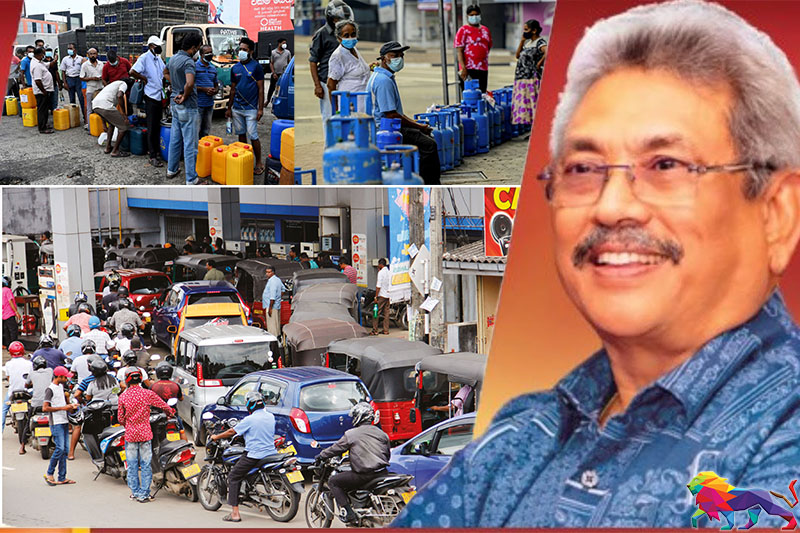
Sri Lanka needs US$1,285mn for three months of oil, US$500mn from India: Minister

Sri Lanka needs 1,285 million US dollar for oil imports in the next three months, of which 500 million will come from an Indian credit line, Energy Minister Udaya Gammanpila said, as the country grappled with forex shortages and global prices went up.

“For the next three months we have forecasted 1,285.5 million US dollars for oil imports,” Energy Minister Udaya Gammanpila said.

“We hope to get 500 million dollars from the credit line from India. We are talking to others we will tell parliament when we finalize them.”

The 500 million dollar credit line to be activated in April is a one year facility at 2.5 percent.

India this month gave consignment of diesel on an appeal by Sri Lanka ahead of the credit line being used officially.

He said oil prices were around 40 to 45 US dollars a barrel in 2020, about 55 to 65 in 2021 are around 90 to 100 million dollars in 2022 so far with Russian invasion of Ukraine pushing prices up, he said.

Brent crude had moved up to 101.40 dollars as he spoke.

As of February 24, Sri Lanka had following stocks of fuel:

Petrol 92 – for 10 days

Petrol 95 -for 40 days

Lanka Auto Diesel 08 days

Super Diesel – 8 days

From a ship that is now being unloaded 5000 metric tonnes of diesel would be given to the Ceylon Electricity Board and 4,200 MT to the Sojitz power plant, which would be enough to run it for six days, he said.

“Some stocks are also coming in the future,” he said.

Each week two to three ship come based on the projected fuel needs of the country, based on which tenders have been floated. However unloading of tankers have been delayed due to forex shortages.

Sri Lanka usually has stocks for 15 to 21 days before the forex crisis, Energy Ministry Secretary K D Olga has said.

Sri Lanka has been struggling to find foreign exchange to pay for oil with liquidity injections being made to keep interest rates down after giving reserves for imports.

When foreign reserves of a pegged central bank (which are savings) are given for imports, an equivalent fall in rupee reserves must take place in commercial banks to keep the economy in balance.

However in a pegged central bank with a policy rates, money is printed an re-inserted to banking system (sterilized reserve sale) preventing a correction in credit, the balance of payments and driving imports and economic activity to an unsustainable level.

Sri Lanka is now trying to get credit lines for fuel, instead of market pricing and offsetting domestic consumption and non-oil imports.

Credit lines (domestic consumption financed by foreign borrowings) will further widen the external current account deficit and national debt.

The Mercantilists who print money or finances budget deficits with foreign borrowings and state enterprises with credit lines then jump up and say there is a current account deficit or a ‘twin deficit’ in a country where private citizens are net savers.

Ukrainian tourists visiting Sri Lanka request extended stay

Ukrainian tourists visiting Sri Lanka have been severely inconvenienced by the current Russian-Ukrainian crisis.

As a result of this issue, they are currently resorted to staying at hotels in Bettota area and are unable to travel to their home country.

They are requesting that they be allowed to remain in Sri Lanka until the war situation in Ukraine is resolved.

The war in Ukraine has resulted in 198 people being killed with 3 of them being children and 1,115 wounded, with 33 of them being children.

Posted in Uncategorized

Basil’s visit to India postponed

Finance Minister Basil Rajapaksa’s visit to India has been postponed, Daily Mirror learns.

The Minister was supposed to land in New Delhi today for meetings with his Indian counterpart Nirmala Sitharaman and External Affairs Minister Dr. S. Jaishankar to finalise on financial cooperation for Sri Lanka, to secure supplies of essential foods and fuel in the midst of the foreign exchange crisis.

According to informed sources, the visit will be rescheduled for a future date shortly.

India has already offered US $ 500 million credit line for fuel and US $ 1 billion facility for the import of food items and pharmaceuticals.

Posted in Uncategorized

Foreign Secy Slams Bachelet’s Decision By Sulochana Ramiah Mhhan

Foreign Secretary Admiral Jayanath Colombage slammed UN High Commissioner for Human Rights Michelle Bachelet’s new report, which claims the UN has decided to set up an evidence-gathering mechanism for Sri Lanka.

Bachelet stated in her report that her office has decided to open an office in Sri Lanka for evidence collection, and that her office has begun implementing the aspects of Resolution 46/1, with a start-up team carrying out preparatory work since April 2021.

“We are not going to allow that to be operating in Sri Lanka,” he said adding that this mechanism run by outsiders will not be allowed in Sri Lanka.

“It’s against the UN mandate, and the United Nations Human Rights Commission has no entitlement to run an evidence gathering mechanism in other countries,” he stressed.

Colombage asserted that since a domestic mechanism is taking shape and the process is on-going, Sri Lanka cannot allow another parallel mechanism introduced from outside and that would never occur.

He pointed out that this matter has been explained clearly to the Rights Chief. “We will do everything locally and no international mechanism of that nature will be allowed,” he reiterated.

He recalled how the 2015, the Government of the time had co-sponsored a hybrid mechanism to probe war crimes allegations, agreed and tried to allow foreign judges to set up a special Court in Sri Lanka. But such mechanism was also rejected then and that will never be allowed too, he reiterated.

He also said this Government is ready to face the UNHRC session and challenge what comes may. The UNHRC raised various allegations related to human rights on Sri Lanka, adding that however, about 95 per cent of matters are related to domestic politics and affairs. “We have a Parliament, a Cabinet, a President elected by the people and we are a democratically elected Government. There is no dictatorship or a military run government in Sri Lanka, so the country has the right to take decisions on the behest of the elected government and the people of the country. But when the very domestic policies are being questioned by the UNHRC, a conflict erupts. We have clearly stated to the UNHRC Commissioner, that a country’s internal or domestic affairs cannot be challenged by the UNHRC and it has no relevance to her Office.

Posted in Uncategorized

Call for abolishing PTA: Sabry acknowledges HRCSL’s right to take stand, reiterates Cabinet will take final decision

Justice Minister Ali Sabry, PC, says a decision on the Prevention of Terrorism Act (PTA) will be taken by the Cabinet of ministers and Parliament.

Minister Sabry said so when The Island sought his response to the declaration by the HRCSL (Human Rights Commission of Sri Lanka) that the PTA should be abolished. He said, “Any individual or an organisation is free to express opinions. Ultimately, the Cabinet of ministers and the parliament shall decide taking all concerns into account.”

The five member-HRCSL, in a statement issued on 15 Feb, following consultations with the Colombo-based diplomatic community, declared: “Notwithstanding the amendments already suggested by the government, the HRCSL advocates the complete abolition of the PTA. The Commission believes that the offence of terrorism should be included in the Penal Code with a new definition for terrorism. It is explicitly for those who threaten or use violence unlawfully to target the civilian population by spreading fear thereof to further a political-ideological or religious cause. The Commission advocates that terrorism should be investigated under the General Law of the country with necessary amendments. The Commission also supports that it is not required to exclude the application of the Evidence Ordinance for the offence of terrorism. The indefinite period of detention violates the Constitution. “Deprivation of liberty of a person pending investigation or trial shall not constitute punishment” (Article 13 (4). Amendments to the Penal Code, the Code of Criminal Procedure Code. Judicature Act and the Bail Act require modifications for this purpose.”

Foreign Minister and former internationally recognised law professor G.L. Peiris said that the PTA was being amended with the objective of bringing it in line with international norms and best practices. According to the academic the PTA was being amended after lengthy deliberations over several months and the proposed amendments were an initial step towards the promulgation of a more comprehensive anti-terror legislation.

The FM explained that substantive amendments to the PTA included amendments to the sections on detention orders, restriction orders, expressly recognizing judicial review of orders, expeditious disposal of cases of those charged to avoid long term detention, repealing sections impinging on freedom of expression and introduction of provisions on access by magistrates and judicial medical officers, prevention of maltreatment and torture during the detention period, right to communicate with the family, grant of bail to long term detainees and day to day hearing of cases.

Posted in Uncategorized

Sri Lanka in talks with Middle East banks for 2 billion US dollars: Minister

Sri Lanka is in talks with banks in the Middle East for financial facilities amounting to two billion US dollars, State Minister for Samurdhi and Micro-Finance Shehan Semasinghe said.

“Discussions have been initiated with banks in the Middle East for 2.0 billion dollars in financial facilities,” Minister Samarasinghe told parliament.

“Successful results are starting to emerge.”

Sri Lanka is seeing pressure on the rupee peg of 200 to the US dollar, depletion of foreign reserves and parallel exchange amid liquidity injection made to maintain low interest rates.

Sri Lanka has 6.9 billion US dollars of foreign exchange denominated debt to be paid, including to domestic holders.

Sri Lanka repaid a 500 million US dollar sovereign bond in January and a billion dollar bond remains to be paid in July.

Gross foreign reserves were down to 2.3 billion US dollars in January. From October, foreign reserves started to be used for imports, which requires more money printing to keep rates down. Fuel shortages have started to emerge.

India, Lanka close to sealing 3 defence-related pacts to boost maritime security

India and Sri Lanka had close to firming up three defence-related pacts and arrangements to boost maritime security ahead of Sri Lanka finance minister Basil Rajapaksa’s visit this week.

Ahead of a visit by Sri Lanka finance minister Basil Rajapaksa to India this week, the two countries are close to finalising three defence-related agreements and arrangements that are expected to boost cooperation for maritime security.

Rajapaksa, the younger brother of President Gotabaya Rajapaksa and Prime Minister Mahinda Rajapaksa, has been coordinating with the Indian side to firm up an economic assistance package to help Sri Lanka tide over a severe balance of payments crisis. He is expected to visit New Delhi during February 25-26, his second trip to the Indian capital since December.

While a $1-billion line of credit to be provided by India to Sri Lanka to purchase food, medicines and essential items will be the focus of Rajapaksa’s visit, the two sides are close to finalising three defence-related agreements and arrangements that will bolster the capabilities of Sri Lanka’s armed forces and boost cooperation for maritime security.

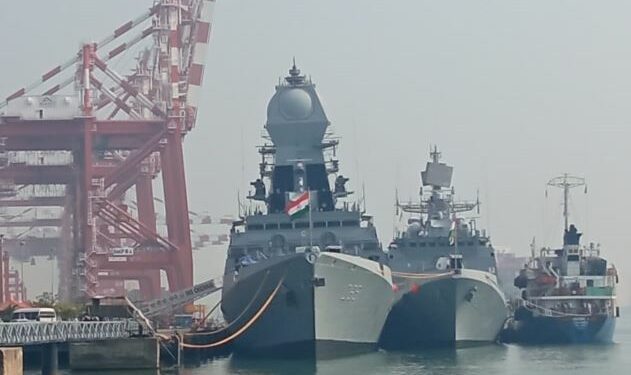
In addition to agreements for the purchase of two Dornier aircraft and the acquisition of a 4,000-tonne naval floating dock by Sri Lanka, Colombo has agreed to post a naval liaison officer at the Indian Navy’s Information Fusion Centre-Indian Ocean Region (IFC-IOR) in Gurugram, people familiar with the matter said.

Tense situation in Parliament as Harin attempts to shed light into power crisis

The Parliamentary debate was adjourned for 10 minutes on 24th February due to MP Harin Fernando’s attempt to convince the Parliament of the impact of power cuts on the public, by bringing a torch to the Parliament.

The Leader of the House, Dinesh Gunawardana informed the House that a confrontation broke out when the Police had requested to examine an object brought by an MP to the Parliament and emphasized that such actions can have consequences as MPs are not permitted to bring such objects.

SJB MP Fernando, responded to the allegations stated that a power cut could occur when he is using the washroom, and that is the reason why he brought three torches to use.

Minister Gunawardana responded stating that an investigation should be conducted as such objects are not permitted within the Parliament, and even if there is a power cut, it’s clear that this action is unlawful and goes against parliamentary practices.

This object could prove to be a security risk and must be banned, he added.

Posted in Uncategorized