Dollar drought leaves Sri Lanka groping in the dark -Nikkei

COLOMBO — As Sri Lanka’s dollar scarcity worsens, a fresh crop of unusual signs has surfaced about spreading shortages of basic goods. “Candles not available due to gas shortage” was one. It was placed at St. Anthony’s church, located in a mixed commercial and residential quarter of Colombo.

The significance of the announcement was not lost on regular worshippers. “Lighting candles is very much part of one’s worship in this church,” said a disappointed mother of two following her visit to the church this week. “I have been visiting this church for over 25 years — never have they not had candles!”

As homes seek light in the wake of rolling power outages, candles are one of a growing list of domestic items that have vanished from the shelves of supermarkets. They also include powdered milk, a favorite addition to a cup of tea, the national drink. Those lucky enough to get access to a few remaining packets share details of their find in whispers, as if discussing contraband items.

The lack of candles is not the only indication of the debt-strapped South Asian nation’s inability to cough up foreign exchange to pay for imported oil to run generators of the state’s energy utility. Government ministers in the ultra-nationalist administration of President Gotabaya Rajapaksa have kept the country on edge about dark nights ahead with public spats over the country’s energy security.

“I have instructed the Ceylon Petroleum Corporation to give 10,000 tons of oil to the Ceylon Electricity Board,” Energy Minister Udaya Gammanpila told reporters on Wednesday, referring to a state utility that uses the Indian Ocean island’s former name. “The CEB needs about 1,500 tons a day and this will be enough for eight days.”

In return, Power Minister Gamini Lokuge has been spinning another message, assuring the public that his officials are committed to uninterrupted power supplies. The country will be free of “power cuts” by the end of the month, he told the local media.

But power outages are in the cards, seasoned observers warned, in the wake of the Rajapaksa government’s decision this week to dip into the country’s dwindling foreign reserves to pay a $500 million sovereign bond, which matured on Jan. 18. That cut off the flow of limited foreign exchange to pay for a long list of imports, including oil, they said.

“We were already short of fuel but we decided to pay the debt,” said Nishan de Mel, executive director of Verite Research, a Colombo-based think tank. “In any kind of tough situation you should share the pain … you shouldn’t frontload the pain on the country — putting more pain on the country and less on the creditors.”

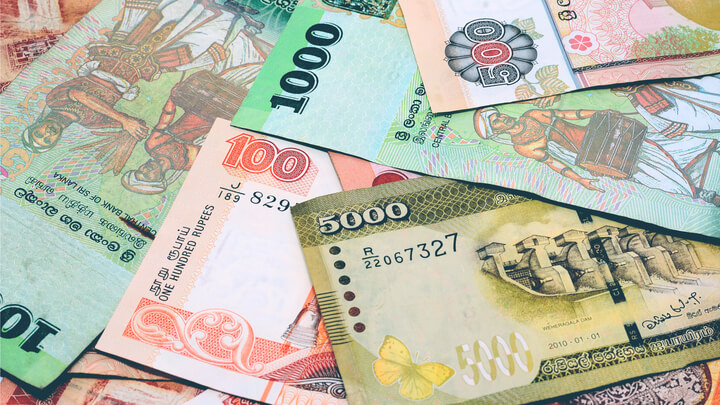
The government’s decision to favor creditors has brought Sri Lanka’s dollar dilemma into sharp relief. Finance Minister Basil Rajapaksa, the younger brother of the president, has said the country’s total external debt for 2022 is $6.9 billion, including a $1 billion sovereign bond maturing in July. The country began the year with only $1.6 billion in usable foreign reserves, with an additional $1.5 billion drawn from a swap with the People’s Bank of China, which, commercial banking sources say, cannot be used to pay debts to non-Chinese entities.

A new report by the World Bank suggests stronger headwinds in 2022, challenging the government’s exaggerated growth forecasts. Officials in Colombo have estimated that this year’s gross domestic product growth to hit 5.5% on the back of a revived tourism sector. That comes in the wake of claims that the country will reach an expected 4.5% growth in 2021.

But the World Bank places Sri Lanka as an economic laggard among its South Asian peers, forecasting growth of 2.1% in 2022, down from an expected 3.3% in 2021. This is the worst 2022 growth estimates in the region, which includes India, expected to grow by 8.3%; Bangladesh, to grow by 6.4%; and Nepal, to grow by 3.9%. South Asia’s regional projected growth will accelerate to 7.6% in 2022, the World Bank says in its “Global Economic Prospects” report, released last week.

The early signs that Sri Lanka was running out of dollars first surfaced in mid-2020, when the country was shut out from accessing international capital markets to raise dollars through sovereign bonds to refinance its bulging foreign debt, an estimated $35 billion in the $81 billion economy. It followed a massive tax cut by the newly elected Rajapaksa government in late 2019 to boost the economy, which in turn worsened the budget deficit. That spooked international ratings agencies, according to analysts.

“Ever since the ratings agencies’ downgrade in mid-2020 to CCC the alarm bells should have gone off, because we lost access to the markets so we could not refinance and roll-over the debt,” said Murtaza Jafferjee, managing director of JB Securities, a financial consultancy in Colombo. “The scarcity of dollars will only get worse from now on.”

Several key numbers illustrate that the inflow of foreign exchange is far from stellar. Foreign direct investment, which the Rajapaksa government flagged as an alternative to foreign borrowing, has only trickled in, with the first half of 2021 attracting a mere $398 million, according to the Central Bank of Sri Lanka. The country’s Board of Investment had set its sights on securing $1 billion by the end of 2021, an ambitious target by the state’s premier foreign invest agency after a sub-par record of attracting only $550 million in 2020, down from $793 million the previous year.

A host of factors have added to the dollar woes. The country’s persistent trade deficit has been averaging $10 billion annually in recent years; tourism has slumped due to COVID-19; and a government plan to raise $1.5 billion by offering high-value properties in Colombo to foreign investors has struggled to attract interest. “We have never felt such a dollar crunch like this,” remarked a veteran commercial banker. “Importers have been running around the last three months to check which commercial banks have dollars.”

The Port of Colombo affirms that sentiment. Containers loaded with goods are piling up as importers are unable to secure dollars to clear them, according to shipping industry sources. Oil shipments at the country’s busiest harbor are also tied up, waiting for the dollar tap to open.

Posted in Uncategorized

Church to seek Easter justice with UN, international community

While claiming that all attempts made by the Catholic Church to get justice for the Easter Sunday terror attacks of 21 April 2019 within the country have failed, Colombo Archbishop His Eminence Malcolm Cardinal Ranjith said that they are currently exploring the possibilities to reach out to the international community, including the United Nations (UN), to seek justice for the said terror attacks.

Speaking during a virtual forum on 23 January, he said: “We have tried our best to get justice from our people within our own context, but all these attempts have failed. Therefore, it does not leave us much room but to explore the possibilities of going international. That means that we will also be going to the UN.”

Noting that they, as the Catholic Church, have links all over the world, the Archbishop said that they would also try to influence some pertinent and powerful countries that are in contact with the church. In addition, he said that in case they would be reaching out to the international community, such efforts would also be supported by his fellow Cardinals around the world.

“Not only going to the UN, but we will try to influence some of the more pertinent and powerful countries that have a relationship with us, because, as the Catholic Church, we are an international organisation and we have our links all over the world. Also, at my level as a Cardinal, I have my fellow brothers who are Cardinals in different and important cities and countries with whom we will be able to do that.” Archbishop Ranjith said.

Archbishop Ranjith further said that while he did not seek to go for such action so far as he had hoped that this issue will somehow find a local solution, it has now become apparent to them that nothing is happening.

“In fact, the legal system operated by the Attorney General (AG) does not seem to consider the recommendations of the Presidential Commission of Inquiry (PCoI) into the Easter Sunday terror attacks. Therefore, we are left with no other option but to go to the international community.”

On 21 April 2019, Easter Sunday, three churches (St. Sebastian’s Church in Katuwapitiya, St. Anthony’s Church in Kochchikade, and Zion Church in Batticaloa) and three luxury hotels in Colombo (Cinnamon Grand Colombo, The Kingsbury Colombo, and Shangri-La Colombo) were targeted in a series of co-ordinated suicide bombings. Later that day, another two bomb explosions took place at a house in Dematagoda and the Tropical Inn Lodge in Dehiwala. A total of 269 people excluding the bombers were killed in the bombings, including about 45 foreign nationals, while at least 500 were injured.

Later, a PCoI was appointed to investigate the said terror attacks and the PCoI, in its final report, has made several recommendations including the filing of criminal charges against former President and incumbent Government Parliamentarian Maithripala Sirisena, former Defence Ministry Secretary Hemasiri Fernando, former Inspector General of Police Pujith Jayasundara, former State Intelligence Service Director Nilantha Jayawardena, former Chief of National Intelligence Sisira Mendis, and several others. However, most of the recommendations made by the said PCoI have not yet been implemented. As a result, several parties including the Catholic Church have been insisting on the need to implement the PCoI’s recommendations.

Posted in Uncategorized

How Sri Lanka became the island of a thousand errors

The government of Sri Lanka is showing an alarming lack of knowledge over how the international economy works. Which seems fair enough since they’ve recently shown an alarming lack of knowledge of how a domestic economy works too.

For example, they decided that the entire country’s farming sector should go organic. Well, okay, that can be done — but then they were astonished at the idea that there was less food being produced.

They didn’t realise that fertiliser and land are substitutes for each other. For any given amount of food produced, you can use more land and less fertiliser or vice versa. If you use less fertiliser and no more land, then there will be less food.

They’re also complaining about a shortage of foreign exchange — this is not something that can happen. There can be a shortage of foreign exchange at a price, of course, the solution to which is to change the price.

Just to make this obvious, there is no shortage of $10,000 an ounce gold; there’s a vast surplus of it. There’s a desperate shortage of $10 an ounce gold. Which is why the gold price is about $2,000 an ounce.

The same is true of foreign exchange. All that needs to happen to have as much foreign exchange as is desired is to change the number of Sri Lankan rupees they’re willing to pay for it.

Or as we, who have read our economic textbooks, can point out, you can fix the price of something but not the quantity, or the quantity but not the price. If you try to fix both, then you’ll get none at any price.

You can only have a foreign exchange shortage if you’re trying to fix the price of that foreign exchange.

A government that doesn’t know this … well, perhaps we shouldn’t be all that surprised that they’re also having problems with debt. They borrowed more than they can pay back and it’s not hugely difficult to understand why people aren’t willing to lend them even more.

So, we know all of that and the Sri Lankan government seems not to. Which does mean that we are more qualified to run Sri Lanka than that government is, but unfortunately that’s not how international affairs work out. Fun as the concept of Bangladesh acquiring a colony is, they don’t let us do that sort of thing any more.

However, there is something a little more subtle here too. Sri Lanka is complaining about how the bond and debt ratings companies are making things more difficult.

S&P, one of the three major credit rating companies, dropped their estimation to what is effectively junk. It’s a great big red warning sign saying: “Don’t Lend Here.” Or at least that’s the way that the Sri Lankan government is taking it and that’s not really true.

It is true that certain investment funds cannot invest in bonds that are labelled junk. But there are plenty more that can. All this official announcement does is change that technical matter at the margin. There’s still plenty of money out there if the price was right.

For the truth is that the ratings agencies don’t, in fact, determine who will lend at what price. Their ratings are, in fact, a follow-up to who is lending at what price. Those credit raters are followers of the market, not leaders of it.

So, to use this example, people are not going to stop lending to Sri Lanka because S&P has changed the rating. It’s much more true to say that S&P has changed the rating because people will not lend to it.

It’s exactly the worry that people won’t lend more, to pay off the old borrowings, which makes Sri Lanka risky to lend to. S&P is just registering this fact rather than causing it.

The effect of this is important, for it means that it’s not the credit rating agencies that are causing Sri Lanka’s problems. They are noting the problems, yes, perhaps even broadcasting them, but they’re not creating them. The Sri Lankan government is doing that all by itself with its own economic policies.

And let’s be honest about this, complaining about someone else noting your mistakes isn’t very grown up, is it? But that is what the Sri Lankan government is doing.

Perhaps 13A Plus, But Certainly Minus Police Powers

On the sideline of the national debate on the proposed new constitution, Tamil political parties have written to Indian Prime Minister Narendra Modi, seeking an external intervention for a federal solution to the alleged grievances of Tamil people in the North and East as the final settlement and until then the demand for full implementation of the 13th Amendment to the Constitution enacted after signing of the Indo-Sri Lanka Agreement of 1987.

While top South Asian experts are of the view that India has no compulsion for 1987-like intervention in Sri Lanka now and the likely advice from New Delhi to Sri Lankan Tamil politicians would be to;‘Be more practical in your demands without clinging to redundant positions’.

President J R Jayewardene, under pressure accepted the Indian proposal and established Provincial Councils in 1987. However, the fact remains that the experience of Provincial Councils in the past 30 years demonstrated that the full constitutional extent of devolution that is possible by an innovative and flexible approach to the implementation of the 13th Amendment has not been realised. This is mainly due to unrealistic expectations of the 13th Amendment. The Provincial Councils were set up in a rush and the impractical demands such as Police and land powers could not be implemented over the years.

Recipe for disaster

In Sri Lanka, like many other resurgent Nations of the South, there are blatant attempts at political interference in policing. If the Police powers are to be devolved to provinces, there would be nine Police forces in addition to the Central Police, and experts believe, that would be a recipe for disaster.

India has 29 Police services in addition to the Central Government Police, the Reserve Police and few other central law enforcement bodies. As most of the Indian states are bigger than Sri Lanka, it is not possible for a single Central Police Force to maintain law and order, thus there is every justification for the establishment of State Police services. Therefore, each of the 29 States have their own Police forces. The Centre is also allowed to maintain its own Police forces to assist the states with ensuring law and order. It maintains seven central Police forces and some other Police organisations for specialised tasks such as intelligence gathering, investigation, research and record-keeping, and training.

The primary role of Police forces is to uphold and enforce laws, investigate crimes and ensure security for people in the country. In a large and populous country like India, Police forces need to be well-equipped, in terms of personnel, weaponry, forensic, communication and transport support, to perform their role well.

However, the clear cut demarcation of state and central Police functions, could not prevent serious disputes between the State Police and the Indian Central Police. The most recent issue was the breach in security of Prime Minister Narendra Modi during his visit to Punjab on 5 January.With farmer protesters blocking the road, the PM’s cavalcade was stranded on a flyover in Hussainiwala in Punjab. Calling it “a major lapse in the security of the PM”, the Ministry of Home Affairs had sought a report from the Punjab Government and asked it “to fix responsibility for this lapse and take strict action”.

Centre to take action

Indian Media reported that the Centre is considering action under the Special Protection Group Act against Punjab Police officers following the security breach. Even as the Punjab Government has constituted a high-level committee to probe the incident, sources said the Centre is preparing to take action against erring officials under provisions of the SPG Act. This, they said, could entail summoning the Punjab Police officers responsible to Delhi or instituting a central-level inquiry against them. “What happened on Wednesday in Punjab is a violation of the SPG Act as the State Government failed to follow all protocols set by the SPG for the PM’s movement. Things are being worked out. Action will be taken,” a Government official told Media.

Section 14 of the SPG Act makes the State Government responsible for providing all assistance to the SPG during the PM’s movement.

The provision, titled ‘Assistance to Group’, states: “It shall be the duty of every Ministry and Department of the Central Government or the State Government or the Union Territory Administration, every Indian Mission, every local or other authority or every civil or military authority to act in aid of the Director or any member of the Group whenever called upon to do so in furtherance of the duties and responsibilities assigned to such Director or member.”

If there are nine provincial Police forces in Sri Lanka, one could imagine the chaos in such a situation involving a VVIP travelling from one province to another.

There was another recent instance of a clash between Indian Central Police and State Police of West Bengal. Last year, when a convoy of BJP president

J P Nadda was attacked allegedly by Trinamool workers during a political rally in West Bengal, the Centre had called three IPS officers, who were in charge of Nadda’s security, on central deputation to Delhi. The MHA had then directed West Bengal Police officers to report to Delhi for a deputation with the Government of India. The three officers, however, were not released by the State Government and did not join central deputation as demanded by the MHA.

Devolving Police powers

The MHA had then also sought a report from the Chief Secretary and the DGP of the state and even summoned them to Delhi for a meeting. The state, however, did not send a report and the two officers excused themselves from the meeting on the ground that the State Government was already probing the matter. The developments had precipitated a war of words between the Trinamool and the BJP, with the former calling MHA “vindictive”.

If the Police powers were devolved to provinces in Sri Lanka, there could be major rifts between the central Police and provincial Police, especially during National Elections when opposition parties are in power in a province. In such an event it could lead to even communal clashes if the minority parties holding power in a province attempt to defend the errant provincial Police officers or vice versa.

In India, the opposition parties in the States demand probes by central agencies even on trivial issues and the party in power in the State interprets such demands as one that infringes upon the constitutional rights of the states. When both sides move court, it becomes difficult for the courts of law to decide and it could lead to a serious impasse.

There is a justification for the demand for Tamil speaking Policemen and women for Police stations in the north and east. However, establishing an armed separate Police forces for the provinces could create a security nightmare instead of solving the issue of maintenance of law and order. It is for the constitution drafting bodies to ensure a safe mechanism without rushing through a draft similar to 13th Amendment, which created more problems than finding answers.

Shall immediately halt militarisation if I become president – PCR

The leader of 43rd Brigade, Patali Champika Ranawaka, MP, says he will immediately halt militarisation in Sri Lanka if he becomes the head of state.

However, he says he has no regrets about supporting the Mahinda Rajapaksa presidency in 2005. In his opinion, it was the need of the hour to defeat terrorism.

The Samagi Jana Balawegaya parliamentarian made these remarks while speaking with Saroj Pathirana for ‘Sandeshaya by Saroj’ YouTube channel.

Ranawaka, who held cabinet portfolios during Mahinda Rajapaksa and Maithripala Sirisena tenures, says the island nation doesn’t need a 300,000 strong army personnel as the country is no longer at war.

Urging all concerned to “forget” wounds of the decades long civil war, he says it is practically impossible in Sri Lanka to punish anybody for war crimes.

However, the ’43rd Brigade’ would support the abolition of the executive presidency, says Patali Champika Ranawaka, only if the previous election system re-introduced.

Posted in Uncategorized

Outlook for Sri Lanka in the “Unlocking Year” 2022 By Valsan Vethody

2022 would be the “Unlocking Year”. If so, there will be no more fear and anxiety; the masks would disappear; cosmetics and business suits would once again be out on display; work-from-home-battalions would go back to the usual hustle and bustle and to the intimidating presence of their bosses in offices; webinars and zoom meetings sans live presence would cease; more and more pompous grumblings about jet-lag would resonate in clubs and board-rooms; MBA brains would get overstressed; ‘ambitious-graphs’ for operational targets of corporates would peak; bank accounts in tax havens will swell; computers at the income tax and enforcement departments will overwork; and the Central bank officials will break their heads to deal with the complexities of an overheated economy showing high consumer demand, supply chain disruptions, excessive money supply, asset bubbles, inflationary pressure, low interest rate, reduced purchasing power that affects savings and investment, foreign exchange volatility, widening income inequality, malnutrition and a surge in the BPL numbers.

This sort of an economic concoction, in which all sorts of positive as well as negative socio-political-economic elements would certainly be a challenge for policymakers to get the macroeconomic fundamentals aligned with democratic realities of the polity, especially, in the context of high expectations from citizens and businesses, who hope their leaders can pilot them out of the Covid-19 induced socio-politico-economic muddle.

These challenges and expectations would be an enticing topic of debate for the so-called ‘aandolan-jeevis’, trade union leaders and political and economic pundits, in the media and on the political platforms that might even impact the future electoral outcomes. This also would have its own international ramifications as the world continues to remain economically multipolar, with its own complexities of competitive economic whims and fancies. These ramifications would be even more intense in the middle-income economies with high economic aspirations, especially if the macro-economic fundamentals of their domestic economies are not strong enough and if they are dependent on external resources to fulfil the economic aspirations of their citizens. Moreover, it becomes progressively worse along with the periodical auctioning of the non-existent resources by politicians in the name of an egalitarian democracy.

These economies are typically those that become easily vulnerable to the geo-strategic susceptibilities that are increasingly becoming polarised into a bipolarity between the USA and China. This bipolarity is the outcome of a decade-long lingering dispute between these two nations over the traditional global economic governance structure, which has been by and large under the dictation of the Western-led, neo-liberal multilateral institutions based on Western values such as strict governance conditionalities, fundamental rights and religious freedoms. This, according to many Third World nations, is designed to interfere in the internal affairs of a nation and therefore imperialistic. China challenged this with its monetary fund – the Global Stability Mechanism – modelled after their governance model based on tech-authoritarianism combined with state-led capitalism and most importantly without any governance conditionalities. China’s political stability, unilateral quick-decision-making mechanism and stronger economic power not only further complemented this model but also harmonised the consolidation of their dominance over the global financial system with their long-term foreign policy interest, while the US has been stumbling with its arbitrary and heedless military-power based foreign policy.

However, the positive development of this geostrategic dimension is the launch of the ‘Global Gateway’ strategy by the EU with an ambitious 300 billion Euros of investments between 2021 and 2027 in various socio-economic sectors across the world with the intention of countering the Chinese global investments and attaining ‘strategic autonomy’ for EU.

When it comes to South Asia, the region which is a vital intersection of maritime trade, connecting the Indian Ocean to the Pacific in the East and the Mediterranean in the West, the geo-strategic bi-polarity becomes a chaotic-tri-polarity. The third polar being dominated by India, the regional superpower, which wields regional superiority over the other two powers due to its geographic and economic dimension, technological capacity, geo-strategic location, cultural identity and most importantly its military power.

Nevertheless, China’s ‘pervasive economic investments’ in the key strategic sectors in South Asia, such as infrastructure, high-tech, information technology, data management, green economy and artificial intelligence, and their assertive border disputes have created a sense of ‘neo-security-threat-perception’ in India, which has not only led to Indo-China face-to-face military stand-off and arms race both in conventional and cyberspace, but also to both India’s as well as China’s discrete meddling in the internal decision-making processes of some of the South Asian nations. In this context, it should be noted that the cornerstone of India’s foreign policy in the South Asian region has always been this so-called ‘security-threat-perception’.

Sri Lanka, with its unique geo-strategic position in the centre of the Indian Ocean, is the worst affected in this regard, as the global geostrategic stakeholders today view Sri Lanka primarily through the prism of Indo-Sino-American geo-strategic competition. Therefore, going forward, Sri Lanka will need to navigate cold-blooded power competition between Beijing, Washington, and New Delhi as much as it did during the Cold War as well as during the thirty years of civil turbulence.

Sri Lanka has the experience as well as plenty of institutional memory with the dynamics of great power competition. Moreover, Sri Lanka has a proud history of safeguarding its sovereignty and integrity even during the most difficult period of its political history.

Therefore, Sri Lanka’s most difficult task lies not at the geo-strategic level, but at the national level, where it must adapt to highly professional governance skills to manage a mix of economic, health, foreign exchange, environmental, and internal socio-political stability challenges. Most importantly, to get the macro-economic fundamentals at the internationally accepted levels.

However, the Sri Lankan diplomatic dispensation has to be mindful that any sort of outreach to China to address Covid-19 economic distress would perpetuate the inaccurate perception that Sri Lanka is prone to advancing Beijing’s geostrategic ambitions.

These post-pandemic challenges are nothing unique to Sri Lanka alone, but also applicable to most other (Covid-19) pandemic hit countries.

(Valsan Vethody is the Consul General of Sri Lanka in Mumbai, India)

Posted in Uncategorized

Sri Lankan minister fumes after Tamil MPs write to India

A Sri Lankan government minister criticised a letter that Tamil parliamentarians addressed to Indian Prime Minister Narendra Modi this week, denouncing their call to New Delhi for assistance.

“They should have conveyed their concerns to our President instead of the Indian Prime Minister because we are a sovereign country and not a part of the Indian Union,” said Sri Lanka’s energy minister Udaya Gammanpila.

Gammanpila, himself a staunch Sinhala nationalist and leader of the extremist Pivithuru Hela Urumaya party, went on to add that “if our Tamil brothers have any issues with regard to implementation of the 13th Amendment they should have talked to our elected government, instead of outsiders”.

The nationalist leader has repeatedly rejected the 13th Amendment, which calls for limited devolution of powers to the Tamil North-East, and call for it to be abolished.

The letter was handed over by politicians from the Tamil National Alliance to the Indian High Commission earlier this week.

It calls on India to ensure that Sri Lanka abides by its commitments under the 13th Amendment and devolve power to the Tamil provinces as a starting point “towards a federal structure”.

Posted in Uncategorized

Trust placed in President Rajapaksa hasn’t diminished – Maha Sangha

The results of patient and well-planned decisions are now becoming a reality, the Maha Sangha has said, pointing out that it is the responsibility of all parties to unite to achieve the aspirations of people by placing trust in President Gotabaya Rajapaksa as a visionary and pragmatic leader.

These remarks were made by the Maha Sangha during the 12th meeting of the Buddhist Advisory Council held at the Presidential Secretariat, yesterday (January 21).

The Maha Sangha expressed their views at the Buddhist Advisory Council, appreciating the President’s leadership in protecting the people from the COVID-19 pandemic and rebuilding the country in the face of challenges and economic hardships.

The Maha Sangha pointed out that the trust placed in President Gotabaya Rajapaksa as the only leader who was able to save the country, the nation and the heritage that was deteriorating has not been diminished and that the people should be made aware of the steps taken by the Head of State during the last two years to protect the Kuragala Sacred Area, the Muhudu Maha Vihara and other temples in the North and East.

They also highlighted that it should be the responsibility of the Buddhist Advisory Council to provide factual information regarding the issues faced by the people of the country and to assist the President in finding solutions.

The President said he expects the guidance of the Maha Sangha to adopt laws and on national dialogues. He also stated that as the Sinhala-Buddhist heritage, which was on the verge of extinction, was preserved despite the COVID-19 obstacles, steps will be taken to develop those historic sites while continuing the task to fulfil the aspirations of the majority of the people.

The Maha Sangha, the members of the Buddhist Advisory Council, State Minister Vidura Wickremanayake, Secretary to the President Gamini Senarath, Principal Advisor to President Lalith Weeratunga, Secretaries to Ministries and Government Officials also attended the said meeting.

Tamil Nadu to provide financial assistance to owners of fishing boats in SL’s custody

Tamil Nadu Chief Minister M K Stalin announced a compensation of INR 5 lakh each to the owners of mechanised boats and INR 1.5 lakh each to the owners of country boats that are presently in the custody of Sri Lankan authorities, the Deccan Herald reports.

At least 128 mechanised boats and 17 country boats are in the custody of Sri Lankans at present. The Chief Minister’s office made the announcement on Friday evening.

Stalin also announced a package of INR 5.66 crore compensation for the 105 fishing boats and equipment that were damaged during the Northeast monsoon that lashed the state.

Fishermen association leader S. Bharathi said that the state government’s announcement is a major support to the beleaguered fishermen of the state who are being allegedly hunted down by the Sri Lankan Navy and police on trivial charges.

In 2021, five fishermen lost their lives during an attack by Sri Lankan authorities, including Naval personnel.

Sixty-eight fishermen were arrested and 15 were released from prison recently. The remaining 55 fishermen are still languishing in Sri Lankan jails.

The Union Ministry of External Affairs has already entered a diplomatic discussion with the Sri Lankan authorities on the arrest of Indian fishermen and the complaints being lodged by the fishermen of Rameswaram, Mandapam, and other areas of Tamil Nadu who were facing tough times in the sea near the Katchatheevu island as well as the International Marine Boundary Line (IMBL).

Krishnaswami Rajendran, who is the owner of a fishing boat at Rameswaram, while speaking to IANS said, “The Sri Lankan Navy is creating problems with our fishermen and it is high time that the government of India takes stringent action against the perpetrators who are attacking Indian fishermen from Tamil Nadu regularly.

“There has to be an end to this. The real situation in the sea is really tough and we are being attacked regularly for no fault of ours.”

Sri Lanka national inflation hits 14-pct in December 2021 after money printing

Sri Lanka’s nation-wide inflation measured by the National Consume Price Index accelerated to 14 percent in December 2021 up from 11.1 percent, after record money printing to maintain low interest rates amid a surging budget deficit and downward pressure on the rupee.

The National Consumer Price Index hit double digits for the first time in November since it started to be compiled from 2014 and the December figure is the record high under the measurement.

The NCPI grew 3.7 percent in December to 161.0 points.

Food prices jumped 6.3 percent in the month while non-food prices rose 1.3 percent.

The food sub-index was up 21.5 percent in the 12-months to December 2021, while non-foods also rose 7.6 percent in the months.

Food prices have been on the rise since August 2019 as the central bank began inflationary policy buying back bonds from old deficits to inject liquidity as part of ‘output gap targeting’.

Generally food prices rise in December and January every year due to seasonal demand but in 2021 the rise had been unusually high amid supply shortage due to heavy rains and a fertilizer ban which hit farmers.

From February 2020, record volumes of money was injected through central bank profits transfers, outright deficit finance and Covid-refinance.

Later ceiling prices were placed on bonds auctions, and hundreds of billions of rupees of securities were bought into the central bank balance sheets to general liquidity and balance as the auctions failed.

Sri Lanka authorities have a repertoire of excuses to print money and keep rates down and delay rate hikes until currency crises have been triggered. The central bank raised the key policy rates on Thursday (20) by 50 basis points for the second time in five months. However, analysts say the tightening should have been done much earlier to curb inflation.

Sri Lanka inflation is going up as the Federal Reserve also follows loose policy and fuel and export prices of goods also go up.

However the money printing central bank was set up in 1950 under US advice supposedly to follow ‘independent monetary policy’ and break up the Sterling Area currency boards, according to critics.

Sri Lanka keeps inflation indices down by suppressing market pricing of energy, uses that also as an excuse not to allow rates to go up and then later claims, ‘administered prices’ pushed up inflation.

There have been calls to change the monetary law to block the ability of the Monetary Board create inflation and currency depreciation with discretionary independence.