Four key foreign representatives to visit Sri Lanka this month

Four key foreign representatives are to visit Sri Lanka this month, the Foreign Ministry said.

The Foreign Minister of Hungary Péter Szijjártó, the Foreign Minister of Turkey Mevlut Cavusoglu, the Minister of State at the UK Foreign, Commonwealth and Development Office (FCDO) Lord (Tariq) Ahmad and the Speaker of the National Assembly of Korea, Park Byeong-seug are scheduled to arrive in Sri Lanka this month.

The Foreign Minister of Hungary, Péter Szijjártó is expected in Sri Lanka tomorrow (12th January) while Lord (Tariq) Ahmad is scheduled to arrive in Sri Lanka on 18th January.

The Speaker of the National Assembly of Korea, Park Byeong-seug, is expected to arrive in Sri Lanka on 19th January.

The Sri Lanka Foreign Ministry said that the Foreign Minister of Turkey, Mevlut Cavusoglu, is expected to arrive in Sri Lanka at the end of the month.

Chinese State Councillor and Foreign Minister Wang Yi had just concluded a visit to Sri Lanka.

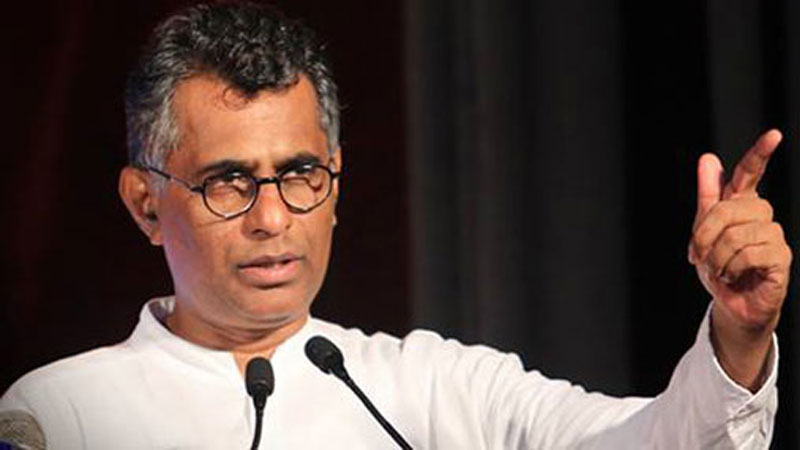
Foreign Minister, Professor G.L. Peiris said that the visits showed that Sri Lanka continues to maintain strong bilateral relations with the international community.

People’s Bank removed from China Embassy blacklist

Sri Lanka’s People’s Bank has been removed from the blacklist of the Economic and Commercial Office of the Chinese Embassy in Sri Lanka, it was confirmed on Tuesday.

On the 9th of January 2022; The People’s Bank of Sri Lanka has informed the Chinese Embassy in Sri Lanka of its request to be taken off the blacklist by the Embassy’s Economic and Commercial Office over the Chinese Fertilizer shipment that was rejected by Sri Lanka, after pathogens were detected in samples twice.

This is after People’s Bank honoured the Letter of Credit obligation of USD 6.9 Mn to China’s Qingdao Seawin Biotech Group.

The People’s Bank of Sri Lanka announced that a sum of USD 6.9 Million was paid to Qingdao Seawin Biotech Group Co., Ltd, on Friday as per the Letter of Credit opened for the purchase of organic fertilizer.

This announcement came days after the Colombo Commercial High Court dissolved an order preventing the payment to a Chinese company for imported fertilizer.

The order was dissolved on the basis that the Chinese company and the Sri Lankan Government had reached a settlement on the issue.

The People’s Bank of Sri Lanka was then blacklisted by the Economic and Commercial Office of the Chinese Embassy in Sri Lanka for failing to make the payment according to the Letter of Credit and the contracts between the two parties.

Latest News
Lata Mangeshkar admitted to ICU after testing positive for Covid-19
Nugegoda consumers sun-baked in the process of buying milk powder
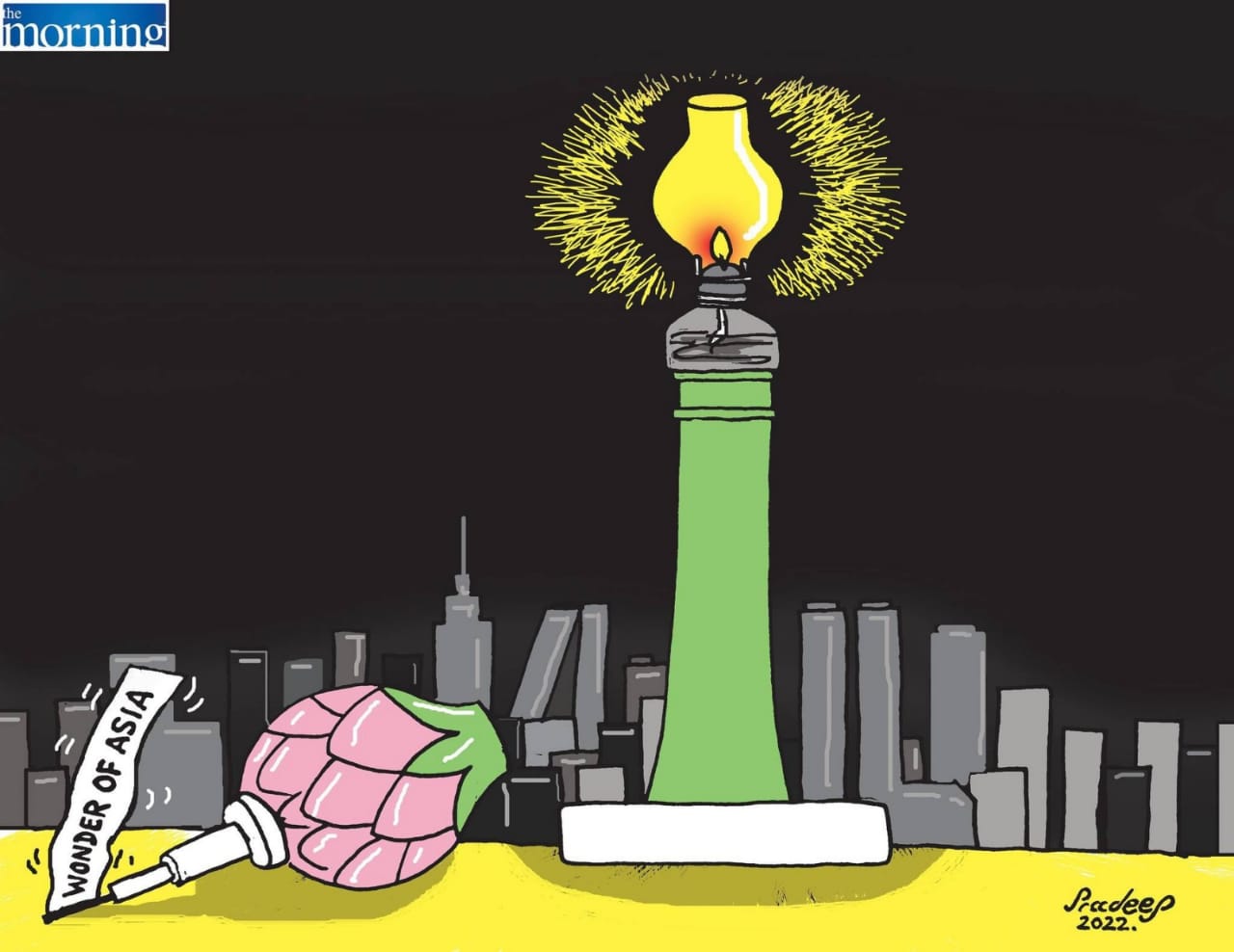
GAS Shortage : Kerosene carts make a glorious comeback to Colombo
Parliament to debate President’s Policy Debate on 19th & 20th Jan
H’tota HC issues order preventing Kataragama PC Chairman from holding office

Formation of common political platform underway

*Talks have been ongoing for some months and some members and parties have already expressed keenness

* It is yet to be decided who will head this platform as a common candidate

The opposition steered by the Samagi Jana Balawegaya (SJB) is presently in talks with several political parties including those in the government to form a common political platform this year to contest the future polls, the Daily Mirror learns.

According to political sources, talks have been ongoing for some months and some members and parties who are part of the government have already expressed keenness in joining this platform to break away from the Rajapaksa regime. The government, it is learnt, is already split into groups, with some remaining in positions but working against government policies.

In recent months, this split has been evident with the critical remarks issued by some government members voicing their opposition to ruling decisions and policies in the media. Already the Yugadanavi Power Deal which received cabinet nod is now before court after a case was filed by three cabinet ministers. The Daily Mirror learns that a campaign is also underway within the government to discredit the leaders in order to lose the popularity which they came in with, in the 2019 and 2020 presidential and general elections.

President Gotabaya Rajapaksa in a recent cabinet meeting has already questioned his cabinet if it is ethical of ministers, deputy ministers and officials to speak publicly against the government while being part of it. In recent days President Rajapaksa has already sacked one of his state ministers for his critical remarks against the government policies. The Daily Mirror learns that the formation of the common platform is being formulated by the SJB and they have already held successful talks with several parties. However, who will head this platform as a common candidate is yet to be decided and revealed.

Political sources said that this common political platform will be finalised this year so it can be ready to contest future polls. In the meantime, the President and Prime Minister have already announced that this year several new investments and FDIs will enter Sri Lanka, thereby easing the economic crises and which will put Sri Lanka back on track. It is learnt that all ministries and departments have been told to bring in results this year in order to fully implement the government policies which were stalled by the COVID-19 pandemic and bring in tangible results to ease the burden off the public.

Posted in Uncategorized

Relief package supports SL economic recovery but compounds govt’s fiscal challenge: Moody’s

The fiscal relief package recently introduced in Sri Lanka reduces the scope for fiscal and debt consolidation at a time when fiscal flexibility is already severely limited by the large share of interest payments in government revenue, Moody’s said in a recent analysis.

According to Moody’s, this funding package with reallocations from the budget in part reflects the limited fiscal space, which constrains the government’s ability to use fiscal policy to mitigate the impact of economic shocks.

Full Statement

On 3 January, Sri Lanka’s (Caa2 stable) government announced a fiscal relief package worth LKR229 billion ($1 billion, 1.6% of our 2022 GDP forecast) to support the economy and alleviate the impact of higher consumer prices on low-income households. While the size of the package is moderate and will be fully funded via reallocations from the budget (6% of budget expenditure in 2022), it reduces the scope for fiscal and debt consolidation at a time when fiscal flexibility is already severely limited by the large share of interest payments in government revenue (60-70%).

Funding the package with reallocations from the budget in part reflects this limited fiscal space, which constrains the government’s ability to use fiscal policy to mitigate the impact of economic shocks. Furthermore, the risk of fiscal slippage has increased with the emergence of the omicron variant of the coronavirus. Some countries have tightened activity and travel restrictions, and any reintroduction of measures domestically or a delay in the recovery of Sri Lanka’s tourism sector would intensify fiscal and external pressures.

Key features of the relief package include cash handouts of LKR1,000 to citizens receiving income support, agricultural subsidies, the removal of certain taxes on food and medicine and an increase in public-sector salaries (LKR5,000 a month from January). Such measures would support domestic demand and the economic recovery as surging prices – particularly for food – stemming from global supply chain-related disruptions and some import restrictions over 2020-21 reduce the purchasing power of households. Consumer price inflation rose to 8.3% year-over-year in October 2021 and accelerated to more than 11% in November, with food prices surging
by 17%.

We expect inflation-adjusted real GDP growth to pick up to around 5% in 2022 from around 4-5% in 2021, in part because of a lower base and because domestic economic activity has largely normalised, with international borders open to vaccinated tourists since October 2021. However, risks remain as the new omicron variant of the coronavirus could delay such a recovery, and several countries have reversed their easing of travel restrictions. Should such risks materialise, the recovery in government revenue would likely be delayed beyond our assumptions, with fiscal and debt metrics remaining very weak for longer.

We forecast that the fiscal deficit will narrow only slightly to around 9-10% of GDP in 2022 from around 11% in 2021, mainly reflecting our expectation for lower revenue growth than the budget envisages. Wide deficits will keep the government’s debt burden at higher levels for some time; we estimate that the debt burden will rise to around 108% of GDP by the end of 2022 from around 101% at the end of 2020 and 87% at the end of 2019, before stabilising at the elevated 2022 level thereafter, mainly reflecting the recovery in nominal GDP growth. Such levels are significantly above the Caa median and much higher than the government’s medium-term target
of around 75% in 2025.

In addition, a delay in the recovery of tourism receipts would weigh on Sri Lanka’s precarious external liquidity position. As of November 2021, the country had $1 billion in foreign-exchange reserves (which in our definition excludes gold and Special Drawing Rights), covering less than one month of imports. While the central bank indicated that reserves had risen as of the end of December with the disbursement of a $1.5 billion swap agreement with the People’s Bank of China, reserves adequacy remains very weak, with reserves at around $2-3 billion compared with $5-6 billion of foreign-currency obligations due annually through at least 2025.

Posted in Uncategorized

Letter from Tamil politicos to Modi on 13A today

A letter by seven political parties representing the Tamil-speaking people in the North and the East (N-E), to Indian Prime Minister Narendra Modi, requesting that the Indian Government urge the Government of Sri Lanka (GoSL) to fully implement the 13th Amendment (13A) to the Constitution, will most likely be sent today (11).

“The letter, signed by seven of the Tamil political parties, will most likely be sent to Modi today (11). Our main requests are that the 13th Amendment to the Constitution be fully implemented, and that the Provincial Council (PC) Elections be held,” Thamil Makkal Thesiya Kuttani (TMTK) Leader and Parliamentarian C.V. Wigneswaran told The Morning yesterday (10).

The letter, as seen by The Morning, notes that: “Since Sri Lanka gained independence in 1948, the Tamil-speaking people have been demanding meaningful power sharing from all the successive governments that came to power. The political leadership of the Tamil-speaking people wanted a solution in accordance with internationally accepted principles recognising their legitimate aspirations. Although many attempts were made to find a solution internally as well as with the assistance of the international community, the Tamil-speaking people’s national question remains unresolved to date. We remain committed to a political solution based on a federal structure that recognises our legitimate aspirations.

“The Tamil-speaking people have always been the majority in the North and East. The Indian Government offered its good offices in 1983, which was accepted by the GoSL and consequently the Indo-Lanka Accord was signed on 29 July 1987. Thereafter, the 13th Amendment to the Constitution was introduced, establishing a PC system that envisaged the devolution of powers to the provinces. But the Amendment was introduced into a unitary Constitution making the exercise one of decentralisation instead of devolution. It is against this backdrop that every effort made thereafter moved in the direction of surpassing the 13th Amendment to the Constitution towards a federal structure.”

In addition to the 13th Amendment to the Constitution, the letter has also highlighted that the 16th Amendment to the Constitution, pertaining to language rights, be implemented in “word and spirit”. Commenting on alleged land grabbing taking place in the North and East, the letter requested that “all attempts to systematically change the demographic pattern of the North and the East, acting contrary to the provisions and spirit of the Bandaranaike-Chelvanayakam Pact (1957), the Dudley-Chelvanayakam Pact (1965), and the Indo-Lanka Accord (1987) should stop forthwith”.

“All activities and attempts by the Archaeology Department, the Mahaweli Authority, the Forest Department, the Wildlife Conservation Department, the Tourist Board, and the Defence Ministry to destroy and pervert evidences that confirm the historical habitation of the North and the East as the traditional homelands of the Tamils must immediately cease. The Archaeology Department must recognise the antiquity of the Tamils from pre-Buddhistic times, accept that it was the Tamils who received Buddhism (Tamil Buddhists) into Sri Lanka, and act accordingly instead of perverting history and prevaricating on history. Tamil villages in the border areas between the Northern and Eastern Provinces are altered by either attaching them to Sinhala areas or bringing Sinhala villages into Tamil areas, thereby altering the ethnic composition to make Tamils minorities in their own areas. This will prevent Tamil people from obtaining political representation in the local government, PCs, and the Parliament. Such pernicious practices must be discontinued,” the letter mentions.

The party leaders have also requested that Sri Lankan Tamil people of Indian origin be given full citizenship, and that the Prevention of Terrorism (Temporary Provisions) Act No. 48 of 1979 (PTA) be immediately repealed. They have further requested that the “proportional representation (PR)” electoral system be implemented in the country and that the newly appointed “One Country, One Law” Presidential Task Force (PTF) be dissolved.

The letter has been signed by Wigneswaran, Tamil National Alliance (TNA) Leader and MP R. Sampanthan, Illankai Tamil Arasu Kachchi (ITAK) Leader Mavai Senathirajah, Tamil Eelam Liberation Organisation (TELO) Leader A. Adaikalanathan, Democratic People’s Liberation Front (DPLF) President Dharmalingam Sithadthan, Eelam People’s Revolutionary Liberation Front (EPRLF) President K. Premachandran, and Tamil National Party (TNP) Leader N. Srikantha.

The discussions relating to the aforementioned letter initially involved the Tamil Progressive Alliance (TPA) (representing mostly Tamils of Indian origin in the upcountry areas), the All Ceylon Makkal Congress (ACMC), and the Sri Lanka Muslim Congress (SLMC). However, Wigneswaran said that these three parties had decided not to sign the letter as the “problems of the Tamils from the North and the East are different to those of the upcountry Tamils and the Tamil speaking Muslims”.

He claimed that whilst the TPA had feared that the Sinhala-speaking population in the upcountry areas may get “upset” over the letter’s push for federalism, the two parties representing the Muslim population had been concerned over discussions to merge the North and the East which could potentially affect their electoral representation.

Speaking to The Morning yesterday, TPA Leader and MP Mano Ganesan said that whilst the TPA still extends their support to the other parties representing the Tamil-speaking people, and joins the call for the implementation of the 13th Amendment to the Constitution and holding the PC Elections, the TPA has “other concerns”. “The discussion process began with the idea of requesting the Indian Government to assist in the GoSL implementing the 13th Amendment to the Constitution and the conduct of the PC Elections. However, other elements were brought into the drafted letter which was initially supposed to be only one-and-a-half pages long (the final letter stands at eight pages). The TPA and the parties representing the Muslim population are compiling a separate letter,” he added.

Posted in Uncategorized

Gazette issued extending terms of Local Government Institutions

A Gazette notification has been issued extending the tenures of Municipal Councils, Urban Councils and Pradeshiya Sabhas until March 19, 2023.

The Gazette has been issued today (10) by the Minister of Public Services, Provincial Councils & Local Government Janaka Bandara Thennakoon exercising the powers vested in him by the Municipal Council Ordinance, Urban Council Ordinance and Pradeshiya Sabha Act.

Accordingly, the term of each member of all 24 Municipal Councils, 41 Urban Council and 275 Pradeshiya Sabhas have been extended until March 19, 2023.

Posted in Uncategorized

Chinese envoy wants defence cooperation with Sri Lanka to keep region stable, prosperous

Both Sri Lanka and China should do more in defence cooperation that would serve the stability and prosperity of the Indian Ocean region, Chinese Ambassador to Sri Lanka Qi Zhenhong said on Sunday (09) following an official visit by China’s foreign minister.

Zhenhong’s statement came soon after Chinese State Councilor and Foreign Minister Wang Yi left the island nation after a two-day visit that saw the signing of four memoranda of understanding between the two countries, excluding any defence pact.

“Defence progression and exchanges is a very important part in bilateral relations,” Zhenhong told a group of journalists late on Sunday.

“I think we (China and Sri Lanka) should and could do more in this field.”

“I believe cooperation in this field, we not only serve the common interests of China and Sri Lanka on sovereignty, security, and stability, but also you will have this region to keep stability and prosperity (sp).”

The statement is likely to make the regional power India nervous along with the United States which has been monitoring China’s activities in the Indian Ocean under Beijing’s One Belt One Road initiative, defence analysts say.

Already India has raised concerns over China’s increasing presence in its backyard of Sri Lanka.

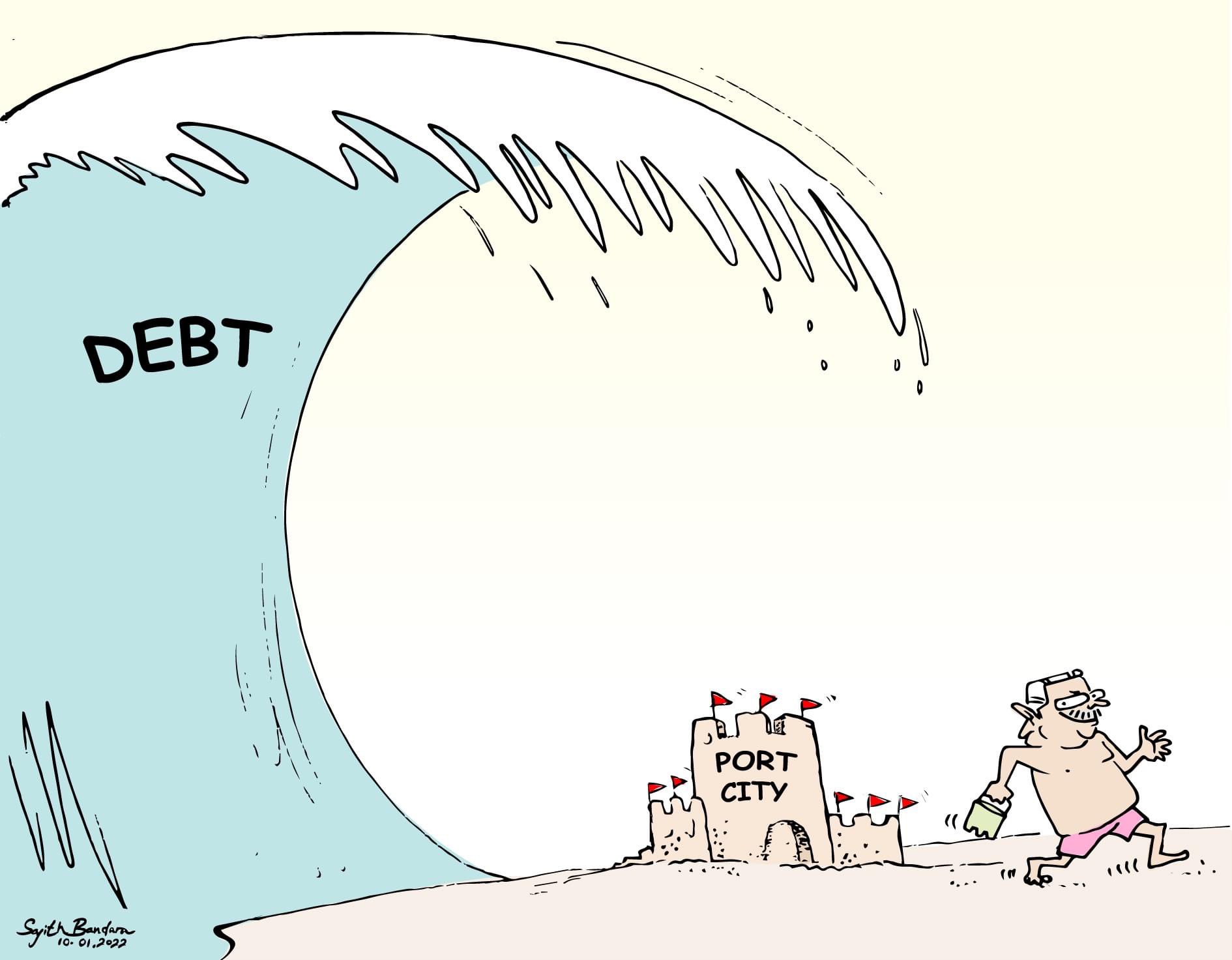
Sri Lanka has already handed over the 1.4 billion US dollar Chinese funded and built Hambantota port in the deep south of the island as a part of a debt-to-equity deal in 2018. China is eying a 15,000-acre investment zone around the port.

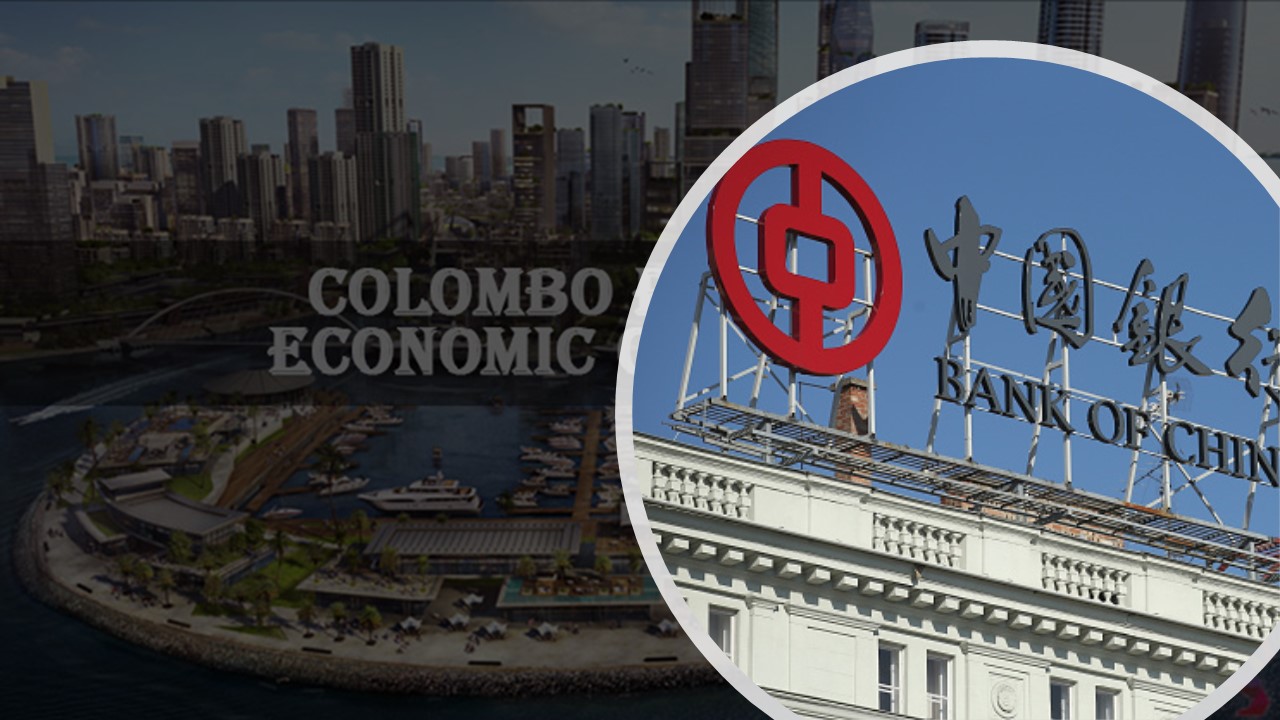
China has also reclaimed a 269-acre land next to Sri Lanka’s main Colombo port where a state-owned Chinese firm is building the Port City. It has already invested 1.5 billion US dollars in the project.

India accounts for over 70 percent of the transhipment at the Colombo port where China also has a terminal on a 25-year lease basis. To counterbalance Chinese presence, President Gotabaya Rajapaksa’s administration has given a majority stake at the West Container Terminal (WCT) to India’s Adani group, a privately owned firm, for a 850 million dollar investment.

Sri Lanka is in the process of canceling power system installation projects in three islands off Sri Lanka’s northern city of Jaffna within 50 km from South Indian coast, which prompted China to say the move was due to “security concern of a third party”.

Defence analysts say Beijing’s activities in the South China Sea have been cited by countries that are raising concerns over increasing Chinese presence in Sri Lanka.

Officials from the current ruling Sri Lanka Podujana Peremuna (SLPP) have told the EconomyNext in the past that indirect backing of India and the United States helped oust the previous government of then President Mahinda Rajapaksa in 2015 after Sri Lanka gave permission to Chinese nuclear submarines to enter Colombo port premises in October 2014.

Officially both India and the US have denied their involvement in toppling Rajapaksa’s previous government.

China has said all its projects in Sri Lanka are commercial in nature and has denied any military involvement.

Posted in Uncategorized

FNO calls for full and thorough probe into Trinco Oil Tank Farm deal with India

The Federation of National Organisations has asked President Gotabaya Rajapaksa to put an immediate halt to the ongoing process of entering into an agreement with India, purportedly to develop the Trincomalee Oil Tank Farm. It has called for a thorough investigation into the questionable deal.

A letter signed by FNO Convener Dr. Gunadasa Amarasekera addressed to the President says the then government of Ceylon took possession of 99 tanks at the farm paying Sterling Pounds 250,000 to the British Navy in 1964. That government did so, taking the national interests into serious consideration. The so-called agreement process contained serious technical flaws. Agreements made without following due process are null and void before the law. Therefore, the President should immediately stop this process and make a full revision of it. Any decision taken otherwise owing to the pressures of public protests or court decisions will pave the way for serious repercussions which would be detrimental to the image and sustenance of the government and Indo-Sri Lanka relations.

The FNO says that the government instead should pay attention to make a policy decision to ensure energy security of the country by retaining its hold on bunkering.

Informed public opinion in this country today is that the process of handing over 99 tanks to the LIOC is questionable. People do not trust this agreement and there will be public protests, the letter has said.

Posted in Uncategorized

Crisis-hit Sri Lanka asks China to restructure its debt

The president of crisis-hit Sri Lanka has asked China to restructure its debt repayments as part of efforts to help the South Asian country navigate its worsening financial situation.

Gotabaya Rajapaksa made the request during a meeting with Chinese foreign minister Wang Yi on Sunday.

In the last decade China has lent Sri Lanka over $5bn (£3.7bn) for projects including roads, an airport and ports.

But critics say the money was used for unnecessary schemes with low returns.

“The president pointed out that it would be a great relief to the country if attention could be paid on restructuring the debt repayments as a solution to the economic crisis that has arisen in the face of the Covid-19 pandemic,” Mr Rajapaksa’s office said.

The statement also said China was asked to provide “concessional” terms for its exports to Sri Lanka, which amounted to around $3.5bn last year, without providing further details.

Mr Rajapaksa also offered to allow Chinese tourists to return to Sri Lanka provided they adhere to strict coronavirus regulations.

Before the pandemic, China was one of Sri Lanka’s main sources of tourists. And it imports more goods from China than from any other country.

In recent months, Sri Lanka has been experiencing a severe debt and foreign exchange crisis, which has been made worse by the loss of tourist income during the pandemic.

China is Sri Lanka’s fourth biggest lender, behind international financial markets, the Asian Development Bank and Japan.

The country has received billions of dollars of soft loans from China but the island nation has been engulfed in a foreign exchange crisis which some analysts have said has pushed it to the verge of default.

Sri Lanka has to repay about $4.5bn in debt this year starting with a $500m international sovereign bond, which matures on 18 January.

The country’s central bank has repeatedly assured investors that all of its debt repayments will be met and said funds for this month’s bond repayment has already been allocated.

Sri Lanka is a key part of China’s Belt and Road Initiative, a long-term plan to fund and build infrastructure linking China to the rest of the world.

However, some countries, including the US, have labelled the project a “debt trap” for smaller and poorer nations.

Beijing has always rejected those accusations, and in response has accused some in the West of promoting this narrative to tarnish its image.

Is China luring poorer countries into debt?

Last month a Sri Lankan government minister said the country planned to settle a debt for past oil imports from Iran by paying it off in tea.

It plans to send $5m worth of tea to Iran each month to clear a $251m debt.

In September, Sri Lanka declared an economic emergency, after a steep fall in the value of its currency, the rupee, caused a spike in food prices.

Authorities said they would take control of the supply of basic food items, including rice and sugar, and set prices in an attempt to control rising inflation.

HRCSL asks IGP to inform about PTA arrests within 48 hours

The Human Rights Commission of Sri Lanka (HRCSL) has written to Inspector General of Police (IGP) C.D. Wickramaratne last week, requesting that the Police inform the HRCSL about an individual who is arrested or detained under the Prevention of Terrorism Act (PTA) within 48 hours to the HRCSL.

In the letter addressed to IGP Wickramaratne, HRCSL Chairperson Supreme Court Judge (Retd.) Justice Rohini Perera Marasinghe had pointed out that this request is made within the powers mandated to the HRCSL under Section 28 of the HRCSL Act No. 28 of 1996 (duty to inform Commission of arrest and power of Commission to inspect to obtain information).

She had further pointed out a number of steps that the Police must take with regard to those who are arrested under the PTA, including informing the HRCSL of their release or transfer. She had claimed that this information was not duly received by the HRCSL, and had requested IGP Wickramaratne to inform police officers of this requirement.

Moreover, the HRCSL has requested that a monthly list of those who are arrested under the PTA, released or transferred be sent to the HRCSL from all police stations, for better monitoring by the Commission.

On 29 December, Marasinghe, along with the other commissioners, met the heads of the Criminal Investigation Department (CID), Terrorism Investigation Division (TID), and the Police Legal Division, where detainees currently being held under the PTA had been discussed.

Calls to repeal the PTA grew last year, both locally and internationally, with UN High Commissioner for Human Rights Michelle Bachelet emphasising the need for its repeal in her oral update about Sri Lanka earlier last year.

The European Parliament, earlier last year, called on the Government of Sri Lanka to repeal the PTA and the European Commission to consider the temporary withdrawal of the Generalised Scheme of Preferences Plus (GSP+) trade concession from Sri Lanka if it is not done. The GSP+ Monitoring Mission for the Third Cycle visited Sri Lanka during the months of September and October, meeting civil society members, politicians, and other stakeholders about a number of issues including the PTA.

The Morning reported at the time that the Ministry of Justice, in its discussions with the European Union (EU) delegation, had assured them that necessary amendments will be made to the PTA within the next six months. The 24th Session of the EU-Sri Lanka Joint Commission in the first quarter of 2022 will witness the review of all aspects of bilateral co-operation.

Last year, President Gotabaya Rajapaksa also appointed a three-member Advisory Board under Section 13 of the PTA, to make recommendations on actions to be taken on detainees and remand prisoners held under the PTA.

The first draft of the renewed PTA report was presented to President Rajapaksa on 15 November by Committee Chairman and Defence Secretary Gen. (Retd.) Kamal Gunaratne.

Ten Tamils who were arrested by the Sri Lanka Police on 18 May under the provisions of the PTA were released on bail on 8 December by the Valaichchenai District Magistrate’s Court. According to the Journalists for Democracy in Sri Lanka (JDS), the party had been arrested for lighting a flame of remembrance for war victims at Kiran beach in Kalkudah, Batticaloa. It was reported that these individuals were held under the PTA for a period of seven months.