Sri Lanka seeks USD 1 billion loan from India

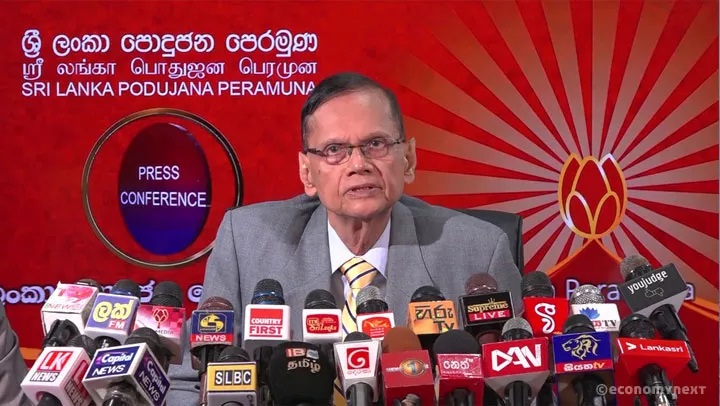
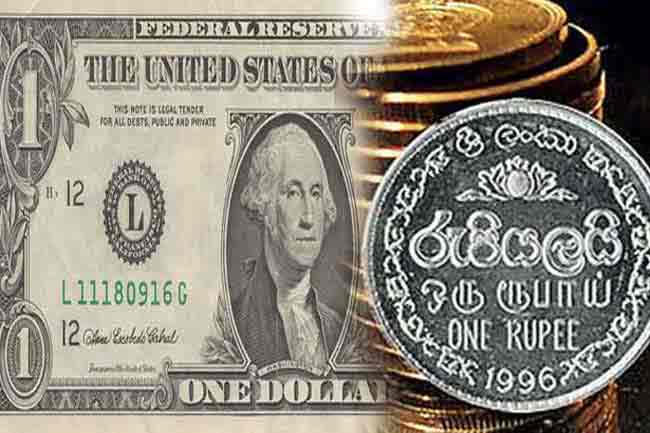
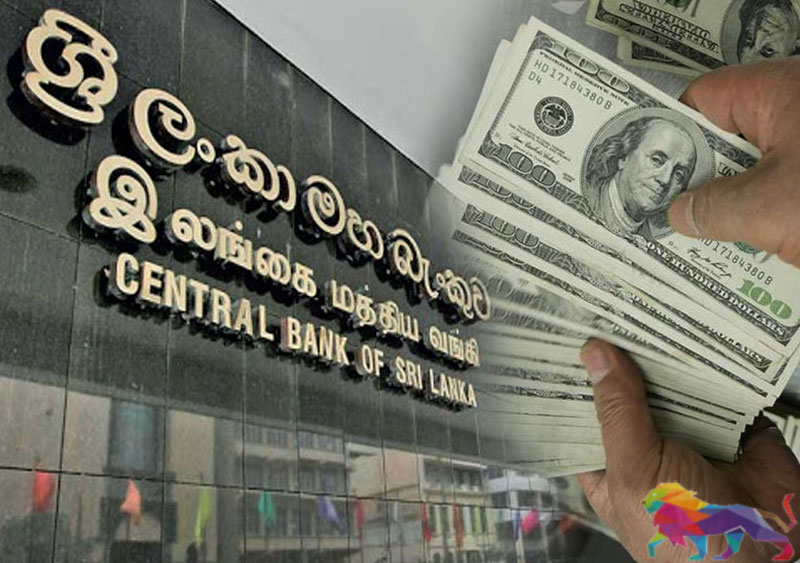
Sri Lanka is negotiating a USD one billion loan from India to import goods from the country, the governor of the Central Bank Ajith Nivard Cabraal said on Wednesday, amidst a shortage of almost all essential commodities.

Cabraal also said that Sri Lanka is negotiating another loan from China as part of an attempt to restructure its debt repayment. The loan amount has not been decided. He said that Sri Lanka is negotiating a USD 1 billion facility with India to import goods from the country.

Cabraal said that this will also help Sri Lanka in its debt repayment and promote more trade with the respective countries.

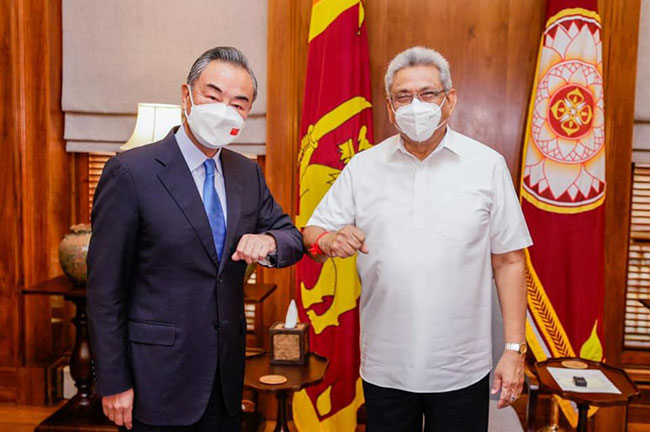
Last week, President Gotabaya Rajapaksa told the visiting Chinese foreign minister Wang Yi that Sri Lanka would be helped if the debt could be restructured.

“We have an understanding that they would assist us in making the repayments in that form. So maybe there is a possibility that we would have a new loan coming in order to cushion our debt repayments to China”, Cabraal said.

Cabraal said Sri Lanka’s debt repayments this year would amount to about USD 6 billion. “We are confident we can pay all of them despite current difficulties we are facing,” he said, adding that the USD 500 million international sovereign bond (ISB) repayment due next will be duly paid.

The government in the past week faced lobbying by the trade chambers who advocated an ISB default in order to pay for imports.

Sri Lanka is currently experiencing a shortage of almost all essentials due to a shortage of dollars to pay for the imports.

Cabraal defended the Central Bank’s decision to sell more than half of its gold reserves last month in order to supplement the foreign exchange reserves.

The Central Bank economic indicators dated January 7 showed that gold reserves had fallen to US dollars 175 million in December from 382 million.

Cabraal said the gold-selling was part of reserves management adopted by the Central Bank and could be brought to the bank in the future.

The government officials said the USD one billion loans from India would be restricted to food imports. Agriculturists have warned of food shortages in the country during the next two months.

Posted in Uncategorized

Elle Gunawansa Thera & Bengamuwe Nalaka Thera go before SC against Trinco Oil Tank farm agreement

Ven. Elle Gunawansa Thera and Ven. Bengamuwe Nalaka Thera today filed a Fundamental Rights petition in Supreme Court challenging the legality of the cabinet memorandum that authorised to enter into an Agreement with the Lanka IOC PLC to jointly develop China Bay Oil Tank farm.

The petitioners filed this petition naming President Gotabaya Rajapaksa through the Attorney General, Cabinet of Ministers including Minister of Energy Udaya Gammanpila, Ceylon Petroleum Corporation, Trinco Petroleum Terminal (Pvt) Ltd, Lanka IOC PLC and several others as respondents.

The petitioners are further seeking a declaration that the purported Agreement said to be signed on 06th of January, 2022 between the respondent parties has no legal force.

The petitioners state that on 30th of December, 2021, Minister Udaya Gammanpila has written a letter to the Chairman of CPC dated 20th December, 2021 with regard to the need to establish a Company in the name and style “Trinco Petroleum Terminal Limited”, under the control of the CPC as said to be instructed by the the President.

The petitioners further state that on or around 04th of January, 2022, Minister Gammanpila has clearly stated at a press briefing that the cabinet of ministers has approved his memorandum with regard to the China Bay Oil Tank farm and has authorized to enter into an Agreement with the Lanka IOC to jointly develop or manage the Oil Tank Farm.

The Petitioner further states on or around 06th of January, 2022 thay came to know that a purported Agreement has been signed between the representatives of the Government of Sri Lanka and the Lanka IOC.

The petitioners are further seeking a declaration that the fundamental rights of all the citizenry of the Republic, duly guaranteed by the Constitution including Articles Article 12(1) have been violated by the respondents.

This petition had been filed through Attorney-at-law Dharshana Weraduwage.

S&P downgrades Sri Lanka to CCC, outlook negative

Standard and Poor’s has downgraded Sri Lanka to ‘CCC’ from an earlier ‘CCC+’ with the outlook negative at the lower level as the currency continued to be under pressure from liquidity injections though reserves were boosted in December with a swap from China.

Sri Lanka is now making liquidity injections mostly to sterilize interventions with bond markets operating after price controls were lifted.

If the government signals an intention to restructure commercial debt rating would be further downgraded.

“Foreign exchange resources will be further pressured over the coming quarters by additional external sovereign debt maturities and current account requirements,” the S&P said.

“These developments indicate a rising probability of sovereign default scenarios playing out over the next 12 months in the absence of an unforeseen positive development.”

“The negative outlook reflects our expectation that Sri Lanka’s external financial position will deteriorate further over the coming quarters.

“This would affect Sri Lanka’s ability to service its debt over the next 12 months.”

The rating agency said a “relief package” while boosting economic activity would also weaken the government’s fiscal position and worsened the risks associated with the government’s already-high debt burden.

The handouts mostly went to state workers who were hit by high inflation created by past money printing who were beginning to protest demanding salary hikes.

S&P said it may revise the outlook to stable or upgrade the rating if Sri Lanka can “significantly boost” reserves or its economic recovery is much stronger than expected.

“This could lower the risks associated with the government’s debt-servicing capacity,” the agency said.

Related

Why Sri Lanka’s rupee is depreciating creating currency crises: Bellwether

However other analysts have warned for some time that stronger the economic and credit recovery as liquidity injections made to enforce low rates, the bigger the hit on the balance of payments as the new money turns into imports which are not controlled.

the full statement is reproduced below:

Sri Lanka Rating Lowered To ‘CCC/C’ On Increasing External Financing Risks; Outlook Negative

Overview

Sri Lanka’s external position continues to weaken owing to elevated external obligations and uneven access to financing.

Foreign exchange resources will be further pressured over the coming quarters by additional external sovereign debt maturities and current account requirements.

These developments indicate a rising probability of sovereign default scenarios playing out over the next 12 months in the absence of an unforeseen positive development.

We lowered our long-term sovereign credit rating on Sri Lanka to ‘CCC’, from ‘CCC+’ previously. At the same time, we affirmed our ‘C’ short-term credit rating on the government.

The outlook on the long-term rating is negative.

Rating Action

SINGAPORE (S&P Global Ratings) Jan. 12, 2022–S&P Global Ratings today lowered its long-term sovereign credit rating on Sri Lanka to ‘CCC’, from ‘CCC+’ previously. The outlook is negative. At the same time, we affirmed our ‘C’ short-term credit rating.

Outlook

The negative outlook reflects our expectation that Sri Lanka’s external financial position will deteriorate further over the coming quarters. This would affect Sri Lanka’s ability to service its debt over the next 12 months.

Downside scenario

We could lower our ratings if Sri Lanka’s fundraising activities fall short of government targets or its foreign exchange reserves erode further beyond our expectations, leading to higher risk on the sovereign’s ability to service debt.

We could also lower the ratings if the government signals its intention to restructure its outstanding commercial debt, implying that investors would receive less value than that promised on the original securities.

Upside scenario

We may revise the outlook to stable, or raise the rating, if Sri Lanka can significantly boost external buffers or its economic recovery is much stronger than we expect. This could lower the risks associated with the government’s debt-servicing capacity.

Rationale

The downgrade reflects continued deterioration in Sri Lanka’s ability to maintain sufficient foreign exchange resources to meet elevated external obligations. The Sri Lankan government faces increasingly likely default scenarios without unforeseen significant positive developments.

Timely debt service will likely become increasingly difficult over the next 12 months, given Sri Lanka’s vulnerable external profile, sizable fiscal deficits, heavy government indebtedness, and hefty interest payments. These factors significantly constrain our ratings. Macroeconomic policies, including the recent introduction of a US$1.2 billion relief package, have provided some support to the pandemic-hit economy. But they have also weakened the government’s fiscal position and worsened the risks associated with the government’s already-high debt burden.

Institutional and economic profile: Economic recovery under pressure from pandemic, external stresses

Sri Lanka’s economic recovery will be challenged by the ongoing pandemic and external financial stresses, hampering consumer sentiment. This could affect access to capital.

We forecast real GDP growth at 2.2% this year, compared with our estimate of 3.0% expansion in 2021.

The government has maintained a supportive fiscal policy stance despite its weak finances.

Sri Lanka’s economy will face sustained headwinds from the pandemic and external financial conditions this year, limiting its recovery potential. The Sri Lankan economy contracted by 1.5% year on year in the third quarter of 2021, reflecting the effects of a severe wave of COVID-19 in the country that peaked in August. A delayed reopening of international tourism also weighed on the economy.

In 2020, the government introduced broad-based import controls to manage foreign exchange outflows, and these are likely to progressively weigh on affected economic sectors. The Central bank of Sri Lanka (CBSL) also hiked its standing deposit and lending facility rates by 50 basis points (bps) in August 2021, in addition to a subsequent 200 bps hike to its statutory reserve ratio. Consumer Price Index inflation, which is currently above 11%, is likely to weigh on consumer sentiment and could place further downside pressure on the currency over the coming quarters.

The advent of the omicron variant of the coronavirus is leading to surging case numbers around the world, and this is likely to further delay the recovery of Sri Lanka’s tourism sector. While domestic case levels remain relatively stable at the time of publication, the risk of another large COVID-19 wave in Sri Lanka is considerable.

Given the highly contagious nature of the omicron variant, a steep escalation in new infections could have a disruptive impact on the economy, even if it does not severely strain the healthcare system. Uneven external demand conditions in countries managing record case numbers could also diminish an important source of support for Sri Lanka’s economy over the next few months.

We forecast the economy will expand 2.2% in real terms in 2022, following our estimate of 3.0% expansion in 2021, and growth will likely average 2.7% during 2022-2025. This will bring per capita income to about US$3,750 in 2022, translating into real GDP per capita growth of 1.6% on a 10-year weighted-average basis. While this growth is comparable to peers at a similar income level, we believe it is substantially below Sri Lanka’s potential.

Sri Lanka’s current political settings are characterized by a ruling coalition with a solid parliamentary majority. However, President Gotabaya Rajapaksa in December 2021 unexpectedly introduced a measure that will prorogue parliament for an extra week until Jan. 18, 2022. Cabinet meetings on negotiating a reform and funding package with the International Monetary Fund (IMF) have so far ended with no substantive agreement, according to media reports, indicating differing views among the policymakers involved.

Flexibility and performance profile: External stress escalating on higher current and financial account obligations

Sri Lanka’s external profile has weakened, with reserves facing consistent pressure from high current and financial account obligations.

Sri Lanka’s fiscal deficit is likely to remain elevated even as the economy gradually recovers.

The government’s interest burden is likely to remain very high as its debt level continues to rise in line with its deficits.

Sri Lanka’s external position remains a key vulnerability of the ratings, with its foreign exchange buffer narrowing. While the central bank’s foreign exchange reserves reportedly rose from approximately US$1.6 billion in November 2021 to US$3.1 billion in December, this remains slightly less than two months’ worth of import cover. December’s reserves were likely boosted by the central bank’s drawdown on a previously agreed Chinese renminbi (RMB) 10 billion swap facility with the People’s Bank of China (PBoC). Sri Lanka’s government has indicated that additional agreements with other central banks and bilateral lenders are in the offing, but its deteriorating creditworthiness may complicate efforts to secure fresh funding.

Additional inflows may be insufficient to offset pre-determined short-term drains on foreign reserves estimated at US$6.6 billion over the next 12 months. The ability of the government to secure additional foreign financing over the next two quarters will be a key determinant of its ability to prevent a deeper external liquidity crisis.

Financing conditions on international capital markets remain challenging for Sri Lanka. These conditions are unlikely to improve over the next 12 months due to rising inflation pressures, and prospects of a faster-than-expected policy tightening in advanced economies. While the government has been able to maintain some dollar funding via Sri Lanka Development Bonds (SLDBs) purchased by domestic creditors, demand for these bonds appears to have diminished. Success in rolling over SLDBs is crucial to the government’s debt-servicing capacity. In turn, this will heavily depend on domestic creditors’ ability to access external financing under favorable terms, as well as their willingness to continue to lend to the government.

We estimate that Sri Lanka’s current account deficit rose considerably in 2021 to about 3.4% of GDP versus a shortfall of just 1.3% in 2020. Higher energy prices are weighing on the country’s goods trade balance, and the delayed recovery of the international tourism sector is limiting the pace of service export growth. While we expect Sri Lanka’s current account position to gradually improve over the coming quarters, the shortfall will place additional pressure on its external liquidity position in addition to capital and financial account obligations.

Sri Lanka’s gross external financing needs as a percentage of current account receipts plus usable reserves should average 145% over 2022-2025, in our assessment. We also forecast that Sri Lanka’s external debt net of official reserves and financial sector external assets will remain elevated at about 163% over the same period.

Persistent deficits in Sri Lanka’s fiscal position will place additional strain on its ability to meet financial obligations, absent considerable improvement. With more than 70% of government revenues required to service interest payments, the government’s heavy debt burden limits its ability to accumulate policy buffers, which are crucial in times of stress. The COVID-19 pandemic has further weighed on government finances by dampening domestic economic activity and lowering excise duty earnings.

Sri Lanka’s 2022 budget includes some revenue enhancements, including an increase in the financial services value-added tax rate, revisions to excise duties on cigarettes and liquor, and a one-off surcharge on high-earning individuals and companies. Taken together, these will boost revenue generation in 2022; however, additional revenue reforms will likely be required to meaningfully raise the government’s revenue-to-GDP ratio over the next few years.

The government in January 2022 also announced a US$1.2 billion relief package, including a special monthly payment to qualifying public servants, retirees, and military personnel. This package is likely to push the fiscal deficit higher than the budgeted shortfall for this year.

We estimate a deficit of 11.1% of GDP for Sri Lanka in 2021, and the government’s fiscal shortfall will likely hit 9.8% in 2022. If revenue growth underperforms the government’s targets, we believe capital expenditure may be cut to partially offset the deficit.

High fiscal deficits over an extended period will worsen the government’s very high debt levels. We expect the increase in net general government debt to average 9.3% over 2022-2025 in our base case, where we assume that the government is able to continue to raise equivalent financing. Net general government debt exceeded 100% of GDP in 2020 and will continue to increase over the next five years, in our view. We add the CBSL’s drawdown on the PBoC swapline in our calculation of the government’s debt.

Sri Lanka’s foreign exchange-denominated debt is vulnerable given the government’s declining foreign exchange reserves and high repayments. The government faces international sovereign bond maturities of US$500 million in January 2022 and US$1 billion in July 2022, in addition to bilateral and official obligations and SLDBs. The central bank has stated that the funds required for the repayment of the January 2022 maturity have already been allocated. Total SLDB maturities in 2022 amount to approximately US$1.45 billion.

A statement published by the office of Sri Lankan President Gotabaya Rajapaksa on Jan. 9, 2022, indicates that the government may seek debt restructuring from Chinese creditors. While additional details are not yet available, Sri Lanka has considerable official and bilateral borrowings from China. Our issuer credit ratings are assessments of default risk on commercial debt, rather than on concessional debt contracted from multilateral or bilateral lenders.

The government has been increasing the share of domestic financing to fund the fiscal deficit. At the same time, domestic interest rates have been kept low partially through liquidity injections by the central bank. While this has capped the effective interest rate on the government’s domestic debt, an increase in domestic liquidity is also likely to put pressure on the exchange rate. Amid high inflation and a currency under pressure, the central bank may hike rates further, potentially pushing the cost of local currency government debt higher as well. The government’s interest burden remains extremely elevated as a proportion of its revenues. We estimate that this ratio will rise to more than 75% this year, the highest among rated sovereigns globally.

We assess the government’s contingent liabilities from state-owned enterprises and its relatively small financial system as limited. However, risks continue to rise due to sustained losses at Ceylon Petroleum Corp., Ceylon Electricity Board, and Sri Lankan Airlines. Sri Lankan banks have purchased substantial quantities of government debt, and the banking sector’s aggregate exposure is more than 20% of system assets.

Sri Lanka’s monetary settings remain a credit weakness, and work toward an updated Monetary Law Act has been suspended since mid-2021. The credibility and effectiveness of the central bank’s monetary policy will be further tested by high inflation, the potential for a faster normalization of global monetary conditions, and the prevailing shortage of foreign exchange in the economy.

Posted in Uncategorized

Sri Lanka ‘technically bankrupt’, seeks Chinese debt restructuring amid economic crisis

The president of debt-ridden Sri Lanka has asked China for the restructuring of its loans and access to preferential credit for imports of essential goods, as the island nation struggles in the throes of its worst economic crisis, partly due to Beijing-financed projects that don’t generate revenue.

President Gotabaya Rajapaksa told visiting Chinese Foreign Minister Wang Yi that it would be “a great relief to the country if attention could be paid on restructuring the debt repayments as a solution to the economic crisis that has arisen in the face of the Covid-19 pandemic,” according to a statement from his office.

Rajapaksa asked Wang for a concessionary credit facility for imports so that industries could run without disruption, the statement said. He also requested assistance to enable Chinese tourists to travel to Sri Lanka within a secure bubble.

Wang and Prime Minister Mahinda Rajapaksa, the president’s brother, later visited Colombo’s Port City, a reclaimed island developed with Chinese investment, where they opened a promenade and inaugurated the sailing of 65 boats to commemorate the 65 years of diplomatic relations between the two countries.

In his speech at the Port City on Sunday, Wang said a persistent and unchecked pandemic had made economic recovery difficult and the two countries must use the anniversary to work closer together.

He did not elaborate nor announce any relief measures.

Wang arrived in Sri Lanka on Saturday from the Maldives on the last leg of a multinational trip that also took him to Eritrea, Kenya and the Comoros in East Africa.

Sri Lanka faces one of its worst economic crises, with foreign reserves down to around US$1.6 billion, barely enough for a few weeks of imports. It also has foreign debt obligations exceeding US$7b in 2022, including repayment of bonds worth US$500 million in January and US$1b in July.

The declining foreign reserves are partly blamed on infrastructure projects built with Chinese loans that don’t make money. China loaned money to build a seaport and airport in the southern Hambantota district, in addition to a wide network of roads.

Central Bank figures show that current Chinese loans to Sri Lanka total around US$3.38b, not including loans to state-owned businesses, which are accounted for separately and thought to be substantial.

“Technically we can claim we are bankrupt now,” said Muttukrishna Sarvananthan, principal researcher at the Point Pedro Institute of Development.

“When you have your net external foreign assets have been in the red, that means you are technically bankrupt.”

The situation has left households grappling with severe shortages. People wait in long lines to buy essential goods like milk powder, cooking gas and kerosene. Prices have increased sharply, and the Central Bank says the inflation rate rose to 12.1 per cent by the end of December from 9.9 per cent in November. Food inflation increased to over 22 per cent in the same period.

Because of a currency shortage, importers are unable to clear their cargo containing essentials and manufacturers are not able to buy raw materials from overseas.

Expatriate remittances have also fallen after the government ordered the mandatory conversion of foreign currency and exchange rate controls.

Ratings agency downgrades have resulted in Sri Lanka losing much of its borrowing power. In December, Fitch Ratings noted an increased probability of credit default.

The Central Bank has added a currency swap in Chinese currency worth US$1.5b to the reserves, but economists disagree whether it can be part of foreign reserves or not.

Wang’s visit has again highlighted the regional power struggle between China and India, Sri Lanka’s closest neighbour that considers the island part of its domain.

Before Wang spoke with Sri Lankan leaders, the top Indian diplomat in the country on Sunday morning inaugurated a train service from a station near Colombo to the north using compartments provided through an Indian loan facility.

An Indian embassy statement quoted Vinod Jacob recalling “the priority placed by Indian Prime Minister Narendra Modi on ties with Sri Lanka in line with the ‘Neighbourhood First’ policy.”

He said that a recent statement by India’s External Affairs Minister S Jaishankar that India would support Sri Lanka in difficult times was an affirmation of that policy in the current context.

“We can see Sri Lanka being saddled between India and China for a potential bailout package,” said political analyst Ranga Kalansooriya.

“India is dragging its feet for some time while China is trying to manipulate the situation to the maximum,” he added.

China considers Sri Lanka to be a critical link in its Belt and Road global infrastructure initiative. Relations were recently strained over a shipment of Chinese fertiliser that allegedly contained harmful bacteria, and business agreements that were inked with China’s rivals, the United States and India.

Kalansooriya said that China was unlikely to bail Sri Lanka out of its economic crisis. “They will look for more business opportunities, fishing in the troubled waters of economic doldrums in the country,” he said.

Posted in Uncategorized

China’s recipe for Sri Lanka’s economic recovery

During his visit to Sri Lanka on January 8 and 9, the Chinese Foreign Minister, Wang Yi, had clearly indicated that China is keen on going beyond infrastructural development to investing in industries in the island nation to help it industrialize and develop a “Made in Sri Lanka” brand.

He also urged an early conclusion of the long drawn out negotiations on a Sino-Lankan Free Trade Agreement so that the island’s economy is put on a more solid and modern footing, based on investment and trade.

These proposals are meant to strengthen the Sri Lankan economy and enable it to earn enough to repay debts even as they release China from the charge across the world that it is on a lending spree in poor countries with the aim of taking over their assets if they fail to repay the loans. China is widely accused of practising- “debt-trap diplomacy.”

In Sri Lanka, so far, China has built massive infrastructural facilities like the Hambantota port, the Mattala airport, the Colombo International Container Terminal, the Colombo Port City, the Lotus Tower, a kidney Disease hospital in Polonnaruwa and several highway and railway links. With the result, today, China is the single largest lender to Sri Lanka having displaced Japan. But still, China accounted for only a little over 10% of Sri Lanka’s external debt of US$ 51 billion in 2021.

Yet, the taking over of the Hambantota port on a 99-year lease following the inability of the Lankan government to pay back the US$ 1.1 billion loan taken from China to build the harbor, is widely cited as a classic case of China’s “debt diplomacy”. However, over time, these projects, barring a few like the Lotus Tower, have started generating income. Even the classic White Elephants, the Hambantota port and the Mattala Airport derided by Forbes as the “World’s Emptiest Airport”, are earning money now.

If they took so long to yield returns it was not the fault of China or the assets, but the Sri Lankan government’s lack of interest in making use of the assets in a creative way. For instance, India had submitted a plan to use Mattala airport for domestic flights through a joint venture, but the previous Mathripala Sirisena-Ranil Wickremesinghe government used it for “grain storage”. However, since the Rajapaksa came back to power, the airport has been attracting flights.

In April 2021, the Lankan Minister of Tourism Prasanna Ranatunga stated in parliament that the Mattala International Airport had earned an income of LKR 445 million from its opening to traffic in November 20, 2020. The Minister said that since the opening of the airport, 10,266 aircraft and 58,651 passengers arrived and 73,513 passengers took off.

As for the Humbantota port, it is attracting traffic and will see a jump when plans to build facilities in the hinterland are implemented. According to the website of Hellenic Shipping News, in September 2021, the China Merchants Port Holdings (CMPH) which operates Humbantota port, declared a dividend of LKR 1.05 billion to the Sri Lanka Port Authority (SLPA), while announcing that its first half net profit had shot up by 204.7% to HK$4.71 billion (Rs 120.61 billion), from HK$1.54 billion in 2020.

For the first half of 2021, Hambantota International Port Group handled 790,000 tonnes of bulk cargo. Bulk cargo volume vaulted by 338.9% from the year before. The roll-on/roll-off terminal handled 281,000 vehicles in the first half, up by 56.2% year-on-year. The Humbantota Industrial Park had signed up 27 enterprises, the company said. It is gearing up to become a fully-functional multi-purpose port next year.

The US$ 1.4 billion Colombo Port City constructed by the China Harbor Company, began humming with activity recently, after the Lankan government, at long last, gave it proper legal structure. Designed to be an international financial hub it is expecting two big-ticket Chinese financial companies to set other international investments in motion, according to the Lankan envoy in Beijing Dr.Palitha Kohona.

There is criticism that about 88 hectares were leased to China for 99 years and another 20 hectares were given on freehold to China in the Colombo Port City. But this was done to compensate for the loss of US$ 380,000 per day due to work stoppage caused by a government inquiry which eventually found no wrong doing.

Alternative to Debt Restructuring

Since Sri Lanka is in the thick of a grave financial crisis. Its President Gotabaya Rajapaksa had sought debt restructuring when the Chinese Foreign Minister called on him on January 9. It appears that Wang did not commit himself to restructuring as such but said that China would assist Sri Lanka “in overcoming the temporary difficulties within its capacity.” But he assured Sri Lankan leaders that he would encourage Chinese companies to invest in Sri Lanka to make Sri Lanka industrialize and establish a “Made in Sri Lanka” brand.

“China will continue to assist Sri Lanka in overcoming temporary difficulties within our capacity. We are convinced that Sri Lanka’s economy will walk out of the current predicament and achieve new and greater progress. Colombo Port City and Hambantota Port are the flagship projects of bilateral cooperation in building the Marine Silk Road, and two engines of Sri Lanka’s economic development. China supports Chinese enterprises in investing and developing in Sri Lanka and combining Chinese capital and experience with Sri Lanka’s human resources advantages to help Sri Lanka improve the ability of self-development, accelerate industrialization, and build the brand of Made in Sri Lanka,” Wang told Lankan Prime Minister Mahinda Rajapaksa.

Wang stressed the need to conclude a China-Sri Lanka Free Trade Agreement which had run into opposition from Lankan nationalists.

“Sri Lanka and China should make good use of the two engines, Colombo Port City and Hambantota Port flagship projects, tap the opportunities of the enforcement of the Regional Comprehensive Economic Partnership and China’s vast market, and discuss the restart of talks on a free trade agreement between China and Sri Lanka to send more positive signals to the world and contribute to Sri Lanka’s economic recovery and development.” Wang told President Gotabaya Rajapaksa.

Posted in Uncategorized

GAS Shortage : Kerosene carts make a glorious comeback to Colombo

In case our readers are unaware, pre-open economy Sri Lanka was a time where the general public had to stay in long queues to buy essential items ranging from rice to kerosene.

When the News 1st team visited urban hotspots of the commercial capital of the island nation our cameras captured certain sights prevalent during the closed economy.

Due to the dire consequence of the gas crisis, bullock carts carrying kerosene barrels were seen in Central Colombo’s Maligawatte area, a sight that took the residents down the memory lane.

Our reporters said that this is now a common sight in many parts of Colombo City.

An elderly lady speaking to News 1st said that it is a pity to see the fate of the country as she reminisced her times standing in queue to buy rice and bread during the 1970s.

Although the two leading gas companies in Sri Lanka have said that ample gas stocks will be distributed to the market, the queues do not seem to end.

Some people who are heavily impacted by the gas shortage have now opted to use firewood.

In general, it was reported that gas queues were seen across the island today (11) as well.

What is happening to Sri Lanka’s SWAP with India?

Recent reports showed that Sri Lanka is holding talks with India for a 1.5 billion US dollar SWAP agreement.

But the SWAP facility has not been officially announced by India.

Recently, Sri Lanka had signed an agreement with the Indian Oil Corporation to develop the Trincomalee Oil Tank Farm as a joint venture.

Cabinet approval had been granted recently to import 500 buses and 750 jeeps under a line of credit.

Indian High Commissioner to Sri Lanka Gopal Bagley has paid a visit to New Delhi.

Finance minister Basil Rajapaksa was scheduled to visit India this week.

But the visit was canceled considering the COVID-19 situation in India.

Posted in Uncategorized

JVP calls on govt. to reveal reason behind postponing LG polls

Claiming that procrastination of local government election was an anti-democratic move, the Janatha Vimukthi Peramuna (JVP) today called on the government to reveal the reason behind postponing the Local Government election.

JVP General Secretary Tilvin Silva told a news conference that the subject minister had been empowered by the Local Government Act to postpone the local government election by an year based on a reasonable reason.

He said the government has failed to come out with any reason for the postponement of the LG polls.

“The term of the Local Government Bodies has been extended from March 19, 2022 to March 19, 2023. The government has not cited any reason for putting off elections for all the LG Bodies. We challenge the government to reveal the reason for postponing the LG polls,” he said.

He said they see no reason other than the government’s fear to go before the people and added that the decision was taken not because of the Covid pandemic.

“The country is fully opened now. All the schools are open now. All the state employees have been called for duties. The government cannot cite covid pandemic as a reason when the country returned to normalcy,” he said.

The letter to the Prime Minister of India was signed by all the leaders – TELO leader Selvam

The letter to the Indian Prime Minister was signed by all the leaders, said Selvam Adikalanathn, leader of the Tamil Eelam Liberation Organization (TELO) and a member of parliament for the Vanni district.

This was stated in the media statement issued by him.

It further states,

This morning (11.01) Federal Party (ITAK) leader Mavai Senathirajah signed and all the leaders signed the letter to the Prime Minister of India.

Though the document will be handed over today (11), the leaders have decided to hand over the document on his return as the Indian Ambassador has gone to Delhi on an emergency visit.

He said he expected the letter to be handed over to the Indian Ambassador on the 18th.

Rajapaksa popularity facing a drop but I believe it is temporary: Namal

– The debt issue and the Forex issue have always been present
– Rajapaksas have always been farmer-friendly, and the dynasty is based on farming
– There should be fresh faces in politics and administration
– The existing tax system should be digitized and present practices need to change

Minister of Sports and Youth Affairs Namal Rajapaksa has said Sri Lanka would ease all crises this year and come out of the woods as the Government hoped to revive the tourism sector and attract further investments. He said that President Gotabaya Rajapaksa’s decision to ban chemical fertilizer was strong but it was not implemented thoroughly by the State Minister and officials in charge. Further, the Minister admitted that the Rajapaksa popularity had declined with the existing crises but said this was only temporary.

Excerpts:

Q The time this interview is being conducted is crucial. Because outside, the country is literally on fire with a soaring cost of living, the economic crisis, people finding it difficult to carry on with their daily lives, the popularity of the Government has drastically reduced. So what is in store for 2022? Are we going to burn further or is the government taking measures to mitigate the issues?

It is a very challenging time, especially with the COVID19 pandemic. The challenge is not only for Sri Lanka but it is a global crisis. In our lifetime, even for our parents and elders and even the entire administrative system, this is the first time we all are going through a global crisis of this nature. Probably this is the worst devastation we have seen after the World Wars. The way we now face and approach things are different from how we faced it earlier.

If you see the 1983 riots, the 2004 Tsunami, the war against LTTE, and the Easter Sunday attacks, all those were domestic crises. But this is the first time all countries are trying to come out of this pandemic. At that time when we went through the domestic crises, we had our friends, our foreign partners, different organizations, who all came forward to help us. But this is the first time, all countries are facing a health, social and economic crisis altogether.

The cost of living is rising globally and there is a food crisis globally as well. We are also facing this. We believe now we need to strengthen our local industries and our domestic economy and of course, we need the foreign currency now coming in urgently.
For that we need the exports going out, cut down imports as much as we can and welcome as many tourists as possible. Our tourism sector has done well these past few months. If we look at today, we have about 30,000 tourists in the country, while I am giving you this interview.

We are also getting in remittances from our migrant workers. Of course, there have been pay cuts globally and cut down of jobs as well, even in Sri Lanka we have seen this. But for this, we have to encourage our private sector. I will tell you, that Sri Lanka is one of the very few countries in the world, where our private sector did not go for job cuts.
This may have happened in the SMEs but if you look at the mass scale factories such as the apparel and manufacturing sector, they did not go for job cuts as other countries did. Rich countries could not do this. They cut down the staff. So we have to respect our private sector.

But at the same time, we saw a huge loss of income for our daily workers and the SME sector also struggled a lot.
So, that is where the government had to step in and hand out Rs.5000 to each family. So, considering all this we will see a revival this year for sure.

Q But is the COVID-19 entirely to blame for all the mess, as I can bluntly put it, that Sri Lanka is in right now?

Well, if you look at the debt issue and the Forex issue, it is not something that happened two months or two years ago. It had been already there.

Q That means, are you saying it was there even during the Yahapalanaya regime?

What I mean is, it was there ever since independence. Different Governments borrowed for different reasons. If you look at President Chandrika’s regime, we borrowed money to buy wheat and rice. Then during President Mahinda Rajapaksa’s time, we borrowed money to build ports, highways, for development.
Then during President Sirisena’s time, we borrowed money to pay the loans. Because of the Central Bank bond issue. The trust broke and the inflation also jumped by a couple of points because of the Bond Scam.
Back then eventually the cost of living started going up. Unemployment rose. So under different Governments, different leaders took decisions, which was best for the country. Now, President Gotabaya Rajapaksa, in all good faith, he cut down on chemical fertilizer.

Q Has this not been one of President Rajapaksa’s weakest decisions? The masses are against this as Sri Lanka was just coming out of continuous lockdowns from the pandemic, and suddenly the President imposes this rule which affects the entire population. Even foreign companies dealing with this issue were of the view that such a decision could not be implemented overnight. So, don’t you see that as a bad decision?

Well, it depends on who you have been speaking to. It is true that there is a process to shift to chemical fertilizer and it should have been structured for 10 years but as we know, from the President’s point of view, he appointed a State Minister for the subject and he waited for one-and-a-half years. The Subject Minister and the officials did not work on this and finally, the President had to make a tough decision. Leaders have to do this for the betterment of their nation.

Q But wasn’t the timing of such a decision, weak?

The leader of a country has a right to make his decisions for the betterment of his people and he did not make this decision overnight. He had informed all officials, as soon as he took office, to get ready for this and these officials did not get ready for this, to be honest. Even today if you ask these officials what is the composition of organic fertilizer they will not know.
My personal belief is this would have been done within 10 years, as some countries have done it successfully. But at the end of the day, as a President, Gotabaya Rajapaksa took this decision. But now as a responsible Government, we have taken one step back and have allowed the private sector to import chemical fertilizer.

Q Is this not a sign that Gotabaya Rajapaksa failed?

Not at all, because leaders should not be worried to take a step back because their people want them to. After all, he is elected by the people.

Q So you are admitting that the people did not want the chemical fertilizer ban?

Well, people want the easy way out. When you do not know how to make organic fertilizer and when the officials are not bothered to tell you how to make it or how to use it and if there is no supply, then people want to go back to what they are used to. This is the normal thing that happens in any country. But you need to realize only a responsible leader and Government, after making a decision and if the public does not want it immediately, will take one step backwards. Leadership is that. Nobody can challenge him for the decision he took as he made the right choice for his people.

Q In 2019, President Gotabaya Rajapaksa won in a landslide victory. And in 2020, Prime Minister Mahinda Rajapaksa and even yourself smashed records by polling in with the highest votes ever in your electorates. You publicized the Rajapaksa name quite a bit. But today in 2022, do you think this very name has declined your popularity due to the crises we are now in due to family politics?

You see, the popularity of any politician will never be at a peak right throughout. The popularity of leaders always fluctuates. People’s needs change drastically. So politicians also need to keep interacting with their voters and see how they can keep updating their policies to meet the people’s demands and what is right for the people. The Rajapaksas have always been a farmer-friendly, rural-based family. Our dynasty is based on farming. So, when we take a drastic decision all of a sudden based on switching from chemical fertilizer to non-chemical fertilizer, then yes, the popularity gets affected. I won’t disagree with you on that.

Q I am not referring to the fertilizer issue, alone Minister. I am talking about the other issues in this country today like the dollar shortage, economic crisis, the soaring cost of living. The common man blames the Government for these failures.

There again you know that when we took over we faced a global pandemic. No politician or political family rode high on popularity for periods of 10, 12 years continuously. The Rajapaksa popularity is facing a popularity drop but I believe this is temporary. There will always be people who are satisfied and those who are not satisfied. But at the end of the day, we need to make the best decisions for the people. Dynastic politics does not exist anymore. It is modern politics. But at the same time, you need to do what is the right thing. When former President Mahinda Rajapaksa decided to end the war, especially after the assassination attempt on former Army Commander Sarath Fonseka, we stood by that decision. We went through a very hard time, there was even a time we had to borrow money. But today we are reaping the benefits of ending the bloodshed. So politicians should not worry about their popularity. But they have to worry about how they will deliver to the people.

Q Minister do you believe in nepotism? You come from a family where the President, Prime Minister, Ministers are all Rajapaksas? Are you planning to take over next?

Well, the people will decide who their leader should be. Not me or not anyone else. And Premadasa himself is coming from a political family. His father was the leader of the country and was also at one time responsible for the youth uprising in the south. We have Dissanayakas as well in Parliament. Then in the last Cabinet, we had a husband and wife. The unfortunate thing here is that the Rajapaksas are always highlighted.

Q Why do you think they are highlighted?

Because we are always with the people.

Q Is it not because of the controversies you’ll have created?

See, when you are with the people, you are a threat naturally. So you are always part of a political conspiracy. If you are hidden, if you are not seen, then no one will bother about you. We still have families in politics. This system not only exists here, but it is also everywhere, whether it be the UK, US or even countries in the region. When some organization, company or party comes up for working for the people, you obviously become part of a conspiracy.

Q You are young. Wouldn’t you want to see fresh faces in our political arena? We are seeing the same old faces.

Definitely, I want to see fresh faces but not only in politics. We need this even in the administration. Unfortunately, we talk only about politicians. We never talk of the administrators. This is where this country has gone wrong for so many years as the easy target is a politician. But why aren’t we talking about the administration that actually runs the country?
If you see all our manifestos have been very similar ever since Independence. Different Governments, different leaders have had their priorities. President Mahinda Rajapaksa had his priority to end the war and secondly, it was infrastructure development. Then, President Gotabaya Rajapaksa has his priorities that are digitalization and a green economy. President Maithripala Sirisena’s priority was good governance. So all leaders come with their priorities. And it is the government service that needs to take it forward. We have a vibrant Government Service but we now need the next generation coming in and who can deliver the policies put forward.

Q Minister, let us focus on your subject of digitalization. You are talking of digitalization when Sri Lanka is lacking its basics. Even something as basic as PayPal is lacking in the market. Why don’t you address all this first?

Paypal is a private company so I don’t think any Government can dictate to them where they should enter. But this is the system change I am talking about. Unless you change the system, where people can get things done on their own, by using technology, I don’t think this country can move forward.

Q You are now in the Government. You can change this system.

We are changing it now and don’t forget to change this system we need to change certain laws that have been existing for 40 to 50 years. We need to change certain habits and practices that have been there. For example, for a teacher to get a transfer, he or she presently has to go meet a union leader or he/she has to find out where there is a vacancy and take that and go meet the Provincial Secretary and then decide if a transfer is possible. Why can’t there be a system online to see where the vacancy exists? Even when you take a doctor, why can’t there be an online system to show which areas need more medical assistance.

And even for those who want to start their own companies, presently they need to collect about 10 letters to start their business. But of course, now the company registration process has been digitalized and it is doing very well. But to even enrol your child to school, how many documents are required?

These documents were required 20, 30 years ago. And as a practice, you keep on asking for the same document. To even get a Police Report about yourself you need to be in a queue for at least 30 minutes. To even pay a tax you need to be in the queue. Nowhere in the world, this is seen. The Government should welcome you with a garland in fact when you arrive to pay your tax money. So these are the practices we need to change. But we are committed and we have already begun to make the changes.

For example, the birth, death and even the marriage certificate can now be taken online. We will also introduce spot fining soon where people don’t need to go back to the place they were fined to pay. This does not require technology worth billions of dollars. It is already there in your smartphones. All you need is a simple QR system. Good governance comes with transparency.

Q Will this reduce the red tape?

This will drastically reduce the red tape and make people’s lives easier. And in fact, we are even doing a study on which documents we can make online. For example, Police Reports can presently be taken only from Police Headquarters. We want to change this and make this available to all police stations. Then Grama Niladhari Certificates will also be changed to an online system. So there are many more plans underway like this to make people’s lives easier.

Q How soon will all this be implemented?

We are looking at completing all this, this year. We are closely working with the Local Council Ministry as well. We are also looking at digitalizing the entire court system, the education system, the university system.
The E-Gramasevaka will also help a lot in the rural areas. And we are looking at going paperless at least within the coming five years.

Q Minister my final question. You are presently dubbed as the ‘Minister of Everything’. Have you not taken too much onto your plate?

Well, the answer is digitalization. Because most of my time goes for youth and sports. But this year I will invest more time in digitalization. And the Monitoring Ministry is not a namesake Ministry. It is about getting things done and working in line with the other Ministries which I am doing. For that, I am using digital platforms. So, whatever I can put in place, I am doing.