Will New Delhi provide succor to struggling Sri Lanka? By P.K.Balachandran

Sri Lankan Finance Minister Basil Rajapaksa is planning to visit New Delhi at the earliest, to seek from Prime Minister Narendra Modi, urgent help to tide over the economic crises in the island, especially the part concerning foreign debt repayment. According to sources, a request has been made for an appointment with Modi. If the appointment is given, the Lankan Minister will make a day’s trip.

As stated by Foreign Minister G.L.Peiris, Basil Rajapaksa’s agenda is wide – to seek loans, investment and economic cooperation. Rescheduling debt repayment could be an unstated item, as Sri Lanka had already sought it earlier from India and China.


But experts wonder if a hurried one-day trip will help Sri Lanka, when the agenda is large, and lacking in focus. There is a manifest absence of detailed planning with the involvement of both sides. Further, it is not even clear if the Sri Lankans have worked out details to make the discussions useful.

During the virtual bilateral summit between Indian Prime Minister Modi and Sri Lankan Prime Minister Mahinda Rajapaksa in September 2020, the two leaders agreed to deepen cooperation in renewable energy with particular emphasis on solar projects under the US$ 100 million Line of Credit from India. Then on 16 June 2021, the agreement in this regard between the Government of Sri Lanka and the Export-Import Bank of India, was exchanged by the High Commissioner of India to Sri Lanka, Gopal Baglay, and the Secretary to the Treasury, Mr. S.R. Attygalle, in the presence of Sri Lankan President Gotabaya Rajapaksa. But Colombo is yet to chalk out plans to utilize the existing US$ 100 million Indian line of credit.

The other nagging question is whether, in the foreseeable future, Sri Lanka will be able to repay loans even if there is rescheduling.


Parlous State

Be that as it may, if an urgent meeting is being sought with Modi, it is because of the parlous state of the Lankan economy. According to the Central Bank of Sri Lanka, the total outstanding government debt is LKR 15 trillion and the Debt/GDP ratio is 101%. 60% of the total debt is domestic and 40% is foreign.

In April 2021, foreign debt amounted to US$ 35.1 billion. Out of the US$ 35.1 billion, 47% (US$ 16383.4 million) was accounted for by international market borrowings; 10% (US$ 3388.2 million) was owned to China; 13% (4415.7 million) to the Asian Development Bank; 9% (US% 3230.9 million) to the World Bank; 2% (US$ 859.3 million) to India, and the rest was owed to others.

Sri Lanka’s gross official foreign exchange reserves fell to US$ 2,267 million in October 2021, down 73% August 2019.

Meeting foreign-currency debt-servicing needs for 2022 will be government’s immediate concern, economic commentator Dinesh Weerakkody says. According to him, two big payments are due in 2022 – a US$ 500 million bond in January, followed by US$ 1 billion of debt maturing in July. It is estimated that a total of US$ 5 billion will be required to service debt obligations (principal plus interest) and other commitments in 2022.

In 2020, imports were reduced by approximately US$ 3.9 billion (a 20% reduction in comparison to 2019) resulting in a US$ 2 billion drop in the trade deficit. This gave the government temporary breathing room to manage foreign debt repayments in 2020, points out Umesh Moramudali, a Colombo University economist in his detailed paper in The Diplomat.

Moramudali warns that with the increase in oil prices in the global market and an expected post-COVID economic revival in Sri Lanka in 2022, fuel import bills will rise again, putting further pressure on foreign reserves. Referring to the government’s policy of barring imports to save foreign exchange, Moramudali argues that the strategy of managing foreign debt through curtailing imports is not a sustainable solution for a country like Sri Lanka, in which more than half of imports are intermediary and capital goods.


“The continuous restriction of imports will curtail economic growth. which is not something that Sri Lanka can afford right now,” he avers.

Sri Lanka has resorted to issuing International Sovereign Bonds (ISB) and roll over of foreign loans. Successive have been swearing by ISBs. This is because, unlike the IMF and concessionary loans, the ISBs carry few or no conditions. But the terms are not favorable for poor countries with low foreign exchange reserves.

In a stinging comment on the penchant for ISBs, Moramudali says: “ISBs are commercial borrowings, have a short payback period, high interest rates, and no grace period. ISBs have a payback period of 5-10 years with an annual interest rate above 6% to be paid biannually. On top of that, there are principal payments – in other words the total borrowed amount of an ISB is settled at the bond maturity date, all at once, rather than being distributed over the years through annual repayments. Therefore, when an ISB matures, foreign debt repayment requirements skyrocket, resulting in a large foreign currency outflow. This leads to significant BOP vulnerabilities. Consequently, even if the foreign debt-to-GDP ratio is less than what it was two decades ago, Sri Lanka’s vulnerabilities are a lot more severe and alarming, because the debt dynamics of the country have completely shifted to a new paradigm.”


Unwise Rejection of IMF

Sri Lanka is adamantly opposed to seeking IMF assistance because the IMF will impose conditions related to economic management which its populist governments have tended to sneer at. But what Colombo does not realize is that Sri Lanka might not be able to maintain a sufficient level of foreign currency reserves and meet foreign debt repayment obligations in the absence of IMF assistance, Moramudali points out.

“With Sri Lanka’s low sovereign credit ratings and the ongoing pandemic, issuing ISBs does not seem like an easy option for the Sri Lankan government (indeed, it looks almost impossible in the near term),” he observes.

Due to the fear of COVID and lockdowns, there has been a great contraction of trade, low tax revenue, and lack of Foreign Direct Investment (FDI) in Sri Lanka. Trade contracted relative to GDP, falling from roughly 33% in 2000 to roughly 13% in 2019. Tourism has completely collapsed because, unlike the Maldives, Sri Lanka has been too scared of opening its borders to foreigners. About 4 million of a total of 21 million Sri Lankans depend on tourism directly or indirectly. These were at the end of their tether in 2021.


Failure to provide comprehensive and consistent, long-term solutions to address structural weaknesses in the Sri Lankan economy has resulted in Sri Lanka’s running into serious Balance of Payment (BOP) crises every other year. Sri Lanka has been relying heavily on foreign loans for development purposes over the last four decades and has now gone in for swaps with a number of countries.

Swaps

Sri Lanka had sought assistance from China and India to resolve the foreign exchange crisis. In March 2021 Sri Lanka got a US$ 1.5 billion three-year swap facility from China. In August 2021 it got US$ 400 million swap with the Reserve Bank of India. Sri Lanka had signed the swap deal available to SAARC countries in 2020 and repaid it in February 2021 after rolling it over once. It entered into a SWAP deal for US$ 250 million with Bangladesh too.


Silver Lining

But there is a silver lining in this dark cloud. It is that Sri Lanka did not default on loan repayments even in 2020 when conditions were excruciatingly bad. It repaid the US$1 billion bond by its deadline. A further US$ 400-500 million in other commitments were met. It kept intact its reputation for honoring sovereign debts.

Posted in Uncategorized

SLMC suspends three MPs who voted in favour of Budget 2022

The Sri Lanka Muslim Congress (SLMC), led by former minister Rauff Hakeem, has decided to suspend the party membership of the three parliamentarians who voted in favour of the Budget 2022.

Issuing a statement, the SLMC said that MPs H. M. M. Harees, Faizal Cassim and Hafiz Nasir Ahmed have been suspended from their posts in the party with immediate effect.

The decision has been taken due to them failing to comply with the resolution of the SLMC’s High Command with regard to the Budget vote in parliament.

The three MPs in question had supported Budget 2022, during the second reading vote, which was passed in Parliament with 153 MPs voting for and 60 against it on Monday (22).

The All Ceylon Makkal Congress (ACMC), led by former minister and MP Rishad Bathiudeen, had also decided to suspend the three parliamentarians of the party who voted in favour of the Budget 2022.

ACMC said MPs Muszhaaraff Muthunabeen, Ishaq Rahman and Ali Sabri Raheem were suspended pending disciplinary action against them.

Sri Lanka to sign new container port deal with China

Sri Lanka will tap a state-run Chinese firm to build a deep-sea container port, the government said on Wednesday, in a move likely to reignite fears over Beijing’s rising regional maritime power.

The island’s capital Colombo is located in the Indian Ocean between the major hubs of Dubai and Singapore, meaning influence at its ports is highly sought after.

Sri Lanka’s port authority signed a preliminary agreement to build the new Eastern Container Terminal (ECT) in Colombo with India and Japan in 2019.

But President Gotabaya Rajapaksa’s administration scrapped the deal in February, with cabinet agreeing this week to award the project to the state-run China Harbour Engineering Company.

It did not say how much the deal was worth, but official sources had earlier estimated another $500 million to develop the partially built terminal.

China has ploughed huge sums into Sri Lankan infrastructure projects over the last decade, becoming one of the country’s biggest foreign financiers.

It has also enjoyed significant political influence on the island under the Rajapaksa clan, who have ruled the country for 11 of the last 16 years.

The ECT is the third port project to come into development around Colombo’s harbour in the past decade.

Just two months ago, Sri Lanka awarded an Indian company another site to build a brand-new deep-sea jetty at an estimated $700 million cost.

That project is next to the Chinese-run Colombo International Container Terminal (CICT), in operation since 2013.

Two Chinese submarines berthed at the CICT in 2014, sparking anger in India, which considers its neighbour Sri Lanka to be within its sphere of influence.

Since then, Sri Lanka has refused permission for more Chinese submarines to be stationed there.

In 2017, unable to repay a huge Chinese loan, Sri Lanka allowed a Chinese company to take over its southern Hambantota port, which straddles the world’s busiest east-west shipping route.

The deal, which gave the partially state-owned firm a 99-year lease, raised fears about Beijing’s use of “debt traps” in exerting its influence abroad.

India and the United States have also expressed concerns that a Chinese foothold at Hambantota could give Beijing a military advantage in the Indian Ocean.

Source:economictimes.indiatimes

Posted in Uncategorized

PC elections not possible till elections ordinance is amended : Dinesh

Provincial council elections cannot be held till a new election law pertaining to the same is enacted, Leader of the House Dinesh Gunawardene said today.

Minister Gunawardene who is also the Chairman of Select committee on Election Reforms came out with this information in response to a question raised by SJB MP Ranjith Madduma Bandara.

“ We have already informed the government that we are ready to support amendment of the Provincial Council Elections Ordinance but the government does not seem to be interested,” Mr. Madduma Bandara said.

“ Supreme Courts have held that the provincial council elections cannot be held till the Provincial Council Elections Ordinance is amended . Therefore the provincial Council elections cannot be held in a hurry,” he said.

“ It was your government which messed up the provincial Council Elections Ordinance,” Minister Gunawardene said.

Posted in Uncategorized

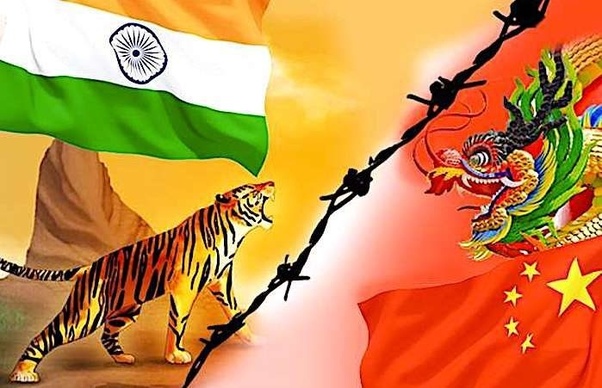
India faces a complex set of relationships with all its neighbours – Menon

Former Indian Foreign Secretary, Shivshankar Menon has said that although China has invested heavily in countries like Pakistan and Sri Lanka, that does not automatically translate into political influence over a country’s foreign policy, popularity, or into soft power.

He said this responding to a question on the role of China’s Belt and Road Initiative (BRI) plays in advancing China’s economic and soft power interests in South Asia during an interview with E-International Relations magazine.

“The BRI plays a very considerable role in advancing China’s interests. It plays to China’s strengths, which are economic, where it is not really matched by any other power in the subcontinent. Nor do outside powers prioritise countervailing China’s growing influence in the subcontinent. By committing over US$ 100 billion to BRI projects in the subcontinent, China has made herself indispensable to the infrastructure and economic plans of the leaders of several countries in the subcontinent,” he said.

However, at the same time the examples of Pakistan and Sri Lanka suggest that one should be cautious in drawing the conclusion that this automatically translates into political influence over a country’s foreign policy, popularity, or into soft power, he said.

“The attractiveness of the Chinese model or way of doing things is still rather limited, as is their power of attraction. This is still a work in progress and the Chinese leadership has often spoken of the need for China to gain soft power. So, its impact on India’s relations with these countries has not, to my mind, yet peaked. India has other affinities and common interests with our neighbours that China cannot match that I think we should concentrate on, rather than trying to match or imitate China,” he said.

Menon added that in his recent book ‘India and Asian Geopolitics: The Past, Present‘, he suggests that China will not behave as Western powers have. He said that the Chinese are very conscious of their own political and strategic tradition. China, particularly their present leadership, see the last 150 years as a historical aberration, a “century of humiliation,” Menon said.

“It is an aberration in their mind from an imagined past when China was the preeminent power in the world, the largest economy, a technological leader, and so on. Objective historians and non-Chinese might have their own, different view of the past, but it is this perspective and the quest for primacy it produces that seems to drive China’s international behaviour now,” he said.

China’s is a different strategic culture from that of the two previous global superpowers, Great Britain and the USA, he said. The former Indian Foreign Secretary said that China’s geography, history, resource endowment and dependencies on the world are different from those western powers.

“Hence my sense is that they will not behave as western powers have. Today, China is yet to be a global superpower, and it is difficult to predict whether she will succeed in this quest, which is facing resistance,” he said.

Menon also said that if the political relationship between China and India remains adversarial, cutting their economic dependencies on China would become a strategic necessity.

“To my mind, the two countries need to find a new paradigm for the relationship, or a new strategic framework, within which to manage or settle these issues and to take the relationship forward. In other words, the present situation calls for a fundamental reset of India-China relations,” he said.

He added that the biggest challenge for India in the last decade was the fact that the international environment became less supportive of the efforts to transform India, particularly after the global economic crisis that began in 2007-8.

“The rise of China and the growth of China-US strategic rivalry changed the situation, opening new opportunities for India-US relations but also creating challenges in our neighbourhood and on the India-China border where China has been changing the status quo. China has emerged unequivocally as our greatest strategic challenge but is also our greatest trading partner. We now face a complex set of relationships with all our neighbours and the major powers in a world that is adrift between orders,” Menon said.

Menon also said that the idea of hard linear boundaries is a relatively recent one in history, a feature of the Westphalian state that has acquired popular legitimacy with the rise of nationalism. However, South Asia has “old nations in new states” he said, pointing to the limitations of these boundaries.

“For most of history, borders, as opposed to linear boundaries, were zones of interaction and communities straddled these borders, while trading, traveling, and carrying on the normal business of life across these porous borders.

With the evolution of India and its neighbours into modern Westphalian states in the second half of the 21st century, and the partitioning of the subcontinent into post-colonial states, hard boundaries were imposed on ancient communities and nations which did not coincide with natural features or ethnic divisions or with their patterns of life.

This is why border zones in most of our countries have been unstable and increasingly securitised by the state, with unfortunate consequences for the inhabitants. The most extreme example of this phenomenon is Pakistan. But I do believe that there are political and economic solutions to these issues which are increasingly being practised by the other countries in the subcontinent, such as India and Bangladesh,” he said.

Posted in Uncategorized

Easter Attacks case postponed to January 2022 as accused request for indictments to be read in Tamil

The case filed against 25 accused with regard to the 2019 April 21st Attacks was postponed to the 12th of January 2022, by the Colombo Permanent High Court Trial-at-Bar on Tuesday (23).

The case was called up in the presence of Justices Damith Thotawatte, Amal Ranaraja, and Nawaratne Marasinghe.

On Tuesday (23), the accused requested the court for the indictments filed against them to be read out in Tamil, and considering the request and the time period required to translate the charges in Tamil, the case was postponed.

In addition, lawyers were not present for 10 of the accused.

The Court also sent a reminder to the President of the Sri Lanka Bar Association to make available lawyers who are fluent in Tamil.

The accused were moved in and out of the court premises under tight security.

Sri Lanka ruling party MP to resign, take up US envoy post to strengthen US-SL ties

Elected ruling Sri Lanka Podujana Peramuna (SLPP) parliamentarian Mahinda Samarasinghe on Tuesday (23) said he will take up the ambassador post in the United States with effect from next week.

“President Gotabaya Rajapaksa requested me to accept the ambassador post to the US. I accepted,” Samarasinghe told parliament.

“I expect to resign from parliament in two or three days and fly to the US on Friday (29), against a backdrop of the US becoming a member of the United Nations Human Rights Council (UNHRC) with a huge vote margin victory. The US starts its membership on January 1.”

Samarasinghe’s decision to take up the diplomatic posting comes as Sri Lanka under President Rajapaksa is trying to balance a foreign policy that is seen as China friendly. Western nations including the US have been pushing the Rajapaksa government to address alleged past human rights violations though the UNHRC.

The rights body has adopted a tough stance on Sri Lanka over its past rights abuses. Samarasinghe said his appointment was to strengthen Sri Lanka’s relations with the US amid the challenging allegations and the UNHRC’s calls for a probe

The UN General Assembly last month elected the US to the Geneva-based UNHRC, more than three years after the Trump administration quit the 47-member body over what it called chronic bias against Israel and a lack of reform.

“I can tell from the 10-year experience of dealing with the UNHRC, when the US becomes the member, the US will be taking a leadership role. So I see that it as an essential to develop good relations and mutual understanding with the US,” said Samarasinghe.

“President Rajapaksa is also of the view that it is not only on economic grounds but also politically that we must form a strong relationship with the US. I am going to fulfill this objective.

“I am not leaving politics. I am going at the request of the president. I want to remind you that I will be giving political leadership to the people of the Kalutara district upon my return after serving the motherland,” he said, referring to his electorate.

Samarasinghe was elected from the island nation’s Western coastal district of Kalutara in the 2020 parliamentary poll. He polled the least preferential votes out of the eight SLPP representatives elected to parliament.

Kalutara district SLPP candidate Wadduwage Manju Lalith Varna Kumara is next in the list to succeed Samarasinghe, a party source said.

Samarasinghe was on a three month leave from parliament this year that was approved by the legislature.

Before joining politics, he was a politically-appointed official in the foreign service and served as the first secretary to the Sri Lanka High Commission in Australia as well as a counselor for the Sri Lankan Permanent Mission to the United Nations in Geneva in the 1980s.

Samarasinghe entered active politics in 1988 and was elected to parliament in 1994 on a center-right United National Party (UNP) ticket. He crossed over to the then government side in 2006, joining the ranks of the center-left Sri Lanka Freedom Party (SLFP).

He has served as Minister of Labour, Disaster Management, Plantation, Skills Development, as well as Ports and Shipping in his parliamentary career. He, as Ports Minister, signed the Chinese-built 1.5 billion US dollar Hambantota port deal to be handed over to China in 2018 on a 99-year lease.

Samarasinghe is the third SLPP legislator to resign from parliament since July.

He defected from the Rajapaksa camp after the 2015 presidential poll defeat and joined former president Maithripala Sirisena. He lost the parliamentary election later in 2015, but Sirisena appointed him on the national list.

Samarasinghe’s name was in Wikileaks quoted by then US ambassador to Colombo Robert Blake in 2007.

The cable said Samarasinghe had expressed concern that then President Mahinda Rajapaksa and his two brothers – Basil and Gotabaya- had rendered his human rights and humanitarian access efforts ineffective and that he would not sacrifice his political career to become “part of a white wash” for the Sri Lankan government’s then alleged recent human rights violations.

Posted in Uncategorized

New COVID-19 cases in Sri Lanka to increasingly be among vaxxed; lockdown incoming?

As vaccination continues, a majority of new COVID-19 cases in Sri Lanka in the coming days will be among the fully vaccinated, a health official said, asking people to brace themselves for a possible lockdown come end December.

Deputy Director General of Health Services Dr Hemantha Herath told reporters on Tuesday (23) that health authorities may impose strict restrictions by the end of the year with the coming Christmas season in mind and anticipating a spike in new cases.

“It won’t be a surprise if authorities declare strict travel restrictions or a lockdown in the coming festival season given the increase in public movement,” he said.

Speaking to EconomyNext, Herath said with the more people being vaccinated in the country, new infections and any deaths will inevitably be people who have received one or more doses of a COVID-19 vaccine.

“If we have vaccinated 100 percent of the population, any new patients we find will be people who have been vaccinated. A majority of deaths may also be those who have been vaccinated but had low immunity due to comorbidities.”

According to official data, Sri Lanka has vaccinated more than 62 percent of the total population as of Tuesday.

Herath could not confirm what percentage of the current active cases in Sri Lanka are vaccinated.

“But in the coming days, a majority can be those who have been jabbed,” he said.

“Not only patients in hospital wards, but a majority in intensive care units (ICUs) can also be vaccinated but experiencing severe conditions due to other health issues,” he reiterated.

Health officials confirmed 735 new cases on Monday (22) with 31 deaths also confirmed for the previous day, an increase of 11 from the day prior.

With the new patients, total cases in Sri Lanka since March 2020 have increased to 558,120 with 16,434 active ceases.

With the home based treatment method in place only around 50 percent of the active cases who need medical attention are currently receiving treatment at hospitals.

Despite the surge in patient numbers, Sports Minister Namal Rajapaksa said on Tuesday that the health ministry has given the go ahead to host a limited number of spectators at the upcoming Lanka Premier League (LPL) cricket tournament.

The approval also includes permission for limited crowds to be allowed at the ongoing test tournament between West Indies and Sri Lanka in Galle, the minister said.

The test tournament began on November 21, with the final to be played on December 03.

“I have not been officially informed about the Director General of Health giving such permission for a crowd gathering,” Herath told EconomyNext.

“Maybe he gave a special permission for that. However, as heath sector workers, my personnel opinion is that it is absolutely not suitable to give permission for such an event in the current situation.

“According to the guidelines I have received so far, no permission has been given for any kind of gathering for sports or festivals,” he said.

Election Laws PSC calls for unbiased media coverage

The Parliamentary Select Committee (PSC) to Identify Appropriate Reforms of the Election Laws and the Electoral System and to Recommend Necessary Amendments has recognised the need for impartial media coverage during periods of elections for the purpose of conducting free and fair elections.

These aspects and related matters have been raised during its discussion with key electronic media institutions on 20 November.

“Committee Chairman and Education Minister Dinesh Gunawardena stated that impartial election campaigning is a key factor in free and fair elections. Many concerns have arisen due to unfair media reporting at present. During an election period, electronic media institutions charge a very high price for election advertisements. He pointed out that this was a serious injustice to certain political parties and politicians,” a parliamentary press release issued in this regard noted on Monday (22).

Sources told The Morning yesterday (23) that the discussion had centred round the increased rates that are charged by media institutions during election times. Representatives of private media institutions had noted that the increased rates work on the basic principles of demand and supply, and the fact that media institutions are able to get a higher profit during election times.

On the other hand, it was noted that this leaves “no chance” for lesser known political parties or candidates who do not have rich sponsors supporting them, thus making the playing field uneven during the time of an election campaign.

“Although the Sri Lanka Rupavahini Corporation (SLRC) and the Sri Lanka Broadcasting Corporation (SLBC) provide free airtime for all candidates during election times, this process also has certain irregularities. The time slot for each candidate is determined through a random process (drawing of lots). However, if a lesser known candidate gets a primetime slot for advertisements during this process, they may trade it to a more popular candidate. Some candidates may not even use the time slot they were given which in turn leads to co-ordination issues concerning the airtime within the SLRC and the SLBC,” sources added.

Additionally, another problem which was discussed is that the Election Commission (EC) only has the capacity to monitor news during election times. A non-governmental organisation (NGO) has monitored other aspects of the electronic media during the most recent elections.

Discussions about the reforms have noted the difficulty of implementing a legal mechanism to regulate the media during election times. However, proposals by stakeholders have included agreements between candidates and the media institutions, with the Election Commission acting as an intermediary, to adhere to certain principles during the election times.

The parliamentary press release further noted that the representatives of the Election Commission have told the committee that the criteria issued by the Commission are only applicable to state-run media and that it is important to seek information from the Mass Media Ministry on the implementation of these criteria. “The Attorney General’s Department should be consulted for the practical implementation of the media criteria issued by the Election Commission,” the press release noted, quoting Labour Minister Nimal Siripala de Silva, who had also addressed the committee on 20 November.

Meanwhile, Sri Lanka Podujana Peramuna (SLPP) Parliamentarian Madhura Withanage has said that news reporting is not balanced during election times.

The discussion had involved officials from both state and private electronic media institutions, including the SLRC and the Independent Television Network (ITN).

Representatives from the media institutions have noted the need for a single legal framework effective for both state-run and private media institutions during election times.

Foreign Minister Prof. G.L. Peiris said on Monday that the committee led by Gunawardena will present its proposals on election law reforms to the Parliament by late January or early February 2022. “The country is very focused on changing the electoral system as both political parties and the public are of the opinion that it is unsuitable. The committee led by Gunawardena is looking into it already, meeting about twice a week, in discussions spanning for more than two hours at a stretch. Those recommendations will also be given to Parliament towards the end of January or at the beginning of February 2022. Those recommendations will also be very helpful,” said Prof. Peiris whilst addressing the media.

The committee is due to meet again on Friday (26) for a discussion with representatives from the print media.

SL bound to go for dialogue with IMF this December: Ranil

Sri Lanka is bound by section 4 of the UN Monetary and Financial Conference to go for a dialogue with the International Monetary Fund (IMF) in December this year, UNP MP Ranil Wickremesinghe told Parliament today.

Mr. Wickremesinghe who was speaking during the committee stage debate on the budget said the IMF was established under the UN Monetary and Financial Conference to promote international monetary cooperation.

“Sri Lanka is bound to go for a dialogue with the UN under section four of the UN Monetary and Financial Conference in December this year. Therefore I request that the details of this dialogue be presented to Parliament. This dialogue will contain the ideologies of the Sri Lankan government, ideologies of the IMF and the agreements reached by both parties. Parliament has the right to know details of this agreement,” he said.

Also he said spending for the presidential task forces from the president’s expenditure heads is unlawful. “Parliament has power over the finances and control of the cabinet as per the constitution. The Cabinet is responsible to Parliament. The task forces were appointed without the cabinet approval followed by Parliament. The task forces are not responsible to Parliament. Therefore spending for the task forces is illegal,” he asserted.