EXTREME WEATHER: RED ALERT issued for Heavy Rains

Showery condition is expected to enhance further in North-western, Western, Sabaragamuwa and Northern provinces and in Galle Matara, Kandy and Nuwara-Eliya districts today and tomorrow (09), due to influence of the prevailing wind convergence zone in the vicinity of the island.

Issuing a ‘Red Alert’ for heavy rain, the Meteorology Department said that very heavy showers above 150 mm can be expected at some places in Northwestern, Western and Sabaragamuwa provinces and in Kandy and Nuwara-Eliya districts.

Heavy showers about 100 mm can be expected at some places in Northern Province and in Matale, Galle and Matara districts during next 24 hours, it said.

General public is requested to take adequate precautions to minimize damages caused by temporary localized strong winds and lightning during thundershowers.

Posted in Uncategorized

Sri Lanka Central bank defends controversial export dollar surrender rules

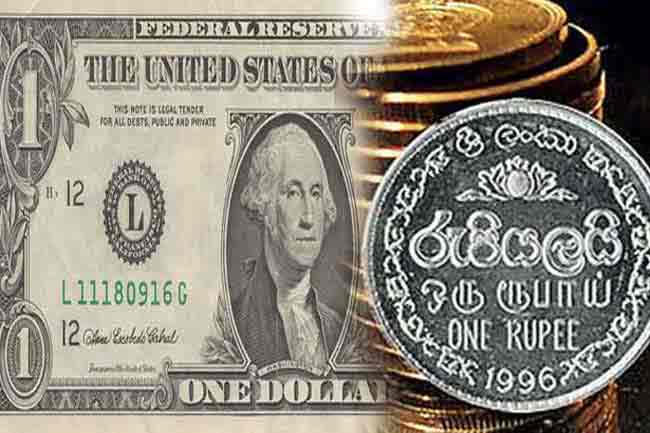
Sri Lanka’s central bank has defended new exporter dollar surrender requirements, which applies to both merchandise and services exports, imposed after money printing created forex shortages.

The new rules which allows for deductions, represent a relaxation for exporters with large import content, the central bank said.

“The residual after the utilisation of export proceeds as above will have to be converted into Sri Lanka Rupees,” the monetary authority said.

“This method, followed by several other countries, ensures that exports with a large import content are not penalised, while enabling exports with a higher domestic value addition to convert a greater percentage of proceeds, after meeting foreign currency financial obligations of such enterprises.”

Analysts had warned that then the official 203 to the US dollar is on the weak side, surrender requirements inject new money, further loosening the credit system, which is already bleeding dollars due to liquidity injections and low rates out of line with domestic credit developments.

However the central bank has been re-selling dollars to importers.

There have been also concerns that export revenues would also be diverted to unofficial channels, like remittances were diverted.

Exporters of services would find it even more easier to divert earnings and price service at or below cost, analysts say.

The full statement is reproduced below.

08 November2021
Communications Department

New rules to convert export proceeds will result in multiple benefits to the country and have no impact on inward remittances by Sri Lankans working abroad.

Sri Lanka has embarked on a focused path towards ensuring macro-economic and financial system stability, having faced strong headwinds from the COVID-19 pandemic.

The pandemic resulted in a substantial loss of foreign exchange revenues to the country, but unprecedented support provided by the Government and the Central Bank of Sri Lanka (CBSL), from fiscal, monetary and public health aspects, has helped a strong rebound of the economy as well as a considerable recovery in some foreign exchange earning sectors.

The tourism sector is also expected to display a notable recovery in the period ahead, and concerted efforts are taken to improve worker remittance inflows through formal channels.

Recent tensions in the forex market have also highlighted the need for Sri Lanka to increase its reliance on foreign exchange earnings over time to strengthen the economy, rather than increasing its foreign borrowings which exposes the economy to various types of shocks.

In this context, in February 2021, the CBSL issued Rules under the provisions of the Monetary Law Act to reinforce the prevailing repatriation requirement on proceeds of merchandise exports and ensure the conversion of a given share of such proceeds within a specific period of time.

These Rules that had been based on similar rules of neighbouring countries, had been fine-tuned from time to time upon requests made by the business community, while those have also helped to ease foreign exchange liquidity issues faced by the domestic market to some extent, with a gradual improvement in repatriation and conversion of export proceeds.

In addition, with mandatory sales of export proceeds converted under the aforesaid Rules by licensed banks, the CBSL has been able to purchase a reasonable quantum of forex from the market thus far during the year, which the CBSL has utilised to part-finance the import of essential commodities to the country during the past few weeks.

Under the new Rules issued on 28 October 2021, the minimum mandatory conversion rate of 25 percent has been relaxed, and instead, exporters have provided with the opportunity to utilise export proceeds for:

a) outward remittances in respect of current transactions;

b) withdrawal in foreign currency notes, as permitted;

c) debt servicing expenses and repayment of foreign currency loans;

d) purchases of goods and obtaining services including one-month commitments; and

e) payments in respect of making investments in Sri Lanka Development Bonds (SLDBs) in foreign currency up to ten per cent of the export proceeds, so received.

The residual after the utilisation of export proceeds as above will have to be converted into Sri Lanka Rupees. This method, followed by several other countries, ensures that exports with a large import content are not penalised, while enabling exports with a higher domestic value addition to convert a greater percentage of proceeds, after meeting foreign currency financial obligations of such enterprises.

In addition, considering the importance of the growing services export sector and the concessions provided to such sectors over time to expand their activities by the Government, the Rules have been extended to services exports as well.

This coverage has been defined in the Rules as payments received in foreign exchange by a person resident in Sri Lanka for services (including professional, vocational, occupational, or business services) provided to a person resident outside Sri Lanka. Accordingly, remittances by Sri Lankan expatriates, which are not considered as services exports, will not be subjected to these Rules.

The implementation of the new Rules, which treat merchandise exports and services exports equally, is expected to provide greater foreign currency liquidity to the domestic market, ensuring the availability of foreign exchange for essential payments at a reasonable exchange rate by Sri Lankans, including the purchase of imported goods, overseas education, foreign travel and health expenses, etc.

In addition, the Rules will enable the identification of the true “value addition” of each export sector of the economy, through the different ratios of conversion as reported by banks.

Exporters enjoy various tax concessions and other advantages provided by the Government in recognition of the net foreign exchange inflow to the country through their operations, and in consideration of the benefits accruing to the country when such proceeds are converted into Sri Lanka Rupees.

Realisation of these anticipated outcomes will therefore enable the Government to continue the provision of concessions to such sectors.

Full repatriation of foreign exchange earnings and improved conversion will also help ensure the stability of the exchange rate and support the stability of the macro-economy and the financial system.

UN investigator wants Scotland to stop training Sri Lankan officers

Police Scotland must stop training Sri Lankan officers if allegations of state-sanctioned torture are confirmed, according to the UN investigator behind an excoriating report into the country’s human rights abuses.

Professor Manfred Nowak, a former United Nations Special Rapporteur on human rights, called for Holyrood to launch an inquiry into the claims of police brutality made by refugees fleeing Sri Lanka for Scotland.

If their claims are established, he said, Scotland’s national force must end its controversial training of Sri Lankan police and special units.

Police Scotland insists its international training improves world policing but critics fear the force has been naive to work with the government in Colombo while its tacit endorsement is helping whitewash the torture, abduction and murder of ethnic minority Tamils.

The long-standing police training programme – which has involved Sri Lankan officers, including some later linked to systemic torture, being trained at Police Scotland’s Tulliallan HQ and Scots officers travelling to Colombo – is currently in limbo while being reviewed by the Foreign Office.

MSP Mercedes Villalba has now written to the British High Commission in Sri Lanka voicing concern that Police Scotland’s training of Sri Lankan police has gifted the Colombo regime “an unwarranted legitimacy” and is “a smokescreen for human rights abuses”.

Nowak, a leading human rights lawyer and secretary general of the Global Campus of Human Rights, said it was alarming that torture techniques he exposed for the UN in 2007 are allegedly still being used and he urged Police Scotland to instigate a criminal investigation into the claims of refugees from Sri Lanka.

He told The Post: “The Scottish Parliament should hold an inquiry and Police Scotland must investigate these allegations of torture and participate with the police in Sri Lanka to prosecute the perpetrators.

“If Sri Lanka does not co-operate or seek to prosecute, then this matter should be brought before the international courts as cases have been in the past.”

He said the testimonies of torture victims who have fled to Scotland in fear of their lives were strikingly similar to the allegation he uncovered in Sri Lanka 14 years ago: “The use of practices such as hanging victims from their limbs, or even their fingers, was something I encountered, as was the use of plastic bags with petrol.

“If there is evidence which shows these practices are being used by the police in Sri Lanka, then Police Scotland need to step away from any future training programmes.”

MSPs have backed Nowak’s call for a parliamentary inquiry. Scottish Lib Dem leader Alex Cole-Hamilton echoed his concerns and said: “Any continuation of the training arrangement Police Scotland has with Sri Lanka brings us worryingly close to a complicit relationship with people who we now know are committing torture and rape on an industrial scale. (Courtesy The Sunday Post)

Posted in Uncategorized

Foreign reserves dip to US$ 2.3bn by October-end

Foreign exchange reserves were measured at US$ 2,267.5 million by the end of October, down from US$ 2,704.2 million in September as the Central Bank settled US$ 492.9 million worth foreign liabilities during the month. Sri Lanka is scrambling to shore up its reserves amid slowdown in inflows due to the pandemic and rating downgrades.

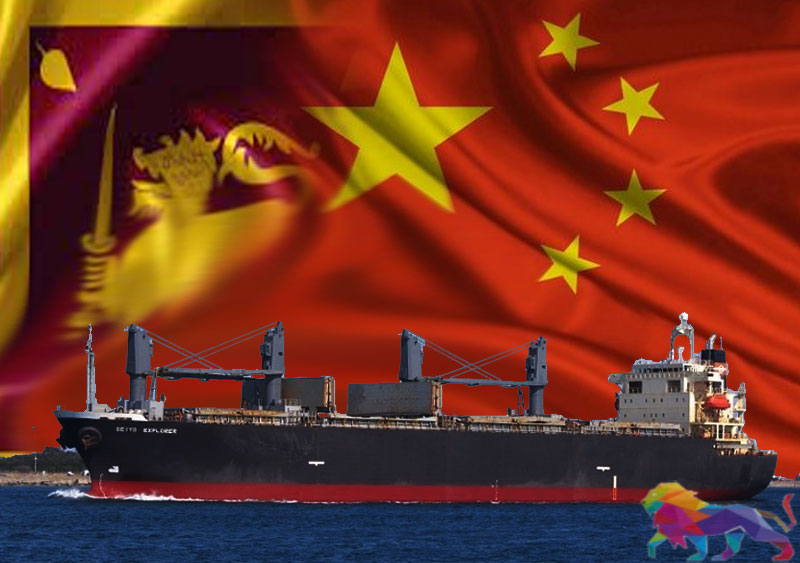
The October reserves touched a fresh post-war low, sufficient for only 1.8 months of imports. But, Sri Lanka has US$ 1.5 billion equivalent swap line signed with People’s Bank of China earlier in the year, which is kept as a stand by support.

The Central Bank recently tightened the foreign exchange conversion rule on both goods and service exporters to rebuild reserves from non-debt creating inflows. Exports have been on an upward momentum since June, generating over a billion dollars or close to that during last four months.

However, the remittance income, which grew constantly fell out of favour since around the same time due to the foreign exchange crunch, which gave rise to several parallel exchange rates in the unofficial channels, prompting action by the authorities to bring the situation under control and thereby re-channel remittances through the official modes.

Meanwhile, increased tourist arrivals in the months of September and October after the easing of virus related restrictions have rekindled hopes for the faster recovery in the US$ 4.5 billion tourism industry, which has the potential to alleviate much of the pressure in the country’s foreign exchange sector.

The Central Bank in early October announced a slew of short term inflows for the next six months, amounting to roughly US$ 10 billion through March next year to ride through the most challenging period of foreign exchange and economic conditions, predominantly pandemic generated. However, Moody’s Investors Service on October 28 further downgraded the country’s sovereign rating to Caa2 from Caa1 citing dwindling reserves and the expanding budget deficit as they grew skeptical over the ability realise the announced inflows.

Sri Lanka’s attempts to generate foreign income out of full or partial sale of State assets have also mired in controversy due to lack of transparency. The proposed partial sale of the coal power plant, Yugadhanawi is a case in point.

While in the first six months, Sri Lanka having received US$ 398 million worth foreign direct investments, the Board of Investment is confident of ending the year with at least US$ 900 million and over a billion dollars in direct investments in 2022.

During the three months from October through December, the country has foreign currency commitments of US$ 553.9 million. During 2022, it has foreign currency commitments of US$ 5,674.3 million, which includes two international sovereign bond settlements of US$ 500 million and US$ 1 billion falling due in January and July respectively.

Posted in Uncategorized

Sri Lanka reports 19 Covid-19 deaths on Monday, toll rises to 13,875

Sri Lanka Monday reported 19 deaths due to COVID-19 after the figures were confirmed by the Director General of Health Services on Sunday, November 07.

Among the deaths reported today, 13 are of males and 06 of females. The majority of deaths – 11 – are of elderly people in the 60 years and above age group.

According to the data reported by the Government Information Department, the total deaths due to Covid-19 since the pandemic began last year has now risen to 13,875.

Posted in Uncategorized

‘One Country, One Law’ Task Force is unconstitutional : A ‘ridiculous move’ by the President – UNP

The United National Party (UNP) has denounced the formation of the Presidential Task Force appointed to study the implementation of the “One Country, One Law” concept, calling it a ‘ridiculous move’ by the President to remove this topic from the purview of the Minister of Justice and the Attorney General without discussing it in the Cabinet first.

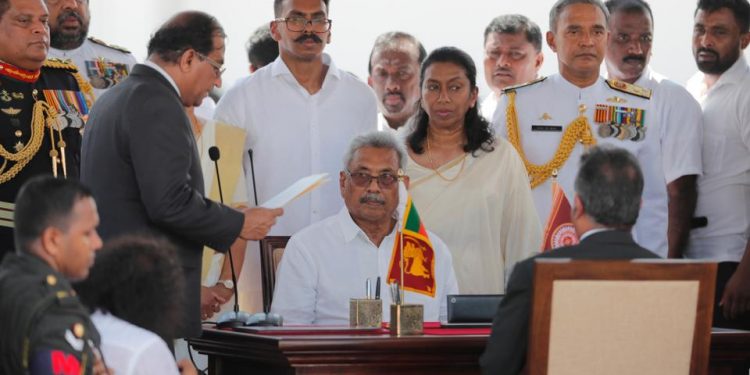
Noting that this is an unconstitutional act by the President as this is a function of Parliament and that it is detrimental to the unity of the country, the UNP called on President Gotabaya Rajapaksa to immediately abolish the 13-member Presidential Task Force.

The decision to oppose the government’s ‘One Country, One Law’ Task Force was taken when the party’s Working Committee met at Sirikotha on Friday (05) under the patronage of former Prime Minister and UNP Leader Ranil Wickremesinghe.

According to sources, former ministers Ravi Karunanayake, Navin Dissanayake, Arjuna Ranatunga and Lakshman Wijemanne had also taken part in the meeting.

Commenting on the ‘One Country, One Law’ concept, UNP Leader Ranil Wickremesinghe pointed out that with the emergence of an independent Sri Lanka, D.S. Senanayake created a Sri Lankan identity.

“Under this identity the Sinhalese, Tamils, Muslims and Burghers were provided a way forward with one identity as defined in our national anthem by the words ‘because of the children of one mother’. This is also mentioned in the Fundamental Rights Chapter of our Constitution,” he said.

He observed that there were separate laws for different sections of the people in this country. Commenting further, the former Prime Minister said;

“The law of our ancient Sinhala kingdom is today known as the Kandyan law. It is more than 700 years old, the Roman Dutch law is more than 600 years old.

Thesawalamai law is a special law which is about 500 years old and is unique only to Jaffna, having not been practiced even in South India. At the same time, the existing law for Muslims has long been accepted.

In addition, an ethnic group called the Mukkuwa in the Eastern Province lived until the latter half of the 19th century, under a separate law. In the 20th century, this group became extinct due to its mixing with the Tamil and Muslim communities.

We have accepted the methods and characteristics of different ethnic groups from the past and no one has been harmed by them. The removal of these laws would be tantamount to the removal of the legal framework established for the entire state of Sri Lanka. We can fix the shortcomings in these laws.

Primarily, the rights of married women are restricted in the Thesawalamai law. We must address that.

Under Muslim law, too, the rights of married women are minimized, and a Bill was drafted in 2019 by the Good Governance Government to amend it.

The Presidential Task Force was appointed at a time when this Bill was being taken forward by Justice Minister Ali Sabry.

In addition, the equal treatment of women and men in Sri Lanka is not seen in all sectors and laws should be introduced for that as well. A dialogue has been formed in the country regarding this.

However, the appointed Presidential Task Force is destabilizing and destroying national unity.

The Minister in charge of the subject or the Attorney General may seek advice and assistance from the President, without relying on a Presidential Task Force to convey his opinion.

The first thing to do is to debate in Parliament these laws.

Thereafter, a Select Committee should be appointed to discuss the matter with the assistance of the Ministry of Justice and especially the Attorney General.”

Sri Lanka continues to ignore UNHRC resolution

Batticaloa Municipal Councilor Thuraisingam Madan has stated that a police investigation is being carried out against those who paid homage at the Batticaloa Shathurukkondan massacre memorial on 09-09-2021.

Batticaloa Municipal Councilor Thuraisingham Madan has stated that a Sri Lankan police investigation is underway against those who paid homage at the massacre memorial that day.

He said that Batticaloa Municipal Council members T. Gauri and Thuraisingam Madan were called to the Batticaloa Sri Lankan police HQ on Wednesday (3-11-21) evening and investigations were carried out.

Madan said he had been informed about the purpose for which he had attended the tribute event and that investigations were being carried out on the instructions of the police chief.

He further added that the legal status of the country was being called into question by the fact that no action had been taken in connection with the assassination of Shathurukkondan, Batticaloa.

Meantime the United nation human right council resolution 46/1 expresses serious concern at the trends emerging over the past year, which represent a clear early warning sign of a deteriorating situation of human rights in Sri Lanka, including the accelerating militarization of civilian government functions; the erosion of the independence of the judiciary and key institutions responsible for the promotion and protection of human rights; ongoing impunity and political obstruction of accountability for crimes and human rights violations in “emblematic cases”; policies that adversely affect the right to freedom of religion or belief; increased marginalization of Tamil and Muslim minorities, surveillance and intimidation of civil society, restrictions on media freedom, and shrinking democratic space; restrictions on public memorialization of victims of war including the destruction of a memorial; arbitrary detentions; alleged torture and other cruel, inhuman degrading treatment or punishment, and sexual and gender-based violence, ; and that these trends threaten to reverse the limited but important gains made in recent years, and risk the recurrence of policies and practices that gave rise to the grave violations of the past.

But the Sri Lankan government continues to ignore UNHRC resolution and supress Tamils fundamental rights which is fully enjoyed by Singala population.

Posted in Uncategorized

“Pay us US$ 8 Mill in 3-days (OR ELSE!)” – Chinese fertilizer Co. tells Sri Lanka.

Qingdao Seawin Biotech Group Co., Ltd., the Chinese Organic Fertilizer Manufacturer has sent a Letter of Demand to the National Plant Quarantine Service.

The Letter of Demand seen Exclusively by News 1st notes that Qingdao Seawin Biotech Group Co., Ltd., has suffered significant loss and damage in a sum of US$ 8 Million and continues to suffer further loss and damage due to loss of reputation and goodwill as well as existing and potential business, due to the negligent conduct of the National Plant Quarantine Service.

The LOD noted that the NPQS make a payment of US$ 8 Million within 3 days from the date hereof for the loss and damage caused to Qingdao Seawin Biotech Group Co., Ltd.

However, the Director General of Agriculture Dr. Ajantha De SIlva told Exclusively to News 1st that no such Letter of Demand was received.

Sri Lanka, not IMF, should restructure debts: Jayasundera

Sri Lanka itself should restructure its loans instead of seeking the assistance of the International Monetary Fund (IMF) and the government has been reducing sovereign debts in that strategy, Presidential Secretary P B Jayasundera said this week.

Moody’s downgraded Sri Lanka’s sovereign rating by slashed one notch down to Caa2 from Caa1 to near default category and global fund managers and analysts have warned Sri Lanka to start IMF discussions seeking debt restructuring.

Sri Lanka is facing a risk of sovereign debt default, analysts say, as its expected foreign inflows are less than the expected foreign outflows amid a depleting foreign reserves after the central bank’s excess money printing resulted in unabated imports despite stringent regulations to cut imports.

Jayasundera, Sri Lanka’s top civil servant and former finance secretary who still has a considerable influence in economic policies, said the government still does not see a need for IMF debt restructuring.

“I don’t see any reason to go to the IMF to restructure the loans. We should restructure the loans by ourselves,” Jayasundera told a virtual news briefing on Tuesday (02) held at Presidential Media Centre.

“We have been hearing about this debt restructuring, default, and need to go to the IMF for the past two years. But meantime we have reduced our sovereign debt by 2 billion US dollars to 13 billion US dollars.”

In a debt restructuring or a distressed debt exchange (DDE) is done by negotiators between the sovereign and a representative committee of bond holders.

However the presence of an IMF program and a sign off on debt sustainability, give confidence to bond holders to accept the re-structuring.

A fully-financed IMF program also unlocks further budget support loans if the government is willing to do growth generating reforms as well as Paris club relief.

Analysts have also warned that Sri Lanka’s reduction of government debt has come from a run-down of foreign reserves and a increasing net indebtedness of the central bank due to liquidity injections.

Jayasundera in September told EconomyNext that the IMF will “definitely” have a role to play in Sri Lanka’s post-Covid-19 economic recovery, but that will be after the authorities formulate the policy framework through the 2022 budget which will be presented on Nov. 12.

Speculations over President Gotabaya Rajapaksa’s administration going to the IMF are on the rise amid risk of sovereign debt default and possible collapse in the rupee currency. However, the government has strongly denied that it was going to the global lender.

Treasury Secretary S R Attygala participating in the same briefing said the government has reduced the foreign debt to 40 percent of the GDP now compared to 50 percent in early 2019 while facing all the risks.

Facing the foreign exchange crisis, the central bank has already started its informal road shows to meet foreign investors, Sri Lankan diaspora, central banks of other countries as well as commercial banks seeking for swaps with its counterparts, investments into government securities, a borrowing through syndicated loan, or investment into government securities.

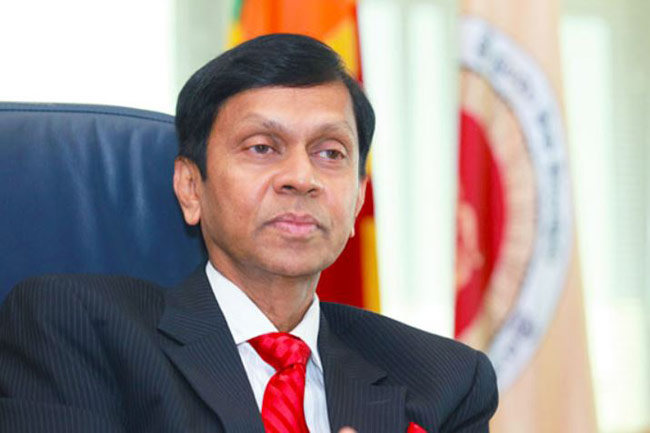
Central bank chief Ajith Nivard Cabraal was in Qatar late in October and met Qatari central bank officials and heads of Qatar National Bank, Doha Bank and The Commercial Bank Qatar, he said in a twitter.come message.

He is visiting the Middle East and attending an investor forum in Dubai to drum up investments to the country.

The central banks last week said many of the planned inflows are on the cards and some are at discussion levels.

Sri Lanka has outlined plans to bring in inflows, but analysts have said the core problem is to stem outflows, which are occurring due to liquidity injections by the central bank which are driving demand and domestic credit up.

Liquidity injection not only made it difficult to raise dollars to repay debt, but also used up reserves to pay for day-to-day imports. Sri Lanka’s imports are at at three-year high due to liquidity injections.

Sri Lanka is now planning credit lines for fuel, in effect incurring foreign debt for day to day living.

Turkey wants closer ties with Sri Lanka: Foreign minister

The Turkish foreign minister on Saturday said Turkey wants to develop holistic relations with Asia that has become the center of global economic power.

Inaugurating a new office of Sri Lanka’s Antalya Honorary Consulate General in the town of Alanya, Mevlut Cavusoglu said Ankara desires to promote cooperation with Sri Lanka in fields such as economy, culture, and education.

Emphasizing that honorary consulates play an important role in diplomatic interactions, he recalled that the first Turkish diplomatic contact with Sri Lanka was established in 1864 when the Ottoman Empire opened an honorary consulate.

Turkey was one of the first countries to recognize Sri Lanka following its independence in 1948, he added.

Cavusoglu said bilateral ties have grown stronger since a tsunami rocked Sri Lanka in 2004 and President Recep Tayyip Erdogan paid a visit to the country at the time.

Commenting on financial relations, Cavusoglu said the two countries set a trade target of half a billion dollars, but the figure stood at about $102 million in the first half of 2021.

He suggested, however, that maintaining economic relationships based on a few specialized products would be unsustainable, and that trade ties should be more diverse.

The Turkish diplomat said health and tourism sectors should also be explored and incorporated into relations.

In a Twitter post, Cavusoglu said: “[Turkey] Will further develop our cooperation with friendly Sri Lanka in the framework of our Asia Anew Initiative.”

“Your generous gesture toward Sri Lanka reflects our two countries’ historical brotherly relations. I must say Turkey is a true friend,” said Sri Lanka’s Ambassador to Turkey Mohamed Rizvi Hassen.

“By opening the consulate we are looking forward to increasing trade, investment, tourism and cultural relations, and more importantly people-to-people contact with this region.”

He added: “The region of Antalya has many opportunities, which can bind the business community in Sri Lanka. Our initiative to open this office provides an opening to explore untapped opportunities available in Antalya for the betterment of the people of Turkey and Sri Lanka.”