Fertiliser crisis: Government to meet Chinese diplomats

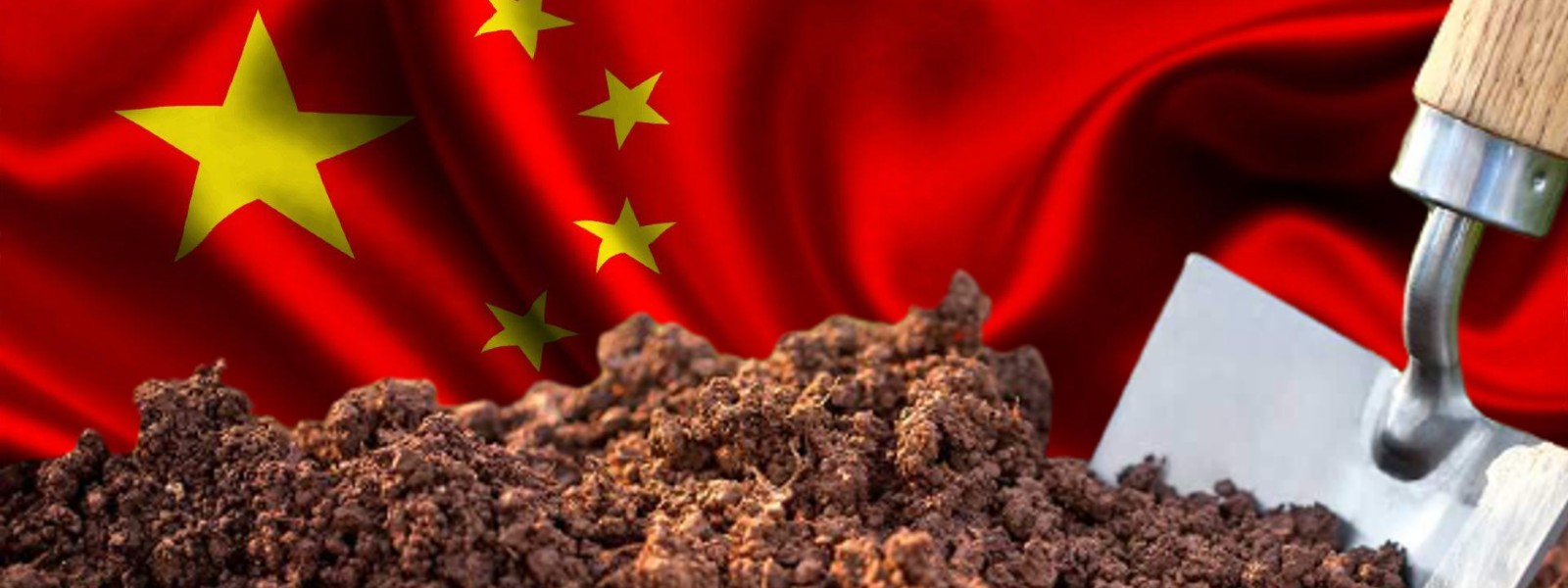
Chinese diplomats will meet officials of the Agriculture Ministry tomorrow (8) to discuss the rejection of a stock of Chinese organic fertiliser bound for Sri Lanka, The Sunday Morning learnt.

Responding to a query, Minister of Agriculture Mahindananda Aluthgamage said he intends to explain to them why the consignment was rejected following the testing of the samples provided by the Chinese company, Qingdao Seawin Biotech Group Co., Ltd.

This move came on the heels of the Colombo Commercial High Court extending the enjoining order issued against the Chinese company till 19 November. The order was first issued after consideration of a petition filed by state-owned Ceylon Fertiliser Company (CFC) on 22 October.

The controversy over the Chinese fertiliser consignment was sparked when organic fertiliser samples provided by Qingdao Seawin Biotech Group Co. Ltd., which were tested twice by Sri Lanka’s National Plant Quarantine Service (NPQS), were found to have contained micro-organisms, including harmful bacteria – a charge the supplier denied. Moreover, the Chinese Embassy in Colombo called into question the local testing methodology and requested the Government to submit the samples to a third party for testing.

Minister Aluthgamage said that a third test would not be permitted, but added that samples from a new stock of fertiliser could be tested for approval if so required.

However, speaking to the media last week, University of Ruhuna Faculty of Agriculture Professor of Crop Science Aruna Kumara raised concerns about the possibility of some Chinese organic fertiliser containing high amounts of arsenic.

Meanwhile, last week, the Economic and Commercial Office of the Chinese Embassy in Colombo blacklisted People’s Bank for not honouring the letter of credit (LC) opened for the importation of said organic fertiliser.

However, People’s Bank maintained that they were bound by the enjoining order issued by the Commercial High Court, which prevented them from making any payments to the Chinese company in relation to the organic fertiliser shipment.

Efforts were being taken by the Sri Lankan Government to de-list the state bank, The Sunday Morning learnt.

Consignment ship loitering

Meanwhile, the vessel carrying the controversial consignment of fertiliser, Hippo Spirit, reportedly changed its name mid-voyage, and was in the close vicinity of Sri Lanka, a commercial ship traffic tracking service told The Sunday Morning.

According to sources, the name of the vessel was changed to “Seiyo Explorer” and had been tracked off the southern coast of Sri Lanka between 24 and 28 October.

Speaking to The Morning, Colombo Harbour Master Capt. K.M. Silva said the Hippo Spirit vessel could enter the port for a service call, but would not be allowed to disembark crew and unload cargo.

“If a service call is required, the vessel can enter the port. But, as of now, the Hippo Spirit vessel has not made the requisition. This is not an easy process. The local agent has to be informed by the vessel, after which the agent has to contact the Sri Lanka Ports Authority (SLPA) and arrange for the documentation to be processed. The agent will then need to make an advance payment. For a service call, food, water, and medicines will be provided to the vessel, but this also needs clearance.

“Most importantly, such vessels need to make a dangerous goods declaration, which, in itself, is a lengthy process. We can’t just accept the vessel when it comes,” said Capt. Silva.

He further clarified that the Navy was not informed or given permission to accept the Hippo Spirit vessel, adding: “The Navy is in charge of security threats which might come from the seas. This itself is a lengthy process, as the vessel needs clearance.”

He added: “We were informed yesterday (last Friday) as well to not accept the cargo. So, unless plans have changed from last (Friday) night, we will not accept the vessel,” he concluded.

Over the last two weeks, the Sri Lanka Port Authority maintained that they had not received any requests from the vessel, or its agents, to call to the port. However, it is learnt that the vessel was loitering near major shipping lanes outside Sri Lankan territorial waters (12 nautical miles).

Speaking to The Morning earlier this week, Ministry of Agriculture Secretary Prof. Udith Jayasinghe stated any attempt by the vessel to unload a prohibited consignment of fertiliser at a Sri Lankan port would amount to “terrorism”.

“The consignment has been rejected, and the fertiliser will not be tested for the third time. If this were to happen, the Director General needs to inform us, but that has not been done either.

“Now that it is rejected, we will not change our decision. If the ship comes by force into Sri Lankan waters and tries to unload – which is highly doubtful – it would be considered an act of terrorism,” Prof. Jayasinghe said.

Stop-gap solution questioned

The Government’s lack of preparedness to support its sudden policy change on fertiliser was made apparent when Sri Lanka last week took the unprecedented step of airlifting 100 tonnes of liquid nano nitrogen fertiliser with the aid of the Indian Air Force. Nano fertiliser is being promoted by the Government as a stop-gap solution until local organic fertiliser capacity-building takes place.

According to Minister Aluthgamage, a further 12,000 litres of nano fertiliser will arrive via sea freight this week. The nano fertiliser that was imported from the Indian Farmers’ Fertiliser Co-operative Ltd. (IFFCO) was being distributed among Sri Lankan farmers under the brand name “NANO RAJA”.

Speaking to The Sunday Morning, State Minister for Promoting Production and Regulating Supply of Organic Fertiliser Secretary Nihal Ranasinghe explained that the Government had ordered 2,125,000 litres of organic nano fertiliser for paddy and maize farmers for the Maha season. According to the Ministry of Agriculture, this quantity of nano fertiliser liquid was allocated to be used for 800,000 hectares of paddy and 300,000 hectares of maize and corn.

When asked if there was a request for nano fertiliser from other crop growers, Ranasinghe responded in the negative.

The storage and distribution of the nano fertiliser will be carried out by the CFC, it is learnt.

However, farmers raised questions about the availability and efficiency of the nano fertilisers that were imported. Farming groups and experts requested for an extensive study to be carried out on the effects of nano fertiliser on different crops before it was approved for use.

However, the Government responded that the liquid nano nitrogen fertiliser had been tested by the Bureau Veritas laboratory, adding that the fertiliser was also approved for use in many other countries. The Sunday Morning learnt that the Sri Lanka Standards Institute (SLSI) had appointed a committee to evaluate the fertiliser.

The agriculture sector is still in turmoil following the Government’s decision to ban the import and use of chemical fertiliser.

The ad hoc move by the Government drew widespread criticism, with even proponents of organic agriculture expressing concern about the policy change being implemented overnight, instead of through a gradual process through a clear and publicised plan.

Farming groups staged protests and burned effigies of state officials, calling on the Government to rethink its decision and to provide relief for those who were affected. Opposition politicians and subject matter experts warned that the ad hoc policy change would push already vulnerable farming communities further into poverty, and would likely cause a food shortage in the coming months.

Attempts to contact State Minister Shasheendra Rajapaksa and the CFC regarding the Chinese shipment and the plans for distribution of the liquid nano nitrogen fertiliser proved futile.

What Sri Lanka did may qualify as war crime: Norwegian diplomat Erik Solheim

Sri Lanka’s 30-year civil war ended in 2009, with the killing of Liberation Tigers of Tamil Eelam (LTTE) leader Velupillai Prabhakaran. More than decade later, the Sri Lankan government led by the Rajapaksa family is still battling allegations that the final days of the war witnessed mass murders.

Prabhakaran was allegedly shot dead by the Sri Lankan army, but not much is known about his final days. There are unconfirmed claims that he had offered to surrender.

THE WEEK interviewed Erik Solheim, former Norwegian diplomat and minister who had tried to negotiate a peace deal between the Sri Lankan government and the LTTE in the early 2000s. Solheim was a confidant of Prabhakaran, and the only outsider who met him several times before the ceasefire was broken and the final battle played out.

Solheim is now the convenor of the advisory committee of The Belt and Road Initiative International Green Development Coalition (BRIGC) at the World Resources Institute (WRI) in Washington, DC. BRIGC is a non-profit organisation that works with leaders in government, business and civil society to promote green initiatives. It is supervised by the Chinese Ministry of Ecology and Environment and has its own secretariat.

Solheim was in Chennai recently on WRI business. He spoke to THE WEEK about how the LTTE reached out to the world during the final days of the war, and how Prabhakaran rejected an offer from Norway and the international community.

Excerpts from the interview.

Q/ What actually happened in the last leg of the war?

A/ I don’t have any specific information. In the last few days of the war, the LTTE was contained to a small area in eastern Sri Lanka. On May 17, 2009—before the white flag incident (the alleged massacre of surrendering LTTE leaders and their families)—LTTE peace secretariat chief [Seevaratnam] Pulidevan called us and said he and [Balasingham] Nadesan, the head of the political wing of the LTTE, wanted to surrender to the Sri Lankan forces and wanted our involvement in that. We told him that it was too late.

We had, on many other occasions, proposed to end the war in a peaceful manner. But now there wasn’t much we could have done, because we were not on the ground. But we promised to inform Basil Rajapaksa, brother of president Mahinda Rajapaksa, about the LTTE’s intention to surrender. And we informed the president, too, the same afternoon. So, the government was well aware of Nadesan and Pulidevan’s intention to surrender.

Q/ You say the LTTE wanted to surrender. Does it mean that Prabhakaran, too, wanted it?

A/ They did not mention Prabhakaran. They only mentioned Pulidevan and Nadesan. We do not know if Prabhakaran was in the same place or somewhere else. Thereafter we got a message that Nadesan and Pulidevan had been killed. The most likely scenario is that they surrendered to the Sri Lankan forces and were executed. But, of course, we were not witness to this.

Q/ But why did they surrender? Was there no other option?

A/ This was the absolute end. They had to either fight it out or surrender.

Q/ There have been reports that Prabhakaran also surrendered.

A/ I have no knowledge on that matter. But the sure information I have is that his younger son, then 12 years old, was captured by Sri Lankan forces. The video clearly showed him with Sri Lankan soldiers, and then he disappeared. In all likelihood, he was executed after surrendering. A war crime, of course.

Q/ What do you know about Prabhakaran’s final hours?

A/ I do not have any answer to that. I think the world needs to know exactly what happened. The Tamil side or the Sri Lankan army should come forward and tell the truth.

Q/ But you said the LTTE reached out to you.

A/ They reached out to us, yes. But we do not have any information on Prabhakaran. In the last few months of the war, we communicated with Pulidevan and Nadesan and, through them, with Prabhakaran. We had invited KP (LTTE leader Kumaran Pathmanathan) to Oslo, because he was the LTTE’s foreign policy spokesperson based in Singapore.

KP agreed to come, and he arranged to take [Prabhakaran] from Singapore to Norway. But the meeting was cancelled at the last minute, obviously on Prabhakaran’s orders. So Prabhakaran constantly refused to organise an end to the war, which could have saved many lives.

Q/ You said the LTTE reached out to you on May 17, 2009. What was the situation before that day? Where was Prabhakaran?

A/ Before May 17, 2009, the main issue for us was to find an organised end to the war. It was very clear that the LTTE would lose. We wanted to save the lives of tens of thousands of Tamil and Sinhalese people. We wanted UN secretary general Ban Ki-moon and other dignitaries to negotiate a deal with Prabhakaran.

The deal was that Indian or US ships, flying the UN flag, would evacuate civilians and LTTE cadre from the war zone. Names and photos would be registered to ensure that those who surrendered would not be harmed. There were indications that the LTTE would accept this deal. But [ultimately] they did not. They wanted to fight till the last moment.

Q/ Did Prabhakaran reach out to you between 2007 and 2009?

A/ At that time, there was no way we could speak directly with Prabhakaran. He felt that the government would track his call and bomb the location. We communicated with him through Nadesan or Pulidevan. They spoke to us many times a week and told us that all was well, but we knew that they were losing ground. In fact, we spoke to them even on the day before they were to evacuate Kilinochchi, which was surrounded by Sri Lankan forces.

Q/ If the LTTE had accepted the deal, would there have been a separate Eelam?

A/ There would not have been a separate Eelam, but all of them would have been alive. There would have been, hopefully, a federal structure.

Q/ What kind of a person was Prabhakaran?

A/ He was not a charismatic person. There was a language barrier; we could not communicate with him in his language. He was more of a military man than a visionary leader. Be it losing the Jaffna peninsula in 2001 or destroying the Bandaranaike airport, and of course the assassinations of Rajiv Gandhi, Lakshman Kadirgamar and others, came from the military point of view.

The LTTE was the world’s first rebel group with a navy and air force. I can say that, until the later part of his life, he was an absolutely brilliant military leader. His political vision, however, was not in line with his military acumen. He did not understand India well; he did not understand the rest of the world. If he had understood India well, he would not have committed the blunder of killing Rajiv Gandhi.

He used to listen to [journalist and strategist] Anton Balasingham in all these matters. But after Balasingham died [in 2006], the LTTE began losing ground. I think Prabhakaran believed that there was a military solution to every problem.

Q/ Would you say that India offered support to the peace process?

A/ Except in the very last few months, India was always for peace in Sri Lanka. India was sceptical and suspicious of the LTTE, because of the Rajiv Gandhi (assassination). But India continuously gave all possible support to the peace talks. Then, after 2008, India’s mood changed. That was the first time [India] thought that the Sri Lankan government could win the war. It was then that India gave all intelligence support to them.

Q/ But you said India was always for peace.

A/ That is because the LTTE did not keep its promise [on ceasefire] earlier. After 2008, India did not trust Prabhakaran.

Q/ Would you say that the war involved ethnic cleansing or genocide?

A/ I normally don’t use that word. But the mass murder of tens of thousands Tamilians certainly happened. Hospitals and civilian institutions were shelled. It was very, very bad; it may qualify as a war crime.

Q/ Do you think the LTTE is regrouping, because the diaspora has always been for Eelam?

A/ I don’t think so. The appetite for an armed struggle in Sri Lanka has gone down. But I think the Tamil diaspora is regrouping for a much stronger civil push based on Gandhian methods.

Q/ But in many countries, including India, the ban on LTTE has not been lifted. Can this be justified?

A/ The LTTE does not exist at the moment, so the ban is not significant in my view. What is important now is to support the legitimate struggle of the Tamil National Alliance and other political parties which want to promote Tamil rights in Sri Lanka. The leadership must come from Sri Lanka itself.

Q/ What do you have to say about the present dispensation in Sri Lanka and their commitment to the 13th amendment, which created provincial councils and made Tamil an official language?

A/ The 13th amendment has been declared as a solution by India. Prime Minister Narendra Modi brought it up. External Affairs Minister S. Jaishankar and other leaders in India have been repeatedly asking Sri Lanka to implement it. I agree with them.

The Tamils of Sri Lanka should fight to expand their political space, ensure that peace remains and help devolve power. So, my advice to Tamils would be to maintain unity. And they should reach out to both Muslims and Sinhalese to find common ground. Indeed, the space for Tamils is far too limited in Sri Lanka. The international community should support the Tamil fight for expanding that space.

Q/ There is a growing concern in India about Chinese investments in Sri Lanka. Do you think that a geopolitical change is happening south Asia?

A/ When we were involved in Sri Lanka, China did not play any significant role there. We were all focused on India and, to some extent, on the US. China did not have major investments there at that time.

But now, it could be a difficult situation. China is investing everywhere in the world, and most countries benefit from these investments. So, Sri Lanka, in that sense, is not a separate case. China has also invested in India, but not as part of its Belt and Road Initiative.

Q/ But my question is specific. Is this altering the geopolitics in the region?

A/ I don’t think I want to comment on this. I would like to stay away from that.

Q/ What is the relationship between Norway and Sri Lanka, now that the LTTE is no more and Gotabaya Rajapaksa is president?

A/ We have a normal relationship with Sri Lanka. We have an embassy there, and trade and economic relations. But there are no special ties, as had been the case during the peace process. We no longer have a close relationship with top leaders.

Q/ You recently had a meeting with Tamil Nadu Governor R.N. Ravi. Did you discuss the LTTE issue?

A/ We did not talk about Sri Lanka. We spoke only about Covid-19 and environmental issues.

Posted in Uncategorized

The struggle for survival of small parties – Daily Mirror.LK

Is the row between the Sri Lanka Podujana Peramuna and the small parties in the ruling coalition real, or is it a drama? Many social media posts have posed this question. Some are of the opinion that this is a drama stage-managed by the ruling party leaders to divert the attention of the masses from many issues the country is currently faced with.

Meanwhile, some groups believe that the leaders of the small parties have resorted to this kind of agitations to extract more favours from Rajapaksas, while there are also people who see a section of Rajapaksas behind the agitations of the small parties, as a result of the feuds within the Rajapaksa family. Only a very few people seem to take the row seriously though the media that always crave for hot cakes attempt to portray a near breakup of the ruling coalition.

As in many cases such as the controversies on the Eastern Container Terminal of the Colombo Harbour and the Trancomalee oil tank farm, these small parties were initially reluctant to lead from the front in their current “struggle” against the government’s move to hand over treasury owned 40% of shares of the Yugadanavi power plant in Kerawalapitiya to a US based company. However, as far as the media is concerned their protests are more eye-catching than those of the Opposition political parties and they in turn get the benefit of media hype.

The issue on the transfer of 40% of Yugadanavi Power Plant was first cropped up in July when the trade unions in the electricity sector raised alarm with a warning to take trade union action following the signing of a framework agreement between the Government of Sri Lanka and the New Fortress Energy Inc.

On October 21, the US-based New Fortress Inc. issued a press release with a headline “New Fortress Energy Finalizes Contract with Government of Sri Lanka for LNG Terminal, Investment into 310 MW Yugadanavi Power Plant, and Gas Supply to Country’s Power Plants.” The statement further explained “New Fortress Energy Inc. (NASDAQ: NFE) (“New Fortress”) and The Government of the Democratic Socialist Republic of Sri Lanka (“GOSL”) jointly announced today that they have executed a definitive agreement for New Fortress’ investment in West Coast Power Limited (“WCP”), the owner of the 310 MW Yugadanavi Power Plant based in Colombo, along with the rights to develop a new LNG Terminal off the coast of Colombo, the capital city. As part of the transaction, New Fortress will have gas supply rights to the Kerawalapitya Power Complex, where 310 MW of power is operational today and an additional 700 MW scheduled to be built, of which 350 MW is scheduled to be operational by 2023.”

New Fortress will acquire a 40% ownership stake in WCP and plans to build an offshore liquified Natural Gas (LNG) receiving, storage and regasification terminal located off the coast of Colombo. New Fortress will initially provide the equivalent of an estimated 1.2 million gallons of LNG (~35,000 MMBtu) per day to the GOSL, with the expectation of significant growth as new power plants become operational, according to the statement.

The Janatha Vimukthi Peramuna (JVP) and the Samagi Jana Balawegaya (SJB) were up in arms against the agreement and the Small parties in the ruling coalition also joined the bandwagon, but separately. They requested a meeting with President Gotabaya Rajapaksa but it was turned down. They were asked to air their views at the party leaders’ meeting of the ruling coalition or the Cabinet meeting which they did at the party leaders’ meeting. They had told the President that the agreement was signed without the approval of the Cabinet where it was only mentioned. They also complained that the minutes of the Cabinet meeting say that agreement was approved, which was wrong.

The meeting ended inconclusively and the small parties went public with their complaints and allegations. They held a meeting called “Mahajana Manthrana Sabhawa” (People’s Council) on October 29 in Colombo where Industries Minister Wimal Weerawansa said that some people are misusing the mandate received by the President while threatening that those who going against the wishes of the 6.9 million people voted for the President must be kicked out. Energy Minister Udaya Gammanpila too were vociferous to say that the deal with the US Company was one more corrupt than various deals entered into by the governments of J. R. Jayewardene, Ranasinghe Premadasa, Chandrika Kumaratunga and Ranil Wickremesinghe. Media interpretatively reported it as him saying that this was the most corrupt government in the history, but he did not seem to correct it.

What they wanted to drive home – genuinely or for the moment – was that the deal was against the national interest and national security. It is ironic that they who portrayed the Rajapaksa family to be the most patriotic people in the country had to accuse the same leaders of selling national assets in a manner that is detrimental to the national interests and national security.

The leaders of the small government allies are not only very careful not to hurt the President but also attempt to absolve him of the deal. Although Weerawansa said that some people are misusing the President’s mandate, the latter did not give an appointment for them to discuss the matter. Also who would dare to mention something that was not approved as an approved item in the Cabinet minutes, without the knowledge of the head of the Cabinet? The President’s Media Spokesman Kingsley Rathnayaka conducted a media briefing under the theme “The Truth about the Yugadanavi Project” on Wednesday where the Power sector officials claimed that the Yugadanavi project was a great investment opportunity for the country.

In Sri Lanka the patriotism is in most cases, especially in politics is seasonal or occasional. When the Yahapalana government signed a trilateral agreement in 2019 to develop the Eastern Container Terminal of the Colombo Harbour with India and Japan, there were no agitations. But the current government had to rescind the deal in January, due to protests by trade unions and political parties including the same small parties in the ruling coalition. Ironically, nobody saw any threat to the national security or the national economy when 51% of stakes in the Western terminal of the same harbour – against 49% of the Eastern terminal – was given to India’s same Adani Group on September 30.

The silence on the part of these small constituents of the government on the high-handed actions by the Chinese authorities in the current fertilizer row is deafening. Similarly, they did not utter a word when the trade unions raised alarm over the current Yugadanavi deal in July and Energy Minister Gammanpila unsuccessfully attempted to hide behind the Indo-Sri Lanka Accord of 1987 when involvement of India in the oil Tank farm was questioned by the Opposition parties.

Will the agitation of these small parties end up in a division of the ruling coalition? It is most unlikely, as they cannot survive without the help of the SLPP or any other major party. If they break away from the SLPP, the only party that might accommodate them is the SJB. And that would further erode their credibility. Anybody who knew what happened to former Army Commander Sarath Fonseka would not dare to take a drastic step, leaving the ruling coalition. And the SLPP too would not prefer to see the Opposition using the oratorical skills of these small party leaders against it. That was evident through Prime Minister Mahinda Rajapaksa’s speech at the fifth anniversary of the SLPP on November 1 where he said the SLPP should not marginalize those who supported the party during difficult times.

‘Revolutionary Change Will Be Achieved’ – President

President Gotabaya Rajapaksa stressed that the revolutionary change mentioned in the “Vistas of Prosperity and Splendour” policy statement will definitely be made.

“The people demanded for a revolutionary change. In achieving this, difficulties and obstacles will have to be faced,” he said, adding that ,however, he will act with commitment to overcome those challenges.

President Gotabaya Rajapaksa said that there are two groups of people who criticize his conduct.

“One group has no understanding of what happened over the past two years. They assume the past two years went on as previous years. The other group is the one that wanted a revolutionary change from me,” he told a gathering on Saturday (6) to officially open 1,500 newly developed roads in the country.

The President said due to COVID-19 the Tourism Sector that generated $5 Bn in revenue collapsed, and a country like Sri Lanka will be affected badly when it loses such revenue.

Further, the President said it is the present government that worked towards the betterment of Sri Lankan farmers, while previous governments failed to do that.

“Experts come in front of camera’s and speak of food security. Food Security does not mean feeding the people with poison ingested food,” he said while adding that he has no desire to force the farmer community to move towards organic fertilizer, but he he made the decision because he promised to do the right thing.

“If I go military style as envisaged by some, I have to use the military to force the farmers to use organic fertilizer. I did not do that, because this is a democracy. I promised to make a change, and I will,” said the President.

He also said people like Wijeyadasa Rajapakshe, Sajith Premadasa, Ranil Wickremesinghe, Joseph Stalin and Mahinda Jayasinghe went and obtained advice from Ven. Muruththettuwe Anandha Thero and it is they themselves who criticize the appointment of the Thero, from whom they sought advice.

In addition, President Rajapaksa said he appointed Venerable Gnanasara Thero to the Task Force on One Country One Nation because the Thero was the only person who spoke of One Country & One Law.

“So I told him to make it. Then I will produce it to the Justice Minister and then Parliament,” said the President in response to the criticism on the Theros appointment.

The President also invited the youth in the country to come forward to bring about revolutionary change in the country.

Posted in Uncategorized

One country, one law task force: Minority parties fear further divisions

The All Ceylon Makkal Congress (ACMC) and Sri Lanka Muslim Congress (SLMC) plan on discussing the recently appointed “one country, one law” Presidential Task Force (PTF) with other political parties and the community, The Sunday Morning learnt.

ACMC General Secretary M. Suhaibdeen told The Sunday Morning that there was growing concern amongst the ACMC and other parties regarding the new PTF and its potential to cause greater divide amongst Sri Lanka’s ethnic communities.

He explained that due to these concerns, the ACMC planned to discuss this matter with other parties, lobby with the Government, and make suggestions regarding it.

“We have already discussed this matter internally, and everyone is critical of this appointment. We find the ‘one country, one law’ concept itself to be questionable when put into practice,” said Suhaibdeen.

He explained that the concept was not practical, given that different religions have different practices that date back thousands of years; therefore, the concept might impede their religious rights.

Other minority parties and organisations had also expressed concern over the task force, and the appointment of Ven. Galagodaaththe Gnanasara Thera as its Chairman.

SLMC General Secretary Nizam Kariapper stated the task force was not credible.

He explained that, despite having qualified individuals in the country, the Government had appointed people who do not have expertise on the respective subject.

“Politically, it is an open secret that the person chairing the task force had hurt Sri Lanka’s Muslim community, and his appointment only makes the community feel worse,” he said.

When questioned if the party will lobby with the Government regarding this issue, Kariapper stated that the SLMC was still in discussions, and had not made plans yet.

Responding to a query, the leftist Janatha Vimukthi Peramuna (JVP) also raised concerns about Ven. Gnanasara Thera’s appointment.

JVP parliamentarian Vijitha Herath explained that if such a task force was necessary, it could have been executed either under the Justice Ministry or through the country’s legal system. He stated that this PTF would cause unnecessary ethnic issues within the country, which, he opined, was the Government’s plan to cover up the real issues, such as the rising cost of living and the fertiliser problem.

Posted in Uncategorized

Sri Lanka reports 20 Covid-19 deaths on Saturday, toll rises to 13,841

Sri Lanka Saturday reported 20 deaths due to COVID-19 after the figures were confirmed by the Director General of Health Services on Friday, November 05.

Among the deaths reported today, 10 are of males and 10 of females. The majority of deaths – 14 – are of elderly people in the 60 years and above age group.

According to the data reported by the Government Information Department, the total deaths due to Covid-19 since the pandemic began last year has now risen to 13,841.

Posted in Uncategorized

Cardinal goes to Supreme Court to protect Muthurajawela

The Archbishop of Colombo, His Eminence Cardinal Malcolm Ranjith has filed a writ petition in the Supreme Court seeking annulment of the decision taken by the Urban Development Authority to take over more than 3,000 acres of land in the Muthurajawela wetland in the Negombo, Wattala and Ja-Ela areas through a gazette notification.

Prime Minister and Urban development Minister Mahinda Rajapaksa, State Minister of Urban Development Nalaka Godahewa, Minister of Environment Mahinda Amaraweera, Chairman of the Urban Development Authority, Central Environmental Authority, and Divisional Secretaries of Wattala, Negombo and Ja-Ela have been named as respondents.

The Cardinal has filed a writ petition in the Supreme Court stating that the Urban Development Authority (UDA) has decided to take over more than 3,000 acres of land belonging to the Muthurajawela Wetlands in a gazette notification issued on October 07.

In his petition, the Cardinal Ranjith pointed out that the takeover would severely affect the livelihoods of the people living in the area and would challenge their residences as well.

Accordingly, the Archbishop of Colombo has requested in his petition to issue a writ order invalidating the gazette notification containing the decision taken to take over the relevant land under the Urban Development Authority.

Posted in Uncategorized

Govt.’s popularity fast diminishing as never before: NPP

Claiming that the popularity of the government was fast diminishing as never before, the National Peoples’ Power (NPP) said today the government was using various ploys to divert the people’s attention from burning issues.

NPP MP Harini Amarasooriya told a news conference that no other government which came to power with a remarkable mandate had lost its popularity within a short period of time in Sri Lankan history.

“The popularity of this government has diminished even before two years have lapsed. A number of crises have erupted in various sectors. For the last 73 years, we have seen that it has been the tradition of the governments to use various ploys to divert peoples’ attention from burning issues. This government is also using the same tactic now,” she said.

The MP said the government was trying to incite racism, religious extremism and create divisions among the people while taking various actions to restrict democratic scope.

Dr. Amarasooriya said the government was intervening in the legal system of the country and added that the law was implemented differently whereas it came to power pledging to ensure “One country One Law” concept.

“A separate law is implemented on people who voice against the government and those who express their opinion on the Easter Sunday attack. Politicians and religious leaders such as Fr. Cyril Gamini Fernando, who voiced his opinion on the Easter Sunday attack, was facing various threats and was plotting to arrest him. A different law is implemented on people who are partial to the government,” she said and added that cases of government cronies were being withdrawn surprisingly.

“This will tarnish the image of the country internationally as some of these cases were involved in human right violations,” she said.

Court extends order preventing payment to Chinese Fertilizer Company

A Sri Lankan Court has extended an order preventing the payment to Qingdao Seawin Biotech Group Co., Ltd. for a Chinese Organic Fertilizer Ship to Sri Lanka.

The order was extended to the 19th of November 2021, on Friday (5).

Local authorities earlier secured the order to prevent the payment, after laboratory tests proved the presence of a pathogen, twice, in fertilizer samples.

Thereafter, the People’s Bank of Sri Lanka was blacklisted by the Economic and Commercial Office of the Chinese Embassy in Sri Lanka for failing to make the payment according to the Letter of Credit and the contracts between two parties.

However, People’s Bank said that is it bound by an enjoining order issued by the Commercial High Courts of Sri Lanka with regard to the trade transaction in question, which precludes the bank from processing the payment.

People’s Bank also said that the temporary delay in processing the said payment pertaining to the LC is solely due to the bank’s obligation to be bound by the legal directions of the country, as a responsible corporate citizen.

It added that once the legal barriers in effect are removed, the LC payment will be effected promptly a per the usual trade practices.

Organic Fertilizer samples from China’s Qingdao Seawin Biotech Group Co., Ltd. tested for the presence of harmful pathogens, not once, by twice in tests carried out by Sri Lanka’s National Plant Quarantine Service.

Sri Lanka’s Agriculture Ministry not only rejected the Chinese Fertilizer but also went to the extent of issuing an order to deny entry to the ship carrying the consignment from entering Sri Lankan ports.

Against this backdrop, Sri Lanka’s State Fertilizer Companies obtained an Enjoining Order against the Chinese company, Qingdao Seawin Biotech, its local agent, and the People’s Bank.

The order has prevented the People’s Bank from making any payment under a Letter of Credit opened in favour of the Qingdao Seawin Biotech Group Company Ltd.

On the 17th of September Sri Lanka’s Minister of Agriculture confirmed for the first time that a microorganism identified as ‘Erwinia’ was discovered in samples brought down to Sri Lanka from Qingdao Seawin Biotech Group Co., Ltd.

On September 29th, Sri Lanka’s Agriculture Minister Mahindananda Aluthgamage announced the suspension of organic fertilizer imports from China.

This was after Director-General of Agriculture Dr. Ajantha De Silva on 28th September confirmed that Harmful Bacteria was detected in a fresh sample (2nd batch) of Chinese Organic Fertilizer.

It was after these developments that the Ceylon Fertilizer Company Limited had got a court order to block payment to Qingdao Seawin Biotech over the shipment of organic fertilizer which was contaminated.

Sri Lankan Church opposes government’s ‘one country, one law’ plan

Sri Lankan bishops have urged the government to abandon its “one country, one law” plan for the predominantly Buddhist nation and instead draft a new constitution.

President Gotabaya Rajapaksa last month appointed a 13-member presidential task force under the chairmanship of hardline Buddhist monk Ven. Galagodaaththe Gnanasara Thera to study the concept and prepare a draft law.

The ‘One Country, One Law’ concept was an election slogan of Rajapaksa in 2019 when he was elected president with overwhelming support from the nation’s Buddhist majority.

According to an extraordinary gazette notification issued by the president, the task force is required to submit reports to the president once a month and the final report on or before February 28, 2022.


Bishop Winston Fernando of Badulla, President of the Catholic Bishops’ Conference of Sri Lanka (CBCSL), has taken a strong exception to the government’s move and has urged the repeal of the gazette notification appointing the task force.

In a statement issued on November 2, he described the omission of Tamil, Hindu, Catholic, and other Christian minority groups from the task force as a lost opportunity.

“The Catholic Bishops’ Conference of Sri Lanka, following a meeting with Catholic Parliamentarians both from the Government and Opposition, wishes to express its deep concern about the erosion of the democratic principles and values in our country,” the CBCSL statement said.

It lamented that “despite the promise made by the President and the Government before and after the elections, the formulation of a new Constitution for the country is put on the back burner with the adoption of the unholy, manipulative 20th Amendment to the Constitution.” He added, “It is being exploited beyond its limit to the detriment of the well-being of the country.”

A controversial chairman


His Bodu Bala Sena (BBS) or the Forces of Buddhist Power, was implicated in the anti-Muslim riots in 2013.

He was sentenced to a six-year prison term for contempt of court last year after shouting at a judge for holding him guilty of accosting the wife of missing journalist Prageeth Ekneligoda.

However, he was accorded a presidential pardon within a few months of starting the prison term.

Flawed process

“To appoint a person without giving any consideration to his past records to chair the Presidential Task Force is adding insult to injury,” Bishop Fernando said in the statement.

The CBCSL statement criticized the purpose of the task force and the manner in which it was appointed. “No one would oppose the ‘One Country, One Law’ objective in governance provided it stems as a corollary of the Constitution of the country,” the CBCSL statement said.

“But to appoint by a special Gazette a Presidential Task Force comprising hand-picked individuals from outside without any reference to the democratically elected Legislature is unacceptable.” The bishops said, “The Parliamentary process has been ignored in a matter of such grave concern.”

The Sri Lankan bishops’ made a strong appeal for the repeal of the gazette notification, saying instead “a new constitution should be drafted to ensure that all the citizens are treated equally before the law”.

Opposition to the task force

Twenty-four Muslim organizations have issued a joint statement strongly condemning the appointment of Ven. Gnanasara Thera as the task force chairman.

Opposition groups and analysts also criticized the decision of the government. According to the news website, ‘Jesustoday.lk’, the “one country, one law” plan is likely to be a dangerous slogan that will erase diversity and make the will of the majority the only law. “All citizens should be equal before the law. This is not what is hidden in the slogan,” it said.

The task force is being headed by someone who has been indicted by the Presidential Commission of Inquiry into the Easter Sunday attacks of April 21, 2019.

The news website further pointed out that the controversial monk heading the task force “has issued hate speeches to a significant number of people in this country.”

Move towards task force

Sri Lanka has witnessed strong opposition by nationalist groups in recent years to attempts to introduce Sharia law in the country, saying it would promote Muslim extremism.

The campaign gained force after the 2019 Easter Sunday suicide attacks on churches and hotels, in which over 270 people, including 11 Indians, were killed. It was blamed on the extremist Islamic group, the National Thowheed Jamaat (NTJ).

However, opposition lawmaker Harin Fernando alleged that the task force chairman had been indicted by the Presidential Commission of Inquiry into the Easter Sunday attacks. He said the appointment of someone like Ven. Gnanasara Thera exposes the political interests of the government.

The appointment of the Presidential task force comes months after a Cabinet decision to amend the country’s Muslim personal laws. Sri Lanka also has the Kandyan Law and Thesawalamai Law, pertaining respectively to the Sinhalese and Tamil communities.

The ‘’one country, one law’ concept was promoted by the ruling Sri Lanka Podujana Peramuna (SLPP) party in a bid to win the support of the Sinhala majority as a counter to the rising extremism.

Meanwhile, the Buddhist monk said he hopes to exchange views with all political parties, religious and civil society organizations. “The aim of this task force is to build the environment for all including Sinhala, Tamil, Muslim, Buddhist, Catholic, Hindu and Muslim to live together under one law and country,” he said.

(Vatican News)

Posted in Uncategorized