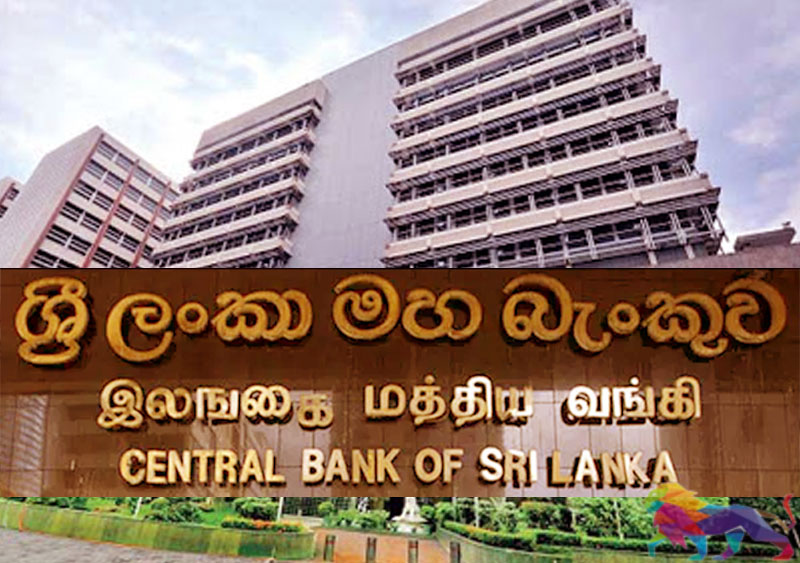
Central Bank imposes import limitations on non-essential goods

The Central Bank of Sri Lanka has imposed import limitations on non-essential goods.

The Monetary Board of the Central Bank of Sri Lanka has decided to impose a 100 per cent cash margin deposit requirement against the importation of selected goods of non-essential/non-urgent nature made under Letters of Credit and Documents against Acceptance terms with Licensed Commercial Banks and National Savings Bank, with immediate effect.

The decision to impose the cash margin deposit requirement is expected to support the ongoing efforts to preserve the stability of the exchange rate and foreign currency market liquidity, particularly by discouraging excessive imports of speculative nature.

The goods on which import limitations have been enforced include telecommunication devices (such as mobile telephones and fixed telephones), home appliances (such as fans, TVs, refrigerators, washing machines, digital cameras, hair clips, heaters, lamps, ovens), clothing and accessories (such as babies’ garments, hosiery, jerseys, nightdresses and pyjamas, overcoats, shirts and blouses, suits, track suits and swimwear, T-shirts, underwear, footwear, watches, sunglasses, other accessories), household and furniture items (such as furniture, lamp and lighting fittings, ornamental products, tableware and kitchenware, bed linen), air conditioners and cosmetics and toiletries.

Posted in Uncategorized

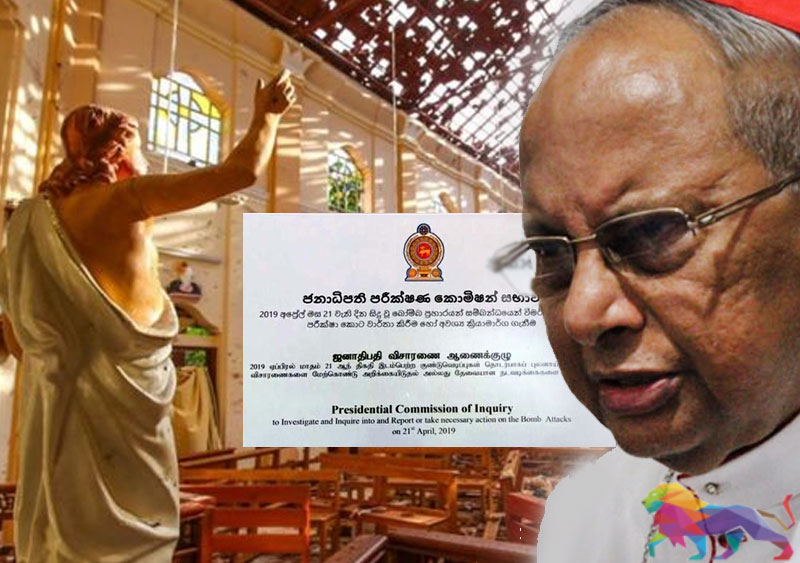
Cardinal denies helping Government to power

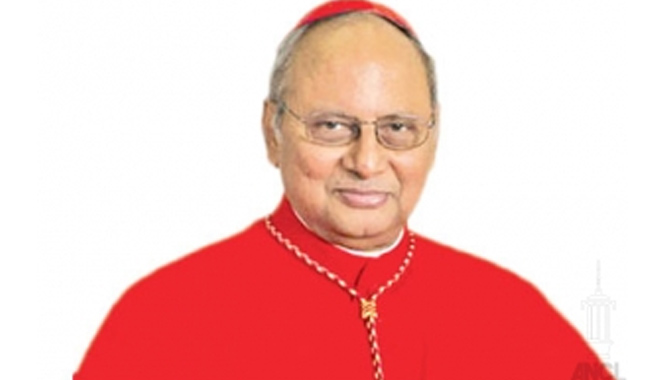
Archbishop of Colombo His Eminence Cardinal Malcolm Ranjith stated that the Catholic Church had never supported the incumbent Sri Lanka Podujana Peramuna (SLPP)-led Government or President Gotabaya Rajapaksa to come to power but had only criticised the then United National Front (UNF)-led Government.

“We only criticised the Government at the time of the Easter Sunday terror attacks because they knew about the attacks but did not prevent it and did not arrest the perpetrators. In that context, if anyone thought that we supported the current Government, it would be a misinterpretation,” the Cardinal clarified.

The Archbishop stated this addressing a media briefing at the Archbishop’s House in Colombo on Wednesday (8).
Speaking further, he said that they were not even prepared to meet any presidential candidate during that time.

“At the time of the Presidential Election, we were not prepared to welcome any presidential candidate from any political party through the gates of the Archbishop’s House. We defended our neutrality,” he emphasised. “There was even a newspaper cartoon in which it was shown that the gate of the Archbishop’s House was locked, and the then presidential candidates Gotabaya Rajapaksa (incumbent President), Sajith Premadasa (incumbent Opposition Leader) and Anura Kumara Dissanayake (incumbent National People’s Power Leader) were standing outside the gate.”

The Archbishop further said that he had never called on the people to vote for any party, but had instead said that the previous UNF-led Government had not fulfilled its obligations.

“So the candidates said that they would change the situation and ensure national security in the country. That is just what they have said, and not something I have said,” he noted.

Earlier in the same press conference, the Archbishop revealed that the Catholic Church has told the international community that justice has not been meted out to the victims of the Easter Sunday attacks of 2019, and that there are attempts by the Government to undermine the investigation.

The Archbishop made these remarks with regard to reports that the Government has sought an audience with Pope Francis at the Vatican, the centre of the Roman Catholic Church, to brief him on the progress made in the investigation into the attacks.

Posted in Uncategorized

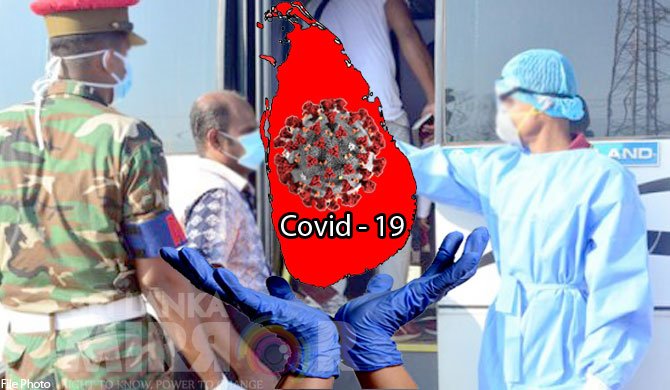
Coronavirus update: 2,856 new COVID-19 cases identified Thursday, total rises to 477,636

According to Epidemiology Unit of the Health Ministry, 2,856 new COVID-19 cases were reported so far on Thursday.

All the new infections confirmed today are from the New Year cluster.

According to the Epidemiology Unit report at 10:30 pm Thursday, a total of 477,636 COVID-19 cases have been reported 58,656 infected patients under medical care at hospitals and homes, while 408,116 patients have fully recovered and been discharged from hospitals.

Sri Lanka Thursday reported 175 deaths within last 24 hours raising the total to 10,864.

According to the Epidemiology Unit report, so far total of 13,128,756 people have received a first dose of COVID-19 vaccine and 9,994,589 have received the second dose.

Will Sri Lanka lose the Port of Colombo ?

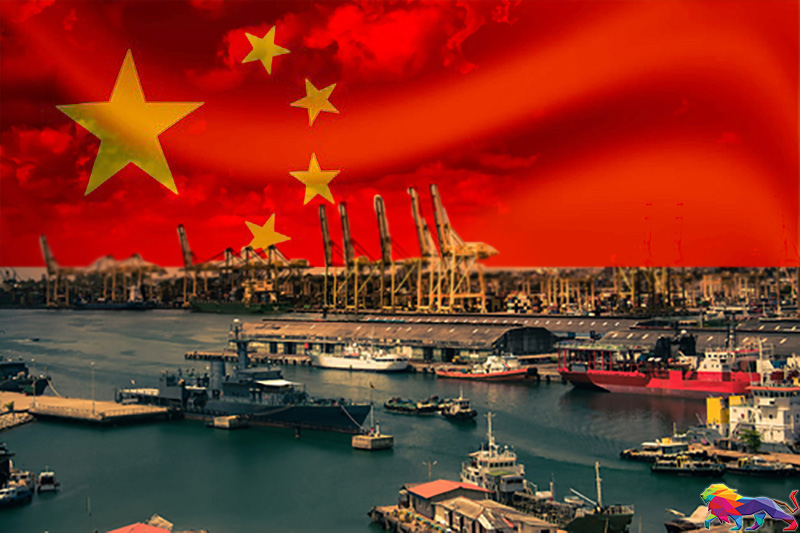
Port Trade Unions have once again voiced their concerns over the proposed project to lease 13 acres of SLPA property to Chinese linked firm.

It has been proposed to hand over 13 acres of land bordering the CICT, SAGT and Eastern Terminals of the Colombo Port to a public-private partnership.

According to a cabinet paper submitted on July 21, it has been proposed to hand over the land to the Colombo Container Terminal (CICT), of which China has a majority stake.

This project is to be implemented on the basis of Build, Operate and Transfer, and it has been decided to appoint a discussion committee consisting of the Secretaries of the Ministries for the relevant activities.

Niroshan Gorakanage, a trade unionist said there is growing concern if an attempt is being made to privatize the ECT and JCT

The CICT Terminal at the Port of Colombo is operated by a Chinese majority company and the neighboring Port City of Colombo is a Chinese project.

The SAGT Terminal at the Port of Colombo is also operated by multinational corporations.

The western terminal has already been handed over to Adani Group in India and the eastern terminal was taken over by the Ports Authority after a workers’ strike, but the unions say authorities are not interested in making it a more efficient service.

There is growing concern as to whether the Port Authority’s Jaya Container Terminal and Samagi Container Terminal will be able to compete with other terminals.

In this situation, will the Port of Colombo, which is strategically located in the Sea of ​​Sri Lanka, one day be lost to?

Arms seizure case: Lankan national held

The National Investigation Agency (NIA) has arrested Arasaratinam Ramesh, a Sri Lankan national, in connection with the Vizhinjam arms seizure case.

The case was originally registered by the Vizhinjam police against six Sri Lankan nationals following their arrest and seizure of 300 kg of heroin, five AK-47 guns and 1,000 live rounds from their a boat by the Indian Coast Guard during patrolling off the Vizhinjam coast on March 18, 2021.

The NIA took over the investigation and arrested two more accused persons, Suresh Raj and Soundarajan, on August 2, 2021. An official communication issued by the agency said that Mr. Ramesh is the brother of Suresh Raj and he had been actively assisting him in the collection of arms, ammunition and drugs trafficking through the international sea route.

The NIA had seized incriminating documents related to the transactions of drugs and arms at the search held in his rented home in Ernakulam earlier. The accused was produced before the Special Court for NIA cases here and remanded to judicial custody, it said.

185 COVID deaths confirmed for Tuesday (7); Total fatalities increased to 10,689.

185 COVID-19 deaths were confirmed for Tuesday (7), said the Director General of Health Services. Accordingly, the total number of deaths in Sri Lanka increased to 10,689.

According to the data released by the Department of Government Information, the latest victims include 102 males and 83 females.

As many as 140 deaths were reported among elderly people who are aged above 60 years.

In addition, 44 individuals aged between 30-59 years and 01 below 30 years have also succumbed to the virus infection.

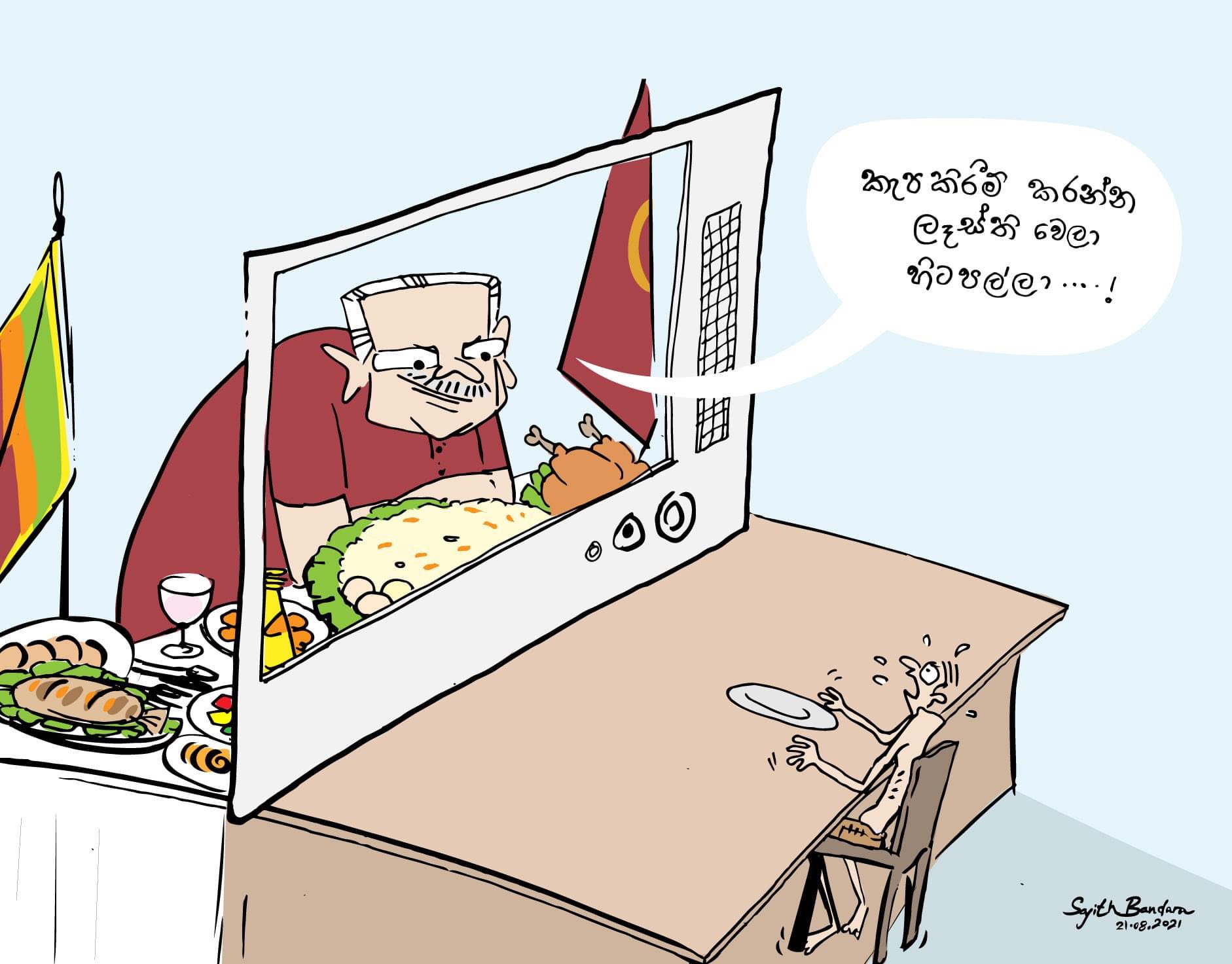
Explained: The perfect storm that has led to Sri Lanka’s ‘food emergency’

Sri Lanka’s Parliament on Monday (September 6) approved a national emergency declared by President Gotabaya Rajapaksa on August 30.

The government said the emergency was required to check soaring prices of food and hoarding of essentials by a “food mafia”. But the Opposition said it was “in bad faith, with the ulterior motive of further restricting fundamental rights of the citizenry and moving further in the direction of authoritarianism”.

The emergency has added to the uncertainty of Sri Lanka’s food crisis, which has all the makings of a perfect storm.

Debt, forex crisis, inflation

Sri Lanka is bent by a huge foreign debt burden. It is unable to repay these loans because of critically low foreign exchange reserves.

With the tourism industry destroyed since the 2019 Easter attacks, Sri Lanka had lost one of its top foreign exchange pullers even before the pandemic struck.

The tea and garment industries have also been hit by the pandemic, affecting exports.

Remittances increased in 2020, but are not sufficient to pull Sri Lanka out of its crisis. At the end of July, the country’s foreign exchange reserves were $ 2.7 billion, while it needs to repay foreign debts of about $ 4 billion.

An expected $ 400 million currency swap with India has not yet materialised. In March, Sri Lanka obtained a $ 1.5 billion currency swap deal from China. Last month, Bangladesh gave a first tranche of $ 50 million of a $ 250 million loan swap agreement.

A currency swap is a loan agreement for repayment with interest in the local currency.

The low forex reserves also mean Sri Lanka has been unable to import as much as it used to in the past.

Earlier this year, it stopped imports of vehicles and several other items, including edible oils, turmeric, and even toothbrushes, in a bid to save precious foreign exchange. Sri Lanka imports many of its essential food items, including pulses, sugar, wheat flour, vegetables, and cooking oil.

This is the supply side problem of the crisis.

On the demand side, the printing of Rs 800 billion by the Central Bank of Sri Lanka over the last 18 months to ease the economic crisis has increased liquidity in the economy. But this infusion of money, and the consequent increase in demand without a corresponding increase in supply, has led to a sharp spike in inflation.

This in turn has devalued the currency, made imports costlier, added to the debt and put the forex reserves under more pressure.

The government’s decision, under the emergency, to fix prices of all essential items has further hit imports, as traders are reluctant to buy at high prices internationally without a promise of returns from sales in the markets at home.

In addition, there is a restrictive import licensing regime.

Another emergency, old fears

The emergency has been declared under the legal framework of the Public Security Ordinance (PSO).

Section 2 of the PSO empowers the President to declare a State of Emergency in two situations: when the President is of the opinion that it is expedient to do so a) in the interest of public security and the preservation of public order, or b) for the maintenance of supplies and services essential to the life of the community.

“With the declaration of a State of Emergency on 30th August 2021, the President is now able to promulgate Emergency Regulations dealing with any subject at any given time. Considering Sri Lanka’s history with emergency, other security related laws and legacy of repression, this raises serious concerns,” the Colombo-based think tank Centre for Policy Alternatives noted in a statement.

While the emergency has to be taken to Parliament for renewal every three months, the President is empowered to bring in regulations that do not need parliamentary oversight or approval.

“The importance of ensuring that the extraordinary powers arrogated to the executive through these emergency regulations have to be used purely for the specific purposes recognised by the regulations…must be recognised as a temporary conferral of extraordinary power for the government during times of acute crisis. It should not be considered as a substitute for the ‘normal legal regime’. As such the State of Emergency should be in force only for a limited period of time,” the Centre for Policy Alternatives note said.

It asked citizens to democratically challenge “any measure to stifle dissent, curtail civil liberties and threaten Sri Lanka’s constitutional democracy”.

Sri Lanka was under an emergency for over three decades during the war against the Liberation Tigers of Tamil Eelam (LTTE) until it was allowed to lapse in 2011; and then for brief periods during the anti-Muslim riots in 2018, and after the Easter bombings in 2019.

In Parliament, Opposition members argued that there was no need for an emergency, as other legislation were available to check hoarding and cap food prices.

The appointment of a serving major general as the Commissioner General of Essential Services has raised concerns that the civilian administration is being bypassed.

Memories of another food crisis

The last time the country experienced a food crisis was in the 1970s, during the Sirimavo Bandaranaike government’s experiment with socialism.

The long queues seen outside the government-owned Sathosa grocery shops have triggered memories of the “ship-to-mouth economy” of those days, Colombo’s The Sunday Times said in an editorial, recalling “the precious ration card which provided every family with limited subsidised quantities of rice, sugar, kerosene, flour, and dhal; the endless queues for bread and cloth; and the draconian foreign-exchange controls and exit permits. Senior citizens may well recall how they had to wait anxiously for the next ship to arrive with their food”.

The ban on chemical fertilisers in March, when President Rajapkasa announced that the country would grow only organic food henceforth, becoming the first country to do so, may aggravate the shortage, agricultural experts have said.

The move was aimed at saving foreign exchange in imports of these fertilisers, but it is feared that the sudden mid-crop change, without preparing the soil adequately, could adversely affect yields of vegetables and rice.

Source: The Indian Express

Posted in Uncategorized

Sri Lanka Facing Severe FX Crisis, Finance Minister Says – Bloomberg

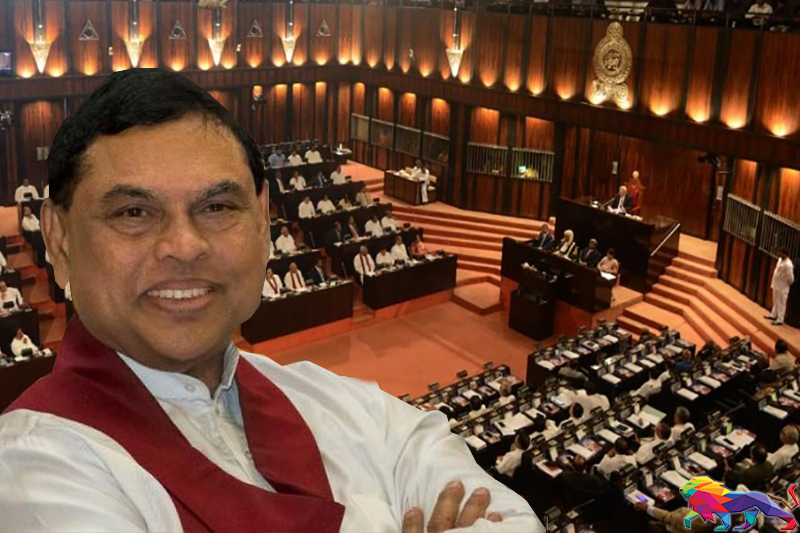
Sri Lanka is facing a severe foreign exchange crisis after the pandemic hit the island nation’s earnings from tourism and remittances, Finance Minister Basil Rajapaksa said.

The government’s revenues were also far short of target as pandemic curbs hurt economic activity, Rajapaksa said during a debate in parliament Tuesday. The country is under an extended lockdown amid a record rise in Covid-19 deaths and hospitalizations caused by the delta variant.

The deteriorating reserves position prompted S&P Global Ratings to last month cut Sri Lanka’s rating outlook to negative. That helped stoke concerns the nation won’t be able to service $1.5 billion of debt due next year, as well speculation Colombo may turn to the International Monetary Fund for support.

Revenue from tourism has fallen to about $2 million a month this year, from more than $450 million two years ago, according to data from Trading Economics. Until recently, travel and tourism accounted for 5% of the $81 billion economy, whose foreign exchange reserves have now depleted to the lowest level since 2009 after repayment of $1 billion of debt in July.

Rajapaksa said Sri Lanka was receiving concessionary funds from the World Bank and Asian Development Bank to help face the pandemic.

“Our policy is to borrow loans with simple and concessionary terms without any conditions that will harm the country’s independence and sovereignty,” he said, without elaborating.

The government earlier this year imposed capital controls as it sought to use its own resources to meet external payment obligations instead of turning to the IMF, whose aid comes with strict conditions.

Posted in Uncategorized

PM not sought a meeting with Pope

Prime Minister Mahinda Rajapaksa has not sought a meeting with Pope Francis and neither will he or his delegation be visiting the Vatican during the Prime Minister’s visit to Italy which begins tomorrow, the Daily Mirror learns.

Prime Minister Rajapaksa will leave for Italy tomorrow morning along with Foreign Minister G.L. Peiris and Foreign Secretary Admiral Jayanath Colombage to attend the G-20 Interfaith Forum.

Sources from the Prime Minister’s Office said neither Rajapaksa nor Peiris had sought an audience with Pope Francis and neither will they be visiting the Vatican or hold discussions over the Easter Sunday attacks or brief anyone over the ongoing investigations.

The purpose of the visit is the G-20 Interfaith Forum at which the Prime Minister will deliver the keynote address and even in his speech there is no mention of the probe of the Easter Sunday blasts, the Daily Mirror learns.

The visit will be restricted to the city of Bologna where the Forum is being held.

Posted in Uncategorized

Cardinal alleges moves by PM, FM to mislead Pope over Easter Sunday probe

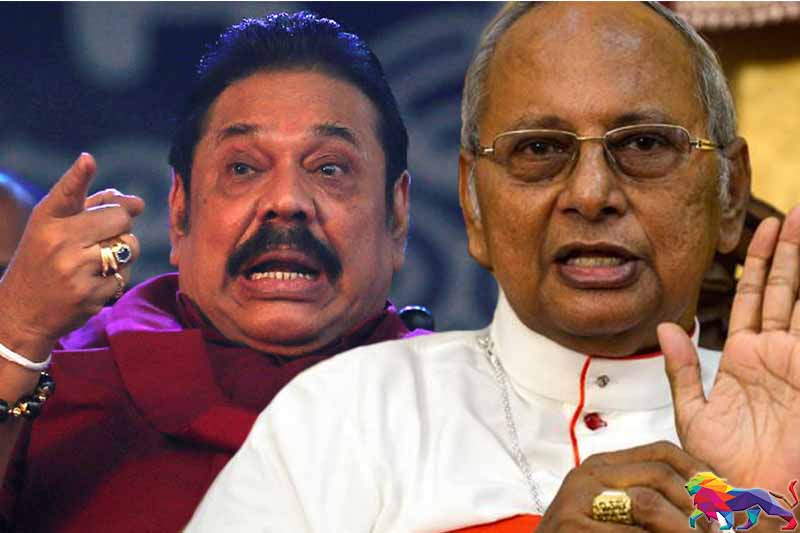
Archbishop of Colombo, Cardinal Malcolm Ranjith, today alleged there were moves by the Prime Minister and Foreign Minister to mislead the Pope and international community over the Easter Sunday investigations during the Prime Minister’s visit to Italy which will begin tomorrow.

Opposing the move by the government to brief the Vatican about the investigations on Easter Sunday attacks, Cardinal Malcolm Ranjith said the Sri Lankan Catholic Church had already briefed the Holy See about the situation.

He said the Vatican is expected to refer the issue to UNHRC in Geneva shortly.

The Cardinal was referring to reports that Prime Minister Mahinda Rajapaksa and Minister of Foreign Affairs Professor G. L. Peiris will brief Pope Francis on the progress made on the investigations with regard to Easter Sunday attacks.

Cabinet spokesman, Plantation Minister Dr. Ramesh Pathirana said yesterday the Premier and Foreign Minister would give a detailed account of the bomb blast carried out in a number of Catholic churches and tourist hotels in Colombo and elsewhere on 21st of April, 2019 and the action taken by the government to mitigate the sufferings of bomb victims together with the legal action to be taken against the suspects.

However the Cardinal said this was a move to cover up, mislead the Pope and the international community.
“If the government goes international we will do it as well as we have no other option. We have already briefed the Vatican representative on Justice and they have informed us that the matter will be referred to the UN Human Rights Council in Geneva,” the Cardinal said.

“A conspiracy is being carried forward in a tactful manner to save those who are behind the attack and an effort is being made to convert the situation favourable towards the government,” he added.