Cardinal alleges moves by PM, FM to mislead Pope over Easter Sunday probe

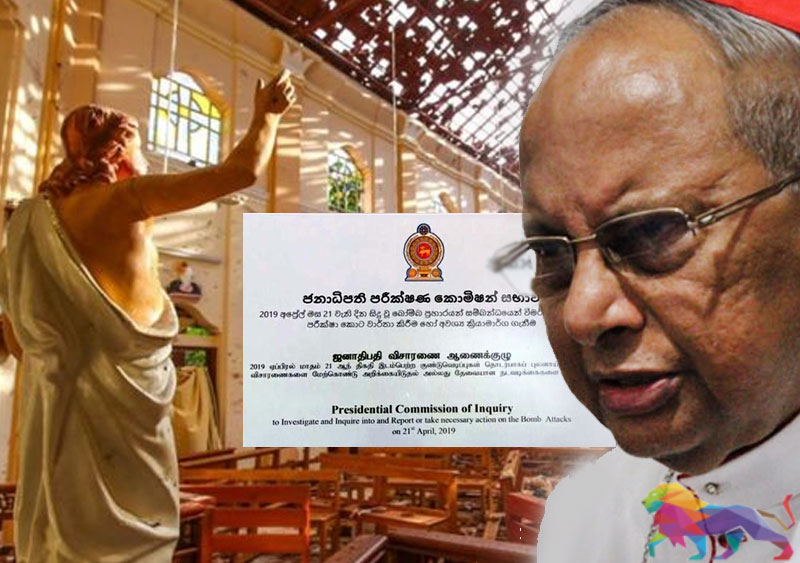
Archbishop of Colombo, Cardinal Malcolm Ranjith, today alleged there were moves by the Prime Minister and Foreign Minister to mislead the Pope and international community over the Easter Sunday investigations during the Prime Minister’s visit to Italy which will begin tomorrow.

Opposing the move by the government to brief the Vatican about the investigations on Easter Sunday attacks, Cardinal Malcolm Ranjith said the Sri Lankan Catholic Church had already briefed the Holy See about the situation.

He said the Vatican is expected to refer the issue to UNHRC in Geneva shortly.

The Cardinal was referring to reports that Prime Minister Mahinda Rajapaksa and Minister of Foreign Affairs Professor G. L. Peiris will brief Pope Francis on the progress made on the investigations with regard to Easter Sunday attacks.

Cabinet spokesman, Plantation Minister Dr. Ramesh Pathirana said yesterday the Premier and Foreign Minister would give a detailed account of the bomb blast carried out in a number of Catholic churches and tourist hotels in Colombo and elsewhere on 21st of April, 2019 and the action taken by the government to mitigate the sufferings of bomb victims together with the legal action to be taken against the suspects.

However the Cardinal said this was a move to cover up, mislead the Pope and the international community.
“If the government goes international we will do it as well as we have no other option. We have already briefed the Vatican representative on Justice and they have informed us that the matter will be referred to the UN Human Rights Council in Geneva,” the Cardinal said.

“A conspiracy is being carried forward in a tactful manner to save those who are behind the attack and an effort is being made to convert the situation favourable towards the government,” he added.

US warns against travel to Sri Lanka

The US Centers for Disease Control and Prevention (CDC) has warned against travel to Sri Lanka because of the rising number of COVID-19 cases, the Reuters news agency reported today.

CDC has also warned against the travel to Jamaica and Brunei for the same reason.

The CDC also eased its ratings for the Netherlands, Malta, Guinea-Bissau and United Arab Emirates from “Level 4: Very High” to “Level 3: High.”

The CDC also raised Australia from “Leve1 1: Low” to “Level 2: Moderate.”

In addition, the CDC raised its advisory level for Anguilla, Antigua and Barbuda, Benin, Ghana, Grenada, Turks and Caicos Islands to “Level 3.”

The CDC issues travel recommendations by countries and for US territories but does not list recommendations for individual US states. It currently lists about 80 destinations out of around 200 ranked as “Level 4,” including some US territories.

UNP calls for a general election system for Parliament, PCs and LG bodies

The United National Party (UNP) has pointed out that a general election system should be introduced for Parliament, Provincial Councils and Local Government Institutions and that 65 percent of the members should be elected under the divisional system and 25 percent under the proportional representation system.

Representatives of the UNP made these observations while testifying before the Select Committee of Parliament to Identify Appropriate Reforms of the Election Laws and the Electoral System and to Recommend Necessary Amendments, yesterday (07).

They also suggested that the number of members elected to local government bodies should be reduced by reducing the number of divisions. Whilst stating that 25 percent of the members elected to local government bodies should be women, the UNP also pointed out to the Committee the need to ensure the representation of minorities.

The Leader of the House, Minister Dinesh Gunawardena presided over the meeting. Former Minister Sagala Ratnayaka, who testified on behalf of the UNP, further stated that Parliament should be an institution with genuine representation in various electorates in Sri Lanka.

The UNP also stated that dual citizens or persons affiliated with another state should be restricted or barred from contesting at the general elections in Sri Lanka.

The party pointed out that the composition of the Parliament should reflect the demographics of the eligible voters to vote in the election as practically as possible and accordingly the members of Parliament should be elected by the voters and from the national list.

The UNP also said that the sources of funding for parties and independent groups at the general election should be revealed. They also pointed out that the expenses incurred by political parties and candidates at an election should be limited.

They were also of the view changing parties should not be allowed and if a member does change the party, he or she should automatically be removed from the party list.

The Vice Chancellor of the University of Sri Jayewardenepura, Senior Professor Sudantha Liyanage, member of the Committee of Experts appointed to analyze the proposals, presented to the Parliamentary Select Committee several models related to the local government election system at the Committee.

Prof. Sudantha Liyanage also pointed out the need to reduce the existing large number of seats in local government bodies.

The Committee Chair, Minister Dinesh Gunawardena stated that the general opinion is that the country needs a better mixed electoral system. He also pointed out the need to have a Member of Parliament responsible for a division.

Ministers Nimal Siripala de Silva, Pavithra Wanniarachchi, Douglas Devananda, Members of Parliament Anura Kumara Dissanayaka, Ranjith Madduma Bandara, Mano Ganeshan, M. A. Sumanthiran, Madhura Withanage and Sagara Kariyawasam were present at this meeting held.

Officials from the Delimitation Commission and the Attorney General’s Department were also present.

The next meeting of the Parliamentary Select Committee is scheduled to be held on the 13th of September, said the Secretary to the Select Committee, Deputy Secretary General & Chief of Staff of Parliament Ms. Kushani Rohanadheera.

Posted in Uncategorized

Sri Lanka confirms 2,964 COVID cases in total today

The Epidemiology Unit of the Health Ministry reports that 1,141 more people have tested positive for COVID-19 in Sri Lanka, moving the daily total of new cases to 2,964.

This brings the confirmed tally of coronavirus infections reported in the country to 471,863.

A total of 388,278 recoveries have been confirmed in Sri Lanka since the outbreak of the pandemic last year.

As per official data, more than 73,000 active cases are currently under medical care at hospitals, treatment centres and homes.

Meanwhile, Sri Lanka registered 184 new COVID-related fatalities confirmed by the Director-General of Health Services on Monday (Sep. 06). The new development pushed the official death toll from the virus outbreak in Sri Lanka to 10,504.

Posted in Uncategorized

Sri Lanka banks quote Rs197/203 to the US dollar

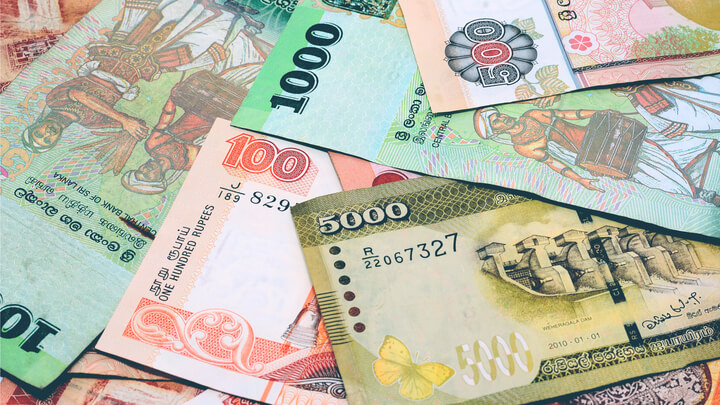
Sri Lanka’s banks are quoting rates of Rs197/203 to the US dollar on Tuesday, stronger from around 226/233 to the US dollar a day earlier, following an official request, financial sources said.

Sri Lanka has no interbank spot market to establish a rupee/dollar price and foreign exchange is matched within banks and in an over-the-counter market.

The rupee had fallen to around 238 to the US dollar Monday, in the OTC market, financial sources said despite attempts by a group of banks to stabilize it at around 230 to the US dollar.

Bank chiefs were requested in writing by authorities to bring the rupee to near 200 levels financial sources said.

It is not clear how much dollars banks can supply at these rates. State-run Bank of Ceylon said the rates applied to transactions below 2,500 dollars. A day earlier it had applied to only 100 dollars.

Several banks said the rates applied to only small transactions.

Even tighter rationing of letters of credit could take place, they said.

Pegged currencies fall when a central bank injects liquidity stimulating credit and imports, preventing outflows from being limited to inflows of foreign exchange.

Liquidity has been mostly injected through failed bill and bond auctions, which have price controls. The new rupees are then used by the government to pay salaries and meet expenses. If a maturing debt is bought by the central bank, past deficits are monetized.

Sri Lanka’s central bank raised policy rates by 50 basis points in August and also hiked the margin commercial banks must keep with the monetary authority to 4 percent from 2 percent.

Posted in Uncategorized

Finance Bill passed in Parliament with amendments

The Finance Bill which was debated in Parliament today (07) has been passed with amendments by a majority vote.

During the second reading of the Bill, Chief Opposition Whip Lakshman Kiriella called for a division and second reading of the bill was passed with 134 parliamentarians voting in favour and 44 voting against the bill.

The Finance Bill enables individuals to voluntarily disclose undisclosed taxable supplies, income and assets which are required to be publicize under some laws.

In addition, it allows the imposition of taxes on taxable income and assets.

Further, the bill will enable granting tax amenities and indemnification of individuals who voluntarily disclose taxable supplies, income or assets against liability from investigation, prosecution and penalties under specified laws.

Meanwhile, the Securities and Exchange Commission of Sri Lanka Bill, which was taken up for debate today, was passed with amendments without a vote.

Meanwhile, a resolution under the Essential Public Services Act, an Order under the Excise (Special Provisions) Act and three regulations under the Imports and Exports (Control) Act were also approved by Parliament today.

Posted in Uncategorized

Cabraal to step down as MP to take over Central Bank

State Minister of Money and Capital Markets, and State Enterprise Reforms, Ajith Nivard Cabraal is to step down from his portfolio and resign as a member of parliament to be sworn in as the Governor of the Central Bank.

The Daily Mirror learns that Cabraal will take over the Central Bank, replacing existing Governor Professor W.D. Lakshman who will take up a senior position in the IMF.

When the Daily Mirror contacted Minister Cabraal, he neither confirmed nor denied the news.

Cabraal will be taking over the Central Bank at a time when the country is facing a foreign exchange crisis.

Posted in Uncategorized

Govt. lost Rs. 1,600Bn during pandemic: Basil

Minister of Finance Basil Rajapaksa states that the Government has lost Rs. 1,500-1,600 billion due to the pandemic, and the gap between Government expenditure and revenue has widened.

The Minister said this at the Parliament during the second reading of the Finance Bill today (7).

The Finance Minister admitted that the government has unnecessary expenses as well as, waste and corruption.

The country is facing a severe foreign exchange crisis while the funds of the Treasury have also reduced, however, the Opposition should assist the Government to solve this issue, he added.

He also said that the earnings of the country’s main sources of income, the Inland Revenue Department, the Sri Lanka Customs, and the Excise Department, have fallen sharply due to the country being on lockdown.

The Tourism Industry, which was also affected during the time, has also contributed to this decline, the Finance Minister said.

Rajapaksa further stated that indirect tax revenue from VAT had fallen by 75-80% due to the COVID-19 pandemic, and the largest portion of Government income was from migrant workers during the last year, however, that amount has been on the decline within the last three months.

However, the Government is currently in discussions with the International Monetary Fund and the Asian Development Bank to find a solution to the economic crisis, he added.

The Finance Minister said the government strives to become a debt-free country.

The policy of the government is to secure aid that will not be subject to political conditions and will not threaten the sovereignty of the country, he said.

Posted in Uncategorized

GSP Plus vital for SL to fight competition – EU Ambassador

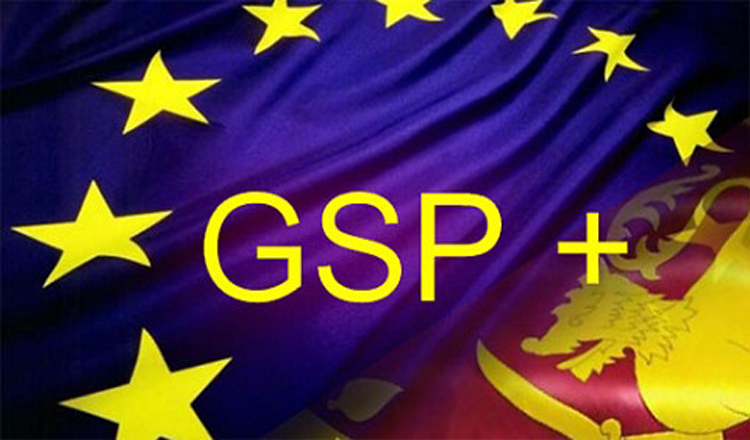
After 2010 Sri Lanka’s exports to the European Union (EU) have increased by 60% but half of it is through the Generalised Scheme of Preferences (GSP) plus, stated EU Ambassador to Sri Lanka Denis Chaibi, speaking at a virtual conference organised by Colombo-based think-tank Advocata Institute.

Vietnam increased by 400% and Bangladesh by 150% during the period from 2010 to 2019, thus to stay ahead of competition, GSP plus is significant for Sri Lanka, stated Chaibi. Ambassador further noted that retaining GSP Plus would give a positive image for Sri Lanka that it is committed to human rights obligations. “The EU market is competitive as it is a superpower in terms of product quality standards.

For a Sri Lankan exporter to export to the EU would give the exporter recognition in any other market as the EU only accepts products with certain standards. Sri Lanka is already in a forex crisis. Increasing exports is a way out of the current crises. COVID-19 has created a resilient supply chain but without preferential access it is difficult for Sri Lanka to increase its exports to EU markets.

GSP plus was granted in 2005, withdrawn in 2010, and then reinstated in 2017 with some conditions. Among these conditions was the commitment of the government to review the Prevention of Terrorism Act. “GSP Plus is an advantage to Sri Lanka as there are only eight countries which enjoy the facility. It provides zero tariffs or reduced tariffs to two thirds of the tariff lines.”

stated the EU ambassador to Sri Lanka. In June 2021 the EU parliament passed a resolution calling for the repeal of Sri Lanka’s Prevention of Terrorism Act (PTA) and inviting the European Union (EU) Commission to consider temporarily withdrawing Sri Lanka’s access to the GSP+ concession. It urged the commission to use the GSP+ as leverage to push for advancement on Sri Lanka’s human rights obligations, thereby pressurising Sri Lanka to fully align its counterterrorism legislation with international human rights conventions.

Elderly father arrested for distributing Rs. 20 million to Jaffna residents

Nelli Adi police yesterday (06) have arrested three persons who were donating Rs. 20 million in cash to the residents in the area at a house on Udupidi Wadiriyan Road in Jaffna on a charge of violating quarantine laws.

A son in a foreign country has sent Rs. 20 million to his father and instructed him to give Rs. 2000 each to the needy families.

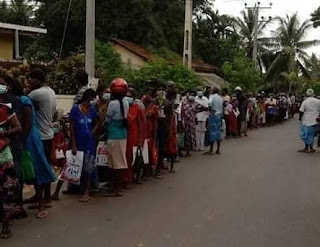
When the elderly father started distributing the money along with two other members of the family, more than 2,000 residents of Jaffna hearing the news had come to the house and formed a long queue to collect money disregarding the quarantine curfew.

Most of them had not even worn face masks, the police said.

The elderly father and his two relatives have been arrested and taken to the police station for gathering a large number of people in one place in violation of the quarantine law at a time when the curfew is being enforced.

At that time about 500 persons had received Rs. 2000 each and the rest had been warned by the police and chased away, police said.