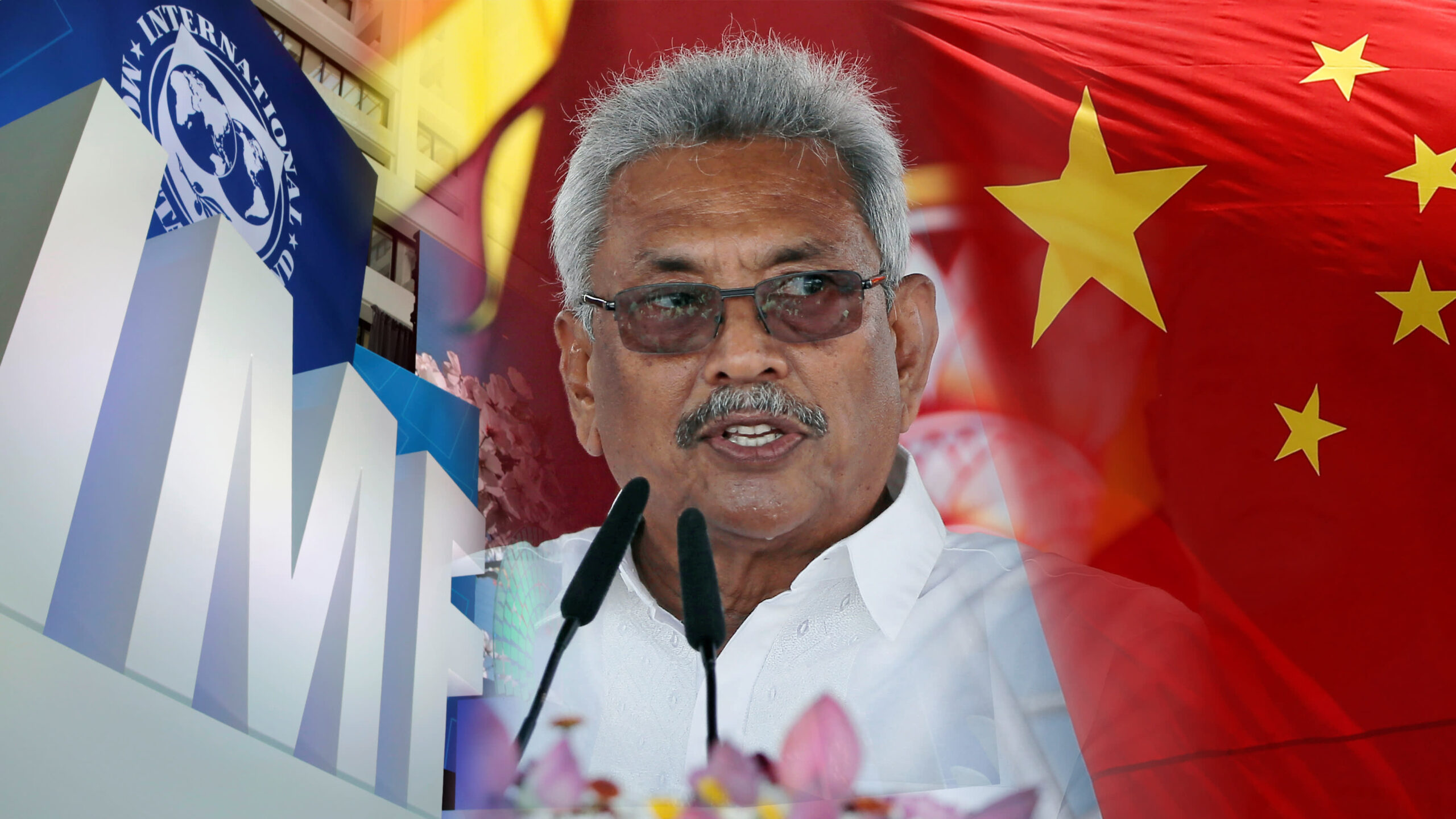
Influx of funds from IMF, China & Bangladesh to strengthen Sri Lankan reserves

Sri Lankan reserves have been strengthened by the receipt of influx of USD 787 Million from the International Monetary Fund (IMF) and USD 150 Million from Bangladesh Central Bank as a swap arrangement, says Finance Secretary S.R. Attygalle.

In addition, Sri Lanka is expecting RMB 2,000 million (around USD 300 Million) from the China Development Bank today (August 31), he added.

Funds from Bangladesh is provided under the currency-swap agreement signed between the Bangladesh Bank (BB) and the Central Bank of Sri Lanka (CBSL) on August 03.

According to the deal, the BB is set to provide USD 250 million in total to help boost the island nation’s fast-depleting foreign reserves and ease pressure on its exchange rate.

On August 18, the BB transferred USD 50 million to the CBSL as the first tranche under the currency-swap deal initiated in March this year. The remaining two tranches involve USD 100 million each.

As the second instalment, Bangladesh released USD 100 million today, increasing the total to USD 150 million.

The BB will transfer USD 50 million more shortly to Sri Lanka if the CBSL sends a request within five working days after receiving the second tranche of the aid, a Bangladeshi newspaper reported quoting officials.

Last week, the IMF allocated a total of USD 650 billion as Special Drawing Rights (SDR) to its member countries to be exchanged as reserves or used as currencies.

Considered the largest allocation of SDRs in history, it came into effect on August 23.

Accordingly, Sri Lanka was allocated 554 million SDRs, which converts to about USD 787 million.

Speaking on the allocation, IMF Managing Director, Kristalina Georgieva said: “SDRs are being distributed to countries in proportion to their quota shares in the IMF. This means about US$275 billion is going to emerging and developing countries, of which low-income countries will receive about US$21 billion – equivalent to as much as 6 percent of GDP in some cases.”

Georgieva also stated that the allocation is a significant shot in the arm for the world and, if used wisely, a unique opportunity to combat this unprecedented pandemic crisis.
Posted in Uncategorized

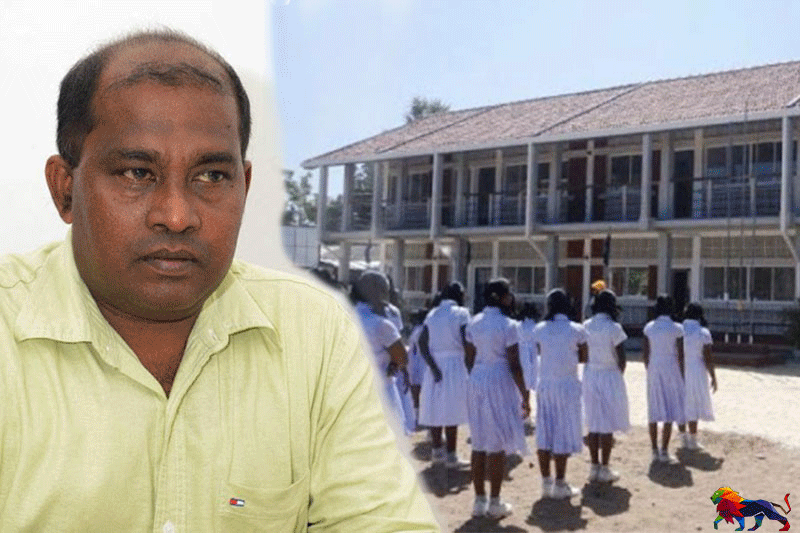
Sri Lanka to declare protesting teachers, principals “closed service” to end long strike

Sri Lanka is set to recognise school teachers’ and principals’ services as a “closed service”, according to Education Minister Dinesh Gunawardena, in a bid to resolve a crisis that has brought online education to a standstill, without stirring other public services.

Though the move, the result of a proposal approved by the cabinet of ministers on Monday (30), could help end a long strike by teachers and principals and restart online school education, it will open many a can of worms in the future, two government officials said.

Both teachers’ and principals’ services were under the public service. But declaring them a closed service will allow the government to treat teachers and principals separately from the rest of the public service when resolving their demands of salary anomalies, wages, transfers, and other benefits.

This will also mean that cadres from the teachers and principals services cannot be transferred to any other public services, government sources explained.

“The implementation of the national decision to close down the teachers’ service will be implemented in the next few months,” Gunawardena said, adding that the cabinet decided to issue a gazette before November 20 declaring the services a closed service.

“All these decisions are taken to provide solutions to existing problems and the decisions are made taking into consideration the 4.3 million children in the country and their teachers who will pave the way for their future.”

The closed service move comes in line a the recommendation by a four-member cabinet subcommittee which looked into the salary anomalies of teachers and principals.

However, two senior government officials warned the move could be detrimental to the public service in the future.

“The government is setting a bad precedent,” said one official who asked not to be named as he is not authorised to speak to the media.

“Tomorrow doctors or nurses or another pubic service can also demand to declare them as a closed service and resolve their issue.”

Another official said Sri Lanka Railways had demanded a similar request two years back.

Forced decision

The government was forced to look into the teachers’ protests as a raft of trade unions of teachers and principals have been on strike since July 11 and have withdrawn from online education and from issuing results of the GCE Ordinary Level exam held early this year.

The education minister said despite financial difficulties, a special allowance of 5,000 rupees will be granted for teachers and principals who will be on duty during September and October 2021, the months in which the government has planned to hold GCE Advanced Level and grade 5 scholarship examinations.

The government has postponed the two key exams that help students select a national school for grade 6 and university entrance, drawing public criticism.

The minister, however, said, implementation of the salary revisions will be done in stages through a 2022 budget proposal. Full implementation will be done in the next four years.

“A decision was taken on Monday (30) to implement these measures in parts before the next four years to find a permanent solution,” he said.

A key teacher trade union welcomed the government’s decisions on “closed service” and salary hike through 2022 budget proposals.

“But we do not accept the 5,000 rupee allowance. We want our salary anomalies to be fixed as a part of the previous Subodhini committee report,” Joseph Stalin, the General Secretary of Sri Lanka Teachers’ Union told EconomyNext referring to a report which teacher unions had demanded the most.

“We don’t accept these increments or allowances otherwise. We will continue our strikes if that does not happen,” said Stalin.

Posted in Uncategorized

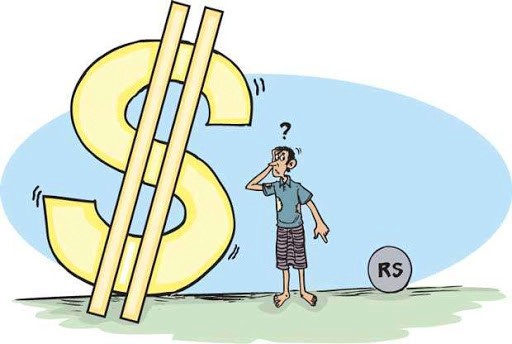
Sri Lanka rupee falls to 226 to US dollar at banks, CB indicative spot changed to Rs210

Sri Lanka’s central bank has published an indicative spot rate of 210 to the US dollar on August 31, while adjusting a rate for telegraphic transfers on its website to widen the margin while banks published rates of 220/226 rupees.

Sri Lanka does not have a functioning interbank spot market at the moment and banks are negotiating with importers and exporters over the counter leading to large margins in many cases, market participants say.

The central bank on Tuesday published a rate of 198.90/204.89 for telegraphic transfers on its website.

Sri Lanka effectively lifted convertibility for current transactions leading to a steady fall of the rupee as more money is printed to buy bonds from auctions that are failing due to ceiling prices.

Last week limited convertibility was provided at around 215 to 219 to the US in the spot market.

This week banks were asked to request dollars from two state banks, which were expected to have been provided with 116 million US dollars and 100 million dollars.

However private banks did not get dollars on Monday, market participants said.

Large private banks are quoting rates of 220/226 for telegraphic transfers and 218/226 for currency notes.

State banks are quoting lower rates for small transactions of 100 US dollars.

Sri Lanka declares food emergency as forex crisis worsens

Sri Lanka on Tuesday declared a state of emergency over food shortages as private banks ran out of foreign exchange to finance imports.

With the country suffering a hard-hitting economic crisis, President Gotabaya Rajapaksa said he ordered emergency regulations to counter the hoarding of sugar, rice and other essential foods.

Rajapaksa has named a top army officer as “Commissioner General of Essential Services to coordinate the supply of paddy, rice, sugar and other consumer goods”.

The move followed sharp price rises for sugar, rice, onions and potatoes, while long queues have formed outside stores because of shortages of milk powder, kerosene oil and cooking gas.

The government has increased penalties for food hoarding, but the shortages come as the country of 21 million battles a fierce coronavirus wave that is claiming more than 200 lives a day.

The economy shrank by a record 3.6 percent in 2020 because of the pandemic and in March last year the government banned imports of vehicles and other items, including edible oils and turmeric, an essential spice in local cooking, in a bid to save foreign exchange.

Importers still say they have been unable to source dollars to pay for the food and medicines they are allowed to buy.

Two weeks ago, the Central Bank of Sri Lanka increased interest rates in a bid to shore up the local currency.

Sri Lanka’s foreign reserves fell to $2.8 billion at the end of July, from $7.5 billion in November 2019 when the government took office and the rupee has lost more than 20 percent of its value against the US dollar in that time, according to bank data.

Energy minister Udaya Gammanpila has appealed to motorists to use fuel sparingly so that the country can use its foreign exchange to buy essential medicines and vaccines.

A presidential aide has warned that fuel rationing may be introduced by the end of the year unless consumption was reduced.

Probe into Lanka boat intercepted with drugs, rifles may suggest LTTE revival: Kerala, TN officials

An ongoing National Investigation Agency (NIA) probe into the seizure of 300 kg heroin, five AK-47 rifles and 1,000 live rounds of 9mm ammunition off the coast of Vizhinjam near Thiruvananthapuram has led to speculation that an international drug running and weapon trading racket is aimed at reviving the Sri Lankan Tamil separatist group LTTE.

The case relates to the March 18 interception of a boat with the contraband by the Coast Guard following an intelligence input. The mastermind behind the operation was Sri Lankan Tamil Suresh Rajan, a resident of Colombo who had been living at Kundrathur, a Chennai suburb, for some time, the Indian Express reported.

Multiple sources in Kerala and Tamil Nadu intelligence agencies said they failed to closely look at the case as it was being probed by the Narcotics Control Bureau (NCB). “The NCB was about to chargesheet six Sinhalese who were on board when NIA stepped in and probed further,” said an intelligence officer attached to Kerala Police.

The NIA probe would later find that six Sinhalese were labourers. Meanwhile, Rajan was arrested from Angamaly, Kerala in August and was later taken into custody by the Tamil Nadu Q-branch for his links with LTTE groups still active in Tamil Nadu and Sri Lanka.

But after the NIA stepped in and took over the probe, they found scientific evidence of a Dubai link from a Thuraya handset (considered an advanced satellite phone) which was seized from the boat. “That was the crucial evidence that led to the arrest of Suresh and his associate Soundararajan,” the officer said.

During searches conducted by NIA at premises linked to the accused in Kerala and Tamil Nadu, several incriminating documents, including books relating to LTTE and several cellphones, gadgets and SIM cards were seized.

According to the officer, the March 18 incident was not an isolated case. “Evidences collected from Rajan after his arrest, including those of transactions worth crores, shows that he was an international drug smuggler with active links with Pakistan-based drug runner Haji Salim, who often shuttled between Dubai, Pakistan and Iran. Rajan held a prominent role in drugs and arms trafficking to Sri Lanka through the backyard of India,” the officer said.

A Tamil Nadu intelligence officer said there was evidence that Rajan met Sri Lankan drug lord Madhush Lakshitha alias ‘Makandure Madush’, who was killed in a shootout in the island nation in October 2020. “Rajan also was in touch with Salim,” said the officer.

There was also evidence that Rajan and Soundarajan worked closely with individuals who are being monitored for their sympathies for LTTE and its reported revival mission. “If drugs were to earn money, the five AK-47 rifles seized from the boats were supposedly for LTTE sleeper cells,” the officer said.

Posted in Uncategorized

Sri Lanka’s Covid-19 death toll crosses 9,000 with another 194 deaths

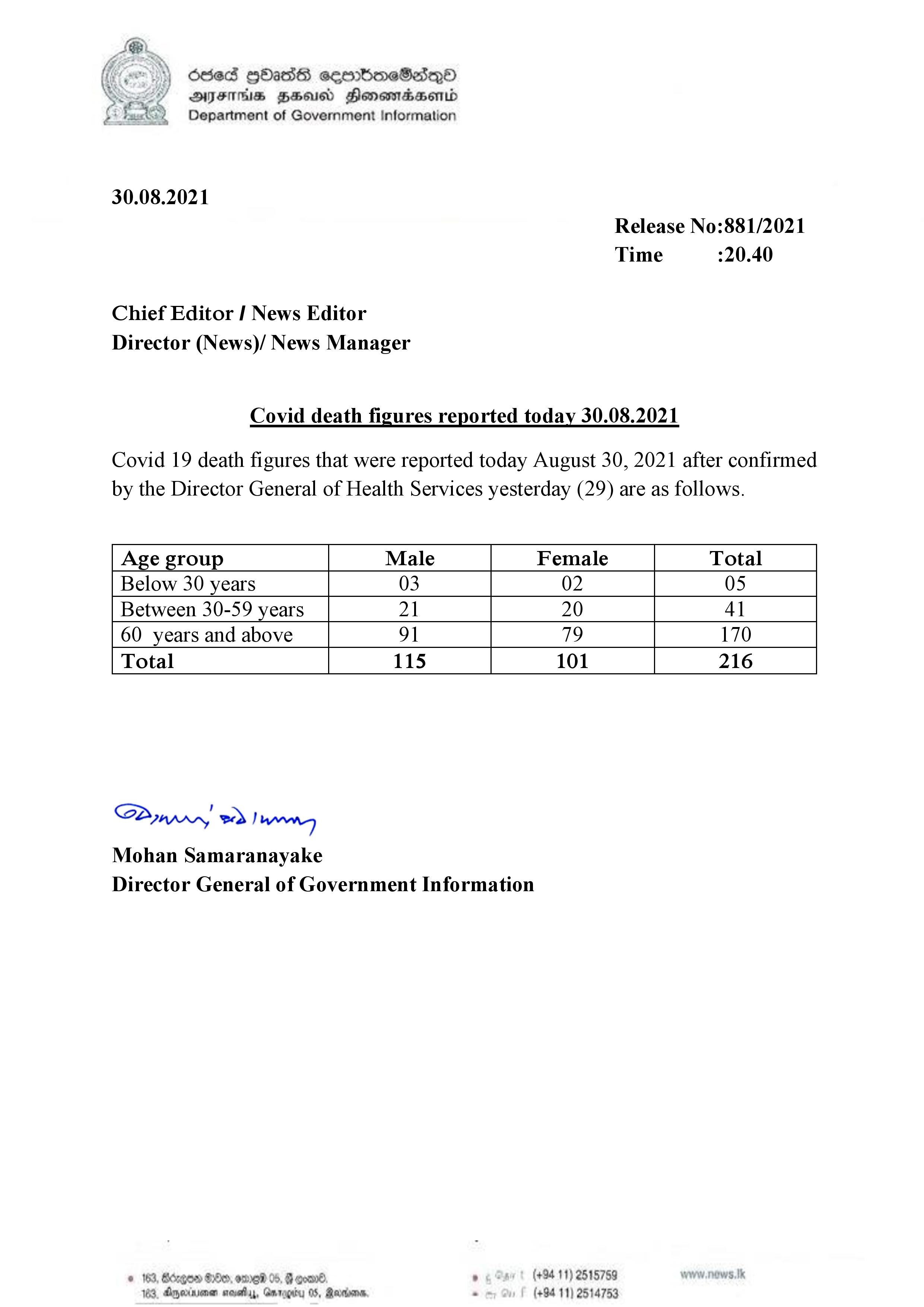
The Director General of Health Services has confirmed another 194 coronavirus related deaths for August 30, increasing the official death toll in the country to 9,185.

According to the figures reported by the Department of Government Information today (31), the victims include 100 males and 94 females while three of the deceased are below the age of 30.

Forty-five of the Covid-19 deaths are individuals between the ages of 30-59 and the remaining 146 are persons aged 60 and above.

Posted in Uncategorized

Former Scottish Justice Secretary calls on Police Scotland to cease training of SL Police

Former Justice Secretary of Scotland Kenny MacAskill has called on Police Scotland to cease all involvement in training police in Sri Lanka following concerns about human rights abuses, Scottish Legal News reports.

Mr MacAskill’s intervention comes after Human Rights Watch, Freedom from Torture, the Sri Lanka Campaign for Peace and Justice and Pax Christi Scotland wrote to justice secretary Keith Brown earlier this month.

The human rights groups called on Mr Brown to provide details of a review of Police Scotland training for Sri Lankan police given allegations of torture and extrajudicial killings by Sri Lankan police in recent months.

Mr MacAskill said: “There has been a lack of clarity with mixed messages from Police Scotland about their current involvement in Sri Lanka. I am calling for the Scottish government to confirm that all involvement in the training of Police Scotland has ceased.

“If that is not the case then the Scottish government must intervene and direct Police Scotland to cease all involvement in the training of police forces in Sri Lanka until such times as its government adheres to and upholds internationally accepted human rights.”

He added: “Scotland has a long tradition of supporting human rights both at home and abroad. Scotland’s reputation for advocating strongly for human rights requires the Scottish government and Police Scotland to provide the assurances being sought.”

Source: Scottish Legal News

UN stands in solidarity with enforced disappearances victims in SL:Hanaa Singer

The United Nations said today they would stand in solidarity with the victims of enforced disappearances, their families and communities, here in Sri Lanka and across the world.

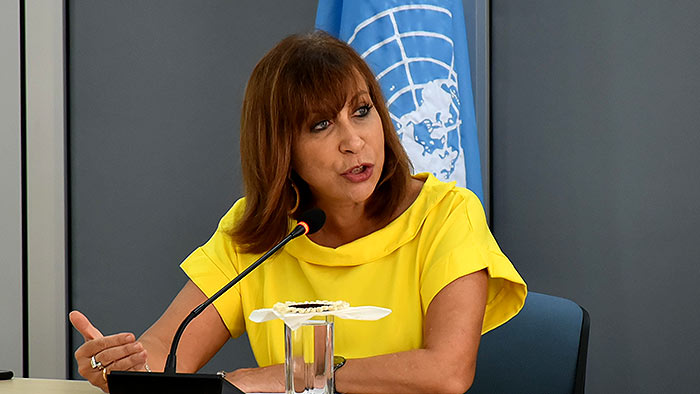
Issuing a statement on the International Day of the Victims of Enforced Disappearances 2021,Hanaa Singer-Hamdy Resident Coordinator, UN in Sri Lanka said that enforced disappearance deprived families and communities of the right to know the truth about their loved ones, of accountability, justice and reparation.

“They experience mental anguish, alternating between hope and despair, wondering and waiting, sometimes for years, for news of the whereabouts of their loved ones. The families and friends of the victims also live with the insecurity that the search for the truth may expose them to danger. It is women who are most often at the forefront of the struggle to resolve the disappearance of family members. In this capacity they may suffer intimidation, persecution, and reprisals,” she said in the statement.

She said the feeling of insecurity generated by unresolved enforced disappearances was not limited to the close relatives of the disappeared, but also affects their communities and all of society.

“The establishment of the Office of Missing Persons (OMP) in 2016 was an important step by the Government of Sri Lanka. Building and maintaining the trust of victims and their relatives is essential for the success of the OMP. A fully independent and effective institution, with the resources, skills and political support needed for its crucial work can help provide victims and families some answers,” the statement added.

“Today we recognise the courage, commitment and determination of families and victims from all communities, who, despite many challenges, have continued to voice their demands for justice and answers about the fate of their missing loved ones and we stand by them, she added.

Moragoda assumes duties in New Delhi as Sri Lanka’s new envoy

The new High Commissioner-designate of Sri Lanka to India, Milinda Moragoda, appointed with the cabinet rank, assumed duties at a simple ceremony held at the High Commission of Sri Lanka in New Delhi today (30).

The staff of the High Commission received High Commissioner-designate Moragoda and Mrs. Jennifer Moragoda, presenting the traditional sheaf of betel leaves.

Moragoda assumed duties amidst chanting of Seth Pirith by the venerable Maha Sangha including Most Ven. Dr. Niyangoda Vijithasiri Anu Nayaka Thero, Most Ven. Prof. Kollupitiye Mahindasangharakkhitha Anu Nayaka Thero, Most Ven. Thirikunamale Ananda Maha Nayaka Thero, Most Ven. Prof. Kotapitiye Rahula Anu Nayaka Thero and the General Secretary of the Mahabodhi Society of India Most Ven. Pelawatte Seewali Nayaka Thero via zoom platform.

Following the assumption of duties, the High Commissioner-designate addressed the staff of the High Commission and stressed the importance of working as one team to advance the interests of Sri Lanka, and to take Sri Lanka-India relations to new heights.

At the staff meeting, High Commissioner-designate Moragoda officially announced his policy framework “Integrated Country Strategy for the Sri Lanka Diplomatic Missions in India 2021/2023“, which is expected to provide an indicative framework for the work of the Sri Lanka Diplomatic Missions in India for the next two years.

This policy framework is based on ‘satara sampadha’ or the four accomplishments, referred to in the Vyagghapajja Sutta of the Pali Canon, which comprises saddhā, sīla, cāga, and paññā, which in the modern context of international relations, could be interpreted as trust, virtuous behaviour, sacrifice and thorough understanding, respectively.

High Commissioner-designate Milinda Moragoda’s career has spanned business, government, politics, diplomacy, media and academia. He is the twenty sixth High Commissioner of Sri Lanka to India.