Security on high alert in Tamil Nadu after infiltration threats

The Tamil Nadu state police and Central intelligence agencies have stepped up vigil after threats of an armed group trying to infiltrate from Sri Lanka were received.

An alert was issued by a Central intelligence agency on Saturday evening and the police have stepped up vigil in the towns of Kanyakumari, Toothukudi, Rameswaram, as well as in Chennai, the Indian media reported.

According to informed intelligence sources, a boat carrying armed operatives was headed towards Rameswaram coast.

However, the sources told IANS that the exact identity of these people are not known as also of the organization that they belong to.

A senior police officer at the state police headquarters in Chennai told IANS: “Yes there is an alert but I can’t reveal more than this at present. We have deployed armed policemen across all the main roads leading to coastal areas through the state.”

With the police stepping up security measures, the sources indicated that more navigating ships have been deployed in the sea by the Coast Guard patrolling units to thwart any attempt to reach the Tamil Nadu coast.

Intelligence sources in Kerala police have indicated that they have also stepped up vigil across the coastal towns of the state after tip-offs from the agencies.

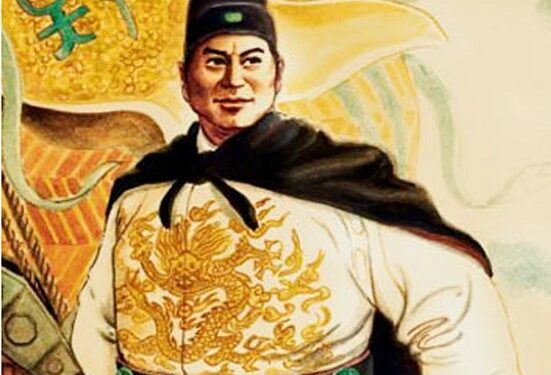
Chinese Admiral Zheng He and the Tamils of Sri Lanka By Dr.Nirmala Chandrahasan The Island

The recent discovery of name- boards in public institutions which have omitted one of the national languages, namely Tamil, only to replace it with Mandarin Chinese has caused a furor with Tamil members of Parliament and other politicians voicing their protests.

Certainly, this is most unfortunate but rather than blame the Chinese it is the Government Authorities in charge of the implementation of the Official languages policy who should be blamed. They have been remiss in this instance which is only a small part of the general malaise in respect of the implementation of the official languages policy.

This however is not within the remit of this article. In this article, I would like to focus on another trilingual inscription on a stone tablet stele, left by the Chinese Admiral Zheng He, and dated 15th February 1409, in Sri Lanka.

It was originally inscribed in Nanjing in China itself and discovered in 1911 in Galle, and now preserved in the Museum in Colombo. This stone tablet with inscriptions in Chinese, Persian and Tamil signals the arrival of the Chinese fleet and invokes the blessings of Buddha and the Hindu God Vishnu whom the inscription mentions as “Thenavaran Nayanar” and refers to an endowment that Zheng He, had presented to the Vishnu Devale at Devinuwara and to a Mosque.

Prof. Sasanka Perera in a very interesting and historically researched article titled “Veera Alakeshvaras Phlight signals from the past,” published in The Island of 28th April 2021, to which I am indebted, refers to this inscription as a “subtle but obvious way of appealing to the socio political sensibilities of large and important communities in The Island at the time”.

So it would appear that the Tamils were an important community in the island at the time. Sinhala does not feature in the inscription.

Veera Alakeshwarar’s clash with the Chinese which I refer to in my article is part of the historical perspective which I wish to draw attention to. It has many lessons for the present , and brings to light the Chinese presence in this country many centuries ago.

To continue with the purpose of Admiral Zheng He’s naval journey, it was part of what was known as the “Ming Treasure voyages”. To quote Prof. Perera, the seven voyages under this naval scheme took place between 1405 -1433 AD and was the brainchild of the Ming Emperor Yongle. These voyages were undertaken to expand China’s military, political and commercial Authority across the oceans and to find local allies and establish Chinese spheres of influence in different parts of Asia, parts of the Middle East and places like Mogadishu and Mombasa in Africa.

Before arriving in Sri Lanka Zheng He’s fleet had visited other south east Asian countries where also steles were left behind. All these interventions were made to ensure the stability of maritime routes for Chinese vessels. This is very much in line with what is happening today, with the Chinese “Belt and Road initiative”.

The Chinese of that era were aware of the Tamil language and culture both because of the maritime traditions of the Tamils during the era of the great Chola empire but also because Tamil Buddhist monks from Kancheepuram had brought Buddhism to China. The Chola empire in South India which held sway over Sri Lanka also included parts of south east Asia, and had a large maritime fleet and merchant navy. Furthermore, Tamil traders and merchant guilds were active in the Indian ocean and in south east Asia. With the decline of the Chola empire the seas were open for a new naval power and we find the Ming emperor making a strategic move.

To turn to Sri Lanka and Veera Alekeshvara’s encounter with the Chinese, I will have to go back in time to the Alagakkonara/Allagakone family, of which he was a member. This feudal family originally from Madurai or Kancheepuram in Tamil Nadu, settled down in Lanka and became very powerful in the Gampola Kingdom. The father of Veera Alakeshvara also known as Alakeshvara became a Minister in the Kingdom. He fortified a marshy region around the present city of Colombo and called the fortress he built there Jayawardenepura, and the area around became known as Kotte, (which means ‘fort’ in Tamil).

From his fortifications he drove out the northern army of the Arya Chakraverti, who ruled the kingdom of Jaffna, and the tax collectors from this kingdom who were raiding the south western region. Thus, he came to overshadow King Vikramabahu I11rd of Gampola. Subsequently after some infighting with family members Veera Alakeshvara, his son, became king of the Gampola kingdom as Vijayabahu VI , and ruled from 1397- 1411 AD.

However, Veera Alakeshvara like some of our present China critics, was hostile to Chinese intentions in Sri Lanka and launched piracy attacks on the Chinese fleet in Sri Lankan waters with the help of some Muslim chieftains. As a consequence, Zheng He, left Sri Lankan waters as he had other ports of call, but returned to take revenge on Alakesvara.

In 1410/11 Zheng He and his troops attacked Kotte and captured Veera Alakeshvara and his family together with other key political figures allied with him. He was taken as a prisoner to China. In the collected works of Yong Rong 1515, his capture is described as well as his subsequent pardon by the Emperor as follows: “thus the August Emperor spared their lives and they humbly kowtowed making crude sounds ( a reference to their language) and praising the sage like virtue of the Imperial Ming ruler.”

But this was not the end of the matter. As Prof. Sasanka points out regime change was the object, and Parakramabahu the Sixth ascended the throne. Chinese records reveal that the new king was chosen by Sinhalese emissaries present at the Ming Court, nominated by the Emperor and installed by Zheng He, using the Chinese military and naval power at his disposal, as a ruler more amenable to Chinas intentions. Parakramabahu VI created a political alliance with the Chinese that allowed expansive political projects such as the Ming Treasure fleet easy access to local waters as well as local political support.”

It is also of interest to note that Sembagha Perumal alias Sapumal Kumaraya, an ethnic Tamil and adopted son of Parakramabahu the Sixth, subsequently conquered the northern Jaffna Kingdom and built the Nallur Kandasamy kovil in Jaffna. His exploits are commemorated by the poet Sri Rahula thera in the Kokila Sandesaya and the Selahini Sandesaya.

Aside from the sense of ‘deja vu’, which Prof. Perera remarks upon, Alakeshvarar’s story has many lessons for us today. We learn that the Tamil community in Sri Lanka was a powerful and respected one, hence the inscriptions in Mandarin along with Tamil and Persian. In the north the Kingdom of Jaffna under the Arya Chakravarti dynasty was as powerful as the other kingdoms and at that time was threatening Kotte and even extracting taxes from regions in the South.

Here too it was ethnic Tamils such as Alakeshvara senior who led the defense of the Kotte and Gampola kingdoms, and built Jayawardenapura, and it was Sembagha Perumal who later defeated the Arya Chacraverti and brought the Jaffna kingdom under the rule of Parakramabahu VI.

Ethnic differences were subsumed, and Sinhalese and Tamils worked together as one people. The wars were for territory, with kings fighting kings and not between ethnic groups. It was only with the arrival of the Western colonial powers starting with the Portuguese that ethnic differences surfaced, perhaps as a consequence of a divide and rule policy.

Another lesson we learn is that the Chinese political presence in the island is not something new. Furthermore Chinese trade was a key factor in the Sri Lankan economy as vindicated by the large collection of Chinese coins in Yapahuwe, which fact is adverted to in Prof. Perera’s article citing Prof. Sudarshan Senviratne. So, the resumption of Chinese political and economic activity in the island is not suprising.

Chinese history records that after the great naval expeditions of Zheng He, there was a change in China’s policy and internal constraints made the country turn inwards. It is now clear that China is resuming its old policy as evidenced by Admiral Zheng He’s naval expeditions, and is once again engaging in expanding its military, political and commercial authority across the globe vide the Belt and Road Initiative.

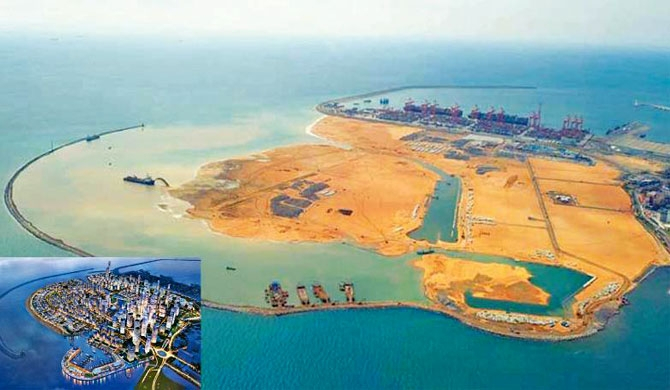
The Port City project in Sri Lanka is part of this grand design. The Port City project can bring benefits to Sri Lanka too, but it is the responsibility of the Sri Lankan Government and people to see that Sri Lanka’s interests are adequately protected and they cannot fault China for any short fall as every country looks after its own interests.

In the context of the lessons we learn from the Veera Alakeshvara episode, Tamil politicians would be well advised to be more mindful when making protests at what they perceive to be Mandarin taking precedence over Tamil. We do not have to kowtow to the new Emperor in Beijing, and protests must surely be made when called for, but made courteously, recognizing that our cultures Tamil and Chinese, have co -existed enriching each other over many centuries as in the spreading of Buddhism by monks from the Tamil country, and the extensive trade as in the exchange of cotton goods for silk between the two civilizations.

We have seen from the Galle Inscription that China gave the Tamil language pride of place in Sri Lanka at a certain point of time, and I may mention similar inscriptions have also been left by them in other south Asian countries. At that time Tamil was a language of commerce and trade in the Indian Ocean region and the Tamil Kingdoms of South India were powerful entities.

Similarly, the Persian language held sway for these reasons. Interestingly we learn from the Moroccan Traveller of the 14th Century, Ibn Batuta, who visited the kingdom of Jaffna, that the king Arya Chackraverti held control of the trade in pearls, had contact with foreign merchants and could speak Persian.

It remains to be seen whether the Tamil language once again regains its lost position and the respect that entails. The Trilingual stele in Galle invokes the blessings of the Hindu deity the “Thenavaran Nayanar” Vishnu, for a peaceful world built on trade.

For the present. we have to recognize that China has come to stay as a power in the region, in a world built on trade. We can be proud that two Asian nations India and China are emerging as the super powers of the 21st century and go with the trend giving due consideration to both countries in our political and economic policies.


Sri Lanka estate females suffering violence, child sex abuse: action needed: study

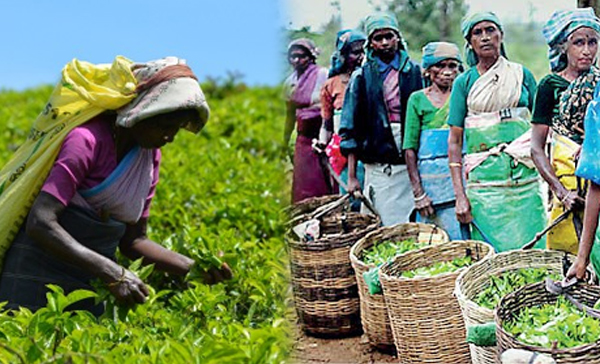
Around a third of Sri Lanka’s female estate workers have suffered violence and sexual abuse as adults and had also been childhood sex victims with male dominance, close living quarters and isolation from mainstream society contributing, a study said.

Though Trade Unions are a powerful institution with a strong influence on this community they did little to address sexual and gender based violence (SGBV).

“It is essential to “buy-in” the leadership on the significance of SGBV as a major determinant of health, through effective advocacy using the findings of the study and works with them,” the report by charities Oxfam and Adventist Development and Relief Agency International said.

“Although most of the administrative staff and care providers are aware of the issues of SGBV, their service delivery is affected by apathy, disbelief, denial and lack of prioritization of addressing SGBV.

“The findings of the study provide strong evidence to ‘jump start’ the system to be more active, receptive and effective to assist the survivors.”

About 10 per cent of the women in the study had suffered sexual violence within the last 12 months 30 per cent had experienced it sometime during their lifetime.

The survey among 393 households in Nuwara Eliya was part of a wider study run from 2017 in the districts of Nuwara Eliya, Matale and Moneragala

Gender-based Violence (GBV) came in the form of sexual violence, physical violence, emotional violence, economic abuse and social abuse (controlling behaviour).

About 19.7 per cent had suffered Intimate Partner Violence (IPV), of any kind, during the previous 12months.

About 13.5 per cent of the women had suffered some form of sexual abuse before the age of
15 years, with parents, parents-in-law and teachers being the most common perpetrators.

Fully 72.5 per cent of perpetrators were family members with parents 17.5 per cent, parents-in-law 17.5 per cent, sibling 2.5 per cent and other members of the family 30 per cent.

“This is a significant finding and needs further study,” the authors of the report said.

“The hierarchical power structure with the father being the head is possibly strongly entrenched and the poorly ventilated and crowded housing within the community could possibly contribute to this unexpected finding.

“Parents and parents in law appear as key “helpers” on one hand and also as a prominent group of ”violators” on the other hand.

“Therefore, the “elders’ ‘ particularly the male parents/parents in law: the power holders should be the target group for awareness-raising intervention to address GBV in this community.”

Official avenues of redress such as the Grama Niladhari, police or the supervisor of the
the estate was not utilized much by women.

Only 2.6 per cent of the women had divulged their experience to the police or Grama Niladari (village headman/woman).

“This possibly indicates the lack of trust or constraints in access to formal services is a challenge for women and provides a space for urgent action,” the report said.

“Childhood sexual abuse is a devastating event recognized under Adverse Childhood Experiences (ACEs) that can have a long term impact and is an important determinant of the individual’s health.”

About 36.8 per cent had ‘not told anybody’ while 34.2 per cent had spoken to one of the parents, 13.2 per cent to a parent in law, 10.5 per cent to the teacher, 7.9 per cent to the midwife.

Grama Niladhari and Public Health Midwife units are overworked in estates because they have to cover around 1,500 families whereas in the rest of the country they cover about 200 to 300 families. Public Health Midwives found it difficult to cover more area due to the terrain.

“Since the Grama Niladhari are overburdened with other issues they would give lesser importance to Sexual and Gender-Based Violence (SGBV),” the report said.

Forty per cent said they saw their mother beaten by the father, 53 per cent said not and 4.3 per cent did not answer.

The proportion of women who experienced both Sexual and Physical Violence during the last 12 months was 3.7% while 20.1% had experienced it at some point during their lifetime.

The proportion of women who experienced both Sexual or Physical Violence during the last 12
months was 13.0 per cent while 37.7 per cent had experienced it at some point during their lifetime.

Although most women were employed and earned a substantial income, the power and opportunity to utilize the money is limited among women.

“The “power holders” (husband/partner) tend to use violence to get the money earned by the women, which makes the potential source of power defunct,” the report said.

Posted in Uncategorized

Gammanpila Responds To SLPP General Secretary: “Fuel Prices Were Increased With The Consent Of President And PM”

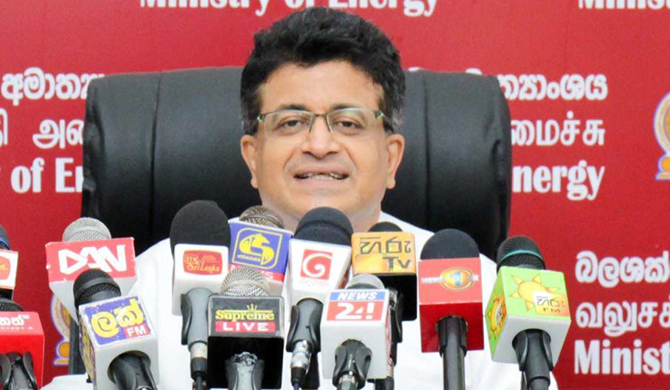
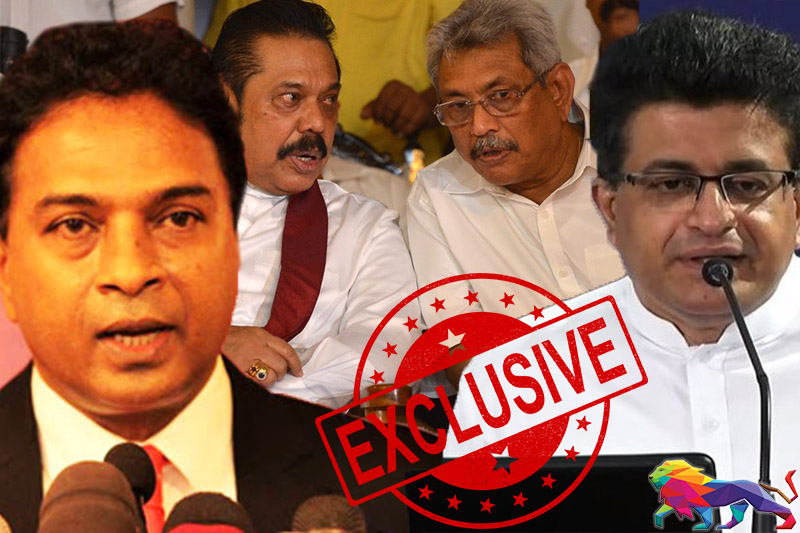
Energy Minister Udaya Gammanpila says President Gotabaya Rajapaksa and Prime Minister Mahinda Rajapaksa and the Cabinet sub-committee on the cost of living, which includes Minister Namal Rajapaksa, had approved the fuel price hike.

Speaking to reporters today, Gammanpila also said that Sri Lanka Podujana Peramuna (SLPP) General Secretary Sagara Kariyawasam did not have the consent of the party to call for his resignation over the fuel price hike.

Gammanpila told reporters today that the decision to increase the price of fuel was taken after extensive discussions.

He also said that a fuel price hike is a matter which comes under the purview of the Minister of Finance.

However, he said that he voluntarily decided to make the announcement on the fuel price hike to protect Prime Minister Mahinda Rajapaksa, who is the Minister of Finance.

SLPP General Secretary Sagara Kariyawasam had said yesterday that raising fuel prices at a time when the public are already facing difficulties as a result of the coronavirus is unacceptable.

He said that the Energy Minister must take responsibility of the situation and resign.

However, Gammanpila said that based on the latest revelations it is Kariyawasam who must resign.

Posted in Uncategorized

Rupee will hit 300 if GSP+ is revoked – Ranil

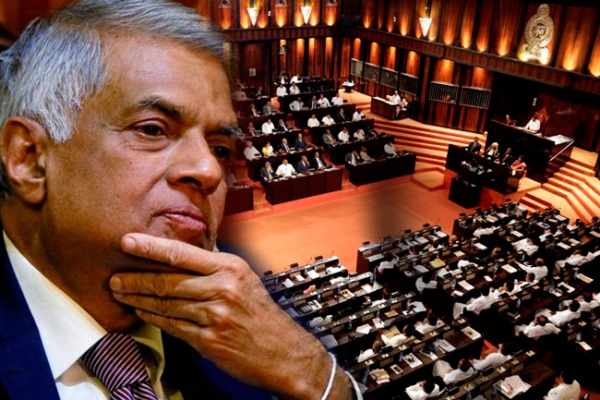
Sri Lanka is facing the grave risk of the rupee hitting 300 against the US dollar if the GSP+ tax concession is revoked at a time when only the tea and garment industries are able to earn foreign exchange for our country, former Prime Minister Ranil Wickremesinghe warned.

The UNP leader made these remarks in response to the Resolution adopted by the European Parliament which called for the repeal of Sri Lanka’s Prevention of Terrorism Act (PTA) as the law is deemed incompatible with the conventions that the country has to implement under the Generalized Scheme of Preferences (GSP+) granted to the island nation.

In the resolution adopted on Thursday (10), the EU Parliament called on the EU Commission to consider “temporary withdrawal” of Sri Lanka’s preferential access to European markets, which cuts trade tariffs significantly for Sri Lankan exports, including apparel, ceramic and rubber.

Issuing a special statement today (13), the former Prime Minister said:

“Our government took action to regain the GSP+ from the European Union to assist in developing the country’s economy in 2017. This facility provides Sri Lanka with permission to export goods to Europe without taxation, which led to a boom in the garment and fishing industries.

An issue has arisen in the European Parliament this week regarding the GSP+ tax concession. We have been warned that this concession will be revoked.

Our tourism industry is at risk at this time due to the COVID-19 pandemic. With the sinking of the X-Press Pearl, issues have arisen for our fishing industry as well. The number of people going abroad for employment has decreased. Therefore, our foreign exchange has fallen.

Sri Lanka borrowed $200 million from Bangladesh due to the economic crisis caused by the decline in our foreign exchange. At present, only the tea and garment industries are able to earn foreign exchange for our country.

In such a case, we are reliant on the GSP+. If this tax relief is lost, the rupee will depreciate further and we will have to pay around 300 rupees per dollar. It will also lead to the loss of thousands of jobs.

In the face of the danger that has arisen, the GSP+ must not be politicized. The government should take immediate action to protect the concession. Do not add any more weight to the heavy economic burden that the people are carrying. I urge the government not to destroy the country,” the former Prime Minister added.

Posted in Uncategorized

Daily coronavirus case tally moves to 2,340

The Epidemiology Unit of the Health Ministry reports that another 707 persons have tested positive for COVID-19 in Sri Lanka, moving the daily total of new cases to 2,340.

This brings the total number of confirmed cases of coronavirus reported in the country to 221,277.

As many as 186,516 recoveries and 2,073 deaths have been confirmed in Sri Lanka since the outbreak of the pandemic.

The Epidemiology Unit’s data showed that 32,688 active cases are currently under medical care.

Posted in Uncategorized

Concerns raised over possible security threats to Colombo Port City

Concerns have been raised over possible security threats to the Colombo Port City.

The concerns were raised at a virtual closed door round table discussion hosted by the Institute of National Security Studies (INSS).

The Institute of National Security Studies, the premier think tank on national security established under the Ministry of Defence, organized a discussion on “Urban Security and Safety: the Port City” with the participation of experts from the tri-forces.

INSS was the first institute to identify the importance of a strategic security plan for the Colombo Port City, at a time there is no discussion about a security plan in the foreseeable future.

The speakers at the discussion included Colonel General Staff, Security Forces West from the Sri Lanka Army Colonel BMA Balasooriya, the Commanding Officer of SLNS Rangalla of the Sri Lanka Navy Captain Rohan Joseph and Group Captain Poojana Gunathilake, Commanding Officer of No. 8 Light Transport Squadron from the Sri Lanka Air Force Base in Ratmalana.

The Moderator, Rear Admiral Dimuthu Gunawardena, Director of Communication and Publication welcomed the guest speakers and briefly introduced the topic in discussion, explaining the urgency to discuss the physical security of the Colombo Port City.

The audience consisted of the INSS staff and invitees from the tri-forces.

“When the Port City is emerging as an economic hub and a maritime center in the Indian ocean, ensuring security becomes a priority for all,” the Ministry of Defence said.

Colonel Balasooriya highlighted that joint security operations and conducting foresight analysis are two vital steps to maximize urban security and safety within the Port City area.

Captain Joseph discussed the maritime security perspective of the Colombo Port City, emphasizing on the importance of a proactive rather than a reactive response to the foreseeable and unforeseeable threats befalling the new piece of land.

He proposed that achieving physical security could only be implemented through a multi-pronged approach and an overarching security policy and a strategy, without which the intended economic ambitions would be severely handicapped.

Referring to the aerial security dimension, Group Captain Poojana Gunathilake illustrated how the Port City will increase and diversify air movements by private entities, culminating in new security concerns.

He therefore recommended to re-visit the existing aerial defence network to upgrade low level detection capabilities, and incorporate the Port City to the wider national air security framework.

The Defence Ministry said that all three guest speakers stressed on the critical need of conducting a comprehensive threat analysis and creating a national policy for the Colombo Port City.

Posted in Uncategorized

Project kicks off to culture artificial reef in Northern waters

The Department of Fisheries and Aquatic Resources with the assistance of Navy launched a project to culture artificial reef off the Delft Island.

The project is expected to enhance biodiversity in the coastal waters off the islands in Jaffna peninsula.

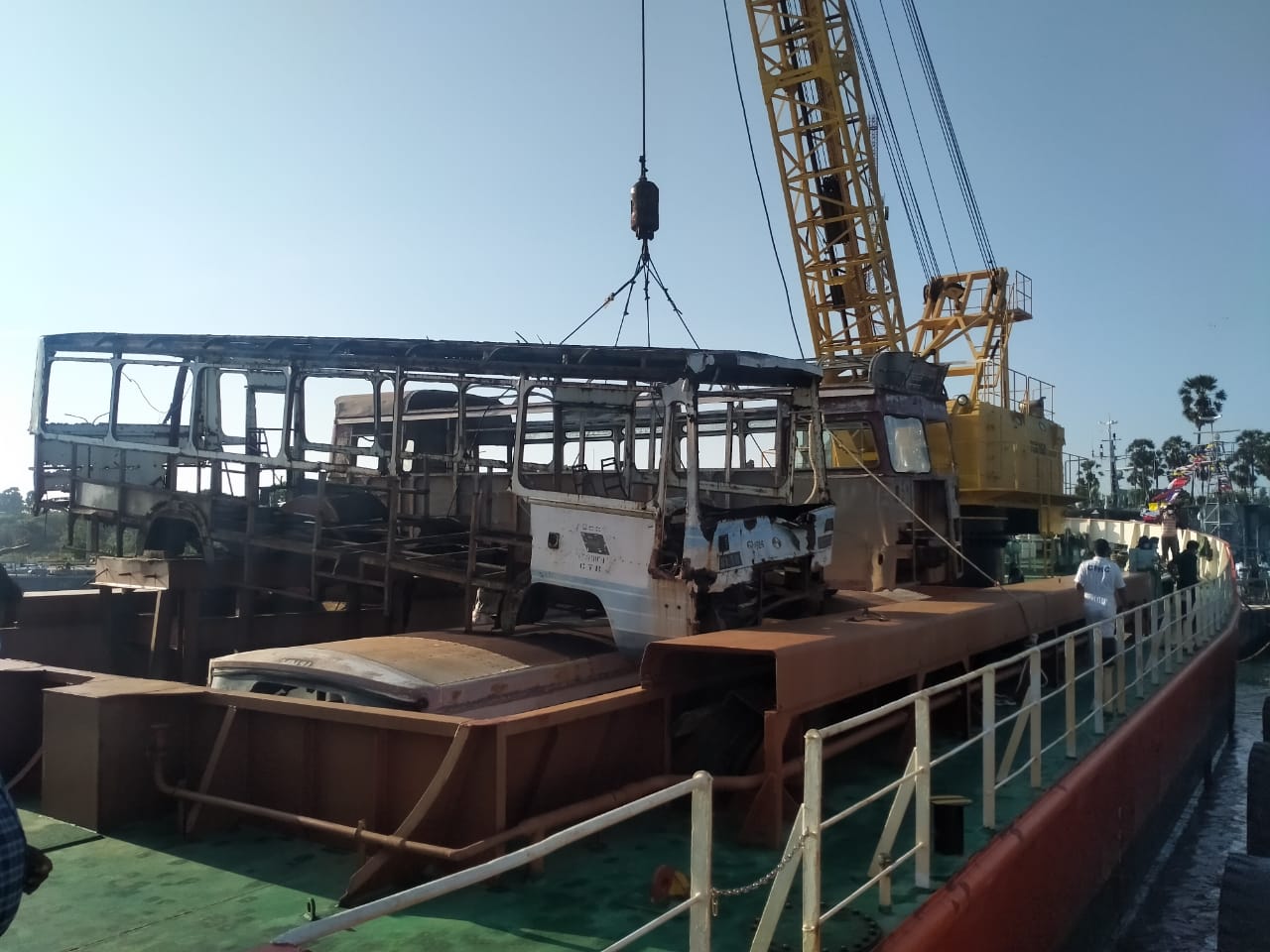
As part of this project, launched by Department of Fisheries and Aquatic Resources, 20 discarded buses are to be submerged off island sector in Jaffna to help create artificial reef conducive to marine environment.

Commencing the project, the Northern Naval Command rendered assistance to submerge four discarded buses, transferred by ‘Sayuru’ a dredging ship belongs to the Fishery Harbors Corporation, off the Delft Island Friday.

Integrated well with coastal biodiversity, it is expected that the project will help increase fish stocks in northern waters in the time to come and the Navy will continue to provide essential support for the success of the same.

Posted in Uncategorized

SLPP calls energy minister to resign over fuel price hike

Sri Lanka Podujana Peramuna (SLPP) says that the Minister of Energy must step down from his post over the increase in fuel prices.

Issuing a statement the General Secretary of SLPP MP Sagara Kariyawasam says that the subject minister must take complete responsibility for pushing the people into more difficulties with a fuel price hike amidst the COVID-19 pandemic.

The statement reads that the government has been put into a difficult position of increasing the fuel prices by the subject minister due to his failure to make the necessary decisions by realizing that such a situation could arise.

Kariyawasam says that they have a suspicion as to whether this situation was created on purpose to create displeasure among the public regarding the leaders who are committed to the development of the country amidst various challenges.

Thereby, the subject minister is directly responsible for this situation and should take responsibility and resign from his post, SLPP said.

China-Sri Lanka Friendship Hospital inaugurated in Polonnaruwa

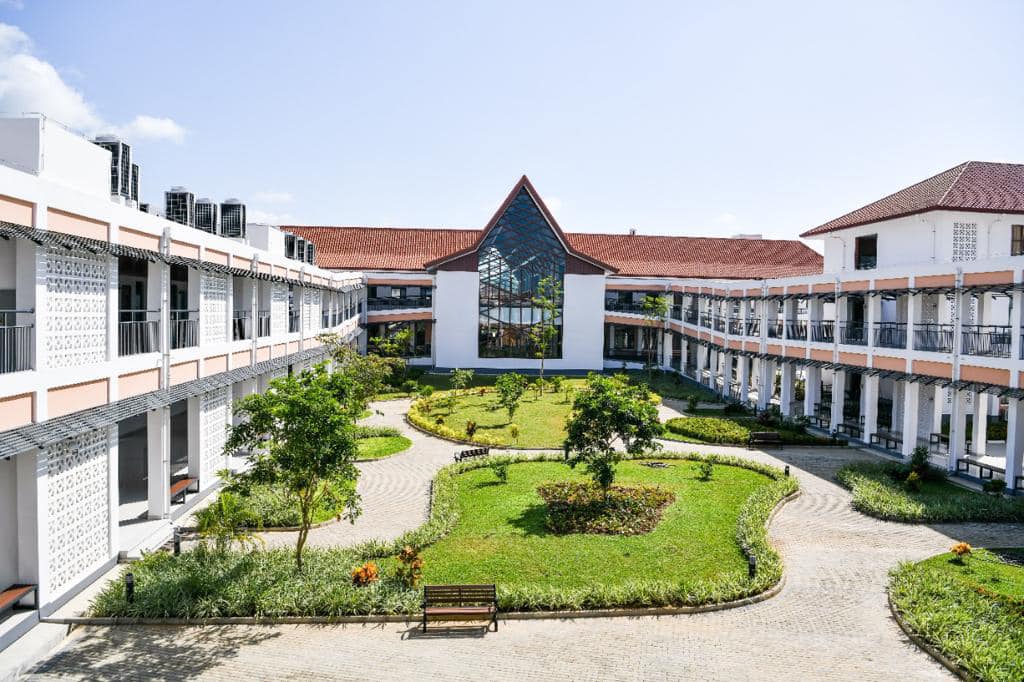
President Gotabaya Rajapaksa on Friday inaugurated the China-Sri Lanka Friendship Hospital in Polonnaruwa, built with a Chinese grant of $ 60 million.

The hospital, located in Sri Lanka’s North Central Province, will specialise in treating kidney ailments, a widely prevalent and recurring concern in the region, especially among farmers.

For years now, residents of this agriculture-intensive area, have been frequently diagnosed with a kidney disorder that the country’s medical experts have identified as Chronic Kidney Disease of Unknown Etiology (CKDu), a condition for which causal factors remain unknown.

Following a request from former President Maithripala Sirisena during his time in office — he is from and currently represents Polonnaruwa in Parliament — the Chinese government provided the grant. The facility was built within 30 months, a press release from the President’s office said.

The hospital, said to be one of the largest in South Asia for nephrology care, with a capacity of 200 beds, follows China’s earlier grant projects in Sri Lanka, also built as large public spaces, such as the well-known Bandaranaike Memorial International Conference Hall in Colombo, that Beijing gifted in the 1970s, and the Nelum Pokuna Mahinda Rajapaksa Threate, that China funded during former President Mahinda Rajapaksa’s time in office.

In addition to sanctioning loans and a currency swap facility worth more than $ 2 billion since the pandemic struck last year, China also announced $90 million grant to Sri Lanka in October last year, following a request from President Gotabaya Rajapaksa, when a high-powered Chinese delegation visited the island nation.

Meanwhile, the Jaffna Cultural Centre, built with Indian assistance of $ 11.5 million, whose construction was completed a year ago, awaits inauguration as authorities “iron out” issues over the administrative set up to the run the Centre. Prime Minister Narendra Modi, speaking in February at an election rally in Chennai, ahead of the Tamil Nadu Assembly polls, said he hoped to open the Centre in Jaffna “soon”. India’s grant assistance to Sri Lanka totals over $500 million.