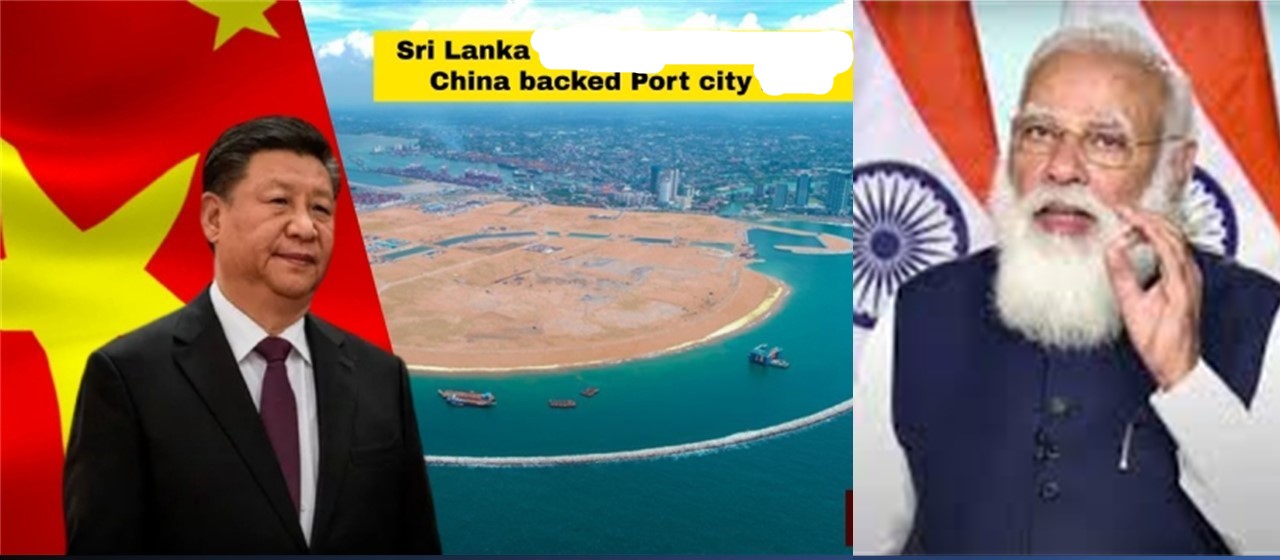
After Port City, Gota Set To Sell Colombo Fort, Slave Island Heritage Buildings To China-Backed Firms

The Government of President Nandasena Gotabaya Rajapaksa looks set to sell hundred acres of prime land to Chinese companies in the Colombo Fort and Slave Island areas, as Beijing continues to seize strategic control of Sri Lanka’s capital city, its major highways, and ports, Colombo Telegraph learns.

China Harbour Engineering Corporation (CHEC) is the company that built and now has virtually complete management, administration and jurisdiction of the Colombo Port City, the reclaimed landmass that was annexed to Sri Lanka’s territory.

This week in a brazen move, the Nandasena Government which is already under fire for rushing through the Port City Bill in the middle of a major coronavirus outbreak, handed over an elevated highway project to CHEC. The Cabinet of Ministers decided to award the contract to build the 17 km Kelaniya-Athurugiriya elevated highway to the Chinese state-owned CHEC sans a competitive bidding process. By winning the bid worth USD 1 billion, CHEC will become the first foreign company to own a major highway in Sri Lanka on which it will operate a toll.

CHEC will operate the New Kelaniya Bridge highway for 15 years, during which it will earn revenue. In 18 years, the Highway will be transferred back to Government of Sri Lanka ownership, Cabinet Spokesman Udaya Gammanpila said. The Cabinet made the decision to hand the project over to CHEC on the basis that the company would take the least amount of time to complete the project and the shortest period by which it will recover the cost, Gammanpila said, without elaborating on a transparent bidding process.

The Company was exposed by a 2018 New York Times investigation for “donating” over Rs 800 million to Mahinda Rajapaksa’s presidential re-election campaign in 2014/2015 through its Standard Chartered Bank account in Colombo. The payments were made from a subaccount controlled by CHEC named the HPDP Phase 2, shorthand for “Hambantota Port Development Project”, the New York Times revealed in its report. In 2011, the World Bank officially blacklisted China Communications Construction Company and all its subsidiaries after an investigation into fraudulent practices in a Phillipines Highway project. CCCC is CHEC’s parent company.

CHEC has reaped massive returns after the Rajapaksa family was returned to power in November 2019 but the procurement of thousands of acres of land in Colombo City would be essentially a seizure of Sri Lanka’s most strategic landmass by China. Beijing is vying for geo-political influence with other foreign powers including the US, Japan and India and Sri Lanka has become an important linchpin in this process.

But the Gotabaya Rajapaksa Administration has much bigger plans for CHEC, a company that has a reputation for oiling the palms of corrupt politicians world over.

Over the next two years, the Government plans to sell hundreds of acres of prime state-owned land in Colombo Fort and its adjacent Slave Island area, including property currently being used by the Sri Lanka Air Force and Sri Lanka Army. Colombo Telegraph learns that the bulk of these properties have been reserved for China Harbour Engineering Corporation, through an intermediary local firm created specifically for the purpose of easing the path for transfer to the Beijing-owned entity and other affiliated investors.

Many of these properties were already listed for diversification by the Yahapalanaya Government and other administrations who hoped to transform Colombo City into a commercial and financial capital and move the state administrative headquarters inland. However, that diversification was to be streamlined under a competitive bidding process for interested investors.

Selendiva Investments Limited in which the Treasury holds 100 percent of shares was established last year.

According to a Cabinet Paper submitted on May 17 by Prime Minister Mahinda Rajapaksa, in his capacity as Urban Development Minister Selendiva Investments has been tasked with transforming several underperforming state-owned assets into “viable, profitable and marketable” assets. Selendiva Investments is empowered to enter into long-term lease agreements with commercial entities about any land owned by the UDA. With private investors in these UDA properties and holdings, Selendiva will “smooth the way” for easy approvals from the state sector.

Based on the proposal now before Cabinet Selendiva Investments will set up Special Purpose Vehicles for specific investments.

According to the Cabinet Paper, the UDA is seeking approval to move ahead with three investment portfolios – namely: The Colombo Fort Heritage Square, The Immovable Property Development and The Government-owned Hospitality Sector under Selendiva Investments.

The proposal seeks to open multiple state-owned properties and UDA holdings for investment.

Ear-marked for “investment” under these portfolios are the Grand Oriental Hotel (GOH), the Gafoor Building, York Building, Republic Building (Ministry of Foreign Affairs), the General Post Office building (Slave Island), Hilton Hotel, Water’s Edge Hotel, Cey Nor Restaurant (Slave Island), International Coordination Centre, Kankesanthurai (Jaffna), and Grand Hyatt Colombo.

Colombo Telegraph learns that the second phase of this Rajapaksa leasing/selling spree will include the Sri Lanka Air Force HQ, SLAF Grounds, other military holdings including the FCID headquarters on Chatham Street where CHEC already has its plush offices in Colombo.

The moves are especially ironic for the Government that swept to power on the basis that the previous Sirisena-Wickremesinghe administration was selling national assets.

Colombo Telegraph learns that the Chinese Government hopes the transactions will be complete by 2022. Chinese firms are often preferred investment partners for the ruling Rajapaksa family because of the potential for massive kickbacks.

Spearheading the work for this major acquisition by the Beijing owned company is Urban Development Authority Secretary Siri Nimal Perera.

Perera was reportedly instrumental in securing the former Army Headquarters in Galle Face for sale to the Hong-Kong based Shangri-La corporation without a tender process on a free hold basis. Perera held office as Chairman of UDA when President Mahinda Rajapaksa was in power.

When the Rajapakasa were last in power, China built a port, an airport, a cricket stadium and a series of other white elephant constructions in the Hambantota region.

Eight years later, with the Government having changed and struggling to pay back massive foreign loans due to Beijing, China wrested control and operation of the Hambantota Port, the most strategically important of the Rajapaksa vanity projects it had bank-rolled when Mahinda Rajapaksa was president of Sri Lanka. Of Sri Lanka’s deep-water ports, Hambantota lies closes to the busiest international east-west shipping lane.

The Rajapaksas are engaged in a sustained effort to make their political survival in Sri Lanka, Beijing’s official business, a foreign policy analyst told Colombo Telegraph.

Unseating the Rajapaksas will be a herculean task, with any Government that hopes to succeed this one likely to be compelled to pledge fealty to Sri Lanka’s overlords in Beijing, the analyst noted.

“By the time Gotabaya Rajapaksa concludes the first term of his presidency, China will have wrested control of several ports in the island and strategic inland property. It will own the bulk of Sri Lanka’s debt, as Colombo repeatedly leans on President Xi Jingping for bailouts amidst a serious debt crisis. Any Government that follows this regime will be saddled with this economic and strategic subjugation – there will almost be no way out,” the analyst, who did not wish to be named, told Colombo Telegraph.

Colombo was already behaving like a vassal state, with the President himself or five-man ministerial delegations going to the airport to accept delivery of the Sinopharm vaccines being donated by Beijing, the analyst pointed out. “There is no question that with every move it makes, the Rajapaksa administration making it known that it is a willing client of the Chinese Government and a supporter of Beijing’s expansion in the Indian Ocean,” the analyst told Colombo Telegraph.

As it expands its strategic advantage in Sri Lanka, Beijing has been careful to invest in all influential sections of society in the island – Buddhist temples and their chief incumbents, senior journalists and media houses, powerful trade unions in the port and medical sectors and local politicians, Colombo Telegraph learns authoritatively. Beijing also has assets situated in senior levels of the ruling Gotabaya Rajapaksa administration that are constantly looking out for China’s interests in all matters, it is learnt. Beijing’s cyber-intrusion into Sri Lanka’s social media landscape has also been noteworthy, and seen an escalation in recent months it is learnt.

It was the determination to create a monopoly on the island’s ports that led to Beijing’s mobilisation of monks and trade unions and other stakeholders to staunchly oppose the lease of the East Container Terminal in the Colombo Port to an India-Japan led joint venture, the analyst explained.

“The west terminal of the Colombo Port is very different – there is nothing there yet in terms of infrastructure, and the way the deal was manoeuvred to be handed over to the Adhani Group of India, it doesn’t look like the Indian Government will have a major role to play in the transaction,” the analyst noted. In the coming years, Sri Lanka’s national electoral battles will also become a form of proxy war between Beijing Vs. The Quad. We saw some measure of that in the 2015 presidential election when the Chinese Ambassador in Colombo himself became a canvasser of votes for the sitting President. We should expect to see this on a much bigger scale in the future,” the analyst added. (By Nimal Ratnaweera)

Covid death toll in Sri Lanka rises to 1,363

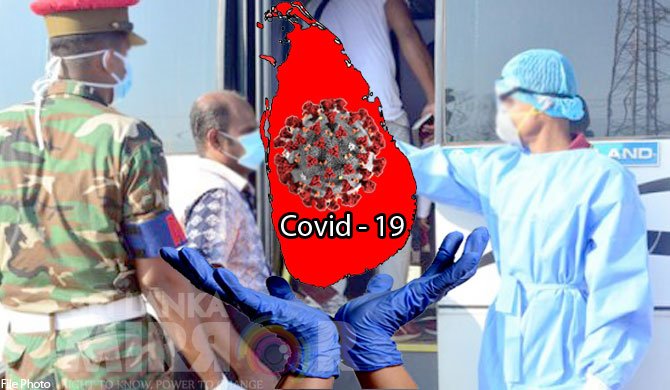
The coronavirus death toll in Sri Lanka rose to 1,363 today.

The Ministry of Health said that another 38 deaths linked to the virus were confirmed today.

Another 602 COVID-19 cases have been detected today in the country, raising the number of confirmed infections to 177,706.

Accordingly, 2,845 coronavirus cases have been detected in Sri Lanka today.

The Epidemiology Unit of the Ministry of Health said 30,019 persons are currently receiving treatment for coronavirus at several facilities across the country.

Earlier today, 2,573 persons who recovered from COVID-19 were discharged from hospitals, raising the number of recoveries in the country to 146,362.

1,452 suspected COVID-19 cases are also under medical observation at present.

India keeping an eye on China-backed Colombo Port City project

India has said it is keeping an eye on the China-backed Colombo Port City project in Sri Lanka that is being touted as a big ticket investment drawing scheme which would boost the island nation’s economy, Live Mint reported.

The project has been in the works for a while but this week, the Sri Lankan parliament approved the Colombo Port City Economic Commission Bill after a two-day debate on it. The Opposition parties in Sri Lanka are against the bill which they say will lead to the creation of a Chinese colony in Sri Lanka. The 225-member Sri Lankan Parliament approved the bill 148-59, according to news reports.

“I don’t think we have formally raised this issue” with the Sri Lankan government, a person familiar with the matter said on Thursday. “But our concerns on this matter are evident,” the person said against the backdrop of reports that the Chinese backed project was at a distance of about 300 kilometers from India. India views China as a strategic rival and the project in India’s sphere of influence – ie within South Asia that New Delhi considers its backyard – is a matter of concern for India.

“We have certain benchmarks – it should be transparent, there is talk of who will it benefit, is it China….we hope that the concerns that the Sri Lankans have themselves raised are addressed within the framework of the Sri Lankan democracy and that if there are other issues to it, it should follow the principles of openness, transparency and financial responsibility,” the person said. “And of course that respects the sovereignty and territorial integrity” of Sri Lanka.

“So I think those elements are important that it (the project) should be following internationally recognised norms… and any development that happens so near to our country we will of course keep a very close eye on that, on whether in any way it impacts our security. But at this point I think there are discussions within Sri Lanka, queries and questions, what are the implications of this for Sri Lanka itself,” the person said.

“If it is commercial venture only, then we don’t have much to say, thats their choice. But if there are other elements we will certainly have a look at it,” the person said.

The $ 1.4-billion Colombo Port City project is expected to play a key role in China’s ambitious ‘Maritime Silk Road’ project in India’s backyard. It is also said to be the single largest private sector development in Sri Lanka. China has built the port city on reclaimed sea, adjoining the Port of Colombo.

The Port city bill aims to provide for a special economic zone to establish a commission to grant registrations, licenses, authorisations and other approvals to operate business in such economic zones. On the importance of the bill, the Sri Lankan government on Wednesday said the port city would attract foreign direct investment, giving the much-needed impetus to the economy. Sri Lanka’s Minister for Capital Markets Ajith Cabraal projected that the initial construction of the port city would bring in investment of $ 15 billion, creating over 200,000 jobs. Sri Lanka, in recent years, has carried out various development projects with an estimated $ 8-billion in loans.

India views China’s Belt and Road Initiative and Maritime Silk Route as ventures of Beijing to boost its own influence in the world and saddle countries, taking China’s loans for the projects within the initiatives, with debt. New Delhi has also objected to the environmental costs of the projects.

Posted in Uncategorized

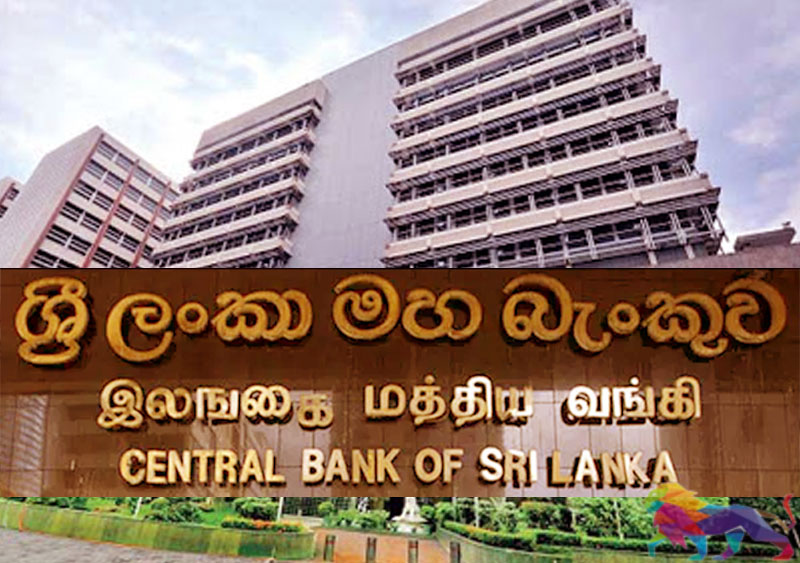
CB lifts limits on short-term forex borrowing by banks

Central Bank has decided to revoke the limits set for short-term foreign currency borrowings for one year.

The previous limits as a percentage of total assets ranged from 1.5% (for banks with credit rating of BBB+ to BBB- or equivalent or Below BBB-) to 2.5% for banks with higher credit rating. Short-term means one year (remaining term of maturity).

The new move is whilst requiring banks to maintain the existing total foreign currency borrowing limit up to 10%. The latter is subject to banks ensuring through appropriate risk mitigation practices that such foreign currency borrowings do not give rise to any excessive forex risk. Banks are also required to inform the Central Bank prior to undertaking any borrowings.

The Central Bank said the new move is after considering the need to stimulate capital formation within the real economy and supplement foreign currency needs of the country.

Banks also have been asked to report their total foreign currency borrowings position at the end of each month within 15 working days starting from 30 June.

The latest stance by the Central Bank will encourage banks to tap more foreign sources to secure short-term funding which is easily available as opposed to long-term.

Some of the banks which had raised funds via foreign sources since last year include Bank of Ceylon, People›s Bank, National Savings Bank, Commercial Bank, Nations Trust Bank, Pan Asia Bank, Sanasa Development Bank etc. Commercial Bank and NDB managed to attract equity investment from abroad as well. Several finance companies too have raised funding from overseas.

“Banks have been regularly sourcing foreign funding both short and long-term. The removal of short-term limit is a big boost,” a senior banker told the Daily FT yesterday.

The relaxation will also help Sri Lanka enhance its forex reserves amidst the challenge of substantial foreign debt servicing and the COVID-19 pandemic.

As of end-April, gross official reserves were estimated at $ 4.5 billion, equivalent to 3.2 months of imports. This does not include the bilateral currency swap facility (worth 10 billion yuan) with the People’s Bank of China (PBoC).

Last year eight companies, mainly banks, had 16 listed debenture issues raising Rs. 22 billion, whilst in 2019, the amount raised was Rs. 58 billion. So far this year, several banks have opted for the same. Sampath Bank raised Rs. 6 billion in April, whilst Commercial Bank has announced a Rs. 10 billion debenture issue. Banks also rely on public deposits to boost their liquidity levels.

In 2020, despite the challenging business environment, off-balance sheet exposures reported a growth of 16.1% (Rs. 675.2 billion) compared to a negative growth of 5.3% (decrease of Rs. 233.5 billion) during 2019. The main increases during 2020 were in undrawn credit lines (Rs. 279.9 billion), FX exposures (Rs. 278.3 billion) and guarantees and bonds (Rs. 66.8 billion).

The net foreign currency exposure as a percentage of banks’ on-balance sheet foreign currency assets stood at 0.3% as at end-2020, decreasing from 1.1% at end-2019.

During 2020, on-balance sheet foreign currency assets increased mainly due to the increase in placements with banks and investments, while the increase in off-balance sheet assets was from forward purchases and other derivative products.

The increase in on-balance sheet foreign currency liabilities was attributed to the increase in customer deposits while the increase in off-balance sheet liabilities was mainly from forward sales.

In 2018, the limits were set based on the maximum outstanding amount of foreign currency borrowings obtained by a licensed bank shall be determined as a percentage of total assets as per the latest annual audited accounts or interim accounts certified by the External Auditor of the licensed bank.

The percentage of foreign currency borrowings of a licensed bank was based on the sum of scores assigned for each licensed bank based on the external long-term credit rating and the total capital adequacy ratio of the bank.

In its original November 2018 direction to set limits, the rationale was that though forex borrowings are an important source of funding for banks, excessive and unregulated foreign capital flows were likely to cause unwarranted macroeconomic and financial stability concerns.

At that time, the Monetary Board introduced a policy framework for foreign currency borrowings of licensed banks with the objectives of addressing the high dependence on foreign currency borrowings and the resulting exposure of licensed banks to foreign exchange risk and minimising the pressure on the reserves and exchange rate of the country arising from large borrowings in foreign currency.

In 2018, off-balance sheet exposures of banks grew significantly by 14.7% (Rs. 569.4 billion) compared to the growth of 5.3% (Rs. 194.6 billion) during 2017.

Undrawn credit lines accounted for the largest share of off-balance sheet exposures with a share of 27.8% at end-2018.

Foreign exchange (FX) exposures accounted for 32.5% of the total off-balance sheet exposure and was caused mainly by unsettled FX purchases (16.8%) and FX sales (15.7%).

The net foreign currency exposure as a percentage of banks› on-balance sheet foreign currency assets stood at 0.8% at end 2018. The banking sector reported a long foreign currency position of Rs. 11.7 billion in 2018 in comparison to a long position of Rs. 19.9 billion in 2017.

Posted in Uncategorized

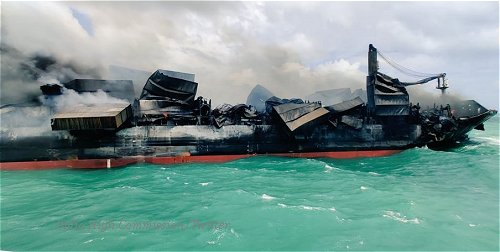
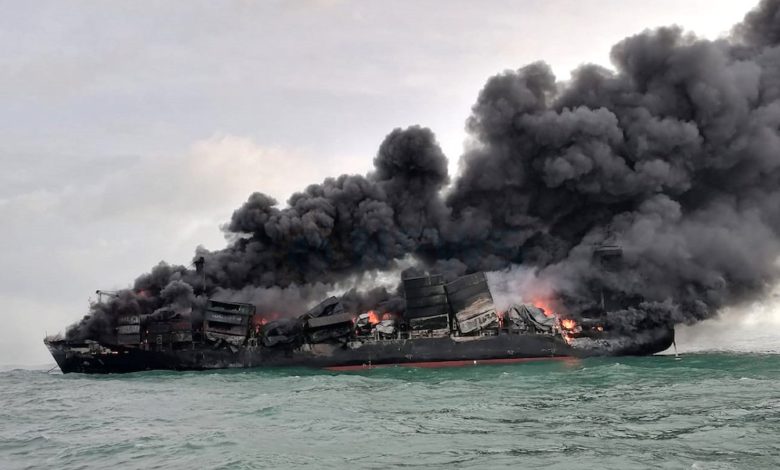
X-Press Pearl came to China run terminal, SLPA says rendered all assistance

State-run Sri Lanka Ports Authority said the MV X-Press Pearl which caught fire came to China-run Colombo International Container Terminals (CICT) and the port rendered all possible assistance to the distressed vessel when made aware of the fire.

It is customary among seafarers in particular to give whatever possible help to distressed vessels at sea.

No prior notice was given of an acid leak, the SLPA said.

SLPA said the following sequence of events took place.

*The crew on board the vessel through radio on 19th the May 2021, had informed the SLPA controls that the vessel would arrive the waters of the Port of Colombo on mid-night and that she would call at the port control area during early dawn.

*As the berth was not ready at that time, the vessel was permitted to remain anchored in the harbor waters, as is usually the process during container operations.

*At that time SLPA had not been informed of any specific event or occurrence verbally or in writing by the vessel.

*The vessel was scheduled to be called at the Port after 23 hours. The Harbor Master only then received an email from the ship’s agent requesting permission to unload and reassemble a TEU containing leaking nitric acid.

*At noon that day, the port control room was notified that there was smoke inside the ship. A few minutes later, the ship’s administration had informed the port control of the SLPA that the vessel itself suppressed the situation.

*However, then two hours later, the vessel again informed of a smoke out of the ship and Sri Lanka Ports Authority (SLPA) taking prompt action at this point, deployed the services of its Fire Brigade at the distressed vessel within a short period of an hour.

X-Press Feeders, the vessels owners said request to offload the cargo at Hamad Port and Hazira Port had been denied and it proceeded to the next port of call, which was Colombo.

The two ports had said they lacked the facilities to do it.

Posted in Uncategorized

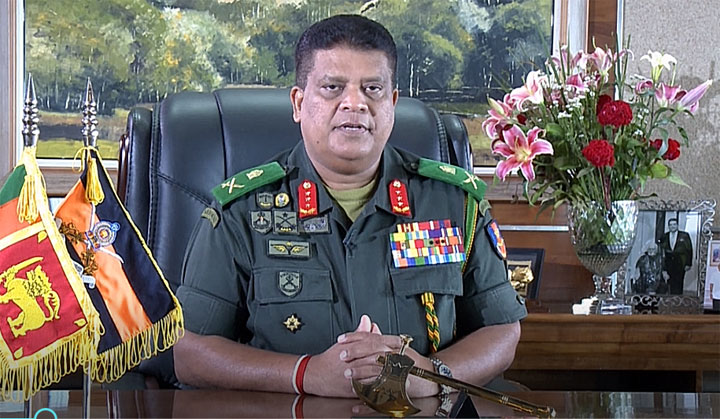
Travel restrictions NOT lifted on May 31 & June 04 – Army Chief

The ongoing travel restrictions will continue until June 7 and will not be relaxed on May 31st and June 4, Army Commander General Shavendra Silva said.

He said the decision was taken during a meeting held with the President and the COVID-19 task force this morning.

Earlier, the Government said travel restrictions will be relaxed on the 25th, 31st May and June 4 to allow people to pick up essential items during the travel period extended for June 07.

General Silva said that essential items will be delivered through the cordination with divisional secretariat.

Meanwhile, it was also decided to distribute Rs.5,000 to the low-income families

Posted in Uncategorized

Eyebrows raised over inordinate delay in seeking Indian help

Controversy surrounds the inordinate delay on Sri Lanka’s part to seek Indian assistance for fighting the fire onboard Singaporean flagged X-Press Pearl anchored 9.5 nautical miles northwest of the Colombo port.

Sri Lanka sought Indian assistance on the afternoon of 25 May, five days after the Captain of the container carrier MV X-Press Pearl requested SLN support to douse the fire.

The SLN has responded to the distress call on the afternoon of 20 May.

The fire erupted on the night of 19 May 19 at a time the vessel operated by the world’s largest feeder operator, X-Press Feeders was in anchorage.

The examination of available information revealed that the SLN requested for Indian backing to fight the major conflagration as well as pollution control after a huge blast on the vessel, which had a raging fire among some of the containers on its deck for more than four days.

Well informed sources said that the blast ripped through the stack of containers at 4.30 am, on May 25th. Sources said that the blast deprived the firefighters whatever chance they had in bringing the situation under control.

Responding to The Island queries, sources explained by the time Indian assistance was sought, the battle was clearly lost.

Sources pointed out that by the time Sri Lanka sought Indian intervention, the brand new vessel had been abandoned with the 25-member crew comprising 25 Philippine, Chinese, Indian and Russian nationals evacuated by the firefighters. The evacuation coincided with the fire overwhelming the firefighters, sources said, acknowledging Sri Lanka obviously lacked the capacity to undertake such a daunting challenge.

Evacuation of all-foreign crew had been carried out by tug ‘Hercules’ chartered by Sri Lanka Ports Authority (SLPA). Sources said that in spite of the huge risk, the ‘Hercules’ crew carried out the evacuation, successfully, under extremely difficult conditions and they were brought ashore. By the time, Indian assistance had been sought, the ship was even listing and some of the containers on its deck had fallen overboard, sources said.

Inquiries revealed that the SLPA lacked the strength to engage in such a firefighting exercise. The SLPA tug ‘Megha’ in spite of being dispatched to the scene of the fire on May 20th hadn’t been able to make a difference. The vessel hadn’t been properly equipped therefore the SLPA had no option but to withdraw it and send two tugs ‘Hercules’ and ‘Posh Hardy’ on May 21 and May 22, respectively.

The Island learns that the SLPA had taken those tugs on long lease from Sri Lanka Shipping Company in 2018. However, another tug ‘Posh Husky’ also taken on long lease from the same company hadn’t been in a position for deployment due to what some sources called ‘equipment issues.’

Subsequently, two other tugs, ‘Mahawewa’ and ‘Aries’ owned by Sri Lanka Shipping Company had been deployed as the situation rapidly deteriorated. Two foreign tugs, ‘Posh Teal’ and ‘Shalwar’ that had arrived here on the night of May 22 and May 23 morning, respectively failed to bring the situation under control either. They belonged to world renowned ‘Salvors.’

By the time Indian assets arrived in Sri Lankan waters the firefight had been lost and the operation transformed to a pollution control mission. Sources said that the country hadn’t experienced a similar situation since independence though the SLN with Indian Coast Guard backing managed to control a fire onboard oil tanker ‘New Diamond’s carrying more than a quarter of a million tonnes of crude oil off the East coast in early September 2020.

Sources said that in spite of successive governments vowing to transform Colombo harbour to a maritime hub a genuine attempt hadn’t been made to achieve that privileged status. The fire onboard ‘New Diamond’ and the ongoing inferno off the Negombo coast exposed the failure on the part of the SLPA to build up its own firefighting capacity.

When Indian assets, Coast Guard vessels Vaibhav, Vajra and Samudra Prehari and tug ‘Water Lilly’ dispatched by Director General Shipping there, in addition to Dornier aircraft for aerial reconnaissance had been on their way, the firefight had been lost, sources said. According to a statement dated May 25th issued in the evening by the Indian High Commission in Colombo, having received Sri Lanka’s request in the afternoon, Dornier aircraft reached Colombo at 4 pm on the same day and the first vessel was to reach the scene by 7 pm.

X-Press Pearl carried 1,486 containers with 25 tons of Nitric Acid, several other chemicals and cosmetics from the port of Hazira, India on 15th May 2021.

Speculation is rife that those responsible, including the X-Press Pearl crew hadn’t made a proper assessment of the situation therefore failed to take tangible measures, on time.

The initial SLN deployment on May 20th afternoon comprised Offshore Patrol Vessels (OPVs) SLNS Sagara, Sindurala and a Fast Attack Craft (FAC).

According to an SLN statement, the ill-fated vessel had arrived at the location (9.5 nautical miles northwest) on the 19th of May and was awaiting its entry into the Colombo harbour.

Inclement weather hampered operations, sources said, pointing out that the government had to address the issue as it was battling both fast spreading Covid-19 pandemic and floods.

Regardless of inclement weather the Air force on two days dropped dry chemical powder on the vessel.

Sources said that Sri Lanka should acquire firefighting capability. Perhaps, following the end of the war, 12 years ago some of the SLN vessels could have been properly equipped to meet emergency situation, sources said. The SLPA should apprise the environment and take whatever tangible measures as such expertise and strengths couldn’t be procured overnight, sources said.

Posted in Uncategorized

Gazette issued declaring several services as Essential Services

An Extraordinary Gazette has been issued declaring several services as essential services considering the current COVID-19 situation in the country.

The following are the services declared as essential services

All services, works or labour of any description carried out or required to be carried out by or in connection with the Sri Lanka Ports Authority established by the Section 3 of the Sri Lanka Ports Authority Act, No. 51 of 1979.
The supply and distribution of all fuels, including petroleum products and liquefied gas.
All services, works, labour of any description whatsoever, necessary or required to be carried out in connection with the discharge, carriage, landing, storage, delivery and removal of oil or fuel from vessels within any port, as defined as such,for the purposes of the Customs Ordinance.
Freight transport by Sri Lanka Railway Department and all public transport services carried out by the Sri Lanka Transport Board for passenger transport.
Maintenance, security and operational aspects that are essential to carry out such public services in line with service requirements.
All type of services, works, or labour contributions which should be carried out or required to be carried out by District Secretariats, Divisional Secretariats, Grama Seva Officers, Samurdhi Development Officers, Agricultural Research Assistants including all field level officers of all District and Divisional Secretariats.
All state banking and insurance services including the Central Bank of Sri Lanka’
Waste management services carried out by the Local Authorities.
The gazette notification was issued on May 27 carried the signature of President’s Secretary P.B Jayasundara under the instructions of the President.

Posted in Uncategorized

27 more deaths push Sri Lanka’s COVID-19 fatality count past 1,300

The Director-General of Health Services confirmed that Sri Lanka has reported 27 more deaths related to the COVID-19 pandemic on Wednesday (May 27).

As per the Department of Government Information, the reported deaths had occurred between May 22 and May 27.

They are identified as residents of Gurutalawa, Badalkumbura, Kandy, Agalawatta, Wennappuwa, Polonnaruwa, Welipenna, Matale, Aluthgama, Maggona, Darga Nagar, Morapitya, Kalutara-South, Galpatha, Beruwala, Galle, Wattegedara, Boossa, Millewa, Neboda, Bulathsinhala, Kadawatha, Wattala, Wellampitiya, and Colombo 15.

Accordingly, the total number of deaths due to Covid-19 infection in Sri Lanka has risen to 1,325.

Female Special Riders Monitor Spread of COVID-19 in Jaffna

A Quick Reaction Special Rider Team, made up of woman soldiers of 7 Sri Lanka Army Women’s Corps was formed on the instructions of Major General Priyantha Perera, Commander Security Forces-Jaffna and Colonel Commandant of Sri Lanka Army Women’s Corps.

The Team has been operational since Tuesday (25) under the supervision of the Commanding Officer, 7 Sri Lanka Army Women’s Corps Major Rashmi Galhena.

This Special Women Corps Quick Reaction Rider Team would operate in an emergency situation and assist COVID-19 prevention work and controlling process. They had their first operation covering populous Jaffna city and its suburb on Tuesday (25).