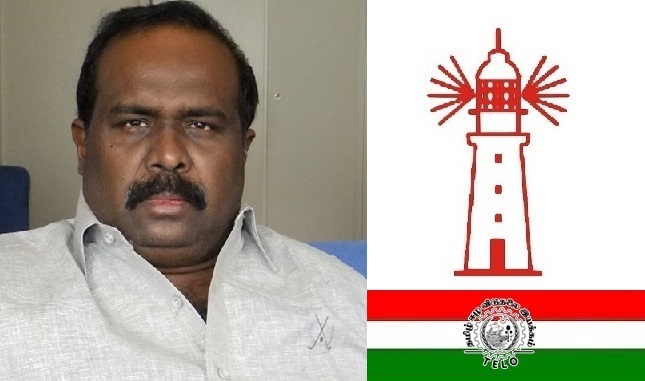
TELO leader Selvam MP requests India and Britain to provide ‘test equipment’

Leader of the Tamil Eelam Liberation Organization and Member of Parliament for the Vanni District, Selvam Adikalanath has requested the Indian and British Embassies to provide test equipment for the Vanni District Hospitals.

As stated in the request letter,

In the Vanni district, it is not possible to identify corona infected people immediately due to lack of testing facilities.

It takes three or four days for the results to come out as there are only a limited number of tests that can be done to prevent infections.

This tragedy is due to the lack of equipment and testing for this infection. This should be rectified immediately.

Therefore, it has been requested to provide equipment to the Vanni District Hospitals to identify the infected without delay and get immediate results.

Meanwhile, he has requested Health Minister Pavithra Vanniyarachchi to immediately hand over the test equipment to the Vanni District Hospitals on a special basis.

He added in his request that the people of the Vanni could be protected by taking these measures before a dangerous situation arises in the Vanni district.

Posted in Uncategorized

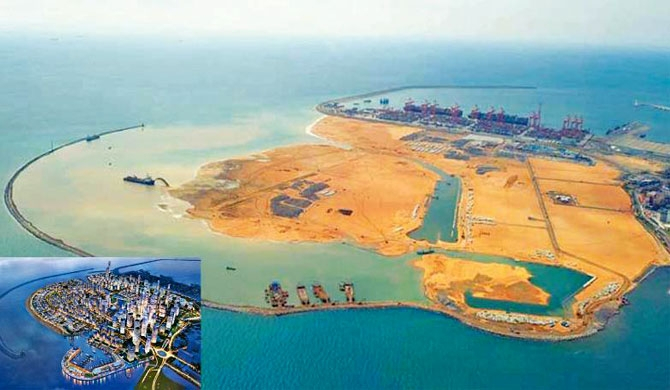
Transparency International Sri Lanka continues to have serious concerns about new Colombo Port City Law

• The hasty process adopted failed to uphold the right to information of the people.
• Parliamentarians were not given adequate time to review the revised version of the Bill.
• Establishment and inadequate oversight of offshore banks and companies could lead to Port City attracting money laundering and illicit financial flows.
• Lack of public access to beneficial ownership information could lead to Port City becoming a secrecy jurisdiction that provides a safe haven for proceeds of crime.
• Sri Lanka faces the risk of being downgraded by the FATF due to the Port City.
May 26, Colombo: Transparency International Sri Lanka says serious concerns continue to linger about the new Colombo Port City Law passed recently.

On the 20th of May 2021, the Parliament of Sri Lanka passed the Colombo Port City Economic Bill into law. Two days prior to the vote on the Bill, the Speaker of Parliament revealed to the members of Parliament and the general public the determination given by the Supreme Court of the Country with regard to the constitutionality of the Bill. Transparency International Sri Lanka (TISL) was one of the petitioners that had challenged the Port City Bill. While welcoming the determination of the Supreme Court, TISL continues to have serious concerns about the new legislation.

At the outset it should be noted that the manner in which the legislation was rushed through, was an affront to the right to information of the citizens of Sri Lanka. The proposed bill was not gazetted in advance, and there was no opportunity given for public consultation and public review, even after the Supreme Court determination was announced, as the Bill was debated soon after and passed, even amidst the height of the third Covid wave in the country. Such timing of this critical Bill raises the concern as to whether the constitutionally guaranteed fundamental right to information of the people of Sri Lanka was respected in this crucial endeavor to impose a law with such far reaching impact on the country. TISL notes with grave concern that this process did not even provide sufficient time for Sri Lanka’s Members of Parliament to fully review and understand the changes made and to reach an informed decision.

One of the primary concerns that TISL raised through its petition against the Bill, was that the establishment of offshore banks and companies could open pathways for money laundering and illicit financial flows. The Supreme Court determination has eased some of these concerns by expressly stating that The Convention on the Suppression of Terrorist Financing Act No. 25 of 2005, Prevention of Money Laundering Act No. 5 of 2006 and the Financial Transactions Reporting Act No. 6 of 2006 apply within the Area of Authority of the Colombo Port City. However, the Registrar of Companies has limited control over offshore companies, and the Supreme Court has not expressly stated whether the Banking Act would apply to these offshore Banks.

The recently enacted Port City Bill does not make it mandatory for Companies operating out of the Port City, to disclose beneficial ownership information. Disclosure of information of individuals who ultimately own the companies is paramount to prevent misuse of legal entities for money laundering or terrorist financing. While law enforcement may be able to access such information, the lack of public accessibility would result in minimal scrutiny over such entities by the public, which will lead to many illicit transactions not being apprehended. Publicly accessible beneficial ownership information is not only a best practice, but also allows for the observation of trends and red flags in transactions.

The rise of risks pertaining to attracting and facilitating black money, could also lead to Sri Lanka being downgraded in the Financial Action Task Force (FATF) rankings, which in turn would have a detrimental effect on the country’s ability to obtain foreign aid, loans and lawful investments.

According to the Tax Justice Network, an estimated US$ 21 to US$ 32 trillion of private financial wealth is located, untaxed, in secrecy/offshore jurisdictions around the world. These offshore jurisdictions result in corporate tax abuse, private and capital tax evasion as well as cross border illicit financial flows. Targeting the United Nations Special Session of the General Assembly (UNGASS) against Corruption that is scheduled to be held on the 24th of June 2021. Transparency International (TI) has submitted a public interest petition to UNGASS calling for “an end to the abuse of anonymous companies and other legal vehicles that facilitate cross-border corruption and other crimes”. It urges the United Nations Member States to make firm commitments to create online public registers of the beneficial owners of companies. Following the exposure of Panama Papers and Paradise Papers since 2006, TI expects that identifying the beneficial owners will end secrecy and uncover systemic corruption and legal entities that enable companies around the world to hide proceeds of crimes, launder public funds and evade taxation.

TISL notes with regret that while the world is coming together to redouble its efforts to tackle illicit financial flows through beneficial ownership transparency, Sri Lanka through the passage of the Port City bill, has created a financial hub that falls short of taking sufficient steps to address the issue of illicit financial flows.

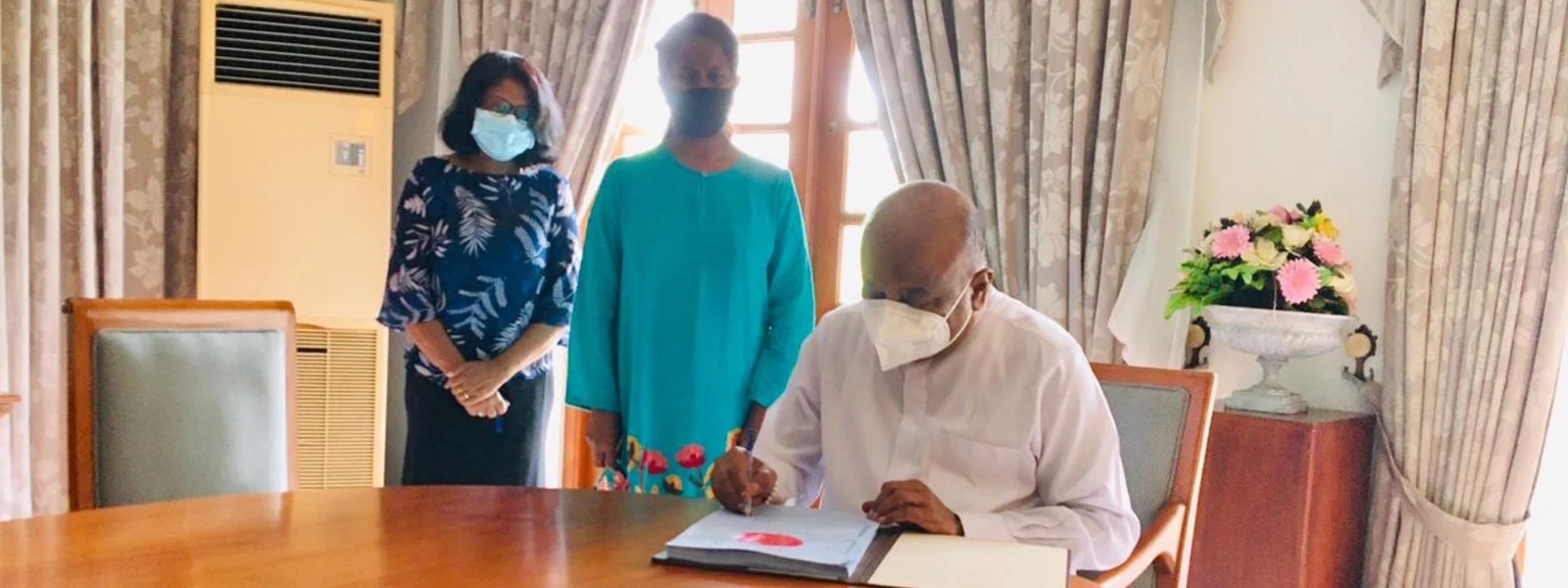
Speaker signs blueprint of the Colombo Port City Economic Commission Bill

Speaker Mahinda Yapa Abeywardane signed and validated the Colombo Port City Economic Commission Bill today.

Thereby the Colombo Port City Economic Commission Act will be implemented in full from today (27).

The Colombo Port City Economic Commission Bill was passed with amendments in Parliament on 20th May 2021.

The Bill was passed with 149 parliamentarians voting in favour and 58 against it during the third reading.

The main opposition Samagi Jana Balawegaya (SJB) voted against the Bill.

A number of amendments to the Bill proposed by the SJB were rejected by the Government.

Earlier, the second reading of the Bill was passed with 148 MPs voting for and 59 against it.

The Supreme Court had determined that some clauses in the Port City Economic Commission Bill are inconsistent with the Constitution.

The Supreme Court determined that if the amendments suggested by the Court are applied then the Bill and its provisions will cease to be inconsistent with the Constitution.

Accordingly, the Government presented the Bill to Parliament with amendments for a debate.

The vote on the Bill was taken following the debate and the Bill was passed.

Posted in Uncategorized

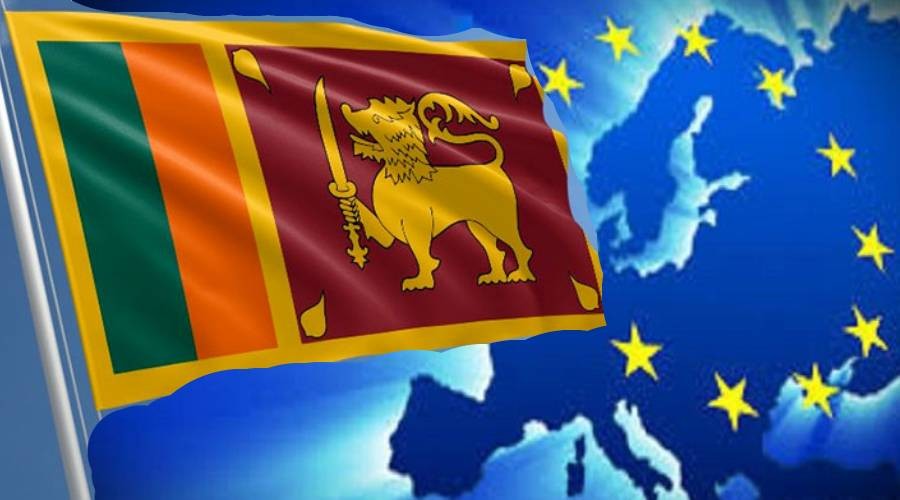
Lanka signs agreement to receive EU grant for agriculture modernisation

The Ministry of Finance and the World Bank recently signed a new agreement to receive a grant from the European Union to support the Agriculture Sector Modernization Project (ASMP).

This grant is part of the EU’s EUR 25 million support to the US$ 125 million project and will be administered by the World Bank.

Since its inception in 2016, the Agriculture Sector Modernization Project has supported the Government of Sri Lanka’s efforts to increase agriculture productivity, boost the value addition of smallholder farmers and agribusinesses and to improve their access to markets. The project also supports agricultural diversification and technology improvements. The project has so far benefitted more than 48,000 smallholder farmers across the country and has created more than 1500 new jobs through investments in agribusiness organizations.

The World Bank has said in a media statement: “Sri Lanka is blessed with an agricultural sector with deep historical roots, which will continue to underpin rural livelihoods and enable the country to rise to future challenges,” said Faris. H. Hadad-Zervos, World Bank Country Director for Maldives, Nepal and Sri Lanka. “Agriculture is important for Sri Lanka’s economy, and we continue to work with all our partners to promote inclusive and resilient growth, through increasing agricultural productivity, farmer incomes and creating jobs in the sector.”

This additional investment will help prepare Sri Lanka for COVID-19 recovery by contributing to export revenues and creating high quality jobs in agro-processing. It will also help expand opportunities for inclusive livelihood support in rural areas, and providing essential food items.

The additional grant funding from the European Union will support the expansion of agriculture clusters in five districts: Kandy (Central Province), Badulla (Uva Province), Ampara (Eastern Province), and Killinochchi and Vavuniya (Northern Province). The scale-up will contribute to a greater livelihood transformational impact and by reaching a larger number of project beneficiaries. It is expected that a total of 25,000 additional beneficiaries would be supported, including 6,000 direct members of farmer producer organizations.

“The European Union is pleased to be partnering with the World Bank and the Government of Sri Lanka to move towards a more sustainable, resilient and productive agriculture”, said Denis Chaibi, European Union Ambassador to Sri Lanka and the Maldives. “By contributing to the agriculture sector modernization programme, we aim to support smallholder farmers, promote new farming solutions to boost productivity and create more jobs, all ultimately to be able to make a positive impact on the lives of some of the most vulnerable”.

The current World Bank portfolio in Sri Lanka consists of 19 ongoing projects, with a total commitment value of US$2.33 billion in a variety of sectors including transport, urban, agriculture, water, education, and health.

The EU has provided over EUR 1 billion in grants so far to Sri Lanka to support and accompany local efforts for recovery and reform processes in a wide range of areas including poverty reduction, democratic governance, local development, agriculture, water or health.

AstraZeneca warns SL not to purchase from private buyers

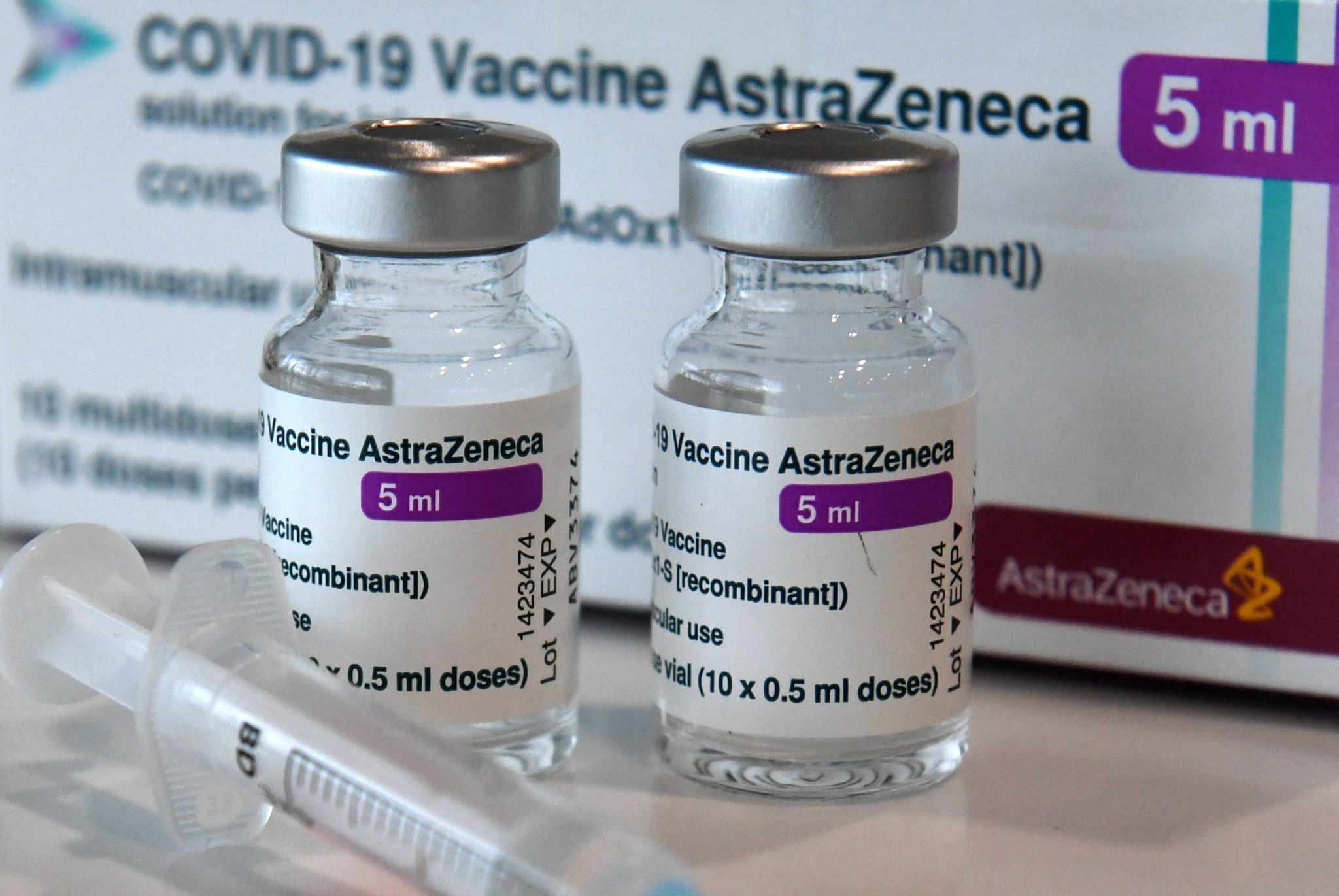
AstraZeneca has informed Sri Lanka’s State Pharmaceutical Corporation not to purchase the AstraZeneca vaccines from any private trader or company as these vaccines are likely to be counterfeit and should be refused and reported to the relevant authorities.

The Daily Mirror learns that in a desperate bid to secure 600,000 doses of AstraZeneca vaccines to roll out the second jabs as time runs out, Sri Lankan authorities had made inquiries from several private companies who claim they have stocks of the AstraZeneca and are willing to sell it to Sri Lanka at a higher rate.

A senior minister told Daily Mirror earlier this week that an inquiry had also been made in the black market as the government wanted to fulfill its responsibility of administering the second doses to all those who had received the first jabs.

The government has expressed its willingness to purchase the 600,000 injections at any price.

The Daily Mirror learns that authorities were in discussions with over 15 private global companies who said they had stocks and were willing to part with 600,000 doses for a higher price. However the government had reached out to the AstraZeneca parent company seeking validation over the authenticity of these doses, and said they would purchase it only if confirmed by the manufacturers and parent company.

In response to this query by the State Pharmaceutical Corporation, AstraZeneca Singapore (Pvt) Ltd., in a letter sent to SPC Chairman Dr. Prasanna Gunasena said that AstraZeneca had learnt that numerous private traders and companies had been approaching the government in Sri Lanka to sell the COVID-19 vaccine from AstraZeneca.

The Associate Director, Government Affairs, Asia Area of AstraZeneca, Jasper Meyns said that AstraZeneca’s current focus was delivering on its substantial global commitments to governments and international health organizations as quickly as possible to help end the pandemic.

“As such, there is currently no private sector supply, sale or distribution of the vaccine. If a trader, or company other than AstraZeneca offers private vaccines, it is likely counterfeit, so should be refused and reported to the relevant authorities,” the letter said.

“AstraZeneca would like to clarify that currently only COVAX, UNICEF and Serum Institute of India are our designated partners to make the vaccine available in Sri Lanka,” the letter added.

Presently the Sri Lankan government has received no confirmation as to when or from whom they can purchase the remaining stocks of vaccines. An official from SPC told Daily Mirror that to date, there was no confirmation on the AstraZeneca supply but reiterated that they were trying hard to secure the doses.

The current program which is underway to roll out the second jabs has come under severe criticism with those with connections and money having received the doses behind closed doors. The Health Ministry has clearly ignored the protocol of administering the doses according to the dates of the first jabs, resulting in the entire system going adhoc and desperate citizens lining up outside hospitals everyday seeking their second doses.

Posted in Uncategorized

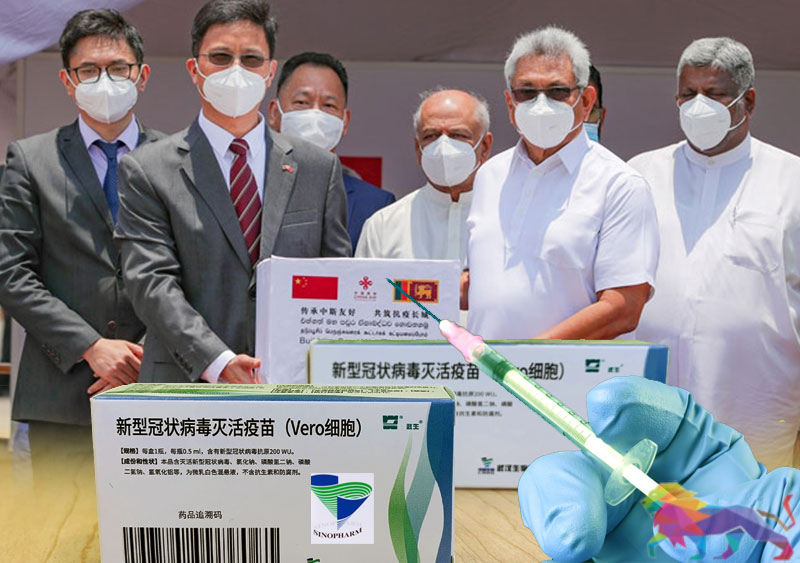
Sri Lanka gets 2nd vaccine donation from China

Sri Lanka has received 500,000 doses of Sinopharm coronavirus vaccine donated by China as the Indian Ocean island nation faces severe shortage of vaccines amid a recent rise in infections.

The vaccine stock that arrived early Wednesday is the second donation from China, following a shipment of 600,000 doses in March.

Sri Lanka is facing a shortage of vaccine after the producer in neighboring India failed to provide the promised Oxford-AstraZeneca vaccine stocks. The government on Tuesday agreed to buy 14 million doses of Sinopharm from China.

The current vaccination program is focused on Sri Lanka’s Western province, which includes the capital of Colombo and its suburbs. It is where the majority of the country’s coronavirus cases have been.

Sri Lanka so far has reported 167,172 coronavirus cases and 1,243 deaths from Covid-19.

Posted in Uncategorized

Sri Lanka not under threat of terrorism: Defence ministry after US updates travel advisory

Sri Lanka on Wednesday refuted misgivings resulting from an alleged assessment by the US embassy here of the threat of terrorism in the country after it updated its travel advisory, warning Americans against travelling to the island nation.

The Sri Lankan ministry of defence said that according to its own assessment, there has been no information on any threat of terrorism or related activities in the country.

The US embassy’s travel advisory, based on a tier 4 categorisation of the level of security in Sri Lanka, had warned its citizens against travelling to Sri Lanka.

The US embassy in a tweet on Tuesday said that the State Department had updated the travel advisory for Sri Lanka from Level 3 (reconsider travel) to Level 4 (do not travel) solely due to prevailing COVID-19 situation in the country.

“There is no change to the terrorist threat level,” it said.

The US has four levels of travel advisories. Level 1 means to exercise normal precaution, Level 2 is to exercise increased caution, Level 3 is to reconsider travel and Level 4 advises Americans not to travel at all.

The US sources said the travel advisory on Sri Lanka remains same since April 2019 in the aftermath of the Easter Sunday suicide bomb attacks which killed over 270 people.

After the attacks, the US State Department raised the travel risk to Sri Lanka to Level 3 in a travel advisory.

“Terrorist groups continue plotting possible attacks in Sri Lanka. Terrorists may attack with little or no warning, targeting tourist locations, transportation hubs, markets, shopping malls, government facilities, hotels, clubs, restaurants, places of worship, parks, major sporting and cultural events, educational institutions, airports, hospitals, and other public areas,” the State Department had said.

The US government has limited ability to provide emergency services to US citizens in Sri Lanka due to the security environment, it had said.

According to the Johns Hopkins COVID-19 tracker, Sri Lanka has reported 169,900 COVID-19 cases and 1,269 deaths.

Posted in Uncategorized

No change in terrorist threat level for Sri Lanka: US

The United States has clarified that there is no change in the terrorist threat level for Sri Lanka.

The US State Department had on Monday issued an updated travel advise on Sri Lanka telling Americans not to travel to Sri Lanka.

A part on terrorism was also in the advise raising fears that there was a terrorist threat to Sri Lanka

“Do not travel to Sri Lanka due to COVID-19. Exercise increased caution in Sri Lanka due to terrorism,” the updated travel advise said.

However, the US Embassy in Sri Lanka said the travel advisory for Sri Lanka had been updated from Level 3 (reconsider travel) to Level 4 (do not travel) solely due to the prevailing COVID-19 situation in the country.

“There is no change to the terrorist threat level,” the Embassy said.

The Centers for Disease Control and Prevention (CDC) in the US issued the Level 4 travel health notice for Sri Lanka due to COVID-19, indicating a very high level of COVID-19 in the country.

Vaccination process completely politicised -JVP

The JVP says the COVID vaccination process has been completely politicised.

JVP Leader Anura Kumara Dissanayake speaking to media at the party’s headquarters said incidents of Sri Lanka Podujana Peramuna Ministers and Parliamentarians reserving vaccine quotas have been reported.

MP Dissanayake said lives have become mere numbers to rulers who have no empathy towards human lives.

The Parliamentarian charged the government of playing with citizens, country’s economy and the future of the children adding they should self-reflect as to why the virus became a pandemic.

He said if the government remains delusional, the situation will deteriorate. MP Dissanayake requested the President and the government to conduct a comprehensive review and take strict and necessary steps adding if not the travel restrictions and the sacrifices of the people, the economy and the general public will be in vain.

MP Dissanayake also pointed out the complications arising within the society due to the travel restrictions imposed to mitigate the spread of the corona virus being impractical.

The MP said the public must be clearly informed of the travel restrictions.

He said the trust of the society has been broken on the data and details of the pandemic adding many citizens complain where details of some individuals who succumbed to the virus are not recorded on the data published.

MP Dissanayake said the government should build the trust in the citizen on the data as the public has no trust on the data reported adding details reported are essential to the public as they need to know of the spread of the pandemic, know if their area has been contaminated.

He said only then will the public adhere to the travel restrictions and isolations.

Poll reforms, for what? By N Sathiya Moorthy

The invitation of the Parliament’s Select Committee on Electoral Reforms, for views and opinions from the people, should make them think also about the kind of reforms that the nation needs – whether it could stop with the poll scheme or should it extend to cover the nation’s political parties, too.

First and foremost, there is no form of an electoral system that could be called perfect, or even close to being perfect. In a multi-ethnic nation like Sri Lanka, however small be the geographical and demographic sizes, very many differences and distinctions keep cropping up from time to time, with the result, there can be no way by which the concerns and aspirations of every segment can be fulfilled, at any given point in time or another.

The nation, at the end of the day, wants a structured scheme of governance, where not only are the views of the people taken into account, but they are also seeming to be so. Hence, to blame one scheme or the other, in favour of yet another, can only be a never-ending process, now and ever.

On the face of it all is the question of ethnic representation. Or, the possibility for empowering the ethnic minorities to be able to have their say in elected governance. The belief that they hold the key to political administration went for a toss as recently as the 2019 presidential elections.

Ever since the introduction of the current scheme of proportionate representation (PR), the minorities were made to believe that no one can become the President of the nation in directly-held polls without taking a substantial number of them into confidence. In 2019, the present incumbent Gotabaya Rajapaksa became President without any substantial vote-share from the nation’s Tamil and Muslim minorities, who are mainly localised in the nation’s North and the East.

In fact, after acknowledging the minorities’ mood against the clan, Gotabaya did not even bother to campaign in the two Provinces, more especially the North. Yet, he became the President of the entire nation, including the Tamils and the Muslims. His rival, the present Leader of the Opposition in Parliament, Sajith Premadasa, had the overwhelming support of these two communities, but not much from his own.

Even in native Hambantota district that he shared with his victorious rival, Premadasa, Jr, did not score a substantial share of majority Sinhala voters, who dominate politics, public life, and societal numbers in Provinces other than the North and the East. So much so, he ended up contesting the subsequent parliamentary polls from the cosmopolitan Colombo City electoral district than from Hambantota, where he had polled the lowest 25 per cent vote-share in the presidential polls.

Twin package, but…

The PR scheme itself was thought of as a panacea for the nation’s prevailing electoral ills of the past. The first-past-the-post electoral scheme had been inherited from the pre-Independence era, when Sri Lanka became the first nation in these parts to usher in adult franchise. After nearly five decades, it was felt that the parliamentary form of government under the poll scheme meant that the elected prime minister need not have a single MP from the minority communities supporting him – at least in theory.

Given the demographic realities, democracy of the times dictated that the elected leader can get his parliamentary majority, including two-thirds from the majority community itself. In 1977, J R Jayawardena became Prime Minister with four-fifth majority in the House. In fact, the Tamil United Liberation Front (TULF) was the main Opposition party in Parliament, with 16 MPs.

That was when he marketed the twin-package of the presidential form of government coupled with PR scheme for parliamentary elections. The idea, as seen at the time, was that a directly elected President will need to count on the minorities, too, in big way or small, to touch the 50-per cent-plus one vote minimum, to be in office. The PR scheme would ensure that the minorities’ voices were not stifled inside Parliament, especially if the government party/alliance wanted to have its way.

But the current Parliament is proof enough that the PR scheme, too, has failed that professed hope. Not only has the President been elected on the near-exclusive votes of the majority Sinhala-Buddhist community, but even in Parliament, for which elections were held months later, President Gota’s party, namely, the SLPP-led combine, under his brother and Prime Minister, Mahinda Rajapaksa, won a two-thirds majority.

A new combination

Now, there is a craving for a third kind of scheme, which is only a combination of the earlier two. The idea that is doing the rounds is to have a majority of the people’s representatives elected on the first-past-the-post system, but with an element of PR, too. Opinion is divided, whether or not to have the ‘National List’, whose aim was to allocate additional seats from a fixed pool, based on the poll percentages of individual political parties, for them to nominate their extra MPs.

It was aimed at ensuring that the lack of representation inherent to the first-past-the-post system did not recur. It is now anybody’s guess why the PR scheme itself should have been thought of when the first-past-the-poll scheme had been done away with. So much so, the ‘National List’ has become an additional blemish on the overall scheme, conferring autocratic powers on individual political party leaderships than already.

Identity politics

Yet, no one is now talking about revisiting the directly-elected Executive Presidency, and all electoral changes are going to be cosmetic, without addressing that core issue. In a nation with a multitude of political parties deriving their strength and electoral representation on the basis of ‘identity politics’, the inability of the ethnic parties to come together on a common minority plank has caused its own additional problems.

Today, and more than in theory, a President can be elected exclusively by the majority community. Given the inevitability of the continuing multitude of minority parties – of the Tamils, Muslims and the third category, namely, the Upcountry Tamils – it becomes easy for the ruling party – or alliance, whichever is in power – to manipulate the minds of MPs or leaders or both, to have the cake and eat it, too. But then that is what politics is all about.

In power, you have the SLPP alliance, which is a bouquet of multiple political colours and even ideologies, so to say. In the Opposition are also a similar bunch of political parties and ideologies. But the division is clear, and is more or less firm. Then you have the JVP, the ‘eternal third force’ that will never ever become the first, or even the second force, to be reckoned with.

This is not the case with the minorities parties. It is easier to count the number of stars in the sky on a full moon night than the number of political parties, separately among the Tamils, Muslims and Upcountry Tamils. At one point in time, during President Mahinda Rajapaksa’s term, the total number of Tamil language speaking MPs, including less than a handful in what essential were ‘Sinhala parties’, added up to 50 in a House of 225.

There was even a Tamil-speaking MP in the JVP, otherwise a ‘leftist, Sinhala-Buddhist nationalist party’. Ramalingam Chandrasekar was from the Upcountry Tamil community. But that all is in the past. Today, the ethnic divisions are deep and deep-seated, but with the premise that the minorities are all against the ruling Rajapaksas, and not others.

That includes war-time army commander, Field Marshal Sarath Fonseka, whom the war-victims of the Tamil community voted for the presidency, only months after the LTTE lost the war. Recently, on the anniversary of the conclusion of the decades-old war, Fonseka congratulated PM Mahinda, then President, and President Gota, at the time, Secretary, Defence – even though they are his sworn political enemies, to boot.

This also takes away any ‘principles’ behind the Tamil vote against the Rajapaksas, and by extension, the anti-Rajapaksa sentiments among the larger minority groupings. With the result, there are no hard and fast yardstick by which one can define, or even divine the kind of elected government that will represent all sections of the Sri Lankan society.

Add to all this the inherent autocracy that party constitutions are allowed confer on their ‘elected’ leaderships, and the picture is complete. On the one hand, you now have the Rajapaksas, especially PM Mahinda at the head of the ruling SLPP combine, whose continuing popularity among the Sinhala-Buddhist majority community with a steady 40-per cent of national vote-share, even in the most adverse political climes. On the other, you have had the UNP, the nation’s GoP, where former Prime Minister/Leader of the Opposition, Ranil Wickremesinghe’s unassailable continuance at the top ensured that the party is all but dead.

Thereby, too, hangs another democracy tale – Amen !

(The writer is Distinguished Fellow and Head-Chennai Initiative, Observer Research Foundation, the multi-disciplinary Indian public-policy think-tank, headquartered in New Delhi. email: sathiyam54@nsathiyamoorthy.com)


Posted in Uncategorized