India has its way on Chinese projects in North Sri Lanka – NewsIn

Though India failed to get the East Container Terminal (ECT) project in Colombo port, it is now well on the way to bagging the West Container Terminal (WCT) project and also three power projects in Jaffna. It has successfully convinced the Gotabaya Rajapaksa government that it will be unwise to ignore India’s interests in its relations with China.

After yielding to Sinhalese nationalist pressure not to give the ECT project to India, the Sri Lankan government offered the WCT in which the designated Indian party is to hold 85% stake. This is much higher than the stake offered to India and Japan (49%) in the case of the ECT. It also matches China’s stake in the adjacent Colombo International Container Terminal (CICT).

Meanwhile, another problem had arisen for India in Jaffna in Northern Sri Lanka. The Lankan government had decided to award three renewable energy projects there to a Chinese joint venture company MS/Sinosar-Etechwin. The power plants were to be set up in three islands off Jaffna, namely, Delft, Analativu, and Nainativu.The plants were to use a mix of solar, wind, and other renewables. The ADB was to give a loan of US$ 12 million for the project.

India strongly objected to the grant of the project to a Chinese company as one of the island locations was only 48 kms from Rameswaram. India feared that the Chinese would spy on India from there.

The Lankan government argued that the Chinese company was better qualified than the Indian party which had also tendered for the project, and that the ADB had sanctioned the deal and extended a loan of US$ 12 million. But this did not wash with India which continued to harp on the security threat to it.

While a section of the Lankan government felt that the India’s objection abridged Sri Lanka’s sovereignty and independence and therefore it deserved to be ignored, the dominant section felt that India’s case must be accommodated in the larger interest of having good relations with the Big Brother and only neighbor. Sri Lanka’s own security was heavily dependent on India, it was pointed out.

Indian Grant

The media on Sunday quoted Lankan Power Minister Dallas Allahaperuma as saying that the Indian High Commissioner Gopal Baglay had met him and offered an Indian “grant” of US$ 12 million for the three energy projects in Jaffna islands. India suggested that Sri Lanka could itself build the power plants with Indian collaboration of course.

Allahaperuma accepted the proposal and promised to put it up at the next weekly cabinet meeting. The minister also informed the media that the original plan to give the project to a Chinese company had not yet been put up in the cabinet.

“If we think of our citizens, receiving a grant is an advantage and it will also ease the burden on the Treasury, because if we go ahead with ADB funds, the Treasury will have to repay those in the future,” the Minister said.

On the Sri Lankan offer to get India’s help to build the West Container Terminal, there appears to be no visible movement. Sri Lankan officials and political leaders who want India-Lanka relations to be on an even keel want both the Indian and Sri Lankan governments to move quickly and start the work on the project. Any delay would activate the nationalist elements, who are basically anti-Indian, they fear. In fact, a port workers’ union leader has already told the press that the workers would go on strike if the WCT project is assigned to India.

“President Works For 15 Hours A Day: I can’t Spend Long Hours At Work As Him” – Prime Minister

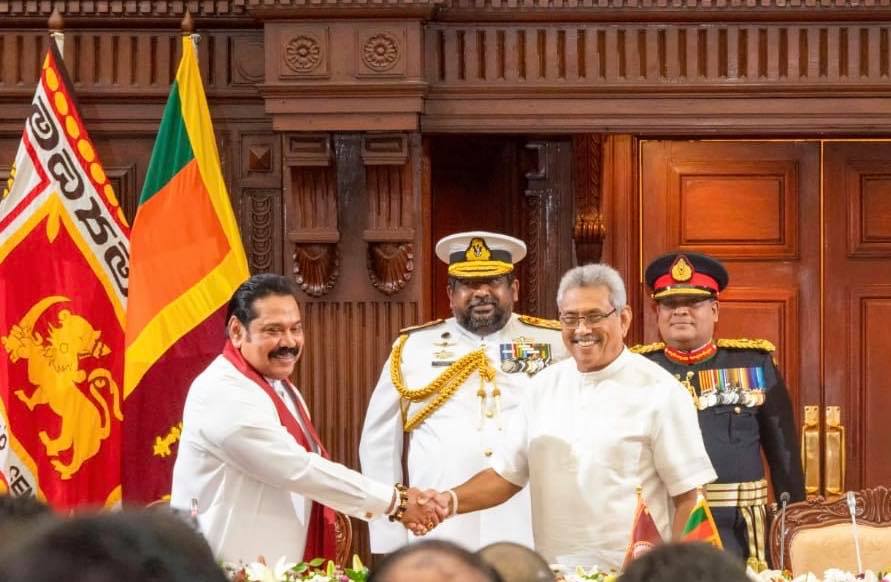
Prime Minister Mahinda Rajapaksa said President Gotabhaya Rajapaksa works 15 hours a day to serve the public.

Addressing a function in Beruwala, the Prime Minister said that was why the President could travel to villages looking into issues faced by the people.

“I don’t want to lie. I can’t work long hours as the President. It is up to the people to make good use of the leaders who give their best to the public,” he added.

He also added that the government was only able to govern the country properly for four hours due to the outbreak of the pandemic.

PM Narendra Modi Affirms India’s Support for Sri Lankan Tamils

Modi recalled the various welfare initiatives taken by the Centre in the housing and health sectors aimed at benefiting the Lankan Tamils, and said he was the first Indian Prime Minister to visit Jaffna (in 2015) in northern Sri Lanka.

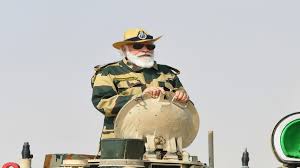
rime Minister Narendra Modi on Sunday said his government has always taken care of the welfare of Sri Lankan Tamils and ”consistently” flagged the issue of their rights with the leaders in the island nation. India was always committed to ensuring that the Tamils there lived with equity, equality, justice, peace and dignity, he said here, after launching various government projects in railways and defence sectors.

Modi recalled the various welfare initiatives taken by the Centre in the housing and health sectors aimed at benefiting the Lankan Tamils, and said he was the first Indian Prime Minister to visit Jaffna (in 2015) in northern Sri Lanka. “Our government has always taken care of the welfare and aspirations of Tamil brothers and sisters in Sri Lanka. It is my honour to have been the only Indian PM to visit Jaffna.

Through development work, we are ensuring the welfare of the Tamil community,” he said. India has constructed 50,000 houses for displaced Tamils in north eastern Sri Lanka and another 4,000 in the plantation areas while “we hope to open soon” the Jaffna Culture Centre, he added.

“The issue of Tamil rights has also been taken up consistently with Sri Lankan leaders. We are always committed to ensuring that they (Tamils) live with equity, equality, justice, peace and dignity,” Modi said. The Sri Lankan Tamils issue has always had an emotional connect in Tamil Nadu and has often dominated the political space here. Modi also pointed to India”s efforts in railway projects for Jaffna and Mannar, air connectivity from Chennai to Jaffna and the initiatives in the health sector.

Posted in Uncategorized

Mass protest in Colombo to coincide with Pakistan PM’s state visit?

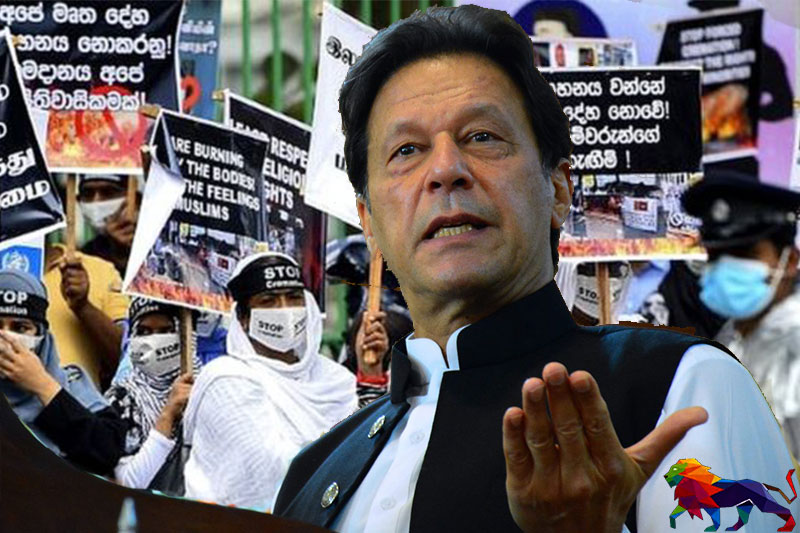
It is reported that the Muslim political parties in Sri Lanka have decided to stage a mass protest in front of the Presidential Secretariat if the government fails to issue a gazzette notification granting permission for the burial of Covid-19 victims before February 23.

The protest is scheduled to be held on the same day of Pakistani Prime Minister Imran Khan’s maiden visit to Sri Lanka.

Prime Minister Khan is expected to hold bilateral discussions with key government officials and party leaders. He is also scheduled to address the Sri Lankan parliament and will become the third Pakistani head of state to do so after former President Gen. Mohammed Ayub Khan (1963) and Prime Minister Zulfikar Ali Bhutto (1975).

Leaders of Muslim political parties had called on the Pakistan High Commissioner and informed him that if the government of Pakistan fails to protest against the mandatory cremation policy and extends its support to the Sri Lankan government in international fora, they will stage a protest on the day the Pakistan Premier is scheduled to arrive in the island.

UN High Commissioner for Human Rights, Michelle Bachelet, releasing a report ahead of the upcoming United Nations Human Rights Council (UNHRC) session in Geneva later this month, called for resolute measures by UN member states including targeted sanctions against the Sri Lankan government.

“I urge the international community to listen to the determined, courageous, persistent calls of victims and their families for justice, and heed the early warning signs of more violations to come,” Bachelet said in a damning report highlighting the deteriorating human rights situation in Sri Lanka.

With Sri Lanka likely to be featured prominently at the 46th session of the UNHRC, diplomatic sources said that the government is making a concerted effort to secure the support of member states including Pakistan.

Posted in Uncategorized

Sri Lanka in talks for US$4-5bn pipeline of swaps, credits except IMF: Central Bank

Sri Lanka is in talks for up to 5 billion US dollars of funding through swaps and loans outside of a program with the International Monetary Fund, and all debt falling due will be met, central bank officials said.

Governor W D Lakshman said required foreign exchange would be sourced from the market and gaps would be filled with swaps and loans.

“There are a number of negotiations going on, the details of which I am not going to come out, with overseas agencies to raise some of the required to raise foreign exchange inflows, through swaps and loans and that sort of mechanism,” Governor Lakshman said

“[There are] negotiations with overseas central banks, overseas banks and other agencies. Multilateral agencies are included though the IMF is not there in that list – yet.”

He said Sri Lanka was following a market oriented economy with state guidance, involving some controls and restrictions.

Such a framework would not be successful under an IMF program, he said.

Deputy Governor Dhammika Nanayakkara said around 4 to 5 billion US dollars in potential funding was in the pipeline.

The tenors ranged from around 1 to 8 years, and the price from 1 percent to around 6.5 to 7.0 percent.

Some of the funds would be precautionary.

“I do not say that the entire 4 to 5 billion is going to be utilized because as the Governor mentioned we will be looking at some of the requirements form the market as well,” Nanayakkara said.

Commercial banks were asked in late January to surrender about 10 percent of remittances converted to dollars by customers at market rates to the central bank.

In 2021 the central bank was targeting about 7.5 billion US dollars of remittances, up from 7.1 billion dollars in 2020.

“If 6 billion (dollars) has been converted to LKR that means 600 million is sourced from the market towards whatever obligation that is falling due,” he explained.

Analysts however had warned that rejection over-subscribed bids to Treasury auctions and turning inconvertible Treasury securities into convertible rupee bank notes by taking them into the central bank’s balance sheet will create forex shortages and make it difficult to general dollars.

Successful bond auctions at a market rate will crowd out imports through the domestic credit system and make dollars available to the Treasury. Injections would do the opposite.

Sri Lanka’s forex reserves had dropped to around 4.8 billion US dollar by January 2021 in the wake of the injections.

Governor Lakshman said Sri Lanka would maintain its unblemished record in debt repayments despite ‘doomsday predictions’.

The doomsday predictions were based on what and happened in the second half of 2010 decade, involving high depreciation, high inflation and high deficits despite rhetoric claiming that there was fiscal rationalization, he said.

“These are all being changed and we expect better results,” Governor Lakshman said.

Analysts have pointed out that the 2015 – 2020 economic framework also failed due to injections made largely through open market operations and a failed attempt at inflation targeting while running a pegged exchange rate, which triggered currency crises and consumption collapses.

A publicly articulated real effective exchange rate targeting exercise also ensured that the exchange rate did not bounce back, when credit collapsed.

Analysts have also argued that in the guise of inflation targeting which requires a floating rate where the reserves money is unchanged Sri Lanka had been selling dollars to peg and had been over-sterilizing interventions to target a call money rate with excess liquidity.

It has been argued that instead of targeting inflation, Sri Lanka is targeting interest rates as a final target triggering currency shortages.

Posted in Uncategorized

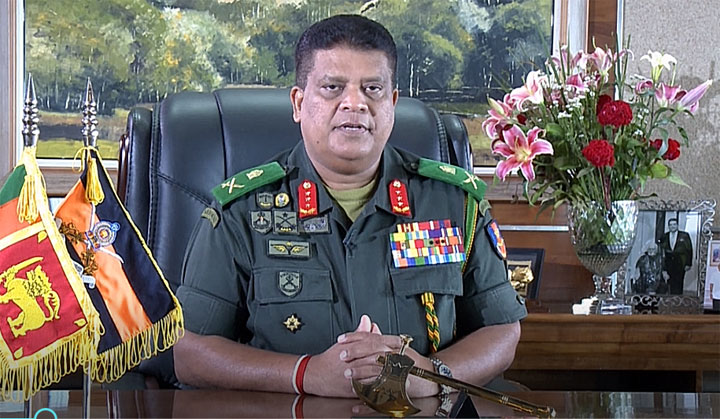
Army Chief refutes rumours of island-wide lockdown

Army Commander General Shavendra Silva has denied the rumours of a country-wide lockdown following the detection of the new coronavirus variant.

The Head of the National Operations Centre for Prevention of COVID-19 Outbreak (NOCPCO) said that discussions are currently being held on the necessary and essential steps needed to control the new variant.

While there are rumours of an island-wide lockdown that are propagated on social media and other media, the government has not arrived at such a decision as of yet, the Army Chief assured.

Meanwhile, the Secretary to the State Ministry of State Ministry of Primary Health Care, Epidemiology and COVID-19 Control Dr. Harsha de Silva stated that the decision of whether or not to impose a lockdown on the country will be taken based on the recommendation of experts.

Posted in Uncategorized

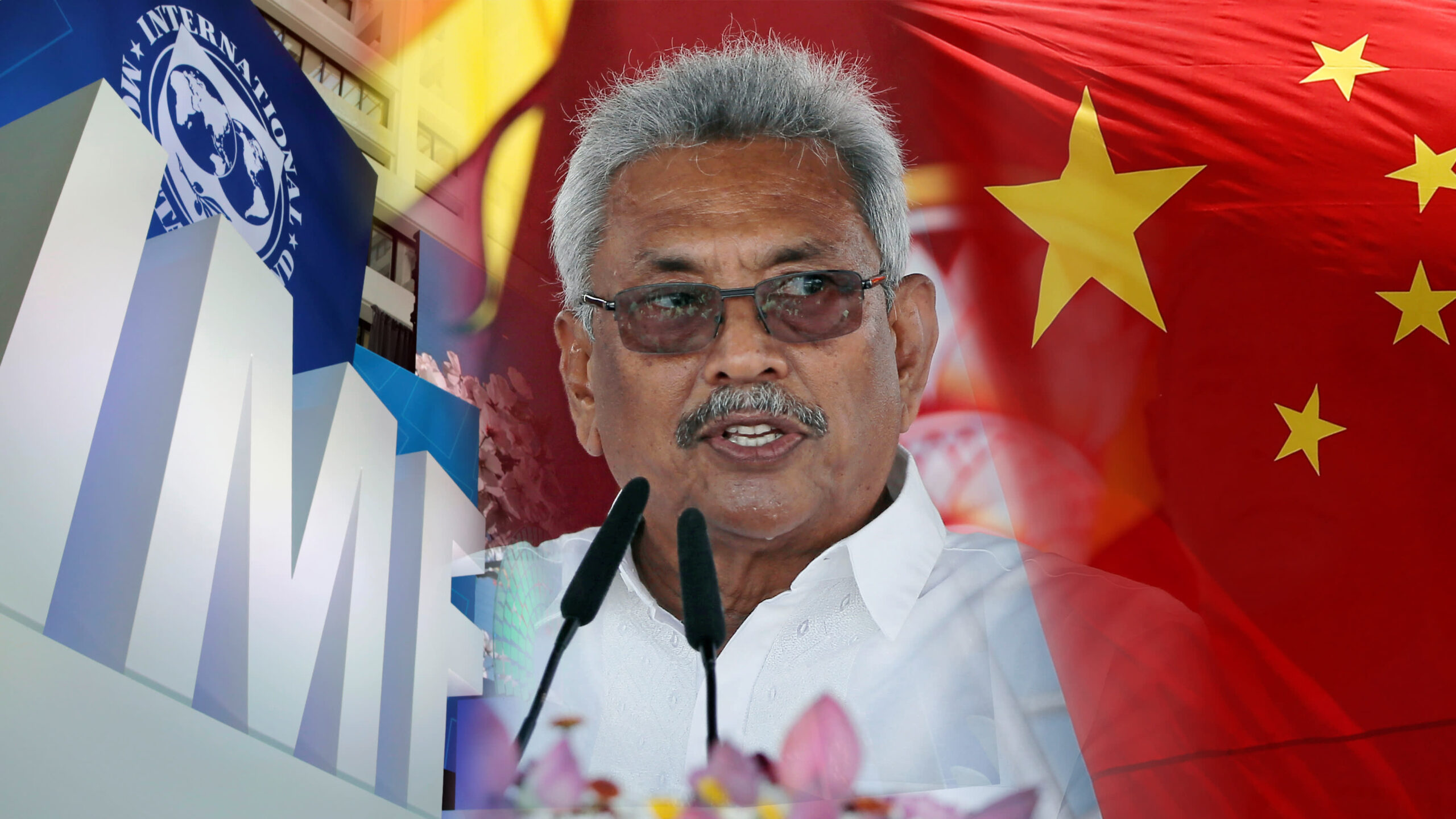
‘India does not care if Sri Lanka has IMF’

The Treasury categorically denies that India ever wanted Sri Lanka to go for an International Monetary Fund (IMF) programme if Sri Lanka was to seek financial assistance from India to service its upcoming external debt repayments.

Treasury Secretary S.R. Attygalle told The Sunday Morning Business that India never told Sri Lanka to go for the IMF programme, and that it is the rating agencies that would like to see Sri Lanka reaching out to the IMF.

According to Attygalle, despite being pushed out of the Colombo Port’s East Container Terminal (ECT) deal by the Sri Lankan Government, India is willing to assist Sri Lanka financially at any given time.

“India has not rejected anything. The $ 100 million credit facility for solar energy or rooftop facility, which our President requested from India, is ready now. Within a week or two we are going to sign the agreement. Even though it is for a rooftop project, still, it is credit from India,” he added.

However, local media reported that Sri Lanka recently settled its $ 400 million SWAP line that it obtained last year from the Reserve Bank of India (RBI), as further extension of the repayment time necessitated Sri Lanka to go for an IMF agreement, according to an Indian High Commission Spokesperson.

Meanwhile, Attygalle stated that it is completely up to Sri Lanka to decide whether the country should go to the IMF or not. Nevertheless, we learnt that Sri Lanka’s request to the IMF for a Rapid Financing Instrument (RFI) was still under review.

Responding to an email sent by us, IMF Mission Chief of Sri Lanka Masahiro Nozaki stated the following.

“In April 2020, we received a request from the Sri Lankan authorities for emergency financial support under the Rapid Financing Instrument (RFI). Assessing relevant conditions for the RFI has taken longer than for other countries, due to Sri Lanka’s daunting economic challenges, high public debt, and parliamentary elections in August. We have sought but not reached (an) understanding yet on how to fulfil key requirements for the RFI, which include policies to continue ensuring debt sustainability. The authorities have a range of options to ensure debt sustainability, and the IMF stands ready to discuss all options with the authorities.”

Following the global outbreak of the pandemic in the first quarter of last year, the IMF received about 102 requests from countries seeking RFI support. As of mid-September, about 76 out of these 102 requests had been approved, according to the IMF. This means that Sri Lanka was among approximately 20 or 30 countries that were not granted RFI support as of September last year.

The 76 approved countries include a number of Asia Pacific countries such as Bangladesh, Mongolia, Myanmar, and Nepal. On 29 May, it approved the provision of $ 488 million under the RFI to Bangladesh, while on 26 June, it approved $ 237.7 million for Myanmar. On 3 June, it approved $ 99 million under the RFI for Mongolia. The total figure of approved funds under this facility was $ 31 billion by end-September.

In mid-August last year, Central Bank of Sri Lanka (CBSL) Governor Prof. W.D. Lakshman told The Sunday Morning Business that Sri Lanka will obtain emergency financial support under the RFI only if the support would be provided with no conditionality.

Meanwhile, a Citi Research report in December last year noted that Sri Lanka’s debt is on an unsustainable path, though the Government of Sri Lanka (GoSL) is in denial, and an IMF programme is essential to avoid a debt disaster. In its report titled “Sri Lanka Economics and Strategy View”, Citi noted that it cannot see a credible strategy for achieving debt sustainability and (external) repayment capacity.

“While officials continue to mention their willingness to pay, we cannot see a credible strategy for achieving debt sustainability and (external) repayment capacity beyond talking up their growth prospects and expecting this to attract FDI (foreign direct investment) and other portfolio equity inflows. The ability of financial repression to contain domestic borrowing costs is limited by rising debt ratios, still expected to grow amid a pro-growth 2021 Budget. We expect net FDI will finance about 40% of the current account deficit in 2021 FY, and the rest will not be wholly covered by official multilateral and bilateral lending, let alone commercial funding, in the absence of an IMF policy reform backstop.”

Posted in Uncategorized

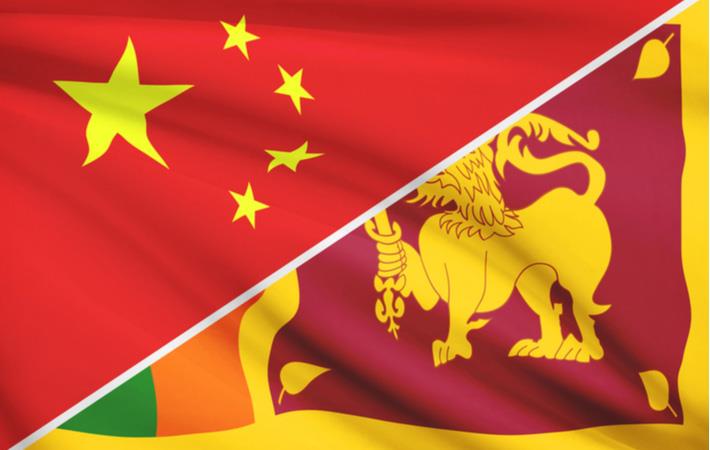
Govt. to sign swap deal with China for US$ 1.5 billion; India deal unlikely

Sri Lanka will next week sign an agreement with China’s Central Bank — the People’s Bank of China — for a swap arrangement amounting to US$ 1.5 billion.

The move came as the Government is looking at measures to bridge the gap of another US$ 1 billion. The Sri Lankan Central bank was expecting this from India, but it is now unlikely, a senior Central Bank official said.

Under the swap arrangement with China, the funds are expected to be made use of to maintain the foreign reserves and for imports from China, the official said.

The money is to be paid back within three and half years.

A currency swap is a transaction in which two parties exchange an equivalent amount of money with each other but in different currencies. The parties are essentially loaning each other money and will repay the amounts at a specified date and exchange rate.

Sri Lanka’s request to the Reserve Bank of India for a currency swap of US$ 1 billion has so far drawn no response and the facility was unlikely to be received now, the official said.

He said that in view of the shortfall, the Central Bank was taking other measures including negotiating similar swap arrangements with other countries while continuing with other measures such as reducing imports.

Vehicle import restrictions were among the measures and will be continued until further notice, he added.

The Chinese swap arrangement would be useful to maintain a balance throughout the year, he said.

Meanwhile, Sri Lanka plans to review eight trade agreements including two which have been stalled midway.

The controversial Indo-Sri Lanka Economic and Technology Cooperative Agreement (ETCA) and the China-Sri Lanka Free Trade Agreement which were stalled would be reviewed with the objective of renegotiating them, Trade Minister Bandula Guanwardena said.

The China FTA talks were halted in 2017 after six rounds of discussions while the ETCA was suspended in 2018 after 12 rounds of discussions.

Another trade agreement with Thailand would also be reviewed.

The India-Sri Lanka FTA effective from 2000 and the Pakista- Sri Lanka FTA effective from 2005 are among other agreements to be reviewed.

Mr Gunawardena said the objective of reviewing the agreements was to ensure that Sri Lanka benefited from the agreements currently in place as well the proposed agreements.

“If there are clauses which are not beneficial to the country, we need to revise them,” he said .

The minister said a Commerce Department team along with an expert committee would review the agreements.

Posted in Uncategorized

Tamil “P2P” Protest of 2021 and the Tamil “Satyagraha” of 1961 – By D. B. S. Jeyaraj

Years and years of witnessing a brutal armed struggle by Tamil militants has created an impression in the minds of many that the nature of Tamil politics in this country has been intrinsically violent

The Tamil political struggle was basically non – violent and adhered to the noble doctrine of “Ahimsa” (avoidance of injury/violence) enunciated by that great apostle of non – violence Mahatma Gandhi

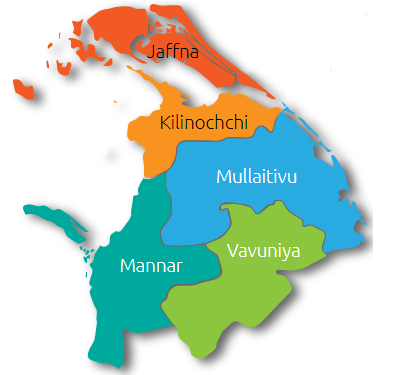
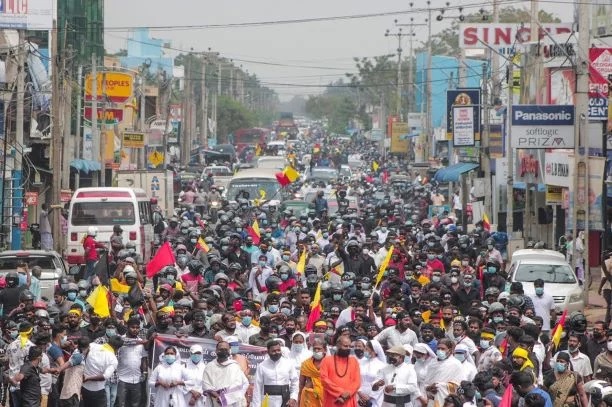
The “Pottuvil to Poligandy” (P2P) Protest that ended last week was a watershed moment in the political history of Sri Lankan Tamils. The Five day “P2P” protest march began in the East on Wednesday, February 3 and concluded in the north on Sunday, February 7. Thousands of Tamils marched on foot and proceeded in vehicles from Pottuvil in the Ampara District to Poligandy in the Jaffna District. The P2P protest trek proceeded along the littoral in the Eastern Province and crisscrossed the hinterland in the Northern Province. The long journey covered over a distance of 700 km across the Districts of Ampara, Batticaloa, Trincomalee, Mullaitivu, Vavuniya, Mannar, Kilinochchi and Jaffna. Tens of thousands of Tamils and Tamil speaking Muslims demonstrated their support for the protest along the route in a remarkable show of solidarity and unity.

What the P2P protest did was to provide an opportunity where the long-suppressed Sri Lankan Tamil community could engage in an imaginative political campaign of this scale and scope. It displayed to the world at large the creative potential within the community to organise and execute a huge political demonstration of this nature.

Above all, it refreshed memories of past non -violent protests by Tamils and indicated that the future course of Tamil politics in this country could, should and would be proactively dynamic in a democratic, non – violent mode.
Years and years of witnessing a brutal armed struggle by Tamil militants has created an impression in the minds of many that the nature of Tamil politics in this country has been intrinsically violent. This violence has even served vested interests to dismiss the justice of the Tamil cause as “terrorism” and portray the “problem” as being an issue concerning law and order only.

What is forgotten, ignored or conveniently overlooked is the fact that for over three decades in post–Independence Sri Lanka, the Tamil political struggle was basically non – violent and adhered to the noble doctrine of “Ahimsa” (avoidance of injury/violence) enunciated by that great apostle of non – violence Mahatma Gandhi.

It has been argued by many that it was the failure of the non –violent Tamil struggle to remedy prevailing political maladies that paved the way for an emerging, frustrated generation of Tamil youth to take to the gun. Whatever the merits or otherwise of this argument there is no denying that the third quarter of the twentieth century is replete with instances of non – violent political dissent and protest conducted by the Sri Lankan Tamils. Hartals, Satyagrahas, black flag demonstrations, marches, processions, mass demonstrations, protest fasts, days of mourning, civil disobedience, civil resistance, boycotts, etc were a regular feature of Tamil politics in those days.
The high watermark of this politics of non – violent protest was the great “Satyagraha” campaign launched on February 20, 1961. The “P2P” of February 3-7 has in a way revived memories of that non – violent protest. Just as the P2P drew widespread support from all the Tamil speaking districts of the North and East, the 1961 Satyagraha too had tremendous support of the people in North-Eastern districts then. It is against this backdrop therefore that this column re-visits the 1961 Satyagraha that paralysed civil administration in the North and East 60 years ago.

July 1960 Parliamentary Elections

The July 1960 Parliament elections resulted in the Sri Lanka Freedom Party (SLFP) winning 75 seats. Its chief rival the United National Party (UNP) came next with 30 seats. The Ilankai Thamil Arasuk Katchi (ITAK) known as Federal Party (FP) in English came third with 16 MP’s. The fourth-place went to Lanka Sama Samaja Party (LSSP) with 12 seats. Other Parties which won seats were the Communist Party (CP) -four, Mahajana Eksath Peramuna (MEP) -three, Lanka Prajathanthravadhi Pakshaya (LPP) -two, Janatha Vimukthi Peramuna (JVP) -two, and the All Ceylon Tamil Congress (ACTC)-one. Six Independent Candidates were also elected as MP’s. In addition, there were six Appointed MP’s who would be nominated by the Prime Minister.

The SLFP with 75 seats with the support of four Independent MP’s formed the Government with a slender majority. However, with the six appointed MP’s the SLFP Government had the support of 85 MP’s in a Parliament of 157 comprising 151 elected and six nominated MP’s. Sirimavo Bandaranaike created history as the world’s first woman Prime Minister.

The new government intended to implement the Bandaranaike (SWRD) policies in full. A key element in this was the total “Sinhalisation” of the Administrative and Judicial spheres. There was increasing insecurity among the Tamil people about their political future. There was much apprehension and fear that the Government was going to implement “Sinhala Only” in a big way throughout the Country. Tamil trepidation in this respect was enhanced by two announcements by the Government. One was that Sinhala would be implemented as the sole official language in all areas of administration with effect from January 1, 1961.The second was the announcement that the Government intended passing legislation making Sinhala as the Language of courts in all parts of the Island.

The ITAK/FP was now under tremendous pressure from its Tamil constituency to do something in this regard. The FP had contested 21 seats in July 1960 polled 218, 653 votes and obtained 16 seats. The party regarded itself as the legitimate representatives of the Tamil speaking people. The party, therefore, prepared a comprehensive memorandum incorporating the concerns of the Tamil people. The Government agreed to discuss the memorandum and a meeting between the Prime Minister and an ITAK delegation was set up at Temple Trees on November 8, 1960.

The two-hour-long discussion was conducted cordially. Issues were discussed in detail. A second meeting was also held November 23, 1960 to follow up on matters. Whatever the optimism generated at these two rounds of talks it soon began evaporating as other events began overtaking. Media reports about the Govt-FP talks caused a backlash among hawkish Sinhala elements within the SLFP. The Government went on the defensive and “apologised” to the Sinhala people for talking to the ITAK/FP.

Language of Courts Bill

Even as these brief signs of SLFP-ITAK rapprochement began to fade away, fresh clouds gathered on the political horizon. In a sudden move that took the FP by surprise, the then Justice Minister Sam P. C. Fernando introduced parliamentary legislation relating to the language of courts. The draft Languages of the courts’ bill empowered the Justice Minister to direct that Sinhala language alone be used for pleadings, recording of proceedings and maintenance of records in any court in the Island. This drastic move by the government made the ITAK feel betrayed. Tamils were upset and worried.

The ITAK’s working committee met in Batticaloa on December 4, 1960 and resolved to discontinue the ongoing dialogue with the Government until the draft Language of the courts’ bill was altered to incorporate provisions for Tamil language also. The FP felt no useful purpose would be served by further discussion until this was done.
The Government reacted harshly. It reiterated that it would go ahead as planned on the language of courts issue. Furthermore, the Government emphasised that it would implement the Sinhala only act in full and stated that the administration of the entire country would only be in Sinhala with effect from January 1, 1961.

With the Government flinging down the gauntlet the ITAK held an emergency meeting of its Parliamentary group on December 18. The party decided unanimously to observe a hartal or stoppage of work in the Northern and Eastern provinces on January 2, 1961. This was the first working day after the proposed switching to Sinhala. The hartal was a big success and paralysed normal life for a day.

National Party Convention

Elated by the hartal’s success, the ITAK/FP revived its dormant action committee. The ITAK had formed an action committee comprising selected leaders to plan, coordinate and implement non – violent protests on a mass scale. Now the party revived and reconstituted the action committee which met on January 8, 1961. The action committee decided on two courses of action. The first was to conduct a widespread “Satyagraha” campaign in the north and east before February 20, 1961. The second was to stage the seventh national party convention of the ITAK/FP in Jaffna on January 21, 1961 and ratify the decision to stage a massive Satyagraha campaign.

The stage was now being set for the launching of the Satyagraha campaign. The ITAK/FP leader S.J.V. Chelvanayakam was not convinced about the feasibility of a Satyagraha campaign. He was doubtful whether there would be public support for such a move because of the threat of repressive action by the government. He was also worried about the outbreak of violence and the potential harm to civilian participants.

Without Chelvanayakam’s support, there was little chance of the party endorsing a Satyagraha at the convention. The formidable task of persuading Chelvanayakam fell on the shoulders of former Kayts MP V. Navaratnam. Described as the “Thangamoolai” (Golden brain) of the FP, Navaratnam was a shrewd planner with the reputation of getting things done. In 1957 the action committee had entrusted him with the responsibility of planning and executing the famous FP march to Trincomalee.

Now the action committee had delegated the responsibility of conducting the Satyagraha to V. Navaratnam (different to ex-MP for Chavakachcheri, V.N. Navaratnam). Navaratnam met Chelvanayakam and outlined his proposed modus operandi for the Satyagraha. Chelvanayakam was half – convinced. Chelvanayakam was finally converted to the cause of Satyagraha after an unofficial meeting of party members held at the ITAK headquarters ( No 25, Second Cross Street, Jaffna). There Chelvanayakam invited V. Navaratnam to address the gathering and explain his blueprint for a Satyagraha.

Navaratnam then spoke. He said that batches of dedicated volunteers steeped in the tradition of non – violent protest would sit in front of the entrances to the Kachcheris or administrative secretariats of districts. They would prevent government employees from working by blocking them. If one batch was arrested another batch would replace it. The Satyagraha would continue on an ongoing basis.

Paralyse District Administration

Since the Kachcheris were the nerve centres of district administration day-to-day governance would be paralysed. Once that happened the Satyagraha could be expanded to other Government departments also. The campaign would commence in Jaffna. Thereafter it would be conducted in Batticaloa, Trincomalee, Mannar and Vavuniya. (At that time the Ampara, Mullaitivu and Kilinochchi districts had not been demarcated). The ultimate objective was to paralyse civil administration in the North and East through non – violent action.

After Navaratnam’s incisive explanation the audience was firmly convinced. Chelvanayakam a devout Christian then retired to a private room for prayer. After praying the ITAK leader decided to go ahead with the Satyagraha campaign. Thereafter Chelvanayakam was resolute in conducting the Satyagraha campaign. Once Chelvanayakam threw in his lot with the Satyagraha project party endorsement for the campaign was assured.
The ITAK convention took place on January 21. Paddiruppu MP S. M. Rasamanickam was elected ITAK/FP President at the convention. In his presidential address, Rasamanickam revealed details of the efforts made by the party to reach an understanding with the SLFP government and why they failed. He said the party had no choice other than to oppose the imposition of Sinhala by the Government. Four resolutions were passed at the ITAK/FP convention. They were on caste discrimination, economic development, citizenship and the prevailing political situation.

The political resolution was proposed by Chelvanayakam and seconded by Dr. Naganathan. It was carried unanimously amidst thunderous cheers and applause. The concluding part of the resolution stated – “This convention taking into consideration the history of repeated betrayals and the utter futility of the method of negotiation and parliamentary action in the present governmental set-up resolves that the only course open to the Tamil speaking people to protect their national honour and win back their freedom is to resort to non – violent direct action and ratifies the course of action set out in the directive of the party’s action committee”.

Enforce “Sinhala Only” Policy

While this was going on the government of Sirimavo Bandaranaike attempted to enforce the “Sinhala only” policy vigorously from January 1961 onwards without any compassion for the predicament of the Tamil speaking people. All government departments and semi-govt. boards and corporations were required to conduct official business in Sinhala only. All records and files were to be maintained in Sinhala alone. Communication with the public was also to be in the sole official language only. Highly educated Tamils in respectable positions were rendered officially illiterate by government fiat.

It could be seen therefore that the Tamil socio-political environment was rippling with tension. It was in this emotionally charged atmosphere that the ITAK/FP national convention ratified the decision to launch a Satyagraha campaign in a phased-out manner. The action committee was empowered to take necessary measures.

The ITAK action committee met on January 29, 1961 and decided to implement the preliminary phase of the direct action campaign. This was to issue a direct appeal to all government employees in the north and east to refrain from working in Sinhala after informing them of the ITAK plans to paralyse civil administration through a Satyagraha campaign. The ITAK followed through by holding meetings and rallies in various parts of the north and east. The public at large was informed of the Satyagraha and asked to be ready. The ITAK also began registering volunteers for the Satyagraha and conducting classes on the basic tenets of non – violent agitation.

The ITAK’s action committee went ahead with its plans for commencing the satyagraha on February 20, 1961. On February 19 the action committee formally approved the phased-out plan for the campaign. Chelvanayakam issued a lengthy statement informing the public of the direct action campaign.

The statement issued by Chelvanayakam set out the parameters of the direct action campaign. D-day dawned on February 20, 1961. The first batch of Satyagraha volunteers all from the Kankesanthurai electorate represented by S. J. V. Chelvanayakam converged at the party office at No 25, 2nd Cross Street, Jaffna. The non – violent contingent numbering over a thousand ,then started out in a procession towards the Jaffna Kachcheri situated along the Jaffna – Kandy A-9 highway.

Jaffna

The Satyagrahi’s reached the Kachcheri premises and took up positions in front of the entrances to the Kachcheri. The time was 7.30 am. The Satyagraha Campaign was officially launched in Jaffna (which included the present Kilinochchi) administrative district on February 20, 1961 with Chelvanayakam and other Jaffna district MP’s. The other Northern and Eastern districts followed suit in the days that followed. It had been decided to wait until the Satyagraha began in Jaffna before commencing the protest in the other districts.

Batticaloa

In Batticaloa (which included the present Ampara) administrative district Paddiruppu MP S. M. Rasamanickam, Batticaloa 1st MP, C. Rajaduria,Kalkudah MP P. Manickavasagar. Kalmunai MP M.C. Ahamed, “Thirukkovil” Ariyanayagam and S. M. Mashoor Moulana met with party stalwarts on February 21 and decided to stage a district-wise “Hartal” on February 27. This was a huge success. Thereafter the “Satyagraha” commenced on February 28 opposite the Batticaloa Fort within which the Kachcheri or administrative secretariat was located. Over 600 Satyagrahi’s marched from the ITAK office on Main Street towards the Fort and sat at both the front and rear entrances in two groups. The MP’s took turns sitting with both groups alternately.

Trincomalee

In the Trincomalee administrative district, Trinco MP N. R. Rajavarothayam and 1st MP for Mutur T. Ahambaram along with former MP M. E.H. Mohammed Ali held a conclave and decided to commence the “Satyagraha” on February 27 after a Hartal. This was done as planned. The Hartal was a roaring success. The Satyagraha campaign which followed soon electrified the town.

Mannar

In the Mannar administrative district the Mannar ITAK Parliamentarian V. A. Alegacone led a group of Tamil and Muslim volunteers on February 24 to all Government departments in the town and issued leaflets. Thereafter the “Satyagrahi’s” led by Alegacone carrying placards launched the Satyagraha opposite the Kachcheri.

Vavuniya

In Vavuniya (inclusive of present Mullaitivu) administrative district, the ITAK candidate G. B. Vincent had lost to an Independent candidate T. Sivasithamparam in the July 1960 Poll. Vincent “Master” and Vavuniya Town Council Chairman Subramaniam started preparing for a Satyagraha launch without the involvement of Sivasithamparam. On February 24 the Vavuniya MP however organised a public meeting in support of the Satyagraha in Mullaitivu town.

The Police in a high-handed action seized the microphone and took it away. T. Sivasithamparam then led 500 volunteers and squatted outside the Police station demanding the return of the confiscated microphone. After several hours it was returned. Sivasithamparam then vowed to join forces with the ITAK and commence a Satyagraha. Thereafter Sivasithamparam, Vincent Master, Subramaniam .and former State Councillor T. M. Sabaratnam together formed a committee and began the Satyagraha in Vavuniya on February 28.

Military Repression

This then was how and why the “Satyagraha” was launched and conducted 60 years ago. It is an event that the Tamils of Sri Lanka can be proud of as an achievement where a small, unarmed, defenceless people through united effort and dedication paralysed the administrative machinery of the Colombo government for nearly two months in the Northern and Eastern Provinces of Sri Lanka until military repression was unleashed. Brute force was displayed. Peaceful protesters including elected representatives of the people were placed under house arrest at the Panagoda Army cantonment. A democratic protest campaign was cruelly crushed.


After Scrapping of ECT, Sri Lanka Foreign Minister Says Bigger Projects With India Will Continue – CNNNews18

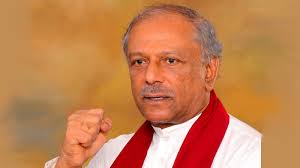
Sri Lanka Foreign Affairs Minister Dinesh Gunawardena on Saturday said bigger projects and investments with India would continue, after the neighbour scrapped the trilateral deal with India and Japan to develop the Colombo Port’s Eastern Container Terminal (ECT).

In an exclusive interview to CNN-News18’s Maha Siddiqui, Gunawardena spoke about his recent meeting with the Indian High Commission, the country’s deals with China, and much more.

When asked about claims that the trade union protests against the project were orchestrated with the help of China, he said that all types of trade unions – from right to the left and of various ideologies had agitated against the matter. “As I’ve mentioned before, bigger projects and bigger investments and with India will continue. About China’s involvement… I don’t think so. That is not the position,” he said.

Asked about how deals with Japan and India had not gone through, and projects with China had, despite the trade unions protesting against foreign partnership, Gunawardena said that many projects were being carried out by China’s assistance, and that there was always criticism by trade unions.

On how the ECT project scrapping would affect India and Sri Lanka’s position, he said the countries’ relations were very strong and had been so for many years. He added that the recent meeting with the Indian High Commission had been a friendly and fruitful one. “We will continue keeping this dialogue with regards to many areas that India is involved in,” he said, signalling that the future relationship between the neighbours would be towards progress.