Former UN official tells Sri Lanka not to count on UN for justice

A former United Nations (UN) official has told Sri Lanka not to count on the UN for justice.

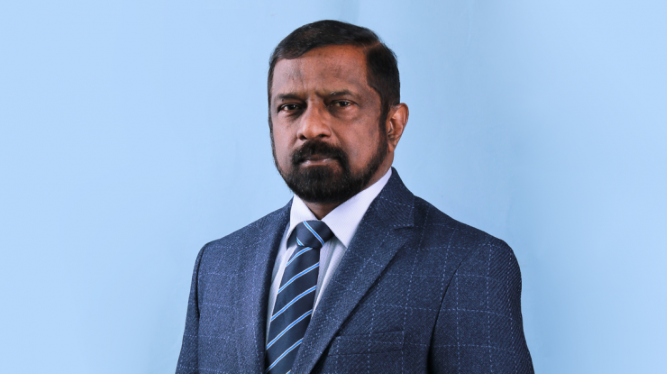
Former Assistant Secretary General and former Chair of a UN Panel, Charles Petrie, said that the UN lacks courage to act on the Sri Lanka issue.

Speaking at a webinar organised by the Global Tamil Forum, Center for Human Rights and Global Justice – New York University, Sri Lanka Campaign for Peace and Justice and the Canadian Tamil Congress, Petrie said that the UN cannot say it does not have the system in place to address the issue.

He said that there are UN officials in Colombo and elsewhere who want to do the right thing.

But he asserted that the UN lacks courage and so the Sri Lankan public must not depend on the UN.

He said that if the Sri Lankan public depend on the UN they maybe disappointed.

Instead, he said if the Sri Lankan public count on their own resilience and the UN performs it would be an unexpected win.

Petrie headed a panel appointed by then UN Secretary General Ban Ki-moon to conduct a comprehensive review of action by the United Nations system during the war in Sri Lanka and the aftermath.

The panel had found that the United Nations system failed to meet its responsibilities — highlighting, in particular, the roles played by the Secretariat, the agencies and programmes of the UN Country Team, and the members of the Security Council and Human Rights Council.

Scrapped Colombo Port Deal As Indian Firm Rejected Terms: Sri Lanka – NDTV

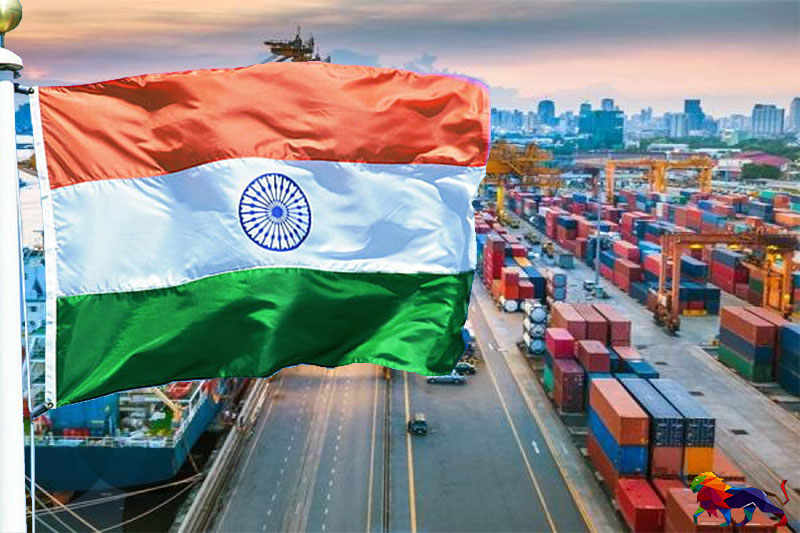
Sri Lanka has said it scrapped the trilateral deal with India and Japan to develop the Colombo Port’s Eastern Container Terminal (ECT) as the Indian firm involved in the project refused to agree to its new terms.
Prime Minister Mahinda Rajapaksa’s office on February 1 said that his government has decided to run the Colombo Port’s Eastern Container Terminal (ECT) as a fully-owned operation of the state-run port authority.

Answering the Opposition’s query in Parliament on Thursday on the deal, Sri Lanka Ports Minister Rohitha Abeygunawardena said a Cabinet sub-committee appointed to examine the deal had proposed new terms.

“We entered talks from a favourable position to us, then that company refused to go ahead with our conditions,” Mr Abeygunawardena told the Parliament, adding that the Indian company’s refusal forced Sri Lanka to scrap the deal.

India, Japan and Sri Lanka had inked an agreement in 2019 to develop the terminal project.

“The governments of India, Sri Lanka and Japan had signed a memorandum of cooperation in May 2019 to develop and operate the East Container Terminal of Colombo Port in a trilateral framework,” Ministry of External Affairs spokesperson Anurag Srivastava said at a media briefing in New Delhi on February 4, three days after Colombo cancelled the deal.

“We sincerely believe that the development of infrastructure in Sri Lanka, in areas such as ports and energy, with foreign investment from India and Japan will be a mutually beneficial proposition,” he said.

Mr Srivastava said the Indian High Commissioner in Colombo was in talks with the Lankan government on the issue.

On Friday, India said its interest to participate in the Colombo port project is a long standing one as most of the goods handled at the facility are from and to India.

“We had in principle agreement from the Sri Lankan government in this regard,” Mr Srivastava said in New Delhi, evading a reply to a question whether Sri Lanka offered India a project to develop the western container terminal project in Colombo port instead of the ECT.

Mr Srivastava further said: “Current government has, however, expressed a preference in engaging investors directly. I understand discussions are still underway.”

The state-owned Sri Lanka Ports Authority (SLPA) signed a memorandum of cooperation in May 2019 with India and Japan to develop the ECT during the previous Sirisena government.

The Colombo port trade unions opposed the proposal of investors from India and Japan buying 49 per cent stake in the ETC. They demanded the ECT to remain 100 per cent owned by the SLPA as opposed to the 51 per cent.

They claimed that the proposed deal with India’s Adani Group was a sell-out of the ECT.

President Gotabaya Rajapaksa had declared that he wanted the India-Japan deal on the ECT to go ahead.

However, after a week of protest, Prime Minister Mahinda Rajapaksa agreed to scrap the deal, prompting India to demand Sri Lanka to abide by its commitment to the trilateral deal with it and Japan.

Japan has also conveyed its unhappiness with the Sri Lankan government.

Posted in Uncategorized

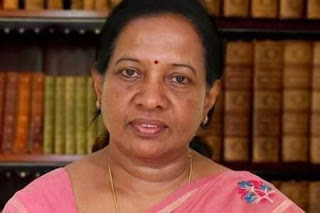
Former Jaffna Mayor included in Commission on human rights violations

Former Jaffna Mayor Ms. Yogeswari Patkunarajah has been included in a Presidential Commission on human rights violations.

In a gazette notice issued by the Presidential Secretariat, it was noted that a Presidential
Commission of Inquiry on Human Rights Violations was established on January 20, 2021.

The gazette notes that taking into consideration the necessity of reflecting the pluralistic character of Sri Lankan society and gender equity, President Gotabaya Rajapaksa, in accordance with the provisions of Section 3 of the Commissions of Inquiry Act, has appointed Ms. Yogeswari Patkunarajah, as a Commissioner of the Presidential Commission of Inquiry.

The President, as per the gazette notice, has placed great trust and confidence in her prudence, ability and fidelity.

In January President Gotabaya Rajapaksa issued a gazette notice appointing the panel headed by Judge of the Supreme Court A.H.M.D. Nawaz.

Others in the panel are retired Inspector-General of Police Chandra Fernando and retired District Secretary Nimal Abeysiri.

The President noted that the policy of the Government of Sri Lanka is to continue to work with the United Nations and its Agencies to achieve accountability and human resource development for achieving sustainable peace and reconciliation, even though Sri Lanka withdrew from the co-sponsorship of the UN Human Rights Council resolutions on Sri Lanka.

The panel has been appointed as the Human Rights Council prepares to discuss human rights in Sri Lanka at its next session in February-March 2021.

Six more COVID-19 deaths bring tally to 390

Sri Lanka has reported 06 more coronavirus related deaths, the Director-General of Health Services confirmed today (February 13).

As per the Department of Government Information, three male patients and three female patients are among the victims.

The new deaths bring the number of COVID-19 related deaths witnessed in Sri Lanka to 390 in total.

Posted in Uncategorized

Sri Lanka’s foreign policy scrambles in the dark – FT.LK

“The world must learn to work together, or finally it will not work at all” – Dwight Eisenhower, 34th US President

Sri Lanka’s foreign policy is in the midst of a storm on the international stage. On Monday the Core Group responsible for the country at the United Nations Human Rights Council (UNHRC) announced that they would be presenting a fresh resolution against Sri Lanka. Coupled with the growing tensions between the Sri Lankan and Indian Governments, the foreign office certainly has its work cut out for it in the coming weeks and months.

Local news cycles have been dominated this year by stories regarding the East Container Terminal (ECT) at the Colombo Port and the tripartite agreement signed between Sri Lanka, India and Japan to jointly develop and operate the terminal.

Following weeks of demonstrations by unions and members of the ruling coalition, the Government made the surprise announcement that they would not be proceeding with the agreement. This decision followed a late evening Cabinet meeting, and left both India and Japan scratching their heads.

The news that this agreement was to be cancelled was all the more surprising considering India’s External Affairs Minister, Dr. S. Jaishankar, had paid a visit to the country a month ago. The ECT featured prominently in the discussions between the Indian Foreign Minister and Sri Lanka’s President and Prime Minister. The confidence in which New Delhi spoke of the continued cooperation between the two countries suggests that at no point was the possibility of the project being scrapped raised.

In the days and weeks leading up to the cancellation, prominent Cabinet Ministers and unions loyal to the Government had undertaken a campaign to oppose the project. The cancellation of the ECT project appears nothing more than a desperate attempt by the Government to quell the growing opposition from within their support base due to a rising host of issues on the ground.

Having made opposition to the ECT project a central feature of their campaign at last year’s election, the Government’s decision appears to be no more than a politically motivated stunt. In fact, shortly after the announcement that the agreement would be cancelled, the Cabinet of Ministers attempted to pacify India by offering them a higher stake in the still to be built West Terminal at the Colombo Port.

To date there has been no indication from India as regards this fresh offer. However, our Northern neighbours have been swift in expressing their displeasure at the unilateral decision. Media quoted an Indian High Commission spokesman who called on the Government of Sri Lanka to ensure the “expeditious implementation of the trilateral Memorandum of Cooperation (MoC) signed in May 2019 among the Governments of India, Japan and Sri Lanka for the development of ECT with participation from these three countries”.

Anger in India toward this apparent public repudiation has grown in the past few days with Indian media reporting that New Delhi is continuing to pressure Colombo to reverse their decision.

Reports have also emerged in India suggesting that China had a role in blocking their involvement in this strategic investment. China has their own presence in the Colombo Port at the Colombo International Container Terminals Ltd., which they hold an 85% stake, and it is believable that they would wish to protect their sole presence. With tension rising in the Indian Ocean between Sri Lanka and India, and India and China caught in their own diplomatic row, the pressure was on Sri Lanka’s foreign policy experts to step in and ensure that the situation was resolved.

However, over the weekend news emerged that the Sri Lankan Cabinet had previously agreed to award a project to a Chinese firm to setup hybrid wind and solar energy projects in three islands in the Northern Province.

Sri Lankan Governments have historically balanced relations between India and China by ensuring that India maintained its interests in the North and Central Provinces of the country, while China was allowed to mark their presence in the South. The surprise decision by the Cabinet to award this project to a Chinese firm has reportedly not gone down well with the Indian Government, who have allegedly lodged “a strong protest” with the Sri Lankan Government.

Having approved this project two weeks prior to cancelling the ECT tripartite agreement, the Cabinet has shown itself as either being incapable or unwilling to balance relations with India and China.

With the Government placing the country firmly in China’s corner, the ramifications are beginning to be seen. Last week the Central Bank of Sri Lanka concluded a $ 400 million currency swap they had initiated with India back in July last year.

Denying reports that India had called for the early cancellation, the Indian High Commission issued a communique clarifying the fact that the continuation of this swap was dependant on Sri Lanka having negotiated an agreement with the IMF. However, the communique concluded by reiterating “that India abides by all of its international and bilateral commitments in letter and spirit.” A clear message to Sri Lanka that while respecting their previous agreements with Colombo, New Delhi would certainly be thinking twice when accommodating future requests from Sri Lanka.

With Sri Lanka’s foreign reserves being reportedly lower than their foreign debt obligation for 2021, the withdrawal of $ 400 million from the Central Bank will certainly increase the pressure on the Government.

India’s apparent assertion that they will no longer be backing Sri Lanka wholeheartedly has certainly come at the worst possible time for the Rajapaksa administration. The next few months will see the foreign office face up to their steepest test with momentum building around the pending resolution at the UNHRC.

The UK has announced that they would be presenting a resolution promoting human rights and accountability in the country at the 46th session of the council in Geneva next month. This resolution is expected to follow up on the damaging report produced by the Office of the High Commissioner of Human Rights last month.

This is not the first time a Rajapaksa Government has been faced with a UNHRC resolution. Following the end of the war in 2009 Sri Lanka has seen itself the subject of several such resolutions. With the then Government opposing these resolutions, the council often found itself divided. In 2015, following the defeat of Mahinda Rajapaksa at the Presidential Election, the Yahapalana Government decided to co-sponsor a resolution (Resolution 30/1) in an attempt to rebuild the faltering international relations. The decision to work with the international community paid dividends as the pressure on the Government was eased and subsequent trade agreements such as the GSP+ with the EU was re-instated.

However, it would appear that cooperation on the international stage has once again been put on the backburner, with the Sri Lankan Government choosing instead to undertake a campaign of opposition towards the resolution. Suggestions are now emerging from the international community that targeted sanctions and travel bans maybe recommended at the UNHRC. As the country attempts to rebuild the collapsed economy, such moves would further weaken the Government. With India now unlikely to support Sri Lanka at the Council, the Government is forced to turn to China in the hope that they will be able to muster enough votes to defeat the proposed resolution.

One possible ally for Sri Lanka may be found in the form of Pakistan. At the end of February Pakistan’s Prime Minister, Imran Khan, is scheduled to visit the island. Pakistan has enjoyed a close relationship with China, and the foreign experts in the Sri Lankan Government are hopeful that through China’s urging Pakistan will lobby Sri Lanka’s cause amongst other Muslim nations. Of course, with the ongoing forced cremations in Sri Lanka drawing widespread criticism from Muslims around the world, the likelihood of the Muslim bloc coming out in support of Sri Lanka is certainly slim.

Sri Lanka’s apparent decision to reduce ties with India has certainly come at the worst possible time. Backed by nationalist policies and growing dissent from within their camp, the Government has found itself backed into a corner in regards foreign policy. Whether or not the decision to hedge their bets on China alone will pay dividends is still to be seen. But at a time when the world is closing ranks on China, the Sri Lankan Government would certainly be better off returning to a middle path on the international stage.


Posted in Uncategorized

Sri Lanka looks to benefit from China’s Belt & Road Initiative, says Foreign Secretary Colombage

Sri Lanka believes it has great potential to be a maritime hub in the Indian Ocean, and the island nation sees China’s Belt and Road Initiative would help, Foreign Secretary Admiral Jayanath Colombage said.

“In that, I see the Belt and Road Initiative as a great prospect for Sri Lanka to be more connected to the global supply chain,” said Colombage in an interview to China’s state-run Xinhua news agency.

Sri Lanka has three deep water ports, which are viewed by Colombage as the country’s biggest assets.

“So we need to benefit from that. We need to benefit economically from the Belt and Road Initiative.

“We need to develop our maritime-related infrastructure,” he said.

Colombage statement comes amid Sri Lanka’s recent decision to pull out of a 2019 agreement with India and Japan, to jointly develop the East Container Terminal at the Colombo Port.

Adjoining the ECT, China holds 85 per cent stakes in the Colombo International Container Terminal which is under a 35-year ‘Build Operate and Transfer’ agreement with the Sri Lanka Port Authority.

China has helped Sri Lanka in its fight against the COVID-19 pandemic and the country now looks forward to furthering its ties with China in order to recover from the pandemic, Xinhua said.

Colombage said 2021 will be a very challenging year for countries including Sri Lanka due to the fight against the pandemic, and Sri Lanka now needs the support of its friends more than in any other years in history.

China has sent medical assistance such as surgical masks, personal protective equipment, and surgical gloves in large quantities to the country’s health authorities, Colombage said.

“This has helped Sri Lanka in its battle against the pandemic.”

Colombage said China has fought the virus very effectively as it has begun producing vaccines in large quantities and is helping other countries by do

“China is going to give us a large number of vaccines and arrangements are being made. I was told these vaccines will arrive here soon. That is a really great gesture. We need more support in this battle against the COVID-19,” Colombage said.

The foreign secretary said the COVID-19 has shattered the country’s economic hope and development progress.

“We now really need to catch up,” Colombage said.

“I think China, being one of the leading economies in the world, and the number one development partner of Sri Lanka, can help us,” Colombage added.

Attracting more investments from China will create more job opportunities for locals, said the official, adding that reaping the benefits from China’s Belt and Road Initiative will be a priority.

Source:http:uniindia

Posted in Uncategorized

01st time SLPP MPs form new alliance within the main alliance

Newly elected MPs from the Sri Lanka Podujana Peramuna have formed an alliance, said the SLPPs Pramitha Bandara Tennakoon.

“This group does not have a leader or a convener. Everyone is treated equally with a right to express their opinion,” he said.

The MP said there are no heroes among those in the faction and the objective is to fulfill the duties on behalf of the government and the people who elected them to the parliament.

“As young parliamentarians, we look up to the government, the ministers, and senior lawmakers. We wish to emphasize the expectations of 6.9 million people lie on the shoulders of the parliamentarians who have not uttered a single word that causes inconveniences to the government,” he stressed.

A responsible government is required, said the SLPPs Pramitha Bandara Tennakoon adding one cannot forget the entire 22 million people including those who did not vote for the SLPP at the polls.

Posted in Uncategorized

Sri Lanka to brief UNHRC during high-level segment

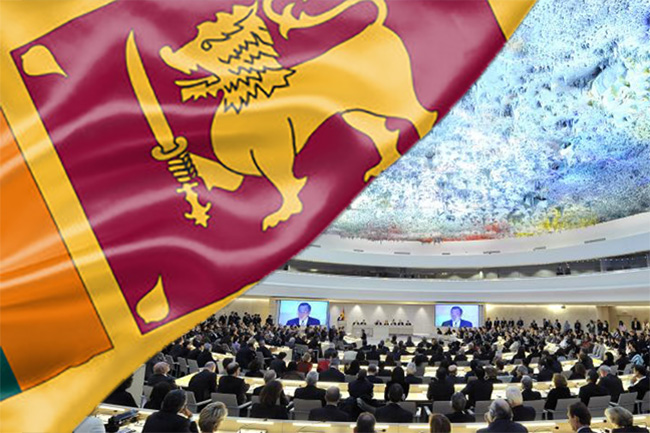
Sri Lanka is to brief the UN Human Rights Council (UNHRC) during the high-level segment of the 46th Session.

Foreign Minister Dinesh Gunawardena is scheduled to brief the council on 23rd February.

Sri Lanka is expected to assert its position on the human rights issue and the decision by the Core Group to submit a fresh Resolution on Sri Lanka to the Council.

Others scheduled to address the high-level segment are Minister for External Affairs of India Subrahmanyam Jaishankar, Secretary of State of the United States of America, Anthony J. Blinken and Wang Yi, State Councilor and Minister for Foreign Affairs of the People’s Republic of China.

The 46th Session of the UN Human Rights Council will be held from 22nd February to 23 March.

The Core Group on Sri Lanka had this week confirmed it will be submitting a Resolution on Sri Lanka at the upcoming session of the UN Human Rights Council in Geneva.

The British Ambassador and Permanent Representative to the UK in Geneva, Julian Braithwaite, informed the UNHRC of the decision to submit the Resolution.

The confirmation was made as the UNHRC met to discuss its plans for the 46th Session of the UNHRC.

The Core Group on Sri Lanka consists of Canada, Germany, Montenegro, North Macedonia, and the United Kingdom.

Braithwaite said that a Resolution will be submitted to the Council on promoting reconciliation, accountability and human rights in Sri Lanka.

The Resolution is a follow-up to one already co-sponsored by the former government, from which the current administration withdrew last year.

Braithwaite said the Resolution will be based on the recent damning report on Sri Lanka by the UN High Commissioner for Human Rights, Michelle Bachelet.

Bachelet had last month made public a damning report on Sri Lanka and has proposed targeted sanctions, such as asset freezes and travel bans against credibly alleged perpetrators of grave human rights violations and abuses.

The UN report warns that the failure of Sri Lanka to address past human rights violations has significantly heightened the risk of such violations being repeated. It highlights worrying trends over the past year, such as deepening impunity, and increased militarisation of governmental functions, ethno-nationalist rhetoric, and intimidation of civil society.

Nearly 12 years after the armed conflict in Sri Lanka ended, impunity for grave human rights violations and abuses by all sides is more entrenched than ever, with the current Government proactively obstructing investigations and trials, and reversing the limited progress that had been previously made, states the report, mandated by UN Human Rights Council Resolution 40/1.

The report urges enhanced monitoring and strong preventive action by the international community, warning that “Sri Lanka’s current trajectory sets the scene for the recurrence of the policies and practices that gave rise to grave human rights violations”.

Among the early warning signals the report highlights are the accelerating militarisation of civilian governmental functions, reversal of important constitutional safeguards, political obstruction of accountability, exclusionary rhetoric, intimidation of civil society, and the use of anti-terrorism laws.

Japan to support humanitarian demining activities in North

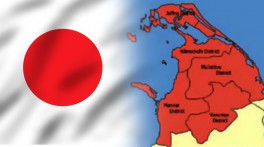
The Government of Japan has provided a total sum of USD 620,379 (approx. Rs. 115 million) to Skavita Humanitarian Assistance and Relief Project (SHARP) for humanitarian demining activities in Northern Sri Lanka.

The grant contract was signed yesterday (February 11) at the Ambassador’s Residence in Colombo, between Mr. Akira Sugiyama, Ambassador of Japan and Lt Col (Retd) Mr. V.S.M. Jayawardhana, Programme Manager of SHARP, the Embassy of Japan in Colombo said.

The Government of Sri Lanka aims to achieve “A Mine Impact Free Sri Lanka” within a few years and become the next mine impact free country in the world. Towards this endeavour, Japan has been a major donor in mine clearance in the country since 2002.

The Government of Japan is SHARP’s primary donor and has provided necessary funding for mine clearance since its inception in 2016 when its first program was launched in Kilinochchi.

Subsequently, SHARP cleared more than 1.5 km2 of mine field through funds disbursed from Japan’s Grassroots Human Security Project (GGP). Japan has provided financial assistance amounting to US$ 38.8 million to SHARP and to the other three demining NGOs currently operational in Sri Lanka.

The project is expected to contribute to the efforts of the Government of Sri Lanka in ensuring that mine-contaminated areas are safe, enabling resettlement of displaced people and enhancing their livelihoods directly or indirectly in Kilinochchi and Mullaitivu districts.

Easter report moots criminal charges against Gnanasara

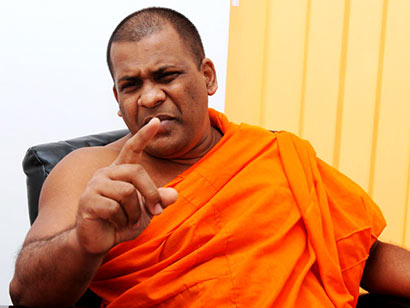
The final report of the Presidential Commission of Inquiry (PCoI) appointed to investigate the Easter Sunday bomb attacks on 21 April 2019 has recommended that criminal charges be filed against Bodu Bala Sena (BBS) General Secretary Ven. Galagodaaththe Gnanasara Thera, The Morning exclusively learnt.

Well-placed sources told The Morning that the recommendation for these charges against the monk pertain to allegations of him having played a role in inciting racial tensions in Aluthgama and Beruwala in 2014. The mob attack on Muslims that took place in Aluthgama, Beruwala, and Dharga Town in the Kalutara District between 15 and 17 June 2014 resulted in at least four deaths, about 80 injuries, and damage to property.

The recommendation is said to have been made under the mandate provided to the Commission to identify persons and organisations who aided and abetted actions that caused racial and religious disturbances or gave support for such acts within the country, and which created public unrest and disturbed social order, and disrupted social integrity and caused racial disturbances.

When The Morning contacted Ven. Gnanasara Thera yesterday (11), the monk said that he had not been informed of such a recommendation.

“I have not been informed of a recommendation made by the PCoI appointed to investigate the Easter Sunday attacks to make criminal charges against me.”

When inquired as to what his course of action would be if or when he is informed, the Thera said: “What I will have to do is laugh,” before adding that he would see what can be done if and when such a thing takes place.

Testifying before the PCoI in June 2020, Ven. Gnanasara Thera said that since no responsible individual or Government paid any attention to information related to extremism that he had uncovered since 2012 to the day of the attacks on 21 April 2019, he had decided to make the public aware of the matter. He added that his name or photograph could not be uploaded to Facebook since the previous United National Front (UNF)-led Government had told Facebook that he is a terrorist.

The Thera noted before the PCoI that he had systematically informed, in writing, the former President and incumbent Parliamentarian Maithripala Sirisena about Islamic extremist activity in the country on five occasions, the former Inspector General of Police (IGP) Pujith Jayasundara on four instances, and the former Ministry of Defence Secretary and current President Gotabaya Rajapaksa too, adding that the latter was the only person to summon the Thera to the Defence Ministry and inquire about the matter.

The monk, who was serving a six-year jail term for contempt of court, was granted a presidential pardon by Sirisena in May 2019. He was also convicted and given a six-month jail term over intimidating Sandhya Eknaligoda, the wife of missing journalist Prageeth Eknaligoda.

The Morning reported yesterday (11) that criminal charges have been recommended to be brought against Sirisena, former Ministry of Defence Secretary Hemasiri Fernando, and Jayasundara. The Morning also exclusively reported that despite media reports to the contrary, the PCoI had not recommended that criminal charges be brought against former Prime Minister Ranil Wickremesinghe.

Appointed by Sirisena on 22 September 2019, this PCoI was to investigate the series of attacks and to recommend necessary actions.

The PCoI handed over its final report to President Rajapaksa on 1 February after hearings and other procedures of the PCoI officially came to a conclusion on 27 January 2021. The first interim report was handed over on 20 December 2019, while the second interim report was handed over to President Rajapaksa on 2 March 2020.

The PCoI had recorded evidence from a total of 440 individuals during its term.

The PCoI was chaired by Supreme Court Justice Janak de Silva and the other members included Court of Appeal Justice N. Bandula Karunarathna, High Court Judges (Retd.) Nihal Sunil Rajapaksa and A.L. Bandula Kumara Atapattu, and former Ministry of Justice Secretary W.M.M.R. Adikari.

Posted in Uncategorized