EU to continue supporting reforms in Sri Lanka

The European Union (EU) says it will continue to support reforms in Sri Lanka and work with new President Anura Kumara Dissanayake.

The EU congratulated Anura Kumara Dissanayake upon his election and inauguration as President of the Democratic Socialist Republic of Sri Lanka.

“The people of Sri Lanka demonstrated once again their commitment to democracy, with a high voter turnout at the presidential elections held on 21 September. Elections took place in a peaceful manner and in a competitive political environment,” the EU said in a statement.

By invitation of the authorities of Sri Lanka, the EU deployed an Election Observation Mission (EU EOM) to undertake an independent, impartial and technical assessment of all aspects of the electoral process.

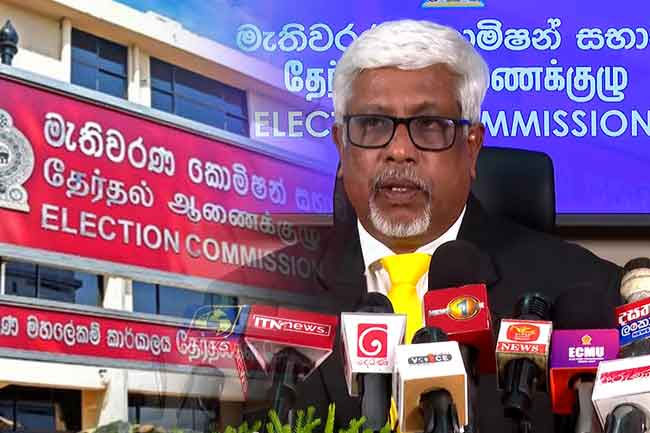
“This further reflects EU’s close cooperation with Sri Lanka on good governance and democracy. The EU EOM indicated in its preliminary report that fundamental freedoms were broadly respected and that the Election Commission of Sri Lanka (ECSL) conducted the process independently and with resolve, ensuring transparency at all key stages of the election,” the EU said.

The EU EOM identified areas where progress is needed, in particular, enhancing transparency in political finance and advancing women participation in public and political life. The EU EOM will publish a comprehensive final report including recommendations to improve future electoral process.

“Sri Lanka is an important and valued partner of the EU. Our cooperation on good governance, human rights and the rule of law, our relationship as trade and investment partners, and our joint work to combat climate change and promote green transition are built on our shared commitment to democratic values,” the EU added.

The EU said it looks forward to working with President Dissanayake and continue EU’s support to Sri Lanka’s reforms to bring the country to economic recovery, lasting reconciliation and inclusive prosperity and growth.

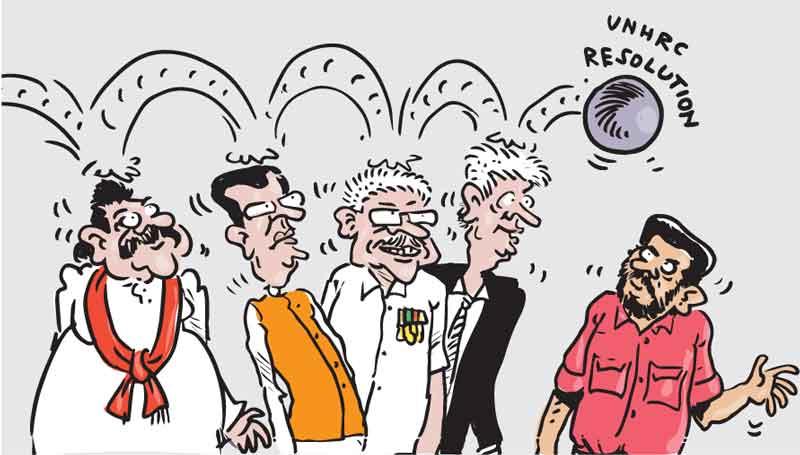
New Resolution on Sri Lanka tabled at UNHRC in Geneva

A new Resolution on Sri Lanka has been tabled at the UN Human Rights Council (UNHRC) in Geneva by the main sponsors the United Kingdom, Canada, Malawi, Montenegro, North Macedonia, and the United States of America.

The Resolution titled ‘Promoting reconciliation, accountability and human rights in Sri Lanka’ had been submitted to the Secretariat just ahead of the Presidential Election in Sri Lanka.

Resolution A/HRC/57/L.1 looks to renew the mandate in Resolution 51/1, which the Sri Lankan Government has already rejected.

The new Resolution tabled at the Human Rights Council during its ongoing 57th Session calls for the mandate and all requested work of the Office of the High Commissioner for Human Rights in Human Rights Council resolution 51/1 to be extended.

The Resolution states:

Promoting Reconciliation, Accountability and Human Rights in Sri Lanka

The Human Rights Council,

Guided by the purposes and principles of the Charter of the United Nations the Universal Declaration of Human Rights and relevant international human rights treaties,

Recalling its previous resolutions on promoting reconciliation, accountability and human rights in Sri Lanka, the most recent of which was Human Rights Council resolution 51/1 of 6 October 2022,

Welcomes the report of Office of the United Nations High Commissioner for Human Rights presented to the Council at its 57th session;

Decides to extend the mandate and all requested work of the Office of the High Commissioner for Human Rights in Human Rights Council resolution 51/1 and requests the Office of the High Commissioner for Human Rights to present an oral update at its 58th session, and a comprehensive report on progress on human rights, reconciliation, and accountability in Sri Lanka at its 60th session to be discussed in an interactive dialogue.

The 57th session of the Human Rights Council is taking place in Geneva from 9 September to 11 October 2024.

President to Address the Nation Tonight (25)

President Anura Kumara Dissanayake is scheduled to deliver a special address to the nation tonight at 7:30 PM.

During his address, the President is expected to outline his future plans and initiatives.

Yesterday, President Dissanayake appointed Dr. Harini Amarasuriya as the new Prime Minister.

Additionally, a new Cabinet comprising 15 ministries under three ministers was also established.

The address will be broadcast on live on Sirasa TV, Shakthi TV and TV1

Posted in Uncategorized

Don’t want to be sandwiched between China and India: New Sri Lanka President

Sri Lanka’s new President Anura Kumara Dissanayake has outlined the broad contours of his government’s new foreign policy, stating that he doesn’t want to be caught between India and China.

In an interview with The Monocle, Dissanayake said, “We don’t want to be sandwiched, especially between China and India. Both countries are valued friends and, under an NPP government, we expect them to become close partners.”

“We also want to maintain relations with the EU, the Middle East and Africa,” Dissanayake said in his interview with The Monocle which was conducted on September 3.

Dissanayake, the leader of the Marxist Janatha Vimukthi Peramuna party’s broader front National People’s Power (NPP), defeated his closest rival Sajith Premadasa of Samagi Jana Balawegaya (SJB) in Sri Lanka’s Parliamentary elections.

The election was the first to be held since mass protests unseated Gotabaya Rajapaksa in 2022 after the country suffered an economic crisis.

Dissanayake won the election, obtaining 5.74 million votes, with 105,264 preferences. Premadasa got 4.53 million votes with 167,867 preferences.

In his interview, Dissanayake also added that one of the priorities of his government would be to save the country from economic crisis.

“Both the main opposition and the ruling party follow the same neoliberal economic model. Today, sadly, we are a bankrupt nation. We have an external debt of €34billion, poverty has increased and the price of essential goods has skyrocketed. Our priority is to save the country from this economic crisis,” he said.

NPP urged to oppose 13A & federalism

Citing speculation regarding the lack of ethnic minority support for the newly elected National People’s Power (NPP) administration, led by the Janatha Vimukthi Peramuna, the Lanka Janatha Pakshaya (LJP) expressed opposition to any possible federal solution, claiming that it lacks a mandate to address ethnic minority issues in this manner.

LJP General Secretary Madubhashana Ranahansa, speaking to the media, emphasised that the new President and the administration’s mandate predominantly reflects the Sinhala-Buddhist majority of the country. He argued that the NPP should respect the mandate that they received, which, according to him, does not include implementing the 13th Amendment to the Constitution or offering federal arrangements for the country’s ethnic minorities. Ranahansa further commented on the political landscape in the Northern and Eastern Provinces, stating that “the majority of the people in these areas have voted not for economic and political stability, but for the concept of a ‘separate state’.” He alleged that their voting patterns reflect aspirations for division, rather than unity under a single nation.

Elaborating on the Party’s stance, Ranahansa insisted that the NPP should prioritise its electoral promises to reform the economic and political systems of the country, instead of focusing on federalism. “The NPP should focus on delivering the change that they promised to the people, in terms of economic and political reforms, rather than entertaining demands for a federal State,” he added.

Posted in Uncategorized

UNP, SJB Talks ongoing despite obstacles

Despite SJB leader Sajith Premadasa yesterday saying that his party will not enter into an alliance with the UNP to contest the General Election, Daily Mirror learns that the talks are still ongoing to make a final decision.

A decision to form a grand alliance for the general election with a new face as the Prime Ministerial candidate was announced earlier yesterday after former President Ranil Wickremesinghe’s decision that he will not contest any election in the future.

UNP Deputy Leader Ruwan Wijewardene who held a joint press conference together with Rajitha Senaratne and UNP Assistant Leader Akila Viraj Kariyawasam said Mr. Wickremesinghe has decided not to contest any election in keeping with the UNP tradition. “President J. R. Jayewardene did not contest after his retirement while late President D.B.Wijetunga also did the same. Mr. Wickremesinghe will follow this tradition,” they recalled.

Mr. Wickremesinghe will play an advisory role, the former MPs said.

UNP Chairman Vajira Abeywardene also confirmed the decision made by Mr. Wickremesinghe at a separate media conference. However he said Mr. Wickremesinghe will stand up for the nation if the need arises.
Wijewardene also said a decision has been made to form a broad alliance and to get the support of the SJB for it. “There are some SJB members who are in favour of joining a common grand alliance and we shall be talking to them,” he said in response to a question as to what would happen if SJB leadership opposes the move.

“We have the support of almost all parties which backed Mr. Wickremesinghe but what we intend doing is to obtain the support of others such as SJB,” Dr. Senaratne said.

It was reported on Monday that Mr. Wickremesinghe has appointed Talatha Atukorala and Mr. Wijewardene to carry out discussions with other parties to form a grand alliance.

The other decisions including the symbol of the new alliance will be decided later. In the meantime, Samagi Jana Balawegaya (SJB) party seniors have decided not to team up with the UNP for the general elections and to field its leader Sajith Premadasa as its Prime Ministerial candidate for the same, a party spokesman said.

“SJB will be fielding our leader as SJB”s Prime Ministerial candidate and the party seniors have already made this decision,” he said.

Meanwhile, SJB National Organizer Tissa Attanayake told the media that there is no necessity for the SJB to ally with the UNP. “We will immediately reorganize ourselves from the grassroots level and will gear up for the general election,” he said.

Posted in Uncategorized

Sri Lanka’s General Election on November 14

The Extraordinary Gazette notification issued by President Anura Kumara Dissanayake dissolving the Parliament of Sri Lanka effective from midnight today (24), has been published by the Department of Government Printing.

The proclamation dissolves Parliament with effect from midnight today and summons the new Parliament to meet on the November 21, 2024.

It has also fixed November 14, 2024 as the date for the election of the new Members of Parliament.

The Gazette notification further specifies the period beginning on October 04 and ending at 12 noon October 11, 2024 as the nomination period, during which nomination papers shall be received by the Returning Officers.

The President has issued the Gazette by virtue of the powers vested in him by Article 70 of the Constitution of the Democratic Socialist Republic of Sri Lanka and in pursuance of the provisions of Section 10 of the Parliamentary Elections Act, No. 1 of 1981.

Dissanayake, leader of the People’s Liberation Front (JVP) and the National People’s Power (NPP) alliance, won a landslide victory over the weekend by beating 38 other candidates and garnering over 5.6 million or 42.3 per cent of the votes.

During the election campaign, Dissanayake vowed to dissolve Parliament if he wins and call snap elections. The present Parliament’s five-year term ends in August next year.

His party had just three lawmakers in Sri Lanka’s 225-member parliament.

Dissanayake was sworn into office on Monday while he appointed academic and first-time lawmaker Harini Amarasuriya as the new prime minister on Tuesday, making her the third woman to be appointed to the post.

On the same day, he appointed a three-member Cabinet which includes NPP’s Vijitha Herath, Amarasuriya and himself, which will serve as the caretaker government until the polls are held.

Meanwhile, President Dissanayake is expected to make a special statement while addressing the nation at 7.30 pm tomorrow (25 September), according to the Department of Government Information.

Posted in Uncategorized

Sri Lanka’s new President dissolves Parliament

President Anura Kumara Dissanayake has signed the Extraordinary Gazette notification dissolving the Parliament of Sri Lanka effective from midnight today (24).

The relevant Gazette notification has been sent to the Government Printer to be published, according to the President’s Media Division (PMD).

Meanwhile, the Government Printer confirmed that the Gazette notification pertaining to the dissolution of the Parliament has been received by the Department of Government Printing.

The President has issued the Gazette by virtue of the powers vested in him by Article 70 of the Constitution of the Democratic Socialist Republic of Sri Lanka and in pursuance of the provisions of Section 10 of the Parliamentary Elections Act, No. 1 of 1981.

The proclamation dissolves Parliament with effect from midnight today and summons the new Parliament to meet on the November 21, 2024.

It also fixes November 14, 2024 as the date for the election of the new Members of Parliament.

The Gazette notification further specifies the period beginning on October 04 and ending at 12 noon October 11, 2024 as the nomination period, during which nomination papers shall be received by the Returning Officers.

Dissanayake, leader of the People’s Liberation Front (JVP) and the National People’s Power (NPP) alliance, won a landslide victory over the weekend by beating 38 other candidates and garnering over 5.6 million or 42.3 per cent of the votes.

During the election campaign, Dissanayake vowed to dissolve Parliament if he wins and call snap elections. The present Parliament’s five-year term ends in August next year.

His party had just three lawmakers in Sri Lanka’s 225-member parliament.

Dissanayake was sworn into office on Monday while he appointed academic and first-time lawmaker Harini Amarasuriya as the new prime minister on Tuesday, making her the third woman to be appointed to the post.

On the same day, he appointed a three-member Cabinet which includes NPP’s Vijitha Herath, Amarasuriya and himself, which will serve as the caretaker government until the polls are held.

Meanwhile, President Dissanayake is expected to make a special statement while addressing the nation at 7.30 pm tomorrow (25 September), according to the Department of Government Information.

Posted in Uncategorized

Harini Amarasuriya sworn-in as Prime Minister

National People’s Power (NPP) MP Dr. Harini Amarasuriya was sworn in as the new Prime Minister of Sri Lanka, making her the 16th person to hold the position.

She was sworn in as the Minister of Justice, Education, Labour, Industries, Science & Technology, Health, and Investments.

Daily Mirror reported today that Harini Amarasuriya will be appointed as Prime Minister, with MPs Vijitha Herath and Lakshman Nipuna Arachchi set to be appointed ministers.

Parliament is to be dissolved this evening.

Sri Lanka to seek ‘maximum support’ from China under new leader Dissanayake, analysts say

Sri Lanka’s left-leaning president-elect Anura Kumara Dissanayake has yet to declare a precise China policy, but was expected to seek “maximum support” from Beijing through foreign direct investment, technology and tourism, according to analysts.

On Monday, Chinese President Xi Jinping congratulated Dissanayake on his election victory on Saturday, hailing bilateral ties as “a good example of friendly coexistence and mutually beneficial cooperation between countries of different sizes” while committing to work with his new counterpart to boost relations.

China’s foreign ministry said it anticipated “new progress” in the strategic cooperative partnership between the countries, based on “sincere mutual assistance and everlasting friendship”.

Dissanayake emerged as the election winner after a second round count with 42.3 per cent of the vote, while his closest rival, opposition leader Sajith Premadasa, won 32.7 per cent.

His election campaign promised tough anti-corruption measures and policies to help the poor, as the debt-ridden South Asian state continues to grapple with a massive economic crisis that has fuelled nationwide unrest.

Dissanayake, 55, leads a socialist electoral coalition – the National People’s Power (NPP) – as well as its main party, the Janatha Vimukthi Peramuna (JVP), a left-wing political group founded six decades ago to spearhead a communist revolution in the postcolonial South Asian state.

Dissanayake has appointed former air vice-marshal Sampath Thuyacontha, who was educated in China, as the new defence secretary.

Observers expected Dissanayake to be pragmatic in dealing with China during his five-year term, during which he is expected to help resuscitate an economy crushed by major policy errors, under-taxation and weak exports. Public debt has also surpassed US$83 billion and inflation soared to 70 per cent.
Dissanayake did not lay out a specific foreign policy position during his election campaign, but it is “highly probable” that he would prefer to work with China over its rival India, according to Priyanga Dunusinghe, an economics professor at the University of Colombo.

“President Dissanayake wants to get maximum support from China to develop Sri Lanka,” Dunusinghe said. “[He] may try to attract Chinese foreign direct investment and tourists to Sri Lanka and look for market opportunities for Sri Lankan exports.”

Since Sri Lanka is a member of China’s Belt and Road Initiative, Dissanayake may try to follow China’s development model, Dunusinghe said, adding that the president-elect might seek support from Beijing to develop digital infrastructure in the country.
Colombo joined the trillion-dollar infrastructure strategy in 2017, with both sides agreeing to cooperate to develop and invest in projects. The belt and road has played a significant role in port projects in Colombo and Hambantota, which Dissanayake has shown “greater interest” in, according to Dunusinghe.

“Dissanayake will be cautious given Indian concerns over closer ties between China and Sri Lanka, and amid recent political developments in the region,” Dunusinghe said, adding that Dissanayake’s predecessor, Ranil Wickremesinghe, applied a balanced approach towards both countries.
However, Colombo-based journalist and researcher Rathindra Kuruwita expected that Dissanayake would “treat China much more warmly” than the previous administrations of Wickremesinghe and Gotabaya Rajapaksa, who he said cosied up to India “at the expense of China”.

“Dissanayake and the NPP have pledged a non-aligned foreign policy, which had served Sri Lanka well in the 1960s and 1970s,” Kuruwita said, adding that Colombo needed Chinese investment to drive its exports and boost its manufacturing industry.

The JVP traces its origins to the pro-China faction of the Sri Lanka Communist Party in the 1960s and, historically, Beijing had tended to strengthen engagement with Sri Lanka when centre-left parties or politicians held power, Kuruwita said.

While increased engagement between Beijing and Colombo was expected, Dissanayake has also stressed maintaining strong ties with New Delhi, with increasing Indian investment a key part of his economic strategy, according to Kuruwita.

“Dissanayake has consistently denied any financial ties to China and reassured both Washington and New Delhi that Sri Lanka will not be used to undermine their security interests,” Kuruwita said.

Kalinga Seneviratne, a Sri Lanka-born researcher at Shinawatra University in Bangkok, said it was “too early to assess” Dissanayake’s diplomacy objectives.

“The main issues for his rural and working-class base was the cost of living, which has skyrocketed, and corruption, which people thought was not sorted out after the Aragalaya in 2022,” Seneviratne said, referring to eight months of protests that erupted as the economy collapsed.

But a widely circulated suggestion that Sri Lanka’s debt crisis was caused by China was not accurate, Seneviratne said.

“About 45 per cent of Sri Lanka’s debts were owed to [international sovereign bond holders] mainly based in the US,” Seneviratne said, adding that Wickremasinghe was pressured by the International Monetary Fund to increase the value-added tax while cutting government subsidies – moves that “hit people hard”.
Kuruwita said China had remained “largely disengaged” from Sri Lanka in terms of investments since the Covid-19 pandemic. The administrations of Wickremesinghe and Rajapaksa had both reneged on commitments under the influence of India, while Beijing shifted its focus to the Maldives, he said.

Source:https://www.scmp.com/