President calls on Chief Prelate of the Ramanna Sect

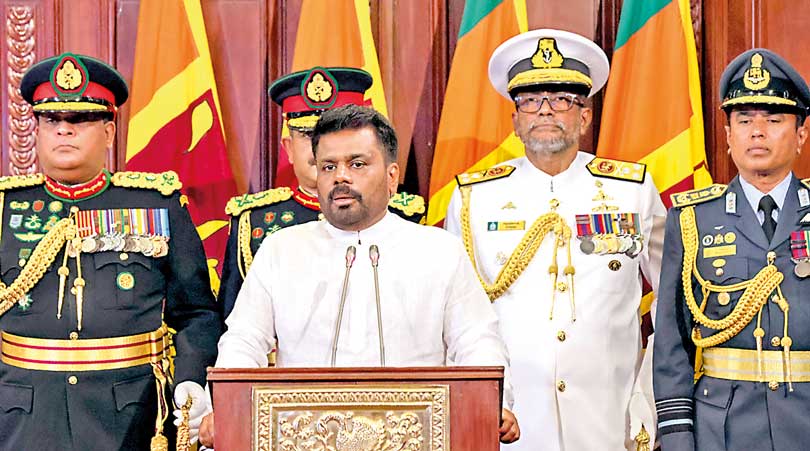
President Ranil Wickremesinghe visited the Sri Lanka Ramanna Sect in Narahenpita this morning (27), where he met with the Mahanayake of the Ramanna Sect Aggamaha Panditha Most Ven. Makulawe Wimala Thero, and received blessings.

The President engaged in a brief discussion with the Maha Sangha of the Ramanna Sect led by the Mahanayake and he updated the Maha Sangha on the country’s economic recovery and outlined future plans.

Additionally, President Wickremesinghe addressed issues related to education, land concerns in sacred areas, and also briefed the discussions held with Tamil MPs concerning the development of the Northern and Eastern Provinces.

Three Chinese warships arrive in Colombo

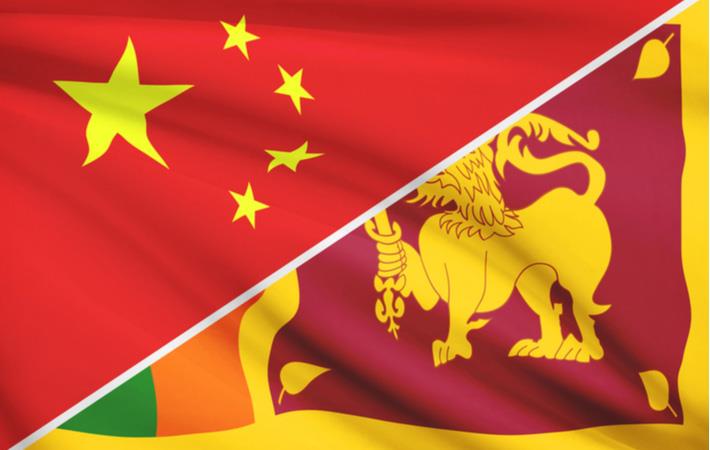
Three Chinese warships; He Fei, Wuzhishan and Qilianshan arrived at Sri Lanka’s Colombo port on a formal visit on Monday (26).

This follows the docking of Indian warship ‘Mumbai’ which is on a three-day visit to Sri Lanka during which it will engage in a Passage Exercise with a Sri Lanka Navy vessel.

Last week, three US warships docked at the port for replenishment; the USS Spruance, USS O’kane, and the USS Stockdale.

The He Fei is a 144.50-meter-long destroyer, crewed by 267 personnel under the command of Captain Chen Junfeng.

The Wuzhishan is a 210-meter-long Landing Platform Dock, manned by 872 crew members and commanded by Captain Fei Zhang.

The Qilianshan is a 210-meter-long Landing Platform Dock, with 334 crew members under the command of Captain Xiong Binghon.

Commanding Officers of the trio of Chinese People’s Liberation Army Navy warships are scheduled to call on the Commander Western Naval Area, Rear Admiral Chinthaka Kumarasinghe at the Western Naval Command Headquarters today, Sri Lanka Navy said in a statement.

“To strengthen the camaraderie between the two navies, crew members of these ships are set to participate in a series of programmes organized by the Sri Lanka Navy.

“In addition crew members of the ships will explore some of the tourist attractions of the country, during their stay in Colombo.”

Sri Lanka Navy personnel will have the opportunity to participate in briefings on the operational functions of the ships as well.

The trio will depart on August 29, after a Passage Exercise (PASSEX) with a Sri Lanka Navy ship off the coast of Colombo.

UN Human Rights Council urged to renew monitoring Sri Lanka

The UN Human Rights Council has been urged to renew monitoring and evidence collection in Sri Lanka at its upcoming September session.

Human Rights Watch Deputy Asia Director Meenakshi Ganguly said that the Sri Lankan Government has been trying to persuade international partners of its achievements in reforming the economy and protecting human rights.

However, a new report by the United Nations high commissioner for human rights warns that Sri Lanka is facing renewed threats to fundamental freedoms. It finds that authorities have sought new repressive laws and engaged in intimidation and violence against victims of past abuses, civil society activists, journalists, and government critics.

The government denies responsibility for grave abuses during Sri Lanka’s 1983-2006 civil war. “This entrenched impunity has also manifested itself in the corruption, abuse of power and governance failures that were among the root causes of the country’s recent economic crisis,” the report says.

The economic crisis, which escalated in 2022, has doubled the poverty rate. The UN estimates that a quarter of households are suffering food insecurity, yet “democratic reforms and accountability for corruption and economic mismanagement remain largely unfulfilled.”

The report finds that “ill-treatment by police and security forces remain prevalent.” Between January 2023 and March 2024, the Human Rights Commission of Sri Lanka recorded 21 alleged extrajudicial killings, 26 deaths in custody, and 1,342 arbitrary arrests and detentions.

The UN examined recent allegations of “abduction, arbitrary detention, torture, ill-treatment and sexual violence perpetrated against individuals of Tamil ethnicity by Sri Lankan security forces.”

Since ending a moratorium on the abusive Prevention of Terrorism Act in 2022, the government has used the law dozens of times against perceived critics, especially Tamils. The families of victims of enforced disappearance face reprisals for engaging with the UN or foreign diplomats. Authorities have detained 121,957 people in a brutal anti-drugs campaign, sending thousands to military-run “rehabilitation” centers.

Meanwhile, new laws “have profound implications for … fundamental freedoms and the rule of law,” the report says. The Online Safety Act contains powers to restrict freedom of expression, and proposed legislation curtailing nongovernment organizations would severely affect groups already suffering from “surveillance, intimidation and harassment.”

The high commissioner called upon members of the UN Human Rights Council to renew UN mandates for monitoring and evidence collection and for “the international community … to help break the cycle of systematic impunity… [by] using all potential forms of jurisdiction.”

Human Rights Watch echoes this call and urges UN member states to ensure the Human Rights Council, at its upcoming September session, adopts a resolution renewing those mandates.

Posted in Uncategorized

Ex-Minister A.H.M. Fowzie given suspended sentence over misuse of ministry vehicle

The Colombo High Court has sentenced former Minister A. H. M. Fowzie for two years of rigorous imprisonment and suspended it for 10 years after he pleaded guilty over the charge of misusing a vehicle belonging to the Ministry of Disaster Management.

The court also imposed a fine of Rs.400,000 on the former Minister, when the case was taken up today (27), Ada Derana reporter said.

Former Minister Fowzie was charged over the possession and personal use of a luxury vehicle worth nearly Rs. 20 million received from the Netherlands to the Disaster Management Ministry, while serving as the Minister of Disaster Management in 2010.

Furthermore, he was found guilty of persuading the officials including the Ministry Secretary and spending nearly Rs 1 million from the Finance Ministry’s funds for the maintenance of the vehicle.

However, Fowzie had pleaded guilty for the charges through his attorney, when the case was taken up for hearing today.

Later, the High Court Judge pointed out that such actions by a senior politician with 62 years of political experience cannot be taken for granted, but considering the fact that he pleaded guilty at the initial stage and that he is now an elderly person of 86 years of age, the former Minister will be given a lenient sentence.

No one can prevent NPP victory; government servants, police, army support us: AKD

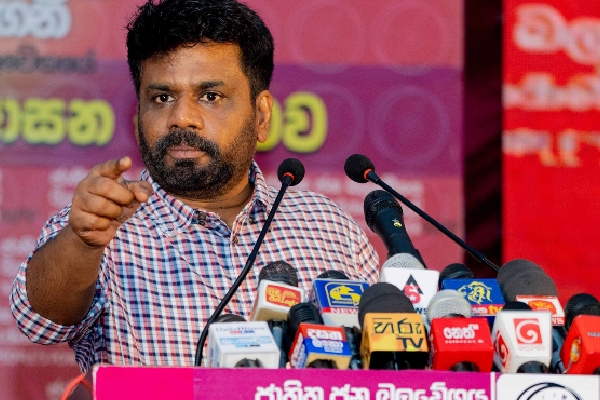
Claiming that some people entertain doubts that President Ranil Wickremesinghe will resort to a trick at the last moment to prevent a National People’s Power (NPP) victory, NPP leader Anura Kumara Dissanayake said today that no can prevent the NPP’s victory this time.

Speaking at a rally in Minuwangoda, he said the majority of government servants, police and army personnel support the NPP this time and said that Ranil Wickremesinghe will not be able to resort to any tricks.

“People entertain doubts that Ranil Wickremesinghe will resort to some sort of trick at the last moment. He cannot resort to any tricks. The majority of the government servants support the NPP. The majority of the police and army personnel also support us. Retired police and army officers are with us. So, no one can prevent the NPP from coming to power,” he said.

Dissanayake said, for the first time that the NPP will form a government to look after the people, adding that so far governments have been formed to look after families and friend of the rulers.

Posted in Uncategorized

Sri Lanka to continue to oppose UNHRC Resolutions

Sri Lanka will continue to oppose UNHRC Resolution 46/1 and 51/1 which were adopted by a divided vote in the Council, diplomats in Colombo were informed.

Minister of Foreign Affairs Ali Sabry convened a briefing on current developments in Sri Lanka for the Colombo-based diplomatic corps at the Ministry of Foreign Affairs.

During the briefing, Minister Sabry emphasized several significant achievements across various fronts during the past year, including advancements in economic recovery, legal reforms and the strengthening of domestic institutions and mechanisms focused on reconciliation.

Minister Sabry highlighted that the Government has taken concerted efforts towards the establishment of a Commission for Truth, Unity and Reconciliation including gazetting the draft bill, and tabling it in the Parliament.

As the Minister of Justice, he reiterated the progress that has been achieved in drafting comprehensive legislation on counter terrorism to replace the PTA, and notable progress on matters related to reconciliation processes coming under the purview of the Ministry of Justice, including the advancements made by the Office on Missing Persons (OMP), Office for Reparations (OR) and Office for National Unity and Reconciliation (ONUR).

An overview of the economic revival of the country was provided by the Governor of the Central Bank Dr. P. Nandalal Weerasinghe, also highlighting the envisaged way forward for continued economic stabilization, while conveying appreciation to the international community for their support towards Sri Lanka’s economic recovery. J.M.S.D. Ratnayaka, Additional Director General of the Department of National Planning, Ministry of Finance, Economic Stabilization & National Policies briefed the participants on the social safety measures implemented by the government and the newly launched Social Protection Policy to support vulnerable groups.

Foreign Secretary Aruni Wijewardane called on the Colombo-based Diplomatic community to understand the current situation in Sri Lanka, support the progress made thus far, and invited them to participate during the Interactive Dialogue on Sri Lanka at the upcoming session of the Human Rights Council.

She also highlighted Sri Lanka’s continued cooperation with the UN human rights mechanisms as well as with the multilateral system. However, Sri Lanka will continue to oppose UNHRC Resolution 46/1 and 51/1 which were adopted by a divided vote in the Council.

Representatives from the Ministry of Justice, Prison Affairs and Constitutional Reforms, Attorney General’s Department, Office on Missing Persons, Office for Reparations, Office for National Unity and Reconciliation, Interim Secretariat of the Truth and Reconciliation Commission, and the Office for Overseas Sri Lankans were also present at the briefing.

Members of the Diplomatic Corps expressed appreciation for the regular briefings provided by the Ministry of Foreign Affairs on the current situation and the steps taken towards recovery and reconciliation, and the regular engagement with related agencies.

Posted in Uncategorized

Northern fisherfolk sell Chinese rice donation on pavement as they cannot stick to it

Northern fisher families who received the generous Chinese ‘humanitarian assistance’ of packets of rice recently, are selling them on the pavement as they are not familiar with how to make ‘Chinese sticky rice’.

The Chinese rice variety, which is different when it comes to preparation, style, and taste compared to local Naadu types, gave a hard time to local fisherfolk who tried the same methods of cooking with the Chinese donated rice.

The Chinese rice donation was among the Rs 1.5 billion worth of humanitarian assistance, which includes a prefabricated housing scheme and fishing equipment for fisherfolk in the Northern and Eastern provinces.

The three aid packages, amounting to Rs 500 million each, would be the largest offered by China in the two provinces, where India has also invested heavily in development, livelihood and investment projects.

One local fisherman who sold the donated Chinese rice through an underground agent also expressed concerns with one of the other donated items – prefabricated housing, saying this is not conducive to living in a province that records higher temperatures for most of the months.

He had an interesting suggestion: give the items to politicians and officials.
Since most of the temporary shelters or vaadi houses erected on coastal lines to store fishing equipment caught fire due to unknown reasons, he is of the view that these prefab houses can be used as vaadi houses for better utilisation.

Posted in Uncategorized

Major ITAK split over presidential candidate

Ilankai Thamil Arasu Katchchi (ITAK) leader S Shiritharan extended his support to presidential candidate P Ariyanenthiran despite his party yet to make a final decision on which candidate it will support in the upcoming election.

Mr Shritharan met Tamil ‘common candidate’ Ariyanenthiran, who is also a Central Committee member of ITAK, on Thursday at his residence in Jaffna and declared his support for his candidacy.

Mr Shritharan stressed that it was his personal decision to support Mr Ariyanenthiran considering the ‘fate of the party’ and the well-being of the people who elected him to Parliament.

Meanwhile, the ITAK Central Committee, which met recently, called for an explanation from Mr Ariyanenthiran over his decision to agree to become the candidate without the approval of the party.

The initiative to form the Tamil People’s General Council to field a ‘common candidate’ at the upcoming polls came following an understanding reached between seven political parties and seven civil society outfits, which signed an MoU on July 22.

Describing the move as “selfish and unwise,” one senior ITAK leader said the party was considering asking their cadres and supporters to make their own presidential choice – just like the leader (Shritharan) did – rather than coming to a collective agreement.

Posted in Uncategorized

To re-democratize Sri Lanka, abolish executive presidency: activists

A group of lawyers, academics, and civil rights activists have called for the abolition of the executive presidency, saying it has failed to deliver the aims for which it was introduced over four decades ago.

The presidency was introduced in 1978 for accelerated and sustained economic growth and development; communal harmony; and political stability, the group of professionals and 8 civil society organizations said.

“It has worsened rather than improved peace and stability, by accelerating ethnic conflict and making our political system prone to frequent crises,” the statement said.

“The executive presidential system produces these undesirable outcomes because, through its lack of accountability and responsiveness, it allows authoritarianism, corruption, and incompetence to trump the common good of Sri Lanka and Sri Lankans.

“We therefore strongly believe that this is the single most important reform that is essential for the meaningful and irreversible re-democratisation of Sri Lanka.”

They called on presidential candidates to commit to end executive presidency.

The full statement is reproduced below:

We the undersigned call upon all candidates contesting the forthcoming 2024 presidential election to firmly and publicly commit to the abolition of the executive presidential system within the first year of the next Parliament.

The experience of 46 years of the operation of the 1978 Constitution shows that the executive presidential system has not delivered on any of the aims for which it was introduced: accelerated and sustained economic growth and development; communal harmony; and political stability. Executive presidentialism has only had a negligible impact on development. It has worsened rather than improved peace and stability, by accelerating ethnic conflict and making our political system prone to frequent crises.

The executive presidential system produces these undesirable outcomes because, through its lack of accountability and responsiveness, it allows authoritarianism, corruption, and incompetence to trump the common good of Sri Lanka and Sri Lankans. We therefore strongly believe that this is the single most important reform that is essential for the meaningful and irreversible re-democratisation of Sri Lanka.

While recent experience since 2022 has only highlighted the autocratic potential of this system, we recall that in the history of presidential elections since 1988, there have been more popular mandates than not for the abolition of the executive presidency. Most recently, the people clearly made the connection between this system and the causes of bad governance and economic collapse when, during the Aragalaya of 2022, they called for ‘system change’. The only way ‘system change’ can even begin to be delivered is by abolishing the executive presidency.

List of Signatories

Individuals

1. Geoffrey Alagaratnam, President’s Counsel
2. Daniel Alphonsus
3. Dr A.M. Navaratne Bandara
4. Daneshan Casie Chetty
5. Bishop Duleep de Chickera
6. Anushaya Collure
7. Anushya Coomaraswamy
8. Dr Radhika Coomaraswamy
9. Dr Tara de Mel
10. Anoma De Silva
11. Minoli de Soysa
12. Visaka Dharmadasa
13. Fr Noel Dias
14. Rohan Edrisinha
15. Nirmaleeni Eriyagama
16. Priyanthi Fernando
17. Suresh Fernando
18. Rosanna Flamer-Caldera
19. Bhavani Fonseka
20. Dr Rajni Gamage
21. Dr Mario Gomez
22. Prof Savitri Goonesekera
23. Prof Camena Gunaratne
24. Sharmaine Gunaratne
25. Melani Gunathilaka
26. Dr Samanthi J. Gunawardana
27. Dr Ruvaiz Haniffa
28. Dr Sanjana Hattotuwa
29. Tracy Holsinger
30. Elijah Hoole
31. Rajan Hoole
32. Ameena Hussein
33. K.W. Janaranjana, Attorney-at-law
34. S.T. Jayanaga, President’s Counsel
35. Chandra Jayaratne
36. Prof T. Jayasingham
37. Tissa Jayathilaka
38. Dr Nihal Jayawickrama
39. Sarah Kabir
40. Dr Sakuntala Kadirgamar
41. Prof Gamini Keerawella
42. Dr Harshan Kumarasingham
43. Jayanthi Kuru-Utumpala
44. Danushka S. Medawatte
45. Anura Meddegoda, President’s Counsel
46. Buhary Mohamed
47. Manoj Nanayakkara, Attorney-at-law
48. Prof Arjuna Parakrama
49. Prof H.R. Pasindu
50. Dr Pradeep Peiris
51. Binendri Perera
52. Dr Jehan Perera
53. Nadishani Perera
54. Srinath Perera, Attorney-at-law
55. Dinal Phillips, President’s Counsel
56. Saliya Pieris, President’s Counsel
57. Ven. Kalupahana Piyaratana
58. Mirak Raheem
59. Dr Ramesh Ramasamy
60. Prof Ruvani Ranasinha
61. Ravi Ratnasabapathy
62. Roel Raymond
63. Dr Kanchana Ruwanpura
64. Athulasiri Kumara Samarakoon
65. Jeanne Samuel
66. Dr Paikiasothy Saravanamuttu
67. Dr Kalana Senaratne
68. Prof Tudor Silva
69. Vanie Simon
70. M.A. Sumanthiran, President’s Counsel
71. Ermiza Tegal, Attorney-at-law
72. Prof Chandragupta Thenuwara
73. Sandun Thudugala
74. Prof Deepika Udagama
75. Prof Jayadeva Uyangoda
76. Gamini Viyangoda
77. Dr Asanga Welikala
78. Dr Shamara Wettimuny
79. Dr Jayampathy Wickramaratne, President’s Counsel
80. Anoma Wijewardene
81. Dr Roshan de Silva Wijeyeratne
82. Dr Joe William
83. Godfrey Yogarajah

Organisations

1. Alliance Development
2. Association of War Affected Women
3. Centre for Policy Alternatives
4. Eastern Social Development Foundation
5. International Centre for Ethnic Studies
6. Institute of Political Economy
7. Law and Society Trust
8. Transparency International Sri Lanka

Namal’s Challenge: Nationalism and Rajapaksa Legacy

‘I Am Ready for the Challenges; … We always believed in nationalism, and we need to protect that. We believed the policies that suit our country were not addressed by the government.’ – Namal

The outdated and distorted strategy of ‘Sinhala-Buddhism,’ long exploited by the old guard, is no longer effective. Recent statements by Namal Rajapaksa suggest that both he and the few survivors in his party still grapple with this deeply ingrained issue, which distorts rather than reflects the true essence of Buddhism. Additionally, it will take at least another decade and a half to erase the Rajapaksa image from public perception, so Namal will need to practice patience.

To stay relevant in today’s politics, Namal—the ‘son’ who, (despite being eighteen years younger) has shown more maturity than the other ‘son’ in the presidential race—needs to move beyond the Rajapaksa image and ideology and adopt modern thinking. However, one positive aspect is that his candidacy has tackled the major challenge the incumbent faced: the ‘Rajapaksa saviour’ label.

Employing extremist Sinhala Buddhist forces to combat other forms of extremism, rather than addressing the root of the problem perpetuates a harmful cycle. ‘Sinhala Buddhism’ represents a significant departure from the philosophy of Buddhism or the Dhamma. The concept was increasingly manipulated by the political class of ’56, to maintain or gain power with the lower class masses. This distortion has led to the normalisation of hate speech and violence. The original teachings of Buddhism advocate for peace and moral behaviour, but the politicised version of Sinhala-Buddhism has unfortunately turned these principles on their head, fostering an environment of division and aggression instead of harmony.

History of ‘Sinhala Buddhist’ Hegemony

Sinhalese elites used manipulation and force to tighten their control, pushing aside minorities and hindering democratic progress. These power grabs, rooted in British colonial divide-and-rule tactics, strengthened Sinhalese dominance while ignoring minority needs. Identity politics, especially Sinhala-Buddhist nationalism and the push for a Sinhala-Buddhist state, were key tools in this process. The dominance of the Sinhalese elites led to rising tensions with Tamil communities, sparking armed conflict and civil war, which further weakened state-building efforts.

By early 1970s, Sinhalese elites faced challenges from both Tamil groups and radical Sinhalese youth, leading to anti-elite uprisings. This notion provides ideological satisfaction to the masses while delivering political and economic benefits to the elites. Sinhala-Buddhist nationalism has not improved living conditions for Sinhalese-Buddhist community. Its characteristic discrimination has fostered manipulative politics, neglecting deep democratic issues. The post-war resurgence of this nationalism and the lack of opposition suggest little progress towards genuine democratic development.

The rise and fall of a political dynasty

In 2020, four brothers from the Rajapaksa dynasty held the Presidency, the Prime Minister’s office, and key portfolios like finance, defence, and interior. At the height of their power, they seemed invincible, but an economic crisis they caused led to their downfall. Before launching his campaign, Namal Rajapaksa visited temples with his father, continuing their tradition of temple ceremonies, which align with the Sinhala Buddhist populism that has fueled their rise a decade ago.

At the peak of their power, the Rajapaksas seemed untouchable, signing massive infrastructure deals, amassing wealth, and avoiding accountability in a state they fully controlled. Human rights defenders criticised their corruption, and crackdowns, but the public largely ignored these warnings. However, as Sri Lanka plunged into its worst economic crisis since Independence in 1948—marked by fuel shortages, power cuts, and soaring inflation—the public’s support began to wane. This shift marked the beginning of the end for the Rajapaksa dynasty, one of South Asia’s most powerful political families.

Namal Can
Lead, if…

If young Namal hopes to lead the nation in the future—a currently unlikely prospect—he will need to distance himself from the Post-Independence Rajapaksa legacy and adopt a more dynamic and innovative approach. He should draw inspiration from his granduncle, Don Mathew Rajapaksa (DM) member of State Council of Ceylon-1937/45, who, along with DS Senanayake, had a forward-looking vision. DM, the “Lion of Ruhuna,” and his two sons, George and Luxman who represented Mulkirigala, Tissamaharama in 1960s and 70s, were prominent figures in Southern province politics. They played a significant role in promoting the welfare of the oppressed and downtrodden people in Giruwapattuwa until they bid farewell to politics with a clean record. Following DM’s death, his brother DA (grandfather of Namal) was elected uncontested. DA chose to follow the ‘Expedient Utopian’ Bandaranaike in 1951 and crossed over to the opposition to form the ‘Sinhala-Buddhist’ SLFP.

DM introduced and wore the Kurahan Saataka to symbolise the tragic destiny of the Giruwapattu people. This contrasts sharply with the 21st-century use of the Kurahan Saataka by the cartoonists to symbolise a corrupt rule by DA Rajapaksa’s sons.

The Executive Presidential system has clearly failed to deliver on its original promises of sustained economic growth, communal harmony, and political stability. Instead of progress, the country has faced persistent economic challenges, deepened ethnic divisions, and increased conflicts, leading to a more fragmented society. Politically, the system has fostered frequent crises and instability. These failures stem from the system’s inherent flaws—centralised power without sufficient checks and balances. This has allowed authoritarianism, corruption, and incompetence to thrive, serving the interests of a few while undermining the common good and eroding trust in public institutions.

Rather than focusing on nationalist sentiments that resonate mostly with the older generation; now that Namal has jump the gun with his early entry into the race, he should distinguish himself by addressing the abolition of the system and power devolution, unlike the other candidates. (Rhetoric by some claiming they will eliminate the executive presidency is not taken seriously by an electorate familiar with such bogus promises). By leading a campaign aimed at future elections, Namal can attract the younger generation, including the 14 to 18 age group that will vote in 2029, positioning himself as a forward-thinking leader.

This strategy could significantly enhance his profile as a potential future leader, positioning him as a serious contender for higher office. In contrast, if he fails to adapt and continues with a lackluster campaign led by left over ‘Johnnies and cronies’, he risks his political career by securing a mere 2 to 3% of the vote. This would likely result in him finishing in a low position, such as fifth or sixth, which would be a considerable setback and could damage his long-term prospects in the political arena.

Embracing a non – Rajapaksa persona would not only require shedding the controversial baggage associated with DA Rajapaksas’s second generation political brand, but also actively engage with progressive and inclusive policies that address the diverse needs and aspirations of Sri Lanka’s populace including the minorities. By redefining his public image and policy stance; Namal could possibly reposition himself as a leader capable of uniting and leading the nation in a new direction, perhaps in the mid-21st century.

-kksperera1@gmail.com