
The Cabinet of Ministers has approved a proposal to prepare legal provisions to cancel the previous nominations submitted for Local Government elections and to call for fresh nominations.
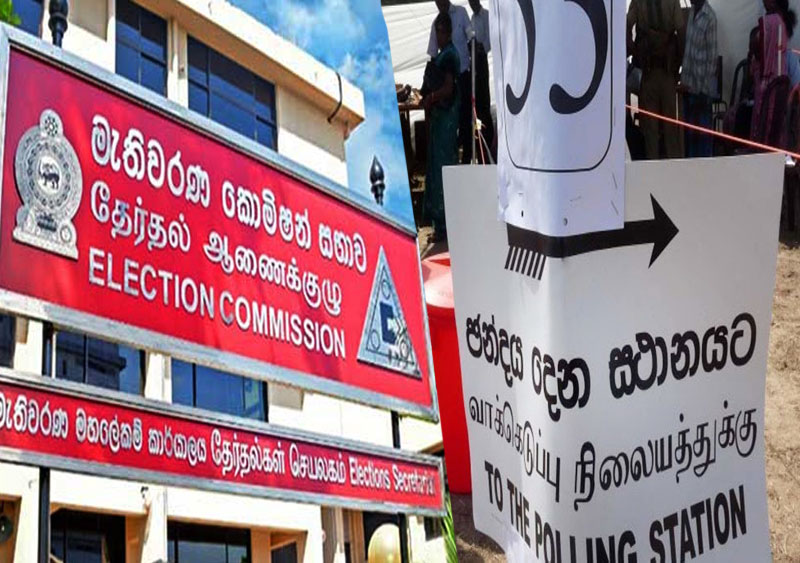

The Cabinet of Ministers has approved a proposal to prepare legal provisions to cancel the previous nominations submitted for Local Government elections and to call for fresh nominations.

Ilankai Thamil Arasu Katchchi (ITAK), the oldest Tamil political party in Sri Lanka, has decided to back Sajith Premadasa while some of their members have openly backed the Tamil common Presidential Candidate, P. Aiyanethiran, in the upcoming election. The ITAK has given a deadline to Ariyanethiran to withdraw from the race as he is a member of the ITAK Central Committee.
The ITAK has clarified that its primary reason for supporting Sajith Premadasa is their concern over Ranil Wickremesinghe’s association and accepting individuals such as Karuna, Pillaiyan, Viyalendran, and Douglas Devananda, who, according to ITAK, have acted against the Tamil population in both deeds and thoughts.
Despite being a Central Committee and ITAK President, Mavai Senathirajah, has also rendered his support to the Tamil common candidate and allegedly has refrained from endorsing Sajith Premadasa at the last minute, citing health reasons, a member of the ITAK told Ceylon Today. Later yesterday (2) Senathirajah had expressed that he is also backing Premadasa when he was questioned about his action. He was not available for a further comment.
Meanwhile, it has been revealed that many ITAK members personally support the common candidate, Ariyanethiran and there is speculation that he may secure over 100,000 votes.
The ITAK’s decision to back Sajith Premadasa stems from their belief that the National People’s Power (NPP) has had a long-standing hostile relationship with the Tamils. However, the Sajith Premadasa faction has emerged as a favourite among Tamil voters, marking a significant shift from their usual support for Premadasa and President Ranil Wickremesinghe, according to the member.
In the meantime, MP S. Sritharan has travelled to the United Kingdom to raise funds for Ariyanethiran, who hails from the Eastern Province.
During a meeting in London, Sritharan urged Tamils to vote for the common candidate.
“We are at a key juncture in our history,” Sritharan stated during his speech in London this week, as the Sri Lankan Presidential Elections approach. “General Elections are now key events for Tamil people. The election battlegrounds have become opportunities for our people to show that we are still here… Each election is a battleground,” a leading Tamil website quoted.
Sritharan has said: “It is from those Eastern homelands we are seeing this common candidate. So, what is our message to the spirits of the fallen?” “What are we going to say to those mothers of the disappeared?” the parliamentarian continued.
“We can’t take up arms again. How many of us know how to fire a gun! How many of us know how to make a bomb, to fire an artillery! Yet, in these 15 years not one of us have thought about taking up a gun, a bomb or firing a shell.”
“Over the 15 years we have shown to the world we are a peace-loving people. But, neither the world nor Sri Lanka are ready to give us a just political solution. They are asking us for goodwill.
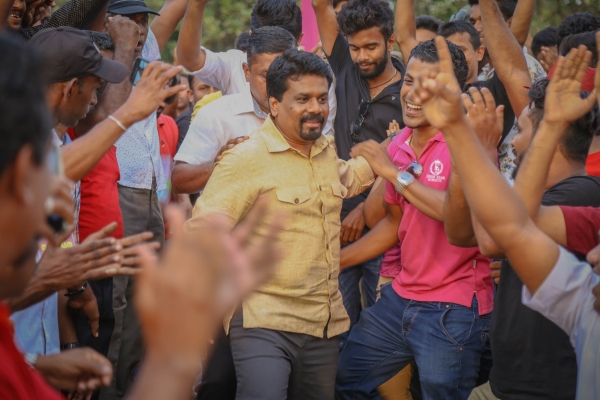
National People’s Power (NPP) Presidential candidate Anura Kumara Dissanayake has announced that his first action if elected as President of Sri Lanka on 22CSeptember will be to solidify his authority by dissolving Parliament.
Speaking to the Daily FT, Dissanayake emphasised that it is not only crucial to win the election but also to secure and establish control over power. NPP MP Harini Amarasuriya reiterated this plan in a media statement yesterday, confirming that the NPP intends to dissolve Parliament on 22 September, using constitutional powers granted to the President.
NPP MP Harini Amarasuriya firmly said: “We see no reason to engage with these corrupt persons even for a single day. The President has the constitutional authority to appoint a new Cabinet and secretaries, and on 22 September leader Anura Kumara Dissanayake will make the best decision for our country. We are fully prepared with the necessary arrangements.”
Amarasuriya explained that under an NPP Presidency, the existing Cabinet and Prime Minister would be immediately removed, and all necessary legal consultations have already been conducted. Speaking to the media, she dismissed any talk of forming a caretaker Government as an attempt to create further uncertainty. In response to questions from journalists, Harini Amarasuriya criticised Ranil Wickremesinghe’s Presidential campaign, suggesting that it is centred around creating confusion. When asked about Wickremesinghe’s recent statements, she questioned his ability to appoint a cabinet that upholds ethical principles, saying: “He has spoken of Theravada economics, but before that, he should be asked to appoint a cabinet capable of following the five precepts.”
Meanwhile, the NPP has also accused the Samagi Jana Balawegaya (SJB) led by Sajith Premadasa and pro-Wickremesinghe factions of collaborating against the NPP.
Dissanayake alleged that discussions are underway between the teams of President Ranil Wickremesinghe and Opposition leader MP Sajith Premadasa to undermine the NPP’s prospects in the upcoming 2024 Presidential election.
Dissanayake claimed that while the public might perceive a conflict between Wickremesinghe and Premadasa, their second-tier teams are reportedly engaged in talks to strategise against the NPP. He suggested that these discussions focus on collaborating to counteract the NPP’s recent progress. “They’re suggesting that it might be wiser for them to unite rather than remain divided and work together to reverse the NPP’s gains. Despite the outward appearance of conflict between Wickremesinghe and Premadasa, their teams are considering joint actions against us. However, it’s too late for such manoeuvres now,” Dissanayake said during an election rally in Homagama on Sunday.
Dissanayake’s comments follow the emergence of a video showing SJB MP S.M. Marikkar interacting with President Ranil Wickremesinghe at a public event believed to be a funeral. In the video, the two are seen discussing the NPP, adding fuel to Dissanayake’s claims of covert discussions aimed at undermining the NPP’s electoral chances.
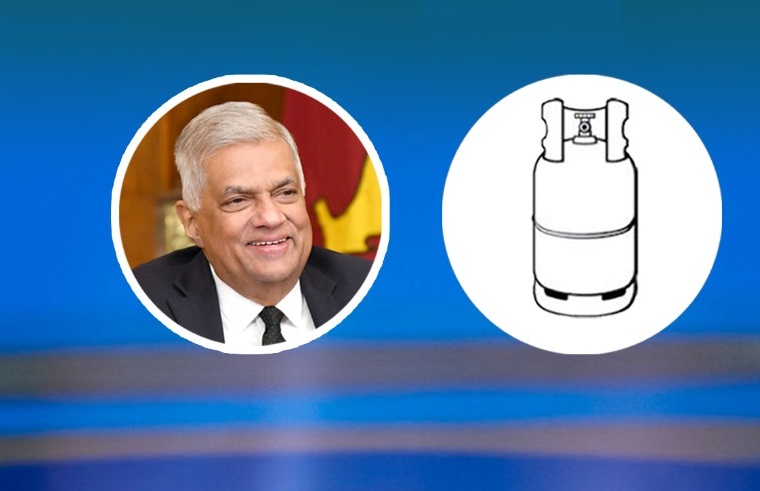
President and Independent Presidential Candidate Ranil Wickremesinghe emphasizing the need to strengthen the rupee and create jobs, outlined his administration’s commitment to generating 100,000 new jobs in the coming year.
He highlighted initiatives focused on the private sector and self-employment, including providing training wages to incentivize companies to retain employees.
“We are focusing on the private sector and self-employment, sending personnel to private companies while providing training wages. These initiatives are designed to incentivize companies to retain these employees,” he explained.
Wickremesinghe also announced plans to direct personnel towards jobs in smart agriculture, aiming to transform Sri Lanka into an export-driven economy. He emphasized the importance of developing tourism, attracting new investments, and boosting export trade, with a dedicated plan already in place.
“Currently, we have the Biyagama A and B investment zones, and in the next phase, we will introduce Keragala as Zone C, covering approximately 120 acres. There are also 60-70 acres, which will be allocated to companies for starting agricultural industries, creating numerous job opportunities,” he detailed.
The President urged supporters to spread his message, particularly in the Gampaha district, where comprehensive development plans are underway.
He also addressed the divide within the United National Party (UNP) and the Samagi Jana Balawegaya (SJB), urging UNP members to vote for him.
“To the UNP members, I want to say that now we have a divide with SJB. But remember, a vote for Sajith is essentially a vote for Anura. Encourage the UNP supporters to vote for me. Cast your vote for the ‘Gas Cylinder’, because if we don’t, this country could explode just like a gas cylinder,” Wickremesinghe concluded.
President and Independent Presidential Candidate Ranil Wickremesinghe also took aim at his political rivals, Anura Kumara Dissanayake and Sajith Premadasa, for their promises to reduce taxes.
Wickremesinghe warned that such measures could lead to a decline in government revenue, drawing parallels to the economic turmoil experienced under former President Gotabaya Rajapaksa, which saw the rupee plummet to alarming levels against the dollar.
“Anura and Sajith claim they will reduce taxes. But when taxes are reduced, government revenue declines. President Gotabaya Rajapaksa did the same, and as a result, people ended up in long queues. Do we really want to see the rupee fall to 370 or 400 against the dollar again? I say to them: stop making false promises,” Wickremesinghe stated.
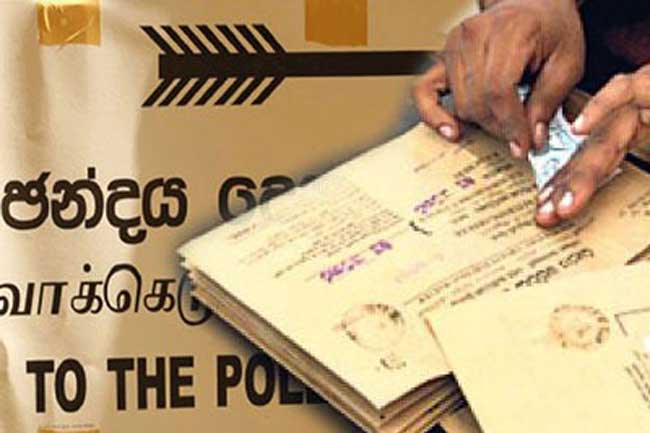
The Election Commission says that all preparations are complete for postal voting of the 2024 presidential election.
Chairman R.M.A.L. Rathnayake highlighted that, according to the plan, postal voting will take place on 4th September at the district secretary offices, election offices, and police stations.
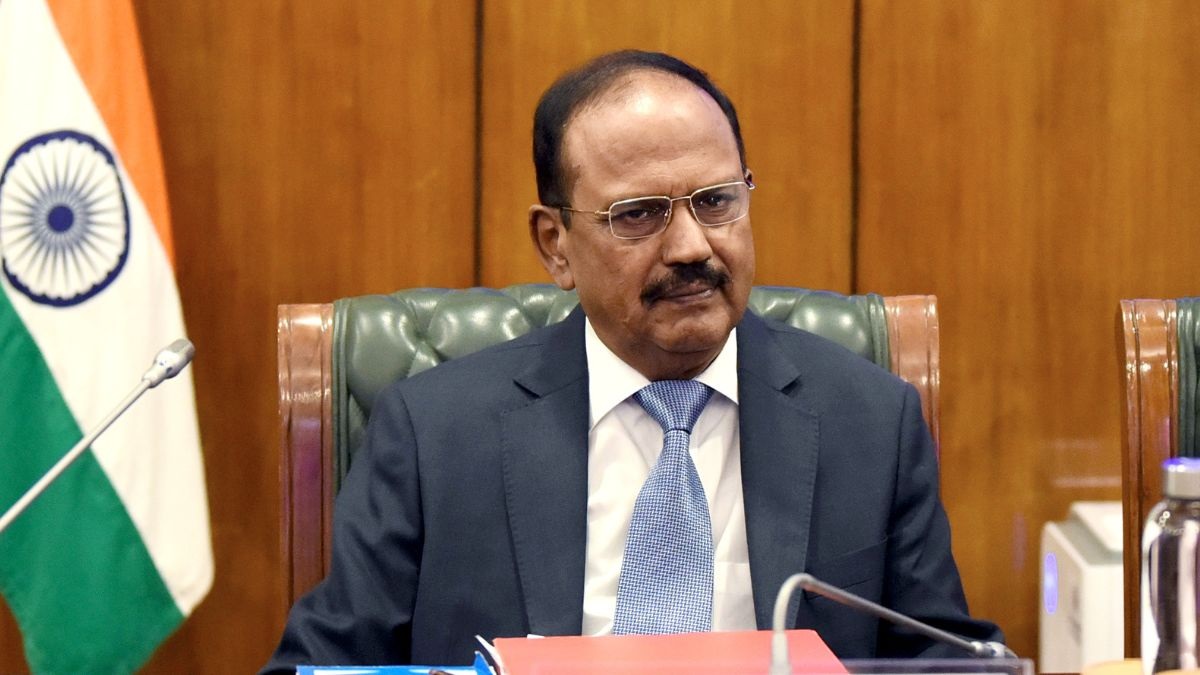
The presence of Indian National Security Advisor Ajit Doval in Colombo in late August 2024, first came to light after he was pictured with Former Sri Lankan High Commissioner to India, Milinda Moragoda.
Moragoda presented a copy of the Pathfinder Foundation’s Study Group Report on India-Sri Lanka Physical Connectivity to Ajit Kumar Doval, National Security Advisor of India.
The Study Group report which was recently launched, provides a comprehensive blueprint for physical connectivity in the sectors of road, rail, electricity and petroleum.
The ultimate goal of this initiative is to increase Sri Lanka’s annual economic growth rate from 3 to 6% through economic integration between the two countries.
Thereafter, a crucial meeting between Indian National Security AdvisorAjit Doval and President Ranil Wickremesinghe unfolded at the Presidential Secretariat in Colombo. The discussions centred around enhancing economic cooperation, strengthening defence ties, and fostering regional collaboration between the two neighbouring nations.
The meeting underscored the importance of the strategic partnership between India and Sri Lanka, exploring avenues to deepen economic engagement and fortify defence cooperation. The dialogue also touched on broader regional issues, reflecting the shared interests and common challenges faced by the two countries in maintaining stability and security in South Asia.
Meanwhile, the Member States of the Colombo Security Conclave (CSC) – Sri Lanka, India, Maldives, and Mauritius signed the Charter and Memorandum of Understanding (MoU) for the establishment of the CSC Secretariat at the Presidential Secretariat.
The CSC s core objective is to promote regional security by addressing transnational threats and challenges of common concern to the Member States.
There are five pillars of cooperation under the CSC namely Maritime Safety and Security; Countering Terrorism and Radicalisation; Combating Trafficking and Transnational Organised Crime; Cyber Security and Protection of Critical Infrastructure and Technology; and Humanitarian Assistance and Disaster Relief.
Doval was also seen meeting with other political figures in Sri Lanka, includign two candidates running for President in the September 21 election.
India’s National Security Advisor Ajit Doval, met with National People’s Power (NPP) leader and presidential candidate Anura Kumara Dissanayake and Samagi Jana Balavegaya Presidential Candidate Sajith Premadasa.
Indian National Security Adviser Ajit Doval also met with representatives of North East Tamil political parties.
The meeting was attended by prominent leaders including M.A. Sumanthiran and S. Sridharan of the Ilankai Tamil Arasu Kachchi, Selvam Adaikalanathan of the Tamil Eelam Liberation Organization, Dharmalingam Siddarthan of the People’s Liberation Organisation of Tamil Eelam, and Selvarajah Kajendren of the Tamil National People’s Front.
The fielding a common Tamil candidate was discussed at the meeting.
Ajit Doval, one of India’s most celebrated spymasters, serves as the National Security Advisor (NSA) for a third term.
In 2019, he became the first NSA to serve two terms. Known for his extensive field work as well as his strategic leadership, the 1968-batch IPS official, who belonged to the Kerala cadre, is also the first policeman to be decorated with the Kirti Chakra, the second-highest peacetime gallantry award after Ashok Chakra.
While a third term for Doval can be seen as part of the continuity in the Narendra Modi government in which top Union ministers have retained their portfolios, Doval’s consecutive third term indicates his importance for the Modi government which has adopted aggressive posture against cross-border terrorism including surgical strikes inside Pakistan. However, Doval has recently helmed important negotiations with his American counterpart which span across technological, strategic, business and economic interests, pointing at an enlarged role for Doval in the Modi government’s foreign affairs.
When Modi became the prime minister in 2014, it is said, the first file Modi’s principal secretary took to him for signing was of Doval’s appointment as the National Security Advisor (NSA). Ever since, Doval has been Modi’s right-hand man.
In India, most NSAs such as Brajesh Mishra for Atal Bihari Vajpayee, and JN Dixit, Shyam Saran and SS Menon for Manmohan Singh, had foreign service backgrounds, but Doval, a former Intelligence Bureau chief, is only the second NSA after MK Narayanan to have a professional career in intelligence. Narayanan too had headed the IB.
A 1968 batch IPS officer who spent virtually all his career in IB, Doval is credited by security experts with intelligence successes like infiltrating the Mizo National Army and planning key Myanmar- and China-related missions.
His intelligence work was also crucial in Operation Black Thunder, the mop-up operation that followed Operation Blue Star, the first big action against Punjab militants in Golden Temple.
Undercover work in Pakistan and the tough job of being one of the negotiators in the 1C-814 hijacking episode added sufficiently to his CV so that when BJP lost power in 2004, the Congress government appointed him as IB chief, despite Doval’s perceived closeness to BJP leaders.
He worked with the IB for more than 33 years in different roles and in areas including the Northeast, Jammu and Kashmir, Sikkim and Punjab. He served in the United Kingdom as well.
Sources: PMD, Indian Media
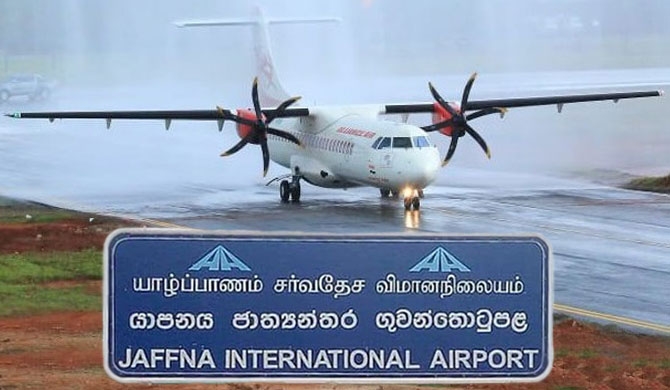
IndiGo has inaugurated daily direct flights from Chennai to Jaffna, marking its second destination in Sri Lanka after Colombo. The new service, starting on Sunday, will enhance the airline’s international network to 34 destinations and overall network to 122.
Vinay Malhotra, Head of Global Sales at IndiGo, said that the route aims to bolster cultural and trade relations between India and Sri Lanka, promising a flight duration of just 75 minutes. Last year, the Chennai-Jaffna route saw significant demand, with over 21,000 passengers.
The Chennai-Jaffna flight will depart at 13:55 and arrive at 15:10, while the Jaffna-Chennai flight will leave at 15:55 and reach Chennai at 17:10.
The Illankai Tamil Arasu Kachchi (ITAK) is facing internal discord following a surprising announcement by M.A. Sumanthiran that the party will support Sajith Premadasa in the upcoming presidential election. This declaration, made on Sunday, has been contradicted by ITAK Leader Mavai Senadhiraja, who claimed he was unaware of such a decision.
Sumanthiran detailed that the ITAK Central Working Committee, after a five-hour meeting in Vavuniya, decided not to support P. Ariyanethran, the so-called Tamil common candidate. The committee also resolved to ask Ariyanethran to withdraw from the race and to back Premadasa’s candidacy.
However, Senadhiraja, who missed the meeting due to illness, expressed surprise at the announcement. He stated, “I am not aware of the Party’s decision to support presidential candidate Sajith Premadasa,” pointing out a significant communication lapse within the party.
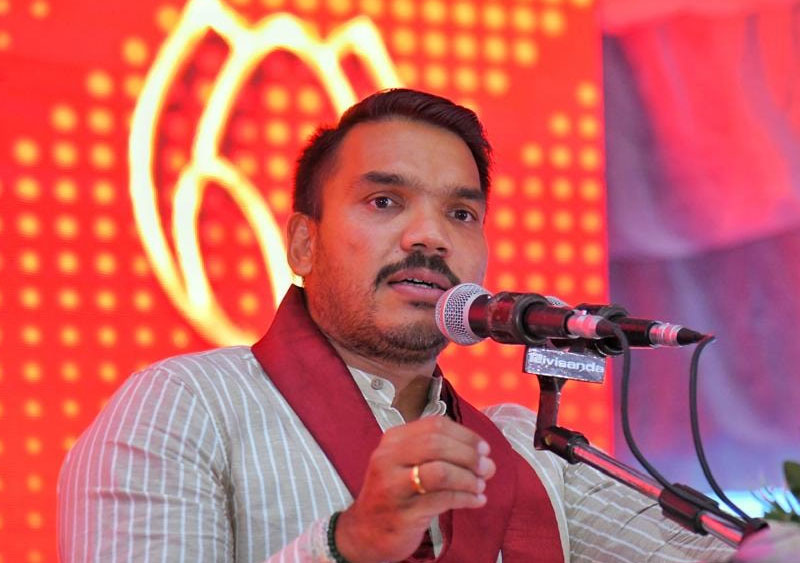
The Sri Lanka Podujana Peramuna’s (SLPP) presidential candidate Namal Rajapaksa’s election manifesto for the 2024 Presidential Election was officially launched in Colombo, a short while ago.
The ceremonial event of unveiling the manifesto titled ‘Namal Dekma’ commenced at the ITC Ratnadeepa Hotel in Colombo this morning (02), with the arrival of Namal Rajapaksa and former President Mahinda Rajapaksa at the venue.
The manifesto has focused on four main areas – state priorities, innovation, investment and independence.
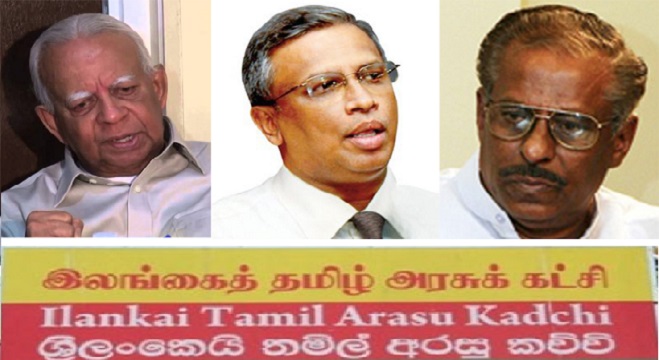
Ilankai Tamil Arasu Kachchi (ITAK) senior leader Mavai Senathirajah said the party has not made a formal decision to support Opposition Leader Sajith Premadasa at the upcoming Presidential election.
He clarified that the recent announcement regarding ITAK’s support for Premadasa was made solely by MP M.A. Sumanthiran and it does not reflect an official party stance.
He said that key party leaders, including MPs Shivagnanam Sritharan and Charles Nirmalanathan, as well as senior members like S. Yogeshwaran and G. Srinesan, were not present at the meeting where this decision was purportedly made.