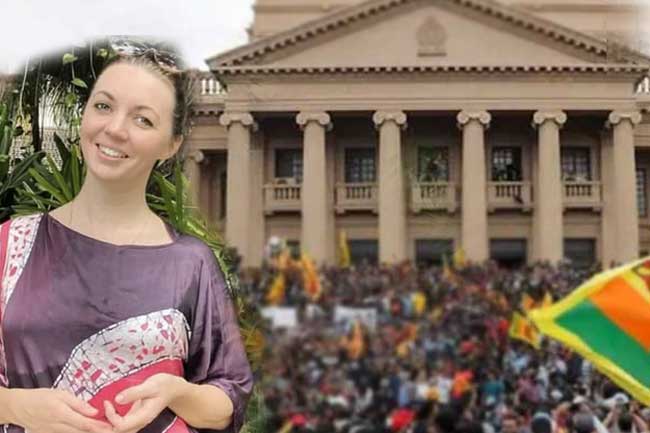
Former TNA leader R. Sampanthan passes away

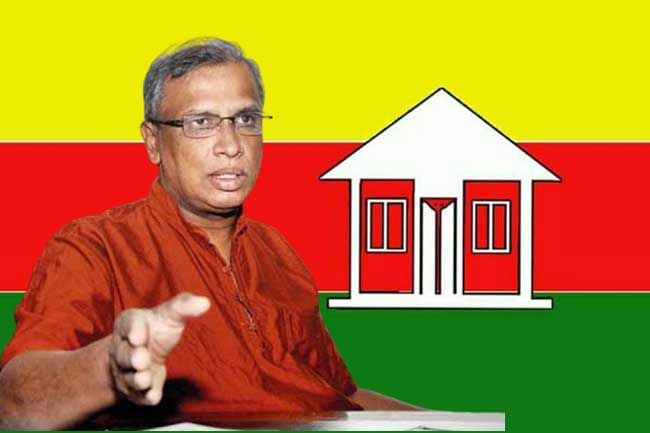
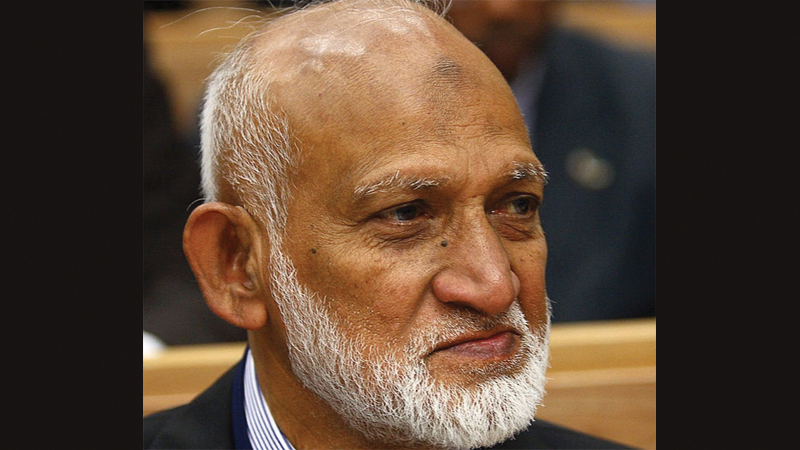
Former Tamil National Alliance (TNA) leader and former Opposition Leader MP R. Sampanthan has passed away at the age of 91.

He has reportedly passed away while receiving treatment at a private hospital in Colombo.

A veteran Tamil politician and prominent figure in country’s main Tamil alliance – Ilankai Tamil Arasu Kadchi (ITAK), his political career spanned six decades, with his first stint in the Sri Lankan parliament starting in 1977.

Sampanthan was the incumbent MP for Trincomalee District and has served in five parliaments since 1977.

A lawyer by profession, Sampanthan led the Tamil National Alliance since 2001. He was a Member of Parliament continuously from 2001 until his death in 2024, and previously served as a MP from 1977 to 1983 and from 1997 to 2000.

He was the Leader of the Opposition from September 2015 to December 2018.

In April this year, the Parliament had granted the former TNA leader and Trincomalee District MP leave of three months from attending Parliament sessions as he was receiving medical treatment.

Born on February 5, 1933, R. Sampanthan commenced his career as a lawyer.

In the 1977 general election, he was elected from the Trincomalee district, marking the beginning of his political journey.

He served as a Member of Parliament from 1977 to 1983 and again from 1997 to 2000.

From 2001 until his passing, R. Sampanthan remained a Member of Parliament and notably became the 14th Opposition Leader in the Sri Lankan Parliament, serving in the position from 2015 to 2018.

Following A. Amirthalingam’s tenure as Leader of the Opposition in 1977, R. Sampanthan became the second Tamil National Opposition Leader in Sri Lanka’s parliamentary history.

Posted in Uncategorized

Do the Tamil Critics of the 13th Constitutional Amendment have the Political Strength to Force a Future Govt to Introduce a Devolution Scheme better than what is Available in the Provincial Councils?

Sri Lankan Tamil politics has become more complicated due to contradictions among Tamil political parties regarding what position northern and eastern Tamils should take in the upcoming Presidential Election.

It makes no sense to expect Tamil parties to be inclined to act unitedly or to come to a unified position to find a solution to the national ethnic problem.

The idea of fielding a Tamil common candidate at the Presidential Election has occupied Tamil politics in recent times.
Though the Democratic Tamil National Alliance (DTNA), consisting of a few Tamil parties whose leaders formerly were prominent members of armed militant groups, have decided to support the attempts to field a common Tamil candidate, the initial enthusiasm among some Tamil parties is now absent in this regard.

There are conflicting views not only between parties but also within each party regarding the common candidate.

Seminars were first organised by a civil society organisation called ‘Makkal Manu’ (People’s Petition) to mobilise support for the idea of fielding a Tamil common candidate. At present, a new civil society organisation called ‘Tamil Makkal Boduchabai’ (Tamil People’s General Assembly) is vigorously spearheading that campaign.

It seems that prominent members of the Tamil People’s General Assembly believe that if they can get the broad support of the Tamil people in the north and the east, they will be able to exert pressure on the Tamil parties to support a common candidate.

Since there has never been a coherent civil society group among the Tamil people, attempts to build on a civil society organisation to prevail upon Tamil politicians to act effectively is welcome.

However, their goal must be relevant to the domestic and international political conditions in the post-war period and to the present-day realities of the Tamil people in the north and east. There is no point in trying to rally Tamil people behind mere sentimental slogans.

Centrepiece of Tamil nationalism

It is said that the idea of a Tamil common candidate was floated with the aim of turning the Presidential Election into a sort of referendum in the north and east to show southern Sri Lanka and the world what the Tamil people’s current position is on the national ethnic problem.

While the Tamil parties are faltering without taking a firm decision, the Tamil People’s General Assembly has been campaigning on some principles such as the sovereignty of the Tamil people, the traditional homeland, and the unification of the people to build them as a nation.

As the campaign by the new civil society organisation in support of the idea of a common candidate is closely identified with the cause of Tamil nationalism, many Tamil politicians are frequently making supportive comments, keeping in mind their future political prospects.

It is also true that some politicians believe that forging a consensus and finding a suitable common candidate will ultimately be impossible, but they are dubiously talking in support of the move.

Speculations are rife about the possible internal and external elements behind this move. It was suspected from the outset that this was a ploy to ensure that a particular presidential candidate in the south did not get substantial votes of the Tamil people.

The Tamil People’s General Assembly is committed to projecting the common candidate as the contemporary centrepiece of Tamil nationalist politics. But they are merely talking about theories and have yet to come out with clearly-defined political demands.

One wonders whether those who are advocating the idea of fielding a common candidate have any plan for the next step if the people of the north and east regard the Presidential Election as a referendum and give a ‘mandate’.

A ‘political Ascetic t’?

It is important to remind the Tamil people, especially the youth today, that after the Vaddukoddai Resolution, the leaders of the Tamil United Liberation Front (TULF), who asked the northern and eastern Tamil people to give them a mandate for a separate Tamil state in the July 1977 General Elections, had no plan on what to do next.

They captured 18 Tamil-dominated constituencies and TULF Leader Appapillai Amirthalingam became the Opposition Leader in Parliament. What happened after that was the recent history of Lankan politics. Politicians and new civil society leaders who speak in favour of the idea of a common candidate should be aware of the danger of a similar history repeating itself.

At the same time, the views expressed by them regarding the process of selecting the common candidate are very interesting. It is said that the common candidate should not be a politician and should only be a symbol of the message that the Tamil people want to convey to the south and the world.

Meanwhile, it is also expected that he will not show any interest in politics after the election, i.e. the common candidate must be a ‘political ascetic’. What is the guarantee that the proposed common candidate in the Presidential Election will not show interest in politics if he gets a significant number of votes from the Tamil people? Can such a ‘political saint’ be found in Tamil society?
On a theoretical basis, if the common candidate gets significant votes in the north and east, the possibility that he may be identified as the future leader of the Tamil people cannot be ruled out. Leaders of Tamil political parties may have suspicions about this. That is why many of them are not enthusiastic about the matter of a common candidate.

The possibility of the Tamil People’s General Assembly becoming a new political party cannot be easily ruled out, depending on the support the common candidate gets among the Tamils.

Perverse trends

When Indian Minister of External Affairs Subrahmanyam Jaishankar, who was in Colombo last week, met the leaders of the Tamil political parties, it is learnt that views were also exchanged on the issue of the Tamil common candidate. The conflict between the leaders of the Ilankai Tamil Arasu Katchi (ITAK) regarding the common candidate has also been exposed in front of Jaishankar.

The leaders of other Tamil parties have said that the issue of a common candidate is still at a discussion stage and that no final decision has been taken. The Indian Minister did not comment on it, only asking them if they were serious about it.
At the same time, there is also a tendency to brand those who express opinions against the idea of a common candidate as traitors to the cause of Tamil nationalism.

This is nothing but a continuation of a perverse political trend that has been dominant in Tamil politics for a long time.
If Tamil nationalism is to be strong, the existence of the traditional Tamil homeland and its people is essential. Tamil people should have hope that if they continue to live in their own territory, there will be a good future for themselves and their descendants.

But, unfortunately, such a situation does not exist today in the north and east. Most Tamils tend to migrate to the West. This situation poses a serious threat to the demography of the Tamil territory. It would be useful to conduct a survey to find out how many Tamils in the north and east prefer to continue living in their own land instead of going abroad.

A civil society organisation engaged in mobilising support for the idea of fielding a common Tamil candidate would do a more useful job if it focused on explaining to the Tamil people the dangers of Tamils’ interests in migration.

This being the case, during the meeting with Jaishankar, parties other than the Tamil National People’s Front (TNPF) insisted on the need to hold Provincial Council Elections and fully implement the 13th Amendment to the Constitution.

Opposition Leader Sajith Premadasa, National People’s Power (NPP) Leader Anura Kumara Dissanayake, and President Ranil Wickremesinghe of the United National Party (UNP) – the main candidates for the Presidential Election – had recently pledged that their future governments would implement the 13th Amendment.

Devolution and political wisdom

The important question is how the Tamil parties will approach the new situation today where all three main prospective presidential candidates are in favour of the implementation of the 13th Amendment. While saying that the amendment is not a solution to the national ethnic problem, the Tamil parties are demanding the Government to implement it and conduct Provincial Council Elections as the first step in the journey towards a permanent political solution.

The Tamil parties cannot think that their work is over after making such a demand. It is necessary for the leaders of the Tamil parties to have the political wisdom to wisely use the opportunity to convince southern Sri Lankan Sinhalese politicians about the value of devolution.

It would be a big deal if the positions adopted by the main candidates could significantly change the majority community’s negative perception of the 13th Amendment.
With all three main presidential candidates supporting the implementation of the 13th Amendment, it would be prudent for the Tamil parties to ask the other two for a pledge not to oppose the implementation of the same if any one of them wins and comes to power.

Some Tamil parties ask whether these candidates propose a federal system of government as a solution to the national ethnic problem in their election manifestos and whether they will agree to change the unitary nature of the Constitution. One does know what to say about their political wisdom in the present context.

We hope that the leaders of the Tamil parties have not forgotten that Jaishankar had asked them during an earlier visit to Sri Lanka how they could expect a federal solution from Colombo governments which were not ready to implement even the 13th Amendment.

There are politicians who feel that because the Liberation Tigers of Tamil Eelam (LTTE) opposed the 13th Amendment, it is their ‘moral obligation’ to continue to oppose it for the sake of Tamil nationalism. Some politicians and civil society leaders say that there is no point in talking about the amendment and that they are not going to accept it even as an interim arrangement.

Veteran Tamil leader Rajavarothiam Sampanthan, who had once said that they would not touch the amendment even with a stick, has been among the first to stand in the forefront demanding its full implementation now.

This columnist is no fan of the 13th Amendment. But just one question for those who are dead set against the amendment: whether we like it or not, the only legal arrangement for devolution of power in the Sri Lankan Constitution today is the 13th Amendment. Do you have the political strength to force a future government to introduce a better devolution?

Sri Lankan Tamils should no longer be a group of people who are repeatedly trying failed experiments and expecting a different result every time.

Courtesy:Sunday Morning By Veeragathy Thanabalasingham

Mahinda Rajapaksa meets Xi Jinping

Former President Mahinda Rajapaksa met Chinese President Xi Jinping in Beijing on Saturday on the sidelines of the 70th anniversary of Five Principles of Peaceful Coexistence.

During their discussions, Xi and Rajapaksa discussed areas of mutual interest and the development projects going forward.

Rajapaksa in a statement on X said he was ‘thrilled’ to meet his old friend Xi Jinping on the sidelines of the anniversary celebrations and said together, countries should strive to build a peaceful and cooperative world.

Rajapaksa is in Beijing on a four day official visit on an invitation extended by Foreign Minister Wang Yi and during his stay he held discussions with leading Chinese officials.

China last week agreed on a debt restructuring agreement with Sri Lanka along with the Paris Club and India.

Several Chinese arrested in Sri Lanka over online scam

Several Chinese nationals have been arrested in Sri Lanka over an online scam, the Police said.

The Police said that at least 30 Chinese were arrested by the Criminal Investigations Department (CID).

According to the Police, the Chinese were arrested at a hotel in Negombo.

The arrest comes after over 130 Indians linked to a major online financial scam had been arrested in Sri Lanka.

The Police said that 137 Indians were arrested by the Criminal Investigations Department (CID).

The Indians, arrested from several parts of the country, are part of a major organised online financial scam.

NEC Issues Statement to Government Institutions in Preparation for Presidential Election

The National Election Commission (NEC) has issued a directive to various government institutions to commence preparations for the upcoming presidential election. Chairman of the NEC, R.M.A.L. Rathnayake, announced that the Government Press, Police, Ceylon Electricity Board, National Water Supply and Drainage Board, and other relevant bodies have been notified through an official letter.

The directive also includes instructions for District Assistant and Deputy Election Commissioners to compile statistics on the number of officers and vehicles needed for the election.
These ssioners are tasked with coordinating polling station preparations with Grama Niladhari Officers.

Confirming the NEC’s directive, Government Printer Ganga Kalpani Liyanage stated that preparations are in progress and said that the cost estimates for election-related printing are being calculated, taking into account the increased prices of raw materials compared to previous years.

Posted in Uncategorized

Hirunika Taken to Welikada Prison from Colombo HC Premises : Lawyers Hopeful About Bail on Appeal

Former Member of Parliament Hirunika Premachandra was taken to Welikada Prison today following her sentencing to three years of rigorous imprisonment by the Colombo High Court. Premachandra was escorted by prison officials from the courthouse premises to the prison.

The conviction stems from an incident in 2016, where Premachandra was found guilty of abducting a youth in a Defender vehicle. The case has been a high-profile one, drawing public and media attention.

Premachandra’s legal team has already filed an appeal with the Court of Appeal, challenging the High Court’s decision. They remain confident that she will be granted bail pending the appeal process.

Posted in Uncategorized

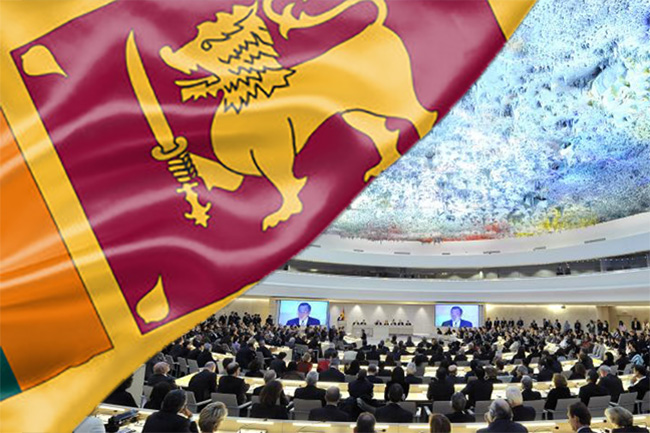
UN police summit: Sri Lanka offers specialized police teams and experts to counter global threats

Sri Lanka has informed the United Nations (UN) that it is willing to contribute police gendarmerie and criminal justice experts with experience and skills to counter the growing challenges to international peace and to share the knowledge and experience with any nation.

“I am confident that the Sri Lanka formed police unit, which is at Readiness Level 3, stands by with the capacity to handle the emerging security landscape,” Sri Lanka’s Public Security Minister Tiran Alles said, addressing the fourth United Nations Chiefs of Police Summit (UNCOPS 2024).

He said that organized crime, gang violence and illicit economies are rapidly on the rise and that this is becoming a growing challenge to international peace.

“It is therefore imperative that the United Nations consider deploying specialized police teams with experience and skills to counter this menace,” he said.

“Sri Lanka is willing to contribute police gendarmerie and criminal justice experts with experience and skills to counter such threats and to share the knowledge and experience with any host nation. Sri Lanka stands ready to partner in this noble endeavour,” he said.

Below is the Full Statement by Minister Tiran Alles at the UN Chiefs of Police Summit:

“The threats to peace have become more diverse and complex than ever before. Violent conflicts have been on the rise during the last two decades.

Protection of civilians has become a critical concern in many conflict-ridden areas with the humanitarian landscape becoming increasingly hostile with non-traditional threats.

New Advanced technologies have opened new domains of security concerns, such as cyber security and autonomous weapon systems, together with the abuse of ICT for criminal purposes and the induction of mercenaries.

Be that as it may, permit me the honor of congratulating the UN Peace operations that have effectively risen to meet the varying challenges in the theatres of conflict.

In this backdrop, Sri Lanka appreciates the pit and substance of the Secretary General’s new agenda for peace.

My delegation recalls with pride that Sri Lanka has been a committed contributor to UN Peacekeeping since the deployment of military observers at the end of the ‘Suez War’.

More than 21,000 Sri Lankan peacekeepers have played an important role in many peacekeeping operations to date.

I am confident that the Sri Lanka-formed police unit, which is at Readiness Level 3, stands by with the capacity to handle the emerging security landscape.

Organized crime, gang violence and illicit economies are rapidly on the rise. This is becoming a growing challenge to international peace.

It is therefore imperative that the United Nations consider deploying specialized police teams with experience and skills to counter this menace.

Sri Lanka is willing to contribute police gendarmerie and criminal justice experts with experience and skills to counter such threats and to share the knowledge and experience with any host nation. Sri Lanka stands ready to partner in this noble endeavour.”

Posted in Uncategorized

UNP and SLPP group join hands to launch President’s election campaign in Matara today

The United National Party (UNP) and a section of the Sri Lanka Podujana Peramuna (SLPP) will jointly carry out the President’s election campaign islandwide starting from Matara today afternoon under the theme ‘Ekwa Jayagamu’ (Victory through Unity).

President Ranil Wickremesinghe, who has yet to announce himself as the common candidate for the scheduled presidential election, will preside over the meeting at the Mahinda Wijesekara playground, named after the father of Power and Energy Minister Kanchana Wijesekara, who
has taken over the responsibility of organising the first of such meetings.

The UNP’s grassroots machinery has been unable to organise what is expected of them to boost the party leader’s prospects in the forthcoming election.

In most of the districts, it would be a similar case where UNP members would be jointly carrying out campaigns.

In the Kandy district, for instance, former Mayor Kesara Senanayake and ex-Provincial Council member Shanthini Kongahage from the UNP will be jointly campaigning with SLPP State Ministers Dilum Amunugama, Lohan Ratwatte and Parliamentarian Mahindananda Aluthgamage.

In the Gampaha district, Minister Prasanna Ranatunga this week summoned a meeting of district politicians. He praised President Wickremesinghe for enabling SLPP members to get back to politics after the anti-government violence that was unleashed against them on May 9, 2022. Minister Ranatunga is set to steer the President’s campaign in the crucial district.

Many Sri Lanka mercenaries have become Russian citizens: Foreign Minister

Many Sri Lankan mercenaries fighting in the Ukraine front have become Russian citizens, making it difficult to give them diplomatic support, Foreign Minister Ali Sabry said.

So far 446 complaints have been lodged by family members asking for government help to bring back menfolk trapped in the Ukraine warfront, he said.

“They have taken Russian citizenship at the moment,” Sabry told reporters on Friday explaining the difficulties faced by Sri Lanka in getting back citizens.

He said “many” appeared to have become Russian citizens.

“If you take another country’s citizenship you lose Sri Lankan citizenship, so if you are no longer a citizen of Sri Lanka we lose the right to represent you, that is the problem, unless they apply for dual citizenship,” Minister Sabry said.

While some appeared to have been misled that they would be camp helpers in support roles and pushed into combat, others may have known the actual stakes involved, he said.

Sri Lankans have been recruited to fight for Russia in the Russia-Ukraine war being promised a large, salary, Russian citizenship, compensation for death and injury.

Returnees have estimated that around 800 Sri Lankans were working for mercenary companies in Russia and perhaps 200 had died.

Minister Sabry said he was unable to confirm the numbers.

Posted in Uncategorized

MR leaves for China to hold high level discussions

Former President Mahinda Rajapaksa left for a four day official visit to China today morning and will hold discussions with Chinese Prime Minister Li Qiang and Foreign Minister Wang Yi during his stay, the Daily Mirror learns.

Sources said that Rajapaksa’s visit was on an invitation by Minister Wang Yi to attend the commemorative events marking the 70th anniversary of the Five Principles of Peaceful Coexistence in Beijing.

The commemorative events will be attended by China’s President Xi Jinping, Prime Minister Li Qiang, Foreign Minister Wang Yi and other leading CPC members.

On the sidelines of the events, Rajapaksa will hold discussions with Prime Minister Li Qiang and Minister Yi on areas of mutual interest and also development projects which will benefit Sri Lanka. Rajapaksa will also discuss Sri Lanka’s debt restructuring agreement and express his gratitude for the assistance given by China and the Exim Bank of China.

Rajapaksa travelled to Beijing through Singapore and will return back on July 1.