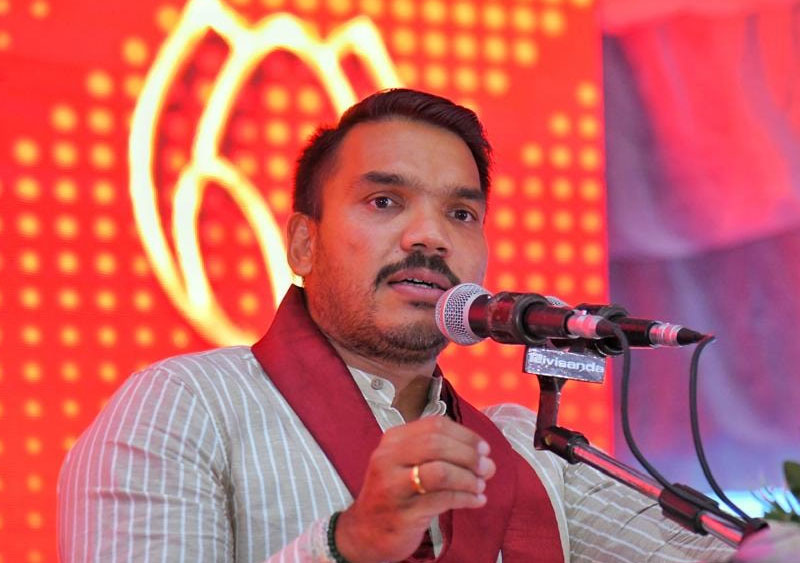
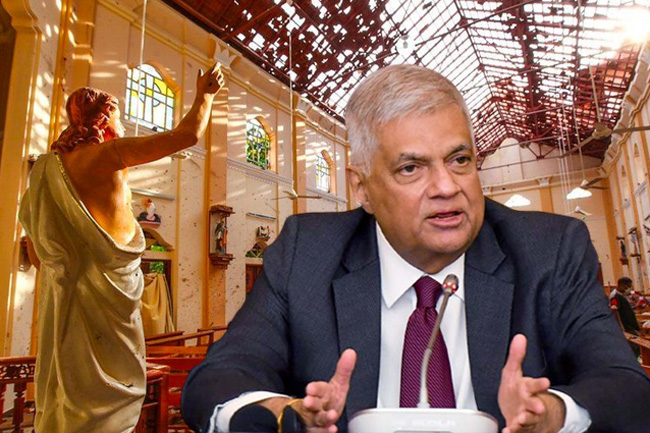
Nominations have closed for the long awaited 2024 presidential election. 39 candidates are in the fray.It is widely acknowledged by the press and public that the chief presidential contenders are incumbent president Ranil Wickremesinghe,leader of the opposition Sajith Premadasa and JVP/NPP leader Anura Kumara Dissanayake. Two others expected to make a mark are Namal Rajapaksa and Dilith Jayaweera.
However the icing on the winning candidate’s cake would be the minority vote. In a keenly contested poll that is likely to trifurcate the Sinhala vote in near equal proportion, the minority community vote could very well provide the necessary numbers to clinch victory. In such a situation the voting pattern of the premier numerical minorities assumes crucial importance.
Sri Lanka’s last official census was taken in 2012. According to that census, Sri Lanka’s majority ethnic community the Sinhalese comprises 74.9 % of the island nation’s population. Numerically, the second largest ethnicity is the Sri Lankan Tamils who are 11.1% of the population. The third largest ethnicity is the Sri Lankan Muslims or Moors who comprise 9.3% of the population. The fourth largest ethnic group is the Tamils of Indian origin known as “Malaiyagath Thamizhar” (Hill Country Tamils) who are 4.1%.
The three numerical minorities namely the Sri Lankan Tamils, Muslims and Indian Tamils together are 25.5% of the population. Since the people of all districts vote together in the Presidential elections, the entire island is transformed into a “single” constituency with a 74.9% Sinhala majority and 25.5 % non – Sinhala minorities.
It is against this backdrop that this week’s column examines the impact of the 2024 presidential election on Sri Lankan Muslim politics. The focus of this two-part article would be on the three Muslim political parties represented in Parliament and their response towards the presidential poll. The roles played by Tamil political parties would be discussed in future articles.
Three Muslim Parties
While there are Muslim MPs from different political parties in the current Parliament , there are only three Muslim Political parties represented in Parliament. They are the Sri Lanka Muslim Congress (SLMC) led by Rauff Hakeem MP, National Congress(NC)led by AHM Athaullah MP and All Ceylon Makkal Congress(ACMC) led by Rishad Bathiudeen MP. Their respective tallies in Parliament after the 2020 elections were SLMC – 5 ACMC – 4 and NC-1.
Of these parties the SLMC and ACMC have thrown in their lot with SJB leader Sajith Premadasa. They have joined the “Samagi Jana Sandhanaya (SJS) alliance and have pledged their support for Sajith Premadasa in the presidential election. The NC is committed to Ranil Wickremesinghe and will back him at the presidential poll.
In a bizarre turn of events , several Muslim MPs who were elected to Parliament on the SLMC or ACMC ticket have revolted against their party decision to support Premadasa. These MPs have declared their support for Wickremesinghe.The 2024 presidential election therefore has created a split in the main two Muslim parties with some MPs defying their leaders.
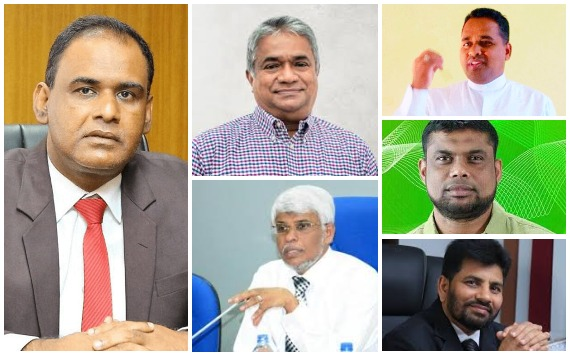
Among these are three MPs from the ACMC and one from the SLMC.There is uncertainty over another Muslim Congress MP. The SLMC leadership however has commenced disciplinary action against both MPs. One of these MPs has been appointed as a minister by President Wickremesinghe. The three MPs who were affiliated to the ACMC conducted a press conference where they were sharply critical of leader Bathiudeen.
While the SLMC and ACMC are caught up in the Ranil-Sajith divide, realities on ground indicate that a sizeable number of Muslims will support the JVP/NPP leader Anura Kumara Dissanayake at the elections. It appears that even as the Muslim party leaders are losing their hold over their MPs, the Muslim parties themselves are beginning to lose their grip on their voters.
The Muslim public is also much bemused by this recent turn of events. Although the SLMC and ACMC were part of the Samagi Jana Balavegaya(SJB) alliance at the 2020 elections and remained as part of the Sajith-led opposition in Parliament, both parties were expected to cross over to President Wickremesinghe’s side when the presidential poll took place. That did not happen. Both parties remained with Sajith and joined his SJS alliance. The decision taken by the leaders has led to an open rebellion by some MPs elected from these parties.
Athaullah’s National Congress
When Ranil Wickremesinghe became prime minister in 2022 May and executive president in July 2022, he extended an invitation to all political parties to support him in his efforts to repair and revive the economy.One of the earliest Muslim parties to do so was the National Congress(NC) led by AHM Athaullah.
The NC was aligned to the Sri Lanka Podujana Peramuna(SLPP) at the 2020 elections. It contested separately at the poll because the SLPP master strategist Basil Rajapaksa wanted a predominantly Sinhala candidate SLPP list for Amparai district. Athaullah got elected in 2020 due to the Tamil vote getting divided between the TNA list and the list headed by Vinayagamoorthy Muraleetharan alias Karuna.The NC contesting under the Horse symbol polled 38,911 (10.08%). Party leader Athaullah re-entered Parliament.
Despite winning Athaullah was not given any ministerial post though he had earlier been a senior cabinet minister in the Mahinda Rajapaksa Governments. It was said then that Athaullah’s loyalty was suspected by Basil because the NC leader had alleged secret dealings with former president Maithripala Sirisena. A disgruntled Athaullah marked time in the SLPP government until the “Aragalaya”crisis erupted. He then broke away and joined the group of “independents”led by Wimal Weerawana and Udaya Gammanpila
When Ranil took over the reins of Govt, Athaullah split from the independents group and backed the Ranil Govt. He expected a ministerial post but that did not materialise. Though disappointed Athaullah remained with Wickremesinghe and was one of the first to pledge support to Ranil’s presidential candidacy.
Athaullah’s decision to support Wickremesinghe was bitterly criticized by his political rivals. Apparently the legendary Muslim Congress leader MHM Ashraff was strongly opposed to Ranil Wickremesinghe in 2000 when Parliamentary polls were held. Ashraff refused to align with the Wickremesinghe-led United National Party(UNP) and opted to remain with Chandrika Kumaratunga’s Peoples Alliance(PA). Ashraff is reported to have then said in Tamil “Ranil Saarathiyaai Irukkum UNP busil Naan Aeramaattaen”( I will not get on board the UNP bus if Ranil is the driver) Ashraff died in a helicopter crash in September 2000.
In later years when SLMC leader Rauff Hakeem joined the UNP Govt led by Wickremesinghe, Athaullah referred to Ashraff’s saying and mocked Hakeem for going against the late SLMC leader’s thinking. Now with Athaullah backing Ranil,it is the turn of the NC leader’s detractors to roast him for flouting Ashraff’s wishes.
The important question is whether Athaullah would be able to deliver a sizeable chunk of votes to Wickremesinghe at the presidential elections. Athaullah hails from Akkaraippatru in Amparai district and has a lot of support there. He has even elevated Akkaraippatry town to a municipality and got his own son elected as Mayor. This blatant act of nepotism eroded Athaullah’s Akkaraippatru vote bank.
The NC also enjoyed support in areas like Addalaichenai and Sainthamarudhu earlier. The NC got an MP seat in 2020 due to substantial votes from areas other than Akkaraippatru. This vote base has now shrunk with National Congress stalwarts like Uduma Lebbe from Addalaichenai and Saleem from Sainthamarudhu joining the Muslim Congress. Nevertheless Athaullah the uncrowned King of Akkarapipattru is capable of garnering a minimum of 25,000 votes for Ranil in his fiefdom opine political observers. This is only a portion of the Muslim votes in Amparai district.
Endorsing Premadasa’s Candidacy
While the NC is backing Ranil, the other two Muslim parties are supporting Sajith. The Muslim Congress led by Rauff Hakeem and Makkal (Peoples) Congress led by Rishad Bathiudeen have joined the SJB alliance endorsing Premadasa’s presidential candidacy. Earlier both parties contested the 2020 poll on the SJB ticket and remained in the opposition.
As mentioned earlier both parties were expected to cross over to Ranil’s side and back the incumbent president at the 2024 poll. Most unexpectedly SLMC leader Hakeem and ACMC leader Bathiudeen have supported Premadasa and as a result face an inner-party revolt. How did this state of affairs come about?
Let us take the Sri Lanka Muslim Congress first. As is well known the SLMC is the premier political party representing the Sri Lankan Muslims especially in the Eastern province. The Muslim Congress aligned with the SJB in the 2020 elections. The SLMC contested on the SJB ticket in all districts except Batticaloa where it contested on its own under the party’s tree symbol.
The SLMC obtained five MP seats in 2020.Party leader Rauff Hakeem won in Kandy. HMM Harees and Faizal Cassim won in Amparai district.MS Thowfeek was elected in Trincomalee. Zainulabdeen Nazeer Ahamed was Elected MP in Batticaloa. He contested as SLMC while the other four contested as SJB.
20th Amendment Crisis
The SLMC was faced with an inner-party crisis within a few months of the 2020 election. Re-visiting this crisis and its consequences are very necessary to understand the reasons behind SLMC leader Rauff Hakeem’s current stance in the 2024 presidential poll. What happened in 2020 was this. The ruling Sri Lanka Podujana Peramuna Govt introduced the 20th amendment to the Constitution.
This amendment was brought in mainly to dilute some provisions of the progressive 19th Constitutional amendment passed by the previous “Yahapalanaya”Govt. Among these were clauses relating to dual citizenship. The 19th Amendment had forbidden dual citizens from contesting in elections.Gotabaya Rajapaksa had to renounce his US citizenship to contest the presidency in 2019.
His brother Basil Rajapaksa also a US citizen wanted to re-enter Parliament in Sri Lanka but did not want to renounce US citizenship. Basil the master strategist of the SLPP wanted to enable dual citizens like him to become MPs through the 20th amendment. The SLPP had 145 MPs of its own and 6 MPs from parties affiliated to it. This was enough to have a two-thirds majority.Yet Basil did not want to take chances. So he engineered an arrangement with nine MPs from the opposition to get more supportive votes for 20 A.
The MPs consisted of four from the SLMC, three from the ACMC and one each from the SJB and SJB affiliated Tamil Progressive Alliance(TPA). While SLMC leader Rauff Hakim and ACMC leader Rishad Bathiudeen voted against the 20th amendment their party MPs numbering seven voted for it.
This embarrassed SLMC leader Rauff Hakeem greatly. Furthermore two Muslim Congress MPs Nazeer Ahamed and Harees alleged that they had voted for the 20th amendment with the consent and approval of leader Hakeem. This placed the SLMC leader in an unenviable position. His own MPs were now undermining his integrity by making such allegations after undermining his authority y voting for the 20th Amendment. In short they were adding insult to injury.
With four out of five MPs defying the party leadership, Rauff Hakeem was in a predicament. If the party were to take disciplinary action against them,it would be a case of penalizing 80% of its Parliamentary strength.
SLMC Counter Campaign
So Hakeem swallowed his pride and quietly began a counter campaign of re-integrating his prodigal MPs. The party went through the motions of seeking explanations from the errant MPs but was more interested in reconciliation as opposed to retribution. This attempt met with success in stages.
Trincomalee District MP Thowfeek long regarded as Hakeem’s most devoted disciple was the first to return to party folds. He was followed by Faizal Cassim. The mercurial Harees was a tough nut to crack. Ultimately, he too was back. It was Harees and Nazeer Ahamed who had openly accused Hakeem of having encouraged their voting for 20 A. Harees finally apologized openly for this. He was “rehabilitated” and appointed senior vice president of the party.
Nazeer Ahamed
But Nazeer Ahamed known as Hafiz for having memorised all 6236 verses of the Holy Quran did not fall in line like the other SLMC parliamentarians. Nazeer a former Eastern province chief minister was also the SLMC deputy leader. Yet he remained defiant of the SLMC leader and ingratiated himself further with the Gotabaya Rajapaksa Govt. He was appointed a cabinet minister for Environment in April 2022. Nazeer Ahamed continued as cabinet minister in the Govt headed by Ranil Wickremesinghe too.
Meanwhile the SLMC’s apex body known as the High Command (Athi Uyar Peedam) took a decision to vote against the 2022 Budget (Appropriation Bill) . Nazeer Ahamed breached party discipline by voting for it. The SLMC then expelled him from the party after going through the due process of calling for an explanation. Nazeer filed a petition in the Supreme court challenging his expulsion. After protracted legal proceedings, a three judge bench of the Supreme Court dismissed the petition and upheld the expulsion. The 62 page judgement delivered on 5 th October 2023 was a unanimous ruling.
As a result Nazeer Ahamed was unseated as an MP and ceased to be a cabinet minister. The SLMC’s Seyed Ali Zaheer Moulana replaced Nazeer Ahamed and was sworn in as Batticaloa district MP. Moulana had polled the second highest number of preference votes on the SLMC list at the 2020 hustings.
Supreme Court Ruling
The Supreme Court ruling on Nazeer Ahamed was a double delight to the Muslim Congress then . The SLMC has over the years established itself as the premier political party representing the Muslim people of Sri Lanka. While the party has an island-wide membership, the SLMC’s stronghold was the Eastern Province of Sri Lanka. Of Sri Lanka’s nine provinces, it is the East that has the largest concentration of Muslims.
Unfortunately, the SLMC has in the past been plagued by defections and cross-overs mainly from Eastern Province party MPs. Even though the SLMC rank and file along with supporters remain faithful to the party and its “Tree” symbol, such loyalty has not been displayed by some frontline leaders.
Muslim Congress leader Rauff Hakeem has been struggling to cope with this breakaway tendency and maintain party discipline. The SC ruling and consequent fate of Nazeer Ahamed strengthened the hands of leader Rauff Hakeem and the party hierarchy to maintain party discipline.
When the judgement regarding Nazeer Ahamed’s expulsion was delivered, I wrote an article about it in the “Daily FT”. In that I quoted Rauff Hakeem about the case and its implications. What Hakeem said then was as follows –
“The judgement by their Lordships have very lucidly compared and contrasted both local and foreign judgements relevant to the ‘Audi alteram partem’ rule and have concluded quite convincingly that duplicitous conduct by the Petitioner in deliberately avoiding to provide a written explanation for his conduct as a precursor to an inquiry by itself absolves the Party in that it had given the Petitioner the fair opportunity to be heard as required by the rule.”
“Though there was precedent for this in Gamini Disanayake case 30 years ago, it was frustrating experience for affected political parties ever since then as technicalities, procedural lapses and failure to follow the dictates of the party constitution had been cited by the judges to invalidate expulsions.”
Rauff Hakeem’s comments indicate the his satisfied state of mind at that point in time. The SC ruling upholding the expulsion of Nazeer Ahamed and its consequent unseating of him as MP was a shot in the arm for the SLMC and its leader. A prickly thorn in the flesh had been removed. Nazeer Ahamed like Humpty-Dumpty had had a great fall and been cut to size.
Nazeer Ahamed’s “Rise”
But to Hakeem’s utter chagrin , Nazeer Ahamed did rise again from that fall due to Ranil Wickremesinghe. It is this “rise”aided by the president that has contributed to the current state of affairs in which the Hakeem-led SLMC opposes Ranil and supports Sajith.
President Wickremesinghe appointed Nazeer Ahamed as Governor of the North-western province in May 2024. This may have irritated Rauff Hakeem but it was well within the rights of the president to do so . But what Nazeer Ahamed started doing after being appointed Wayamba governor was provocative to the SLMC in general and its leader in particular.
Nazeer Ahamed reportedly began “canvassing”for Ranil within the SLMC with the blessings of the president. The idea seemed to be that of promoting a split in the SLMC and getting MPs to support Ranil’s candidacy if the party leadership decided to support Sajith Premadasa. SLMC MPs were allocated large sums of money under the district de-centralised budget for development projects in their electoral districts
Rauff Hakeem
According to informed Muslim Congress sources, Rauff Hakeem had not intended to support Sajith over Ranil until the president began reaching out to SLMC MPs over the head of the party leader . Until then the SLMC leader was trying to bring about rapprochement between Ranil and Sajith and promote a re-unification of the UNP and SJB. Wickremesinghe going behind the back of the SLMC ledership with the alleged collaboration of Nazeer Ahamed had hurt and angered Hakeem say SLMC circles.”It became a prestige issue for the “Thalaiver”(leader) they say. While addressing the media after the party decision to support Sajith, the SLMC leader was critical of the president communicating with Muslim Congress MPs independently/
Rishad Bathiudeen
It is against this backdrop that the SLMC officially backed Sajith Premadasa;s candidacy as opposed to that of Ranil Wickremesinghe. This in turn has led to Muslim Congress MPs revolting against the leader’s decision to support Sajith over Ranil. What happened thereafter and also matters concerning Rishad Bathiudeen and the CMC will be related in the second part of this article.
END
D.B.S.Jeyaraj can be reached at dbsjeyaraj@yahoo.com