US envoy meets Election Commission members, discuss plans for elections

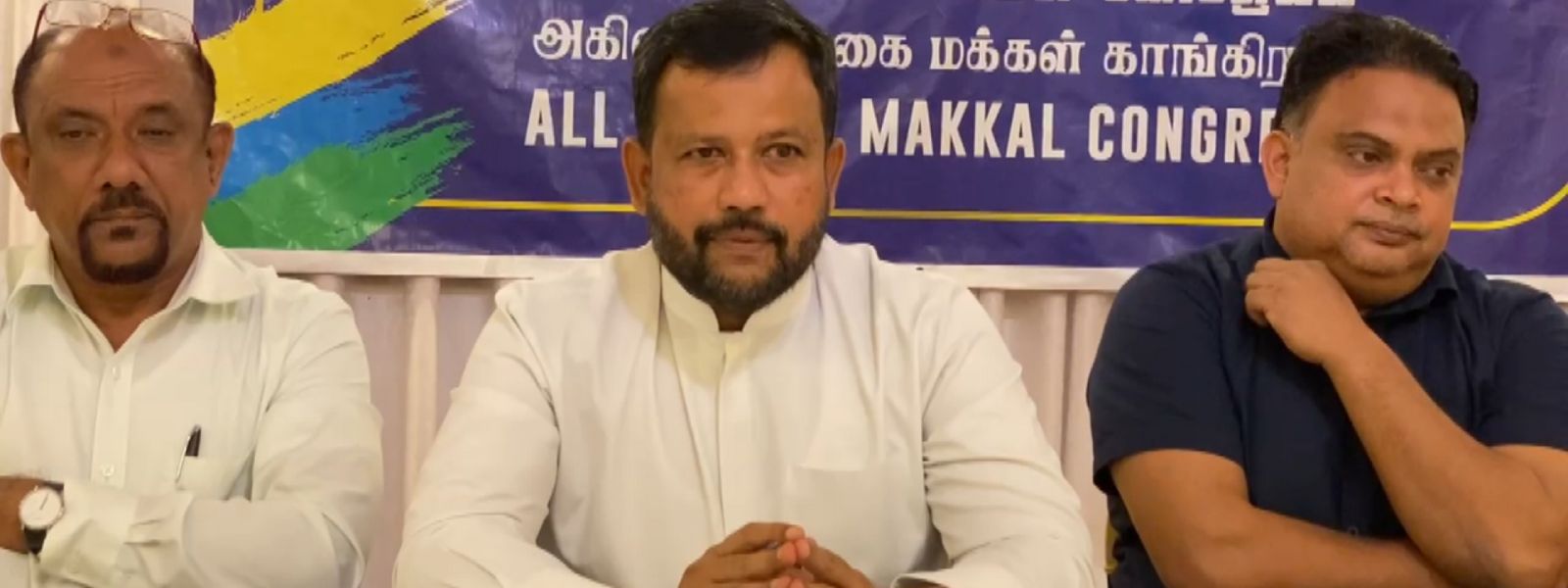
U.S. Ambassador to Sri Lanka, Julie J. Chung, has met with the members of Sri Lanka’s Election Commission including its chairman, Mr. R. M. A. L. Rathnayake.

In a post on ‘X’ (formerly Twitter), the Ambassador said the meeting was held to discuss the plans to hold the upcoming elections in Sri Lanka and “upholding a transparent process”.

“As Sri Lanka, the U.S., and many countries face elections this year, we exchanged views on the importance of voting in free and fair elections as a pillar of democratic governance,” she said.

Prime Minister issues clarification on Presidential Election

Prime Minister Dinesh Gunawardena has confirmed that the Presidential Election will be held in accordance with the Constitution and on the date specified by the Election Commission.

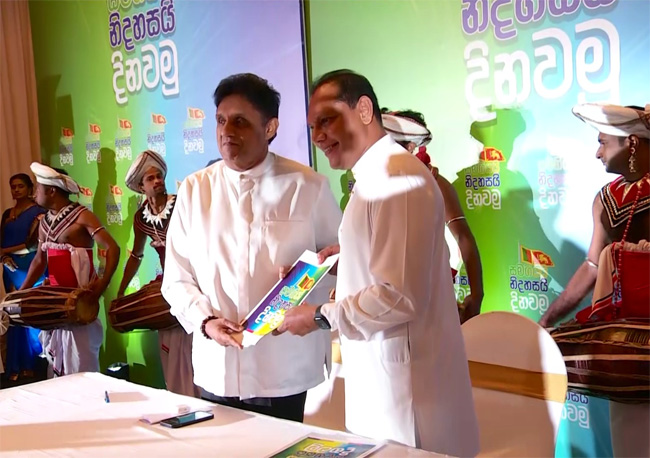
He made these comments while responding to questions from journalists after attending the opening of the Martin Wickramasinghe Hall of Life section at the National Library and Documentation Services Board today (29).

“The government’s stand on the election has already been announced. The Election Commission declared that the presidential election can be held according to the constitution.”

“They have announced that it will be scheduled between the months of September and October. The government has also announced that,” he said.

Replying to a question on allegations that the government is trying to postpone the election after seeing the crowd for its May Day, the Premier said:

“No political decision will be taken after seeing a crowd. We will not be panicked or reversed, but will move forward.”

He added: “Steps have been taken according to the accepted election law for the development of the country by advancing the supreme parliamentary system and the people’s mandate. There is a two-thirds system that is very difficult to be followed to change the election rules. Otherwise, the parliament can go on until next August. If necessary it can be dissolved earlier. Or they can dissolve it by themselves. There is a system in the constitution to do so.

“After the Presidential election, it will be the general election. Later, attention has been paid on holding provincial council and local government elections at the same time.

“Some people declare various things without responsibility. I am telling the countrymen that a Democratic government or parliament will not allow the government to make sudden announcements about something that has not been discussed in any situation and to create unrest in the country irresponsibly.”

“The Election Commission has the power to call the Presidential election, according to the Constitution. It cannot be called in advance or later. It has been fixed in the constitution. Accordingly, the Election Commission will conduct the election as scheduled.”

Posted in Uncategorized

Our pleas ignored but we will not give up: Cardinal

The request by the church to conduct a proper investigation into the Easter Sunday bomb attacks is being ignored by the authorities. But they will renew their struggle and will fight for justice, Archbishop of Colombo Cardinal Malcolm Ranjith said.

Cardinal Ranjith made this remark after paying his last respects to Tilina Harashni who died on Monday after suffering for five years due to the injuries she suffered as a result of the Easter Sunday bombings in 2019.

“We pray for Tilina who underwent immense suffering for five years after the bomb attack,” the Cardinal added.

Posted in Uncategorized

UNP proposes postponing elections by two years

The United National Party (UNP) has proposed to postpone Sri Lanka’s two upcoming elections by at least two years.

UNP general secretary Palitha Range Bandara made this observation while attending a press conference in Colombo today (28).

He proposed that the Presidential Election and the General Election be postponed for 2 years, through a proposal to be tabled in Parliament and that a referendum could be called if necessary.

“Now we have to save the country from this bankruptcy and rebuild the country’s economy,” the former parliamentarian said.

He stated that Sri Lanka has an agreement in place with the International Monetary Fund (IMF) and if the said agreement is violated the country will regress back to how it was two years back.

“So, do we want to knowingly go back to that point and get ruined? Or else do we reach a common agreement and postpone both these elections for two years?”

“The President is not greedy to stay on. We are the ones asking,” he said, adding that funds should not be wasted by going for a general election at this time.

“Postpone them both for two years. These issues can be resolved within those two years and afterwards elections can be held,” Range Bandara added.

Posted in Uncategorized

Civil Activists Protest Outside SLPP Office; Coconuts Smashed & Heated Exchange With Police

A group of civil activists gathered in front of the Sri Lanka Podujana Peramuna office at Nelum Mawatha, Battaramulla for a protest.

Their protest centered around the contention that the Sri Lanka Podujana Peramuna lacks the mandate to endorse bills affecting the country.

Among the activists present was Jamuni Kamantha Thushara, who had participated in the signing of an agreement known as “One Agenda for the Nation” in Colombo yesterday afternoon.

This morning, they assembled outside the Sri Lanka Podujana Peramuna head office to protest.

Security measures were heightened, with police and anti-riot teams stationed at the party headquarters. However, civil activists were denied entry.

Additionally, Dan Priyasad, a civil organization activist, attempted to reach the protest site from the Sri Lanka Podujana Peramuna party headquarters.

Posted in Uncategorized

Planters’ Association strongly opposes arbitrary wage hike

The plantation industry raised its strongest possible objections to the Government’s ”arbitrary, reckless, unilateral decision” to drastically hike minimum wages for tea and rubber sector workers by an unprecedented 70%.

All producer stakeholders issued a unified warning against the devastating impact the latest increase will have on the plantation sector, leading crippling operational challenges, ultimately leading to severe economic instability for the nation.

“This decision was made without proper consultation or consideration of the needs of all industry stakeholders. In particular, it fails to provide any consideration and threatens to cripple every segment of the Sri Lankan tea and rubber industry. This current effort to force such a clearly unsustainable mandatory minimum wage on tea and rubber smallholders and the Regional Plantation Companies (RPCS) is impossible for the industry to absorb, even with radical cuts to basic operational necessities. The continuity of the entire plantation sector is now at risk, and most critically the livelihoods of the very workers and communities who are connected to the industry across Sri Lanka,” The Planters’ Association of Ceylon stated.

As a result of the decision, the cost of production for tea and rubber is set to rise dramatically, with estimates indicating a minimum 45% increase in the cost per kilogram of tea. This surge in operational costs will render Sri Lanka’s tea and rubber industries uncompetitive in the global market, further exacerbating the financial strain on these sectors.

Additionally, the wage hike will place an enormous burden on Regional Plantation Companies (RPCs), which will face an annual increase in excess of Rs. 35 billion inclusive of EPF/ETF and gratuity payments. This financial strain is unsustainable and threatens the livelihoods of thousands of workers in the plantation sector.

The PA also noted that the current approach of the Government in attempting to coercively set wages for the private sector, and interfere in management of the sector from key Government figures represent a stark violation of the terms of the IMF agreement, which is crucial for Sri Lanka’s economic recovery. This decision is very clearly driven by short-term populist politics aimed at securing electoral victories rather than fostering long-term economic health of the industry, and securing the interests of workers.

The IMF’s $3 billion Extended Fund Facility (EFF) for Sri Lanka is contingent on several stringent conditions aimed at ensuring fiscal consolidation including reduced intervention in state-owned enterprises (SOE). Historically, state control over enterprises has led to inefficiencies and financial burdens, as evidenced by the failures of numerous state-run businesses in Sri Lanka.

Historically, the state has consistently failed to manage State-Owned Enterprises (SOEs) effectively, leading to steep losses and in many instances, near total collapse. By the time of privatization in 1992, state owned plantations made continuous losses that had to be heavily subsidized by the Government up to Rs. 5 billion per year which was borne by the Treasury.

A further Rs. 8 billion was owed by the JEDB and SLSPC to the Bank of Ceylon and Peoples’ Bank as a result of a US$ 300 million lending facility which was extended to the state plantations by the World Bank. While these funds were intended for the improvement of the plantations industry, there were no significant improvements and the plantations did not have the ability to repay the debts, and the Government was eventually compelled to absorb this debt.

Following privatization, worker wages appreciated sharply, and with a significantly larger workforce of 327,123 within the RPC sector the industry was able to operate more effectively, investing substantially towards the development of the industry, including all of the key certifications and standards that have allowed Pure Ceylon Tea, and rubber to maintain a reputation for unmatched quality relative to global competitors.

These efforts have led to improvements in efficiency and productivity, which are now at risk due to the proposed wage hike. It is also important to note that all these companies are publicly traded companies listed on the Colombo Stock Exchange. Any attempt at a second and immediate expropriation by the Government will therefore contravene Securities and Exchange Commission and SEC rules, the Companies Act and other related statutory provisions.

Such an arbitrary and impractical decision also risks severe damage to local and foreign investor confidence alike. The PA warned that this would have negative consequences beyond the plantation industry, especially at a time when Sri Lanka desperately requires foreign direct investment to help boost strategically important sectors in manufacturing and services, as well as the agriculture sector.

The PA has long advocated for a shift to a productivity-linked wage model or a revenue share model, which aligns worker compensation with productivity and revenue earned at auction. This approach not only incentivizes productivity but also ensures a fair and sustainable wage system for workers. Already workers under revenue share under the previous wage structure recorded earnings in excess of the minimum wage that was recently gazette.

The current daily attendance-based minimum wage model is outdated and does not reflect the realities of the modern plantation industry. Any disruption to production or quality standards could send shockwaves through export markets, diminishing export revenues and competitiveness.

“We urge policymakers to prioritize long-term economic stability over short-sighted decisions and to consider the industry’s proposals for a productivity-linked wage model,” the PA said.

Posted in Uncategorized

Sri Lanka urged to Halt Labour Law Reforms

Amnesty International, Clean Clothes Campaign, and Human Rights Watch have urgently called on the Sri Lankan government to stop its proposed labour law reforms, citing concerns that the changes would undermine workers’ rights and protections by removing international minimum standards.

In an open letter to Sri Lanka’s government and parliament, the coalition highlighted that the proposed reforms could severely impact the garment industry by compromising human rights standards, potentially harming the country’s reputation and responsible sourcing practices.

The rights groups emphasized the need for comprehensive consultation with workers and their representatives before any reforms are enacted. They warned that the proposed draft Act contains clauses that threaten Sri Lanka’s compliance with international labour laws, including ILO conventions No. 87, 98, 144, and 190.

The coalition stressed the importance of a transparent and inclusive reform process that respects established democratic procedures and international labour standards.

Posted in Uncategorized

Upgrading of Northern railway line to be completed by August

Minister of Highways, Transport, and Mass Media Dr. Bandula Gunawardena says that it is unlikely that the reconstruction work on the Northern railway track will be completed before the upcoming Poson Poya.

In response to a question raised by a journalist during a press conference held today (28), the minister explained that the development of the Northern railway line could be completed by August this year.

Meanwhile, he further stated that a special bus service will be implemented for the ‘Poson Poya’ holidays.
He said that the bus service will be implemented on the ‘Poson Poya’ day and the day before.

Minister Gunawardena also stated that an announcement will be made in relation to the schedule of the special bus service and special arrangements have also been made with the Sri Lanka Transport Board (SLTB) and the private sector bus operators in this regard.

Postponing elections not healthy for any democracy – Namal

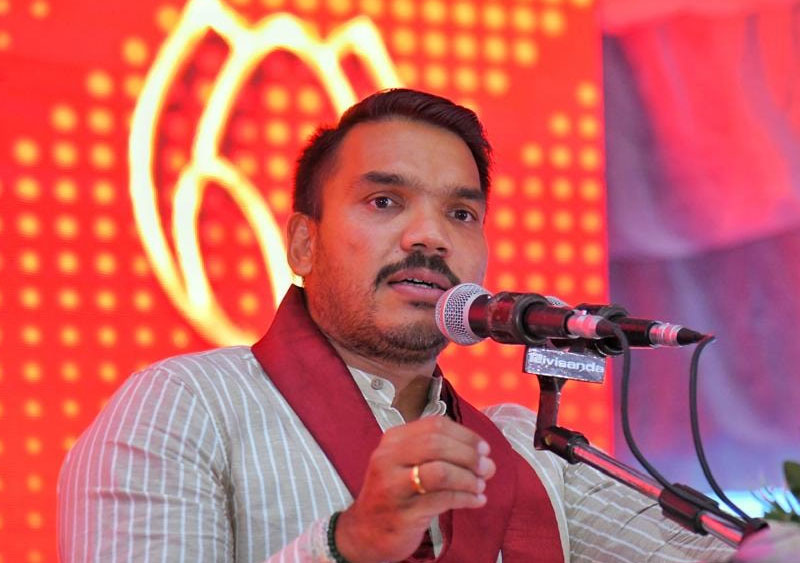
Parliamentarian Namal Rajapaksa says that postponing elections is not healthy for any democracy.

The Sri Lanka Podujana Peramuna (SLPP) National Organiser stated that extending the terms of the President and the Parliament undermines the fundamental principles of a democratic society.

“Stability should come through the will of the people, not by delaying their voice,” he said in a post on ‘X’ (formerly Twitter).

Rajapaksa’s comments come likely in response to a statement made by the General Secretary of the United National Party (UNP) Palitha Range Bandara, proposing for the postponement of the two upcoming elections by two years.

Speaking at a press conference in Colombo today (28), he proposed that the Presidential Election and the General Election be postponed for 2 years, through a proposal to be tabled in Parliament and that a referendum could be called if necessary.

“Now we have to save the country from this bankruptcy and rebuild the country’s economy,” Range Bandara said.

He stated that Sri Lanka has an agreement in place with the International Monetary Fund (IMF) and if the said agreement is violated the country will regress back to how it was two years back.

“So, do we want to knowingly go back to that point and get ruined? Or else do we reach a common agreement and postpone both these elections for two years?”

“The President is not greedy to stay on. We are the ones asking,” he said, adding that funds should not be wasted by going for a general election at this time.

“Postpone them both for two years. These issues can be resolved within those two years and afterwards elections can be held,” Range Bandara added.

Sri Lanka govt distances itself from UNP call for postponing elections

The government has distanced itself from a statement by President Ranil Wickremesinghe’s United National Party (UNP) calling for delaying elections by two years.

Labour Minister Manusha Nanayakkara responding to questions from journalists on Tuesday May 28 said all political parties represented in parliament are free to make proposals, but the government would have to make a final decision.

President Ranil Wickremesinghe currently stands as an independent candidate, according to Nanayakkara, though he has yet to formally declare his candidacy.

“The president is an independent person. Yes, the UNP is his party. The UNP can make such a proposal. When a party makes such a proposal, it can be considered. When an early parliamentary election was proposed, we considered it and decided whether to hold that or the presidential election,” said Nanayakkara.

“Similarly a new proposal has been made. We don’t know how that will be considered, but the government would have to decide,” he added.

Nanayakkara was responding to a question about a statement made by UNP general secretary Palitha Range Bandara earlier Tuesday morning, callig for a referendum to postpone both presidential and parliamentary elections by two years to extend President Wickremesinghe’s term to continue ongoing economic reforms.

“Is Mr Palitha Range Bandara the government? He is the UNP secretary,” the minister said.

“The SLPP says parliamentary elections should be held. Will that be so because they have proposed it?” he added.

Nanayakkara reiterated that Bandara’s statement was not one from the government.

“The UNP can make statements, as can the SLPP or any other party. But let’s see what happens in the end,” he said.

Nanayakkara crossed over from the main opposition Samagi Jana Balawegaya (SJB) to support Wickremesinghe. He had said earlier in the week that would definitely win the presidential election.

“President Wickremesinghe will definitely win the election,” he said, adding that the president has provided much relief and that the economy continues to recover having fallen to its lowest point.

Posted in Uncategorized