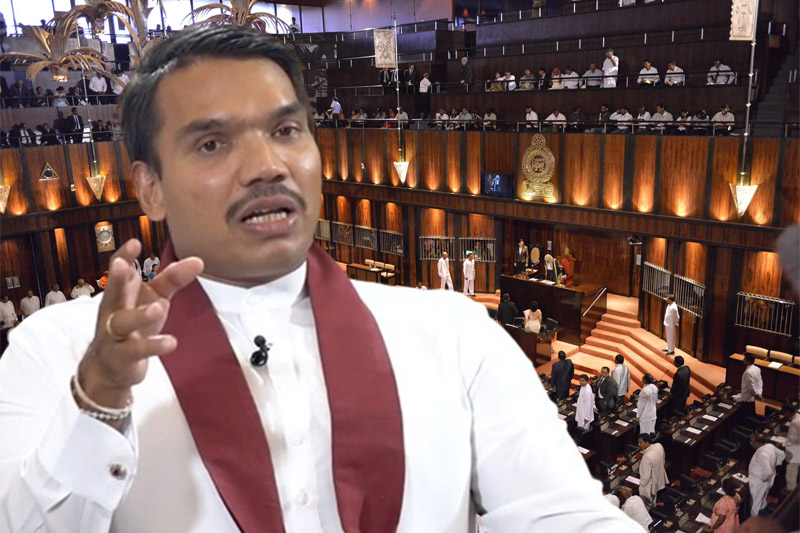
An appeal from NMSJ to implement 13A

The National Movement for Social Justice (NMSJ) has appealed to the Government and all political parties to earnestly consider implementing the 13th Amendment to the Constitution.

Issuing a statement, former speaker and NMSJ chairman Karu Jayasuriya also underscored the need to address the contentious land issue through the proposed Land Commission without delay.

The statement said;

“Since its inception, the NMSJ, under the guidance of the late Ven. Maduluwawe Sobhita Thera has advocated for national unity and harmony. However, we recognize that as a nation, we have so far failed to achieve this goal, which has in turn contributed to the challenges we face today.

Reflecting on our history, we recall that our independence from the British Empire in 1948 was achieved through the collaborative efforts of leaders from all ethnicities including Sinhala, Tamil, Muslim and Burgher.

Sadly, subsequent events including divisive racial and religious trends have eroded this unity. We are deeply concerned about the current situation and the impact it may have on future generations.

Therefore, we appeal to the Government and all political parties to earnestly consider implementing the 13 Amendment to the Constitution and addressing the contentious land issue through the proposed Land Commission without delay.

Additionally, we advocate for open and honest discussions with all stakeholder, particularly in the North regarding Police powers. It is crucial for all parties involved to prioritize the interests of the nation and engage in constructive dialogue to find a solution.

We acknowledge and appreciate positive developments, such as improved relations with the Global Tamil Forum and enhanced understating among religious leaders and civil society organizations. These collaborations offer hope for a brighter future if we collectively commit to a shared national vision.

As we approach the next elections, we urge all stakeholders to come together in a spirit of unity and cooperation. By addressing these critical issues, we can bestow upon future generations the gift of a harmonious and prosperous Sri Lanka.”

460 Complaints Filed Regarding Sri Lanka Veteran Trafficking Scheme

460 complaints have been lodged so far regarding the trafficking of retired Sri Lanka veterans for the Russia-Ukraine war.

On the 9th, the Ministry of Defense established a special unit to provide information regarding this human trafficking racket.

Any informantion regarding this can be provided to the Ministry of Defense through the hotline 0112 441 146.

The Defense Secretary requested family members of the concerned personnel to reveal the person and institution behind the cordination of this trafficking racket to the relevent hotline.

Posted in Uncategorized

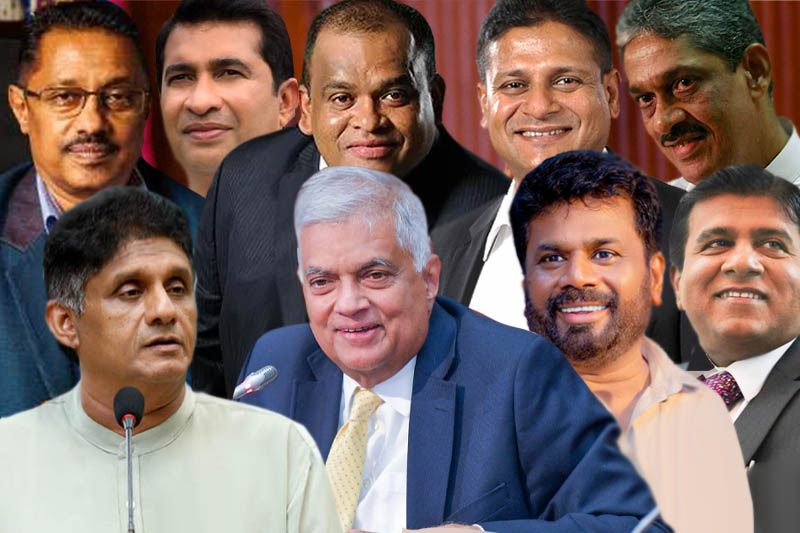
RW Govt. inches close to IMF’s June deadline while objections grow against Basil in campaign meets

The Vesak holidays last week, which also presented a long weekend holiday, saw the usual politicking that has become quite common due to the upcoming elections take a more pious outlook, with political leaders of all key political parties racing against each other to engage in religious observances in their constituencies while moving around with the general public.

While many members of his staff were taking a break during the long holidays, President Ranil Wickremesinghe, whose travels were confined to Colombo due to the adverse weather that prevented him from taking any helicopter rides even for the opening of the State Vesak Festival in Matale, attended quite a few Vesak events in Colombo.

The President was seen opening the pandal set up by one of his loyalists, former Colombo Municipal Councilor Kithsiri Rajapaksa, as well as opening the dansala organised by Rajapaksa. Wickremesinghe also attended the Vesak Zone organised by the Gangarama Temple in Colombo after engaging in religious observances.

Prior to the holidays, the Wickremesinghe Government faced continuous questions by the media regarding the finalising of the country’s debt restructuring programme, given that the month of May was also coming to an end. However, the Government expressed hope of signing the Memorandum of Understanding (MoU) with the Official Creditor Committee (OCC) of the Paris Club and the Export-Import Bank (Exim Bank) of China before the completion of the International Monetary Fund’s (IMF) Executive Board review of Sri Lanka’s Extended Fund Facility (EFF) programme due next month.

The IMF meanwhile maintains that Sri Lanka’s overall performance in the IMF programme has been strong as the macroeconomic policies have started to bear fruit. However, IMF Director of Communications Julie Kozack said that the completion of the second review by the IMF Executive Board required the implementation of prior actions agreed by the Sri Lankan authorities and completion of a financial assurance review.

She noted that the completion of the financial assurance review included confirmation from multilateral partners, financing contributions, and the adequate progress of the debt restructuring.

Meanwhile, some of the prior actions that need to be implemented for the second review include the implementation of the Public Debt Management Act and the Public Financial Management Act, which aims to reinforce fiscal discipline by introducing binding fiscal rules and is essential for meeting ambitious fiscal targets, notably a primary surplus target of 2.3% of the Gross Domestic Product (GDP) by 2025.

Understanding the urgency of getting the financial legislations in place, the Government last Wednesday (22) presented the Economic Transformation Bill and the Public Financial Management Bill in Parliament.

Unrealistic targets

Meanwhile, State Minister of Finance Shehan Semasinghe last week took a swipe at the parliamentary Opposition over what he implied as faulty targets.

While addressing Parliament during an adjournment debate, Semasinghe criticised the economic policies proposed by the main Opposition Samagi Jana Balawegaya (SJB).

“According to estimates for 2024, the Government expects to collect Rs. 3,870 billion in tax revenue and a total Government revenue of Rs. 4,127 billion. As of now, Rs. 1,040 billion in tax revenue and Rs. 1,522 billion in total revenue have already been collected for 2024,” he revealed.

The State Minister added: “According to the SJB proposal, if the corporate tax is reduced to 24%, only Rs. 640 billion can be collected this year, with a 21% reduction. With a 21% reduction, we can estimate a loss of Rs. 140 billion. If we talk of the Pay-As-You-Earn (PAYE) tax, there will be a loss of Rs. 40 billion. They also talk of Valued-Added Tax (VAT) reduction, but overall, the SJB is talking about cutting off revenue of over 10% of the GDP.”

RW’s stance to Cabinet

While pushing the country’s economic agenda in line with the IMF programme, President Wickremesinghe is also faced with responding to the disinformation campaign pushed by his coalition partners in the Government, the ruling Sri Lanka Podujana Peramuna (SLPP), which continues to push the agenda of holding Parliamentary Elections prior to the Presidential Election.

After making several public statements on which election would be held first, President Wickremesinghe last Wednesday informed the Cabinet of Ministers that the Presidential Election would be held first during the scheduled period this year and that the relevant funds had already been allocated for the said election.

Basil’s conundrum

The many news reports planted by the SLPP of an early dissolution of Parliament in order to hold Parliamentary Elections prior to a Presidential Poll have left many wondering which election will be held first. It is interesting to see SLPP theoretician Basil Rajapaksa’s propaganda campaigns back in action.

The ruling SLPP is currently faced with multiple issues in order to hold the party rank and file without further erosion and Basil is now a man facing the conundrum of the party’s next political move. Basil is no novice to electoral politics and is well aware that the SLPP’s future hangs on key decisions that will have to be taken at the upcoming Presidential Poll.

It is evident that the SLPP is split over the party’s stance at the Presidential Election – whether to support President Wickremesinghe or field its own candidate at the poll. Basil understands that the SLPP’s political path will be adversely affected in the event the party supports President Wickremesinghe at the election. Such a move could then also further solidify the split in the party, with a good portion joining with Wickremesinghe for the Parliamentary Elections.

However, if the SLPP fields a candidate at the Presidential Poll, who stands a high chance of losing, such a result would also have a definite impact on the SLPP’s performance at the Parliamentary Elections.

After weighing all these issues, Basil’s only solution is to push for a Parliamentary Election prior to the Presidential Poll. He believes that although the party will not be able to record a victory at the Parliamentary Elections, the SLPP can prevent a further erosion of its members and voter base in a bid to rebuild in time for the 2030 Presidential Election, when SLPP National Organiser Namal Rajapaksa is expected to contest at the poll.

President Wickremesinghe’s firm stance of holding the Presidential Election as scheduled with Parliamentary Elections afterwards has greatly disappointed Basil. In fact, Basil has been pushing for the holding of Parliamentary Elections first with the President during the eight rounds of talks held so far between Basil and Wickremesinghe.

It is in such a backdrop that Basil decided to launch a propaganda campaign by planting news stories that Parliament would be dissolved next month.

SJB’s stance

The holding of Parliamentary Elections prior to a Presidential Election also stands to benefit the main Opposition SJB.

The SJB has seen a growth in its support base as the main Opposition political party rather than due to an individual – the party’s leadership.

Given that a Presidential Election will be focused on an individual, the SJB may not stand to enjoy the full benefit of the support enjoyed by the party at a Presidential Election led by Opposition and SJB Leader Sajith Premadasa.

Basil’s polls campaign

All these issues have compelled SLPPers supportive of Basil to launch a propaganda campaign to push for an early Parliamentary Election. Their aim is to create a public discourse on the need for a Parliamentary Election prior to a Presidential Election, while on the other hand also create a volatile environment in the stock market with the news in order to push President Wickremesinghe to consider the dissolution of Parliament to hold Parliamentary Elections. Interestingly, SLPP propagandists have already claimed the deadline for the President to dissolve Parliament as well.

However, Basil’s choice of messenger to carry out the propaganda campaign, his loyalist, Sri Lanka’s former Ambassador to Russia Udayanga Weeratunga, seems to have been a wrong one. The Rajapaksa relative has from time to time made various public statements on Basil’s behalf and has earned the public criticism of SLPP Leader Mahinda Rajapaksa (MR) as well. MR has earlier stated that Weeratunga did not represent the party or the Rajapaksa family.

Weeratunga, this time around, has said that a decision had been made to dissolve Parliament on or after 14 June, adding that the Parliamentary Elections would be held first and that it would then be decided whether the elected prime minister from that government would be fielded as the presidential candidate or if a different person would be chosen.

“The Parliamentary Election will definitely be held in the first week of August. This was decided after discussions between the President’s faction and representatives from the SLPP,” he further said.

Participating in a television talk show, Weeratunga also noted that President Wickremesinghe would not contest the next Presidential Election.

He added that businessman-turned-politician Dhammika Perera would be the SLPP’s prime ministerial candidate at the Parliamentary Elections.

No dissolution

Janatha Vimukthi Peramuna (JVP)-led National People’s Power (NPP) Leader Anura Kumara Dissanayake (AKD) meanwhile claims that President Wickremesinghe will not dissolve Parliament to hold Parliamentary Elections prior to the Presidential Election.

He notes that although the President is constitutionally able to dissolve Parliament, he will not do so since he is aware that such an action will result in him losing his bargaining power with other political parties.

AKD explains that if Wickremesinghe does not dissolve Parliament, until the next president is sworn into office, he can remain in power and have the support of a Cabinet of Ministers. “If he dissolves Parliament, he loses his power. There is no way he would dissolve Parliament when he could retain power for several months more,” he said.

On the other hand, if President Wickremesinghe moves to dissolve Parliament at the current juncture, he will also stand to lose the support of the members of the ruling SLPP who are currently supporting him.

SLPP ministers in the Government who have expressed their support of Wickremesinghe are likely to return to the party fold to contest the Parliamentary Elections. The United National Party (UNP), which has only one sitting Member of Parliament (MP) at present, will also stand to lose a considerable portion of its voter base.

President Wickremesinghe will therefore fight back the Basil-backed propaganda campaign in order to hold the Presidential Election first.

Backtracking

Realising that Basil’s propaganda campaign had backfired without public support and President Wickremesinghe reiterating the holding of the Presidential Election first, SLPP General Secretary Sagara Kariyawasam told the media last week that the party had not requested Wickremesinghe to hold Parliamentary Elections first but had only conveyed its opinion to the President.

“The decision to dissolve Parliament is in the hands of the President. SLPP Founder Basil Rajapaksa informed the President that it is better to hold the General Elections first. The President will take the decision. We are ready to face any election, be it the Presidential, Parliamentary, Local Government, or Provincial Council Elections,” he said.

UNP campaign

The UNP meanwhile is in the process of preparing for the launch of a UNP-led alliance in June. The alliance will form Wickremesinghe’s platform for the Presidential Election.

It is learnt that several political parties, civil society organisations, and members of certain parties are expected to join this alliance, while talks are also underway to obtain support from several MPs from the SLPP and the main Opposition SJB.

Meanwhile, the SLPP dissidents’ group led by MPs Anura Priyadarshana Yapa and Nimal Lanza is all geared to hold the official launch of the broad alliance together with members of the Sri Lanka Freedom Party (SLFP) and several other parties on 8 June in Ambalantota in Hambantota. This new alliance is expected to be converted to the broad alliance that would support Wickremesinghe’s candidature.

Objecting to Basil

However, there seems to be growing friction between the Yapa-Lanza alliance and the official SLPP, with objections being raised by the former against Basil’s involvement in Wickremesinghe’s election campaign.

Wickremesinghe’s campaign committee, which includes members of the Yapa-Lanza alliance, several ministers, and MPs of the SLPP as well as the SLFP, now holds weekly meetings. The committee usually meets every Monday to discuss campaign-related work and the next steps.

President Wickremesinghe, meanwhile, had invited the SLPP’s Basil to also attend this campaign committee meeting.

It is learnt that a majority of committee members have opposed the President’s decision to permit Basil and his representatives to attend the meetings.

It is also learnt that Yapa and Lanza, along with the SLFP’s Duminda Dissanayake, had boycotted a recent meeting of the committee where Basil had also been invited to attend. These members had also avoided the dinner that had been held after the meeting.

Following the latest development, the Yapa-Lanza group and the SLFPers in the committee have discussed Basil’s role at a meeting convened in Parliament and have decided not to attend any future meetings that include Basil, especially in relation to planning political campaigns. They have also informed Wickremesinghe that Basil should not attend these meetings when the SLPP has not even decided to support the President’s candidature.

The Yapa-Lanza alliance maintains that it will receive the support of around 40 sitting MPs.

Meeting SLPPers

Meanwhile, President Wickremesinghe recently met with several groups of SLPPers. The meetings were with former Provincial Council members of the SLPP and the party’s parliamentary group.

The meeting with the former Provincial Councillors was organised by Minister Pavithra Wanniarachchi’s husband, Kanchana Jayarathna. During the discussion, the SLPPers had pointed out that people in their constituencies still considered them as councillors although Provincial Councils had been defunct for over five years.

However, the former councillors have noted that they will publicly extend support to Wickremesinghe only when the SLPP has made an official decision to support the President at the upcoming Presidential Election. The President, it is learnt, had agreed and had asked the group to take the Government’s ‘Aswesuma’ and agriculture modernisation programme to their constituencies.

Some of the SLPPers at the meeting had complained that they were yet to receive the compensation for their houses that had been destroyed on 9 May 2022. Wickremesinghe had tasked his Chief of Staff Sagala Ratnayaka to discuss the matter with the relevant State officials.

Namal’s stance on RW

The SLPP once again claimed that it was not supporting President Wickremesinghe at the polls, with Namal Rajapaksa, who is of the view that the party should field its own candidate at the upcoming Presidential Election, saying that Wickremesinghe was the UNP’s candidate and that it was up to the SLPP to decide on the party’s own candidate.

Namal further noted that the party would also have to decide on whether it would support the UNP.

Portfolio talk

Meanwhile, Premadasa is working to ensure that none of the MPs in his fold will cross over to the Wickremesinghe Government.

The growing dissension within the SJB over certain decisions taken by Premadasa, such as giving prominence to dissident SLPPers who have joined the party fold and accepting a large number of commanders from the tri-forces to the party fold, has resulted in many SJB seniors deciding to discuss the allocation of ministerial portfolios under a future SJB government.

Several discussions have been held among a group of SJB seniors about the growing dissension over Premadasa’s actions and the need to address these issues.

It is in such a backdrop that Premadasa announced that MP Harsha de Silva would be appointed as the minister of finance in an SJB-led government. He made the announcement during a speech at an event held in Galle.

“After @sajithpremadasa announced in Galle that @HarshadeSilvaMP will be his future finance minister, all of a sudden the #ranilist seems to be very, very hurt. Don’t worry, a few more months for elections so save your emotions for later,” SJB member Rehan Jayawickreme said on X.

Premadasa’s move to give prominence to SLPP dissident MP Dr. Nalaka Godahewa on economic issues was opposed by senior SJBers, claiming that the SJB Leader should give de Silva his due place as the party’s economic advisor.

SF ready to move

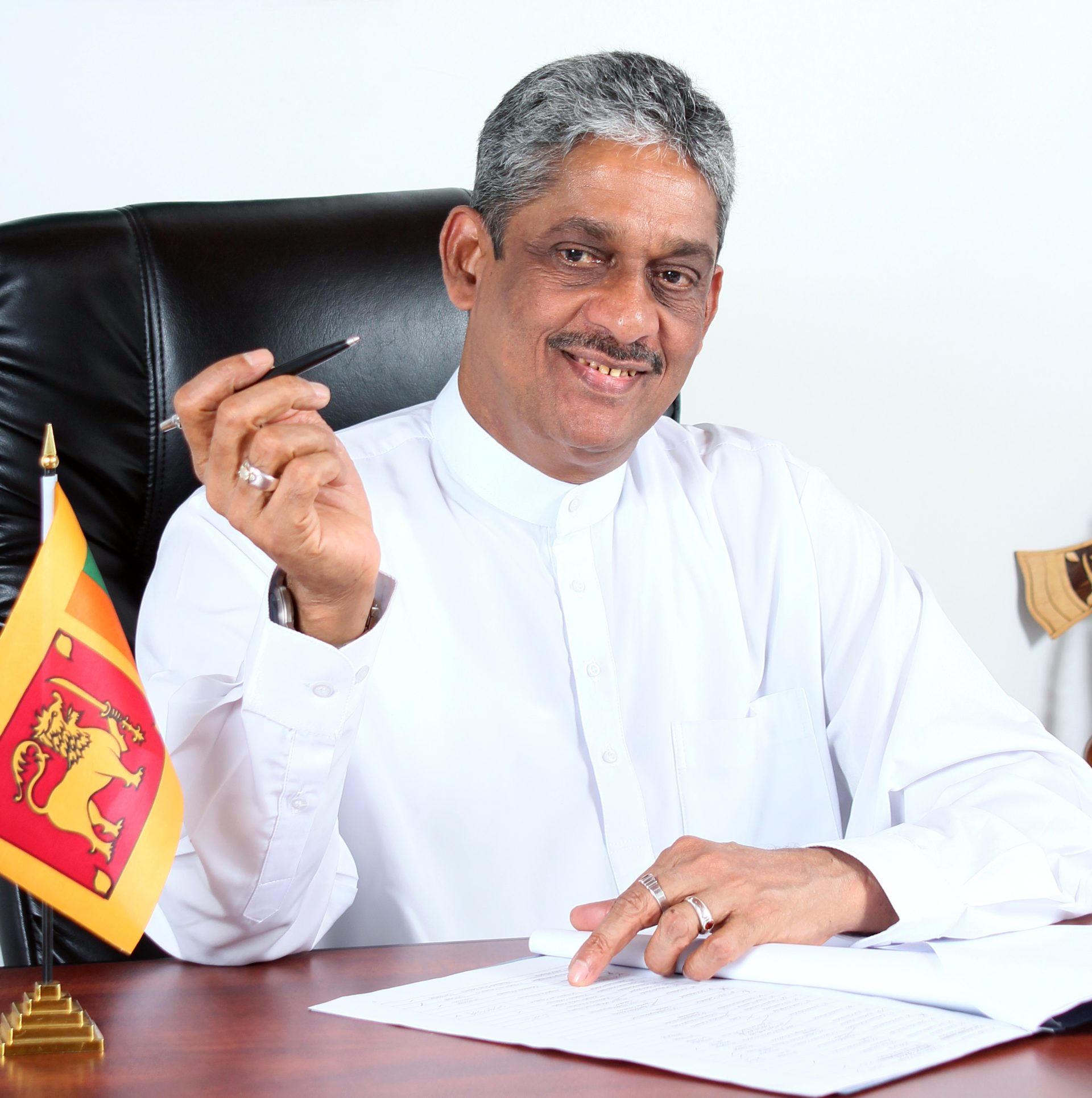
Meanwhile, SJB Chairman and MP, Field Marshal Sarath Fonseka (SF) continues to indicate his intentions of moving out of the SJB by saying that he is prepared to take up any challenge to take the country forward. “I took on the challenge of liberating this country and ended a nearly three-decade-long conflict. I am willing to take on any challenge that ensures Sri Lanka heads in the right political direction and we rid ourselves of the current corrupt political system,” he said.

Fonseka’s statements that he is prepared to make a decision on behalf of the country have now turned out to indicate that he is gearing to contest the upcoming Presidential Election.

News reports quoting sources close to Fonseka claim that he is expected to make the announcement of his candidature at the upcoming Presidential Poll next month. It is learnt that he is currently exploring the possibility of contesting as an independent presidential candidate.

The Court of Appeal has meanwhile set 5 June to take up the petition filed by the SJB leadership seeking the annulment of the enjoining order issued by the Colombo District Court that prevents the SJB from removing Fonseka from the party chairmanship and post of Kelaniya Organiser.

Another plan

It is interesting that Fonseka is looking at contesting the upcoming Presidential Election as an independent candidate, especially given his close association with President Wickremesinghe. Fonseka has been seen together with Wickremesinghe on several occasions, including in the President’s office in Parliament as well as in Wickremesinghe’s office at the Finance Ministry.

Given the tie between Fonseka and President Wickremesinghe, one could also wonder whether it is yet another ploy by the latter to break the SJB vote bank, especially the SJBers who are not too keen to support either Wickremesinghe or Premadasa at the Presidential Election.

No SJBers for SF

However, SJB seniors immediately claimed that no SJBer would join Fonseka even if he defected from the party.

While maintaining that the party had not been informed by any verified source of Fonseka’s decision, SJB General Secretary Ranjith Madduma Bandara said that SJBers would not defect from the party when its Leader Premadasa had already declared that he would contest the Presidential Election.

Debate conundrum

Meanwhile, the much-touted debate between Premadasa and AKD is yet to pan out despite the latter agreeing to one of the dates presented by the SJB for the debate. AKD on Monday (20) agreed for the debate to be held on 6 June.

The venue, time, and subject topics of the debate are to be finalised following a discussion between the SJB and JVP/NPP.

The SJB last Sunday (19) issued a fresh set of dates for debate between a committee of experts and another debate between the leaders of its party and the JVP-led NPP.

In a letter to NPP Executive Committee Member Dr. Nalinda Jayatissa, SJB Head of Operations MP Nalin Bandara proposed the dates 27, 28, 29, 30, and 31 May for the debate between the Economic Councils of the two parties, while proposing the dates 3, 4, 5, 6, and 7 June for the Leaders’ debate.

However, the JVP/NPP has not commented on the debate between the Economic Councils of the two parties, which has been sought by the SJB.

The SJB meanwhile is yet to announce its decision to participate in the debate with AKD on a date given by them, with some SJBers claiming that the party first needed to see a printed economic policy of the JVP/NPP. The JVP/NPP has maintained that the statements made by the party’s Economic Council members reflect its economic policies, although they are not in print.

Dilith to replace Sajith

Amidst the confusion over the Premadasa-AKD debate, with the SJB Leader yet to officially announce his agreement for the debate on 6 June, Mawbima Janatha Party (MJP) Leader, businessman-turned-politician Dilith Jayaweera has expressed preparedness to replace Premadasa in the debate with AKD.

Jayaweera claims that Premadasa will not participate in the debate and that he is prepared to participate instead and answer any question posed to him.

Wijeyadasa barred

The crisis within the SLFP meanwhile took a new turn with the Colombo District Court on Monday (20) issuing an interim order preventing Justice Minister Dr. Wijeyadasa Rajapakshe from functioning as the SLFP Leader and Keerthi Udawatte from functioning as the Acting General Secretary of the party.

The petition seeking the enjoining order was filed by the pro-Nimal Siripala de Silva faction’s Acting General Secretary of the party, Duminda Dissanayake.

Following the interim order issued by the Colombo District Court, members of the pro-de Silva faction of the SLFP returned to the Party Head Office at Darley Road, Colombo.

However, Rajapakshe has meanwhile filed a petition before the Civil Appellate Court of the Western Province seeking the lifting of the enjoining order obtained by Dissanayake from the Colombo District Court barring him from holding the post of SLFP Leader and Udawatte as the party’s Acting General Secretary.

The court heard the case on three days last week and it has been fixed again for Friday (31).

Posted in Uncategorized

SL passports for Lankan refugees living in Tamil Nadu

Founder and chief functionary of Organization for Eelam Refugees Rehabilitation (OfERR) S.C. Chandrahasan on Friday said that Lankan refugees living in South India welcome recent move by the government to issue passports to them.

“This recognition will help around 100,000 Lankan refugees in South India. This was announced by Eastern Province Governor Senthil Thondaman at a function held at the Sri Lankan consulate in Chennai during his recent visit. Around 600 Lankans living in refugee camps have already applied for Lankan passports,” Chandrahasan told the Sunday Island.

Chandrahasan, who is a son of former Federal Party leader SJV Chelvanayakam, said that around 59,000 Lankans currently live in various refugee camps maintained by the Tamil Nadu government while around 41,000 have been able to live in their own homes with the assistance of their relatives living all over the world.

President of OfERR, S Sooriyakumari, told the Sunday Island that this proces would immensely benefit the members of Lankan refugeee community in Tamil Nadu as these passports will enable them to visit their families in Sri Lanka or any other country. This should have been done many years back, he said.

Governor Thondaman in a ‘Face to Face’ interview telecast last week said that President Wickremesinghe had directed that work on issuing passports and travel documents to Lankans living in Indian refugee camps begins early.

Posted in Uncategorized

French Ambassador to Sri Lanka dies of suspected cardiac arrest

The French ambassador to Sri Lanka, Jean Francois Pactet, died of a suspected cardiac arrest at his official residence in Rajagiriya today.

Police Spokesman DIG Nihal Thalduwa said the 53-year-old ambassador was found dead at his residence this morning.

It was revealed that the ambassador did not come out of his room today, and when checked, he was found dead.

The Welikada Police are investigating the incident, and a post-mortem examination is to be conducted.

Posted in Uncategorized

Pardoning Gnanasara Thero will send out a dangerous message By Veeragathy Thanabalasingham

When the Colombo High Court sent the Buddhist monk and general secretary of the Bodu Bala Sena (BBS) Galagoda Aththe Gnanasara Thero to prison two months ago, it was expected that intense efforts would be made to get him out as soon as possible.

The Chief Prelates of Sri Lanka’s three main Buddhist Chapters have jointly written to President Ranil Wickremesinghe to pardon him and release him on the occasion of the Vesak festival. The day after this news was published, it was also reported that Gnanasara Thero’s name was not in the list of prisoners to be released on the occasion of Vesak. So it doesn’t seem possible for him to come out soon.

If someone else had been the President, perhaps Gnanasara Thero would have been released from prison last week. But it seems unlikely that the current President will show any urgency in this matter. During the reign of the Rajapaksas, Gnanasara criticized Wickramasinghe in words that cannot be put in writing.

Earlier a request for pardon and release of Gnanasara Thero was made by a state minister within days of his imprisonment. But his appeal did not receive much attention in the public domain.

It can be hoped that many people would not have failed to consider the views expressed by the Mahanayake Theros about Gnanasara Thero in the letter written to the President in the context of public opinion about him.

The Mahanayake Theros mentioned in the letter that Gnanasara Thero raised his voice for the Sinhalese Buddhist nation and informed the security forces about extremists in the country.

“He acted as the chairman of the Presidential Task Force set up to draft an Act to implement a common legal system – the One Country, One Law’ concept. He presented valuable recommendations to the government and worked with a good understanding of national unity. He played an important role in certain Sinhalese nationalist organizations and worked to win the hearts of society and strived for social cohesion,” Chief Prelates said in the letter.

This is not the first time Gnanasara Thero had gone to jail. He trespassed into the Homagama Magistrate’s Court eight years ago when the trial of officers of the Military Intelligence Unit for allegedly abducting journalist Prakeeth Egnelikoda was going on.

After that incident, in August 2018, the Court of Appeal sentenced him to 6 years in prison for contempt of court. The Supreme Court rejected his appeal against the verdict.

However, nine months later, on May 21, 2019, the then President Maithripala Sirisena pardoned Gnanasara Thero and he was released from prison exactly a month after the Easter Sunday bombings. The former President did not give any reason for his release.

The pardon granted by the President drew strong condemnation from human rights groups, civil society and legal organizations. Tamil National Alliance (TNA) Member of Parliament M.A. Sumanthiran described that the pardon had taken majoritarianism to ‘another level.’

As far as President Sirisena is concerned, one doesn’t know if he thought that pardoning Gnanasara Thero was a great service to the Sinhalese Buddhist community.

Next, on March 28th this year, the Colombo High Court sentenced Gnanasara Thero to four years of rigorous imprisonment and a fine of 100,000 rupees in a case filed against him for denigrate Islam and the Muslim community at a press conference held in a famous Buddhist Temple in Kurunegala district in 2016. The judge rejected his lawyer’s plea to release him on bail citing illness.

Former President Sirisena pardoned Gnanasara Thero nine months after his first imprisonment. But now when he went to jail for the second time, the Mahanayake Theros are appealing to the President to release him even before two months have not passed.

What is the message the Chief Prelates are conveying through that request? Is it that it is proper to allow those who carry out virulent campaigns that incite violence against minority communities and insult other religions to go unpunished just because they wear a saffron robe?

In Sri Lanka, there have been several Buddhist monks who have held negative views against minority communities and engaged in inciting violence. They could not have acted so brazenly without a strong political backing. The Mahanayakas were not unaware that the conduct of these monks brought the Maha Sangha into disrepute.

The Mahanayakas could not stop a substantial section of the monks from behaving completely contrary to Buddhist principles and getting involved in politics.

Many a Buddhist monk has been at the forefront of communal violence in Sri Lanka. Hate against the minorities is not something new in the country. It is an obnoxious trend that has grown parallel with the evolution of ethnic majoritarian politics in modern Sri Lanka.

If it is to be prevented, the Sinhalese polity should recognize the legitimate political aspirations of the minority communities and come forward to find an amicable political solution to the national ethnic problem. But even after the end of three decades of civil war that brought havoc to the country, the Sinhalese polity has not understood the urgency for such a solution. There are no progressive forces in the South that can carry out healthy political activities to make the Sinhalese people aware of that need.

Last week’s events in the North and the South’s of the end of the war highlight the deepening of the ethnic divide.

After the end of the Civil War, racist forces of the South needed a new ethnic enemy to continue their regressive politics. Finding that enemy in the Muslim community, the racist forces brought Gnanasara Thero to the fore to launch fanatical propaganda campaigns.

There is no need to revisit here the disasters caused by sectarianism which escalated twelve years ago on the steps of the Colombo BMICH with the inaugural convention of the BBS. The politics of putting the Sinhalese Buddhist community into a siege mentality by creating a false impression that there is a threat to the Sinhala race and Buddhism from the Muslim community was carried out in full swing.

Former President Gotabaya Rajapaksa’s recent comment in his book that the competition between the interests of the Sinhalese Buddhists and the interests of all the non-Singhalese and non-Buddhists brought him to power is a telling admission of the Rajapaksas’ racist approach to returning to power.

Gnanasara Thero had made a huge contribution to it. So he was able to say anything without fear of the law during the Rajapaksa regime.

One cannot help but ask the question whether Gnanasara Thero would have met the present fate if there had not been a regime change. Gnanasara Thero was so useful to the Rajapaksas that he was appointed as the head of the Presidential Task Force entrusted with drafting a law to implement a common law for the entire country.

Buddhist monks have long had the full patronage of the political elite, engaging in activities that may tarnish the principles of Buddhism and the Maha Sangha.

A few months ago, in Batticaloa, the Sri Mangalaramaya Buddhist Temple chief priest stood in the middle of the road and shouted aggressively in front of several police officers that he would cut the Tamils living in southern Lanka into pieces. But someone should have warned him about the possible consequences. He released a video the next day or so apologizing for his actions.

But his tirade is not simply to be forgotten with a mere apology. How would the law enforcement agencies have treated a clergyman of another religion if he had done the same? What would the law have done to him?

If Sri Lankan society does not separate religion from politics, the country has no future. But it is a matter of great concern that conditions in Sri Lanka do not offer any hope for that.

Posted in Uncategorized

Jaffna Uni Gets Research Block Worth Rs. 942 Mn

Sri Lankan President Ranil Wickremesinghe opened the new Clinical Training & Research Block at the Medical Faculty of Jaffna University.

Foreign Affairs Minister Ali Sabry, PC tweeted that the Clinical Training & Research Block at the Jaffna University Faculty of Medicine, is the first new construction there in 46 years, costing Rs. 942 million.

Addressing the inauguration, President Wickremesinghe said the Jaffna Hospital would be upgraded as a national hospital soon to ensure an excellent health system in the North.

Posted in Uncategorized

Jaffna Hospital would be upgraded as a national hospital in the near future

PMD; President Ranil Wickremesinghe stated that the Jaffna Hospital would be upgraded as a national hospital in the near future to enhance and ensure excellent healthcare standards in the Northern Province.

He further noted that the Cabinet has given its approval for the Karapitiya Hospital to be upgraded as a national hospital.

These remarks were made during President Wickremesinghe’s attendance at the inauguration of the Clinical Training and Research Block at the Faculty of Medicine, University of Jaffna, today (24).

Chairman of the University Grants Commission, Prof. Sampath Amaratunga, emphasized the need for modernizing technology across all science-based faculties in the country, including engineering, medical, science, and agriculture faculties. He highlighted that the current out dated technology hinders progress and adaptation to the modern world.

Furthermore, he noted that Sri Lankan children studying abroad excel not because of the technology they use but because of their knowledge. He emphasized that the integration of new technology could significantly propel the country forward.

In response, the President instructed the Ministry of Science and Technology and the Ministry of Education to collaborate on drafting a proposal for modernizing technology in these faculties and present it for his consideration.

Furthermore, the President highlighted significant developments in the region, notably the construction of the Clinical Training and Research Department building at the Jaffna University—the first such structure to be built in 46 years. With an investment of LKR 942 million, this facility will accommodate 1200 students for undergraduate and postgraduate clinical training, fostering international research collaborations.

The building, spanning 6000 square meters, comprises multiple lecture halls, clinical skills laboratories and an auditorium. Additionally, it features essential medical facilities such as operating theatres, recovery rooms, cleaning and disposal areas, sterilization units, preparation rooms and storage facilities.

Furthermore, the building houses patient waiting rooms, consultation rooms, and specialized units dedicated to endoscopy, vascular surgery, and mammography. It also accommodates research laboratories, a forensic investigation unit, and a museum for educational purposes.

Under the management of the Department of Obstetrics and Gynaecology, supported by the Department of Surgery, and other consultants from the teaching Hospital Jaffna, the Fertility Care Unit is set to offer a wide range of services, encompassing specialist consultations, diagnostic procedures, and treatment facilities.

Meanwhile, the Clinical Trials Unit (CTU) will facilitate clinical research on locally adapted patient-oriented, and cost-effective treatment methods. Additionally, the Clinical Genetics Unit (CGU) will aid in genetic cost-effectiveness, disease management, and preventive measures.

Following the unveiling of the plaque and the inauguration of the new building, the President proceeded to embark on an inspection tour.

The President addressing the gathering further stated:

“Your request for the establishment of a national hospital in Jaffna has been duly noted. Coincidentally, I have been contemplating the same. Just last week, the Cabinet approved the upgrade of Karapitiya Hospital, and next hospital to be upgraded as a national hospital is going to be Jaffna Hospital.

It is imperative for Jaffna to have an excellent healthcare system, ensuring equitable access to quality healthcare services not only in Colombo and the southern regions but also in the north and central areas. However, our efforts should not stop there. We must also turn our attention to the broader developmental needs of the region.

Regarding my frequent visits to Jaffna, allow me to clarify the purpose behind my recent visit. Despite it coinciding with a long weekend, I felt compelled to address pending matters, particularly the inauguration of two hospitals as requested by both the local community and the Ambassador for the Netherlands during my previous visit.

I have made it a point to visit Jaffna regularly, both as Prime Minister and President, recognizing the pressing need to address the longstanding issues stemming from the conflict in the north and east. The time has come to shift our focus towards development. There are people here without who are looking for jobs and the potential for Jaffna for development is great, to use that term. Jaffna, which has seen limited development in recent years, holds immense potential for growth.

While I may not delve into all the issues at hand today, it is evident that progress has been made in addressing certain challenges, such as land-related issues. However, there remain unresolved matters concerning detainees and other related issues that require our attention. But we still have, to bring this to a close and that revolves around the remaining political issues.

Moving forward, we must prioritize reconciliation efforts, address concerns regarding missing persons, and devise mechanisms for compensation and truth and reconciliation. I think this is the time now we have to deal with all these issues.

These are complex issues that demand collective cooperation and engagement from all stakeholders. I have discussed this with the members of Parliament from North and the East, as to what measures we need to take.

Amidst economic challenges, we’ve been unable to allocate significant funds in recent years. However, we must earmark resources for truth and reconciliation efforts. The government is committed to establishing the Truth and Reconciliation Commission (TRC), but we must address the critical issue of judicial powers.

We’re deliberating whether the TRC should wield judicial authority or if a separate court should be empowered based on TRC recommendations. This decision is paramount, and I’ve tasked relevant ministers, in consultation with parliamentarians and ambassadors, to draft legislation for parliamentary review.

Moreover, Jaffna holds immense developmental promise, particularly in renewable energy, agriculture, and industries. Harnessing solar and wind power capacities could position Jaffna as a major energy hub. This is the biggest and we have not yet tapped, I mean the potential for the north is not in terms of megawatts but in terms of gigawatts. Additionally, agricultural modernization and industrial zoning initiatives aim to elevate economic prospects in the region.

We aim to cultivate a competitive, high-value export-oriented agriculture sector nationwide, with the Northern Province playing a pivotal role. The province’s farmers possess the requisite skills for this endeavour, which promises to significantly enhance both individual and provincial incomes.

In the realm of industry, discussions are underway to establish the inaugural investment zone in Kankasanthurai, followed by industrial parks in Paranthan and Mankulam. Collaborative efforts with India are also underway to develop Trincomalee.

Furthermore, we’re exploring tourism prospects in the north, anticipating transformative changes with forthcoming land connectivity, particularly benefiting Jaffna.

These initiatives hold the potential to position the Northern Province as a key economic hub of Sri Lanka.

During our visit, we witnessed captivating dance performances by students from the Faculty of Medicine at the University of Jaffna, most of who are under 21 years of age, born in 2002 or 2003.

These individuals belong to Generation Z and are deeply invested in shaping their own futures. It’s incumbent upon us to facilitate their aspirations, which underscores our legislative efforts aimed at propelling rapid development within a new economic paradigm”.

Minister Douglas Devananda:

“For over a decade, since 2003, the Jaffna University Faculty of Medicine Students’ Union has tirelessly advocated for the construction of this building. Today, we stand here witnessing the fulfilment of that long-standing request. Furthermore, swift actions have been taken to address other pressing needs, including those of the Faculty of Agriculture.

During a critical period when the nation grappled with unrest, it was President Ranil Wickremesinghe who stepped forward to assume leadership, demonstrating unparalleled commitment. Today, we witness a multitude of developmental endeavours underway across the country.

President Ranil Wickremesinghe, with his visionary leadership, has transformed a non-functional vehicle into a vehicle fit for travel, symbolizing his capability to navigate the challenges ahead. His unwavering dedication inspires confidence, as evidenced by his track record of tangible achievements.

Member of Parliament Mr. Dharmalingam Siddharthan:

“In a remarkably short span of two years since assuming office, President Ranil Wickremesinghe has spearheaded numerous initiatives for the advancement of the Northern Province. The inauguration of this building for the Faculty of Medicine at the University of Jaffna is yet another testament to his commitment to Northern development.

His decisive actions, particularly concerning sensitive issues like the release of lands, reflect his deep concern for the welfare of the northern population. Even as the Prime Minister, he played a pivotal role in driving development efforts in both the northern and eastern provinces.

Member of Parliament Mr. M. A. Sumanthiran, PC:

“Hon. President, I extend my sincere gratitude for granting me the opportunity to address this esteemed gathering on behalf of the people of Jaffna. I also personally thank you for gracing us with your presence here today.

President Ranil Wickremesinghe has exhibited an unwavering commitment to the progress of not only the North but also the East, dating back to his tenure as Prime Minister. The inauguration of the Faculty of Medicine building at the Jaffna University is a milestone event transpiring today and underscores not just an investment in the North but also a significant contribution to the nation’s advancement. I firmly believe that this institution will evolve into a hub for scientific innovation in Sri Lanka’s future.

As emphasized by previous speakers in this event, the President has accorded special consideration to the development of the Jaffna district and its residents. It is possible that challenges in the North may have impeded your journey in 2005, a fact that I believe is now regretfully acknowledged by the people of the region.

I extend my heartfelt congratulations to the Faculty of Medicine at the University of Jaffna for realizing this monumental project. The dividends of this investment are bound to be substantial. We extend a warm welcome to the President for gracing the Jaffna district with his presence, and we commend him for his dedicated efforts in advancing the interests of the North during this visit.”

Governor of the Northern Province Mrs. P. S. M. Charles:

“It is with immense pride that I announce the completion of the Clinical Training and Research Department of the Faculty of Medicine at the University of Jaffna, marking a significant milestone after 46 years.

In March of last year, I requested the President’s presence for the inauguration of this building. He assured me of his attendance in May, and true to his word, he is here with us today.

In attendance were esteemed dignitaries, including Secretary of the Ministry of Education Thilaka Jayasundara, Chairman of the University Grants Commission Senior Professor Sampath Amaratunga, Dean of the Faculty of Medicine of the University of Jaffna Professor Rajendra Surendrakumaran, and former Member of Parliament Vijayakala Maheswaran.

Ferry Service Between India and Sri Lanka Delayed Indefinitely

The resumption of passenger ferry service between India and Sri Lanka has been postponed indefinitely, once again.

The service was originally scheduled to begin on Sunday (20).

The agency operating the ferry service between Kankesanthurai in Sri Lanka and Nagapattinam in Tamil Nadu, India, announced another postponement due to a lack of legal approvals and current weather conditions.

This marks the third time the service has been postponed.

The ferry service between the two countries officially began on October 14, 2023.

British Tamil Brin Pirathapan crowned MasterChef Champion 2024

Brin Pirathapan, a British Tamil veterinary surgeon, has claimed the prestigious title of MasterChef Champion 2024, winning the 20th series of UK TV’s biggest cooking competition.

In an interview with the Tamil Guardian, 29-year-old Brin spoke of the inspiration he drew from his Tamil background to create bold, creative combinations of flavours that led to him being awarded the coveted MasterChef trophy.

Speaking the day after his historic win on Wednesday evening, he credited his parents, father Gopal, a civil engineer, and mother Darley, who works for a bank, for inspiring his love of food and flavour, and said he felt lucky his Tamil culinary culture had such an integral role in his cooking.

“[My parents] are great cooks and I’ve been lucky enough to be treated to amazing Tamil flavours throughout my life,” said Brin.

“With this Tamil background, I’ve seen how every dish is there for a reason, how certain things do or don’t go with certain things, and how flavours marry up.

“I’ve taken those lessons from our Tamil culture at a foundation level and put them into the different types of cuisine I do and the modern European way I cook.

“Even though you might not see a curry on the plate, the Tamil food I’ve been exposed to has taught me how to refine my bold dishes to be packed full of flavour – I wanted my food to look pretty but to be as flavoursome as a pile of rice with six curries which you eat with your hands.”

In the final episode, his parents spoke of how they had arrived in the UK in a “difficult situation,” with ethnic conflict raging in Sri Lanka. “They came to the UK because Sri Lanka was not a safe place to be,” he told The Times. Brin was clear they played a key role in his MasterChef journey.

“When I look at my childhood all I saw is that they tried to do as much as possible to give me every chance we could have to succeed at life and not be hindered that they came over in a difficult situation,” he told the Tamil Guardian.

“They gave me so many opportunities and it’s made me the person I am today – really it’s made me a MasterChef champion!”

Brin said he felt totally overwhelmed by the support of his Tamil parents and the community at large. He was born in Ilford and grew up in Chelmsford, Essex before moving to Bristol, but has won support from across the country. There was an added element of his family seeing him pursue his passion that made them even more proud.

“We cannot express how proud we are,” his mother Darley said during the final episode.

Throughout his time on MasterChef, the Tamil influence on his dishes shone through.

Brin said his dish in the second round, a sambal-crusted rack of lamb with an aubergine relish, was based on the kathirikai curries he would eat growing up, showcasing how his cooking is an amalgamation of his Tamil heritage and British upbringing.

He fondly recalled how his favourite dishes growing up were mutton curries and mutton rolls, which at times he loved so much his mother had to tell him not to eat so much of at parties, and which he jokingly attributed to being a slightly ‘larger’ kid.

“You have got this pastry with an incredible crunch filled with tender bits of meat wrapped in all these spices, that was top-notch for me,” he said. “Even the vegetarian curries, like fried aubergine, when you’re a teenager you see how tasty these are.”

As he delves into the food industry, he is particularly keen to ensure his Tamil influences are central to his cooking and to learn more about the basis of Tamil food.

“In all honesty, I want to have more of the Tamil influences on my cooking and bring as much of our culture into what I do as much as possible and refine it. And now I have a platform that I can do that.”

Some other noticeable Tamil-inspired dishes during the series included a pork tenderloin and four-way onion dish, in which he described the onion as the basic ingredient of Tamil cooking, and a tiger prawn curry which he told judges was inspired by his father’s memories at school.

“These are ingredient combinations that Brin is inventing,” said MasterChef judge, Gregg Wallace. “That makes him dangerously clever. He’s got technique, he’s got creativity.”

“In my experience, Brin is unique. One of the cleverest talents I’ve ever, ever seen.”

Brin’s competition-winning dishes started with fried capers, pickled chilli, pickled and charred shallots, orange and honey-glazed octopus with tempura mussels, herb tuilles dusted with scallop roe, an orange gel and samphire on a romesco sauce.

His main course was spiced venison loin, beef short-rib and pickled mushroom tartlet, celeriac and miso purée, salt-baked beetroot and pak choi, served with a gochujang and red wine sauce split with a herb oil. He finished his menu with a dessert of white chocolate and cardamom and saffron cremeux, with pistachio meringue shards, whisky-poached mango, raspberry gel, pistachio crumb and a mango, lime and chilli sorbet.

As for the next steps, Brin hopes to refine his online content, release some cookbooks and create some supper clubs or private dining, as he finds his future in the food industry

“I just really hope that I’ve managed to make our Tamil community really proud,” said Brin. “If I’ve done that, I feel like I’ve really succeeded.”

Posted in Uncategorized