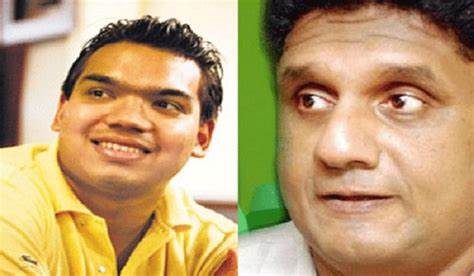
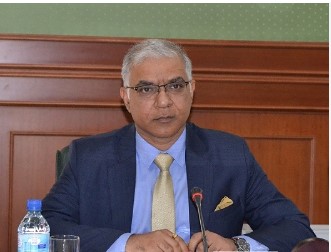
Sarath Fonseka to split from SJB; to run for President

Former Army Commander, Field Marshal Sarath Fonseka, has decided to contest for Presidency at the upcoming Presidential election, the Daily Mirror learns.

Sources close to Fonseka said that the current Chairman of the Samagi Jana Balawegaya (SJB) will make a formal announcement in June.

Fonseka is to contest as an independent candidate instead of joining forces with any political party.

Sources claimed that Fonseka has also managed to secure the support of a group of SJB MPs and back-door talks are ongoing with MPs and politicians from other political parties.

The Daily Mirror learns that Fonseka’s campaign will look at promoting a corruption free country and also give priority to national security.

The former Army Commander took to the streets during the ‘Aragalaya’ protests and will look to ride on the support he got at the time.

He is also expected to work with intellectuals and prominent personalities during his campaign.

The former Army Commander will seek to boost his Presidential bid with the launch of a book on the war, the Daily Mirror learns.

The book is expected to reveal information related to the conflict and the role he played as the Army Commander at the time.

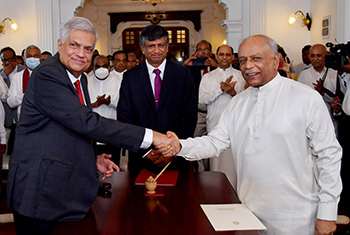
Meanwhile, sources also said that a former diplomat has sought a meeting with Fonseka as a representative of President Ranil Wickremesinghe.

Fonseka has not ruled out meeting Wickremesinghe but has indicated he will not withdraw his decision to contest for Presidency.

The MP has already had discussions with the President in Parliament, sources added without divulging further details on the matters discussed.

Sources also said that Fonseka had informal discussions with a number of diplomats and briefed them on his upcoming announcement.

According to the source, Fonseka has indicated his intention to work closely with India, China and the US.

Posted in Uncategorized

UN Report urges global justice, sanctions for Sri Lanka’s disappeared victims

A new report from the Office of the United Nations High Commissioner for Human Rights (OHCHR) has recommended targeted sanctions on officials responsible for disappearances in Sri Lanka since 1970 and has called for justice outside the country for the families of victims.

Released last week, just before the 15th anniversary of the war’s end and four months ahead of the next UN human rights session where Sri Lanka is likely to face a new resolution, the report has sparked significant attention from rights groups.

The report, titled “Accountability for Enforced Disappearances in Sri Lanka,” urged justice for all Sri Lankan ethnic groups, including Sinhalese and Muslims, during the war and other insurrections, rather than focusing solely on ethnic minority Tamils as in the past.

Sri Lanka ended a 26-year civil war in 2009 with the state military defeating the Liberation Tigers of Tamil Eelam (LTTE), who fought for an independent state in the island nation’s North and East. The civil war was rooted in 35 years of discrimination against ethnic minority Tamils by the majority Sinhalese.

Tamil families have been waiting for justice and accountability from successive governments since 2009 to find their relatives disappeared during the final weeks of the conflict, amid failures from global rights bodies, including the UN.

On Saturday (May 18), the island nation witnessed two commemorations: Victory Day, mostly in the southern part of the country, and Remembrance Day for the Tamils in Sri Lanka’s North.

London-based rights group Amnesty International has estimated the number of disappeared victims in Sri Lanka between 60,000 and 100,000, although the Sri Lankan government has repeatedly disputed these figures. There is no credible numbers recorded by the government.

“Impunity remains entrenched,” the OHCHR said in its report, expressing dissatisfaction with the Sri Lankan government’s measures over the last 15 years.

“Notwithstanding steps such as the criminalization of enforced disappearances and the establishment of the Office of Missing Persons (OMP) and the Office for Reparations, these have not translated into concrete results that would satisfy victims’ rights to truth, justice, reparations, and guarantees of non-recurrence.”

UN investigations have found credible evidence of crimes under international law and other violations of international human rights and humanitarian law committed by both sides of the conflict.

The government has strongly and repeatedly rejected such allegations, and there has been little to no independent or impartial national inquiry into these serious crimes.

The OHCHR said the latest report was prepared with “a series of consultations with victims exploring the impacts of enforced disappearances in Sri Lanka and their perspectives on accountability.”

It held bilateral interviews with 39 victims and convened focus groups involving 43 victims, with a higher ratio of women to compile the report.

TARGETED SANCTIONS

A limited number of Western nations have already imposed targeted sanctions, including travel bans for some Sri Lankan political and military leaders, after finding credible information about human rights violations, the OHCHR said.

The United States has imposed a travel ban on former Army Chief Shavendra Silva and his immediate family members, Navy intelligence officer Chandana Prasad Hettiarachchi, Army Staff Sergeant Sunil Ratnayake, army officer Prabath Bulathwatta, and former Navy chief Wasantha Karannagoda, citing human rights violations, the report said.

Canada last year imposed financial sanctions to freeze the assets of former Sri Lankan presidents Mahinda Rajapaksa and Gotabaya Rajapaksa, along with Chandana Prasad Hettiarachchi and Sunil Ratnayake, citing rights abuses.

Human rights analysts say some Sri Lankan political and military leaders are still unaware that they have been blacklisted by Western nations for rights abuses and will only become aware of such measures when they request visas from these countries.

“Consider further targeted sanctions, consistent with international law, against those who are credibly alleged to have been responsible for enforced disappearances and other gross violations and abuses of international human rights law or serious violations of international humanitarian law,” the OHCHR said.

The Rajapaksas and military leaders have denied any wrongdoing, though successive governments have rejected an independent international investigation into alleged human rights violations, citing infringement on the country’s sovereignty.

Alan Keenan, London-based International Crisis Group’s Sri Lanka Senior Analyst, said the latest report broadens the time horizon to include the disappearances of Sinhala youth during the insurrections led by Marxist group Janatha Vimukthi Peramuna (JVP) as well.

“It’s an issue that all Sri Lankans have been affected by, which goes to the core of the legal system and the failure of multiple governments, basically every government since the 1970s, to deal with,” Keenan told EconomyNext.

“So I think this report is important in that it reminds everybody in the international community and in Sri Lanka of the depth of the problem that Sri Lanka faces in terms of its lack of effective institutions of the rule of law and the many decades of impunity for the most serious violations of international human rights law and, during the war, international humanitarian law.”

“What’s also positive is that the range of recommendations in the report potentially benefits all communities—Tamils, Sinhalese, Muslims, men, and women, rich and poor.”

He noted that human rights issues are often presented by the government in the media as being anti-Sri Lankan and anti-Sinhala majority, favoring only Tamils, Muslims, Christians, or other minority groups.

“This report shows that acting on accountability, holding people accountable, setting up new institutions to make that possible, bringing out the truth, and reforming and strengthening the institutions of justice and the rule of law is everybody’s issue. It should benefit all communities. That’s what’s most interesting and important about this report.”

INTERNATIONAL JURISDICTION

The OHCHR has urged the international community to engage with Sri Lanka due to an “accountability gap at the domestic level,” with victims urging prosecution in a third State due to “widespread impunity in Sri Lanka.”

Citing examples of some Non-Governmental Organizations (NGOs) filing legal actions against former Sri Lankan military leaders in Brazil, Australia, Germany, and Switzerland, the OHCHR noted that no state has yet issued an arrest warrant or prosecuted any Sri Lankans suspected of involvement in an enforced disappearance.

“A key stumbling block has been the immunities afforded to persons who remain in high office or have subsequently been appointed to diplomatic posts,” it said.

“Use all potential forms of jurisdiction, including under accepted principles of extraterritorial and universal jurisdiction, to investigate and prosecute crimes under international law committed in Sri Lanka, strengthen coordination in relation to ongoing investigations, and consider support for other avenues of international justice.”

International Crisis Group’s Keenan explained that cases targeting alleged perpetrators in Sri Lanka could also be pursued in other countries.

Amnesty International’s Secretary General Agnès Callamard, who witnessed the Remembrance Day by the Tamils in the final battlefield of Mullivaikkal, said the Sri Lankan government is best placed to provide answers to the victims, though past “domestic mechanisms to establish accountability in the last 15 years have been mere window dressing.”

“UNWARRANTED, PREPOSTEROUS” REPORT

Sri Lanka’s Foreign Ministry dismissed the UN report, stating that no member country had given a mandate to the OHCHR to compile such a report at a time when Sri Lanka was commemorating the 15th anniversary of the war’s end.

“This is unwarranted,” a Foreign Ministry spokesman told EconomyNext.

“The timing of the release is politically motivated and seems to be targeting the 15th anniversary of the end of the war. The content is unsubstantiated, not credible, and unfounded. It has just interviewed a few victims and targeted our senior officials and military personnel.”

He accused the United Nations Human Rights body of deliberately targeting a small country like Sri Lanka to “draw attention away from human rights violations elsewhere in the world.”

“It has asked to probe disappearances from 1970–2009. This is almost 40 years, covering a substantial period of post-independent Sri Lanka. This is totally preposterous.”

Sri Lanka will respond to the UN Human Rights High Commissioner on the content of the report through its Geneva envoy, he said.

Sri Lanka has admitted to some human rights violations but has strongly rejected any foreign probes into the allegations. Despite the island nation’s protest, the UN rights body has passed two resolutions to conduct an independent investigation with its own officials.

Sri Lanka rejects alleged genocide claims by Canadian Prime Minister

Sri Lanka’s Ministry of Foreign Affairs rejected the “false allegation” of a so-called “genocide” in Sri Lanka in a message by Canadian Prime Minister Justin Trudeau on 18 May 2024.

The Government of Sri Lanka in all previous communications has categorically refuted such outrageous allegation of genocide in Sri Lanka. No competent authority in Canada or elsewhere in the world has made any objective determination of genocide having taken place in Sri Lanka.

These unfounded allegations relate to the conclusion of the armed separatist terrorist conflict waged by the LTTE in pursuit of a separate state, contrary to the principles of the UN Charter. The LTTE is a listed terrorist organization in 33 countries worldwide, including in Canada.

Prime Minister Trudeau’s endorsement of this false narrative of genocide in Sri Lanka is highly disruptive of communal harmony among the Canadians of Sri Lankan origin, a valuable community of Sri Lankan heritage living overseas. Many of these peace-loving citizens have constructively engaged with Sri Lanka and we welcome their support.

Civilians from all communities – Sinhalese, Tamils, Moors, Malays, and Burghers – were affected by the conflict in Sri Lanka. In fact, it was the majority Tamil civilians of the North and the East who were disproportionately affected by the daily repression of the LTTE. All communities suffered in brutal terrorist acts of the LTTE. A partisan narrative ignores the complex reality of the Sri Lankan conflict and as such these comments by Prime Minister Trudeau resonates adversely among Sri Lankans and disrupts the Sri Lankan government’s ongoing efforts towards national unity, reconciliation and progress in Sri Lanka.

Canada’s falsification of our history amounts to irresponsible disinformation. It misleads the minds of current and future generations in Canada and elsewhere, encouraging and perpetuating hatred. It empowers extremism on all sides in all parts of the world where such messages are easily and instantaneously transmitted including through social media.

We therefore urge the Canadian Government to assume responsibility in a spirit of mutual respect in promoting peace and harmony,”the Foreign Ministry said.

On a related but separate front, Canada’s disproportionate focus on Sri Lanka is a clear example of double standards. While Canada has opted to support a false narrative regarding the conflict in Sri Lanka, it has remained intentionally ambiguous relating to the daily dire humanitarian situations we see elsewhere. It is crucial that countries like Canada, who claim to be global advocates of human rights, recognize their self-interested double standards which are resulting in increased polarization in the international community.

Clearly, the repeated statements by the Prime Minister of Canada with regard to Sri Lanka are the outcome of electoral vote bank politics in Canada, funded by a small number of Canadians of Sri Lankan origin with vested and personal interest.

We categorically reject the allegation of genocide – in fact, throughout the conflict, humanitarian supplies including food and medicines were regularly and systematically delivered to affected areas by the Government in collaboration with local NGOs and international organizations such as the International Committee of the Red Cross and UN agencies. Food and medicine were provided via land and sea routes to civilians trapped in the conflict and used as human shields by the LTTE. Wounded were evacuated with the assistance of the ICRC, irrespective of whether they were LTTE cadres. Humanitarian needs were regularly evaluated and despatched. Additionally, throughout the conflict, the Government ensured the continuity of civilian administration in the affected areas by addressing the needs for housing, schools, hospitals, roads, and other infrastructure, enabling the continuity of civilian life and livelihoods. Local administration in the Northern and the Eastern Provinces was financed and run by the civil servants of the Government of Sri Lanka,” the Foreign Ministry added.

In contrast, the LTTE has indiscriminately targeted civilians of all communities in all parts of the country, engaged in ethnically ‘cleansing’ the areas in the Northern and the Eastern Provinces controlled by the force of their trafficked and smuggled arms. The LTTE has targeted and assassinated the moderate Tamil leadership of the country including the former Foreign Minister Lakshman Kadirgamar.

The Foreign Ministry said that since the end of the conflict many steps have been taken by the Government of Sri Lanka towards reconciliation, unity and achieving durable peace and security despite the present economic hardships. The Government says it is determined to continue these measures.

Russia cirticises western pressure on Sri Lanka over human rights

The Russian embassy expressed concerns over the western pressure on Sri Lanka regarding human rights while the very same forces are having a separate stand on the unfolding humanitarian crisis in Gaza, Yugoslavia, Afghanistan etc.

In a statement, the embassy said it has noted increased external pressure on Sri Lanka with regard to the human rights situation in the country.

“Numerous western political figures, diplomats and foreign quasi human rights organizations have come up with their critical statements and abundant observations.

“In spite of the fact that the above-mentioned personalities and entities are well known for their policy of double standards, the Embassy as the official representation of the Russian Federation would like once again to express its perplexity by the way those “ambassadors of justice” see things. Why are they reticent about the Gaza situation? Why don’t they provide their assessments of the humanitarian damage the NATO caused to Yugoslavia, Afghanistan, Libya and other regions to which the Alliance aims to export its “freedom and democracy”? What hinders them to look into the matter of Russian speaking minorities being oppressed in Baltic countries? Why do they finally omit and even indulge the atrocities by the Nazi regime of Zelenskyy in respect of his own people?

“Answers to these questions are partially known but the public community definitely wants to hear them loud,” the embassy said.

Amnesty chief notes complacency in delivering justice in Sri Lanka

Amnesty International’s Secretary General, Agnès Callamard, noted complacency in delivering justice in Sri Lanka.

Callamard concluded a five-day visit to Sri Lanka, Monday, in which she met with officials and a diverse cross-section of society, stakeholders to discuss a range of pressing human rights issues. Speaking at the end of her mission, she said:

“This visit has provided insights into the many challenges that Sri Lanka is confronting 15 years after the end of the war that has fractured and polarized Sri Lankan society. I am deeply grateful to all those who engaged with us, recounting their pain and grief, sharing their views and concerns, and voicing their hopes, fears and demands for the present and the future. Amnesty International stands ready to support all genuine efforts and commitments to confront long-standing impunity, address the violations and grievances of the past and present, and put an end to discrimination and the repression of fundamental freedoms.

“We thank President Wickremesinghe for making the time and providing the opportunity to engage in a constructive dialogue over the human rights challenges facing Sri Lanka. As the home of our South Asia Regional Office, Sri Lanka is vital to our work and we appreciate the government’s continued support and commitment to our cause.

“A slew of new legislations such as the Online Security Act and the proposed NGO law are worrying evidence of the dangers currently confronting Sri Lankas’s vibrant civil society.

“We are further concerned about the crackdown on freedom of expression and peaceful assembly, including through the use of ICCPR Act provisions, to make arbitrary arrests, These are often carried out under multiple accusations without formal charge or evidence and has led to lives being lived in limbo. This must end.

“This is a significant year for Sri Lanka, marking 15 years since the end of the three-decade long internal armed conflict that left tens of thousands of people injured, dead, displaced, or forcibly disappeared. But it is not just successive governments that have failed the victims and the people of Sri Lanka. All those in positions of leadership, from elected officials to opposition leaders, the religious establishment and the national media, have failed to hold the line on the fight against impunity.

“The elections slated in the coming months will also have a major impact on the future of Sri Lanka and human rights considerations for years to come. The political leadership of the country must implement trust building measures that will address divisions, encourage inter-ethnic solidarity, and provide avenues for meaningful healing. It is imperative to address past wrongs; and make a conscious effort to create an enabling environment for redress while the government considers the establishment of a new Truth and Reconciliation Commission.

“A seemingly lack of political will, along with complacency in delivering justice, prevents reconciliation, feeds grievances, and promotes instability. There should be no room for complacency.

“We urge the international community to work with the national authorities to secure truth and justice for all victims of the war and of on-going human rights violations and lay the foundations for a freer and fairer Sri Lanka.”

Following a meeting with President Ranil Wickremesinghe on Thursday, 16 May, 2024, the Amnesty International delegation travelled to Mullaithivu on Friday to meet families whose loved ones were forcibly disappeared during the war.

Agnès Callamard took part in the commemoration on 18 May, 2024 at Mullivaikkal marking the 15th anniversary of the end of war and the suffering endured by the Tamils in the lead up to 18 May, before returning to Colombo to meet representatives of the Malaiyaha Tamil community, human rights defenders, protestors, members of civil society organizations, members of the international community and government representatives.

The Amnesty International delegation focused on an array of key issues, including the lack of accountability for grave human rights violations committed by both sides during the internal armed conflict, repression of the right to peaceful assembly and discrimination against groups such as the Malaiyaha Tamil community, the Muslim community and LGBTI people.

Other priority areas addressed throughout the visit included threats to civil society, freedom of expression and the right to peaceful protest, the use of anti-terror laws such as the Prevention of Terrorism Act (PTA) to suppress dissent, harassment, intimidation, surveillance and obstacles to press freedom, especially in the north of the country.

Posted in Uncategorized

4 Sri Lankan ISIS terrorists arrested in India were planning major attack – report

Four ISIS terrorists were arrested in Ahmedabad yesterday, days after the city airport received a bomb threat. The terrorists – believed to be Sri Lankan nationals – were arrested by the Gujarat Anti-Terrorism Squad after a tip-off.

Giving details of the operation to arrest the four ISIS terrorists, police said multiple teams were formed after the officials received the information that the suspects were planning to travel to Ahmedabad to carry out terror attacks in India.

Vikash Sahay, Director General of Police, Gujarat, said these four terrorists had boarded an IndiGo flight bound for Ahmedabad from Chennai yesterday. “The arrests were made after checking the list of passengers coming from the Southern region and getting their identities confirmed by officials in Colombo,” he said.

Police said the four men “had been in touch with a man named Abu in Pakistan through social media”.

“Abu encouraged them to carry out a terror attack in India. They were so radicalised that they also agreed to suicide bombing. Pakistani resident Abu also gave them Rs. 4 lakh in Sri Lankan currency,” Mr Sahay said.

Police said after scanning their mobile phones, they found photographs of some weapons and location data of Nanachiloda near Ahmedabad.

“The ATS later recovered three Pakistani pistols and 20 cartridges, as indicated in the photographs, from Nanachiloda area,” officials said.

The weapons were arranged by their Pakistani handler, they said.

They were also communicating with the ISIS leaders through Proton Mail, an end-to-end encrypted email service, officials said.

Officials said the suspects – Mohammad Nusrat (33), Mohammad Farish (35), Mohammad Nafran (27) and Mohammad Rashdeen (43) – wanted to “teach a lesson” to Jews, Christians and the members of the BJP and RSS.

“Evidence showing their commitment to join ISIS and follow the path shown by former ISIS Chief Abu Bakr Baghdadi,” they said.

The Ahmedabad airport on May 12 received a bomb threat email which turned out to be a hoax after security personnel searched the airport complex, but nothing suspicious was found.

Meanwhile, Sri Lankan intelligence agencies have launched a fresh probe into the ISIS activities on the island nation following the arrest of the four suspected ISIS terrorists, all natives of Sri Lanka, from the Ahmedabad airport.

Sources said that Sri Lanka’s State Intelligence has requested for more details from their Indian counterparts to identify the background of arrested suspects in Ahmedabad and their alleged links to ISIS.

Sri Lanka’s Public Security Minister Tiran Alles told the media that the country’s security agencies are taking the developments quite seriously and are closely monitoring the situation.

“We are working in close coordination with our Indian counterparts to ensure that all necessary measures are taken to address any potential threat,” Alles told the media.

Five years ago, a group of Islamic State bombers carried out a series of suicide attacks in Sri Lanka on Easter Sunday, killing 270 people, including 45 foreigners, and injuring over 500.

Weeks before the coordinated bomb attacks on three churches and several hotels, the Indian intelligence agencies had alerted their Sri Lankan counterparts about the Islamic State’s plan to carry out such suicide missions.

However, in a major security lapse, the Sri Lankan authorities ignored the warnings.

They later admitted to receiving an “intelligence brief” from India about six terrorists planning a suicide attack on some important churches in the country.

Source: NDTV / IANS

Posted in Uncategorized

‘We will not allow anyone to harm India’s security’: Sri Lankan Foreign Minister

Sri Lankan Foreign Minister Ali Sabry affirmed his country’s commitment to safeguarding India’s national security interests on Monday, stating that Colombo, as a responsible neighbour, will not allow anyone to harm India’s security.

The Minister also addressed India’s concerns regarding the visits of Chinese research vessels to the island nation, saying that they would like to work with other countries in a transparent manner but not at the cost of others.

“We have very clearly stated that we would like to work with all countries, but any reasonable concerns regarding Indian security will be taken into note, and we will not allow anyone to harm that. Subject to that, of course, in a very transparent manner, we would like to work with all countries,” the Minister said in an interview with ANI.
“I just got to know that recently China has become India’s biggest trading partner. So similarly, like you work with that. We would also like to work with everyone, but that should not come at anyone else, third parties cost. So therefore, let me reiterate, as a responsible neighbour and a civilizational partner we will not undertake anything that would harm the legitimate security concerns of India,” he added.

When asked about the ongoing elections in India, the Minister said that the exercise is a celebration of democracy and asserted that Sri Lanka would work with India irrespective of its election outcome.

“It’s a celebration of democracy, the largest democracy in the world. Indian people are educated. Indian people will know what is good for them. I think when it comes to elections, it is domestic matter. It is the public who must decide and others only should watch. We see this celebration is taking place of a democracy. We want a peaceful conclusion of this and we will work with any outcome with the indian public decide,” he said.

Last year, India had expressed its security concerns over the docking of the vessel at the Sri Lankan port as it was shown as a research vessel with the capability of mapping the ocean bed, which is critical to anti-submarine operations of the Chinese Navy. The Chinese research ship had docked at Sri Lanka’s Hambantota Port.

External Affairs Minister S Jaishankar while commenting on Chinese spy vessel Yuan Wang-5 which had docked in Sri Lanka, said that any developments that have a bearing on India’s security are “obviously of an interest to us”.
“What happens in our neighbourhood, any developments which have a bearing on our security, obviously are of an interest to us,” Jaishankar said at a joint press conference after the 9th India-Thailand Joint Commission Meeting.

Source:(ANI)

Posted in Uncategorized

Will Ranil Wickremesinghe regain support of Tamil and Muslim voters? By DBS Jeyaraj

Sri Lanka’s last official census was taken in 2012. According to that census, Sri Lanka’s majority ethnic community the Sinhalese comprises 74.9 % of the island nation’s population. Numerically, the second largest ethnicity is the Sri Lankan Tamils who are 11.1% of the population. The third largest ethnicity is the Sri Lankan Muslims or Moors who comprise 9.3% of the population. The fourth largest ethnic group is the Tamils of Indian origin known as “Malaiyagath Thamizhar” (Hill Country Tamils) who are 4.1%.

The three numerical minorities namely the Sri Lankan Tamils, Muslims and Indian Tamils together are 25.5% of the population. These three ethnic groups form the majority in some Sri Lankan districts. In other districts they are a substantive segment of the population. Since the people of all districts vote together in the Presidential elections, the entire island is transformed into a “single” constituency with a 74.9% Sinhala majority and 25.5 % non – Sinhala minorities.

Therefore the three ethnic minorities have played a significant role in presidential elections from the time the executive presidency was introduced. The voting pattern of the Tamil and Muslim communities in previous presidential elections was discussed in detail by this column last week.

The focus of this series of articles has been on incumbent President Ranil Wickremesinghe’s strategy and plans about contesting the 2024 presidential polls. As such this week’s article would try and assess the plus and minus points of President Wickremesinghe vis a vis the Tamil and Muslim voters.

Ranil Wickremesinghe as mentioned earlier has generally been popular among the Tamil and Muslim voters of Sri Lanka. The bulk of Tamil and Muslim voters supported him in 1999 and 2005 when he directly contested the presidential elections. The three minority ethnicities also strongly supported the presidential candidates backed by Ranil in 2010, 2015 and 2019 namely Sarath Fonseka, Maithripala Sirisena and Sajith Premadasa.

There is optimism in the UNP that the Sri Lankan Tamils will be very supportive of Ranil. These sections opine that Ranil could appeal to the Tamil people directly regardless of Tamil party support and harvest Tamil votes

Tremendous Jolt

The United National Party (UNP) in general and Ranil Wickremesinghe in particular received a tremendous jolt in the 2020 Parliamentary elections. The party polled only 249,435 (2.15%) votes in the country. For the first time in its history, the grand-old party failed to get an MP elected. The UNP polled only 30,875 (2.61%) in Colombo which was considered its stronghold for decades.

This electoral debacle was mainly due to the bulk of the UNP’s sitting MPs breaking away and forming the Samagi Jana Balawegaya (SJB) under Sajith Premadasa’s leadership. While the Rajapaksa-led Sri Lanka Podujana Peramuna (SLPP) swept the polls in 2020, the SJB came next. Premadasa became the leader of the Opposition.

Though Ranil had much political support among Tamils and Muslims for many decades, the 2020 poll reversed the situation. It was the UNP breakaway, the SJB led by Sajith Premadasa, which got the bulk of Tamil and Muslim votes. In fact, one-thirds of the MPs elected from the SJB in 2020 are Muslims and Tamils.

The question that arises at this juncture is whether Ranil Wickremesinghe can win back the Tamil and Muslim votes lost by the UNP to the SJB in 2020? Can Ranil regain the support of Tamil and Muslim parties and voters to help him win the 2024 Presidential poll? Let us briefly gauge the situation in terms of each of the three main ethnic groups in this regard.

Independent Candidate

It is clear that Ranil Wickremesinghe will contest the presidential elections as a non -party independent candidate. He will be supported by an alliance of political parties, groups of MPs, individual MPs and organizations. Ranil however will not be a candidate of this alliance. Instead the alliance will only back the non -affiliated Wickremesinghe. Hence the extent of support Wickremesinghe could get from the three minority groups can only be estimated by the number of Tamil and Muslim MPs and parties backing him.

Ceylon Workers Congress

Let us take the Tamils of Indian origin known as the Hill Country Tamils (Malaiyagath Thamizhar) first. The largest Trade union and chief political party representing the Up Country Tamils is the Ceylon Workers Congress. The CWC is now a constituent of President Ranil Wickremesinghe’s Government. It has two MPs elected from Nuwara Eliya in Parliament. CWC Gen. Secy Jeevan Thondaman is a Cabinet minister. CWC President Senthil Thondaman is the Eastern province Governor. The CWC will back Ranil strongly at the elections.

Ranil’s bond with the CWC was further cemented on May Day this year. The Ceylon Workers Congress (CWC) held its rally in Kotagala. President Ranil Wickremesinghe who was the chief guest at the huge CWC rally brought joyful news to the workers gathered in Kotagala. He announced to a wildly cheering audience that the daily wage of plantation workers had been raised from Rs. 1,000 to Rs. 1,700.

The 700 rupee increase amounted to a 70% pay rise. The president displayed a copy of the Gazette proclamation to the people. He had taken the trouble to get it gazetted on April 30. The positive effect of the 700 rupee wage increase will transcend beyond the estate line rooms and impact on the whole community. It will demonstrate that the President and Government is concerned about them.

The three numerical minorities namely the Sri Lankan Tamils,Muslims and Indian Tamils together are 25.5% of the total population. These three ethnic groups form the majority in some Sri Lankan districts

Tamil People’s Alliance

Though the CWC is the foremost Party of the Hill Country Tamils, it does not have a monopoly of Parliamentary seats. In fact it is the Tamil People’s Alliance (TPA) that has the largest number of Up Country Tamil MPs in Parliament. The TPA is an alliance of three parties namely the Democratic People’s Front (DPA) led by Mano Ganesan, the National Union of Workers (NUW) led by Palani Digambaram and the Up Country Peoples Front (UCPF) led by V. Radhakrishnan.

The TPA contested the 2020 Parliamentary polls on the SJB ticket and got six seats. Three in Nuwara Eliya, one each in Badulla, Kandy and Colombo. One MP Aravinthakumar elected from Badulla crossed over to the SLPP Government in 2020 and was expelled from his party. He is now a state minister in the Ranil-led Government. The TPA has so far remained with Sajith Premadaa’s SJB in the opposition. There are however rumblings of discontent and grumblings of dissatisfaction within the SJB bosom.

There has been much speculation that the TPA will split with the SJB and support Wickremesinghe’s candidacy at the right time. The TPA refusal to sign a memorandum of understanding with Sajith’s SJB is a possible pointer. It indicated that the TPA did not want to tie-up with the SJB prematurely. The alliance wanted to weigh its options and decide at the opportune moment. In short the TPA wants freedom to transfer allegiance to Ranil whenever it wants to do so. Until then it will be in but not of the SJB. Some also opine that the TPA may get divided on this issue with some MPs staying with Sajith and others throwing in their lot with Ranil.

Ranil-Sajith Clash

The current UNP-SJB split is basically an ego clash between Ranil and Sajith. There are no major policy differences. In fact they are the same ideologically. The SJB itself is old UNP wine in a new SJB bottle. There is much yearning among the rank and file of both parties to re-unite and confront the SLPP and JVP together. This grass-root feeling is reflected among the Tamil and Muslim party allies of the SJB too.

It is perhaps due to this factor that TPA leader Mano Ganesan along with Muslim Congress Leader Rauff Hakeem are trying hard to re-unite the SJB and UNP. If there is rapprochement between Ranil and Sajith, minority party leaders like Mano and Rauff would be spared the unenviable task of choosing between the two. This however seems unlikely and so the TPA will have to decide whether it supports Ranil or not in the near future. This may cause a split in the party.

Vadivel Suresh

Apart from the CWC and the TPA, Ranil has received a shot in the arm in the form of Badulla MP Vadivel Suresh the influential Secretary of the Lanka Jathika Estate Workers Union (LJEWU). Suresh who opted to desert Ranil and join Sajith got estranged from the latter. He is now back with the UNP and was seen on the UNP stage on May Day. Thus Ranil appears to be on a strong footing as far as “Malaiagath Thamizhar” voters are concerned with the CWC, LJEWU and elements of TPA support.

Sri Lanka Muslim Congress

Let us move on to the Sri Lankan Muslims. The chief Muslim Party the Sri Lanka Muslim Congress (SLMC) remains with the SJB in the Opposition though some of its MPs supported the Gotabaya Government earlier. The SLMC too has not signed a MOU with the SJB as requested by Sajith recently. SLMC leader Hakeem like TPA leader Ganesan has been trying hard to reconcile Sajith and Ranil and re-unify the UNP.

Observers of the Muslim political scene feel that the SLMC would support Ranil at the presidential election. Though Rauff Hakeem has been playing his cards close to his chest, a number of MPs in the SLMC are for Ranil. There is every likelihood of them revolting if Rauff remains with Sajith. Besides the newly appointed Wayamba Governor Nazeer Ahamed is capable of triggering a pro-Ranil revolt within his former party the SLMC if necessary.

ACMC-NC

The All Ceylon Makkal Congress (ACMC) led by Rishad Bathiudeen will also support Wickremesinghe when elections are announced. He is already displeased with Premadasa over several issues. ACMC dissidents like MPs Rahman and Musharraf are also supportive of Ranil.

The National Congress led by AHM Athaullah is firmly backing Ranil. Athaullah is the uncrowned king of Akkaraipattu. Former Batticaloa MP Hizbullah who has considerable support in Kattankudi will back Ranil.

Thus the three Muslim parties (SLMC, ACMC and NC) dissident Muslim MPs and influential politicians like Hizbullah will support Ranil. Furthermore Muslim MPs elected directly on the SJB ticket like Hashim, Mujibur Rahman and Imran Maharoof may also support Ranil if and when they split from the SJB. It appears therefore that Wickremesinghe is likely to get much Muslim support in the presidential election.

Ranil Wickremesinghe as mentioned earlier has generally been popular among the Tamil and Muslim voters of Sri Lanka

EPDP-TMVP

Finally we come to the Sri Lankan Tamils. What Ranil is sure of at present is the support of two Tamil parties in addition to his own UNP. The EPDP led by Douglas Devananda and the TMVP led by Chandrakanthan alias Pillayan are part of the Wickremesinghe Government. Devananda is a Cabinet minister and Pillayan a state minister. The EPDP has two elected MPs. The TMVP’s Pillayan got the highest number of preference votes in Batticaloa. Devananda also has a limited yet stable vote bank in the North.

Batticaloa MP Viyalendran who split from the TNA and joined the SLPP in 2018 is now a state minister. He too is likely to back Ranil. Then there is Angajan Ramanathan who was the only MP to get elected on the SLFP ticket in 2020. Angajan got the highest number of preference votes in 2020. The politically astute Angajan is likely to hitch his wagon to the Ranil star at the right time.

Former Supreme Court Judge and Jaffna district MP C.V. Wigneswaran voted for Ranil at the presidential poll held in Parliament on 20 July 2022. Therefore he is likely to support Ranil but the consistently inconsistent Wigneswaran may change his mind again. In any case it does not matter because CVW has negligible support among the people now.

The All Ceylon Tamil Congress has two MPs. But the party led by Gajendrakumar Ponnambalam will not participate in a presidential election and has called upon Tamils to boycott the poll.

Tamil National Alliance

The premier political configuration of the Sri Lankan Tamils is the Tamil National Alliance (TNA) which got ten seats in the 2020 elections. The TNA is fractured now with two of its three constituents the TELO and PLOTE forming a new alliance called the Democratic Tamil National Alliance (DTNA) with three other parties including the EPRLF. The chief TNA constituent Ilankai Thamil Arasuk Katchi (ITAK) now stands alone. Of the original ten TNA Parliamentarians, the ITAK has six MPs while the TELO and PLOTE have three and one respectively.

It is too early and too dicey to attempt to gauge what the ex-TNA constituent parties will do in the 2024 presidential poll because none of them have declared their intention so far. These parties may decide only after elections are officially announced.

However, in the 2022 Presidential election the TNA declared its support for Dullas Alahapperuma and not Ranil Wickremesinghe. Yet there were unconfirmed reports that only four of the ten MPs had voted for Dullas. The rest had either voted for Ranil or spoiled their votes. Ranil himself hinted jovially that some in the TNA voted for him. Some reports say the DTPA may support Ranil though the front is yet to declare its position openly.

ITAK -Two Camps

Meanwhile the ITAK itself is now fragmented into two camps. One is supportive of S. Shritharan and the other supports MA Sumanthiran. Furthermore the ITAK is now enmeshed in a legal tangle. The hopelessly divided party seems unable or unwilling to present a common position in courts. Against this backdrop it is virtually impossible to predict what the ITAK may do in the presidential poll. However, there are straws in the wind which indicate that some individuals in both the ITAK camps are likely to support Ranil.

There is optimism in the UNP that the Sri Lankan Tamils will be very supportive of Ranil. These sections opine that Ranil could appeal to the Tamil people directly regardless of Tamil party support and harvest Tamil votes. Given the positive image enjoyed by Ranil among North-eastern Tamils, this move could prove successful.

Tamil Presidential Candidate

However there are two current developments that could work negatively against Ranil. The first is the move by certain quarters to field a common Tamil presidential candidate. If this happens, the “common Tamil candidate” may siphon off potential Tamil votes supportive of Wickremesinghe.

“Mullivaaikkaal Kanji”

The second is the conduct of the Police in handling the peaceful commemoration of the Humanitarian tragedy that engulfed Tamils in May 2009. The 15th anniversary is being memorialised by the distribution of porridge called “Mullivaaikkaal Kanji “ in coconut shells to people in a token gesture of remembrance. This is to denote the fact that hundreds of thousands of Tamil civilians trapped in Mullaitheevu district could only have kanji as food in those dark days.

The Police in the Eastern province have cracked down hard on persons who allegedly distributed Mullivaaikkal Kanji. Male Policemen have reportedly dragged wailing women by their hair and arrested them. Three women including an undergrad and a man have been remanded for allegedly distributing porridge to people. The Police action is saddening and angering the Tamil people.

This high handed, unreasonable conduct is reflecting badly on President Wickremesinghe. So much so that ITAK spokesperson M.A. Sumanthiran addressing a media conference reportedly said “Ranil Wickremesinghe need not come here canvassing for votes if this continues”.

Basil’s presence at Ranil’s election committee opposed

Several powerful figures in the president’s election operations committee have strongly objected to the presence of Basil Rajapaksa and his followers at its meetings.

Anura Yapa and Nimal Lanza boycotted its meeting that was followed by dinner on Monday in protest against Rajapaksa being invited.

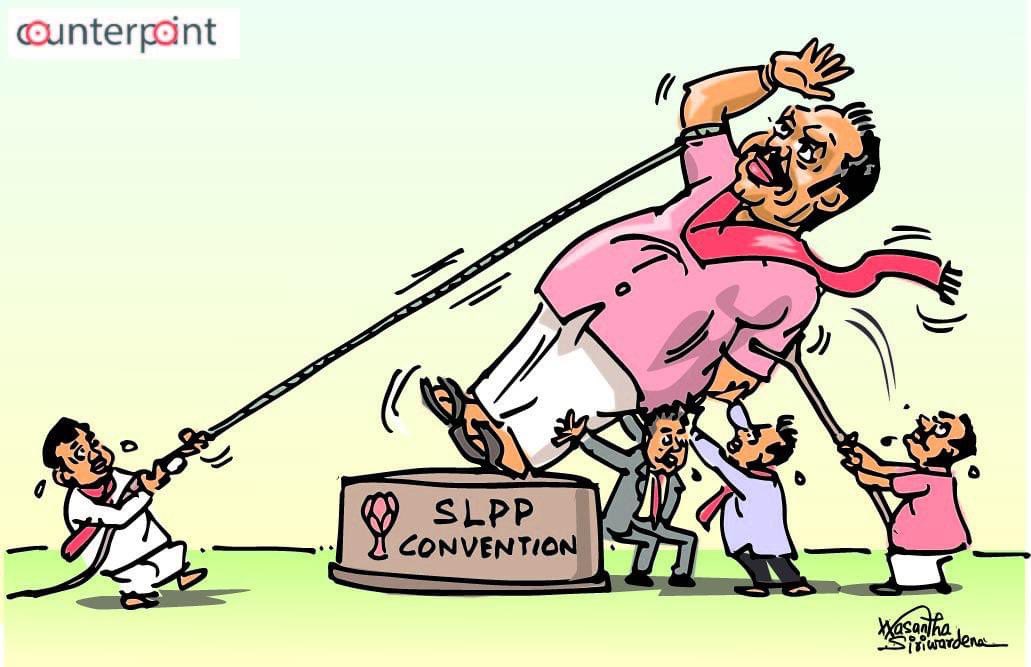
Yapa’s New Alliance and the Sri Lanka Freedom Party’s Nimal Siripala faction strongman Duminda Dissanayake have decided to boycott committee meetings if Rajapaksa attends.

They say president Ranil Wickremesinghe could obtain the support of the Sri Lanka Podujana Peramuna at the presidential election, but he should not get the Rajapaksas on his election stage.

Posted in Uncategorized

Sri Lanka may have to depend on India or nuclear to reach low carbon target: researcher

Sri Lanka will need to either connect to India or set up a nuclear power plant if the country is to reach its renewable energy targets due the country’s weather patterns, a researcher and policy advocate has said.

Sri Lanka has set ambitious goals for renewable electricity generation by 2030, apparently without much prior study or any costs being revealed when the target was set by President Gotabaya Rajapaksa.

Rohan Pethiyagoda, a taxonomist and researcher who had also been senior state officials involved in policy at one time said overall Sri Lanka used a large volume of biomass (firewood) for cooking.

“We need to recognize, of course, that about 60 percent of Sri Lankan households still use firewood as their primary fuel,” Pethiyagoda told a climate forum organized by Sri Lanka’s Ceylon Chamber of Commerce.

“Bless them, because they reduce our dependence on fossil fuels for cooking. Even the tea industry, one of our largest exports, uses biomass as its primary fuel for about 90 percent of its production.”

In the electricity sector, where the renewable lobby and other activists oppose coal on the basis of carbon emissions based on international trends, as well as dust, base load still has to be generated if thermal generators are replaced.

Solar power is available only for a few hours in daytime and it can also vary depending on cloud cover.

Hydro power (run of the river plants) is more stable but is dependent on rain. Large hydros with storage can be used for peaks, industry analysts say.

Wind is available throughout the day but can also be unstable. The problem of variability (non-firm energy) can be solved to some extent through ramping and battery storage at additional cost, analysts say.

A renewable plant in Poonakary with battery storage was priced at around 48 to 49 rupees (about 15 US cents) based on public statements.

Meanwhile Pethiyagoda said Sri Lanka’s weather patterns created an additional problem.

“We have this unusual thing for our renewable energy in Sri Lanka, that at the tail end of the northeast monsoon, from about December to April, we have a dry period in this country, which means that our hydro potential during those months goes down,” Pethiyagoda said.

“Now, as luck would have it, our wind potential goes down at the same time.”

As a result, Sri Lanka needs a reliable alternative to the current coal baseload.

“So for that reason especially, we need to look at either connecting to India’s grid in the long term or having a nuclear facility in Sri Lanka if we want to be low carbon. And of course, we need to replace our vehicle fleet.”

“And our base load can probably come from nuclear,” Pethiyagoda said.

“But whichever way we do it, the cheaper way would be for us to connect to India’s grid.

“Whichever way we do it, we’re looking at an investment of about 40 billion dollars. And then we have the problem of looking at how wind and solar will behave.”

It was not clear what the 40 billion dollar investments would be made up of.

Sri Lanka’s external debt as at December 2024, including unpaid principal after default was 37.3 billion US dollars.

In 2021 when the 70 percent target was unveiled in President Gotabaya Rajapaksa’s election manifesto power engineers said a 53 percent energy share planned for 2030 in a general plan at the time was was equal to that of Germany.

Pushing up the share to 70 percent would require billions of dollars of extra investments, they said.

After the central bank cut rates and triggered an external default however, Sri Lanka growth, and power demand in the next few years is expected to be lower than before extreme macro-economic policy.

Related Sri Lanka to invest US$11bn by 2030 to meet renewable target

In 2023, the CEB said about 11 billion US dollars would be needed to meet the 70 percent target.