Parliament to be dissolved in June: Dhammika to be PM candidate! SLPP

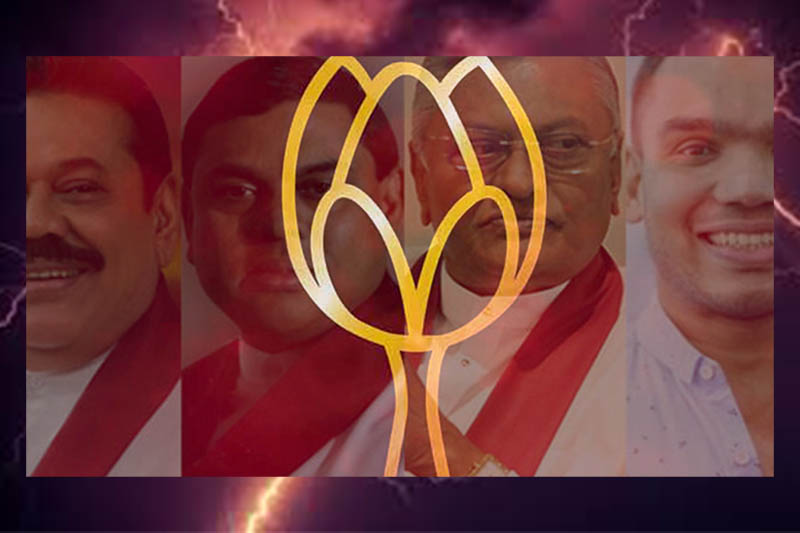
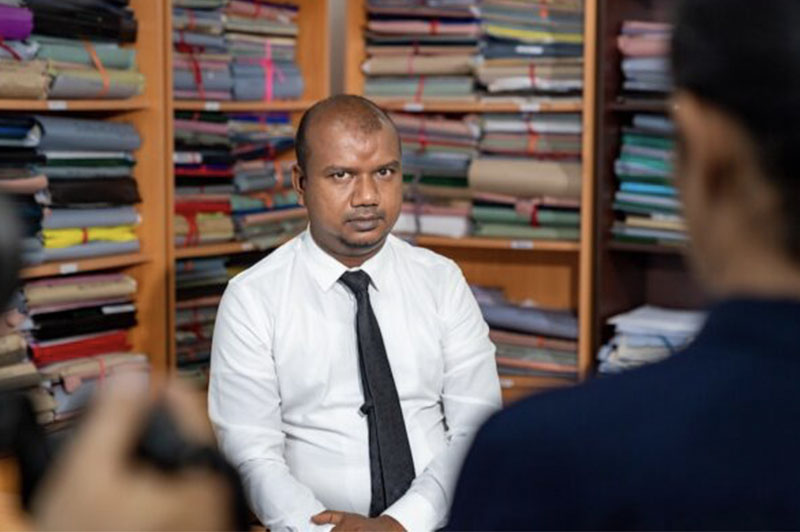
The parliament will be dissolved on either 14 or 15 of June, claimed Udayanga Weeratunga, a close friend to Rajapaksa family and ex-ambassador to Russia.

Incumbent Ranil Wickremesinghe will not contest the next presidential election either, he also said in an interview with ‘Hiru TV’.

Final agreement has already been reached with the president to hold a general election first, said Weeratunga, adding that just one person from the SLPP was aware of that.

Businessman Dhammika Perera will be the SLPP’s prime ministerial candidate at the election, he added.

When contacted for a comment, a senior official close to Wickremesinghe said the president had no intention of dissolving parliament and going for a general election first.

His election campaign has already been launched by a foreign advertising firm, the official added.

Posted in Uncategorized

US ambassador Chung visits north

The United States stands in solidarity with all Sri Lankans, reflecting on the resilience and hope for a united future, said US ambassador Julie Chung.

She said so on X on the anniversary marking 15 years since the end of the civil war.

“We remain a steadfast partner to the Sri Lankan people, including those who continue seeking justice, equal rights, and access to opportunities,” Chung said.

“We reaffirm our commitment to support Sri Lanka’s journey towards a prosperous and inclusive future that embraces its diversity for sustainable peace and process,” she also said.

Meanwhile, Chung visited the north and met with families of the disappeared, former combatants and former PTA detainees.

“Even today many Sri Lankan citizens face continued intimidation. All families have the right to memorialize loved ones,” she said.

The US ambassador met with the north’s governor P.S.M. Charles to discuss economic development and social issues in the province.

We also discussed ways the US can further support small businesses, agricultural modernization and reconciliation efforts, she added.

Posted in Uncategorized

UK supports meaningful progress in Sri Lanka

The United Kingdom continues to lead international efforts on human rights and transitional justice in Sri Lanka, working with our partners to support meaningful progress that will allow the Sri Lankan people to engage on these issues and remember their loved ones freely, said UK foreign secretary James Cameron.

He was giving a statement on the 15th anniversary of the end of Sri Lanka’s armed conflict.

“Sri Lanka is an important Commonwealth partner, and we will continue to work with all communities to make the most of the country’s extraordinary potential.”

“As we mark the 15th anniversary of the end of Sri Lanka’s armed conflict, my thoughts are with all those killed and disappeared, and with their loved ones who continue to search for answers,” said Cameron.

“I heard first-hand about the devastating consequences of the war when I visited Northern Sri Lanka in 2013.”

“There I made a commitment that the UK would support truth, justice, and accountability for all,” he added.

Fifteen years after the end of the war, victims still await justice at Mullivaikkal: Amnesty

Speaking at a commemoration marking the 15th anniversary of the end of Sri Lanka’s internal armed conflict on 18 May 2009, which culminated in the brutal Mullivaikkal offensive where countless civilian lives were lost, Secretary General at Amnesty International Agnès Callamard said:

“Today’s anniversary is a grim reminder of the collective failure of the Sri Lankan authorities and the international community to deliver justice to the many victims of Sri Lanka’s three-decade-long internal armed conflict.

It is sobering to stand in the same place where, 15 years ago, countless civilian lives were lost during the last days of the war.

Ahead of this event, we have witnessed clampdown on the memory initiatives, including arrests, arbitrary detentions and deliberately skewed interpretations of the Tamil community’s attempts to remember their people lost to the war. Authorities must respect the space for victims to grieve, memorialise their loved ones and respect their right to freedom of expression and peaceful assembly.

UN investigations have found credible evidence of crimes under international law and other violations of international human rights and humanitarian law committed by those on both sides of the conflict, yet there has been little in the way of an independent or impartial national inquiry into such serious crimes.

Meanwhile, the families of those who were forcibly disappeared during the conflict have been left to search desperately for their loved ones. It is truly heartbreaking to hear from victims how long they have been demanding justice in vain.

The Sri Lankan government is best placed to provide answers to the victims, however numerous domestic mechanisms to establish accountability in the last 15 years have been mere window dressing.

The report by the UN Office of the High Commissioner for Human Rights released earlier this week too reiterates the gaping deficits in Sri Lanka’s accountability initiatives that has contributed to impunity remaining deeply entrenched.

Tens of thousands of victims and their families continue to suffer in anguish as they await truth, justice, and reparations. We stand in solidarity with them here in Mullivaikkal today.”

Background:

During the internal armed conflict from 1983 to 2009, Sri Lankan government forces and their armed political affiliates committed extrajudicial killings, enforced disappearances and acts of torture against Tamils suspected of links to the Liberation Tigers of Tamil Eelam (LTTE).

The LTTE also launched indiscriminate suicide attacks on civilian targets like buses and railway stations, assassinated politicians and critics, and forcibly recruited children as fighters.

Violations of international human rights and humanitarian law peaked in the final months of the conflict, most notably in May 2009 when some 300,000 displaced civilians were trapped between the warring parties.

It was at Mullivaikkal, a small village in Mullaitivu district in the Northern Province of Sri Lanka, where the final offensive between the Sri Lankan forces and the LTTE took place, killing at least 40,000 civilians according to UN estimates.

Each year, on 18 May, a memorial event at Mullivaikkal brings together thousands of war-affected Tamils to commemorate those lost to the war and demand justice and accountability.

The Office of the High Commissioner for Human Rights (OHCHR) this week released a report on accountability for enforced disappearances in Sri Lanka.

Posted in Uncategorized

Dead or alive? Parents of children gone in Sri Lanka’s civil war have spent 15 years seeking answers

For 15 years, Rasalingam Thilakawathi has been trying to find out what happened to her daughter at the end of Sri Lanka’s bloody civil war. Or if she might still be alive.

The last evidence she has is a photo from a newspaper that shows her daughter, who was 19, sitting inside a bus along with others. The photo, according to the newspaper, shows captured Tamil Tiger fighters in the last stages of the war in May 2009.

Now, 15 years after the end of the long battle between Sri Lankan government forces and Tamil Tiger separatists, Thilakawathi searches for answers. Was her daughter among the 100,000 people killed in the 26-year-civil war? Many more people are missing.

“Tell me whether she is dead or alive,” the mother, who lives in Moongilaaru village of Mullaitivu district, asks authorities again and again. “If you shot her tell me that you shot her, I will accept it.”

In the years since the war ended, many of those who lost children or other family members have grown too feeble to actively search for their loved ones. Others have died.

“I don’t want to let go but I can’t walk properly now,” says 74-year-old Soosai Victoria who has been searching for her son who went missing at 21. “I am praying for him to return. I believe that he is there,” Victoria said.

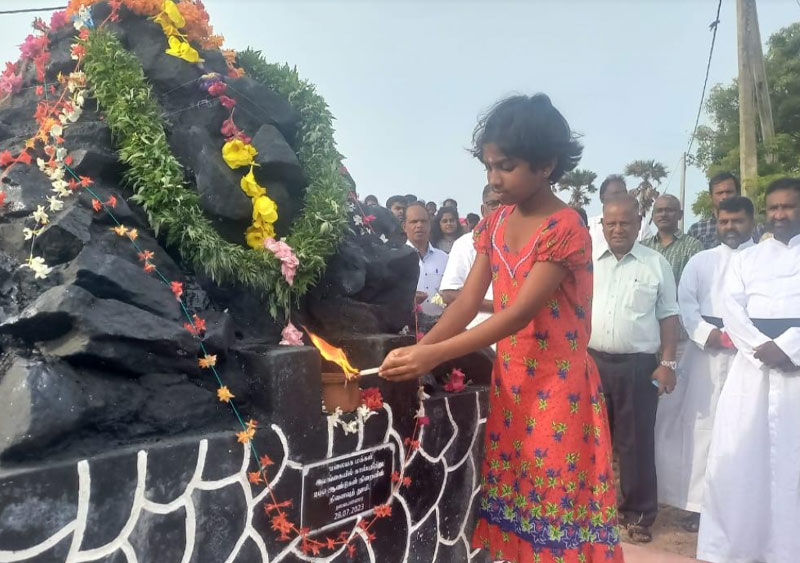
On Saturday, a memorial service marked the 15th anniversary of the war. It took place on the strip of land in Mullivaikal village where the civilians had pitched their tents for the last time before the whole area fell under government forces. Thousands of people were believed to have died here.

The island nation of Sri Lanka has been riven by the conflict between the largely Buddhist Sinhalese majority and the minority Tamils, who are Hindu and Christian. The mistreatment of Tamils sparked a rebellion, with Tamil Tiger fighters eventually creating a de facto independent homeland in the country’s north. The group was crushed in a 2009 government offensive that UN experts say killed tens of thousands of Tamils, many of them civilians.

Both sides were accused of serious human rights violations. The government was accused of deliberately targeting civilians and hospitals and blocking food and medicine for those trapped in the war zone. The Tamil Tigers were accused of conscripting child soldiers, holding civilians as human shields and killing those trying to escape.

Many blame the United Nations for failing to step in to stop the bloodshed.

Farmer Subramaniam Paramanandam recounts how he and a dozen others begged U.N. officials and other international humanitarian groups not to leave the battle zone.

As the Tamil Tigers retreated under a government onslaught, Tamil civilians fled with them into their shrinking territory.

“We heard that the international organizations were packing up to leave,” Paramanandam recalls the exit of the last batch of humanitarian workers. “Hearing this, about 10 or 11 of us ran to their offices. We pleaded with them with clasped hands asking them not to leave.”

Their pleas were not answered, and fighting escalated.

“Our sufferings can’t be put to words and we only had our trust in the U.N. and the international organizations. Nothing happened,” he said.

Severe criticism against the U.N. led then Secretary-General Ban Ki-moon to set up an internal review panel to look into its actions during the last phase of the war.

Its 2012 report said the relocation had a severe impact on the delivery of humanitarian assistance and reduced the potential for protecting civilians.

Citing the report Ban said it concluded that the U.N system failed to meet its responsibilities.

“This finding has profound implications for our work across the world, and I am determined that the United Nations draws the appropriate lessons and does its utmost to earn the confidence of the world’s people, especially those caught in conflict who look to the organization for help,” Ban said.

In Vejle, Denmark, people gathered from all over Europe to remember slain Founder of Liberation Tigers of Tamil Eelam, Velupillai Prabhakaran. Prabhakaran died in 2009, but in the proceeding years, some have come forward to say Prabhakaran is alive and living abroad, collecting money on his behalf. His family is trying to dispel the myth he is alive.

Thilakawathi and other parents of missing children have demonstrated and protested, and said they will continue until they get answers. She has visited state security agencies and government-appointed commissions but hasn’t received any information. She said her daughter was recruited as a child soldier by the Tamil Tigers three years before she went missing. She worked in their computer department, fearing her siblings too will be taken if she left them.

Many parents have refused to accept death certificates for their children without information on what happened to them.

Sellan Kandasamy left his injured wife as he crossed over with his family to the government-controlled area when fights were nearly ending. He hasn’t heard from her since.

“She wasn’t registered and we were not allowed to ask for details. We requested that someone stayed with her but we were chased away with poles. So we had to leave her on the rubble and leave,” said Kandasamy as his tears welled up in his eyes.

Paramanandam himself has lost three sons, one fighting for the Tamil Tigers and two who were not part of fighting went missing as their family moved to escape shelling.

Paramanandam’s plea now is that the U.N ensures that there is accountability for the excesses committed by both sides.

“Whatever happened should be investigated truth must be found out there should be accountability and there should be assurance for such things not to happen again.”

A new U.N. Human Rights Commission report recommends establishment of an independent prosecution and a special court to bring perpetrators to justice. It also says that the international community should initiate prosecutions in their own countries.

“This report is yet another reminder that tens of thousands of Sri Lankans who were forcibly disappeared must never be forgotten,” U.N High Commissioner for Human Rights Volker Turk said. “Their families and those who care about them have been waiting for so long. They are entitled to know the truth.”

Posted in Uncategorized

Families complain on over 400 Sri Lankans in Russia-Ukraine war

Sri Lanka’s Defence Ministry has received over 400 complaints from family members of citizens recruited by mercenary companies to fight in the Russia-Ukraine war.

Authorities launched an investigation earlier this month into reports of Sri Lankan nationals with military backgrounds being trafficked to fight in Ukraine.

In response, the Defence Ministry set up a hotline for family members to lodge complaints after a few returnees exposed the deadly conditions faced by mostly ex-soldiers fighting primarily for Russia. The Ministry reported that a total of 411 complaints have been received so far.

It was reported that not only former members of the security forces but also citizens without any military training have been recruited as mercenaries in the Russia-Ukraine conflict.

The government has decided to send a delegation to Russia to identify and repatriate its citizens fighting for Russia in Ukraine.

Sri Lanka Tamils mark 15 years since end of civil war – AFP

Sri Lanka’s minority Tamil community marked 15 years since the end of the island nation’s civil war on Saturday in an emotional ceremony that proceeded despite fears authorities would attempt to prevent its staging.

Public events celebrating the Tamil Tigers separatist group — which fought a no-holds-barred battle to establish an ethnic minority homeland — are illegal and authorities have blocked past memorials.

Tamils say the events are held to remember all victims of the decades-long war, which concluded in 2009 after a military offensive in the last Tigers stronghold. The operation was condemned internationally for the indiscriminate bombardment of civilians.

“Thousands died here the day before the war ended,” a 41-year-old Tamil village official, who asked not to be identified for fear of reprisal, told AFP at the memorial site in Mullivaikkal.

“There were lots of wounded people crying for help,” he added. “This will haunt me for the rest of my life.”

Several thousand Tamils had travelled to the village for the remembrance, where they lit oil lamps to commemorate the dead.

– ‘Impunity is prevailing’ –

Sri Lankan authorities have repeatedly disrupted similar memorials in the island’s former war zones over the years and arrested participants, but Saturday’s ceremony went ahead without incident.

This year it was attended by Amnesty International’s global chief Agnes Callamard, the most senior foreign dignitary so far to attend a remembrance event in Sri Lanka’s battle-scarred north.

The rights watchdog has for years pressed Sri Lankan authorities, who have repeatedly refused to permit an international probe into wartime atrocities, to properly investigate and prosecute those responsible for abuses.

“We are here to remind the international community that there are people in Sri Lanka waiting for justice,” Callamard told reporters after the event.

Prime Minister Justin Trudeau of Canada, which in 2022 voted to recognise May 18 as Tamil Genocide Remembrance Day, said on Saturday his country would “always advocate for justice and accountability for the crimes committed during the conflict”.

“Today, we honour the victims, survivors, and their loved ones, who live with the lasting pain caused by this senseless violence,” Trudeau said in a statement.

– Intimidation continues –

Tamil residents near the ceremony site told AFP that security forces had been noticeably more active in their communities as the anniversary neared.

“There is heavy surveillance of the people, and it is intimidation,” one Tamil resident said Thursday, asking not to be named for fear of harassment.

Saturday marked 15 years since the killing of the Tamil Tigers’ charismatic but reclusive leader Velupillai Prabhakaran, who had led the separatist group in open rebellion against Sri Lankan forces since 1972.

His death in the village of Mullivaikkal was the culmination of the lightning military offensive that killed at least 40,000 civilians in the final months of the fighting, according to UN estimates.

Sri Lankan forces were accused of indiscriminately shelling civilians after telling them to move to “no fire zones” to clear the path of their assault.

Posted in Uncategorized

Sri Lanka strongly rejects UN report; questions its mandate and timing

Sri Lanka rejected Friday’s UN report from the Office of the High Commissioner for Human Rights (OHCHR) calling for accountability for enforced disappearances, stating such a report has not been mandated by the UN Human Rights Council.

It also questioned the timing of the report on the eve of the May 18 end of the armed conflict with the LTTE in 2009.

On Friday, the OHCHR issued a 45-page report titled ‘Accountability for Enforced Disappearances in Sri Lanka’, referring to the “continuing accountability deficit in Sri Lanka” and calling for “renewed action” at the domestic level to hold it to account through criminal justice and other relevant processes. The report calls for the international community to be engaged with Sri Lanka on this issue and for the instigation of investigations and prosecutions using universal jurisdiction or other bases of jurisdiction and the need for targeted sanctions.

A Foreign Ministry spokesman told the Sunday Times that the timing of the report seemed to politicise the entire issue of allegations of enforced disappearances.

He said UN Human Rights High Commissioner Volker Turk was not mandated by any UN member-state to issue such an “unsubstantiated, vague and biased” report against senior security and defence officials. “There is no resolution on the issuance of such a report,” he added.

Ambassador to the UN (Geneva) Himalee Arunatilka will be writing to High Commissioner Turk, questioning his unilateral initiative to issue this report and the motive for it when he has no mandate or authority to serve extraneous interests. She is also to speak to other member-states on the breach of protocol by the UN High Commissioner.

The Sunday Times further learns that the report has no author and no number as is customary for any UN report.

The spokesman raised the issue of the timing for the day before when commemorative events are being held in the north of Sri Lanka and in Western capitals by sections of the Sri Lankan diaspora to commemorate the dead especially during the last stages of the three-decade-long armed conflict that ended with the defeat of the LTTE on the battlefield.

He said that this was an attempt by the UN agency to target Sri Lanka “at a time when there are gross human rights violations happening elsewhere in the world,” a clear reference to the human rights violations currently unfolding in Occupied Palestine.

One of the highlights of the report has been that, for the first time, the UN has drawn references to those who ‘disappeared’ as far back as the JVP-led 1971 insurgency—more than half a century ago—and the second JVP insurgency from 1987 to 1989.

While there has been repeated questioning why the UN has only raised the issue of enforced disappearances during the LTTE-led armed conflict, though references have been in general to ‘enforced disappearances’, the formal specific inclusion of the JVP insurgencies, and references to the work of “paramilitary groups” are clearly a reference to the JVP insurgencies.

These come against the backdrop of a recent comment by a JVP parliamentarian that the party, now contesting the forthcoming presidential election, supports the commemoration of all those who died during all the armed conflicts in Sri Lanka. Of late, the JVP has intensified its campaigning in the north, with a May Day rally in Jaffna seeking northern votes for its presidential candidate.

The JVP’s Propaganda Secretary and International Affairs spokesman, Vijitha Herath, told Parliament that anyone who lost their loved ones in the (LTTE) war should be allowed to commemorate them, and “that is common whether it is in the South or North”. He said it was a right that families should have. “We too have lost people; we have two commemorative events to remember our members who have died, and no one has tried to stop us so far”.

The Foreign Ministry spokesman said it was “ridiculous” to even try and investigate allegations of forced disappearances of 1971 when the actors were “dead and gone” and that it was proof of a targeted agenda by the UN agency against Sri Lanka.

Mahinda, Sajith Join Indian HC At Mayurapathy Kovil Ceremony

The procession of offerings for the Kumbhabhishekam Pooja began its journey from the Mayurapathy Kovil in Colombo, destined for the Seetha Amman Kovil in Nuwara Eliya.

A group of special representatives recently brought holy water from the Sarayu River in Ayodhya, India, considered the birthplace of Lord Rama, to Sri Lanka for the Kumbhabhishekam festival.

These offerings, including bowls containing the sacred water, were deposited at the Mayurapathy Kovil in Colombo yesterday.

Today, after a special pooja, the procession carrying the offerings began its journey.

Indian High Commissioner to Sri Lanka Santosh Jha, opposition leader Sajith Premadasa and former President Mahinda Rajapaksa were also present at this event.

The offerings are being taken to Seetha Eliya in a special procession.

The motorcade will travel to the Seetha Amman Kovil in Seetha Eliya, Nuwara Eliya.

It is believed that this temple is located in the jungle areas, where Princess Seetha was held after being brought to Sri Lanka.

Election Commission urges prompt action on LG polls

In a bid to resolve ongoing electoral issues and ensure the smooth functioning of local governance, the Election Commission has urged the government to hold the Local Government elections as early as possible.

This was discussed and conveyed in a recent meeting held between election commission officials and Prime Minister Dinesh Gunawardena.

During the meeting, the Election Commission also presented the Prime Minister with options for the upcoming Provincial Council elections.

Speaking to Daily Mirror, Election Commission Chairman R.M.A.L. Rathnayake highlighted that these elections could be held under either the existing system or a newly demarcated system, providing flexibility to accommodate various logistical and administrative considerations.

The discussion also focused on the hurdles impeding the Provincial Council elections.

The Commission underscored the need for specific legislative amendments to the Local Government Election Law, which would streamline the electoral process and address current challenges.

By advocating for these changes, the Election Commission emphasized the importance of timely and effective electoral procedures to uphold democratic principles and ensure robust local governance.