Protest in Colombo demanding removal of Attorney General

A silent protest was held in Colombo today demanding the removal of the Attorney General.

According to reports, the silent protest was held in front of the Colombo High Court.

The protesters were seen holding placards, accusing the Attorney General of alleged corruption and bias.

Meanwhile, the BAR Association of Sri Lanka (BASL) has expressed concern over recent social media posts targeting the Attorney General.

Issuing a statement, the BASL said that certain individuals are attempting, through such posts, to unfairly interfere with the independence of the Attorney General’s office.

The statement further pointed out that in relation to criminal cases, the Attorney General performs a quasi‑judicial function.

It added that based on the material presented by investigating officers, the Attorney General must decide whether or not to file charges against a suspect, or whether to proceed with indictments.

The BASL emphasized that the Attorney General must also consider whether the relevant evidence is legally admissible and whether, on that basis, there is a fair likelihood of securing a conviction.

The statement further noted that decisions of the Attorney General can be reviewed before the Court of Appeal by way of writ applications, or before the Supreme Court through fundamental rights petitions.

Posted in Uncategorized

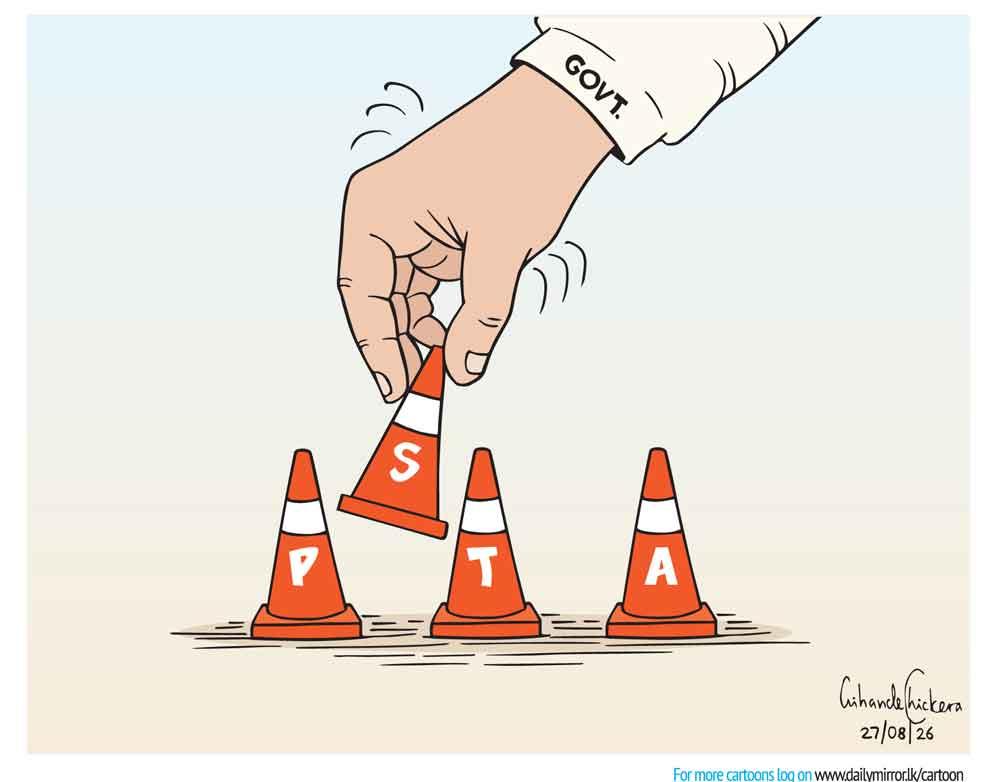
Govt’s counterterrorism bill risks more abuses – HRW

The Sri Lanka government’s proposed counterterrorism legislation includes numerous provisions similar to the current abusive law and risks facilitating the same kind of repression, Human Rights Watch said Monday.

The bill does not meet benchmarks set out by the United Nations counterterrorism expert or comply with human rights obligations and commitments that Sri Lanka made to the European Union to benefit from trade arrangements under the Generalized System of Preferences, or GSP+.

The Protection of the State from Terrorism Act (PSTA), published by the Ministry of Justice in December 2025, would replace the draconian Prevention of Terrorism Act (PTA), which has facilitated extensive violations including arbitrary detention and torture since it was introduced in 1979. In 2017, Sri Lanka committed to replace the PTA with human rights-respecting legislation as a condition for the EU to reinstate GSP+, but successive Sri Lankan governments have failed to comply. In his party’s 2024 election manifesto, President Anura Kumara Dissanayake campaigned for the “abolition of all oppressive acts including the Prevention of Terrorism Act (PTA) and ensuring civil rights of people in all parts of the country.” The proposed law falls short of meeting that pledge.

“Ridding Sri Lanka of its abusive Prevention of Terrorism Act is long overdue, but this proposed law includes numerous provisions that would allow the authorities to commit the same abuses,” said Meenakshi Ganguly, deputy Asia director at Human Rights Watch. “The government should impose an immediate moratorium on the existing law, and prepare rights-respecting legislation through inclusive public consultations.”

Besides provisions similar to the PTA, the draft law includes measures that previous governments proposed in 2018 and 2023 that were dropped following criticism of their rights implications. The Dissanayake government called for public input from experts and civil society, but did not incorporate their previous recommendations.

Sri Lanka has a long history of using counterterrorism legislation to commit rights violations especially against Tamils, Muslims, and perceived government opponents, including human rights defenders. Those abuses have continued under the current government. In separate 2025 cases, the authorities detained for months two young Muslim men who had criticized Israel, under the PTA before releasing them without charge. The government informed the UN that 49 arrests were made under the PTA in the first five months of 2025, compared with 38 in all of 2024. In many instances, the law was used to combat organized crime, not terrorism.

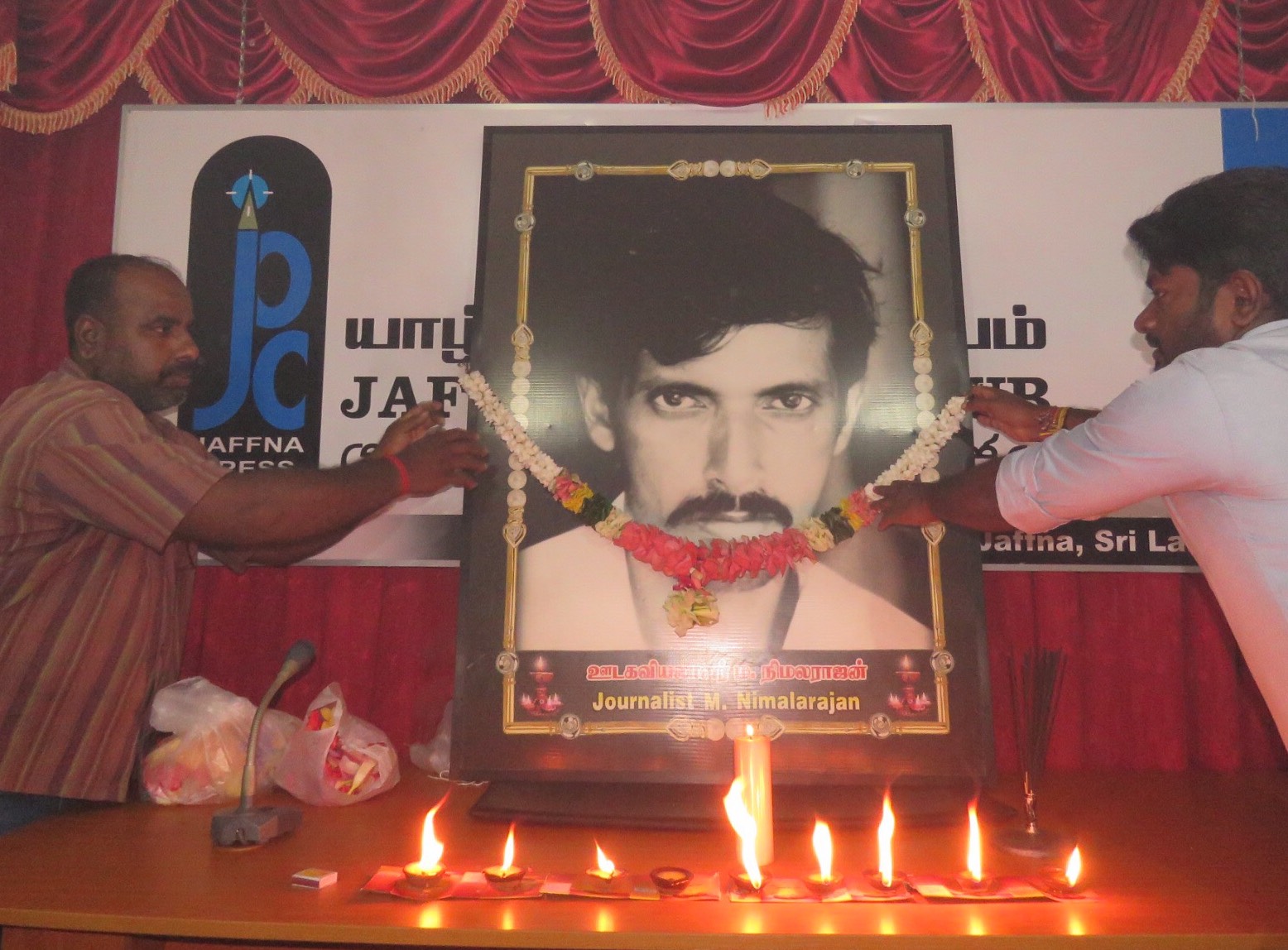
The Office of the UN Human Rights Commissioner found that the police Terrorism Investigation Division repeatedly summoned human rights defenders and questioned them about alleged participation in events and demonstrations. In August 2025, police investigated a journalist for terrorism after he reported on the excavation of a mass grave containing remains of people allegedly executed by security forces during the 1983-2009 war with the separatist Liberation Tigers of Tamil Eelam. Particularly in the north and east, police conduct baseless “terrorism” investigations into members of civil society in an apparent attempt to intimidate them, and obstruct funding to civil society organizations.

UN human rights experts have found that Sri Lanka’s counterterrorism law contravenes international human rights law, including the International Covenant on Civil and Political Rights, the International Convention for the Protection of All Persons from Enforced Disappearance, and the Convention against Torture and Other Cruel, Inhuman or Degrading Treatment or Punishment.

In 2021, the UN independent expert on human rights and counterterrorism and others set out five “necessary prerequisites” to ensure that Sri Lanka’s counterterrorism law complies with international rights standards. They include providing an appropriate definition of terrorism, ensuring precision and legal certainty, including provisions to prevent arbitrary detention, measures that adhere to the absolute prohibition on torture, and providing due process and fair trial guarantees including judicial oversight. However, the latest proposed counterterrorism law does not fully meet any of these standards, Human Rights Watch said.

The bill includes a broad and vague definition of terrorism, which includes crimes that do not constitute terrorism, and could be construed as prohibiting political activism. These include “intimidating the public or any section of the public” or “compelling the Government of Sri Lanka … to do or to abstain from doing any act.” The consequences of an act of terrorism are defined as including death, “hurt,” or hostage taking, but also “serious damage” to property, “robbery, extortion or theft.”

These broad definitions extend to curtailments on speech that are incompatible with international human rights law. The bill criminalizes anyone who publishes or distributes written or visual material “with the intention of directly or indirectly encouraging or inducing the public or any section of the public, to commit, attempt, abet, conspire to commit or prepare to commit, the offence of terrorism.” Due to the vagueness of the law’s definitions, it would be difficult or impossible for Sri Lankans to know what may be deemed a “terrorist publication.”

Like the PTA, the proposed law includes extraordinary powers of arrest and arbitrary detention. A suspect could be remanded (held) without charge by a magistrate for up to one year. In addition, the police could obtain a detention order from the secretary of defence, under which the accused can be held for up to a year and a magistrate would have no power to release them, even if they believe their detention is unjustified. The total period of remand and detention without charge can therefore be up to two years.

The bill empowers members of the armed forces to stop, search, and arrest suspects, and to enter premises and seize documents or other objects without a warrant if they have “reasonable suspicion” of a terrorist offense. The Sri Lankan military has a long record of torture and other ill-treatment and is not trained in law enforcement.

Several sections of the bill purport to offer safeguards against torture, including through checks on a suspect’s welfare by a magistrate and medical officer, and visits to detention sites. However, similar existing provisions are not consistently implemented, including due to a lack of capacity. Security forces have ignored the current requirement to notify the Human Rights Commission of Sri Lanka of all PTA detentions.

Provisions empowering the attorney general to defer or suspend prosecution if the suspect fulfills conditions that can include accepting guilt and submitting to “rehabilitation” are of particular concern. This could enable authorities to coerce confessions, while custodial “rehabilitation” programs may amount to punishment without trial. In the past, so-called rehabilitation programs for alleged terrorists and drug users in Sri Lanka have been associated with torture.

The bill grants the president sweeping powers to proscribe organizations and declare curfews, while the secretary of defence can designate anywhere a “prohibited place” where taking a photograph or video is punishable by three years in prison. The police may apply to a magistrate for an order restricting an individual’s movement and activities. These powers have fewer safeguards than in legislation that was proposed in 2023.

“The proposed law shows that Sri Lankan authorities still cling to the idea that counterterrorism legislation can be used to create sweeping and repressive powers that have little to do with combatting terrorism,” Ganguly said. “The EU and other international partners should urge President Dissanayake to stick to his commitments to abolish the PTA instead of repackaging its disastrous provisions in a new law.”

Ex ‑ Army Captain Linked to Notorious ‘Karandeniya Sudda’

Sri Lanka Police say the former Army Captain arrested in Minuwangoda with 18 T‑56 magazines and 25 rounds of ammunition maintained close ties with the notorious underworld criminal known as Karandeniya Sudda.

The suspect, arrested with the weapons cache, has made a series of explosive revelations during interrogation, exposing a web of organised crime, political links, and past military investigations.

According to police, the former officer admitted that during his military service he had been remanded over an incident involving in treasure hunting.

Investigations suggest he may have acted in collaboration with a former powerful minister from the North‑Central Province, who was allegedly connected to the same treasure hunting incident.

The suspect further disclosed that he was once investigated over the disappearance of 3,000 T‑56 rounds from an Army camp in the North‑Central Province — a matter that had raised serious security concerns during his service period.

Police also revealed that the ex‑Army Captain had visited the airport to pick up organised crime figure “Ganemulla Sanjeewa” when he arrived in Sri Lanka — an operation allegedly planned under the direction of Karandeniya Sudda.

However, once Ganemulla Sanjeewa was taken into custody by the CID, the suspect is believed to have secretly fled the airport, avoiding potential detection or arrest.

Authorities say the ongoing investigation into the former captain is being handled by the Western Province North Crimes Division.

Exiled Tamil survivors in UK break silence on Sri Lanka’s wartime sexual violence

ECONOMYNEXT – More than 16 years after Sri Lanka’s brutal civil war ended in 2009, exiled Tamil survivors of conflict-related sexual violence (CRSV) in the United Kingdom continue to grapple with profound, multi-layered trauma that ripples through families and communities, a report by the International Truth and Justice Project (ITJP) said.

The report reveals through raw survivor testimonies how physical scars, psychological torment, and social ostracism persist without acknowledgment, justice, or reparations from the Sri Lankan government.

Drawing from consultations with exiled Tamils, the document—titled “Justice and Reparations Needs of Exiled Tamil Sri Lankan Survivors of Conflict-Related Sexual Violence”—exposes a continuum of suffering that demands urgent international intervention.

As President Anura Kumara Dissanayake’s administration faces scrutiny over its reluctance to confront past atrocities, the findings of the report underscore a nation’s failure to heal.

The report’s findings delve deeply into the “multi-dimensional effects” of CRSV, painting a vivid picture of individual and collective devastation.

Survivors, many of whom endured rape, gang rape, sexual torture, and humiliation at the hands of Sri Lankan security forces, describe not just bodily harm but a shattering of the spirit, it said.

One male participant illustrated his isolation in a drawing: a figure “totally isolated from people, not able to live like a normal person.”

Hard to Pass Stools

Physical repercussions include chronic pain from injuries like anal rape, with one survivor lamenting, “We continue to have problems in our body after sexual violence – it is hard to pass stools in the morning – there is pain – we worry we might have this problem forever.”

Women also reported targeted assaults on breasts, causing lingering tenderness that disrupts intimacy, while cigarette burns on visible areas like upper arms serve as constant reminders, especially when wearing traditional saris.

During Sri Lanka’s 26-year civil war (1983–2009) between government forces and the separatist Liberation Tigers of Tamil Eelam (LTTE), sexual violence against Tamils was widespread, systematic, and deliberate, primarily perpetrated by state security forces as a tool of intimidation, punishment, and control over conflict-affected populations, rights groups say.

Documented acts included rape, gang rape, sexual torture, genital mutilation, forced nudity, and other humiliations, targeting Tamil civilians, detainees, militants, and prisoners of war—both women and men, including children—in detention centers, checkpoints, and militarized zones.

The violence peaked during the war’s final phase in 2009, with mass rapes and sexual slavery amid the displacement of hundreds of thousands, and persisted post-war in the north and east, where heavy military presence fostered impunity, rights activists and survivors said.

Human rights groups like the UN and Human Rights Watch have described these as potential war crimes and crimes against humanity, disproportionately affecting

Tamils perceived as LTTE supporters, with male victims often overlooked due to stigma.

Survivors report long-term physical injuries, psychological trauma, social ostracism, and economic hardship, with the continuum of abuse linked to broader ethnic repression.

Past Sri Lankan governments and the military have consistently denied or minimized allegations of sexual violence during the civil war, often framing them as isolated incidents, propaganda by the defeated Tamil Tiger rebels, or fabrications by the Tamil diaspora.

However, they have failed to conduct credible investigations or prosecutions despite UN and international calls for accountability.

Successive administrations, including those under former Presidents Mahinda Rajapaksa and Gotabaya Rajapaksa, have stalled transitional justice mechanisms, rejected international involvement, and maintained impunity for security forces, with the military claiming only a handful of reported cases despite evidence of systemic abuse.

The current government under President Dissanayake has pledged to address “controversial crimes” and restore the rule of law, but as of early 2026, no tangible progress has been made on reparations, apologies, or holding perpetrators accountable, rights activists say.

Raped in front of Family

Psychological wounds run even deeper, manifesting as stress, fear, frustration, suicidal thoughts, “deadly nightmares,” insomnia, and a pervasive sense of powerlessness.

“I have unforgettable memories of what happened to me in terms of sexual violence – especially in the army-controlled area when we were checked and sexually abused in front of our brothers and sisters and kids and family members,” a survivor who has attended counselling for 7-8 years said.

“I am unable to forget or get rid of this for many years.”

This powerlessness, he said “is the common ground which links all of us together although we expressed about our feelings in different ways.”

The trauma extends to families: a father recounted how his son saw his scars during a bath and asked why he didn’t fight back, leaving him to cry within himself so it’s not just a scar on the body that he has, but scars deep in his heart.

Social exclusion compounds the agony, with survivors facing stigma, guilt, and denial of rights upon disclosure.

“As a result of sexual violence, families are separated. When we experience sexual violence, we are marginalised in society, and even if we attend a function or celebration we will be ostracised – others are hesitant to talk to us, and we will always be under the influence of our memories of our traumatic experience,” one survivor said.

“And we still face threats from the army, including threats to our families, and sometimes detention. We experience repeated nightmares about what happened,” he said.

“Although we were released from detention, [the Criminal Investigation Department] will question us again and again, watching our activities and tapping our phones – we face all sorts of threats.”

Even approaching the Human Rights Commission yields no proper documentation or action, amid ongoing militarization in the north that restricts free movement, survivors said.

Jobs Denied

“If you are victims of sexual violence in Sri Lanka, people refuse to give you employment. Sexual violence will directly affect our income,” another survivor said.

“Sometimes we will be forced to accept work we don’t like. I feel like I am a victim. I feel shame, and that people will not listen to my voice. Our victim’s voice will be refused, or not heard properly.”

Survivors described further victimization, including workplace abuse and militarized environments where “other people in the Tamil community try to abuse” them and do the same.

Impacts on children and marriages are profound, the report said.

“Afterwards we find we are unable to function when someone tries to be friendly or touch us in a friendly manner, we feel embarrassed or ashamed or angry as it brings back bad memories of our past experience of sexual violence,” another survivor said.

“It is difficult for us to go into a marriage – it is very hard to enter into this. Sometimes we worry we are infected with a STD as a result of the violence, and we start to think that inside us we have lost the ability to be a man anymore.”

Successive Sri Lankan governments have frequently accused Tamil survivors and diaspora members who sought asylum in Western countries of fabricating or exaggerating allegations of war crimes, including conflict-related sexual violence, to secure immigration benefits, political asylum, or to discredit the state and revive separatist agendas.

This narrative, prominent during and after the 1983–2009 civil war, portrays such claims as Tamil Tigers’ propaganda or motivated by financial gain from host countries’ welfare systems, with officials like former President Mahinda Rajapaksa and military spokespersons dismissing UN reports, videos, and survivor testimonies as “fraudulent” or “biased” attempts by “rebel sympathizers” to tarnish Sri Lanka’s image and prolong ethnic divisions.

Critics, however, argue the stance perpetuates impunity without any proper independent investigations, silences victims, and hinders reconciliation, as evidenced by stalled transitional

The report also highlights collective trauma among Tamils, rooted in betrayal by the international community and their own leaders.

“We have a long history of betrayal in our Tamil history. We were betrayed at the end of the war by the UN and other international organisations. We were even betrayed by some of our own Tamil politicians,” one participant said.

“People thought the UN would protect them from attacks and intervene. They did not; the Sri Lankan government could not have won the war unless they were supported by the rest of the world. There is a belief that the whole world united itself to defeat us. It is a big betrayal.”

Survivors’ perceptions of agency evoke frustration and disillusionment.

“There is a need to have a permanent solution to repair the damage. We also need to see the perpetrators punished as that will give us some satisfaction,” a female survivor added.

“We are working hard to punish those who are not punishable. There are many people around who could be punished. Even the small fry are not punished.”

They have said Sri Lanka’s legal system does not have a solution to our problems.

“And even when we try to make someone accountable, they find another 10 ways to escape the legal system, and perpetrators are not punished, and they have impunity.”

Survivors said there should be an independent international organisation which victims can approach and make complaints to without being afraid.

“As I am speaking openly now, the burden in my mind is being reduced. Two years ago, I attempted to do suicide three times. But now I can see changes in myself,” another survivor said.

The report warns that without transformative reparations addressing stigma and structural inequalities, healing remains impossible.

“Sexual violence is happening not only for women but also for men. More victims are in our home country than here. Here we could speak about it openly but in our home country there is no atmosphere like here,” another survivor added.

Parliamentary Pensions (Repeal) Bill Challenged Before the Supreme Court

The Parliamentary Pensions (Repeal) Bill has been challenged by several petitions in the SC. Petitioners claim that several provisions in the Bill are unconstitutional.

The petitioners include former MPs M.M. Premasiri, Nawarathna Banda, B.M. Deepal Gunasekara, and Samansiri Herath, and former MPs Piyasoma Upali and Upali Amarasiri.

The petitions, filed through Attorney-at-Law Sanath Wijewardane, claim that the fundamental human rights guaranteed by the Constitution have been violated.

The petitioners are seeking a ruling from the Supreme Court requiring a 2/3 majority in Parliament and a referendum to pass the Bill.

Posted in Uncategorized

Anura Meter: One-third of Presidential Pledges Fulfilled by November 2025

The latest update of the Anura Meter by Verité Research, a policy pledge tracking initiative, shows mixed progress on the key election promises made by President Anura Kumara Dissanayake. According to the updated assessment, as of 11.2025, 10 out of 30 selected major election promises have been fulfilled. A further 10 promises are currently in progress, while no progress has been recorded on nine promises, and one promise has been classified as unsuccessful. This analysis, which includes developments up to the 2026 national budget, was completed prior to the impact of Cyclone Ditwah.

The Anura Meter tracks progress on 30 key pledges drawn from the president’s 2024 presidential election manifesto, with seven of these included based on direct public feedback. Researchers selected these monitored promises based on their high level of public interest and national importance, spanning major policy areas such as economic reform, governance, anti-corruption efforts, law and order, and social protection. The platform continues to invite the public to suggest additional promises they believe should be monitored to ensure the tracker remains a relevant tool for accountability.

This initiative is maintained by Manthri.lk, Sri Lanka’s only parliamentary monitoring platform, which is operated by Verité Research, one of the country’s largest independent research institutions. The project aims to improve transparency around the implementation of election promises and follows earlier pledge-tracking efforts such as the Maithri Meter and Gota Meter, which monitored the manifestos of former presidents Maithripala Sirisena and Gotabaya Rajapaksa.

Posted in Uncategorized

China sends out message to the JVP/NPP as AKD woos northerners while some UNPers try to block SJB-UNP alliance

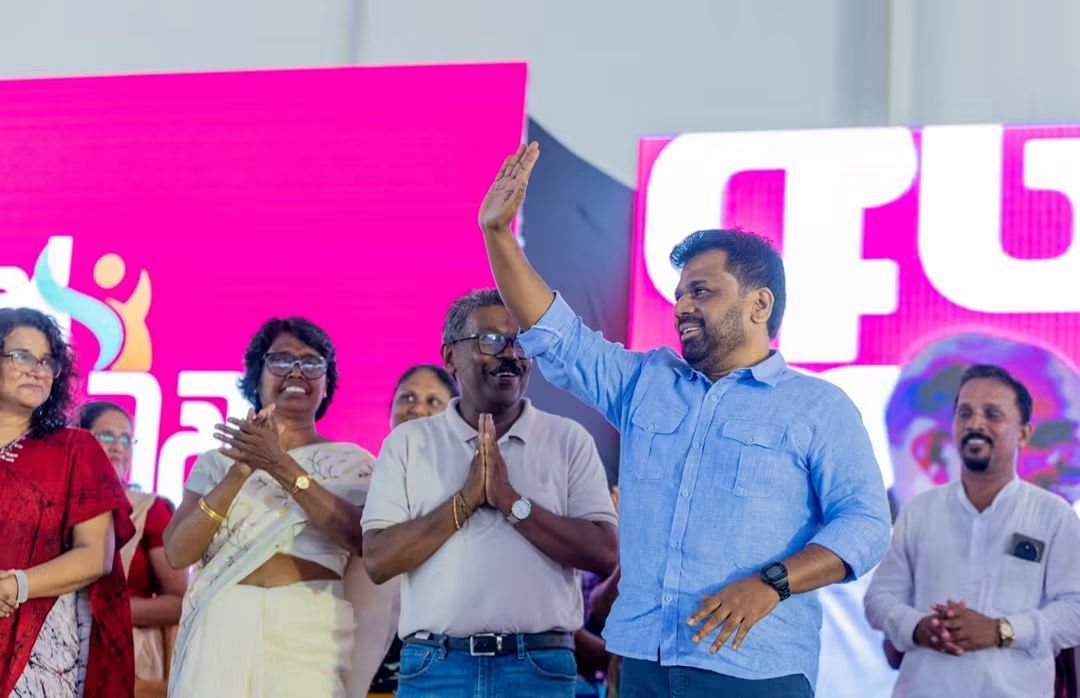
President Anura Kumara Dissanayake (AKD) last week launched one of the country’s large-scale housing projects with the national housing programme for 2026 under the theme ‘A Place to Belong – A Beautiful Life’ in Chavakachcheri in Meesalai on Friday (16). The programme is aimed at providing housing for 31,218 families nationwide, including 2,500 war-displaced families from the north and east. Under the first phase of the programme, providing Rs. 2 million per house for 800 war-displaced families in the Jaffna District was commenced by presenting cheques of Rs. 300,000 each.

AKD’s two-day visit to the Northern Province saw him also launching two renewable energy generation projects in Mannar as well.

The President also attended Thai Pongal celebrations in Jaffna with many engagements with the people in the district. Video clips of AKD engaged in a morning walk clad in a pair of shorts and T-shirt on the streets while exchanging pleasantries with the people were widely shared on social media with positive as well as critical comments aimed at the President and his Janatha Vimukthi Peramuna (JVP)-led National People’s Power (NPP) Government.

However, it is interesting that while AKD was in Jaffna, the Ilankai Tamil Arasu Katchi (ITAK) had opposed a national programme being pushed by the JVP/NPP Government – ‘Prajashakthi.’ ITAK Media Spokesperson, former Member of Parliament (MP) M.A. Sumanthiran noted that ‘Prajashakthi’ was a mechanism carried out based on a political party and that it operated in parallel to the State machinery and set a wrong precedent.

He further stated that development activities, which should be carried out by elected Local Government representatives, were instead being undertaken through the ‘Prajashakthi’ programme, thereby obstructing the functions of those institutions. Sumanthiran also emphasised that the programme was contrary to the Constitution and added that legal action would be taken against it in the future.

Meanwhile, religious observances have taken centre stage in the diaries of many Opposition political leaders in the past two weeks. While former President Ranil Wickremesinghe (RW) engaged in religious observances in Anuradhapura, Sri Lanka Podujana Peramuna (SLPP) National Organiser Namal Rajapaksa and his wife visited Bodh Gaya in India last week to engage in religious observances.

IMF’s review delegation

Meanwhile, a delegation of the International Monetary Fund (IMF) is expected to visit Sri Lanka on Thursday (22) and is to remain in the country till 28 January. The delegation will be on a fact-finding mission to review the country and its economic situation under the ongoing Extended Fund Facility (EFF) following the impact of Cyclone Ditwah.

The IMF’s Executive Board postponed its decision on releasing the sixth tranche under the IMF’s EFF facility that was due to take place last December following the Sri Lankan Government’s request for a Rapid Financing Instrument (RFI) following the cyclone.

Central Bank of Sri Lanka (CBSL) Governor Dr. Nandalal Weerasinghe meanwhile has said that Sri Lanka should pursue revisions to the targets set under the IMF’s EFF arrangement, considering recent unforeseen developments.

He has noted during a televised programme that discussions on revising the targets are expected during the upcoming visit of an IMF delegation later this month.

“It was initially expected to complete the fifth review on 15 December 2025. However, due to the cyclone, the Government noted that the previously proposed budget would no longer be applicable for the coming year, as additional expenditures would be required,” he has explained, noting that time was needed to postpone the review, make assessments, and set new targets for the year ahead and beyond.

“The IMF also offers RFIs, which are well suited for situations like this,” he has further noted, while adding: “In 2020, we were not eligible for this support due to the lack of debt sustainability. Now that we have achieved it, the RFI is the most appropriate option.” Dr. Weerasinghe has added that a key advantage of the RFI is that it does not require a formal agreement with the Government.

The CBSL Governor’s recent statement has been viewed with much interest by many economists who have noted that the Governor seems to have had a change of heart with regard to Sri Lanka’s current engagement with the IMF and is now sounding close to the calls of the main Opposition Samagi Jana Balawegaya (SJB).

Wang Yi’s transit visit

Meanwhile, the much-touted visit of Chinese Foreign Minister Wang Yi, which was hyped in the media, turned out to be just a transit visit on his return trip to China following an official visit to Africa. Wang arrived in Sri Lanka on Monday (12) morning with a 17-member delegation and left the country that evening.

They were received at the airport by Chinese Ambassador to Sri Lanka Qi Zhenhong and senior officials from the Chinese Embassy. Representing the Sri Lankan Government, Ministry of Foreign Affairs East Asia and Oceania Division Director General Savitri Panabokke and other ministry officials were also present.

It is learnt that Minister Wang had stayed at the Jetwing Lagoon hotel in the Negombo area during his period of transit in Sri Lanka.

Foreign Minister Vijitha Herath met with Wang at Jetwing Lagoon during his transit visit and while welcoming the Chinese Minister, Herath had extended his sincere appreciation to the Government and people of China for their timely and generous support to Sri Lanka in the aftermath of Cyclone Ditwah.

Herath further said that in this regard, he had particularly requested the assistance of the Chinese Government in infrastructure development, including reconstruction of identified roads, railways, and bridges which had been affected.

“Minister Wang Yi assured his personal intervention to the said request, expressed confidence that Sri Lanka was on the right track for early recovery, and reaffirmed the Chinese Government’s fullest support,” he added.

Chinese displeasure

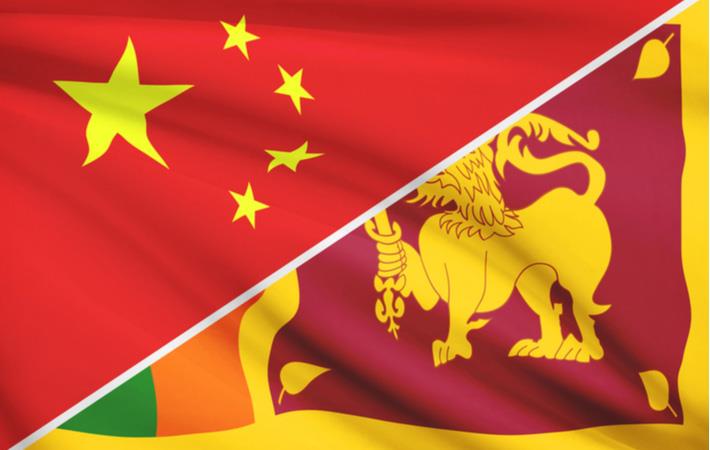
However, the brief, anticlimactic visit by Wang in Sri Lanka has resulted in much talk about what seems like a change in the Chinese towards the JVP-led Government.

It was initially reported that Wang was likely to meet with President AKD and Prime Minister Harini Amarasuriya, apart from Foreign Minister Herath, during his brief visit to Sri Lanka. The meetings with the President and Prime Minister did not take place, and it is learnt that they had not taken place because the Chinese Foreign Minister was on a brief transit stop and due to logistical difficulties in handling such VVIP meetings within the span of a few hours.

Nevertheless, there was also talk in political circles, including some Government circles, that the Chinese were likely to announce an assistance package to Sri Lanka’s post-Ditwah rebuilding process like what the Indians had done. No such package was announced by Wang and the only message about the meeting between Herath and the Chinese Minister was released by Herath, saying that China had expressed continued support to Sri Lanka.

It seems the Chinese have sent a strong message to the JVP/NPP Government.

‘The Black Box’ last week wrote that a Chinese delegation consisting of a senior member of the Communist Party of China (CPC), during a meeting last month with a group of senior JVPers led by JVP General Secretary Tilvin Silva at the Party Headquarters in Pelawatte, had expressed concerns and displeasure over the agreements signed by Sri Lanka with India.

A special concern on the Chinese side had been the Memorandum of Understanding (MOU) related to defence signed between the two countries, especially since the Chinese have continuously claimed that Sri Lanka’s decision to not permit Chinese research vessels to enter Sri Lankan waters was due to pressure from an external party.

Harini-Sajith meet over CC

Meanwhile, the appointment of three new members representing civil society to the Constitutional Council (CC) is on hold due to a delay in the Prime Minister and Opposition Leader reaching consensus on the nominees.

Prime Minister Harini Amarasuriya and Opposition Leader Sajith Premadasa have met in Parliament during the last parliamentary session to discuss the appointment of the three new representatives of civil society to the CC. The term of the three civil society representatives who served in the CC concluded this month, and the three new representatives must be appointed with the consent of the Prime Minister and the Opposition Leader.

The names of the three outgoing civil society representatives were selected by then Prime Minister Dinesh Gunawardena and Opposition Leader Premadasa through consensus where Gunawardena and Premadasa had proposed a name each and the third name was finalised with the consent of both the Prime Minister and Opposition Leader.

Premadasa has maintained that the new civil society representatives to the Constitutional Council should not be affiliated to any political party, especially due to the belief that the Government is likely to appoint individuals affiliated with the ruling party to the CC in order to enable the passage of an individual handpicked by the President to the auditor general post. Three nominations by the President to the post of auditor general have already been rejected by the CC for not being suitable for the post.

However, Premadasa, it is learnt, had obtained legal counsel about the appointment of civil society members to the CC and the lawyers had informed Premadasa that the Government could not make the appointments arbitrarily since the appointments required the Opposition Leader’s consent.

When Amarasuriya and Premadasa had met for the first meeting to discuss the nominees to the CC, the Government side had requested that the Speaker of Parliament be permitted to sit at the meeting as a mediator. Premadasa, however, has rejected the request saying that there was no provision in the Constitution for a mediator to be present at the meeting. The Opposition Leader has further noted that the process should be carried out in line with the provisions of the Constitution.

No final decision

However, the first meeting between Amarasuriya and Premadasa on determining the three new civil society representatives to the CC had concluded without a final decision being reached.

It is learnt that Amarasuriya had presented several names for the positions and so had Premadasa, but the meeting had concluded without a consensus being reached.

While the first meeting was held between the Prime Minister and Opposition Leader on 7 January, a second meeting was held on 8 January.

The second meeting between Amarasuriya and Premadasa, it is further learnt, had also concluded without reaching a final decision on the names, with both the Prime Minister and the Opposition Leader insisting on their nominees to fill the three vacancies in the Constitutional Council.

Impeaching an official

Meanwhile, it is learnt that the Government is looking at the possibility of moving an impeachment motion in Parliament against a senior official of the Government. This would be a rare occasion when a Government has moved an impeachment motion to remove a public official.

The official to be impeached is reportedly under much scrutiny over his alleged conduct related to his duties. It is learnt that this official has even faced public criticism on some occasions over his alleged conduct.

While the Government has already obtained the necessary legal advice to move the impeachment motion for the removal, the relevant document is expected to be finalised in the coming weeks.

It is also learnt that once the document is finalised, it will be handed over to the President for signature.

RW’s case and AKD

However, it is learnt that the ongoing probe and case against former President Wickremesinghe has taken a new twist with the news that the same allegation (misuse of public funds) could also be levelled against President AKD.

It is also learnt that several Wickremesinghe loyalists are in the process of gathering information about President AKD’s visit to Japan last year. This development had taken place after one of Wickremesinghe’s confidants had informed him that President AKD’s visit to Japan as President was not an official one and that it was a personal visit.

Hearing of this, several Wickremesinghe loyalists have started to gather information regarding AKD’s Japanese visit and have also sought legal advice on the matter. These individuals, it is learnt, have also gathered posts that were circulated on social media of several events, especially meetings with the Sri Lankan community in Japan, that President AKD had attended.

Some Wickremesinghe loyalists have pushed this news into the media as a warning to the Government that action similar to the one being pursued against the former President could also be pursued against President AKD, once out of office.

Cases withdrawn

Meanwhile, Prime Minister Amarasuriya told Parliament during the last sessions of the House that the Attorney General’s Department and the Commission to Investigate Allegations of Bribery or Corruption (CIABOC) had withdrawn 102 court cases in the period between 2019 and 2024.

She noted that the Attorney General’s Department and CIABOC had decided not to pursue and file fresh legal action in 34 cases while 65 cases had been refiled.

The Prime Minister made this observation in response to a question posed by Opposition MP Ajith P. Perera.

Opposition control in CMC

Meanwhile, the ruling JVP/NPP has received another warning from Colombo with the combined Opposition securing a majority of members in the key Finance Standing Committee of the Colombo Municipal Council (CMC), which oversees the council’s financial affairs.

The Opposition had also secured a majority in most standing committees of the CMC during council proceedings last week.

Opposition CMC members Roy Bogahawattha, Anura Sujeewa, Tharanga Athuraliya, Dayakantha Perera, and Arshad Nizamdeen were reportedly elected to the Finance Committee.

Colombo Mayor Vraîe Cally Balthazaar and Deputy Mayor Hemantha Weerakoon also serve as ex officio members of the Finance Committee.

CMC Opposition member Riza Zarook has told journalists that the joint Opposition had managed to appoint members from their faction to the Finance Standing Committee. “The Mayor will act as the executive, while the Opposition members will function as the legislature of the Finance Standing Committee,” he has noted.

SJB-UNP alliance

Amidst these developments at different levels of governance, the main Opposition SJB and the United National Party (UNP) are moving ahead with the discussion to unite through a common work programme.

Opposition and SJB Leader Premadasa presided over the SJB Working Committee meeting last Tuesday (13) where the discussion focused on the Government’s proposed education reforms, controversy over the appointment of an auditor general, the push to increase electricity tariffs, and the ongoing move for a union between the SJB and UNP.

As soon as the topic of the SJB-UNP alliance was taken up for discussion, several senior SJBers turned to each other and noted that Premadasa seemed to be serious about it to include it in the meeting’s agenda.

“I would like to inform you that the talks between the SJB and UNP for a common work programme are progressing well. They are progressing better than I had initially anticipated. There’s a positive response from the other side as well. This means we can put forward a strong front in future elections and win,” the SJB leadership has noted. None of the members at the meeting had opposed the statement made by the Leader.

RW’s sentiments

However, some elements in the UNP seem to be engaged in tactics to obstruct the SJB-UNP discussions with news being disseminated to political gossip columns in the media by UNP Leader, former President Wickremesinghe’s Flower Road, Colombo 7 office claiming to be Wickremesinghe’s sentiments or those of some of his loyalists, which could hinder moves to bring the two parties together.

The gossip columns have quoted UNP sources noting that Premadasa did not seem sincere in his efforts to unite with the UNP and that the SJB leadership was engaged in a time-buying exercise of showing his party members that the two parties were going to unite due to the severe pressure brought upon him by party members urging an alliance between the SJB and UNP.

Further quoting these UNP sources, the gossip columns have noted that senior UNPers have stated that the SJB has thus far remained silent on the proposals presented by the UNP. “The UNP’s Working Committee met and discussed the discussions between the UNP and SJB and made several proposals, which were communicated to the SJB through Ruwan Wijewardene. However, the SJB Working Committee has not discussed these proposals,” Wickremesinghe had told several of his loyalists, according to some political gossip columns.

UNP seniors at Sajith’s birthday

Meanwhile, the ongoing moves between the SJB and the UNP to unite through a common work programme witnessed yet another boost last Monday (12) at Opposition and SJB Leader Premadasa’s birthday celebrations.

Religious observances were organised to bless Premadasa on his birthday at the Hunupitiya Gangaramaya Temple, and the front row was occupied by senior UNPers, Deputy Leader Ruwan Wijewardene and National Organiser Sagala Ratnayaka. Wijewardene sat next to Premadasa’s wife Jalani while Ratnayaka sat next to Premadasa and Ravi Karunanayake was next to Ratnayaka.

Apart from the party seniors, there were several UNP organisers as well as Local Government representatives at the religious observances.

Ruwan’s letter to Ranjith

However, Wijewardene had arrived at the Gangaramaya Temple to attend the religious observances carrying a letter. Many have wondered what the letter in Wijewardene’s hand might have contained.

After greeting Premadasa, Wijewardene had handed the letter to SJB General Secretary Ranjith Madduma Bandara saying that it was from the UNP and its leadership.

The letter, it is learnt, contains the proposals on the framework to continue the ongoing dialogue between the SJB and UNP that were agreed by the UNP Working Committee at its last meeting to be handed over to the SJB.

Sajith-Sagala meeting outcome

Last week, ‘The Black Box’ revealed an important meeting that had taken place recently between SJB Leader Premadasa and UNP Leader Wickremesinghe’s confidant, UNP National Organiser Ratnayaka. The meeting between Premadasa and Ratnayaka took place as a further development to the meeting that took place at the end of last month between Premadasa and UNP Deputy Leader Wijewardene and seniors Navin Dissanayake and Akila Viraj Kariyawasam.

The Premadasa-Ratnayaka meeting had taken place at Colombo Club at the Taj Samudra hotel, which is the same venue where the previous meeting between Premadasa and the senior UNPers took place.

After explaining the need for the two parties to form an alliance, Premadasa had explained to Ratnayaka that despite the many issues he had faced while in the UNP, he had put aside all that had happened in the past and wanted to sincerely make an effort to bring the SJB and UNP together.

“I don’t have to remind you of the issues I faced when I was in the UNP. I was harassed and I never kept any anger in my mind. Even when we formed the SJB, Ranil did everything he could to attack me and split the party. Even when he became President, he tried it. But when he was remanded, I was in Singapore and I immediately told the party to mobilise and do everything to support Ranil and secure his release. He was my former Leader, and I sincerely stood by him. That’s why I went to the hospital every day he was there. But still, when he was released from hospital, he once again tried to attack me.

“What I have to say is that we cannot continue in this endeavour while playing games against each other. We can either continue to play games against each other or we can join forces and work together. I cannot play games and bring the parties together to bring victory to the two parties. But Ranil is always trying to play games and obstruct me,” Premadasa had said.

Ratnayaka had listened to the statement made by Premadasa and responded saying that both the UNP and SJB should reach a consensus on working together and that members of both parties were waiting to see the two parties joining forces.

Premadasa had further stated: “There’s no doubt the two parties need to unite. We need to reach a consensus and Ranil needs to be there in the process as an adviser. There are now many young leaders in both parties who could grow to leadership positions. That’s what the people want. We can decide later whether we are going to join and form one party or form an alliance. We need to now form a common work programme for the two parties.”

Ratnayaka had agreed and noted that the leaders of the two parties needed to meet soon to further strengthen the ongoing discussions. Premadasa had agreed and the meeting had concluded on a positive note.

Wajira’s change of heart

Meanwhile, UNP Chairperson Wajira Abeywardena, who was not too supportive of an alliance between the UNP and SJB, seems to have had a change of heart by saying that the country would be transformed into a developed nation by a government led by the UNP and SJB.

Abeywardena’s U-turn comes soon after Ratnayaka’s meeting with Premadasa became public. News of the meeting and the positive outcome made Abeywardena realise that he was the only senior UNPer not supportive of the ongoing efforts by Premadasa to finalise a common work programme between the UNP and SJB.

Abeywardena, while pushing aside efforts for an alliance between the UNP and SJB, has instead been pushing the UNP and its leadership to align with the SLPP and SLPP dissidents.

New appointments in SJB

Meanwhile, the SJB at its Working Committee meeting last week had discussed the need for the party to have a better mechanism to coordinate with cooperative societies islandwide. Everyone had agreed and it was decided to appoint MP Waruna Liyanage as the convenor of the mechanism to coordinate with the cooperative societies.

Premadasa has also taken steps to give appointments to young members of the party, noting that the SJB needs to focus on preparing a second tier to ensure that the party makes a strong move forward.

Wimal’s ‘Harini Go Home’ strike

Meanwhile, the controversy surrounding the Government’s proposed education reforms saw former Minister Wimal Weerawansa together with a group of civil society activists launching an indefinite protest campaign on Monday (12) outside the Education Ministry demanding Education Minister Harini Amarasuriya’s resignation as well as the withdrawal of the new education reforms. Along with the protest campaign, Weerawansa also started a hashtag – ‘Harini Go Home.’

The group organising the protest are called the ‘Adults Standing for Children’ and Weerawansa told a news conference that parents from across the country were invited to join the satyagraha campaign, regardless of political affiliation.

He alleged that the proposed education reforms failed to provide fair opportunities for children and instead introduced measures that could harm students’ futures. The reforms, he claimed, were being implemented in a rushed manner without adequate consultation and amounted to a commercial venture rather than a genuine effort to improve education.

Taking a step back

However, the Government on Tuesday (13) announced that the Cabinet had decided to implement the proposed education reforms for Grade 6 starting in 2027, instead of 2026, following the recent controversy over content in the Grade 6 English module.

Cabinet Spokesperson, Minister Nalinda Jayatissa has said at the weekly Cabinet press briefing that the decision to postpone the implementation of the Grade 6 education reforms was based on the findings of a Criminal Investigation Department (CID) probe into the inclusion of an inappropriate web link in the module, as well as a separate Education Ministry investigation and consultations with education officials led by the President.

The Minister has further explained that the Cabinet has decided to allow additional time to further review the English curriculum and address concerns raised over its content and implementation, while the existing Grade 1 module will continue without any changes.

“The Government clearly believes that education reform cannot go forward without minimum public confidence,” Jayatissa has said, adding that the heightened public concern over the matter only reflects the value placed on education by citizens, which the Government acknowledges and appreciates.

Also, a meeting was held between President AKD, Prime Minister Amarasuriya, and representatives of teachers’ trade unions on Tuesday (13) at the Presidential Secretariat. During the discussion, the teachers’ trade union representatives had stated that they accepted the necessity of the new education reforms being implemented by the Government and pointed out that the Grade 6 curriculum needed to be revised. They had also expressed their readiness to work together with the Government in the new education reform process.

Wimal’s predicament

Meanwhile, the Government’s announcement of the postponement of the implementation of the proposed Grade 6 education reforms resulted in Weerawansa concluding the satyagraha campaign that was launched outside the Education Ministry.

While calling off the satyagraha campaign, Weerawansa and civil society representatives noted that the Government had decided to withdraw the proposed education reforms and that the agitation campaign was therefore being concluded.

However, pro-Government activists including Minister Jayatissa claimed that Weerawansa should continue with his satyagraha campaign since the proposed education reforms had not been postponed as a whole, since the Grade 1 reforms would continue and the Education Minister would not be resigning either.

“He (Weerawansa) can protest until the Prime Minister and Education Minister are removed, but that is his decision; he might have to stay a long while, no one will give thambili to him,” the Minister said, adding that Weerawansa could continue his campaign, as long as it did not obstruct the activities of the Education Ministry and the Department of Examinations, or inconvenience the public.

RW’s call to Wimal

However, former President Wickremesinghe had telephoned Weerawansa and inquired about his campaign against the Government’s education reforms by asking, “What did you do to Harini?”

It is learnt that Wickremesinghe has been critical of Opposition Leader Premadasa saying that Weerawansa had taken the lead in the campaign against the education reforms since the main Opposition had failed to do so.

Sajith’s white paper

Meanwhile, Premadasa, it is learnt, is in the process of preparing a white paper on the much-needed education reforms in response to the Government’s controversial education reforms. Premadasa has also formed a common platform to safeguard the free education system in the country and he has further looped in former Education Minister Akila Viraj Kariyawasam into the forum.

One of the main aims for forming the common platform is to identify the areas where the JVP/NPP Government had gone wrong when preparing the proposed education reforms. Premadasa convened a meeting of this common platform last week and noted the importance of an education system that is suitable for the country and job oriented.

Members of the common platform had agreed to Premadasa’s proposal to formulate an education policy through a broad consultation process including stakeholders, professionals, and intellectuals from all 25 districts. He had further noted that discussions be held at district and provincial levels.

ITAK supports Harini

Meanwhile, the ITAK announced that the party would not be supporting the No-Confidence Motion (NCM) being moved by the Opposition against Education Minister Amarasuriya.

ITAK MP Sivagnanam Shritharan announced that his party had reached this decision during a press conference last week. He noted that his party would not sign the motion, explaining that the decision was taken because no proper evidence had been presented regarding the allegations made against the Prime Minister.

He further noted that since the controversial learning modules had already been withdrawn, demanding her removal from office was viewed by his party as a political reprisal.

Shritharan added that the matter had been discussed with the party leadership during a parliamentary group meeting, and even if the motion were to be presented in Parliament, his party would neither support it nor vote against the Prime Minister.

Source:The Morning.lk

Posted in Uncategorized

Launch of new Beijing-Colombo air link announced in China

The Sri Lankan Embassy in Beijing together with Beijing Capital Airlines last week organized a destination promotion event and announced the launch the Capital Airlines direct flights from Beijing to Colombo.

While congratulating Beijing Capital Airlines for expanding the connectivity between Beijing and Colombo, the Sri Lanka Ambassador Majintha Jayesinghe highlighted the longstanding bilateral relations between the two countries and the significance of strengthening connectivity in line with the Joint Statement issued following the meeting in January 2025 between President Xi Jinping and President Anura Kumara Disanayaka, a news release from the embassy said.

The President of the Beijing Capital Airlines Liu Jun expressed appreciation and stated that the new route is an important milestone in expanding the airline’s South Asian network while strengthening the Air Silk Route. He also highlighted that this is the only direct flight connecting Northern China with Sri Lanka and a key Capital-to-Capital air link, it added.

There was no word about the flight frequency and when the service will begin.

Ambassador Jayesinghe reiterated that Sri Lanka is more than a holiday destination and is positioned as an exotic, experienced-rich, year-round travel destination offering warm and pleasant weather. He emphasized that Sri Lanka, as a stand-alone destination, provides a blend of rich history, eight UNESCO heritage sites, diverse landscapes, pristine beaches, dense forests, and scenic mountains, inviting Chinese travellers to explore and enjoy Sri Lanka.

The commencement of the Beijing – Colombo route will contribute to the social and economic development of both countries. The Beijing- Colombo service has filled a longstanding gap in the aviation market and will further promote the economic, trade, cultural and tourism development, while offering more convenient travel options, the news release said.

Solicitor General takes over Ranil’s UK-visit case

The probe into allegations that former President Ranil Wickremesinghe misused Rs. 16.6 million in state funds during a visit to the UK to attend his wife’s graduation ceremony at the University of Wolverhampton has been placed under the direct supervision of Solicitor General Viraj Dayaratne.

To supervise the investigation, Attorney General Parinda Ranasinghe has appointed Mr Dayaratne, who is the head of the Criminal Division of the Attorney General’s Department.

Additional Solicitor General Dileepa Peiris is currently directing the investigation into Mr Wickremesinghe’s case.

The Sunday Times also learns that the Criminal Investigation Department (CID) is yet to submit to the AG’s Department extracts from the investigation conducted by the CID team that visited the UK as part of the probe.

Posted in Uncategorized

Thai Pongal message – TELO

To the Tamil people of the North, East, and across the island,

At a time when our homeland continues to face political marginalisation, demographic engineering, and the erosion of our collective rights, the TELO Party stands with unwavering commitment to the dignity, safety, and future of the Tamil nation.

Our struggle is not merely about elections or party politics. It is about protecting our identity, preserving our homeland, and ensuring justice for the generations that suffered war, displacement, and systematic discrimination.

We call upon every Tamil—young and old, at home and abroad—to remain united, vigilant, and politically conscious. The forces that seek to weaken our voice thrive only when we are divided. Unity is our strength, and political participation is our shield.

TELO reaffirms its dedication to:

• Defending the rights of the Tamil people
• Protecting the North–East homeland from militarisation and land grabs
• Advocating for truth, justice, and accountability
• Ensuring meaningful power-sharing and self-governance
• Building a future where Tamil children can live with dignity, equality, and security

Our message is simple: The Tamil nation will not be silenced. Our rights are not negotiable. Our future must be shaped by us.

Let us move forward with courage, clarity, and unity.

In solidarity,
TELO