Sri Lanka’s Online Safety Act can criminalize nearly all forms of expression – Core Group tells UNHRC

The Core Group on Sri Lanka at the UN Human Rights Council have expressed concern over the recent legislative developments regarding human rights in the country.

UK’s Deputy Permanent Representative to the United Nations Rita French delivering a statement on behalf of the Sri Lanka Core Group comprising Canada, Malawi, Montenegro, North Macedonia, the United Kingdom and the United States stressed that the Online Safety Act has the potential to severely restrict online communication and could potentially criminalise nearly all forms of expression, creating an environment that has a chilling effect on freedom of expression.

They urge the government to enact amendments to align the Act with Sri Lanka’s human rights obligations and commitments.

Further more, the Core Group called for the Prevention of Terrorism Act (PTA) to be replaced with legislation that is consistent with Sri Lanka’s international obligations, and encourage the release of unjustly held long-term PTA detainees and for Sri Lanka to maintain a moratorium on its use.

“As the government brings forward other legislation with potentially serious implications for fundamental freedoms and civic space, we encourage comprehensive consultations with stakeholders, including civil society, and due legislative process,” she noted.

FULL STATEMENT: This statement is on behalf of the Sri Lanka Core Group comprising Canada, Malawi, Montenegro, North Macedonia, the United Kingdom and the United States.

High Commissioner,

There have been several important legislative developments regarding human rights, reconciliation and civic space. Unfortunately, some of these developments give cause for concern.

The Online Safety Act has the potential to severely restrict online communication and could potentially criminalise nearly all forms of expression, creating an environment that has a chilling effect on freedom of expression. We urge the government to enact amendments to align the Act with Sri Lanka’s human rights obligations and commitments.

We continue to call for the Prevention of Terrorism Act (PTA) to be replaced with legislation that is consistent with Sri Lanka’s international obligations. We acknowledge the recent release of nine Tamil leaders detained last November. We encourage the release of unjustly held long-term PTA detainees and for Sri Lanka to maintain a moratorium on its use.

While we note the government’s efforts to establish a Commission on Truth, Unity and Reconciliation, we stress the importance of an inclusive participatory process to build trust in advance of any legislation. Any future commission must be independent, inclusive, meaningful, and transparent, meet the expectations of affected communities, build upon previous transitional justice processes, and provide pathways for accountability.

As the government brings forward other legislation with potentially serious implications for fundamental freedoms and civic space, we encourage comprehensive consultations with stakeholders, including civil society, and due legislative process.

We welcome the government’s stated commitments on land releases but note with concern reports of increased tensions around land seizures in the north and, particularly, the east of the country.

High Commissioner,

We urge the government to engage with you and your office to address these and other challenges, and we remain ready to support Sri Lanka in addressing HRC resolution 51/1.

Posted in Uncategorized

India notes increase in investments in Sri Lanka

India has taken note of an increase in investments in Sri Lanka as well as other countries in the region.

India’s External Affairs Minister S Jaishankar, in a veiled dig at Maldives President Mohamad Muizzu for his comment earlier this year, said that big bullies do not offer $4.5 billion aid or vaccine or food when neighbouring countries are in distress.

Jaishankar was responding to a question on whether India is being perceived as a “bully” in the region. Moreover, the question was in reference to Muizzu calling India a bully amid the India-Maldives row.

Jaishankar, who was speaking at an event promoting his book ‘Why Bharat Matters’, stressed on India’s role in providing assistance to its neighbouring countries whenever any crisis arose. As per ANI, Jaishankar said at the event, “The big change today in this part of the world is what has happened between India and its neighbours. When you say India is perceived as a big bully, you know, big bullies don’t provide $4.5 billion when the neighbours are in trouble. Big bullies don’t supply vaccines to other countries when Covid-19 is on or make exceptions to their own rules to respond to food demands or fuel demands or fertiliser demands because some war in some other part of the world has complicated their lives.”

The minister’s comment comes after Muizzu had said earlier in the year, “We might be small but that doesn’t give you the licence to bully us.” Maldivian ministers were suspended for their derogatory remarks on Prime Minister Narendra Modi who had posted pictures from his visit to Lakshadweep and had promoted the union territory as a tourist destination.

Jaishankar said that much has changed between India and its neighbours, especially with Nepal and Bangladesh. He said there are roads and railways and waterways that didn’t exist a year ago. Indian businesses use Bangladeshi ports on a national treatment basis, he said. Jaishankar also highlighted the increase in investments in Nepal, Sri Lanka, Bhutan, Bangladesh and the Maldives.

“The volume of the trade and the investments which are there, it’s actually a very good story to tell. Not just with Nepal and Bangladesh, with Sri Lanka as well, I would also say even with the Maldives,” the minister said, further adding that Bhutan has consistently been a strong partner of India.

“So, our problem in the neighbourhood, very honestly, is with respect to one country. In diplomacy, you always hold out hopes that, yes, okay, keep at it and who knows one day what the future holds,” he said.

Meanwhile, Muizzu had asked India to remove military personnel from the island nation before March 10. The remaining Indian troops manning the two aviation platforms will be withdrawn by May 10. Muizzu is widely seen as a pro-China leader.

SJB to file objections to injunction preventing suspension of Sarath Fonseka

The Samagi Jana Balavegaya (SJB) has stated before the courts that it will file objections requesting to invalidate the injunction issued preventing the suspension of Field Marshal Sarath Fonseka’s party membership and positions held in the party, and from taking disciplinary action against him.

Appearing for the Opposition Leader Sajith Premadasa, President’s Counsel Romesh de Silva communicated this to the Colombo District Court when a petition filed by SJB Chairman Field Marshal Sarath Fonseka in this regard was taken up this morning (04).

Accordingly, the Colombo District Judge Sandun Withana ordered the relevant objections to be taken up for consideration this afternoon.

The Colombo District Court, which considered a complaint filed by Fonsek recently, issued the relevant injunction on Leader of the SJB Sajith Premadasa, its General Secretary Ranjith Madduma Bandara, National Organiser Tissa Attanayake and Treasurer of the party Dr. Harsha de Silva.

Sri Lanka Podujana Peramuna to decide on election after Basil’s return

The national organiser of the ruling Sri Lanka Podujana Peramuna (SLPP) will take a decision on whether to contest the 2024 presidential election on its own or support a candidate fielded by an alliance party is part of, a spokesman said.

SLPP legislator Piyal Nishantha told reporters that Rajapaksa is set to arrive in the country on Tuesday March 05.

“The SLPP has no wish to count its eggs before they’re hatched. Our national organiser is a very creative leader that steered the party to victory in a very short period of time,” said Nishantha.

Following Rajapaksa’s return, said Nishantha, the SLPP’s executive committee, headed by Rajapaksa, will decide whether to form an alliance and “provide an opportunity to a candidate” or field its own candidate at the presidential poll that’s due to be held between September 17 and October 17 this year.

“From that moment on, we’ll say compete with us and see if you can,” said Nishantha.

President Ranil Wickremesinghe has said that a presidential election will be held this year before a parliamentary election in 2025. However, some opposition groups have expressed uncertainty over the matter.

In a recent interview with India’s WION network, Wickremesinghe was noncommittal about contesting the presidential election that should constitutionally be held by at least October 17 this year. He did, however, say “both presidential and parliament” elections are due when asked about elections happening in 2024.

Asked how optimistic he is of his own chances, Wickremesinghe said: “For me to be back, I must contest.”

When pressed for his plan, he said: “I have come here to put the economy into order. My first order is to focus on that we get out of bankruptcy.”

There was no confirmation from the president that he would definitely be running.

Meanwhile, there are reports that Wickremesinghe wishes to abolish the executive presidency.

SLPP has to find a better candidate than RW – Prasanna

Indicating the problem faced by the Sri Lanka Podujana Peramuna (SLPP) in facing the forthcoming Presidential election, Minister Prasanna Ranatunga told yesterday that his party, the SLPP would have to find a better candidate than President Ranil Wickremesnghe if it wants to field a candidate of its own.

He said that former minister Basil Rajapaksa will not contest while time is not ripe for Namal Rajapaksa to contest.

“I will support Basil if he contests for the presidency, but he will not contest” he stated.

Ranatunga, who is highly supportive of President Wickremesinghe’s recent decisions, warned that he will have to decide on his SLPP membership if the party decides to field another candidate.

He expressed these views at a party meeting held in his hometown, Udugampola in Gampaha District.

Posted in Uncategorized

‘Address root causes of conflict in Sri Lanka and ensure accountability’ – UN High Commissioner

The United Nations (UN) has called for targeted measures against credibly-alleged perpetrators of serious human rights violations and abuses in Sri Lanka.

UN High Commissioner for Human Rights, Volker Türk, in an oral update on Sri Lanka at the UN Human Rights Council in Geneva, said that two years ago, tens of thousands of Sri Lankans took to the streets demanding deep democratic reforms and accountability for economic mismanagement and corruption, which resulted in the most severe socio-economic crisis in a generation.

“There was great hope that the country would embark upon a long overdue transformation that would benefit all its communities,” he said.

However, Volker Türk said that while the Government has taken important steps to stabilize the economy, he was concerned by the introduction of new or proposed laws with potentially far-reaching impact on fundamental rights and freedoms, the rule of law and democratic governance.

“These include the Online Safety Act; the Anti-Terrorism Bill; the Electronic Media Broadcasting Authority Bill; and the NGO Supervision and Registration Bill – which variously strengthen the executive, grant broad powers to the security forces, and severely restrict rights to freedom of assembly, association and expression, impacting not only on civic space but the business environment,” he said.

Meanwhile, Volker Türk said that the disastrous consequences of Sri Lanka’s economic crisis continue to bite deeply, particularly for the most marginalised.

“Poverty rose further to an estimated 27.9% last year. Nearly two-thirds of households across the country have seen their monthly incomes decrease since March 2022, while food, transportation, health and education costs continue to rise. Despite the Government’s efforts, social protection remains overstretched, and the government’s largest budget expenditure this year will go towards servicing its debt. I appeal for Sri Lanka to be given the fiscal space and support by international financial institutions and creditors to uphold economic, social and cultural rights,” he said.

This year, Sri Lanka marks 15 years since the end of a decades-long civil war. Yet, Volker Türk said that violations of human rights remain unaddressed.

“Tens of thousands of families of the disappeared are still looking for their loved ones and face intimidation, arrests and violence in their search. Land disputes continue to escalate in the north and east of the country impacting on people’s livelihoods. Provincial Councils and local government bodies, that promised a measure of devolution, are not currently constituted,” he added.

He also noted that it is also almost five years since the devastating Easter Sunday bombings, and despite Supreme Court orders victims are still seeking truth and justice.

While the Government has introduced a draft legislation for a Commission for Truth, Unity and Reconciliation, the environment for a credible truth-seeking process remains absent.

“My Office continues to receive allegations of surveillance, harassment and arrests by security forces of civil society representatives, journalists and victims, as well as of people who have been involved in organising commemoration events for war victims,” Volker Türk said.

Volker Türk said that he remains deeply concerned about recurring, credible accounts received by his Office of abductions, unlawful detention and torture, including sexual violence, by the Sri Lankan police and security forces, some of which allegedly took place in 2023, mainly in the north and east of the country.

Last week, the appointment of a new Inspector General of Police was confirmed, despite the Supreme Court’s finding that he was responsible for torture of an individual in 2010. These cases highlight the need for comprehensive security sector reform, the High Commissioner added.

Volker Türk said that his Office continues to work to advance accountability in Sri Lanka and is providing support to several jurisdictions undertaking criminal justice investigations, and is deepening its information and evidence base on specific incidents of human rights concern.

It has also been carrying out research on enforced disappearance and conducting consultations with victims.

The High Commissioner for Human Rights said that sustainable peace and reconciliation will not be achieved in Sri Lanka with regressive laws and authoritarian approaches, which will only serve to perpetuate the human rights concerns of the past.

“I urge the Government immediately to reverse this trend and undertake credible accountability measures to investigate and prosecute past and present human rights violations and economic crimes. I also urge Member States to continue to reinforce these efforts, including through appropriate use of universal and extra-territorial jurisdiction and targeted measures against credibly-alleged perpetrators of serious human rights violations and abuses,” Volker Türk said.

He noted that it is only through addressing the root causes of the country’s conflict and economic crisis, and ensuring accountability, that Sri Lanka will be able to enhance its prospects of achieving genuine reconciliation and sustainable peace and development.

Posted in Uncategorized

Presidential election will be held between 18 Sept. and 18 Oct. 2024

The presidential election is the only election that the Constitution has set a time frame for and therefore it cannot be postponed, Commissioner General of Elections, Saman Sri Ratnayake has said.

“The Election Commission has no direct authority over holding other elections. For example, the tenure of the local council is four years. The line minister can hold the elections a year before, or he can extend the tenure of councils by a year. The tenure of a Parliament is five years but the President can dissolve Parliament after two and a half years into its tenure. This is not the case with a presidential election.”

The Constitution says that the tenure of the presidency is five years and there are no provisions to extend the tenure, according to Ratnayake. “On 18 November 2019, Gotabaya Rajapaksa was sworn in as President. The Constitution stipulates that the next election should be held between 18 September and 18 October.”

The Commissioner General of Elections said that even if the President dissolved Parliament in the first week of September, they had the capability of holding both the general and presidential election on dates close to each other.

“The Constitution says that if the President dissolves the Parliament, he or she is bound to provide the necessary funding and other facilities. This year, we asked for 20 billion rupees, to hold the presidential and local or provincial council elections. We only got 10 billion but if the government decides to hold local or provincial council elections, the Treasury has to provide us with necessary funds,” he said.

Ratnayake said the estimates for 2024 elections were based on prices that prevailed in late 2023. He added that there are about 800,000 first time voters for an election held in 2024.

Commenting on campaign financing, he said that it was not a new concept for Sri Lanka and campaign expenditure by candidates had been limited by law until 1977.

“George E. de Silva lost his seat in Parliament, in 1948, following an election petition, filed by his opponent T.B. Illangaratne, found him guilty and deprived him of his civil rights. Illangaratne said Silva got his manifesto translated for a fee of 40 rupees but had not put that on his list of expenditure. K. M. P. Rajaratne was fined Rs. 100 in 1955 by the district court in Badulla for not submitting his election expenses. He also lost his seat. The system operated during the first past the post system,” he said.

This changed with the proportional representation system where the political party submitted the nomination of candidates, he said. Before this each candidate was responsible for handing over his or her own nominations, Ratnayake said.

A politician needed funds to run a campaign, he said. However, when there was no cap on expenditure money became the determining factor in winning elections, he said. During the 2018 local council election, a candidate had spent 40 million rupees for a ward with 1,800 votes in Maduraketiya, Moneragala, Ratnayake said. The candidate was returned but was unseated by the Monaragala High Court subsequently.

Posted in Uncategorized

Sri Lanka Awards Energy Deal To India After Rejecting China – AFP

Sri Lanka on Friday awarded the construction of three solar and wind hybrid power generation facilities to an Indian company after scrapping a tender won by a Chinese firm.

New Delhi has long been concerned about growing Chinese influence in the island nation, which sits near key global shipping lanes and which India considers to be within its sphere of influence.

The project, initially financed by an Asian Development Bank (ADB) loan, was temporarily shelved two years ago after India raised concerns over China’s involvement.

Sri Lanka’s energy ministry said Friday that the project had been revived and was now fully funded by an $11 million Indian government grant.

It added that renewables firm U-Solar from India’s tech hub of Bengaluru had been awarded the building contract.

India’s assistance “underscored the significance New Delhi attached to bilateral energy partnership”, the Indian embassy said in a statement.

The three facilities will have a combined 2,230 kilowatts of renewable energy capacity and be located on islets near the northern city of Jaffna, not far from India’s southern coast.

China and India have been competing for major infrastructure projects in Sri Lanka, which is currently emerging from its worst economic crisis since independence from Britain in 1948.

Beijing is also Sri Lanka’s single largest bilateral creditor, accounting for around 10 percent of the island nation’s $46 billion foreign debt at the time of a government default at the peak of the crisis in 2022.

EC to consider request to allow Sri Lankans overseas to vote

The Election Commission is to consider a request to allow Sri Lankans living overseas to vote at future elections.

A request in this regard was put forward to the Election Commission by a civil society organization.

The group noted that there are thousands of Sri Lankans who are either employed overseas or are dual citizens.

The Election Commission was requested to make arrangements for Sri Lankans overseas to be able to vote from their respective counties at future elections in Sri Lanka.

The group noted that the Election Commission gave a positive response to the request.

Posted in Uncategorized

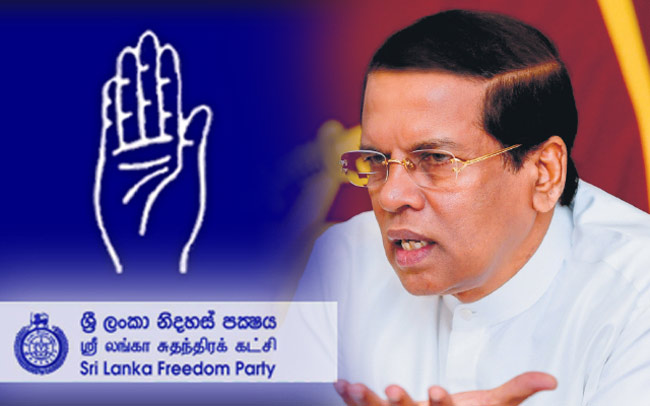
Sirisena Says SLFP-Led Alliance Launching Next Week: Amendments to UPFA Constitution Finalised

Former President Maithripala Sirisena announced the forthcoming launch of a new alliance led by the Sri Lanka Freedom Party (SLFP) during a press briefing following the party’s Central Committee meeting.

Amendments to the United People’s Freedom Alliance constitution have been finalized, with new office bearers to be appointed soon, according to SLFP General Secretary Dushmantha Mithrapala.

The partii#es involved in the proposed alliance are yet to announce their stance on the forthcoming presidential election.