Unified Payment Interface goes live in Sri Lanka

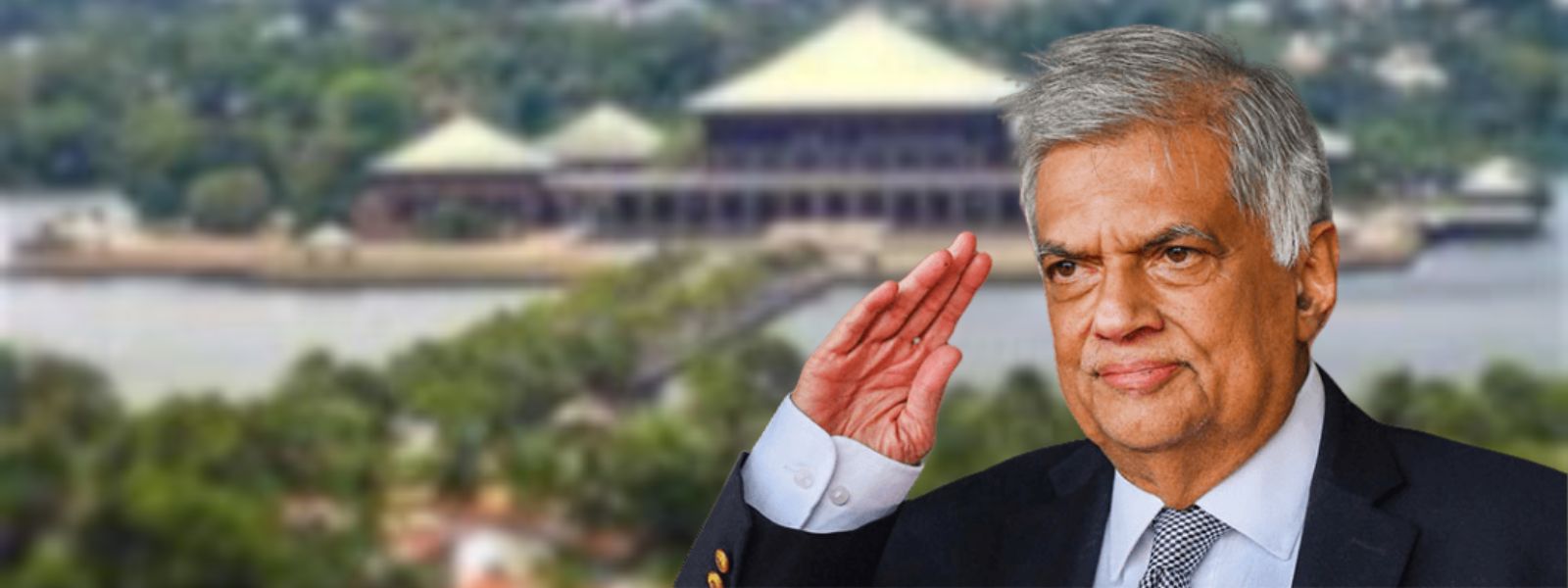
The Prime Minister of India, Narendra Modi along with the President of Sri Lanka, Ranil Wickremesinghe and the Prime Minister of Mauritius, Pravind Jugnauth jointly inaugurated the launch of Unified Payment Interface (UPI) services in Sri Lanka and Mauritius, and also RuPay card services in Mauritius via video conferencing today.

President Wickremesinghe congratulated Prime Minister Modi for the consecration of Shri Ram Mandir at the Ayodhya Dham. He also emphasized the centuries-old economic relations. The President hoped to maintain the momentum of connectivity and deepening of the relationship between the two countries.

Addressing the occasion, the Prime Minister said that today marks a special day for three friendly nations of India, Sri Lanka and Mauritius when their historic connections take the form of modern digital connect. He said that it is proof of the government’s commitment towards the development of the people. The Prime Minister underlined FinTech connectivity will further strengthen cross-border transactions and connections. “India’s UPI or United Payments Interface comes in a new role today – Uniting Partners with India”, the Prime Minister emphasized.

The Prime Minister underlined that digital public infrastructure has brought about a revolutionary change in India, where the smallest of vendors in the remotest of villages are transacting via UPI and making digital payments. Speaking about the convenience and speed of UPI transactions, the Prime Minister informed that more than 100 billion transactions took place via UPI last year worth INR 2 lakh crores or 8 trillion Sri Lankan rupees or 1 trillion Mauritius rupees. The Prime Minister also mentioned making last-mile delivery through the JAM Trinity of bank accounts, Aadhar and mobile phones wherein 400 billion US dollars has been transferred into the bank accounts of beneficiaries. He informed that with CoWin Platform India conducted the world’s biggest vaccination programme. “Use of technology is promoting transparency, reducing corruption and increasing inclusivity in society”, the Prime Minister said.

The Prime Minister stressed that “India’s policy is ‘Neighborhood First’. Our maritime vision is SAGAR i.e. Security and Growth for All in the Region. India does not see its development separately from its neighbours.”

Referring to the Vision Document that was adopted during the last visit of the Sri Lankan President, the Prime Minister highlighted the strengthening financial connectivity as its key component. The Prime Minister expressed the confidence that connection with UPI will benefit Sri Lanka and Mauritius and digital transformation will get a boost, local economies will witness positive change and tourism will be promoted. “I am confident that Indian tourists will give priority to destinations with UPI. People of Indian origin living in Sri Lanka and Mauritius and students studying there will also get special benefits from it”, the Prime Minister added.

The Prime Minister underlined that today’s launch symbolizes the success of Global South cooperation. “Our relations are not just about transactions, it is a historical relation”, PM Modi emphasized highlighting the strength of people-to-people relations between the three nations. Drawing attention to India supporting its neighbouring friends in the last ten years, the Prime Minister said that India stands with its friends in every hour of crisis, be it natural disasters, health-related issues, economic or support on the international stage. “India has been the first responder and will continue to be so”, the Prime Minister underlined. PM Modi also highlighted the special attention towards the concerns of the Global South even during India’s G20 presidency. He mentioned setting up a Social Impact Fund to extend the benefits of India’s digital public infrastructure to countries in the Global South.

Concluding the address, the Prime Minister extended his heartfelt gratitude towards President Ranil Wickremesinghe and Prime Minister Pravind Jugnauth who played a vital role in today’s launch. He also thanked the central banks and agencies of the three countries for making this launch successful.

With guidance from the Reserve Bank of India and the Central Bank of Sri Lanka, NPCI International Payments Limited of India and Lanka Pay of Sri Lanka have collaborated for enabling the acceptance of UPI services through LankaQR. This will allow merchants in Sri Lanka to accept seamless digital payments from Indian tourists. Such interlinkage will generate ease among Indian tourists benefitting Sri Lanka’s tourism industry, as well as fostering greater connectivity in the FinTech and digital domain. High Commission of India also organised a live screening of the launch event, which was attended in large numbers by representatives of banks, business and Indian community in Colombo.

Posted in Uncategorized

Sri Lanka needs to diversify markets to address food insecurity: US ambassador

The US supports addressing Sri Lanka’s food security challenges, US Ambassador to Sri Lanka Julie Chung has told Minister of Commerce, Trade and Food Security Nalin Fernando.

“The ambassador emphasized the importance of enhancing food security in the country. She also stated that to slash the food price increase and to adapt to the inflation, Sri Lanka needs to diversify the market,” a statement by the Ministry said.

The trade ministry focuses mainly on decreasing the cost of production, minimizing post-harvest wastage, and enhancing the quality of production, Fernando said after the meeting on Monday (12) at the trade ministry.

Fernando conceded that the country needs assistance with new technology to improve production, and assistance for SME sector productivity improvement.

In May 2023, the UN’s Food and Agriculture Organization and the World Food Program estimated that 17 percent of the country’s population are in moderate acute food insecurity.

“Discussed US support to address Sri Lanka’s food security challenges, including USDA’s school feeding program and USAID SriLanka’s initiative to boost paddy productivity,” Chung said on social media platform X (twitter).

“The United States continues to support training and financing to small businesses and entrepreneurs and expand trade between our countries.”

SLPP MPs not consulted on ETCA, alleges govt. member

SLPP parliamentary group member Sarath Weerasekera yesterday (11) took exception to a government decision to finalise technical level talks on the proposed Economic and Technical Cooperation Agreement (ETCA) with India before the end of March this year.

The issue hadn’t been taken up at a government parliamentary group at any level or discussed in Parliament, the former Public Security Minister told The Island. The government parliamentary group consists of SLPP, three MEP MPs, including Prime Minister Dinesh Gunawardena, one UNP MP, one TMVP MP, two EPDP MPs and two CWC MPs.

Referring to a recent statement attributed to Cabinet spokesman Bandula Gunawardena, regarding the status of ETCA negotiations, the Colombo District MP said that such a far reaching agreement couldn’t be finalised without proper consultations.

The ruling SLPP should state its position on ETCA without delay, MP Weerasekera said, urging President Ranil Wickremesinghe not to exploit the continuing political, economic and social crisis to advance his agenda.

Responding to The Island queries, the SLPP MP said that the two countries suspended talks on ETCA in 2018 following a spate of protests here. Negotiations commenced in 2016, between Modi’s India and the Yahapalana government, a year after Mahinda Rajapaksa’s defeat at the 2015 presidential election.

The then President Maithripala Sirisena in late March 2016 strongly defended ETCA, alleging protests against the move were politically motivated.

Lawmaker Weerasekera said that Sri Lanka deeply appreciated unprecedented Indian support during the 2022 economic crisis but it wouldn’t be fair to take advantage of a hapless country.

MP Weerasekera said that the two governments resumed talks on ETCA soon after President Gotabaya Rajapaksa’s ouster in July 2022. The former Navy Chief of Staff declared that the UNP leader, elected by Parliament to complete the remainder of Gotabaya Rajapaksa’s term, shouldn’t have resumed talks on ETCA under any circumstances.

Commenting on MP Weerasekera’s sudden criticism directed at ETCA, sources pointed out that during the 2016-2018 period there had been altogether 11 rounds of talks. The 12th round of talks was held in Colombo from Oct 30, 2023 to Nov 1, sources said, adding that the Cabinet spokesman briefed the media in the first week of Dec 2023 in this regard.

According to Minister Gunawardena, the Cabinet approved President Wickremesinghe’s proposal regarding ETCA meant to boost Sri Lanka’s efforts to achieve export-led economic recovery.

Sri Lanka and India signed a Free Trade Agreement on Dec 28, 1998 during Chandrika Bandaranaike Kumaratunga’s tenure as the President. The FTA came into operation on March 1, 2000.

Sources said after the conclusion of the 12th round of talks in Colombo, both parties announced details. According to media statements issued in the first week of Nov 2023, discussions covered various chapters including Trade in Goods, Technical Barriers to Trade, Sanitary and Phytosanitary Measures, Trade in Services, Custom Procedure & Trade Facilitation, Rules of Origin, Trade Remedies, Economic & Technology Cooperation and Dispute Settlement. Sources emphasized that negotiations were held in an open and transparent manner.

The Sri Lankan delegation was led by K J Weerasinghe, Chief Negotiator, and the Indian delegation was led by Shri Anant Swarup, Joint Secretary in the Department of Commerce, Government & Chief Negotiator.

The Indian Ministry of Commerce and Industry said in a statement that during 12th round of talks both sides reviewed the progress on implementation and decided to drop nine issues as being resolved. Issues such as the quota on apparel and pepper and the procurement of pharmaceuticals were also discussed and both sides decided to continue the discussion and explore new options for resolution of the matter, the Indian Ministry said.

MP Weerasekera said that the SLPP couldn’t keep quiet over a fresh move on ETCA after having vigorously opposed the agreement during the Yahapalana administration. The MP acknowledged that the SLPP was experiencing a catch 22 situation.

Snap general election in April?

A decision on which election should take place first will be taken in April, reports ‘Irida Deshaya’.

As per the constitution, a presidential election has to be held this year.

However, certain government seniors worried by the popularity ratings have asked the president to go for a general election first.

The report says an opinion poll will be held by the president’s side in April, after which the decision is due.

Also, the SLPP will make its decision known in the same month on whether to support the president.

If the SLPP decides against supporting, the seniors have urged the president to get his supporters in the party and go for a snap general election.

Only thereafter, a presidential election will take place.

However, the president wants to hold a presidential election first.

On 09 February, The Leader TV revealed that MPs of several parties reached secret agreement to pressurise the president to go for a general election in order to prevent Anura Kumara Dissanayake from being elected president.

Posted in Uncategorized

Sri Lanka to introduce India’s digital payment system UPI amid tax evasions

Sri Lanka will introduce India’s Unified Payment Interface (UPI), a revolutionary digital payment move to achieve a cashless economy, which may help to tighten loopholes that have allowed for tax evasion in the island nation.

The UPI will help the public to use their smartphone as a virtual debit card.

In other words, people do not need any cash or card to carry out transactions. They can simply use the smartphone as a debit card and send and receive money through it. The UPI is an interface that allows the user to link more than one bank account in one smartphone app and transfer funds without having to share any account number.

Sri Lanka President Ranil Wickremesinghe will witness the launch of Unified Payment Interface (UPI) services in Sri Lanka and Mauritius along with Prime Minister of Mauritius, Pravind Jugnauth and Indian Prime Minister Narendra Modi on Monday 12 via video conferencing, the Indian High Commission in Sri Lanka said.

“India has emerged as a leader in Fintech innovation and Digital Public Infrastructure. Prime Minister (Modi) has placed a strong emphasis on sharing our development experiences and innovation with partner countries,” the Indian High Commission in Colombo said in a statement.

“Given India’s robust cultural and people-to-people linkages with Sri Lanka and Mauritius, the launch will benefit a wide cross-section of people through a faster and seamless digital transaction experience and enhance digital connectivity between the countries.”

It also said the launch will enable availability of UPI settlement services for Indian nationals travelling to Sri Lanka and Mauritius as well as for Mauritian nationals travelling to India.

Officials at the state-rub Inland Revenue Department (IRD) say the move will help to tax a person at the point of receiving funds or earning income from multiple sources to various bank accounts.

BOOSTS OVERALL TAX REVENUE

According to Indian tax experts, people in India have been rapidly switching to e-wallets due to the various restrictions, limitations, and withdrawal fees in bank accounts.

These digital wallets and UPI transactions are very quick and also save the people from the hassle of carrying cash or a card, they say.

And it can be linked to multiple bank accounts. It is convenient even for those who are not very comfortable with technology.

The UPI saves the taxpayers from paying more taxes, while serving as a foolproof method for tracking transactions and reduces the use of cash which is hard to track.

Electronic transactions also help increase the overall tax revenue of the government.

Local tax experts say tax evaders had used multiple bank accounts under personal names as well as joint bank accounts in the past. They believe the UPI could effectively address the weakness in Sri Lanka’s existing tax collection system with no physical meeting with tax officials. ‘

In India, UPI transactions up to.50,000 Indian rupees are exempt from tax. Any amount exceeding this limit, received through UPI apps or digital wallets, is treated as a gift and taxed as per the provisions applicable to income from other sources. However, if the money received is a repayment of any sum owed to you, it will not be taxed.

Posted in Uncategorized

When AKD met AKD, why and to what end By N Sathiya Moorthy

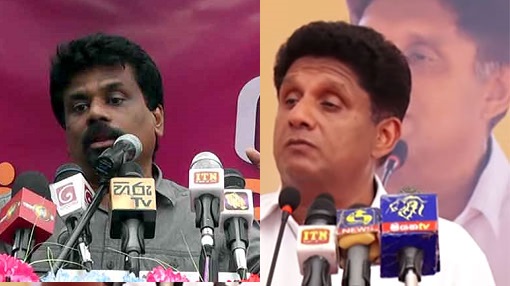
For the uninitiated in Sri Lanka, AKD in politico-strategic circles in the neighbouring India’s capital, New Delhi, refers to Ajit Kumar Doval, the nation’s all-important National Security Advisor (NSA). For counterparts in India, who are even less initiated, the initials stand for Anura Kumara Dissanayake, leader of the centre-left Janatha Vimukthi Peramuna (JVP), now wanting to be known by its relatively recent name or that of its coalition, National People’s Power (NPP). Anura is also the party’s presidential candidate, and his nomination was announced a year or more before elections that are due by the upcoming October.

At the invitation of the Indian government, AKD met AKD in New Delhi. So did the Sri Lankan AKD and his team met India’s Minister for External Affairs (EAM), Subhramanyam Jaishankar and Foreign Secretary, Vinay Mohan Kwatra. They also visited the west Indian states of Gujarat and Kerala, for first-hand understanding of developments in farm and allied sectors, starting with animal husbandry, as NPP’s National List parliamentarian, Harini Amarasuriya told the interviewer of a Colombo TV channel.

Gujarat is the home state of Prime Minister Narendra Modi – but that is beside the point. The important and immediate point is that Gujarat is home to ‘Amul’ cooperative milk society in a town called Anand. It is the largest and the most efficient one of its kind in South Asia. The Anand/Amul model of dairy farming and processed, packaged milk marketing has been an inspiration and role model for both the public and private sectors across India and elsewhere in the Third World.

Likewise, Kerala, of course, has a leftist government. That again is beside the point – or, again a coincidence. The fact is that Kerala has tea and rubber estates, and also coconut palm along its hill ranges. Their farming and marketing methods are said to be advanced, even relative to Sri Lanka.

Heavy price

Given that Sri Lanka is an agrarian economy and has been neglecting its cash crops over the past several decades and wantonly killed its domestic dairy industry in the name of shamelessly unsustainable imports, especially in the aftermath of the Economic Reforms of 1978, the current economic crisis may be an opportunity to revive both, so as to replace forex-spending with forex-earnings.

Self-discredited President Gotabaya Rajapaksa had the right idea in this regard, but did not have the knowledge, expertise or patience to go through the mill. Simply put, he did not know that he did not know. Hence he allowed himself to be driven by a cabal, inside and outside the government, inside and outside the country. They too did not know, and did not know that they did not know. The nation has paid a heavy price for their ignorance.

Now that certain opinion polls have been consistently putting AKD’s name as the nation’s first choice even if not with the required 50-per cent plus vote-share, they seem wanting to know more than they thought they knew. Having stayed in the Opposition for much of the party’s 60 years, they need a better mental make-up to realise and recognise that it is their job to find solutions to the nation’s problems. Like they have been doing all along, they just cannot blame the rest of them all, both within Parliament and outside, and believe that they had done a good job of it.

Shrugging off the past

The India visit thus comes as an occasion for the JVP leadership to know what lies outside of their confined political and intellectual space. It may have taken years for the AKD leadership to shrug off its own past even in the party’s post-insurgent democratic avatar since the early nineties.

Thankfully, their spokespersons have now begun talking about the modern world, where IT and computer-driven economy are realities in more ways than one. This does not mean that they have to do a complete make-over. As parliamentarian Amarasuriya implied, they acknowledge that the world is inter-connected and they need to know how the world works and how Sri Lanka is working with the other – for them to understand the dynamics to make the desired changes that goes with their basic premises and policies.

Maybe, at some point, they may end up having to revisit the basics to make them relevant to the contemporary world. It is because the world has changed through the Cold War and beyond, and is in the IT-AI era, which is a world by itself, in terms of technology, global and globalised thinking, down to job-creation for Sri Lankan youth, both nearer home and afar.

Indian ‘hegemony’

The JVP has a long way to go and they have just begun. Their India visit is only a part of this learning process. They are now ready to acknowledge that India is a regional power with which Sri Lanka has a lot to do. Since the days of slain party founder Rohana Wijeweera’s ‘Five Classes’ with perceived and unquestioned ‘Third Class’ that centred on what he had concluded without evidence was ‘Indian hegemony, the JVP has been attacking everything Indian.

There were thus Indian goods, including essential food items and medicines, which the JVP wanted, banned – or, banned it themselves in areas where they had the muscle power to do so. In more modern times, they have been highly critical of every development project funded by India.

This went on until or even during the economic crisis, when India and India alone was the one nation to rush aid. They did not take the government to local courts for non-payment of price for organic fertilizer unsuited to the country, as China did, for instance. India also did not talk about war crimes and human rights in the UNHRC even during those horrible days for the nation and its people as the entire West did.

This was not the first time that realisation of the kind had dawned on them. Post-tsunami, 2004, India was the first nation to rush help for rescue, relief, rehabilitation and restoration – even before being asked. This was when India was still assessing how much it had lost in human lives and property, and where all. Subsequently, when the West offered assistance to India, too, New Delhi very clearly told them to send their assistance to nations that needed it, like Sri Lanka.

It was not that all. The JVP leaders saw for themselves how the Indian soldiers pressed into relief work did a professional job of it all, and did not get involved in local politics of any kind. Better still, once the work was done, they packed up and left. The Indian effort also showed them, how India did not require a military base in the country as imagined and could operate out of their own land territory – during war and peace, and peace and peace, to be precise.

This did change their perception of India as a hegemon, but they had not been conditioned as yet to accept the ground reality. Now with the nation’s leadership hanging like a fruit that they can touch, feel and take, their ideas are beginning to change.

At least there is a new way of thinking that the old needs to be reviewed. Rohana’s might have been gospel in his time – which it was not – but it is not so any more. Not after the JVP had left its militant mental make-up to embrace democracy as the acceptable path to serve their people even better.

Learning curve

For India, too, interacting with the JVP leadership is a learning curve. Burdened by the past, New Delh too had found relative comfort in staying away from the JVP. Today, Sri Lanka is changing and there is the need for knowing whom the Sri Lankan people think they know enough to trust them with the risky job of governance, more so in these risky times.

From a purely Indian perspective, there may be more to it than meets the eye – or, so it seems. In common neighbour Maldives, where again India has a lot at stake, both in terms of development funding and security concerns, yes, centred again on China, the overnight emergence of Mohamed Muizzu as President of people’s choice has left the international community confused. Possibly, India too did not want to be caught unawares if Sri Lanka voted AKD and the NPP to power.

India is no exception. A PhD holder in structural engineering from a reputed British university, Muizzu was Works Minister for seven long years (2012-18) and Male city mayor for two years until elections last September, but the Maldivian system did not encourage overseas partners to side-step the leader and establish personal working relationship with the other.

That comfort of facelessness seemed to have worked in his favour. Truth be acknowledged, he is conditioned by the script that he has inherited, from wherever, and his visible anti-India stance on issues of consequence more for the Maldivian people than even for India. The absence of education in foreign policy is showing by the hour, by the day.

In its turn, Sri Lanka has issues of politics and governance, which is its task. Sri Lanka has even more problems still on the economic front. Strategically located in the Indian Ocean all along, more than any time in the past, including the Cold War era, the nation is being made aware of this prime fact. In the past, nations had complained that Sri Lanka, beginning with its days as Ceylon, was using its location-advantage to play the global and/or regional Peter against Paul.

In more recent times, Colombo is beginning to recognise that it’s not as simple as in the past, and not as simple as they had thought all along. The JVP is also in the learning curve all along, only that they are recognising the reality only when the post-Aragalaya public mood purportedly shook them off from their ideological past into a pragmatic present to a performance-centric future.

Nothing against nations

Whatever they may have seen and discussed in Gujarat and Kerala on what needed doing to revive the nation’s economy the JVP way over the medium and long terms, the JVP is aware that the short-term alone takes them there. The short term is about both politics and economics nearer home. It is also about the outside world, what the world thought about Sri Lanka on issues that mattered to both – not just to one side, as parties like the JVP had all along thought.

Thus in New Delhi, the JVP /NPP leadership could have expectedly exchanged views on multiple issues concerning their two nations. With Minister Jaishankar and Secretary Kwatra, they could have exchanged views on multiple bilateral issues, including trade, investment and the ethnic issue. With India’s AKD, Sri Lanka’s AKD could have discussed mutual perceptions of regional security, yes, involving China, too, and Sri Lanka’s own role, position, current posturing, and possibly future possibilities.

As Amarasuriya, MP, implied, the JVP has not changed its views on the Indo-Sri Lanka Accord and 13-A being pushed down the nation’s throat without proper debate in Parliament or elsewhere. But in another context, she also clarified that they had nothing against any nation. Their reservations were only about the Sri Lankan leadership of the time.

Of course, there are critics and critics in the country who have taken exception to AKD’s India visit this time. They did not seem to have any such queries for him when he toured the US not very long ago, or the party conceded that they had to do business with the IMF after all, if elected to power. In the former case, there was no news of their meeting American officials in America. In the latter, they have been claiming that they will re-negotiate the IMF deal, implying that the present rulers did not do enough.

Modern idiom

In her television interview, Harini Amarasuriya described the NPP) as a ‘progressive party that believes in social justice, equal opportunity’ – and indicated that they were fishing for inputs that could translate the ideology in modern idioms and conditions. That is a good beginning, but either way, they do not have too much time and leisure to pull everybody’s present to the past of their comfort. It is easier and cheaper in terms of the ‘price’ the nation would have to pay, for them to travel to the present and take it to the future – that is, if the voters too want them to do it.

It was President Mahinda Rajapaksa who reportedly explained why he thought of sending MPs from his impossible coalition that had the leftist JVP and the rightist JHU, for the second round of failed talks with the LTTE overseas: ‘They need to come out of their cocoon and comfort zones, and see the world for themselves, and what the war has cost the nation and its people in terms of development and prosperity. Then (alone) they would agree that a negotiated settlement is the only way out.’ It did not happen that way, yes, but a decade and a half after the successful conclusion of the war, the nation is worse off than where it had begun before the war.

In the present context, centre-right JHU leader Udaya Gammanpilla, who had broken away from the parent JHU long ago, put the JVP situation so succinctly and effectively. Welcoming Team AKD’s India visit, Gammanpilla had this to say: ‘The JVP has been critical of everything Indian other than Buddhism.’ Now, it is changing and for the good– or, so he seemed to imply.

(The writer is a Chennai-based Policy Analyst & Political Commentator. Email: sathiyam54@nsathiyamoorthy.com)

Posted in Uncategorized

NPP says world has changed and so has it

The National People’s Power (MPP) says the world had changed and so has the NPP as a political movement.

NPP MP Vijitha Herath told reporters today that the NPP will work with any country.

He said the world has changed, the region has changed and the NPP has also changed.

Herath, who was part of the NPP delegation that visited India, said that the party received an invitation in December to visit Inda.

The MP said the invitation was for a 10-day visit but the NPP cut it down to 5 days owing to other commitments.

While in India, the delegation led by NPP leader Anura Kumara Dissanayake had several meetings including with India’s External Affairs Minister S. Jaishankar and National Security Adviser (NSA) Ajit Doval.

The NPP said that Dissanayake’s visit to India signified a monumental stride for the NPP and Sri Lanka on the global stage.

The party said the strategic engagements and diplomatic finesse showcased during this tour not only strengthen bilateral relations but also position the NPP as a key player in shaping the nation’s destiny.

The NPP further said that as the Sri Lankan people prepare for elections, the international recognition garnered by the NPP sends a powerful message about the party’s capability to lead and navigate the intricacies of global diplomacy, ushering in a new era for Sri Lanka’s international relations.

SLFP will support proposal to abolish Executive Presidency – Maithripala

Leader of the Sri Lanka Freedom Party (SLFP) Maithripala Sirisena has assured the party’s support towards a proposal to abolish the Executive Presidency.

Speaking at an SLFP media conference themed ‘We stand for freedom’ (‘Nidahasa Wenuwen Api’), the former President revealed that as per information received, measures are underway to present such a proposal soon.

Meanwhile, Opposition Leader Sajith Premadasa, however, has declared that this is not the right time to abolish the Executive Presidency.

Posted in Uncategorized

Controversial MiG deal: Sri Lanka-Ukraine agreement missing?

Maithri Gunaratne, PC has informed the Fort Magistrate’s Court recently that the agreement between the Governments of Sri Lanka and Ukraine supposedly signed during the ‘MiG deal’ has gone “missing”.

These revelations were made when the case regarding the deal was called before the court last month through a motion.

Gunaratne had informed the court that during the Criminal Investigation Department’s (CID) investigations into the deal, an Air Marshall attached to the Sri Lanka Air Force (SLAF) had revealed that the agreement had gone “missing”.

However, although almost a decade had passed since the revelation, the CID was yet to take any action on the matter, he had said.

Thus, he had claimed that the CID had named witnesses in the case as suspects.

Reports about the controversial ‘MiG deal’ show that although former SLAF Commander Air Marshal Donald Perera had wanted to call for an open tender to procure MiG 27 aircraft in January 2006, Udayanga Weeratunga had accompanied certain Ukrainian and Singaporean businessmen who had met with then Defence Ministry Secretary Gotabaya Rajapaksa, after which it had been decided to buy the aircraft from Ukrinmash – a Ukrainian company. Weeratunga was appointed as the Sri Lankan Ambassador to Russia and Ukraine in June 2006.

As per the supposed contract between the SLAF and Ukrinmash, over $ 14 million had been paid to a private company in the UK, known as Bellimissa Holdings Ltd.

Further investigations into the matter revealed that although the deal was claimed to be a Government-to-Government one, the Ukrainian Government had said that Ukrinmash had no connection to Bellimissa Holdings, thus indicating that millions of dollars of Government funds had gone into private pockets.

When contacted, SLAF Spokesperson Capt. Dushan Wijesinghe said that when the investigation had been carried out years ago, the SLAF had compiled a report on the matter and submitted it to the court. According to Capt. Wijesinghe, the officer in question is now retired.

Police Spokesperson DIG Nihal Thalduwa told The Sunday Morning that they could not comment on court proceedings.