“Putting your foot in your mouth” is a figurative expression about a person saying or doing something that should not be done or not have been said, especially if it embarrasses the person concerned or someone else. Among those who frequently put their feet into their mouths are politicians of all kinds and hues and from all parts of the world.
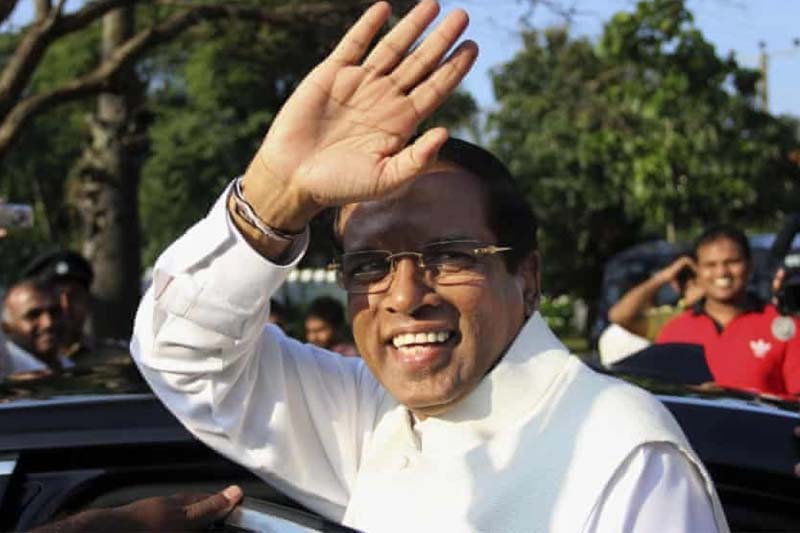
Sri Lanka the miracle of Asia is second to none in this sphere. From “Apey George” George E de Silva of Kandy in the past to CV Wigneswaran of Jaffna in the present, there have been several politicians in this resplendent Island who are famous for this. However the greatest of all politicians in this respect arguably is Pallewatte Gamaralage Maithripala Yapa Sirisena who served as the sixth executive president of Sri Lanka from 2015 to 2019. Such is his reputation for doing or uttering inappropriate things that Sirisena has acquired the prefix “Aiyo”. Many refer to him as “Aiyo” Sirisena nowadays.
Maithripala Sirisena is a man of many surprises. He has displayed a penchant to make controversial remarks and startling revelations on more than one occasion. Most of these sensational disclosures explode in the public domain with a powerful bang and then fizzle out into pathetic whimpers.
Easter bombings
The latest outburst emitted by former president Sirisena is currently receiving much media exposure. This was about the dastardly bombings in Sri Lanka on Easter Sunday five years ago. On 21 April 2019, explosive suicide bomber attacks were conducted by Islamic “Jihadists” in Colombo, Negombo and Batticaloa. Three luxury tourist hotels, two Catholic Churches and an Evangelical Christian Church were targeted within a brief time span on Easter morning. 269 people including 45 foreign nationals were killed. Over 500 were injured. Most of the victims were guests at the hotels or worshippers in churches including children attending Sunday school.
Maithripala Sirisena was the President then. He had left for Singapore on 16 April and was there on 21 April when the bombings occurred. Sirisena came under heavy criticism over his alleged acts of omission and commission in handling this issue. Subsequently President Sirisena appointed in September 2019 a commission of inquiry headed by Supreme Court Judge, Justice Janak de Silva to investigate and report on the “series of terrorist attacks on Easter Sunday and to recommend necessary action based on the findings.”
Other members of the Commission were Court of Appeal judge Nishshanka Bandula Karunaratne, retired Supreme Court judges Nihal Sunil Rajapaksha and A.L. Bandula Kumara Atapattu and the Justice Ministry’s former secretary W.M.M.R. Adhikari. The Report comprising 472 pages, 215 annexures and 6 volumes was released in February 2021. Sirisena was then out of presidential office. He did not contest the 2019 Presidential poll in which Gotabaya Rajapaksa was elected president. In 2020 Sirisena contested in Polonnaruwa district and was elected to Parliament.
The Janak de Silva Inquiry Commission report recommended that the Attorney General initiate criminal proceedings against President Sirisena and his chief defence and intelligence officials for failing to act on intelligence received to prevent the attacks on 21 April 2019.
Furthermore in a separate development, Sirisena was ordered by the Supreme Court to pay Rs. 100 million as compensation to the victims of the bombing. This was following fundamental rights petitions filed on behalf of victims being heard by the Apex tribunal.
It is now accepted widely that the Presidential election would take place later this year. Sirisena himself declared last year that he would be a candidate representing the Sri Lanka Freedom Party (SLFP). Attempts are also being made to form an alliance with the SLFP as chief constituent.
It is against this backdrop that the former President came out with a revelation some days ago on 22 March that caused many to cry out again in exasperated tones – Aiyo Sirisena! Sections of the print and electronic media in Kandy and Colombo were told by Sirisena that he knew who was behind the horrible Easter bombings. He had received this information about the “masterminds” only a few weeks ago, he said. Sirisena declined to name those allegedly responsible but stated he would do so to courts if summoned with the caveat that he and his family should be guaranteed full security first.
Sirisena’s disclosures
Sirisena’s disclosures stirred a hornet’s nest. There was a huge outcry. There was a strident demand that Sirisena be arrested and interrogated by the Police. It was stressed that he should be compelled to come out with the truth about the Easter bombings. Interestingly this reaction was divided. Some wanted Sirisena to be questioned and the truth uncovered. Others who disbelieved him, wanted Sirisena to be grilled and penalised for what were suspected to be lies and untruths. A few wanted him to be tried and convicted for withholding information.
With pressure mounting on the Government to take action, Public Security Minister Tiran Alles instructed Inspector General of Police (IGP) Deshabandhu Tennakoon to order the Criminal Investigation Department (CID) to record a statement from Sirisena. When the CID contacted the ex-president on 24 March, Sirisena said he will come to the CID on Monday 25 March and make a statement.
Maithrpala Sirisena was true to his word and presented himself at the CID headquarters on 25 March. A detailed statement was recorded. The proceedings took 330 minutes. Sirisena gave the slip to media personnel waiting in front and went away via a side exit.
The excreta hit the oscillator! Several reputed newspapers came out with startling reports that “Aiyo” Sirisena had pointed the accusing finger at big neighbour India of being responsible for the Easter terror.
Indian espionage agency RAW
The essence of Sirisena’s accusation according to media reports was that the Indian espionage agency Research and Analysis Wing (RAW) had masterminded the Easter attacks. He had named a particular Indian diplomat stationed in Colombo then. Sirisena also reportedly told the CID that the RAW had done so because the New Delhi Government was annoyed with Colombo for letting China get prestigious projects in Sri Lanka instead of India.
The ex-president alleged that this information was disclosed by an Indian diplomat who had made a confession of sorts to him. Sirisena had told the CID that he would reveal the identity of his Indian informant and other details to court. Efforts made by this columnist to communicate with former President Sirisena in this regard were unsuccessful.
Due to the serious nature of Sirisena’s accusations, the recorded statement was immediately perused by the Attorney-General. The Attorney-General advised the CID to file a “B” report at the Maligakande Magistrate’s Court. Subsequently the Court has noticed Maithripala Sirisena to appear on 4 April (Thursday) and make a full statement to court.
Since the matter is going to be taken up before courts, this column will refrain from further comments on this issue at the present juncture. However there is a salient point that needs to be emphasised. If the media reports about Sirisena’s accusations against India are correct, then I must assert strongly that I do not believe ex-president Sirisena at all. I am no fan of the RAW or any other intelligence agency but linking the RAW to the Easter bombings is highly improbable and totally absurd.
I do not want to delve into the reasons and motives behind Sirisena’s claims at this point of time, but I must state that they are like the allegations made by another ex-president Gotabaya Rajapaksa in his “Conspiracy” book about Tamils and Muslims being responsible for the “Aragalaya” that overthrew his Government.
Outrageous accusation in 2018
Maithripala Sirisena is a not so bright politician who does not know the seriousness of the statements he is making or the implications of his unfounded accusations against India. In order to illustrate this point I wish to go down memory lane and re-visit an incident where “Aiyo” Sirisena made an outrageous accusation in similar vein against India in general and the RAW in particular. This happened in October 2018. I have written about this earlier and will rely on some of those writings.
The “Yahapalanaya” (Good Governance) Government was in power then with President Maithripala Sirisena and Prime Minister Ranil Wickremesinghe leading an uneasy life of political co-habitation. The weekly cabinet meeting was held on 16 October 2018. Verbal fireworks exploded at that cabinet meeting especially between Sirisena and Wickremesinghe. The contentious issues were the awarding of the East Port Terminal at the Colombo Harbour to India and President Sirisena’s complaint about an alleged plot by the Indian espionage agency RAW to assassinate him and ex-defence secretary Gotabaya Rajapaksa.
“The Hindu” news story
The reputed Indian English newspaper ‘The Hindu’ posted a detailed news story filed by its Colombo Correspondent Meera Srinivasan. The news item was posted at 11:04 p.m. on 16 October. It was subsequently updated at 3:44 p.m. on 17 October. The news story by Meera in ‘The Hindu’ headlined “Sri Lankan President Sirisena alleges that RAW is plotting his assassination” read as follows:
“In a charge that might seriously impair New Delhi-Colombo relations, Sri Lankan President Maithripala Sirisena on Tuesday accused India’s Research and Analysis Wing (RAW) of plotting his assassination.
At the weekly Cabinet meeting, Mr. Sirisena told ministers that the Indian intelligence agency was “trying to kill” him, but “Prime Minister Narendra Modi may not be aware of the plan,” The Hindu has learnt from sources present at the discussion.
“We were just shocked when he said it,” a source said, requesting anonymity.
When contacted for verification, a senior officer at the President’s media unit said: “We will verify this and revert.” However, there has been no response till Tuesday night.
President Sirisena’s claim comes days before Prime Minister Ranil Wickremesinghe’s scheduled visit to New Delhi, meet Mr. Modi and discuss bilateral matters, including key, India-assisted projects on the island.
This is not the first time a Sri Lankan leader has accused the Indian agency of interference. Following his poll defeat in 2015, former President Mahinda Rajapaksa held RAW among those responsible for the change in regime.
Mr. Sirisena’s allegation, the sources said, came when he raised concerns over the government’s “indifference” to an assassination plot targeting him. Reports of the said plot emerged last month when an individual named Namal Kumara, part of an anti-corruption outfit, claimed he was aware of a plan to assassinate Mr. Sirisena and former Defence Secretary Gotabaya Rajapaksa.
The CID interrogated Mr. Kumara. The police subsequently arrested an Indian national late in September. Local media reported that the Indian, identified as M. Thomas hailing from Kerala, claimed he knew of the plot.
However, the Sri Lankan Government issued an elaborate denial of the report and clarifications came from the highest level. Media Minister Mangala Samaraweera slammed it as a “disinformation campaign”, urging reporters to be responsible.
At Tuesday’s meeting, Mr. Sirisena reportedly said “the Indian national must be a RAW agent trying to kill me. The Indian PM may not be aware. That is often the case. Trump may not be aware of CIA’s similar moves.”
The Hindu, on Tuesday evening, spoke to multiple sources in government — across political parties — who attended the meeting, and they confirmed this.
Tuesday’s meeting also saw a heated argument between President Sirisena and Mr. Wickremesinghe, when a Cabinet paper on developing the Colombo Port came up for discussion. Sources said Mr. Sirisena vehemently objected to any Indian involvement in upgrading its east container terminal – a project that New Delhi has been keen to take up.
However, Mr. Wickremesinghe is said to have countered by saying Colombo had promised New Delhi on collaborating on the project, and it was important to rope in India at the terminal, given that about 80% of the cargo handled at the transshipment hub was meant for India. He reportedly sought a week’s time to sort out the issue, since he would be meeting Mr. Modi soon.
Meanwhile, the President’s media unit on Tuesday called off a scheduled press meeting by Mr. Sirisena’s advisers on the reported assassination plot.
When contacted, Presidential Adviser Shiral Lakthilaka told The Hindu: “We cancelled it because we are awaiting more information”. Asked if it was connected to Mr. Sirisena’s reported remarks at the Cabinet, he said: “No, it had nothing to do with that.”
It is noteworthy that the Hindu’s Colombo correspondent Meera Srinivasan made it a point to emphasise in her report that she had spoken “to multiple sources in government — across political parties — who attended the meeting,” and they had confirmed it. Subsequently, in an Editor’s note published in ‘The Hindu’ it was said the correspondent had spoken to two Cabinet ministers and got indirect confirmation from two others before filing the report after extensive checking and cross-checking.
The same Sirisena who accused India’s RAW of plotting to assassinate him, has now reportedly made a far more serious allegation that the RAW had masterminded the April 2019 Easter bombings. Aiyo Sirisena
Alarm bells in South Block
Several Sri Lankan newspapers also reported details in different degrees of the controversial Cabinet meeting. In fact it was the “Economy Next” website which broke the story first. However it was ‘The Hindu’ news story that sent alarm bells ringing in India’s “South Block.” which houses the Prime Minister’s office and the ministries of Defence and External Affairs.
With India’s South Block being alerted by the news in the ‘Hindu,’ events began to move rapidly. Sirisena’s purported reference to RAW at the Cabinet meeting could not be taken lightly as India’s external agency the Research and Analysis Wing (RAW) had been directly implicated.
Although President Sirisena had reportedly given a clean chit to Indian Prime Minister Narendra Modi saying Modi would not have known, the reality was that Maithripala’s remarks amounted to an affront to Premier Modi. This was because the RAW is an adjunct of the Cabinet Secretariat coming under the direct purview of the Prime Minister. The RAW chief reports administratively to the Cabinet Secretary who in turn reports to the PM.
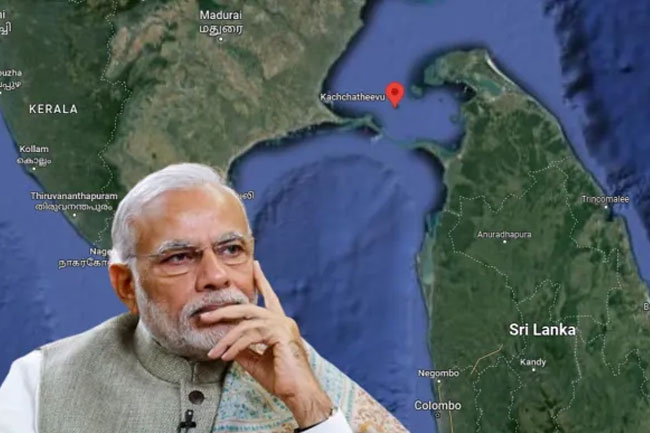
Premier Narendra Modi
So President Sirisena’s reference to the Indian espionage agency placed Narendra Modi in a difficult position. On the one hand it implied that the Indian Prime Minister may have had a hand in the alleged assassination plot. On the other hand if the RAW was acting independently of Modi it meant that the premier was not in control of a key agency under his direct command.
What agitated South Block officials further was the personal interest displayed by Premier Narendra Modi in this matter. After being informed of this ‘news’ the Indian PM told key officials in the External Affairs Ministry and Prime Minister’s Secretariat that this matter if true was “ very serious” and instructed them to give top priority to it. The Indian PM urged his officials to “find out the full truth” and brief him as soon as possible.
The then Indian Foreign Secretary Vijay Keshav Gokhale contacted the then Indian High Commissioner in Colombo Taranjit Singh Sandhu and was briefed. The Foreign Secretary told the High Commissioner that this allegation against the RAW was a ‘slur’ on India’s national external intelligence agency and that Prime Minister Modi was ‘hurt’ by this. High Commissioner Sandhu was instructed to meet President Sirisena as early as possible and seek clarification.
Taranjit Singh Sandhu
High Commissioner Taranjit Singh Sandhu got cracking. He secured an appointment at very short notice to meet President Sirisena. Indian envoy Sandhu met with President Sirisena at the Presidential Secretariat in Colombo on 17 October.
After explaining the ramifications and implications of Maithripala Sirisena’s reported Cabinet meeting remarks, the Indian High Commissioner sought specific clarity from the Sri Lankan President on three counts.
Firstly what was the basis on which the President suspected an Indian link in the alleged conspiracy to assassinate him? Secondly what was the basis on which the President suspected the involvement of the research and analysis wing in the plot to assassinate him? Thirdly was there any explicit reference to Indian Prime Minister Narendra Modi in the President’s purported remarks?
President Sirisena recounted in detail the information he had received about the alleged assassination conspiracy. President Sirisena said his safety and security was at stake and he had been compelled to increase his own personal security. The President told the Indian envoy that he did not criticise or blame India in any way for this state of affairs.
Sirisena stated that he had merely speculated that an Indian espionage agency could have been involved. He had never pointed the finger specifically at the R&AW. Sirisena also told Sandhu that he had never accused Premier Modi in any way. In fact he had gone out of his way to say that Narendra Modi would not know what an espionage agency was doing. These were all general remarks and were not specifically directed against the RAW or Premier Modi.
Seizing upon the sentiments expressed by President Sirisena, High Commissioner Taranjit Singh Sandhu suggested diplomatically that it would be better if President Sirisena himself spoke to Prime Minister Narendra Modi and explained matters. He said the Indian premier was very concerned about this entire issue and would very much appreciate hearing from Sirisena personally.
Telephone conversation
President Sirisena was more than willing to talk to Prime Minister Modi. Thus a convenient time was arranged in the afternoon of 17 October. Narendra Modi began the telephonic conversation by saying “Ayu Bowan Excellency, how are you?” Then followed a very interesting 20-minute conversation between the two leaders. The prickly issue was resolved amicably.
This was what happened then. The same Sirisena who accused India’s RAW of plotting to assassinate him, has now reportedly made a far more serious allegation that the RAW had masterminded the April 2019 Easter bombings. Aiyo Sirisena!
(The writer can be reached at dbsjeyaraj@yahoo.com.)