Outgoing NZ High Commissioner calls on former TNA leader in series of farewells

The outgoing High Commissioner of New Zealand to Sri Lanka, Michael Appleton, on Wednesday morning (27 Dec.), met with former Tamil National Alliance (TNA) leader R. Sampanthan.

Taking to ‘X’ (formerly Twitter), Appleton revealed that several matters of concern were discussed at the meeting, including political developments in the North and East.

Meanwhile, the duo also discussed the approaches adopted by both New Zealand and Sri Lanka toward social cohesion and constitutional arrangements, and the scope for enhanced cooperation between the two countries.

Appleton’s visit comes amidst a series of such meetings with several parties including other Ministers and the Governor of the Central Bank of Sri Lanka (CBSL), two weeks ahead of the conclusion of his posting in Sri Lanka.

Appleton is scheduled to conclude his tenure as the High Commissioner of New Zealand to Sri Lanka in the first week of January. Following this, he and his family will return to New Zealand, where he is expected to assume the position of Senior Foreign Affairs Adviser to New Zealand’s Minister of Foreign Affairs, Winston Peters.

President invites all political parties to help stabilize economy and address ethnic issue

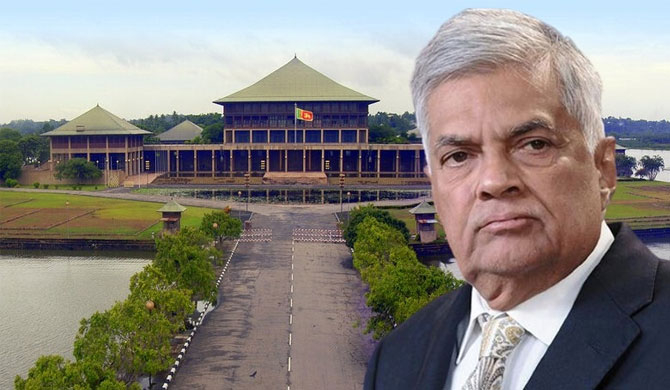
In a significant announcement at the centenary celebration of Badulla Guruthalawa Muslim Central College this morning (27 Dec.), President Ranil Wickremesinghe highlighted two critical challenges facing the nation, building a stable economy and addressing the ethnic problem.

The President extended an open invitation to all political parties again, urging them to join hands in achieving these goals, irrespective of party affiliations.

President Wickremesinghe emphasized his commitment to safeguarding the rights of all citizens and expressed a desire to swiftly resolve lingering issues related to reconciliation. He revealed plans to make a special statement on these matters in March.

During his visit to Guruthalawa Muslim Central College, the sole Muslim National School located in the Uva Province, the President received a warm welcome from the students. As part of the centenary celebrations, he inaugurated the college’s new website.

The Principal, A. Sammun, presented the commemorative issue to the President, marking the centenary of the College.

President Wickremesinghe took the opportunity to award medals to students who excelled in the GCE Ordinary Level and GCE Advanced Level exams. Congratulating the college on its centenary, he left a note in the commemorative book and posed for a group photo with the teaching staff.

The President further commented:

“To secure a prosperous future for the children of our nation, it is imperative that the government’s initiatives are robustly advanced.

We have garnered support from nations around the world to ensure the success of these programs, which, if implemented effectively, will undoubtedly contribute to the establishment of a stable economy and the resolution of various challenges facing our country.

In pursuit of these goals, I earnestly appealed to all, irrespective of political affiliations, to rally behind us in our efforts to fortify the nation’s economy. Regrettably, the response fell short of our expectations.

There are two paramount issues that demand immediate attention in our country. Regardless of political allegiance, I once again implore all to collaborate in addressing these challenges.

Firstly, the imperative is to build a stable and resilient economy. Secondly, we must seek solutions to the ethnic issues plaguing the nation. A thriving country necessitates both a robust economy and a unified community, with a confirmed Sri Lankan identity.

All individuals, irrespective of their ethnicity be it Sinhalese, Tamil or Muslim, are Sri Lankans. While the Sinhalese constitute the majority, our commitment is to progress while safeguarding the Sinhala identity, religion, and culture.

It is crucial to avoid any form of discrimination against other races or religions, ensuring the protection of the rights of all citizens. The path to a prosperous nation lies in collective progress as Sri Lankans.

We have addressed various challenges faced by the Sinhalese people and are actively working on solutions for other issues. Additionally, the government is addressing concerns of other segments of the population.

Despite the conclusion of the war, unresolved matters persist before the Human Rights Commission in Geneva and we have taken necessary steps to address these issues.

Efforts are underway to rectify the displacement of some individuals by allowing settlement based on the 1985 map. Land rights are being granted to those affected in the northern and eastern provinces, comprising Tamil, Muslim, and Sinhalese communities.

The government is also focusing on addressing missing persons, providing compensation and resolving outstanding issues.

Furthermore, we are committed to developing the economies of the northern and eastern provinces. A robust economy is essential to prevent the recurrence of underlying issues even after their resolution.

Special attention is being given to the concerns of Hill Country Tamil people, with dedicated programs focusing on their rights, including land and education development.

Additionally, efforts are ongoing to address the issues faced by the Muslim community, including a thorough review of burial practices and the removal of Post – Easter Sunday attack restrictions.

We are actively working on these matters, including the preparation of a draft law to regulate Madrasa schools. Expression of opinions, not related to terrorism or attempts to incite revolution, should be protected under the law and steps are being taken to ensure this.

Reports are being sought from relevant ministries and officials and I expect to make a comprehensive statement by February or March. Prior to that, consultations with religious and political leaders will take place and I trust that we will receive collective support in addressing these challenges.”

State Minister of Higher Education Aravinda Kumar;

“The President noted that arrangements are underway to provide an auditorium for this school, and we extend our gratitude to him for this initiative.

Throughout its 100 years of history, this school has achieved numerous milestones in education. Despite being located in a province facing considerable challenges, a substantial number of students from this institution have seized the opportunity for higher education.

It is crucial to uphold this standard of quality. I extend my heartfelt best wishes for the school’s future endeavors and the continued educational success of its students”.

Member of Parliament and Senior Advisor to the President Mr. Vadivel Suresh;

“We take great pride in the visit of President Ranil Wickremesinghe to Guruthalawa Muslim Central College. His dedication to educational initiatives extends beyond this locality, encompassing the entire country.

Guruthalawa Muslim Central College stands as the sole Muslim national school in the area. We commend the notable talents displayed by the students of this Central College and are committed to addressing any existing deficiencies within the school. Our gratitude extends to the principal and the entire teaching staff for their efforts in imparting quality education to students, both at the GCE Ordinary level and the Advanced level.”

This commemorative event witnessed the presence of notable dignitaries including Muslim religious leaders, State Minister of Education Aravinda Kumar, Governor of the Uva Province A. J. M. Muzammil, Uva Provincial Director of Education Rohitha Amaradasa, other provincial education officials, teachers, parents, students and well wishes.

Posted in Uncategorized

Election funding: Could request addl. sum from Consolidated Fund: EC

The Election Commission (EC) stated that while they had requested the Government to allocate Rs. 20 billion (Bn) for the elections to be held next year (2024), and only Rs. 10 billion had been allocated through the 2024 Budget, they could however, if necessary, request more money from the Consolidated Fund.

President and Finance, Economic Stabilisation, and National Policies Minister Ranil Wickremesinghe recently said that the Government would hold both the Presidential and Parliamentary Elections in 2024.

Speaking to The Daily Morning on the financial allocations for the said elections, EC Chairman R.M.A.L. Rathnayake said that they had requested the Government for financial allocations of Rs. 20 billion for election purposes in 2024, but that the Government had allocated only Rs. 10 billion. “What is to be held next year is the Presidential Election. A sum of about Rs. 10 billion is needed for it. The Government has allocated it (Rs. 10 billion) through the Budget.”

Speaking further, he said that the EC could ask for more financial allocations from the Consolidated Fund if any other election is to be held next year. “There are provisions that enable us (the EC) to ask for more funds from the Consolidated Fund if any other election is to be held. This is under normal circumstances. What happened with regard to the Local Government (LG) Elections (the non-allocation of financial provisions to hold it) is something different,” he said.

With the LG Elections – which were scheduled to be held early this year – having been indefinitely postponed due to the non-issuance of required funds by the Finance Ministry and the Treasury, several parties have claimed that President Wickremesinghe and the Government may attempt to postpone the upcoming elections too.

Posted in Uncategorized

What I feel now, What I think now, is that I should have remained with the armed struggle -TELO Leader Selvam

It was because of the armed struggle that Tamils were “treated with respect in Sri Lanka’s parliament,” said Tamil Eelam Liberation Organisation (TELO) leader MP Selvam Adaikkalanathan in an interview last week.

Adaikkalanathan was speaking to Vasanatham TV on his view of the liberation movement and the armed struggle, telling the interview “What I feel now, What I think now, is that I should have remained with the armed struggle”.

“Because the situation is so grim at present,” said Adaikkalanathan.

“If you look at our north and east now, although there are no gunshots, everything else is happening. Efforts to erase the history of the Tamil people, of the people who are the guardians on those lands, is underway. The situation that existed when we had arms, the situation that was there when the armed struggle was at its peak….is no longer there.”

“It is as though we are being viewed as foreigners in our own land,” the lawmaker continued.

He went on to describe recent arrests of Tamils under Sri Lanka’s much criticised Prevention of Terrorism Act (PTA).

“The PTA is being used to persecute even trivial activities, such as decorating a cake with the name ‘Prabhakaran’,” he said. “Even the UN has said this PTA should be repealed. But they don’t seem to care. The PTA is being used all the time.”

“The climate exists today where the fundamental rights of a people to express their views democratically are denied. As I said before, the only things absent are the sound of gunshots… we are being silently destroyed.

“The military is appropriating our lands. They are stealing land for Buddhist temples. The PTA is being unleashed on our people. They are of the mindset that we should toil under them, that we should be their slaves.”

When asked about how he felt the situation would be different if the LTTE was present, Adaikkalanathan said that “at least the Sinhala nation would have been afraid to some extent”.

“The aim of the armed struggle is to force the protagonists to come to a table to discuss a political solution,” he added.

“When the LTTE were there that sort of situation existed. Because of the armed struggle we were treated with respect in Sri Lanka’s parliament. If the armed struggle was still going on now, the situation today would be very different.”

See his full interview below.

Posted in Uncategorized

The many twists and turns in Sri Lanka-Israel relations By P.K.Balachandran

Sri Lanka’s relationship with Israel has been unique. In the past 75 years as an independent nation, Sri Lanka has recognized, derecognized and again recognised Israel, guided by ever-changing ideological, geopolitical and domestic factors.

But in contrast to Sri Lanka, Israel has been consistent: It has always wanted good relations with Sri Lanka and has helped Sri Lanka whenever its help was sought, irrespective of the official status of the relationship.

Interestingly, war has been one of the determining factors in the relationship. War has brought Sri Lanka and Israel closer, despite the existence of ideological and political factors militating against it.

Although part of the Western alliance, Israel defied the Western nations’ informal ban on arms sales to Sri Lanka during its war with the Tamil militants from the 1980s to 2009 and supplied it with military aircraft and vessels. Without Israeli weaponry the Sri Lankan armed forces could not have defeated the formidable Liberation Tigers of Tamil Eelam (LTTE).

And now, because of the Gaza war, Israel has sought and got Sri Lankan agricultural and construction workers to fill positions vacated by the Palestinian Arabs and other foreign nationalities. While many Arabs fled, Israel itself deported 82,000 Palestinian workers doubting their loyalty.

The Sunday Observer reported that Israel turned to Sri Lanka (and also India) to urgently fill around 30,000 vacancies in its construction industry. The Israel Builders’ Association (IBA) said that its representatives would be in India and Sri Lanka within days to screen applicants for various roles such as plastering, ceramic tiling, building work and iron bending. The US$ 71 billion Israeli building industry is currently operating at just 15% of its pre-war capacity. The Israeli construction industry needs an estimated 100,000 workers to return to its pre-war capacity.

Sri Lankan workers will be going to work in the agricultural sector also. In November, Sri Lanka had agreed to immediately send 10,000 farm workers. Some 100 of them have already arrived in Israel. Currently, about 8,000 Sri Lankans are working in Israel, mostly as caregivers. Two Sri Lankan caregivers perished in the brutal Hamas attacks, the Times of Israel reported.

All this is happening even when Israel has no embassy in Colombo. While Sri Lanka has a regular embassy in Tel Aviv, Israel operates from its embassy in New Delhi.

Just as Israel desperately needs Sri Lankan and other foreign workers, Sri Lanka badly needs foreign remittances as the foreign exchange draught continues despite the recent inflow of US$ 4 billion. Sri Lanka is still burdened with a total foreign debt of US$ 52 billion on which it defaulted in April 2022.

Because of the pandemic and the subsequent economic crisis, local unemployment has increased. Youth unemployment is particularly worrying as it stands at 28%. Lankan youth from the poorer classes as well-educated professionals are leaving the country in droves. The government itself has encouraged its employees to go out of the country for employment by giving them leave of absence without pay.

Today, Sri Lanka-Israel relations are cordial, despite the Gaza crisis in which Sri Lanka has sided with the Global South and has voted with the latter in the United Nations.

But relationship has seen great ups and downs in the past. According to Sri Lankan scholar in international affairs, Dr. Punsara Amarasinghe, the Jews’ relationship with Sri Lanka has a long history that dates back to the biblical epoch. Galle is said to be the city of Tarshish, to which King Solomon sent merchant ships.

Amarasinghe further says that the Jewish presence in the island nation thrived under British rule with many European Jews holding prominent positions in the colonial administration in the island that was known as Ceylon till 1972.

After its independence in 1948, Ceylon established relations with Israel unlike most of the neighbours in South Asia, which were markedly pro-Palestine and anti-Israel. Under Sri Lanka’s first Prime Minister D. S. Senanayake, Ceylon began buying weapons from Israel, including the naval vessel HMCyS Gajabahu. On the economic front, Israel assisted in the digging of tube wells in the dry zone of northern Sri Lanka.

But when the leftist S. W. R. D. Bandaranaike became Prime Minister and was followed by the even more leftist Sirimavo Bandaranaike, Ceylon (which became Sri Lanka in May 1972) became hostile to Israel, preferring to establish ties with the Palestine Liberation Organization (PLO) instead. Sirimavo Bandaranaike closed down the Israeli embassy in Colombo.

But Colombo’s attitude to the pro-Western Jewish State changed radically with the coming into power of the pro-West J.R.Jayewardene in 1976. His Minister of Internal Security, Lalith Athulathmudali (who had been a law lecturer at Hebrew University in Jerusalem), and Ravi Jayewardene, founder of the Special Task Force, believed that Sri Lanka should turn to Israel to combat the Sri Lankan Tamil militants. President J.R.Jayewardene allowed an Israeli mission (not an embassy though) opened in Colombo in 1984.

Minister Gamini Dissanayake got Israeli advice to accelerate the Mahaweli development project to settle Sinhalese farmers in the island’s dry zones.

Punsara Amarasinghe quotes Victor Ostrovky and Claire Hoy the authors of By Way of Deception: A Devastating Insider’s Portrait of the Mossad to show how the Sri Lankan government was aided by the Mossad in the early 1980s.

“The book reveals that it was a Mossad operative, Amy Yar, who advised Jayewardene’s government to accelerate the country’s ambitious Mahaweli development project as a quick remedy for the energy crisis and, more importantly, as the best strategy to settle Sinhalese farmers in the island’s dry zones.”

“Two Israeli academics provided a broad analysis of the project that crucially helped the Sri Lankan government convince the World Bank to invest $250 million. A large portion of the Mahaweli contract was given to Israeli construction company Solel Bonah and Israeli architect Ulrik Plesner, who planned six new towns for the Mahaweli settlements.” Amarasinghe says.

However, the revived Israeli presence in Sri Lanka in the early 1980s and the opening of the Israeli embassy in Colombo in 1984 alarmed the country’s Muslim ethnic minority which was also politically influential. In 1987 India too wanted the Israeli interest section to be closed because at that time, New Delhi was both anti-Israel and anti-US.

In 1992, Sri Lanka-Israel ties were suspended by President R. Premadasa, who is believed to have told the American Ambassador that Sri Lanka had no Jews but it had a politically significant Muslim minority which he could not alienate.

Come 2000, ties with Israel were restored, though without an embassy in Colombo. Israel became a key source of weapons and training for the Sri Lanka Armed Forces during the intensified war against the LTTE. Israel sold IAI Kfir fighter jets, Super Dvora Mk III-class patrol boats, Saar 4 class missile boats and Gabriel missiles, according to Amarasinghe.

In 2017, the governments of Israel and Sri Lanka signed an agreement to bring foreign nursing aides to Israel. Sri Lankan nurses have acquitted themselves creditably in Israel and so more are likely to be recruited. In February 2020, Israel offered Sri Lanka technology in agriculture, education, transportation and IT sectors, which was openly welcomed by Sri Lankan President Gotabaya Rajapaksa.

In September 2021, the Sri Lankan government signed an agreement with Israel to upgrade Israeli-made Kfir fighter jets of the Sri Lanka Air Force.

And importantly, opposition from the Sri Lankan Muslim community to any dealings with Israel had disappeared upon the advent of the Rajapaksas in Sri Lankan politics in 2005. Relations with Israel are clearly improving even though Sri Lanka’s Foreign Minister Ali Sabry is a Muslim. If Israel does become a major employer of Sri Lankans, (the number currently envisaged is 100,000), the establishment of an Israeli embassy in Colombo cannot be ruled out.

Posted in Uncategorized

SLPP event at Horana draws big crowds!

The SLPP is reorganizing the party at electoral level to target elections due next year.

One event saw the opening of a coordinating office by MP Sanjeewa Edirimanne at Horana town on 24 December.

It drew big crowds, mainly youths of the area.

General secretary Sagara Kariyawasam, MPs Piyal Nishantha, Gamini Lokuge, Sarath Weerasekara, Lalith Warnakumara, Sumith Udukumbura and Tissa Kuttiarachchi also attended.

Posted in Uncategorized

Sri Lanka logistics centre with China gets 15-year tax holiday

A logistics centre in Colombo Port with China’s CM Ports, Sri Lanka Ports Authority and Access Engineering will get a 15-year tax holiday, according to a gazette notice.

Thirty expatriates will be completely freed from income tax.

The corporate income tax exemption will start from the first year the project company makes a taxable profit or two years after commercial operations, whichever comes earlier.

Taxes on dividends will be exempt for the 16 years.

The project company will be exempt from withholding tax for the project period.

The logistics centre will be built on a 50-year build operate transfer project.

Imports for the project will be exempt from value added tax, port and airport levy and Export Development Cess for the 6 year project implementation period.

Customs import duty will be exempted for project imports, unless they are in a ‘negative list’.

Import of items in the negative list will be allowed, if they are not available in sufficient quantity domestically.

Posted in Uncategorized

Human trafficking to Myanmar: CID identifies four suspects including Chinese national

The Human Trafficking, Human Smuggling, and Maritime Crimes Division of the Criminal Investigation Department (CID) has initiated two special investigations into the incident of cyber slavery involving a group of Sri Lankans in Myanmar, said Sri Lanka Police.

Police Media Spokesman SSP Nihal Thalduwa stated that investigations are underway regarding 04 suspects including three Sri Lankans and a Chinese national based on four complaints received by the police.

Ada Derana recently revealed an incident of 56 Sri Lankans being forcibly detained in a Burmese terrorist camp and put to work as cyber slaves.

Reportedly, Sri Lankan youths are facing this tragedy since 2022, while the Ministry of Foreign Affairs had previously rescued 32 such Sri Lankans on several occasions.

The Ministry of Foreign Affairs has already sought the assistance of Sri Lankan Embassy in Yangon to rescue the Sri Lankans who are currently in cyber slavery in Myanmar.

Against this backdrop, the police urge the public to avoid going abroad for work on tourist visas.

On Sunday, the CID revealed that three persons who had been engaged in the trafficking of Sri Lankans to Myanmar had been identified through investigations. The trio was said to be the residents of Aralaganwila, Wathuregama and Dorathiyawa areas, and have fled the areas by now.

Previous Sri Lanka government accused of blocking investigation into Easter bombings -UK Guardian

Accusations are growing that the former Sri Lankan government, led by strongman president Gotabaya Rajapaksa, blocked an investigation into the country’s worst terrorist attack amid claims that they had helped orchestrate the blasts in order to return to power.

In the attacks on Easter Sunday in 2019, six suicide bombers targeted churches and luxury hotels across the country, killing 269 people, including eight British tourists.

But almost five years on, an investigation has failed to provide any answers for how the attacks took place and the security failures that led up to them. So far, there have been no criminal convictions.

Instead, people previously involved in the investigation, and the leader of Sri Lanka’s Catholic church, have alleged that inquiries were repeatedly sabotaged and obstructed by the Rajapaksa government.

In a recent documentary for Channel 4’s Dispatches, a whistleblower alleged that the attacks were part of a plan to create instability in Sri Lanka and ensure that Rajapaksa, a member of Sri Lanka’s most powerful political family, would win the presidential elections in 2019.

The source said he had helped an intelligence officer with close ties to the Rajapaksa family meet members of the local Islamist militant group, National Thowheeth Jama’ath (NTJ), that carried out the attack. He said it had been part of a plan that had been hatched over a couple of years to create an “unsafe” security situation that would help bring Rajapaksa to power.

The Rajapaksa family had ruled Sri Lanka for almost a decade from 2005. They were credited with ending its bloody, 26-year-long civil war but became notorious for their authoritarian methods, including the use of “death squads” to target critics and journalists.

Mahinda Rajapaksa was ousted in 2015 after a backlash against alleged corruption, but the family had planned a return to power in the 2019 election, this time with younger brother Gotabaya as the presidential candidate.

He won the election but was toppled dramatically from power in July last year, after the country experienced a catastrophic economic crisis, and replaced by Ranil Wickremesinghe, who is seen as close to the Rajapaksa family.

Ravi Seneviratne, the former director general of police who initially led the Easter attacks investigation, told the Observer that after Gotabaya Rajapaksa was elected president, the government had “prevented the investigation”.

He said his team had already “established links” between state and military intelligence officers and the NTJ suicide bombers. He said that the investigations had also led him to believe there was someone higher up helping to coordinate the attack who had yet to be apprehended.

However, when Rajapaksa took office, Seneviratne’s entire team at CID was taken off the case. More than 20 of his officers were transferred without his approval and travel bans were imposed on all 700 CID officers.

“The motive was to make them too scared to send a message. Many were too scared to work and some people even applied for transfers out of CID,” he said. Since then, Seneviratne claims there have been several attempts to “keep me quiet”.

The targeting of those involved in the investigation took a murkier turn this month after the attorney general told the courts that there had been a conspiracy to murder Shani Abeysekara, the former head of Sri Lanka’s CID, who was overseeing the investigation before he was suddenly removed when the Rajapaska government came to power.

A court petition filed by Abeysekara, which was taken up this month, said a plan to kill him in a staged vehicle accident had been uncovered. The petition identifie dhis involvement in the bombing investigation as one of the reasons for the assassination attempt.

Upul Jayasuriya, the lawyer representing Abeysekara, said that his client’s involvement in the Easter bombing investigation was “one of the biggest problems”. Still fearful for his life, Abeysekara declined to comment directly on the case.

Last year, Abeysekara went public with allegations that prior to the attacks – when the CID was already investigating NTJ militants – state and military intelligence officers had sabotaged the investigation and “fabricated” evidence to divert investigators away from the group, including ringleader Zahran Hashim, who later carried out one of the suicide bombings.

He has also alleged that his attempts to raise the issue of NTJ militants with the national security council had been obstructed. After the Easter bombings, he said, his investigators had established links and vidence of communication between intelligence officials and members of the NTJ group that carried out the attacks.

Another former CID officer who was part of an investigation into NTJ militants months before the bombings, and who asked to remain anonymous for safety reasons, confirmed the accounts.

“There were several attempts that were made by the military intelligence and state intelligence to sabotage the criminal investigation department’s work,” he said.

While more than 200 people have been charged in the investigation, so far no one has been convicted, and there have been no answers on how several specific high-level warnings about the imminent attacks, particularly from Indian intelligence, were ignored.

In January, former president Maithripala Sirisena, who was in power at the time of the attacks, was ordered by the supreme court to pay millions in compensation to the victims.

Following the Dispatches revelations, the Sri Lankan government said it had set up a special parliamentary committee to investigate allegations, but sources said that no one had been called to testify before it.

A recent statement by the ministry of defence said the government “vehemently denounces the accusation of orchestrating the attack and assisting the bombers against a dedicated senior military officer who has served the nation for 36 years”.

The ministry added that “successive Sri Lankan governments have demonstrated an unwavering commitment to uncovering the truth”. Gotabaya Rajapaksa could not be reached for comment.

Among the harshest critics of the ongoing failures is Cardinal Malcolm Ranjith, head of the Catholic church in Sri Lanka, who alleges there was a cover-up from the highest levels of government.

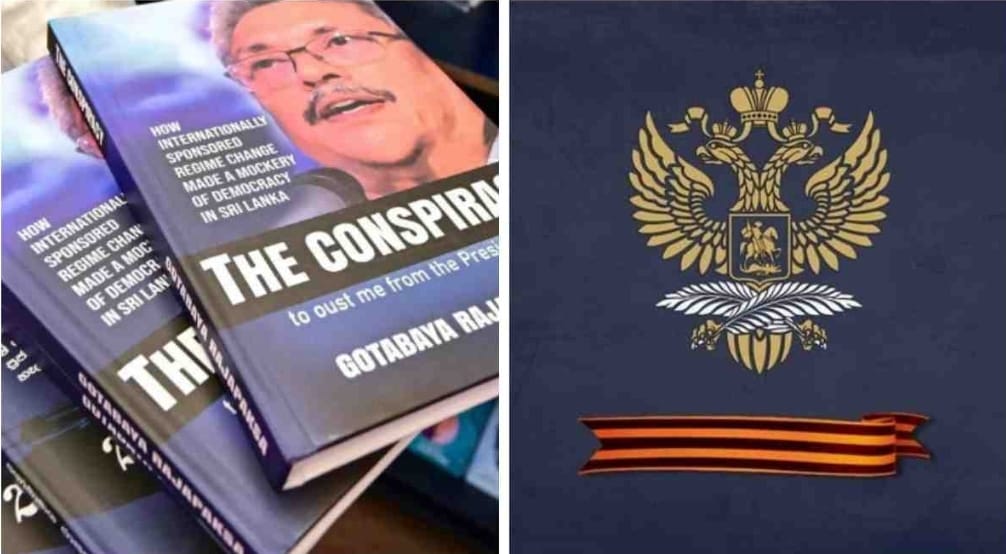
“When Gotabaya Rajapaksa came to power, he appointed a stooge to take over the case who made a blunder of all investigations,” he said. “We know that there are several occasions when evidence was deliberately covered up. They have made a mockery of transparency, a mockery of accountability and a mockery of democracy.”

Ranjith added: “We are demanding a transparent, accountable investigation where the politicians don’t meddle with the investigators.”

For the families of the victims, the lack of justice has been excruciating. “I ask God every day to take us too. How can we live with this pain?” said Sebastian Patrick Fernando, 74, who lost his son Neranjan in the attack on St Sebastian’s Church in Negombo.

“We voted for the Gotabaya Rajapaksa government thinking they would give us answers. But they have done nothing, and now people say they did it to come to power. They should be held responsible.”

Thilina Harshani, who was paralysed from the waist down and lost her six-year-old son in the blast, also blames the government for inaction. “Why did this happen to us?” she said. “Why did they bomb our church? Why were we targeted? And why are the masterminds still on the loose?”

Maithri says he is ready to contest

Former president Maithripala Sirisena has expressed readiness to contest for presidency again.

He said he was prepared to consider if his SLFP’s executive council decides so.

The party chief was speaking at an event to hand over appointment letters to his representatives at Bingiriya electorate on 23 December.

He also inspected a Batik clothing production centre.

Incumbent Ranil Wickremesinghe, opposition leader Sajith Premadasa, Dilith Jayaweera, Dhammika Perera and Janaka Ratnayake have said that they would contest at the presidential election.

Posted in Uncategorized