Sri Lanka opposition leader vows to punish those responsible for financial crisis

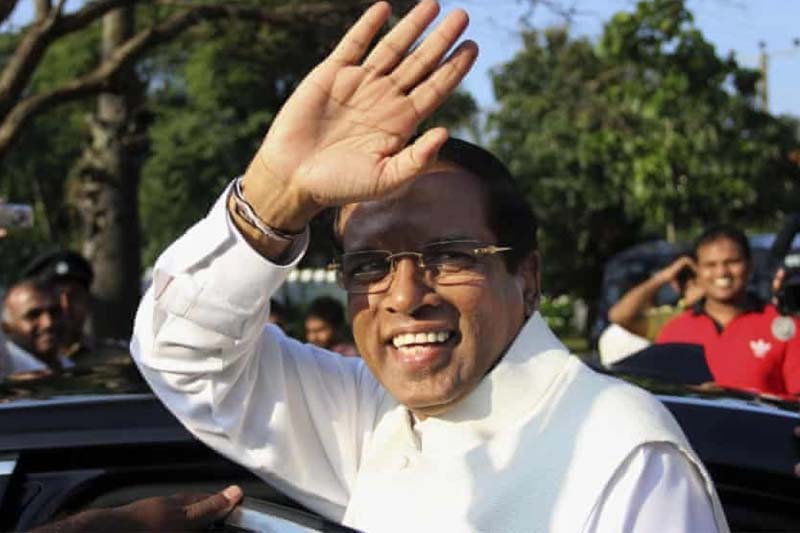
Sri Lanka opposition leader Sajith Premadasa has vowed to take legal action against people that “robbed” the country.

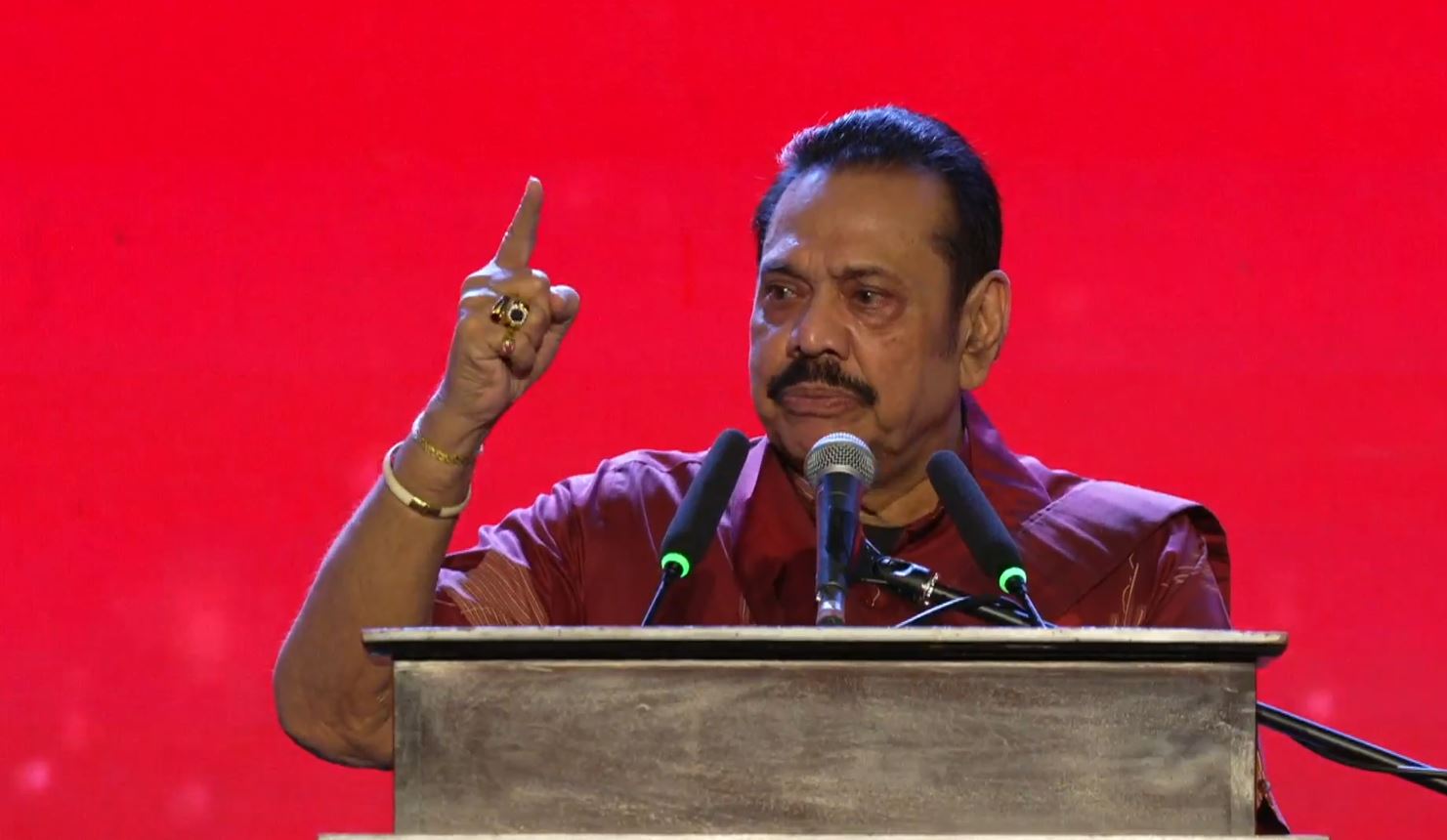
Speaking at a public rally in Minuwangoda on Sunday December 03, Premadasa said government MPs who harassed him in parliament will not be able to undo his resolve to bring to book those that brought Sri Lanka to financial ruin.

“As you must have seen, when the court verdict on these people who violated human rights of this country was being discussed in parliament, those inside parliament that supported the family rule and also raised their hand for the incumbent president came forward to challenge me,” said Premadasa.

The leader of the main opposition Samagi Jana Balawegaya (SJB) was alluding to an incident involving government MP Sanath Nishantha who along with a number of his colleagues had surrounded Premadasa when he was raising a question pertaining to a recent Supreme Court verdict holding members of the Rajapaksa family responsible for the financial crisis.

“They even grabbed the question I had in my hand,” said Premadasa, referring to his documents being forcibly taken away by one MP.

MP Nishantha, who represents the ruling Sri Lanka Podujana Peramuna (SLPP) led by former president Mahinda Rajapaksa, was suspended from parliament for two weeks following the incident.

“They may grab my documents. They may manage to take everything I own. They may even take my life. But no matter what they take from me, no one will be able to take away my determination to bring the rogue family that robbed this country to book,” said Premadasa.

Former president Rajapaksa has said he does not accept the apex court’s verdict holding him, two of his brothers and officials affiliated with their administration responsible for the 2022 currency crisis.

I do not accept it. I must state that clearly. There will be an opportunity to make a statement in defence. We will answer it then,” he said on November 15, asked by reporters in Kandy for his thoughts on the verdict.

Posted in Uncategorized

Prez undermining EC ahead of elections: SLPP rebel group

The rebel SLPP group yesterday (04) accused President Ranil Wickremesinghe of trying to bring the legislature under his control ahead of presidential and parliamentary polls scheduled for 2024 and 2025.

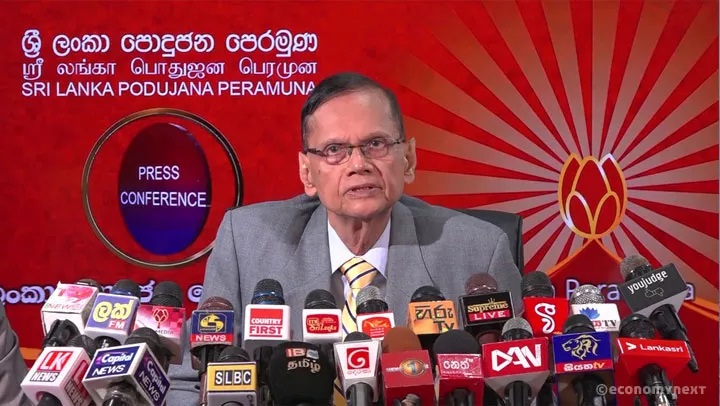
Addressing the weekly media briefing at Nawala, top Opposition spokesperson and former External Affairs Minister Prof. G.L. Peiris alleged that Wickremesinghe’s recent threat to appoint a Parliamentary Select Committee (PSC) to ascertain the status of the Constitutional Council (CC) was in line with his strategy to keep the legislature under his thumb.

Prof. Peiris said the executive posed a threat to the legislature as well as the judiciary against the backdrop of the moves to introduce a new Act to govern Parliament, undermine CC and clip the wings of Cabinet ministers. He cited the recent sacking of Sports Minister Roshan Ranasinghe (SLPP Polonnaruwa District) as a case in point.

Referring to the proposed parliamentary Act, the former minister pointed out that the President with just one UNP National List MP in the current Parliament, was bent on bringing the whole administrative structure, at every level, under his direct control. Prof. Peiris asserted that the President seemed determined to push ahead with his contentious strategy, regardless of consequences.

The former top law academic said that the way President Wickremesinghe responded to the CC’s refusal to endorse multiple extensions to former IGP C.D. Wickremeratne revealed the UNP leader had absolutely no regard for the 21st Amendment enacted on Oct 21, 2022 with an overwhelming 2/3 majority. The academic acknowledged that the President was pursuing an agenda inimical to parliamentary democracy in spite of clear opposition to such undemocratic behaviour both in and outside Parliament.

The ex-Minister alleged that President Wickremesinghe conveniently failed to fill a longtime existing vacancy in the vital Election Commission (EC). Recalling how the President moved against the previous EC after having failed to force the independent commission to put off Local Government polls on its own, Prof. Peiris expressed fears the delay seemed to be deliberate. The one time internationally recognized law academic accused President Wickremesinghe of planning to sabotage the EC in the run-up to the presidential polls late next year.

“We are quite concerned about Wickremesinghe’s motive in continuing with one vacancy in the five-member EC,” Prof. Peiris said, pointing out that P.S.M. Charles, one-time member of EC, received appointment as Governor of the Northern Province on May 17, 2023. Prof. Peiris said that President Wickremesinghe posed quite a threat to the parliamentary system.

Responding to The Island queries, Prof. Peiris emphasized that the SLPP should be held accountable for the developing crisis. Having invited Wickremesinghe to accept premiership on May 12, 2022 at the height of the public protest campaign, the SLPP accommodated the UNP leader as Finance Minister on May 25, 2022 before electing him the President in late July, of the same year, Prof. Peiris said.

The former law professor added that the President operated on the premise that regardless of the SLPP’s stand, the majority of members, including the entire Cabinet, would abide by his stand on any contentious issue. This was proved when President Wickrememesinghe sacked Sports Minister Ranasinghe who had the guts to stand up to Sri Lanka Cricket (SLC).

The former minister urged the genuine Opposition to sink whatever differences to meet the President’s challenge. The President has repeatedly shown that he didn’t care about the Constitution and intended to consolidate his position in preparation for the next presidential poll.

Prof. Peiris warned that Wickremesinghe would go all out against the media, both print and electronic, as he stepped up pressure on the Opposition.

Plantation workers to get postal addresses

In a historic development, the Attorney General yesterday (4) informed the Supreme Court that steps have been taken for the first time in 200 years, to assign postal addresses for the plantation worker community residing in the ‘Muwan Kanda’ rubber estate, in Mawathagama, Kurunegala. This marks a significant milestone as it is the first instance of providing postal addresses to plantation workers in the country.

This was informed to the Supreme Court, by Deputy Solicitor General Kanishka de Silva, representing the Attorney General during the hearing of the Fundamental Rights (FR) petition filed by Jeevaratnam Suresh Kumar, a resident of the ‘Muwan Kanda’ estate in Mawathagama, requesting the Supreme Court to issue a directive to the State to provide postal addresses to the plantation workers.

The petition was heard before the three-Judge Supreme Court Bench comprising Chief Justice Jayantha Jayasuriya, A.H.M.D. Nawaz, and Arjuna Obeysekera.

The petitioner’s lawyer, Lakshan Dias, explained that the petition aimed to provide postal addresses to the entire estate workers’ community across the island. He acknowledged the time required for such an extensive task and appreciated the government’s efforts to address the long-standing issue faced by the plantation workers.

Deputy Solicitor General Kanishka de Silva emphasised that providing postal addresses for the entire plantation community nationwide is a time-consuming programme. He mentioned that government officials are diligently working to gather information for this task, requiring additional time.

Chief Justice Jayantha Jayasuriya noted that this initiative marks a historic moment for the plantation workers, spanning over 200 years and expressed satisfaction over addressing their need for postal addresses.

The Chief Justice informed the petitioner’s lawyer that, considering the fulfillment of the relief sought, the hearing of the petition would be adjourned. However, he mentioned that if the petitioner wishes to inquire about the progress after six or nine months, they have the option to bring the petition back to Court and seek an update on the activities’ progress.

A China rivalry twist emerges in Sri Lanka’s new US-funded, Indian-built port

A US-funded port project in Sri Lanka that is partly owned by a private group close to India’s ruling party could signal a new form of partnership to counter growing Chinese influence in the Indo-Pacific region.
The Adani Group, controlled by Indian billionaire Gautam Adani and with businesses ranging from ports to edible oils, is developing the Colombo West International Terminal project in Sri Lanka’s capital and holds a 51 per cent stake in the project, backed by more than US$500 million in funding from a US government agency. Sri Lankan conglomerate John Keells Holdings and the state-run Sri Lanka Ports Authority hold the remaining stakes.

India and the United States – alongside Australia and Japan – form the Quad diplomatic network, whose leaders have said they are focused on providing an alternative to Chinese infrastructure projects for developing nations. The new Sri Lankan port terminal, resembling a public-private partnership, would appear to be their first such endeavour.

Analysts say the move signals a new determination on the Quad’s part to guard against smaller nations leaning too heavily on China and its arterial trade and military routes. Another terminal at the port is run by China Merchants Port Holdings Co Ltd.

Cedomir Nestrovic, a professor of geopolitics at the ESSEC Business School Asia-Pacific in Singapore, said it would be too simplistic to characterise the US-funded project as just another business deal.

He said geopolitical interests could be seen in the fact that the US$553 million in financing from the US International Development Finance Corporation, a federal government agency, represents nearly four-fifths of the US$700 million required to build the terminal.

There are not many other cases “where America has invested institutionally in this way, with this amount of money,” Nestrovic said. “The political motivation is part of the larger rivalry that exists between the United States and China.”

Not business as usual?

US efforts to contain China militarily through the presence of American troops in South Korea and Japan have been expanded into the economic sphere via the larger Quad grouping and the push “to ‘cut the grass’ of Chinese investments”, Nestrovic said.

“How to put a little bit of pressure on China,” was a possible US motive for the port investment, he said, in addition to Washington’s desire to provide smaller nations with a non-Beijing alternative for infrastructure investments and “tell them you are not alone”.

If the partnership model for the port terminal proves to be successful, analysts expect it to be replicated elsewhere in the region.

“So this is part of the big game. It’s not just one investment that is done in Sri Lanka,” Nestrovic said.

This is part of the big game. It’s not just one investment that is done in Sri Lanka
Cedomir Nestrovic, professor of geopolitics

For years now, Beijing and New Delhi have vied for influence in Sri Lanka and across the wider Indian Ocean with its busy shipping corridors. India sees the sea lanes as vital to defending its southernmost regions, prompting analysts to warn that they could emerge as a potential flashpoint with China amid deteriorating ties since a border clash more than three years ago.

India provided around US$4 billion in financial aid and humanitarian support to Sri Lanka last year, as the island sought an International Monetary Fund bailout to relieve its crushing debt burden after its tourism-dependent economy collapsed amid the pandemic.

Delhi has since pursued ambitious long-term investments in Sri Lanka, including renewable-energy projects and the expansion of a harbour at Trincomalee in the country’s northeast into a major port.
It is envisaged that the new terminal in the major transshipment hub of Colombo, meanwhile, will help smaller vessels plying their trade in the shallow harbours of eastern India get their cargo to world markets.

Vital trade corridor

Adani Group is also developing India’s first transshipment port in the southern state of Kerala, which is expected to be fully operational by the end of next year, as the country eyes a bigger slice of international maritime trade currently dominated by China.

“China is already operating a terminal in Sri Lanka, and in the absence of the Adani venture, they [Chinese companies] could have drawn cargo away from India by outpricing us,” said an Indian industry shipping executive who requested anonymity, adding that it would make sense for the group to now invest in similar transshipment ports across Asia.

Adani Group is already India’s biggest port operator, owning more than a dozen facilities across both coasts, and is now looking to expand to Bangladesh, Vietnam and Tanzania, according to Gautam’s son Karan Adani, CEO of Adani Ports and Special Economic Zone Ltd. That’s in addition to its ports already under development in Sri Lanka and Israel.

The group, which bounced back from US-based short seller Hindenburg Research’s bruising allegations of stock-price manipulation in January, is representative of large Indian businesses’ increasing desire to go global, Nestrovic said.

“I think Indian businesses will start to become global businesses,” he said, adding that if the Adani Group’s Sri Lankan venture works out, it will pave the way for expansion elsewhere.

Private partnerships in focus

Analysts say the US likely chose to partner with the private sector on the new Sri Lankan port terminal as doing so involves less red tape than working with Indian state-owned enterprises.

“The Indian establishment has [also] realised private projects are more efficient and are more deliverable,” said Aditya Gowdara Shivamurthy, associate fellow with the Delhi-based Observer Research Foundation’s Strategic Studies Programme.

Such partnerships would also help the US bolster its low-key presence in South Asian nations, where it has mostly concentrated on providing aid. But even that is not always welcome.

A US$500 million grant to build power transmission lines in Nepal and allow load sharing with India ran into a storm of protests last year after opposition parties suspected the real motivation was establishing an American military base.

The South Asian nation’s development compact with the US Millennium Challenge Corporation was only officially launched in August after being stuck in limbo for five years.

Shivamurthy said there was the potential for such difficulties to be avoided in future through more US-India business collaborations.

“India knows that the US has the technology and cash and the US knows that India has the knowledge and leeway in these countries,” he said.

China, whose pockets are far deeper than India’s, has been growing its influence in Sri Lanka and the Maldives in recent years through major infrastructure projects, extending its sway in a region that Delhi has traditionally seen as its strategic backyard.

“I think it’s a question of how you find the right balance. At the end of the day, who can deliver on the ground is the most important question,” said Harsh Pant, an international-relations professor at King’s College London.

“The US is looking at the reality of a China on the upswing and recognising that it needs to work with India with innovative outcomes.”

For a long time, India thought it could secure its interests in the Indian Ocean on its own, Pant said, but Delhi has now realised it can’t afford to work in a silo. “Unless like-minded countries work together, it will be very difficult to project a favourable balance of power.”

He said that would involve “a wider matrix of like-minded countries”, including Japan and Australia, working together on projects.

“Today, there is a pushback from India and like-minded countries. You’re going to see more of this going forward,” Pant said.

Source:Biman Mukherji has more than two decades of reporting and editing experience in Asia, focusing on Indian and Asia business.

Sri Lanka’s Haycarb begins coconut growing campaign in North

Sri Lanka’s Haycarb Plc, an exporter of activated carbon said it had begun a campaign to expand coconut cultivation in the north of the island.

This is being done in partnership with the Coconut Development Authority and Coconut Cultivation Board.

“Haycarb aims to plant 100,000 coconut trees in the Northern regions of Sri Lanka, including Mullaitivu, Kilinochchi, and Jaffna. This initiative is a vital part of a broader national endeavour to establish a second coconut triangle,” the company said in a statement.

Phase One kicked off in Iyakachchi, Jaffna, with the distribution of 25,000 coconut seedlings.
The remaining 75,000 trees are to be planted in the Northern and Eastern provinces by end 2024.

“Haycarb has worked extensively in developing and manufacturing premium quality coconut shell based activated carbons to suit a range of application segments globally, that include water and air purification, gold extraction and many other applications,” Haycarb Managing Director Rajitha Kariyawasan said.

“We see growth potential in the activated carbon market, for which we require a much greater supply of coconut charcoal. This will support the demand for coconut shells in the country while reducing dependence on imported charcoal,” he said.

“Our recent technological drive to develop activated carbons for the energy storage segment, encompassing both mobile and stationary power and energy applications, embraces sustainability principles.”

Haycarb is also expanding its pioneering ‘Haritha Angara’ green charcoaling initiative with the installation of 30 additional pits in 2023/24, bringing the total to 473 pits island-wide, and plans to expand the total to over 500 pits by 2025.

Launched in 2014 with the aim of introducing eco-friendly charcoaling practices to local suppliers, the “Haritha Angara” initiative encourages local suppliers to convert their traditional open pit charcoaling sites to environment-friendly closed pits using technology, training and expertise developed by the Haycarb team.

Haycarb has manufacturing facilities in Sri Lanka, Thailand, and Indonesia, supported by marketing offices in the USA, UK, and Australia.

Posted in Uncategorized

Rs 1.1M on five officers for five days for meals in 2022

The Defence Service Command and Staff College (DSCSC) has spent a staggering Rs 1.1 million as entertainment expenses (food and refreshment) over just five days on five officers, Defence Ministry Secretary, Chief of Defence Staff and three Commanders of the Army, Navy and the Air Force in 2022, a National Audit Report submitted in Parliament on 28 November revealed.

According to the report, the five officials had visited the DSCSC to monitor the operations of the institute.

The report DEF/DSCSC/22/04 published by the National Audit Office highlights that these activities were carried out in contravention of Treasury Circulars outlining expenditure limitations amid the current crisis in the country.

In another bizarre move, the purchase of 30 black colour dining chairs for the hostel, costing Rs 350250 left unused in the DSCSC warehouse as the colour was deemed unsuitable and mismatched to the ambience of the hostel.

Furthermore, the audit reveals that contributions for civilian staff at DSCSC from 2009 to 31 August 2022, have not been remitted to the Employees’ Trust Fund, with outstanding contributions for 64 current employees amounting to Rs 7.58 million.

The procurement of a heavy-duty photocopier for DSCSC saw a discrepancy, with the machine acquired at Rs 2.2 million instead of its listed price of Rs 1.6 million, resulting in a loss of Rs 600,000 in the procurement process.

The audit report also notes a delay in the procurement process for the heavy-duty copier due to a lack of specifications tailored to the needs of DSCSC, contributing to the higher acquisition cost.

Additionally, a four storey library and examination hall building, constructed at a cost of Rs 133 millions for the college, reportedly suffered substantial damage to its electrical system and upper-floor walls due to water leakage. Despite the issues dating back to 2019, there has been no restoration. In summary, the total expenditure for the staff college in 2022, dedicated to enhancing the professional knowledge of selected Student Officers from the tri-forces and Police, amounted to Rs 171 million.

Posted in Uncategorized

Indian State elections go the Modi way, but Congress makes a dent in the South

The Bharatiya Janata Party (BJP), whose mascot is Indian Prime Minister Narendra Modi, has won in three of the five States which went to the polls on different days in November.

The results of all elections, except the one held in Mizoram, were announced on Sunday. The counting of votes in Mizoram will take place on Monday.

The States in which the BJP won are: Rajasthan, Madhya Pradesh and Chhattisgarh, all in North India and all Hindi-speaking. The BJP has always been strong in what is called the “Hindi belt” (or “cow belt” as it is largely agricultural and culturally conservative).

As per the past pattern, the BJP lost in the South Indian State of Telangana, where the language is Telugu. In Telangana. the Congress wrested the government from a regional party Bharat Rashtra Samiti (BRS).

In a State election held earlier in 2023, another South Indian State, Karnataka, had gone to the Congress. So, the entire South Indian region is a non-BJP area. Andhra Pradesh and Tamil Nadu, which are also in South India, are ruled by regional parties. And Kerala is under the Communists.

The North and South differ in ideological orientation. While the North is very receptive to Hindu nationalism or “Hindutva” the South is not. The South is not only more secular but is also equalitarian in its ethos. In the North, religious affiliation overwhelms other considerations such as social justice, caste inequality etc.

Of course, there are considerations other than Hindu nationalism in a voter’s mind when he or she makes a political choice. Among these are: the way the government delivers social welfare schemes and whether there is corruption and malfeasance in the implementation of schemes.

It is generally granted that in the BJP-ruled States in the North, delivery of welfare schemes is satisfactory. The BJP government in Karnataka fell because it was wanting in this regard. It lost the last elections to the Congress.

The latest round of elections signified the popularity of “Hindutva”, an ideology which is based on Hindu consolidation against the minorities (especially Muslims), in the Hindi belt. The Congress tried to divert the attention of the voters by speaking loudly against glaring caste and economic inequalities. It proposed that a census of castes be taken to know their relative social and economic status. But this appeal got no traction. Hindu unity got traction.

The Congress leaders’ attempt to portray themselves as good Hindus by publicly performing Hindu (Brahminical) rituals did not cut ice with the voters for whom the BJP was the only genuine Hindu party.

A factor related to Hindutva is a muscular foreign policy. Hindutva entails strong steps to counter perceived threats from Muslim Pakistan and the Islamic world. The Modi government’s aggressive stance on Pakistan and cross-border terrorism and its resistance to the hegemony of Western democracies are lauded by sections which are under the spell of Hindu nationalism. Israel is their role model.

For the Congress to make headway in the North, many experts suggest that it should stop pretending to be a Hindusitic party. It should give an alternative world-view to the voters, one that is secular, equalitarian and Gandhian in its approach. But there are others who argue that since the flavour of the season is aggressive Hindu nationalism at home and jingoism abroad, it will be futile to propagate a secular and Gandhian ideology which has passed its expiry date.

Rahul Gandhi kept saying that the Congress offers love in place of the hate touted by the BJP, but clearly, it fell on deaf ears.

The Congress may also have to change the issues that it has been taking up, issues such as the concentration of wealth and economic influence in the hands of a few oligarchs like the Adanis and the patronage they get from Modi. The Adani’s monopolies and his alleged shady dealings are clearly not an issue for the common man.

Coming to the consequences of the election results, the most striking consequence is the tremendous psychological advantage that the victories have given the BJP and Modi, personally. The BJP and Modi will now go with gusto into the country-wide parliamentary elections in May 2024.

Conversely, the results will dampen the spirit of the Congress and its allies who come under the rubric of “I.N.D.I.A”.

The leadership of Rahu Gandhi may be challenged within I.N.D.I.A. But will Rahul and the Gandhi family give in without a fight? After all, the Congress is still the single largest party in the alliance and the only all-India party among them.

The constituent parties of I.N.D.I.A will be meeting in New Delhi on December 6 to take stock of the situation and chalk out a plan for the future.

Posted in Uncategorized

IMF Review of Sri Lanka’s Extended Fund Facility Pushed to December

The First International Monetary Fund Review of the Extended Arrangement Under the Extended Fund Facility for Sri Lanka will be on December 12.

Sri Lanka officials were expecting the review to be completed in December as soon as official creditors gave their assurances.

The review was originally expected around September with another review based on December data, leading to September and March disbursements.

Jeevan wants India and Sri Lanka to rectify historical wrongs

Minister Jeevan Thondaman says both Sri Lanka and India must take responsibility for restoring the rights and dignity of every Indian Origin Tamil (IOT) community of Sri Lanka.

Though half a century has lapsed since India signed the Indo-Sri Lankan agreements (Sirimavo-Shastri Pact of 1964 and Sirima-Gandhi Pact of 1974) to resolve the status of Indian Origin Tamils (IOT) in Sri Lanka, the Indian government has still not fulfilled its treaty obligations, the Madurai Bench of the Madras High Court observed on Thursday.

Issuing a statement today, Minister Jeevan Thondaman welcomed the decision of the Madras High Court, which he says brings to light the longstanding injustices faced by the Indian Origin Tamil (IOT) community of Sri Lanka.

He said the Sirima-Shashthri pact’s forced repatriation of our people, who had enriched Sri Lanka for over 150 years at the time, remains a stark reminder of the historical injustices imposed on my community that continue to resonate.

“Our community, torn from their homeland, denied Sri Lankan citizenship for nearly 50 years, and left in limbo without Indian citizenship, has endured decades of statelessness. Although citizenship issues were finally resolved in Sri Lanka in 2009, this has profoundly affected their access to basic rights, identity, and dignity. Today, our Government is working on healing the deep scars left by these injustices,” the Minister said.

Thondaman said that President Ranil Wickremesinghe’s Committee on Integration of the Plantation Community seeks to find and implement practical solutions to fully integrate the IOT plantation community to Sri Lankan society.

“The President’s recent announcement to give every estate worker family 10 perches of land, will finally give them ownership over the land they have lived and toiled in for 200 years,” he said.

However, Thondaman asserted that this is not enough and that every IOT forcibly taken away, must also have the right to return back to Sri Lanka.

“This is not just a demand; it’s a call to rectify historical wrongs. Both Sri Lanka and India must take responsibility for restoring the rights and dignity of every individual affected. The long-term impact of statelessness on the IOTs is a collective failure of both countries,” he said.

Thondaman said he is committed to work with all partners including India, to ensure justice and a rightful place for the IOT community in Sri Lanka and Indla’s shared history.

Posted in Uncategorized

Indian envoy visits Sri Lanka’s north, underscores India’s commitment to country

The Indian envoy in Colombo has visited Sri Lanka’s Northern Province to emphasise New Delhi’s abiding commitment to the development and well-being of the people of the country through enhanced development cooperation and expanded economic partnership.

Indian High Commissioner Gopal Baglay has completed a three-day visit to the province, the Indian High Commission said in a statement on Saturday. He was accompanied by senior diplomats of the High Commission on the visit from November 29 to December 1.

The High Commissioner visited three islands off Jaffna, Nainativu, Analaitivu and Delft to assess the preparedness for implementing the Hybrid Renewable Energy Systems project. The Government of India have committed to support this project with a grant to address the energy needs of the inhabitants of these islands.

This was the High Commissioner’s last of several visits to Jaffna during his assignment to Sri Lanka and underscored India’s abiding commitment to the development and well-being of the people of Sri Lanka, including in the Northern Province, through enhanced development cooperation and expanded economic partnership in accordance with the priorities and the requirements of the people of the region, the statement said.

He visited Thalaimannar and Kankesanthurai passenger facilities in pursuance of the ongoing efforts for enhanced connectivity through ferry services between mutually agreed points in India and Sri Lanka.

“Attesting to the significance of developing railway infrastructure under the India-Sri Lanka development cooperation partnership for the benefit of the people of Sri Lanka, the delegation undertook a journey by Sri Lankan Railways from Colombo to Medawachiya in modern coaches supplied under an Indian credit line.

The train journey also provided an opportunity to experience the riding comfort offered by the upgraded railway line from Anuradhapura.

The work is undertaken by reputed Indian public sector company IRCON, under an ongoing Indian line of credit for the upgradation of the Maho-Omanthai segment.

The High Commissioner inaugurated a programme to donate 1,000 school bags to students across Mannar District at Murunkan Maha Vidyalayam whilst also launching a special financial assistance scheme for underprivileged students at the University of Jaffna. In addition, he distributed dry rations to more than 500 families in Jaffna and Delft Islands. Deep freezers were donated to 15 fishermen cooperatives for the use of fishermen in the Jaffna region.

“Interacting with representatives of the cooperatives at Pasaiyoor, the High Commissioner stressed that India is striving to bring benefits of scientific research and expertise for commercially sustainable development of fisheries in Sri Lanka, including in the Northern Province so that the benefits can directly reach the fishermen and the common people”.

At the Indian Peace Keeping Forces (IPKF) memorial in Jaffna, the High Commissioner paid homage on December 1 to the brave sons of India who made the supreme sacrifice in Sri Lanka.

The IPKF was formed under the mandate of the Indo-Sri Lankan Accord signed in 1987 that aimed to end the civil war in the country between militant Sri Lankan Tamil nationalists such as the Liberation Tigers of Tamil Eelam (LTTE) and the Sri Lankan military.

Source: PTI