Chinese loan-sharks arrested in Sri Lanka

The Criminal Investigations Department (CID) has arrested five Chinese loan-sharks in Dehiwala.

The Police said that a Sri Lankan was also arrested from the loan center operated in Dehiwala.

According to the Police, the loan-sharks had provided loans to people and later held them to ransom to get the money back with interest.

The Cyber Crimes Investigations Division of the CID conducted an operation based on a complaint received and arrested the suspects.

The Police also seized 8 desktop computers, 13 laptops, and 41 mobile phones.

IMF team overseeing Sri Lanka’s bailout programme visits Jaffna

A team of senior IMF officials overseeing Sri Lanka’s bailout programme has toured the Tamil-dominated Northern district of Jaffna for the first time under the current USD 2.9 billion agreement, officials said on Monday.

Led by Peter Brueur, the International Monetary Fund senior mission chief for Sri Lanka, the team last week met with the Governor of the Northern province, PMS Charles, and other senior officials and discussed issues related to economic growth in the province, demining programmes, resettlement of conflict-displaced individuals and compensation for conflict victims.

They also discussed the educational matters related to Jaffna University, post-COVID operations, and the adverse effects of climate change on the northern region, the officials said.

The team, which returned to Colombo on Monday, is scheduled to engage with the finance ministry. Talks are expected with Shehan Semasinghe, the state minister of finance, who leads the local IMF engagement under President Ranil Wickremesinghe.

The discussions in Colombo are anticipated to focus on the targets outlined in the current IMF programme, which advocates large scale economic reforms in the island nation.

In a meeting with President Wickremesinghe on Thursday last, Brueur had expressed satisfaction with Sri Lanka’s progress in implementing reforms aimed at revitalising the economy.

The global lender had commended Sri Lanka for its advancements in policy-oriented variables and fiscal consolidation.

Sri Lanka, which declared its first-ever debt default in April 2022, had secured an IMF bailout agreement of USD 2.9 billion over four years by the last quarter of 2022.

The first tranche of USD 1.5 billion was released in March 2023, with the second installment of USD 337 million arriving in December 2023 following the first review.

Source: PTI

Posted in Uncategorized

India-China battle for Sri Lanka Telecom

The sale of the Government’s controlling 50.23% stake in Sri Lanka Telecom (SLT) has sparked an apparent battle between Indian and Chinese firms whilst some viewed the level of interest as disappointing.

The SOE Restructuring Unit (SRU) announced Jio Platforms Ltd. in Gujrat, India, Gortune International Investment Holding Ltd., c/o Capital Alliance Ltd. and Pettigo Comercio International LDA., c/o NDB Investment Bank Ltd. submitted their offers to the Government’s notice for Request for Qualification (RfQ).

Jio is part of Indian billionaire Mukesh Ambani’s business empire Reliance Group and appears the most credible and formidable contender. Brokerage BofA has pegged Jio Platforms’s valuation at $ 107 billion. BofA in a note said it expects Jio Platforms to continue adding subscribers this year while making deeper inroads with its advanced feature phone JioBharat and wireless broadband device JioAirFiber.

Gortune International Investment Holding is a private equity firm out of China’s southern hub – Guangdong province. Pettigo Comercio International is front for UK’s Lyca Group owned by Lankan born successful entrepreneur Allirajah Subaskaran. Pettigo Comércio Internacional, Lda is a company that owns the trademarks LYCAMOBILE and LycaFly. The company also provides domestic and long-distance telecommunications services.

SRU said the evaluation of the RfQs will adhere to the Special Guidelines on Divestiture of State-Owned Enterprises, a framework approved by the Cabinet of Ministers in July 2023.

The International Finance Corporation (IFC) acts as the Transaction Advisor for the divestiture of shares held by the Government in Sri Lanka Telecom PLC.

The original deadline for RfQ was 18 December following issuance of notice on 10 November. The deadline was extended till 12 January.

Industry analysts viewed the mere 3 responses as disappointing. The Telecommunication Engineers Union (TEU) has written an open letter to President Ranil Wickremesinghe on the very issue (see story elsewhere on this page). TEU is the most prestigious professional trade union in Sri Lanka Telecom PLC consisting of around 550 qualified, experienced, and passionate professional engineers representing 95% of the management of the Company.

The SLT sale is also facing other challenges as the company has gone to courts over the proposed merger between Dialog Axiata PLC and Airtel Lanka Ltd.

SLT PLC reported a revenue of Rs. 17,490 million with a growth of 3.7%, while Mobitel recorded 2.7% de-growth during Q3’23 compared to Q3’22.

The Group’s consolidated revenue for the quarter increased by 3.9% to Rs. 27.7 billion, compared to Rs. 26.7 billion in Q3 2022. SLT PLC revenue growth was driven mainly by growth in broadband, PEOTV and enterprise revenue streams. During the 3rd quarter, Mobitel regained its growth after several quarters of decline, and revenue has begun to increase in Q3 with a 3% growth over Q2.

Compared to Q3 2022, SLT Group’s operational expenditure (Opex) increased by 13.3% in Q3 2023 to Rs. 19.7 billion. Major causes of SLT’s rising Opex are increased costs related to electricity, repair and maintenance. Despite the growth in revenue that was recorded, SLT was unable to match the increase in costs which has impacted the Group’s profitability.

For the 9 months ending September 2023, SLT Group’s Opex was Rs. 57 billion, a 14.9% increase from Rs. 49.6 billion in the same period last year. Cost surges are attributed to economic conditions such as higher electricity tariffs, LKR devaluation against USD, and import restrictions.

The SLT Group’s financial performance in Q3 was significantly impacted by a steep decline in profitability of its subsidiary, Mobitel. Group EBITDA decreased by 13.7% compared to the corresponding quarter the previous year, primarily due to decrease in Mobitel EBITDA.

The drop in revenue and increase in Opex, have led Mobitel EBITDA to decrease during Q3. Accordingly, Group operating profit also dropped by 81% during the quarter. Group PAT decreased by 208% mainly due to operating loss in Mobitel and increase in finance cost of SLT PLC.

Posted in Uncategorized

UK Prime Minister thanks British Tamils for ‘amazing contribution’ in Thai Pongal message

UK Prime Minister Rishi Sunak sent a “huge thank you” to British Tamils in a message released to mark Thai Pongal today, stating the community has made an “amazing contribution” to the country.

“Let me first say a huge thank you to British Tamils for the amazing contribution you make in the NHS, education, science, business, public service,” said Sunak in a video message released this morning.

“And as we look ahead, let me also renew my commitment to building a better, brighter future for everyone.”

British politicians from across the country have released messages to mark Thai Pongal today, including Leader of the Opposition Keir Starmer who said it was “also a time for us to remember the sacrifices made by the Tamil people for self determination, peace and justice in Sri Lanka”.

Posted in Uncategorized

Keir Starmer commemorates ‘sacrifices made by the Tamil people for self determination’ in Pongal message

Marking Thai Pongal, Britain’s Leader of the Opposition, alongside numerous other MPs have issued statements celebrating the conribution of British Tamils to life in the UK and reaffirming their commitment to supporting Tamils in their struggle for self-determination, truth, justice and accoutability.

His full statement is reproduced below:

Today, Tamils both in the UK and around the world celebrate Thai Pongal, the Tamil harvest festival. May the harvest festival bring abundant blessings, prosperity, and happiness. As we gather with family and friends, let us celebrate the spirit of unity, gratitude, and the rich Tamil culture that defines this special occasion.

I also take this opportunity to thank the British Tamil community and highlight the many contributions they have made to the social, economic and cultural fabric of our country. Their contributions in academia, medicine, business, arts, literature and science have made our communities and our country stronger. I’d like to extend a special congratulations to the hard work and success of the Tamil students who have come from around the world.

This is also a time for us to remember the sacrifices made by the Tamil people for self determination, peace and justice in Sri Lanka. Labour will continue to push the UK government to act on their clear responsibility to ensure the Sri Lankan government no longer delay in supporting justice, accountability and reconciliation, and a Labour government will work with our international partners, standing shoulder to shoulder with Tamil communities, to help build peace and political stability in Sri Lanka.

On behalf of everyone at the Labour Party I want to wish you a very happy and peaceful Thai
Pongal.

Posted in Uncategorized

Sri Lanka reiterates stand on ‘One China’ policy after Taiwan polls

Sri Lanka reiterated its stand on the ‘One China’ policy after Taiwan elected William Lai as their President.

Foreign Minister Ali Sabry said that Sri Lanka was glad to see the peaceful conclusion of the elections in Taiwan.

“Glad to see the peaceful conclusion of the elections in Taiwan. Sri Lanka remains steadfast in advocating and upholding the One China policy, and we aspire for a harmonious reunification of Greater China,” the Sri Lanka Foreign Minister said.

The election in Taiwan has angered Beijing, which issued a statement shortly after the results insisting that “Taiwan is part of China”.

While Beijing has called for “peaceful reunification”, it has also not ruled out the use of force.

It had cast the Taiwan election as a choice between “war and peace”.

China has ramped up its military presence around the island in recent months, heightening fears of a possible conflict.

Posted in Uncategorized

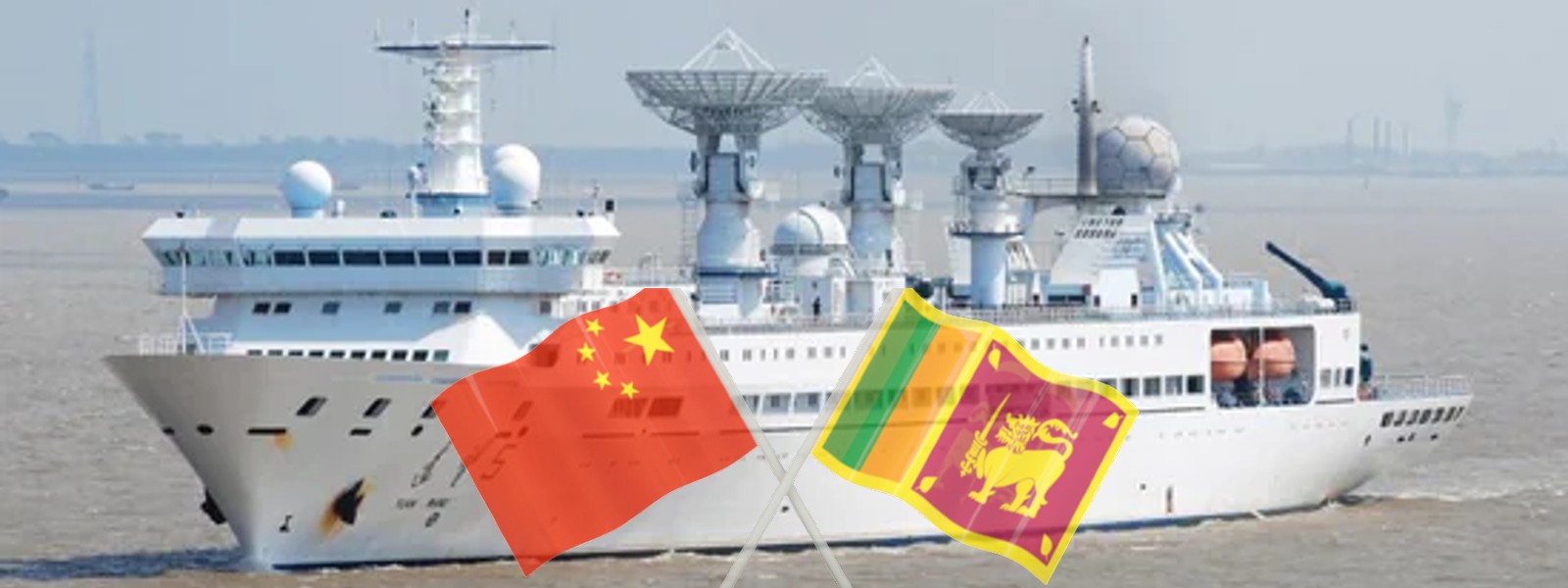
Resolve local affairs before safeguarding international seas: Cardinal

Criticising the government’s move to send in a naval ship to ensure the safety of international sea routes, Archbishop of Colombo Cardinal Malcolm Ranjith said local affairs have been neglected by the authorities.

Cardinal Ranjith who was speaking during a special service held to mark the second anniversary since the finding of a grenade at the All Saints’ Church, Borella said authorities have failed to find the real perpetrators who placed a grenade inside the church, who planned the Easter Sunday attacks and those who have harassed the media in the past.

“We are still to see justice being meted out to those who were behind the Easter Sunday attacks. No one still knows who were behind the disappearance of Prageeth Ekneligoda and the killing of Sunday Leader Editor Lasantha Wickramatunga. Everything has been swept under the carpet. Authorities seem to be giving priority to safeguard international seas rather than resolving burning issues in the country,” he added.

“We understand that 2024 is a year of elections. Let’s hope and pray that people will hand over the nation to proper leaders this time,” he also said

Posted in Uncategorized

New Indian High Commissioner Santosh Jha meets former President

Newly-appointed Indian High Commissioner Santosh Jha on Saturday met Sri Lanka’s former president Mahinda Rajapaksa and discussed New Delhi’s consistent support to Colombo over the last several decades.

“High Commissioner @santjha met former President @PresRajapaksa and discussed Sri Lanka’s age-old relationship with India, as well as India’s consistent support to Sri Lanka over last several decades as a close friend and neighbour,” the Indian High Commission said in a post on X.

Jha assumed charge as the High Commissioner of India to Sri Lanka in December 2023.

A senior Indian diplomat, Jha was India’s Ambassador to the European Union, Belgium and Luxembourg before taking up his assignment in Colombo.

Jha had also served in Colombo from 2007-2010 as Counsellor at the High Commission, handling work related to commercial and economic matters.

Recalling his previous stint in Sri Lanka, Jha said that he considers it a great privilege to be in Colombo once again to work for further strengthening bilateral friendship and cooperation.

Rajapaksa and his family were ousted from power during anti-government protests in the island nation following an economic crisis in 2022.

Source: PTI

Mahanayaka Theros call for necessary legal provisions to prevent distortion of Buddhist teachings

The Chief Prelates (Mahanayaka Theros) of all three Buddhist Chapters in Sri Lanka have called on President Ranil Wickremesinghe to implement the law against the organized groups of people who they claim are spreading false ideologies regarding Buddhism and are harming the Buddhist philosophy and its cultural values.

In a joint letter addressed to the Head of State, the chief prelates highlight that it has become evident that the behaviour of such individuals who are trying to destroy Buddhism can no longer be considered as mere incidents.

Thereby, the Mahanayaka Theros have pointed out that instead of trying to isolate and find solutions to such events, which are carried out in order to corrupt the noble interpretation of the religion, it is time to prepare the necessary legal provisions to prevent such ‘Dharma distortions’ and ‘Sasana distortions’ from repeatedly occurring in the society.

Furthermore, the Mahanayaka Theros have emphasized the urgent need to prepare necessary legal provisions to implement the law against such individuals who are trying to create social disturbances by misleading the Buddhist community by promoting such statements on social media and to regulate the promotion of such statements.

Accordingly, the Mahanayaka Theros have sought prompt attention of the President who is ‘committed to promoting and fostering the safety of Buddhasasana’ regarding the matter.

Jan. 1974 Tamil Conference, police attack and civilian deaths in Jaffna By DBS .Jeyaraj

A significant event in the post-independence history of the Sri Lankan Tamils took place 50 years ago on 10 January 1974 in Jaffna. A joyful cultural celebration was marred by the Sri Lankan Police unleashing violence against Tamil civilians. Ecstasy turned into agony when the panic-stricken people ran helter-skelter for safety. Seven persons died of electrocution when electric wires were dislodged by Police firing in the air. Another died of a heart attack in the melee. The 50th death anniversary of the tragic victims was commemorated in Jaffna on Wednesday

(10 Jan.).

This columnist, then a 19-year-old, lived in Jaffna and attended the research conference related events. The course of events are yet embedded in memory. What happened then was this.

The fourth world Tamil Research Conference of the International Association of Tamil Research (IATR) was held in Jaffna from 3 to 9 January 1974. The conference attended by several internationally reputed Tamil scholars was purely academic and restricted to a selected audience. However a cultural event was held on 10 January for a mass audience with the participation of some of the international Tamil scholars. Several awards were handed out at the event. The huge crowd estimated between 10 and 15,000 spilled over into some streets and roads also.

A platform had been erected in the precincts of Veerasingham hall where the conference had taken place. The crowds attending the event were within Veerasingham hall premises and the Jaffna esplanade. The road between the hall and esplanade was full of people. Initially the Police cooperated fully with the organisers and even re-directed traffic along other roads to divert vehicles away from the crowds. The Police also ensured proper parking of vehicles. The Policemen on duty at the event had no problems with the people and even engaged in amiable conversation

with them.

ASP Chandrasekera

The atmosphere changed drastically when a Police contingent led by the then Assistant Superintendent of Police (ASP) Chandrasekera tried to proceed through the middle of the crowd and asked people through a hailer to move aside and let the Police vehicles pass. The people at the outer edges of the crowd did so and the vehicles proceeded inward slowly. Since the crowd in the middle was dense, the people could not move away and the Police vehicles got stuck. Some of the youngsters in the crowd began hooting and jeering.

ASP Chandrasekera a former bodyguard to the then Prime Minister Sirimavo Bandaranaike, then ordered his men to crack down forcefully although the Police had not sustained any damage or faced any real danger.

ASP Chandrasekera tried to justify his action later at the magisterial inquiry by stating that stones were thrown at the Police. He claimed that two Policemen were injured and a vehicle damaged by the stone throwing. The ASP also said that he was proceeding to the venue because of information that an Indian national and political activist from Tamil Nadu was addressing the meeting though he was not permitted to do so. The person in question was R. Janarthanam the president of the “Ulagath Thamizhar Ilaingar Paeravai” (World Tamil Youth Federation).

Acting under the ASP’s orders the Policemen numbering over 40 first began firing tear gas canisters. This was followed by helmet wearing cops baton charging the crowd. The terrified people began scattering and running in all directions seeking safety. Pandemonium erupted when the Police began using firearms by firing in the air.

Seven electrocuted

The time was past 8 p.m. and additional electricity had been obtained through a generator to enhance illumination. When a Policeman fired upwards, some bullets hit the electric wires and loosened them. The overhead wires fell on an iron railing separating the Veerasingham hall and the road. As a result several people got electrocuted. Seven died. Apart from the deaths, over 50 people were injured in the stampede.

In addition to the seven electrocuted, there was another casualty too on that night. This was a well-known school master who had died of a heart attack while fleeing the Police attack. There had also been two more deaths by electrocution the previous day. A parade with floats or vehicles with exhibits mounted on a platform was held on 9 January in Jaffna. One of the floats was a miniature replica of “Annapoorani” the Valvettithurai built schooner that was sailed to the USA. One of the sails struck overhead wires resulting in two men being electrocuted to death. Thus 10 persons had died in incidents relating to the Jaffna conference.

Police unleashing violence against civilians assembled peacefully at a cultural event shocked the people of Jaffna in particular and the Tamils in general. It was compared by some to the Jalianwala Bagh massacre of 1919 in Punjab, India. Hundreds were killed when Gen. Dyer of the British army ordered his troops to fire on a civilian gathering. “Will the Sinhala majority state not allow Tamils to even participate in a cultural event in their cultural capital, Jaffna” was the question in many Tamil “hearts and minds” then.

Tamil mood

The overwhelming Tamil mood was morose and resentful. While the Police attack was deplorable and by itself incurred the people’s wrath, there were two important reasons for the collective sense of hurt and grief felt by the Tamil people then.

The first was that the research conference had been held in Jaffna after a bitter struggle. Tamil politicians, academics, writers and artistes aligned with or sympathetic to the then United Front Government of Prime Minister Sirimavo Bandaranaike wanted the IATR conference to be held in Colombo. Another section of the Tamil people wanted it in Jaffna. Finally the conference was held in Jaffna despite the obstructionist tactics of the Government and their supporters. Jaffna in its entirety was in a festive mood then. Homage paid by foreign scholars to their mother tongue made all Tamils happy and proud. The unnecessary violence unleashed marred the joyful mood and caused anger and sadness.

The second reason was that the ruling Government showed no remorse or regret for the attack or the loss of life. Furthermore the Government turned a deaf ear to requests that the Government should set up a commission of inquiry to probe the incident. The matter was raised in Parliament too but there was only a deafening silence. The magisterial inquiry held by Jaffna magistrate K. Balakidnar had ruled that the deaths were due to “accidental electrocution”. But prevailing Tamil public opinion was for a commission of inquiry to probe the conduct of the Police.

Impact of incident

What must be realised is that the impact of an incident like this was tremendous five decades ago. It was like a first of its kind incident. Subsequently as the ethnic issue escalated into unbridled violence and open war, the Tamils experienced massacres of far greater proportion. But at that time seven persons dying as a result of Police violence had a profound effect on the Tamil psyche.

It was a crucial factor in strengthening the secessionist tendency among Tamils. It is noteworthy that former Leader of the Opposition and Tamil United Liberation Front (TULF) leader Appapillai Amirthalingam when testifying before the Sansoni Commission observed thus: “The refusal of the government to appoint a Presidential Commission to inquire into the seven deaths and the conduct of the Police which led to those deaths, was a prime cause of the demand for a separate state.”

IATR Conference

Tamils in Sri Lanka had looked forward to the IATR World Tamil Research Conference being held in Jaffna. Tamils are very proud of their ancient language and literature. Tamil is recognised as a classical language. A unique feature of the affectionate regard Tamils have for their language is the reference to “Thamizh Thaai” meaning mother Tamil. Tamils personify their mother tongue as their mother or mother Tamil. Hence an international Tamil conference being held in Jaffna was most welcome. In a land where their language had been deprived of official language status and where they had been systematically discriminated against, the honour and prestige of an international conference on Tamil in Jaffna was something they eagerly anticipated.

Fr. Thaninayagam

Moreover Jaffna had a special link or connection with the IATR and the convening of Tamil research conferences. The IATR and Tamil research conferences was a brainchild of a distinguished Tamil from Jaffna. Rev Fr. Xavier Stanislaus Thaninayagam known respectfully as “Thaninayagam Adigal” was an eminent Catholic Clergyman and renowned linguistic scholar.

Fr. Thaninayagam loved and revered the Tamil language. He taught at many universities and also lectured about the Tamil language, culture and literature globally visiting many countries. Thaninayagam Adigal also edited a quarterly journal called “Tamil Culture” specialising in Tamil studies.

Fr. Thaninayagam served as Dean of the Faculty of Arts and Head of the Indian Studies Department at the University of Malaya (UM) at Kuala Lumpur from 1961 to 1966. During this time, Fr. Thaninayagam participated at the 1964 Orient Scholars Conference in New Delhi. He along with two others convened a meeting of Tamil scholars attending the conference in New Delhi. Thaninayagam proposed the setting up of a body for Tamil studies and research. Thaninayagam’s brainchild became a reality in the form of the International Association for Tamil research (IATR) in New Delhi.

Kuala Lumpur

Xavier Thaninayagam followed through by organising the first world Tamil research conference under the auspices of the IATR in April 1966. It was held at the University of Malaya in Kuala Lumpur. The conference was ceremonially declared open by the Malaysian Prime Minister of that time Tunku Abdul Rahman. A total of 145 research papers were submitted.

Madras

The second IATR World Conference was held in the Indian city of Madras (now Chennai) in January 1968. It was declared open by the Indian President of that time Dr. Zakir Husain who was himself a leading educationist. 163 research papers were submitted. The strongly Tamil nationalist Dravida Munnetra Kazhagam (DMK) ruled the Tamil Nadu

state then.

The DNK chief minister CN Annadura’s Government popularised the academic conference by organising entertaining mass-oriented events simultaneously. Apart from a number of cultural events a gigantic procession followed by a mass meeting at Marina Beach was held. The icing on the cake was the erection of 10 statues of Tamil scholars, poets

and writers.

Paris

The third IATR World Tamil Conference was held in Paris in July 1970. Dr. Malcolm Adiseshiah a Tamil hailing from Vellore in Tamil Nadu was then the deputy director-general of UNESCO. Fr. Thaninayagam in tandem with Dr. Adiseshiah organised the conference in France. It was purely an academic affair. The conference was opened by the then French minister of culture Edmond Michelet. A total of 16 research papers were submitted. The then chief minister of Tamil Nadu, Muthuvel Karunanidhi attended the conference in Paris.

Sri Lanka venue

From inception, the IATR research conferences were held every two years. The fourth conference was scheduled to be held in 1972 and Sri Lanka was to be the venue. The Sirimavo Bandaranaike led Sri Lanka Freedom Party (SLFP) majority government was not receptive to the idea. It was said that the Tamil research conference would radicalise Tamil sentiments in Sri Lanka. It was also said that the leading Sri Lankan Tamil political party, the Ilankai Thamil Arasuk Katchi (ITAK) could politicise the event. Though the Leftist Lanka Sama Samaja Party (LSSP) and Communist Party (CP) were constituents of the Government, they did not enlighten their senior partner.

Chelliah Kumarasuriar

The only Tamil minister in the UF Government was Chelliah Kumarasuriar, an engineer, who held the post and telecommunications ministry portfolio. He had been first appointed Senator and after the abolition of the Senate made an appointed MP. A group of non-political Tamil academics and professionals interacted with Kumarasuriar and got his support to conduct the conference in Sri Lanka. Kumarasuriar in turn obtained the Government’s green light to hold the conference on the condition that it should only be of an academic nature devoid of politics.

The conference which should have been held in 1972 was not held that year. Finally it was scheduled for January 1974.

A committee was set up to organise the conference in Sri Lanka. It was widely representative and consisted of academics, professionals, artistes, writer and journalists. It was supposedly non-political and mandated to organise the conference only.

Colombo or Jaffna?

However the organising committee was soon divided internally. A bloc or group supportive of Kumarasuriar emerged. The primary bone of contention was the venue. Kumarasuriar and his group wanted it to be held in Colombo. The others with the tacit support of the ITAK wanted to be held

in Jaffna.

China’s gift to Sri Lanka the Bandaranaike Memorial International Conference Hall (BMICH) had been opened in Colombo. Kumarasuriar’s group wanted the Tamil conference to be held at the BMICH with the then President (Non-executive) William Gopallawa declaring it open. They argued that it was appropriate to hold the conference in the capital city Colombo. The first and third conferences were held in the Malaysian capital Kula Lumpur and French capital Paris, it was pointed out.

The others did not agree. They said the Tamil Conference should be held in the largest Tamil city in Sri Lanka – Jaffna. Moreover Jaffna was deemed the cultural capital of Sri Lankan Tamils. It was also pointed out that the second conference was held in the Tamil Nadu capital Madras and not New Delhi the Indian capital. After a long tussle the Pro-Jaffna sections in the Committee won the day.

The organising committee broke up and several resigned or were made to quit. Lake House Journalist T. Sabaratnam working for “Thinakaran” was a member of the organising committee. He voted for Jaffna as the venue. A furious Kumarasuriar exerted pressure on the ANCL management and forced Sabaratnam to resign from the committee. Retired Supreme Court Judge H.W. Thambiah was the committee head. He too resigned.

Prof. Vithianandan

A re-constituted organising committee was set up with Prof. Vithianandan as President.

Vithianandan had been the premier force in getting the conference to be held in Jaffna. The joint secretaries were Dr. Kopan Mahadeva and architect V.S. Thurairajah. A secretariat was set up in Main Street, Jaffna to organise the conference. Fr. Thaninayagam was the committee patron and adviser. The committee guaranteed that the conference would be purely academic and would not be

politicised.

The Government was not happy about the conference being held in Jaffna and was non-cooperative. Since the IATR Conference in Madras had been utilised by the ruling DMK to earn political kudos, it was feared that the ITAK would do so in Jaffna. Kumarasuriar and his minions especially the “Mutpoakku Ezhuthhaalar Sanfam” (Progressive Writers Association) and some Tamil academics were hostile. It was in this environment that the 4th IATR World Tamil Research Conference was held in Jaffna. What happened thereafter would be related in the second part of this article.

(The writer can be reached at dbsjeyaraj@yahoo.com.)

Posted in Uncategorized