China’s secret “Blue Dragon” strategy: Can US containment policy succeed from Taiwan to Sri Lanka?

China’s “Blue Dragon” strategy seeks to upend Washington’s containment policy and breakout of strategic bottlenecks through leveraging national defence and development across four separate geographic frontiers. For Washington, addressing the China challenge must begin by rethinking policies no longer suitable to the challenge at hand.

To compete strategically with the United States (US) and undermine Washington’s Indo-Pacific policy, China has quietly been advancing its stealthy divide and conquer foreign policy agenda on four different but connected frontiers. The core of this comprehensive plan can be described as China’s “Blue Dragon” strategy, which is primarily anchored between two “unsinkable aircraft carriers,” Sri Lanka and Taiwan. The plan targets three bodies of water in the Indo-Pacific region and the major river systems in Southeast and South Asia originating from the Himalayas.

Despite Washington’s public denial of “containment” of China, the US has continued its “global spy operations” and increased its defensive military posture in the Indo-Pacific. The Biden administration’s recent reengagement of relations with Beijing emerges from the tense diplomatic hiatus following the Sino-Russian “no limits” pact in February 2022 and the US Airforce fighter jets downing of a suspected Chinese spy balloon in February 2023.

One question still remains: can a traditional containment policy prove effective in countering China’s ambitious Blue Dragon strategy?

An emerging global power

The first frontier in China’s Blue Dragon foreign policy strategy is related to territorial disputes over Taiwan and the Senkaku Islands (as known in Japan) in the East China Sea (ECS) and the Western Pacific Ocean. While continuing its operational air and sea activities encircling Taiwan and the cross-Strait region, China has been penetrating the ECS and beyond into the Western Pacific. The increasingly militaristic China has clearly been demonstrating its show of force to Taiwan, while simultaneously sending a purpose-driven message to the United States and Japan.

Armed with two aircraft carriers—the Liaoning and the Shandong—and a fleet of modern ships and aircraft, China’s unyielding pressure on Taiwan is closely tied to President Xi Jinping’s dedication to the “reunification” of the “breakaway province.” The Chinese government has explicitly stated that the “national reunification is the only way to avoid the risk of Taiwan being invaded and occupied again by foreign countries [and] to foil the attempts of external forces [i.e., the US] to contain China.”

The constant Chinese People’s Liberation Army’s (PLA) Navy and Airforce exercises mark an escalation of Beijing’s “gray zone warfare” in the Taiwan Strait, the Senkaku Islands, and even in the vicinity of US military bases in Okinawa and Guam. China’s Blue Dragon strategy includes “normalising” Beijing’s territorial claims.

The maps, ships, and artificial islands

Beijing’s second frontier is linked to its militarised artificial islands in the South China Sea (SCS). With the release of the “new standard” map of China in August 2023, Beijing has claimed a vast swath of contested waters and reefs, reinforcing its “nine-dash line” in the SCS. China’s neighbouring countries—including India, the Philippines, and Vietnam—were infuriated by the new map.

In 2016, the Permanent Court of Arbitration in The Hague ruled in favour of the Philippines, rebuking China’s territorial claims, stating Beijing has “no legal basis” for “expansive claim to sovereignty over the waters.” The United States, the Philippines, and the global community at the time hoped that the landmark ruling would force Beijing to reconsider its claims and honour international law.

Since the ruling, China has continued its aggressive territorial claims with the publication of new maps, construction of artificial islands, and militarisation of the SCS. China’s escalating assertiveness has compelled the US to thwart Beijing’s expansion efforts. While the US has failed to ratify the 1982 UN Convention on the Law of the Sea, Washington continues in practice to operationalise its principles, maintaining that “all States [should] enjoy the freedoms of navigation . . . [and] lawful uses of the sea,” according to UN Articles 58 and 87.

Sri Lanka: the crown jewel of the “Western Ocean”

China’s third Blue Dragon frontier is associated with Sri Lanka, India, and the Indian Ocean—i.e., China’s “Western Ocean.” Beijing also continues to claim Aksai Chin and Arunachal Pradesh as Chinese territory. These claims are carefully devised to keep India perpetually restless and drain its military and financial resources rather than finding a permanent solution to the border conflict.

The northern encirclement of India is also strategically linked to China’s “Buddhist diplomacy” with Sri Lanka and its surrounding Indian Ocean. Beijing’s goal is to transform the Indian Ocean into the “Western Ocean”—the name that can be traced back to ancient Chinese literature and poetry. This tale of China’s “peaceful rise” and historical relationships is showcased in Sri Lanka, China’s other “unsinkable aircraft carrier.” Sri Lanka is the “crown jewel” of the Belt and Road Initiative, as evidenced by Beijing’s construction of the Hambantota Port, the Colombo Lotus Tower, and other massive infrastructures with loans to the island.

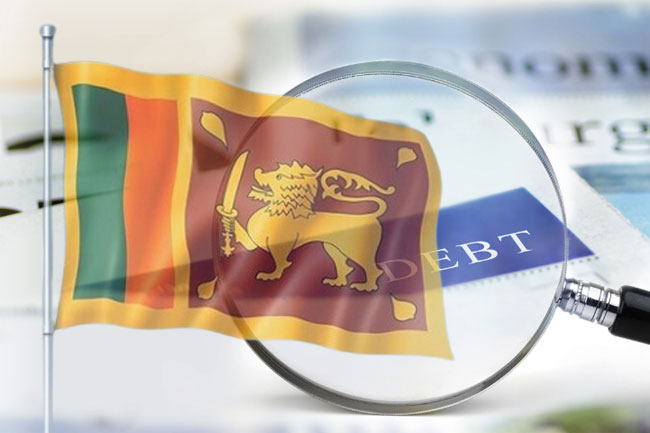
Sri Lanka continues to play a pivotal role between China, India, and America (CIA). When Sri Lanka was declared bankrupt upon the default of its international loans and other financial obligations in May 2022, it was India that provided the needed loan of US$3.8 billion. Out of concern for disclosing China’s “art of war” in secret dealings, Beijing has advocated a bilateral Sino-Sri Lanka solution and declined to involve a multilateral framework aimed at achieving a sustainable debt restructuring scheme.

Instead, China has announced the sending of the Shi Yan 6 PLA Navy ship to Sri Lanka in late October 2023, causing “concerns” in both New Delhi and Washington. In August 2022, India and the United States also expressed security concerns over Yuan Wang 5 ship’s berthing at the Hambantota Port, which is widely considered the next Chinese military base. US Senator Chris Van Hollen recently reiterated in Colombo that Washington is committed to protecting Sri Lanka’s sovereignty “whether it comes to a free and open Indo-Pacific or debt restructuring” by providing IMF assistance and supporting the Sri Lanka Navy to safeguard the island’s territorial waters. Thus, the “CIA” competition over Sri Lanka continues.

The Himalayas: From Mekong to Brahmaputra

Beijing’s fourth frontier is related to the “geopolitics of water” in the Brahmaputra River basin in India and Bangladesh and the mighty Mekong River in the Southeast Asia.

China has been using the rivers in east, south, and southeast Asia, derived from their tributaries in the Tibetan Plateau, to produce hydroelectric power through a vast network of river dams. However, the control over the sources of transboundary rivers, like Brahmaputra and Mekong, has also given Beijing significant geopolitical and geo-economic leverage against the downstream countries. With the expansion of its dam system, China has manipulated the water level of cross-border rivers, disrupting agriculture, farming methods, and transportation networks throughout Asia.

Beijing might keep using the powerful “water card” of manipulation against downstream countries, forcing them into various compromises and concessions. In other words, China possesses a “water blackmail” tool to pressure lower riparian countries and “punish” them for policies and actions which do not correspond with Beijing’s will.

Washington’s dilemma: to contain or not to contain?

China’s philosophy to win a war without fighting a battle is illustrated by a range of carefully designed tactics from Taiwan to Sri Lanka. The United States’ traditional containment methods stemming from the Cold War cannot be used in the context of an increasingly more versatile and powerful China. Today’s world is more closely interconnected by political and corporate lobbying as well as technology and trade than it was during the Cold War period. Thus, it is nearly impossible to divide the world into pro-American and pro-China camps, especially when the US-Sino trade regimes are inexplicably intertwined and expanding.

Washington needs to keep ahead of China’s scientific and technological advancements and maintain US security guarantees to its allies and like-minded democratic countries in the Indo-Pacific. However, American military cooperation—in the forms of Quad and AUKUS, or bilateral defence treaties with the Philippines and Vietnam—is not a panacea. The United States should treat its “small” allies and friends as partners in both military and economic realms. The Biden White House has now begun a “charm offensive” by courting the 18-nation Pacific Islands Forum aimed at curbing Chinese inroads in the South Pacific.

With its growing centralised power and autocratic mindset, Beijing might miscalculate by overestimating its military might and economic capacities with its ambitious plans augmented by “wolf warrior” diplomats. After all, while America’s containment policy contributed in part to the downfall of the Soviet Union, the autocratic empire in Moscow collapsed under the weight of its own miscalculations and weaknesses of the centralised system.

Unlike democratic governing systems that have naturally embedded self-correcting mechanisms—such as regular elections, multi-party platforms, and the freedom of expression—autocratic and centralised systems tend to erupt from the top, sideways, and the bottom like a volcano. In this worldview, perhaps, China might be “its own worst enemy.” The United States would be wise to sustain a highly agile containment policy through active partnerships with friends and allies while allowing Beijing to make its own mistakes and miscalculations.

(Dr. Patrick Mendis, a former American diplomat and military professor in the NATO and Indo-Pacific Commands during the Clinton, Bush, and Obama administrations, is a distinguished visiting professor of transatlantic relations at the University of Warsaw in Poland. Dr. Antonina Luszczykiewicz, a former Fulbright senior scholar at Indiana University in Bloomington, is an assistant professor at the Jagiellonian University in Krakow, Poland.)

(This article is published under a Creative Commons License and may be republished with attribution: Courtesy of Australian Outlook. https://www.internationalaffairs.org.au/australianoutlook/chinas-secret-blue-dragon-strategy-can-the-us-containment-policy-succeed/.)

Easter attacks case : New court order against Maithripala

Taking up the petition filed on the 2019 Easter Sunday terror attacks, the Supreme Court of Sri Lanka today ordered several former state officials, including former President Maithripala Sirisena, to produce their assets and liabilities.

Former Defence Secretary Hemasiri Fernando, former Inspector General of Police (IGP) Pujith Jayasundara, and former State Intelligence Service (SIS) Chief Nilantha Jayawardena have also been ordered to produce their assets and liabilities.

The Supreme Court instructed the former state officials to produce their assets and liabilities through affidavits before December 30, 2023.

The order has been issued as the former state officials have failed to pay compensation in full to the victims and relatives of victims of the Easter attacks.

In January 2023, the Supreme Court ordered the group of former government officials to pay compensation for the victims of the 2019 Easter Sunday attacks.

The order was issued by the Court as it announced the verdict concerning the case filed against Sirisena and several others over failing to prevent the Easter attacks despite having prior intelligence information.

The Supreme Court ordered former President Sirisena to pay Rs. 100 million, and former Secretary of Defence Hemasiri Fernando to pay Rs. 50 million in compensation to the victims of the Easter attacks.

The court also ordered former SIS Director Nilantha Jayawardena and former Inspector General of Police Pujith Jayasundara to pay Rs. 75 million each, and National Intelligence Chief Sisira Mendis is to pay Rs. 10 million as compensation to the victims.

The verdict was issued after 12 petitions filed by the Bar Association of Sri Lanka, the families of the victims of the attacks, Catholic priests and several others were heard before a seven-member bench headed by Chief Justice Jayantha Jayasuriya.

Posted in Uncategorized

India and China jostle for investments in Sri Lanka By P.K.Balachandran

With the Sri Lankan economy slowly recovering from the dumps it has been in since defaulting on its international loans in April 2022, India and China are jostling to secure investment opportunities in the island nation.

On its part, the Ranil Wickremesinghe government is trying to accommodate both the regional powers through a delicate and challenging balancing act amidst opposition criticism over non-transparency in its dealings with India.

Earlier this week, the Lankan government said that it would shortly enter into an investment agreement with the Chinese oil major Sinopec, to build a US$ 3.85 billion refinery at the Chinese-built Hambantota port.

Earlier in 2019, the project was given to a Singapore-based Indian-family owned company, Silver Park International, but that company had failed to implement the contract, the Lankan Energy Minister Kanchana Wijeskekara said.

The government terminated the contract in August when Silver Park International failed to start construction. It also retrieved the 485 hectares of land allocated for the refinery.

It has now given the project to the Chinese state-owned Sinopec.

Among the various international and domestic bidders, Sinopec was the only one that had stayed in the field.

During his recent visit to China, Lankan President Wickremesinghe held talks with the Sinopec Group Chairman Ma Yongsheng. Sinopec has agreed to make an initial investment of USS$ 1.5 billion in the refinery.

Sinopec has already entered Sri Lanka’s retail fuel distribution market. The Lanka IOC and the Lankan State-owned CEYPETCO are the other players in this field.

The operations of two other foreign fuel distribution companies –the United States-based RM Parks and United Petroleum Australia—will be delayed. RM-Parks has deposited the performance bond.

“We have placed a condition that they cannot remit their profits from fuel trading technically for two years after the arrival of each shipment. Therefore, it becomes a huge initial investment for them. Therefore, they need time,” the media quoted an official as saying.

China owns 52% of Sri Lanka’s bilateral debt, and Beijing’s approval is crucial for any efforts by Colombo to restructure its outstanding loans.

India Not to Let Go

Meanwhile, India is trying hard to retain its foothold in Sri Lanka which it had gained substantially in 2022 when it extended US$ 4.5 billion to rescue Sri Lanka from the dire straits it was in after the default in April 2022.

Indian Finance Minister Nirmala Sitharaman arrived in Colombo on Wednesday for a three-day visit, during which, she will attend a grand ceremony to mark the 200th., year of the arrival of Indian plantation workers in Sri Lanka and also discuss with the Sri Lankan President the role India can play in the economic recovery of Sri Lanka.

Sitharaman is expected to discuss the resumption of talks to enhance the existing FTA to an Economic and Technology Cooperation Agreement (ECTA) after a five-year hiatus.

The two sides held the 12th round of negotiations on the ETCA in Sri Lanka from 30 October and 1 November but no agreement could be reached.

A Business Summit on the theme “Enhancing Connectivity: Partnering for Prosperity,” is a highlight of her current visit. A high-power Indian business delegation of 30 persons, cutting across several industries, is in Colombo to participate in the discussions. The delegation includes the Confederation of Indian Industry (CII) and the Federation of Indian Chambers of Commerce and Industry (FICCI).

India has reiterated on several occasions that it is committed to the economic recovery process in Sri Lanka and has highlighted the vital role of investments in this endeavour.

India is currently the largest source of investments in Sri Lanka and the largest source of tourists too. It is also Sri Lanka’s largest trading partner.

Separately, Finance Minister Sitharaman has informed the Chief Prelate of the premier Buddhist institution, the Asgiriya Chapter of the Maha Sangha, the Venerable Warakagoda Sri Gnanarthana Thera, that she will witness the exchange of MOU on solar electrification of religious places across Sri Lanka.

This is the first project under the USD 15 million grant announced by Prime Minister Narendra Modi for the promotion of Buddhist ties between the two countries.

The Sri Lankan media have acknowledged that Sitharaman was instrumental in fast-tracking the multi-pronged assistance of U$$ 4.5 billion to Sri Lanka in 2022. She had also advocated strongly for Sri Lanka at the IMF for a special package, during the economic and financial crisis.

India was also the first bilateral creditor to provide a written assurance of financial support which paved the way for the IMF package, the media said.

Opposition Objects to IOC Deal

However, the main Sri Lankan opposition party, the Samagi Jana Balawegaya (SJB) has opposed the government’s decision to extend the license given to the Lanka Indian Oil Corporation (LIOC) for another 20 years.

The LIOC has about 150 petrol sheds in the island nation.

On October 29, the SJB Deputy General Secretary Mujibur Rahman told the media that the 2001 agreement with Lanka IOC had granted the entity hefty tax concessions and a 20-year licence to operate in Sri Lanka in exchange for an investment of U$ 70 million.

“The agreement was struck without a competitive tender process and lacked transparency,” he charged.

According to Rahman, over the years, Lanka IOC has made a net profit of US$ 3 billion from its operations in Sri Lanka.

“Once again, there has been no competitive tender process or transparency. Are we obligated to grant this deal to the IOC? Was this agreement secretly negotiated between President Ranil Wickremesinghe and Indian Prime Minister Narendra Modi?” he asked.

He raised concerns about whether the cabinet had thoroughly examined Lanka IOC’s two-decade presence in Sri Lanka before consenting to the renewal.

Rahman also criticised the Energy Minister for not presenting a comprehensive review and the particulars of the deal in parliament.

He complained that LIOC did not address the fuel shortage during Sri Lanka’s most severe crisis nor did it provide better prices to the public.

“The public deserves to know the rationale behind this renewal. Instead, the government has secretly extended their licence once again,” he alleged.

Posted in Uncategorized

World Bank calls on Sri Lanka to stay the course on reforms

As Sri Lanka recovers from a series of unprecedented shocks with devastating impacts, it is crucial to stay the course on sound and timely reforms in order to stabilize the economy, World Bank Managing Director for Operations, Anna Bjerde, said.

Anna Bjerde, who concluded a four-day visit to Sri Lanka, underscored the World Bank’s continuous commitment to investing in people, strengthening human capital, and creating jobs.

Bjerde met with Sri Lanka’s President and Minister of Finance, Ranil Wickremesinghe, cabinet ministers, representatives of opposition parties, civil society, private sector, development partners, and World Bank project beneficiaries, the World Bank said in a release.

She participated in a roundtable hosted by the President with key ministers, private sector representatives, and development partners—including members of the MDB+ platform, which includes Multilateral Development Banks (MDBs) and bilateral development partners. The platform enables member institutions to coordinate their engagement with Sri Lanka. The roundtable focused on Sri Lanka’s progress on structural reforms, mobilizing private capital for development, supporting job creation, human capital development, and regional cooperation.

As Sri Lanka recovers from a series of unprecedented shocks with devastating impacts, it is crucial to stay the course on sound and timely reforms in order to stabilize the economy while fostering economic growth that can attract investment, generate jobs, protect the poorest and most vulnerable, and build resilience to future crises. But equally important is the need to strengthen governance, citizen engagement, and social cohesion, a must for inclusive growth,” said Bjerde.

Her trip included visits to World Bank-supported projects in the Northern and North Central Provinces related to agriculture, health, climate change, private sector development, and financial inclusion for women.

“During my visit, I heard about the challenges Sri Lankans face. Skilled professionals are leaving the country, farmers are struggling to cope with a changing climate, and entrepreneurs are constrained by a lack of investment and access to credit. But I also saw huge opportunities to scale up climate-smart agriculture, harness renewable energy, boost entrepreneurship, promote competitiveness and regional connectivity,” added Bjerde. “The World Bank will continue to support Sri Lanka on its journey to recovery, connecting farmers to markets, strengthening access to healthcare, boosting innovation, pursuing transformation through infrastructure investments, and creating quality jobs for women and youth.”

The World Bank has been a partner to Sri Lanka for more than 70 years, providing financial and knowledge support to the country.

At the onset of the economic crisis in May 2022, the World Bank moved fast to help protect the people of Sri Lanka—particularly the poor and vulnerable—from the worst impacts by repurposing funds from the existing portfolio. In addition, the World Bank was one of the earliest responders to the crisis and initiated a coordination platform with the Asian Development Bank and the Asian Infrastructure Investment Bank to align emergency assistance to help sustain basic services and commodities.

Posted in Uncategorized

State Bank of India opens branch in Trincomalee; Indian FM hands out passbooks to first customers

Indian Finance Minister Nirmala Sitharaman opened a branch of the State Bank of India in Trincomalee on Thursday (2) during her official visit to Sri Lanka.

Senthil Thondaman, Governor of Eastern Province, Shri Gopal Baglay, India’s High Commissioner to Sri Lanka, and Chairman of the State Bank of India, Shri Dinesh Khara were also present at the inauguration.

Sitharaman highlighted that SBI, with its 159 years of significant presence, is the oldest bank in Sri Lanka and continues to grow its business at home and abroad.

The Indian Finance Ministry posted on X, formerly known as Twitter, that during the Sri Lankan economic crisis, SBI’s presence in Sri Lanka paved the way for a smooth extension of a line of credit worth $1 billion by the Government of India to Sri Lanka.

SBI Sri Lanka continues to play vital role by supporting corporates in international trade, it added.

SBI in Sri Lanka continues to scale up remittances through a robust Digital Platform via SBI Sri Lanka YONO app and online banking, in addition to the in-branch operations, it further said.

After the inauguration, Minister Sitharaman interacted with the new branch officials and distributed passbooks to new customers, while also adding comments on the visitor’s book in Trincomalee, Sri Lanka.

Posted in Uncategorized

President holds bilateral talks with Indian Finance Minister, exchange bilateral documents

President Ranil Wickremesinghe has met with visiting Indian Finance Minister Nirmala Sitharaman and the Indian delegation, a short while ago.

The Head of State met Indian Finance Minister Nirmala Sitharaman, High Commissioner of India to Sri Lanka Gopal Baglay and the Indian delegation for bilateral discussions at the President’s House in Colombo a short while ago, the President’ Media Division (PMD) reported.

During the bilateral meetig with Finance Minister Nirmala Sitharaman, bilateral documents were exchanged to enable the execution of projects under the USD 15 million grant assistance by the Government of India for the promotion of Buddhist ties between India and Sri Lanka.

Accordingly, a Letter of Exchange and Letter of Acceptance to formalize an amendment to the MOU on USD 15 million grant assistance for the promotion of Buddhist ties between India and Sri Lanka was exchanged, along with a Memorandum of Understanding on solar electrification of places of religious worship across Sri Lanka with a grant allocation of USD 10 million.

Posted in Uncategorized

N-E issues: Asgiri Chapter urges Govt. impartiality, sensitivity

The Asgiri Chapter of the Siam Sect said that the Government must be impartial and more sensitive when handling issues in the North and East areas of the country before blaming Buddhist monks for their conduct.

Speaking to The Daily Morning yesterday (1 November), the Secretary of the Supreme Sangha Council of the Asgiri Maha Viharaya Ven. Dr. Medagama Dhammananda Thera said that it seems that the Government and the law enforcement authorities do not listen properly to the voice of the people who have been living in these areas since the three-decade ethnic conflict, and therefore urged the public not to misinterpret the situation by highlighting the conduct of one particular Buddhist monk.

When queried about the conduct and recent statements made by Ven. Ampitiye Sumanarathana Thera who is the chief incumbent of a temple located in the borders of the Trincomalee and Batticaloa Districts, Dhammananda Thera said that his conduct cannot be accepted, yet, some unique issues faced by him (Sumanarathana Thera) and his community have made them so.

“As I was a member of a committee appointed by the previous Government, I personally know the issues faced by him and his people. Some people have no permanent residency in either of these two districts due to these racial issues. I don’t blame this Government, but, almost all governments have neglected these issues. Some look at this issue from another perspective,” he said.

He further stated that since these issues are very complex, the Government should look into these matters very deeply and where its roots are, before making decisions. He said that if they make inquiries partial, it would badly affect the existence of the country’s social fabric.

Recently, the Illankai Tamil Arasu Kadchi (ITAK) submitted a formal letter to the Inspector General of Police, urging action against Sumanarathana Thera. The monk has come under scrutiny for his alleged incendiary remarks that have raised concerns about communal harmony in the country. In a recently circulated video that has sparked outrage, the monk is seen making threats against the Tamil community in the Southern region of Sri Lanka. The ITAK contends that these statements pose a serious threat to communal harmony and have the potential to incite violence and hatred, and therefore demanded his arrest under the International Covenant on Civil and Political Rights Act.

Several attempts made to contact the Police in this regard proved futile.

Posted in Uncategorized

India to build another 10,000 houses for estate community in Sri Lanka

The Government of India has announced plans to build another 10,000 houses for estate workers in Sri Lanka, as part of ‘Phase 4’ of the Indian Housing Project.

Delivering the keynote address at ‘Nam 200’ this afternoon (02 Nov.), celebrating 200 years since the arrival of Indian Origin Tamils (IOT) to Sri Lanka, Indian Finance Minister Nirmala Sitharaman revealed that commending the success of ‘Phase 3’ of India’s flagship development project, Indian Prime Minister Narendra Modi has announced that a further 10,000 houses will be built for estate workers in the Northern Province of Sri Lanka.

Commenting on the success of the third phase of the Indian Housing Project, the Finance Minister revealed that 3,700 houses, of the 4,000 houses agreed to be established under the project, have already been handed over to the beneficiaries.

“This will remain a special moment for our bilateral relationship, as well as personally to me”, Minster Sitharaman said in this regard.

Accordingly, the foundation stone for the first lot of the 10,000 houses due to be built under ‘Phase 4’ of the project will be laid today, as part of the ‘Nam 200’ celebrations.

Finance Minister Sitharaman further highlighted India’s continued commitment and unwavering support to uplift the wellbeing of IOTs in Sri Lanka, and said, “India has consistently stood in solidarity with you, offering all the support within our means”.

She further stated that “Enhancing connectivity between India and Sri Lanka will build bridges of experience and opportunities for the people of both countries”.

State Bank of India opens two new branches in Sri Lanka’s North, East

State Bank of India (SBI), the largest public bank in India, will open two new branches in Sri Lanka this week, extending the services to the island nation’s Northern Jaffna peninsula and Eastern port district of Trincomalee where India is already dominating.

Indian Finance Minister Nirmala Sitharaman will inaugurate the new branches during her three-day official visit, the Indian government said in a statement.

SBI, the largest bank in India with over 20 percent market share by assets, has been in Sri Lanka for more than 150 years, serving both corporate and retail clients.

India has been expanding its businesses into Sri Lanka’s North and East after the end of a 26-year war in 2009.

India has already built a Cultural Centre in Jaffna, once the de facto capital of separatist Liberation Tigers of Tamil Eelam (LTTE), where predominantly ethnic minority Tamils are living. Tamils are more close to South Indian Tamil Nadu state by culture and language.

India, one of the World’s fastest growing economies, has already got an oil tank farm in the Eastern port district of Trincomalee and is involved in more than a third of fuel business by volume in Sri Lanka.

Trincomalee is also rich in mineral mines.

Currently SBI Sri Lanka is operating through 5 branches namely Fort & FCBU branches at main building in fort, Colpetty branch, Wellawatta branch and Kandy branch.

SBI Sri Lanka has the product range from all types of deposit accounts, financing working capital, term loans, vehicle loans, housing loans and trade finance.

China will play positive role to help Sri Lanka navigate debt situation

China says it will continue to support Chinese financial institutions in actively consulting with Sri Lanka.

Foreign Ministry Spokesperson Wang Wenbin speaking at the Regular Press Conference on Tuesday (31) said that China will continue maintaining friendly communication with other creditors and jointly play a positive role in helping Sri Lanka navigate the situation, ease its debt burden and achieve sustainable development.

He told reporters that, as an official creditor, the Export-Import Bank of China tentatively agreed with Sri Lanka on the debt treatment, and the Sri Lankan side has released relevant information.

On the 11th of October 2023, the Ministry of Finance of Sri Lanka issued the following statement with regard to the agreement reached with the Exim Bank of China:

The Government of the Democratic Socialist Republic of Sri Lanka is pleased to announce that it has reached an agreement on the key principles and indicative terms of a debt treatment with the Export-Import Bank of China (“China Exim bank”).

The agreement in principle covers approximately USD 4.2bn of outstanding debt. It constitutes a key step towards restoring Sri Lanka’s long-term debt sustainability and will pave the way to a prompt economic recovery.

The indicative terms agreed will provide the necessary fiscal space for Sri Lanka to implement its ambitious reform agenda.

The Sri Lankan Government commends the engagement and continuous support of China Exim bank in reaching this agreement in principle, which demonstrates a mutual commitment in line with the goal/objective of restoring public debt sustainability consistent with the IMF-supported program.

The Sri Lankan authorities hope that this landmark achievement will provide an anchor to their ongoing engagement with the Official Creditor Committee and commercial creditors, including the bondholders.

It should also facilitate approval by the IMF Executive Board of the first review of the IMF-supported program in the coming weeks, allowing for the next tranche of IMF financing of about US$334 million to be disbursed.

The Secretary to the Treasury Mr. K M Mahinda Siriwardana issued the following statement:

“Yesterday marked a big step for Sri Lanka as we reach this landmark agreement in principle on debt treatment terms with our largest single creditor. We thank China Exim bank for the support in resolving our country’s debt situation. This agreement constitutes a key milestone in Sri Lanka’s ongoing efforts to foster its economic recovery.”

In the next few weeks, the Sri Lankan authorities and China Exim bank will actively work on formalizing and implementing the agreed parameters of the debt treatment.

Posted in Uncategorized