World Bank MD in Kopay to monitor project progress

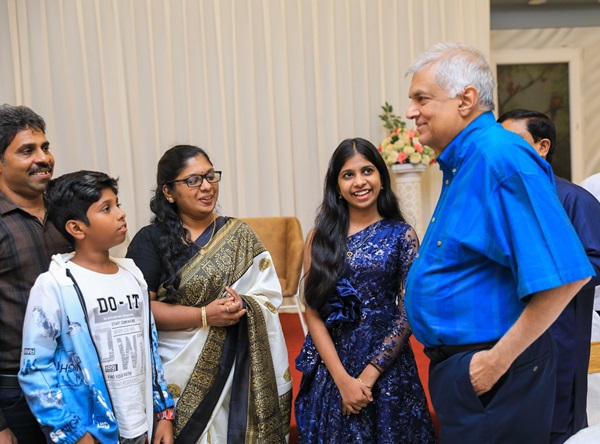
A High-Level delegation of the World Bank visited the Kopay Hospital in Jaffna.

The objective of this visit is to monitor the projects implemented under the Primary Healthcare System Strengthening Project, funded the World Bank.

Anna Bjerde, Managing Director for Operations of the World Bank, and a high-level delegation arrived in Sri Lanka on Sunday (29), to monitor the projects implemented under World Bank assistance.

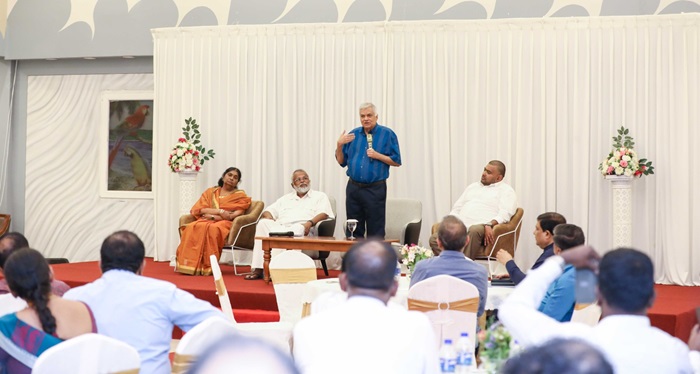
The World Bank delegation also met with the bankers in the Jaffna District.

On Tuesday, they will meet with the president for a roundtable discussion with multilateral financial institutions.

“Everywhere I go, I find inspiration from women entrepreneurs. From the Zumba teacher to the trailblazer breaking barriers in the construction sector, I was energized by their passion & determination.” said Anna Bjerde, Managing Director of Operations, World Bank in a post on the World Bank Sri Lanka Facebook page.

Another post added that the divisional hospital in Kopay, Sri Lanka has been a lifeline to over 16,000 people during the country’s crisis.

For 5 years, World Bank has worked with government to strengthen primary healthcare delivery of more than half of Sri Lanka primary healthcare facilities, it added.

AKD in US moots adoption of non-aligned foreign policy

National People’s Party (NPP) leader Anura Kumara Dissanayake yesterday expressed the view that Sri Lanka should embrace a genuinely non-aligned foreign policy in the present global landscape.

“Sri Lanka must transition towards a non-aligned foreign policy that does not align with any specific foreign power,” Dissanayake said.

The NPP leader made these remarks while speaking at an event in Los Angeles as part of his ongoing tour of the US to connect with party supporters and well-wishers.

“No nation can exist in isolation in today’s interconnected world. Global economies and communication are interlinked, and although not officially declared as wars, many powerful countries are engaged in power struggles with each other such as the conflicts between the US, China, India, Russia and Europe,” he noted. “At present, Sri Lanka lacks the potential to emerge as a global power centre,” he added.

The MP noted that due to this situation, it is inevitable that Sri Lanka becomes entangled in these power struggles or becomes a victim of them. Dissanayake emphasised that, as a result, Sri Lanka’s primary foreign policy objective should be to refrain from offering direct or indirect support to any of these feuding foreign powers and adopt a non-aligned foreign policy.

“Whether we like it or not, geographically, we are situated within the Indian power centre. Therefore, we cannot overlook India when deliberating on our political or economic choices,” he said.

“Consequently, we must formulate our economic strategy accordingly. The present economic plan has consistently relied on the same approach since the 1980s, centred on asset sales and acquiring loans. We must make a decisive departure from this course,” he remarked.

The NPP leader said, Sri Lanka should strive to build an economy capable of withstanding all the political and economic crises occurring globally.

Dissanayake is scheduled to visit Boston, Virginia Beach, Washington DC and New York to address Sri Lankans domiciled in the US.

Wimal accuses India, US of undermining SL relations with China

National Freedom Front (NFF) leader Wimal Weerawansa, MP has recently warned that the country will have to pay a very heavy price for violating bilateral agreements.

The MP was commenting on the government delaying a scheduled visit by Chinese research vessel due to pressure exerted by external powers. The former Commerce and Industries Minister said so at the Bandaranaike International Airport (BIA) on his return from Beijing where he attended the 3rd Belt and Road Forum for International Cooperation.

The vessel, which was to reach Colombo harbour in the first week of October, arrived here yesterday.MP Weerawansa found fault with India and the US for constantly interfering in Sri Lanka’s bilateral relations with China.

The former JVPer asserted that Sri Lanka couldn’t secure required support from China due to the government routinely giving into Indian and US pressure.Both President Wickremesinghe and MP Weerawansa attended the Beijing forum.

Posted in Uncategorized

Snap election in light of political uncertainties?

The country is likely to be pushed towards a snap general election following the 2024 budget debate in light of the political uncertainties resultant from the minor cabinet reshuffle, reported ‘Deshaya’ newspaper.

Quoting highly-placed political sources, it said the Sri Lanka Podujana Peramuna (SLPP) was having internal talks on boycotting the votes on five selected ministries.

Party strongman S.B. Dissanayake has told the media that they would even be prepared to defeat the budget for next year.

SLPP general secretary Sagara Kariyawasam has publicly criticized the cabinet changes – especially the cabinet and state portfolios for plantation industries being given to the SLFP.

When contacted, UNP general secretary Palitha Range Bandara declined to say what action his party would take if the SLPP decided to leave the government, saying that party has yet to make such an intimation officially.

Attempt to bully SLPP

A meeting of SLPP politicians at the Malalasekara Mawatha home of MP Namal Rajapaksa has discussed certain media reports the government was considering dissolving parliament after the budget’s presentation.

These reports are an organized attempt intended at scaring the SLPP, that incidentally came after backbenchers proposed to defeat the votes of certain ministries, said the participants.

Escalating Crisis Between President and Sri Lanka Podujana Peramuna Seniors Over Cabinet Reshuffle Ahead of Crucial Budget

Tensions between President Ranil Wickremesinghe and the Sri Lanka Podujana Peramuna have reached a boiling point, as the failure to appoint senior MPs proposed by the party to ministerial positions and unilateral decisions made by the President during a recent cabinet reshuffle intensify the ongoing crisis.

This internal crisis of the government comes ahead of a curucial budget of which the final vioting will take place in mid-December.

The heart of the issue lies in the unresolved status of prominent Sri Lanka Podujana Peramuna members, including Rohitha Abeygunawardena, SM Chandrasena, Wimalaweera Dissanayake, Janaka Bandara Tennakoon, CB Rathnayake, and SB Dissanayake, who were put forth as ministerial candidates by the party but have yet to secure ministerial appointments. This delay has fueled discontent and heightened divisions within the party.

Furthermore, the crisis has been further exacerbated by President Wickremesinghe’s unexpected alterations to the ministerial positions of senior figures like Keheliya Rambukwella, causing unease and frustration among party members.

In an unexpected turn of events, it has come to light that some senior members within the SLPP faction, who had been hopeful of receiving ministerial positions, have ceased their regular visits to the Battaramulla party office. This move reflects the deepening disillusionment within the party’s ranks.

Posted in Uncategorized

Police Yet to Take Action on Sumanarathana Thera Over Threatening Remarks Against Tamils

The failure of law enforcement to take prompt action against Buddhist monk Ampitiye Sumanarathana Thera for his alleged threatening and hateful comments against Tamils living in the South has ignited a growing outcry from various quarters, raising questions about the police’s inaction.

The Ilankai Tamil Arasu Katchi (ITAK) has submitted a formal letter to the Inspector General of Police (IGP), urgently urging action against Ampitiye Sumanarathana Thera, a Buddhist monk hailing from Batticaloa. The monk has come under scrutiny for his alleged incendiary remarks that have raised concerns about communal harmony in the country. In a video that has sparked outrage, the monk is seen making threats against the Tamil community in the Southern region of Sri Lanka.

The contentious video features Ampitiye Sumanarathana Thera issuing inflammatory statements, including a disturbing threat to cut Tamils living in the South into “pieces.” Such comments are not only offensive but are also deemed to be in violation of international laws, specifically the International Covenant on Civil and Political Rights (ICCPR). The ITAK contends that these statements pose a serious threat to communal harmony and have the potential to incite violence and hatred.

Despite these concerns and the formal complaint lodged by ITAK, the police have yet to take swift action to address the issue, leading to frustration and discontent among those advocating for justice.

TNA MP Shanakiyan Rasamanikkam questioned the police’s inaction, emphasizing the need for consistency in applying the ICCPR laws. He stated, “Action taken or not taken on this matter will show us if the ICCPR Act is only to be used against those opposed to the government, Tamils, and Muslims in Sri Lanka, or if it is against hate speech.”

The delay in addressing this issue has raised concerns about the impartiality and effectiveness of law enforcement in handling cases involving hate speech and threats to communal harmony. As the calls for action against Ampitiye Sumanarathana Thera continue to grow, the situation remains a matter of considerable concern and public interest.

Posted in Uncategorized

Several SJB members to join UNP?

Minister Harin Fernando has accused the Samagi Jana Balawegaya (SJB) of ousting him from the political party over a personal vendetta.

Speaking further in this regard, Fernando revealed that, while he trusts the Supreme Court to give an appropriate verdict in this regard, several members of the SJB are likely to join the United National Party (UNP).

On 18 July, the SJB Working Committee decided to expel Ministers Harin Fernando and Manusha Nanayakkara from the party.

In May 2022, the SJB had suspended the party membership of the two parliamentarians after they had accepted ministerial portfolios in the government while the party had vowed to take disciplinary action against them.

MPs Harin Fernando and Manusha Nanayakkara were sworn in as the Minister of Tourism & Lands and Minister of Labour & Foreign Employment, respectively.

Fernando and Nanayakkara had said they accepted ministerial portfolios in the government under President Gotabaya Rajapaksa to do their utmost to find solutions to the ongoing economic crisis as a positive response was not received from many political party leaders for a collective effort.

They both subsequently resigned from their ministerial portfolios on July 9, 2022 along with the rest of the Cabinet, after then President Gotabaya Rajapaksa informed the Speaker of Parliament that he intends to resign.

However, they were both reappointed to the same ministerial portfolios by incumbent President Ranil Wickremesinghe when he appointed a new Cabinet on July 22, 2022.

Posted in Uncategorized

Ranil Ready to Rock The Boat?

The cat is out of the bag. President Ranil Wickremesinghe has said, both the presidential and parliamentary elections, will be held next year. Under the Constitution, the former is due next year, but the parliamentary polls are due only a year later. By combining both, the ‘wily Ranil’, as he is at times known, has served notice on the Rajapaksas’ SLPP under-writer of his government.

The message is this: ‘Either we swim together, or sink together’. Yet, sinking is easier for both under the circumstances. Swimming together is not going to be easy for either camp, not when they are unsure of which way would the elections go, and who would need greater support from the other – when, what, how and how much.

Ahead of the post-war presidential poll, incumbent Mahinda Rajapaksa had the option of advancing the parliamentary poll ahead of his own re-election that the war victory had already sealed for him. The argument was that the party – the parent SLFP-UPFA – at the time needed him more than the other way around.

Mahinda’s personal perception, gleaned from predecessor CBK’s second-term experience was this: A second five-year term is the maximum allowed under the Constitution, and a second-term President becomes a lame-duck the minute he or she gets elected.

Party leaders down the line take no orders from the incumbent, nor do they care for the hierarchy even on formal occasions. They are busy fishing for a new leader in the place of the outgoing one and do not want to hurt the sentiments and sensitivities of that faceless, nameless person, male or female. There is no harm in hurting the other. Maybe, it will fetch you brownie points under the next leader.

Boon or Burden?

Just now, Ranil too, seems to think this way. He knows the limitations of his re-won popularity, thanks to the early-day good work in stabilising the nation’s economy after last year’s disasters. He has not as much succeeded in reviving it. Instead, his government has been taxing the people heavily – or, that is the perception among the public sector employees, whose over-sized numbers are a legion.

Having failed to engineer as many defections from the breakaway SJB, at least thus far, Ranil and the UNP have little choice, but to capitulate before the Rajapaksas, for their SLPP cadre-support to win the presidency in a popular mandate, which he lacks just now. Ahead of it, he will still need the Rajapaksas’ endorsement and support to be the common candidate of both parties. Or, that is the SLPP perception.

Yet, both are in doubt about each other’s popularity and acceptance levels, leaving aside the mutual suspicion that is age-old as parties and personalities. Ranil especially does not know if the Rajapaksas’ support will be a boon or a burden in his re-election bid, given the still simmering public anger in the aftermath of last year’s Aragalaya protests.

Likewise, the Rajapaksas are just now unsure if Ranil’s election as President will rub on them, and if an SLPP-UNP combine could win the parliamentary polls, at least coming as the single largest group with other existing allies of the former. Ranil is possibly keen, not to end up as a run-down President, if the presidential poll comes first and he gets re-elected.

It’s a Catch-22 situation, but neither side knows how to proceed from here. One thing however, seems clear to both of them. They need each other at least for the first of the two elections. How much and how far, neither is sure about.

What if the presidential poll comes first, Ranil wins, and the SLPP requires his popularity to make the grade in the parliamentary elections next? What if the parliamentary polls come first where no one is talking about a repeat SLPP sweep, and it impinges negatively on whatever popularity Ranil is perceived to have?

Mockery of methods

In this background, President Wickremesinghe’s decision to shift SLPP Health Minister Keheliya Rambukwella to the Environment portfolio is as ‘much interesting’ as it is a mockery of set procedures. Not very long ago, Parliament voted out a no-confidence motion against Rambukwella, rather convincingly. The President had backed his minister.

Hence, for him to remove the very same minister from the very same ministry, representing the even otherwise difficult SLPP ally raises questions as to why he did not do it earlier – if his mind too, was with the Opposition’s resolution. Why waste Parliament’s time and scarce public funds when the Opposition’s original demand was only for the President to sack the minister?

According to the Opposition, Minister Rambukwella was inefficient and corrupt, and as a result, the credible public health system in the country had gone for a toss. The President seems to endorse it even if belatedly. How then did he conclude that he would be efficient and incorrupt in the Environment Ministry, which is more complex and complicated, given international conventions and the like?

Naturally, the SLPP is not happy with the change. The Rajapaksas are said to be even unhappier with Wickremesinghe handing over a crisis-ridden Health portfolio to Dr. Ramesh Pathirana, who is already saddled with a complex ministry, in Industries. It is possible that it is an interim arrangement – but that is not the point.

The SLPP is upset as much about the Health portfolio going to a representative of parent SLFP, whose boss and former President Maithripala Sirisena is out to settle whatever scores possible with the Rajapaksas, in whichever way possible, in the twin polls, now due next year. They thus read additional portfolios for an SLFP nominee as Wickremesinghe wooing the party and its boss. They do not seem to conclude that Ranil may after all be wooing the minister, not his party, just as he has succeeded in doing with a few ministerial nominees of the SLPP, earlier.

Challenges, Consequences

The question now is this: Between Ranil and the Rajapaksas, who will blink first, and how – if at all? There is the alternative scenario, where the Rajapaksas can hope to upstage President Wickremesinghe by withdrawing support to his government before he dissolves Parliament under the law to facilitate fresh elections and render them toothless, powerless, as the Ranil camp may presume.

Of course, both face challenges and consequences. By withdrawing support to the ‘Wickremesinghe’ leadership, the Rajapaksas may be committing an electoral hara-kiri of sorts. Or, that is the general belief. But news reports have also been talking about the Rajapaksas, especially Namal from the clan’s third political generation, drawing reasonable crowds wherever he addresses public rallies. It is not necessarily person-centric but time-centric. A year back, ‘pater familias’, Mahinda was either booed or had to turn back when he attempted come-back rallies.

Likewise, by dissolving Parliament and pushing the SLPP out of his electoral scheme, Wickremesinghe may be attempting a political suicide, a second or third or whatever time, in his decades-old political career. Unless of course, there is a hidden writing on the invisible wall: Dump the Rajapaksas and the SLPP, and the UNP and the breakaway SJB can hope to work together, with or without re-merger.

Speculative, it is, yes, but is it not what politics and elections are all about in a democracy – which Sri Lanka still is?

About the Author:

N Sathiya Moorthy is a Policy Analyst and Political Commentator, based in Chennai, India. Email: sathiyam54@nsathiyamoorthy.com

By N Sathiya Moorthy

Posted in Uncategorized

Ranil is running out of time and tricks, now it’s time the people had their say by Rajan Philips

The first part of the title needs no elaboration. The second part is an unfolding question that has many answers to it, and which one of them will eventually prevail also depends on multiple factors. Objective circumstances, agency roles and subjective leadership moves are all at play. The simplest way to exit in politics is to resign. No amendment, no majority, or no referendum is needed.

The last President, Gotabaya Rajapaksa, unwittingly established a new precedent in Sri Lankan politics when he resigned from office after running away from it. All that said, Sri Lankans could also be thankful to Mr. Rajapaksa for leaving the way he did, unlike say Benjamin Netanyahu in Israel whose belligerence has created the most explosive situation for the region and the world in the 21st century.

No one is expecting President Wickremesinghe to resign before his carryover term from his predecessor is over. But there are plenty of speculations and suspicions about Mr. Wickremesinghe’s political intentions and the tricks that he might play to extend his stay in power. When it comes to elections, no matter what elections, no one has a clue about what the President is going to do. The truth is even the President may not be knowing what he is going to do, because he is constantly looking for winning conditions for him to call an election.

The tricks he plays!

For Ranil Wickremesinghe, winning conditions are hard to come by. Absolute power has come to him late in life, but there is no assurance of winning an election in spite of his powers and even after such a long time in politics. The alternative to not winning an election is not to have an election. Or keep changing election timing to improve winning chances. President Wickremesinghe has been trying everything. And he has everyone else chasing whatever election rabbit he pulls out of his scheming cap.

He cancelled the local government elections without saying anything about it, while letting everyone else agitate over it. He floated the idea about provincial council elections to keep everyone guessing. He got his sidekicks to spread rumours about advancing the presidential election even though as an interim president he is not entitled to do so.

Then came suggestions that he might try to advance the timing through a constitutional amendment. That was a dead end move because there was never going to be two-thirds majority support for it in parliament, where the opposition parties have been clamouring for parliamentary elections to be held after local government elections.

The one power that the President now has is to dissolve parliament and have new parliamentary elections. Mr. Wickremesinghe will not do that because he cannot put together a winning coalition, and the MPs who are supporting him in parliament now are scared to face an election. So, he opens a new window for distraction – electoral reforms, which have now taken a life of their own with the gazetted appointment of a Presidential Commission that is tasked to complete its work before April, unwittingly, but also fittingly for April Fools day, 2024!

In between came suggestions for abolishing the presidency, because the President is said to have figured out that he is not likely to get more than 50% votes on the first count, and he is not going to be high in the second or third preferences of those who are not going to vote for him in the first place. Put another way, Ranil Wickremesinghe is not the first, second or third best presidential candidate to a majority of Sri Lankan voters. That seems to be the assessment of all the president’s men. Hence the move to abolish it, as the last resort.

Mr. Wickremesinghe has played the abolition card before – in the dying days of the yahapalana government, when he suggested abolition after the UNP decided on Sajith Premadasa as its presidential candidate for the November 2019 presidential election. It became a laughing proposition then. Even Mangala Samaraweera laughed out loud.

This time, Anura Kumara Dissanayake has made a brilliant counter proposition that a constitutional amendment to abolish the ‘executive presidency’ should be coupled with the dissolution of parliament leading to a new general election.

The election itself could be coupled with a referendum on abolishing the executive presidency. To be clear, abolishing the executive presidency means only removing the elected presidency and reducing its powers to those appropriate for a head of state in a parliamentary democracy. To be clear as well, such a reform of the presidency should not require a referendum, as argued expertly by Dr. Nihal Jayawickrama in the Sunday Island last week.

Even so, there will be no harm in piggybacking a referendum question on presidential reform during a parliamentary election. A clear referendum result will put an end to a very longstanding question. In any event, the abolition kite never took off, let alone flew.

Finally, the nation, or nations, heard from the horse’s mouth that there will be elections, that is the presidential and parliamentary elections as and when they are due. Addressing the Special General Convention of the United National Party at the Sugathadasa Indoor Stadium in Colombo, last Saturday (October 21), President Wickremesinghe reportedly “outlined the timeline for upcoming elections in line with the constitutional provisions” – presidential election in 2024, followed by parliamentary elections, and local government elections in the first half of 2025. One would think that the President was not merely repeating the constitutional timeline for presidential and parliamentary elections which most people know, and that he was implicitly confirming that the two elections will be held as they come due.

Many are understandably skeptical and unsure if the President is being sincere or whether he is pulling another fast one. Like how he shooed away the local government elections. The sudden appointment of a new, nine-member commission on election reforms headed by former Chief Justice Priyasath Dep, certainly reinforces people’s skepticism about the President’s sincerity.

The specific tasking of the commission to make study the potential for enabling concurrent representation in both the parliament and the provincial councils is yet another example of Mr. Wickremesinghe’s presidential panache for making seemingly innovative, but which are in fact nonsensical suggestions. This might be the reason why there seems to have been no mention of provincial council elections at the UNP convention. There may not be any mention of them at all until we find out if the President is serious about enabling elected representatives to be concurrent members of both the parliament and the provincial councils.

Smart Dekma

Let us look at it another way. The theme of the UNP convention was “Smart Country – 2048.” One would have thought that country has seen the last of such cliches after the sensational collapse of Gota’s “Saubhagyaye Dekma” nonsense. Now we have the new Ranil version – Smart Country 2048, in pure English. Thankfully, it is not being splashed across the country as the Gota prototype was.

That is also because the UNP now is mostly a one-man state show. It does not have the prop up of 6.9 million who voted for Gotabaya Rajapaksa or 5.5 million who voted for Sajith Premadasa. Put another way, Smart Country has little chance of blossoming into a winning national platform.

My point here is something else. 2048 is the President’s target year for Sri Lanka reaching economic self-reliance and take off. With all the focus on the digital, the take off could turn out to be a virtual one. To make this a real one many concrete steps and short flights will have to be taken for the next 25 years starting from now. But we haven’t heard anything by way of a concrete plan or program from the President. Nor has the President demonstrated that he is assembling a political team that is worthy of the grand economic project that he claims he is launching.

There is nothing transparent about the team the President might be having outside parliament. And everything is transparent about the team of MPs that he has in parliament – their corruption, incompetence and their becoming increasing unelectable. The President has not articulated anything about whether the current political system and the institutional machinery are adequate for the grand purpose of delivering economic liberation by 2048.

Nor has there been any hint of what might come after him, for after all he is not expecting to be around till the day of deliverance in 2048. All that the country has had from him, politically speaking, is one trick after another to scupper one election or another. The last of them is the President’s recitation of the election timeline at the UNP convention.

So, it is understandable that there are criticisms and concerns that the President is pulling another fast one on the people. And the political counter to the President’s manoeuvres and machinations has already started. The time for fast ones is over, and there should not be any more postponement of elections. The President’s manoeuvres are likely to be countered both within parliament and outside parliament.

The opposition parties could request the Election Commission to make early announcement of election timelines – voter registration, nominations, and polling date, to keep the pressure on the President not to cancel or postpone the presidential election or the parliamentary election. The forthcoming budget process and debate could be used to ensure that sufficient funds are allocated for the two elections, and to get repeated commitments from the President that there will be no budgetary excuses to cancel or postpone either the two national elections.

Next to resigning or retiring, the most straightforward exit from power is electoral defeat. Ultimately the people will decide if President Wickremesinghe deserves to stay in office beyond the five year term for which Gotabaya Rajapaksa was elected in November 2019. Mr. Wickremesinghe’s best argument for the people’s vote is that he has managed to restore economic stability from the chaos that was handed to him. But the stability that he is now presiding over is tenuous at best and will not be sustainable when the country starts repaying its debts.

He may have deserved an extended stay in power to look after the economy if he had just done that – look after the economy without playing tricks with elections. Instead, President Wickremesinghe has been using and abusing the power of his office either to avoid facing the electoral test or to bolster his electoral prospects. Now it is time the people got their turn to exercise the power of their vote to say who shall be the next President or who will form the next government.

Every single Tamil will be cut into pieces! Sinhala Buddhist monk threatens a massacre

Extremist Sinhala Buddhist monk, Ampitiye Sumanarathana, threatened to kill all of the Tamils in the South this week, in yet another racist outburst that was caught on camera.

“Every single Tamil person will be cut into pieces!” exclaims the monk. “They will all be killed! All the Tamils in the south will be cut into pieces and butchered! The Sinhalese will massacre them.”

The clip was reportedly taken on Wednesday in Batticaloa, as the monk clashed with police and locals.

“He’s inciting racial hatred & violence,” said parliamentarian Mano Ganesan. “This is unacceptable & disgusting.”

Sumanarathana has a long history of racist hate speech and assault.

The monk has threatened to kill a Tamil government official in 2016, subjecting him to verbal slander when he described him as a “Tamil dog” and a “bloody tiger”, while a Sri Lankan police officer watched. He has similarly spewed anti-Muslim hate speech. The same year he was arrested after leading a group of Bodhu Sala Sena (BBS) monks from the south into Batticaloa. Sumanarathana climbed on top of police barriers and recited hate speech against Tamils and Muslims.

In 2019, he physically assaulted a Christian man in Batticaloa whilst Sri Lankan police officers watched on.

In 2020, he threatened to choke a government official over a purported archaeological site. Colombo Gazette reported that the monk said, “tell your superior to come or I will take this pole and kill you”.

In 2021, he threatened officials in Batticaloa, as he staged an impromptu protest at the Divisional Secretariat office demanding land be allocated for the construction of a Buddhist shrine.