Sri Lanka’s Colombo Port City Grants Authorization to Two Cryptocurrency Exchanges

Two cryptocurrency exchange platforms have been granted authorization to operate within the Port City Special Economic Zone. The Colombo Port City Economic Commission (CPCEC) issued these authorizations, marking a notable step in embracing emerging financial technologies.

The two authorized cryptocurrency exchange platforms are Bitazza International Ltd from Thailand and Scallop (Pvt) Ltd from the United Kingdom. These platforms have received the green light to establish their operations within the Colombo Port City, facilitating the exchange and trading of digital currencies.

This decision is expected to open doors for regional cryptocurrency exchanges, as both Bitazza International and Scallop look to establish their presence in the region. Their operations will cater to the growing interest in digital assets and cryptocurrency trading within the Colombo Port City.

The move aligns with the Port City’s commitment to fostering economic growth, innovation, and technological advancement. By allowing cryptocurrency exchanges to operate within the special economic zone, the CPCEC aims to position the Colombo Port City as a hub for financial technology and digital currency-related activities.

Nimal Lansa challenges errant Sri Lanka Podujana Peramuna MPs to defeat budget

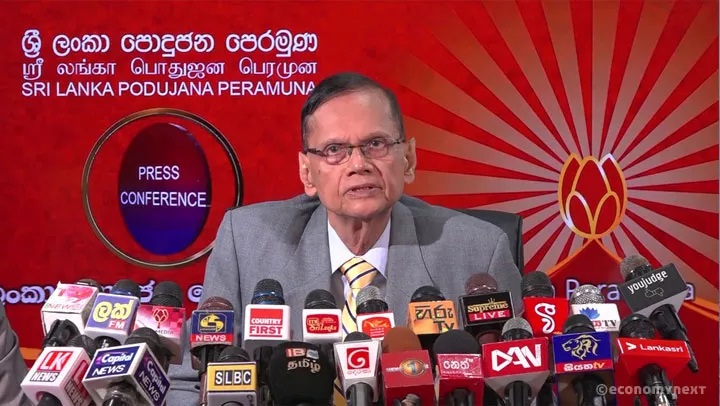
Sri Lanka Podujana Peramuna (SLPP) legislator Nimal Lansa, who has reportedly been working on a new alliance backing President Ranil Wickremesinghe, has challenged detractors within the government to try and defeat the upcoming budget.

“What I have to say to [government MPs] Namal Rajapaksa and Sagara Kariyawasam is, if you are opposed to the budget, come and vote against it, defeat the government and go for a parliamentary election. We’re all prepared for that,” Lansa said, speaking to reporters.

“No matter how much they shout, they will not defeat the budget. If you can, accept my challenge and defeat it,” he said.

Lansa’s comments came in the wake of former sports minister Namal Rajapaksa, who sits in the government benches, criticised a controversial electricity tariff hike, which he said the public has blamed on the SLPP, the party led by his father and former president Mahinda Rajapaksa.

“On the one hand, electricity tariffs are going up, as are taxes and water tariffs. There is also talk of new taxes to be imposed. There are no measures being taken to control cost of living. It’s the SLPP that takes the blame,” he said.

“The budget is coming. We’re waiting to see what he proposes in the budget. With those proposals, we as a party shall take a decision,” he added.

SLPP general secretary Sagara Kariyawasam at a recent press briefing also lamented the blame heaped on the Rajapaksas for the electricity tariff hike.

His colleague MP Rohitha Abeygunawardean, meanwhile, said the SLPP has no intention of breaking up the government.

“We’re not going to break this up halfway through for funsies. We will raise both hands for any good thing the government does. We will stand up for whatever that is good in the budget. We do not, however, plan to support anything we see as wrong,” said Abeygunawardena.

“If you cannot do this, please go to the people. If somebody comes with Aladdin’s lamp and says he can quickly reduce tariffs, we can see about that,” he added.

A defeat of the budget effectively sees the dissolution of parliament, leading to a general election.

With the presidential election just a year away, the SLPP’s continued support for President Wickremesinghe remains up in the air. Lansa, a former confidante of SLPP national organiser Bail Rajapaksa, has reportedly switched allegiances to form a new alliance backing Wickremesinghe.

The SLPP has given mixed signals on which way the party will go and, at the time of writing, there is still no clarity on whether or not the party will field its own candidate.

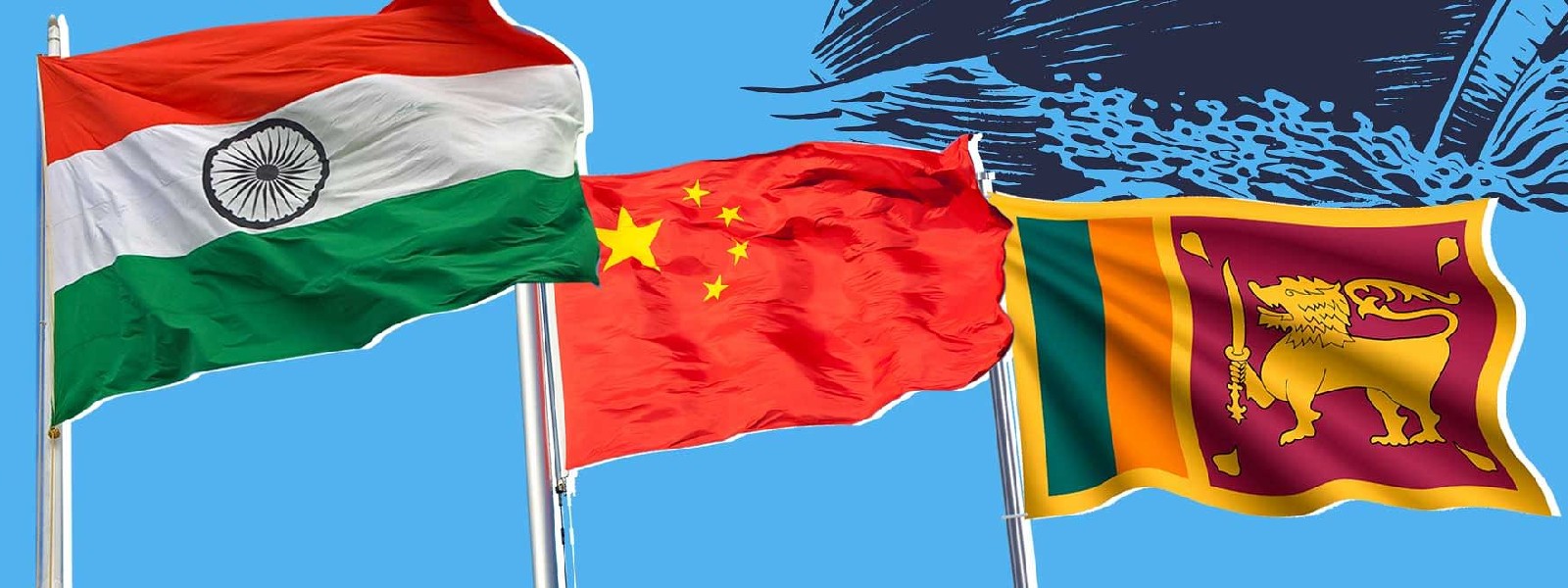
Chinese research vessel ‘Shi Yan 6’ to reach Colombo today

The Chinese research ship ‘Shi Yan 6’ will make a port call in Sri Lanka today (Oct. 25), Foreign Affairs Minister Ali Sabry says.

Accordingly, the vessel, about which India remains concerned, is scheduled to dock at Colombo Harbour later today.

However, earlier this month, Minister Sabry had said Shi Yan 6 was given permission to dock here in November, despite China having sought a port call in October.

India’s concerns stemmed from the arrival of high-tech research ship Yuan Wang 5 in Colombo in August 2022.

The island nation’s neighbour on several occasions had expressed its security concerns over Shi Yan 6’s capability of mapping the ocean bed which is critical to anti-submarine operations of the Chinese navy.

In September 2023, Sabry told Indian media that the Chinese research vessel Shi Yan 6 was not given permission to make a port call in October, as negotiations were still on.

He also highlighted that India’s security concerns, which he said were ‘legitimate’, were ‘important’ for the island nation. The Chinese vessel Shi Yan 6 is expected to conduct research with the National Aquatic Resources Research & Development Agency (NARA).

Posted in Uncategorized

Supreme Court Suspends Lawyer for Unauthorized Recording of Presidential Commission Testimony on Easter Sunday Attacks

Sri Lanka’s Supreme Court has delivered a verdict, ruling that a lawyer found guilty of unauthorized recording of the testimony given before the presidential commission appointed to investigate the Easter attack will be suspended from practicing law for a duration of eight months.

The suspension is set to take effect from January 1 of the upcoming year. This decision comes following a formal complaint filed by Mr. L.M.B.P. Herath, the Secretary of the Commission. The panel of Supreme Court Judges, comprising Bhuvaneka Aluvihare, S. Thurairaja, and Mahinda Samayawardena, reached this unanimous verdict after careful consideration.

The incident occurred on September 9, when the relevant presidential commission was conducting an inquiry. Mohammad Mursha Mursha, representing the United Lanka Jayamithullah Ulama organization, was providing testimony when he was accused of violating Supreme Court rules by surreptitiously recording the proceedings on a mobile phone.

NPP meets Australian HC, discusses delays in polls

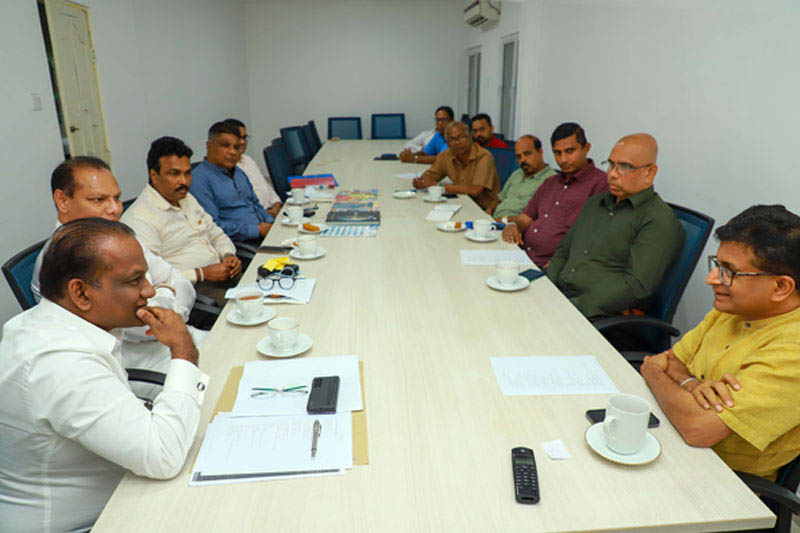
Representatives of the National People’s Power (NPP) met Australian High Commissioner Paul Stephens where several matters including the postponement of elections, the Online Safety Bill and the Anti-Terrorism Bill were discussed.

NPP members Vijitha Herath and Harini Amarasuriya met the High Commissioner at his official residence this morning.

They discussed at length the political and economic situation in the country. The NPP members brought to the attention of the HC the moves to bring in the Online Safety Bill and Anti-Terrorism Bill to suppress protests of the people.

They also discussed the non-conduct, delay and moves to avoid holding elections.

Posted in Uncategorized

Namal slams Cabinet reshuffle, says President should understand coalition politics

SLPP Parliamentarian Namal Rajapaksa has voiced his displeasure over the recent Cabinet reshuffle that took place, deeming it a mere ‘change of posts’, as opposed to an effective solution the issues Sri Lanka is currently facing.

Responding to questions from the media, Rajapaksa emphasised that when running a coalition government such as the incumbent administration, it is the state’s responsibility to ensure that a mechanism in place which would allow for discussions to be held with all political parties involved in the decision-making process.

Commenting further on the matter, MP Rajapaksa revealed that since of late, the Sri Lanka Podujana Peramuna’s (SLPP) stance was not considered when making certain decisions.

He assured, however, that despite this, there is no feud between the SLPP and the Sri Lanka Freedom Party (SLFP), albeit recent speculation in this regard, adding that, “Ultimately, we all believe that a system that would give the people of this country a certain extent of relief is what needs to be implemented”.

The SLPP MP thus opined that the “changing of portfolios and positions” does not allow for such a system to be implemented, nor does it resolve any of the country’s issues.

While acknowledging the Head of State’s right to make decisions such as the recent Cabinet reshuffle, the SLPP MP emphasised the President’s responsibility is to create a system beneficial to the country’s citizens, and thereby highlighted the due responsibility to consult all political parties affiliated with the coalition government when making such decisions.

“Electricity bills have increased, water bills too, are expected to increase and there is also talk of new taxes being introduced. The President openly admitted to increasing electricity tariffs following discussion with the International Monetary Fund (IMF). If they are going to take political decisions based on discussions with the IMF, instead of with the related political parties, then that it is their way of governance. But the end result is the fact that people of this country are the ones who are left affected. If they think that such discussions and measures would resolve the country’s health crisis, or help drag Sri Lanka and its citizens out of this economic crisis that they have been forced to face; they are wrong”, the SLPP MP stated, highlighting that no proper measures are being taken to maintaining living expenses at affordable rates.

Commenting on President Ranil Wickremesinghe’s decision-making, the SLPP MP stated that while the political party is grateful for the fact that he accepted the presidency when invited to do so at a time where the country was in turmoil, and other potential candidates backed out, it is imperative that the President, in his capacity as a seasoned politician, understands coalition politics and the need for discussions with all political parties, or at least the patty leaders, prior to making certain decisions.

Thus, Rajapaksa stated that with the upcoming discussions for the Appropriation Bill (The Budget) for the fiscal year 2024, he hoped that the President will implement a mechanism that would bring relief to the people.

Posted in Uncategorized

Pentagon report claims China considered Sri Lanka for military logistic support

(The Hindu) – China is trying to expand global military footprints, with a latest Pentagon report naming 18 countries, besides Djibouti and Cambodia’s Ream Naval Base, to insist that Beijing has “probably” “considered” them as “locations for PLA (People’s Liberation Army) military logistics facilities”.

Of these considered defence facilities outside the China which would provide PLA military access in case of any operational requirements, four are India’s immediate neighbours — Bangladesh, Sri Lanka, Pakistan and Burma (Myanmar) and another three of them — Thailand, Singapore, and Indonesia — are in the South East Asia, as per the US Department of Defence’s annual report to Congress on “Military and Security Developments Involving the People Republic of China 2023”.

“The PRC (People’s Republic of China) probably also has considered other countries as locations for PLA military logistics facilities, including Burma, Thailand, Indonesia, Pakistan, Sri Lanka, United Arab Emirates, Kenya, Equatorial Guinea, Seychelles, Tanzania, Angola, Nigeria, Namibia, Mozambique, Bangladesh, Papua New Guinea, Solomon Islands, and Tajikistan,” the annual report released by the US Department of Defence this month stated.

The PLA’s Strategic Support Force (SSF), revealed the US report, operates tracking, telemetry, and command stations in Namibia, Pakistan, Argentina, and Kenya.

The Beijing is doing it to expand its overseas logistics and basing infrastructure to allow the PLA to project and sustain military power at greater distances, the Pentagon report observed but cautioned that its global network “could disrupt US military operations”.

The Pentagon findings also narrated that China has scaled up deployment of forces and infrastructure build-up along the Line of Actual Control since the 2020 Galwan stand off with India in eastern Ladakh. These improvements include underground storage facilities near Doklam, new roads in all three sectors of the LAC, new villages in disputed areas in Bhutan, a second bridge over Pangong Lake, a dual airport and multiple helipads.

The report, at the same time, stated negotiations between India and China “made minimal progress as both sides resisted losing perceived advantages on the border”.

“Since early May 2020, sustained tensions along the India-China border have dominated the Western Theater Command’s attention.” “Differing perceptions between India and the People’s Republic of China (PRC) regarding border demarcations along the Line of Actual Control (LAC) combined with recent infrastructure construction on both sides, led to multiple clashes, an ongoing standoff, and military buildups along the shared border,” the report said.

In 2022, China deployed one border regiment, supported by two divisions of Xinjiang and Tibet Military Districts with four combined arms brigades (CAB) in reserve in the western sector of the LAC. “China also deployed as many as three light-to-medium CABs in the eastern sector from other theater commands and an additional three CABs in the central sector of the LAC. Although some elements of a light CAB eventually withdrew, a majority of the deployed forces remain in place along the LAC,” it pointed out on enhanced deployment at the border.

The Galwan face off which, it said, lead to death of 20 Indian Army personnel and four of PLA’s, significantly strained the bilateral ties. The deployment of the PLA’s Western Theater Command, oriented toward India and counterterrorism missions along China’s Central Asia borders, along the LAC will likely continue through 2023, it said.

Posted in Uncategorized

Sri Lanka’s NPP leads with 42 pct of likely voters, ahead of SJB, UNP in September

Support for leftist National People’s Power (NPP) among voters has increased by 42 percent, putting them “well ahead” of the main opposition Samagi Jana Balawegaya (SJB), the president’s United National Party (UNP) and the ruling Sri Lanka Podujana Peramuna (SLPP), survey data showed.

“In Sri Lanka Opinion Tracker Survey (SLOTS) polling for September 2023, support amongst likely voters for the NPP/JVP increased to 42 percent (+9). This put them well ahead of the SJB on 22 percent, the UNP on 13 percent, and the SLPP on 8 percent,” the Institute for Health Policy (IHP) said in a statement Monday October 23 morning.

In the three months since June 2023, the most notable trends in the SLOTS MRP polling are a significant increase in support for the NPP/JVP, a fall in respondents saying they will vote for other minor or unnamed parties, and a modest upward trend in support for the UNP, the IHP said.

IHP and SLOTS director Ravi Rannan-Eliya was quoted as saying that this suggests that the current surge in support for the NPP/JVP is driven largely by undecided or floating voters opting for the NPP/JVP, instead of a swing away from the UNP which was the case earlier in the year.

SLOTS combines interviews from a national sample of adults (ages 18 and over) reached by random digit dialling of mobile numbers, and others coming from a national panel of respondents who were previously recruited through random selection. IHP estimates voting intent using an adaptation of Multilevel Regression and Post-Stratification (MRP), with multiple imputation to account for uncertainties in its modelling, exploiting data from all SLOTS interviews to estimate voting in a particular month.

The September 2023 MRP estimates are based on 599 interviews conducted in September 2023, and 13,431 interviews conducted overall from 1 October 2021–11 October 2023, with a margin of error assessed as 1–3 percent for the SJB, NPP/JVP, UNP, SLPP, SLFP, ITAK, TMVP and the other parties. As the September update uses a more recent data set than the previous update, the IHP said, there are small changes in estimates of voting shares for previous months. A total of 62 stochastic simulations were used in the modelling to estimate margins of error.

MRP is a method that is increasingly used by polling firms in other countries to leverage small samples, most notably by YouGov which used it to forecast results of the UK Brexit Referendum and recent UK general elections. The IHP said all estimates are adjusted to ensure the sample matches the national population with respect to age, sex, ethnicity, socioeconomic status, education, geographical location, and voting in the 2019 Presidential and 2020 General Elections.

Posted in Uncategorized

Sri Lanka waives visa fee to six Asian nations, Russia and China

Sri Lanka has approved the issuing of free visas to tourists from India, China, Russia, Malaysia, Japan, Indonesia and Thailand, the tourism minister said.

The cabinet approved this as a pilot project till 31 March with immediate effect.

“Cabinet approved visa free to India, China, Russia, Malaysia, Japan, Indonesia and Thailand as a pilot project,” Tourism Minister Harin Fernando said.

Sri Lanka has free visas now to tourists from Singapore and Maldives who also do not charge a fee from Sri Lankans.

Others have to pay about 30 US dollars to get electronic travel authorization online, with a lower fee for South Asia.

The ETA comes fast and can be quickly filled.

“Sri Lanka may be known as the teardrop isle (due to its distinctive shape), but the country’s refreshingly straightforward visa system shouldn’t be a source of much anguish for travelers,” a story on Lonely Planet says.

“The process is very simple and quick,” according to Tripadvisor.com. “A visa can still be obtained at BIA Colombo for $5 extra, but having an ETA visa means quicker exit from the immigration process.”

The ETA made it much easier for travelers especially from non-Western countries to get prior authorization to visit Sri Lanka as they did not have to send documents to missions in the capital city.

However other observers say for Western visitors in particular, who are used do hopping on to planes or trains and travelling to other countries, visas and prepayments can be a barrier and Sri Lanka may lose out to competition.

There have been concerns raised of late that price floors on hotel rooms may put the country at a disadvantage.

In the ASEAN region also intra-region tourism is booming due to lack of visas.

China and Sri Lanka Issue Joint Statement Highlighting Closer Ties: Extensive Agreements on Trade, Cooperation, and Friendship

The People’s Republic of China and the Democratic Socialist Republic of Sri Lanka have issued a 19 point-joint statement following a high-level meeting between the two countries’ leaders during the third Belt and Road Forum for International Cooperation. The meetinghas resulted in extensive common understandings and agreements on deepening their traditional friendship and expanding mutually beneficial cooperation.

Chinese President Xi Jinping and Sri Lankan President Ranil Wickremesinghe held separate meetings during the forum, discussing a wide range of issues, from economic cooperation to regional and international concerns. The joint statement underscores several key points:

Historic Friendship: The leaders of both nations expressed satisfaction over the development of China-Sri Lanka relations since the establishment of diplomatic ties in 1957. Their strong, enduring partnership, based on principles of independence, self-reliance, solidarity, and mutual assistance, has enabled them to overcome various challenges, including natural disasters, the COVID-19 pandemic, and economic difficulties.

Mutual Support: Both countries reiterated their support for each other’s core interests and major concerns. Sri Lanka reaffirmed its commitment to the one-China principle and opposed any form of “Taiwan independence.” China, in turn, affirmed its support for Sri Lanka’s independence, sovereignty, and territorial integrity.

Economic Cooperation: China has provided vital support to Sri Lanka during the COVID-19 pandemic and the economic crisis in 2022. They reached agreements on debt treatment and agreed to continue cooperating to help Sri Lanka address its financial difficulties and achieve sustainable development.

Belt and Road Initiative: Sri Lanka pledged continued active participation in China’s Belt and Road Initiative, signing several agreements to accelerate cooperation in this regard. The two countries are committed to sharing development experiences and creating new opportunities for high-quality Belt and Road cooperation.

Trade and Investment: The leaders expressed their intention to conclude a comprehensive free trade agreement to enhance economic cooperation further. China will continue to support Sri Lankan industries in establishing ties with relevant Chinese associations and encourage more investment from Chinese enterprises.

Education and Culture: Both nations recognized the importance of education exchanges and cultural cooperation, intending to enhance exchanges of teachers, students, and researchers.

Environmental and Technological Cooperation: They agreed to cooperate on climate change adaptation, sustainable development, disaster prevention, and maritime issues. This includes strengthening joint efforts in disaster prevention and mitigation, research, and the blue economy.

Multilateral Cooperation: China and Sri Lanka pledged to uphold true multilateralism, promote greater democracy in international relations, and support the multilateral trading system. They also expressed their commitment to making economic globalization more open, inclusive, balanced, and beneficial to all.

Global Initiatives: Sri Lanka affirmed its support for and active participation in China’s Global Development Initiative, Global Security Initiative, and Global Civilization Initiative. Both nations will work together for global and regional peace, security, development, and prosperity.