Emil Kanthan & another removed from Sri Lanka’s terror watch list

The Ministry of Defense has taken action to remove the names of two individuals who had been blacklisted due to their alleged support for terrorism and related activities.

The Secretary to the Ministry of Defence, General Kamal Gunaratne, issued a Gazette notification on Monday (23), officially removing the names of these two persons from the blacklist.

The individuals removed from the blacklist are Niklapillai Antony Emil Lakshmi Kanthan, also known as Ramesh, hailing from Maradawadi Mawatha, Weppamkulam, Vavuniya, and Murugesu Sri Sanmugarajah, residing on Kachcheriya Road, Nallur, Jaffna.

Ramesh, who had been the subject of an Interpol Red notice since July 27, 2010, due to his alleged involvement in terrorism-related activities, had been on the blacklist since 2014.

The Ministry clarified that the list of designated individuals, groups, and entities published in the Gazette Extraordinary No. 1854/41 on March 21, 2014, has been periodically updated and amended.

Posted in Uncategorized

SLPP, UNP marriage on the rocks after Cabinet reshuffle

The marriage between the Sri Lanka Podujana Peramuna (SLPP) and the United National Party (UNP) is on the rocks after President Ranil Wickremesighe went ahead with a mini-Cabinet reshuffle.

SLPP General Secretary Sagara Kariyawasam told reporters the SLPP did not agree with the Cabinet reshuffle, which included removing Keheliya Rambukwella from the Health Minister post and appointing him as the Minister of Environment.

Rambukwella was replaced despite defeating a no-confidence motion against him in Parliament recently.

Kariyawasam said the allegations against Rambukwella are false and so there was no justification to replace him.

There had been indications earlier that the SLPP and the UNP are likely to form a grand alliance ahead of the next elections.

Colombo Gazette reported last month that talks to form a grand alliance were at the initial stages and included attempting to agree on a common policy and framework on governing the country.

UNP Leader Ranil Wickremesinghe is expected to contest the Presidential elections next year. It is still not clear what role SLPP Leader Mahinda Rajapaksa will play in the event Wickremesinghe does contest.

The popularity of the SLPP dropped during the economic crisis and the ‘Aragalaya’ protests.

During the crisis the SLPP was forced to back the appointment of Wickremesinghe as Prime Minister and later President.

SJB: Has Prez made LG polls disappear?

The SJB yesterday (22) said President Ranil Wickremesinghe had made known his intention not to conduct the Local Government (LG) polls.

Top SJB spokesperson Mujibur Rahman said that addressing the Special General Convention of the UNP at the Sugathadasa Indoor Stadium, President Wickremesinghe had declared that the presidential polls would be held in 2024, followed by a general election, and the LG polls would be conducted in early 2025.

Rahman said President Wickremesinghe had made no reference to LG polls which were scheduled to be held in March this year, and accused the latter of exerting pressure on the Supreme Court hearing case pertaining to postponed LG polls.

The former MP said that he had moved the SC after government ignored a Court of Appeal directive in March this year that funds be released for conducting the LG polls. Rahman alleged that President Wickremesinghe had deliberately left out LG polls in his statement.

Commenting on President Wickremesinghe’s declaration regarding presidential and parliamentary polls, Rahman said that those national level elections were conducted in terms of the Constitution. “Actually, there is no need for the President to give an assurance regarding presidential and parliamentary polls. The issue at hand is LG polls,” he added.

Responding to another query, Rahman said that the Opposition would take up the issue in and outside parliament. He dismissed as mere rhetoric UNP National List MP and its Chairman Wajira Abeywardena’s claime at the UNP’s Special General Convention that Wickremesinghe could win the next presidential poll with a staggering 10 mn votes. “The truth is the UNP down to just one MP in Parliament is scared of facing the electorate. Therefore, the President has decided not to hold LG polls,” Rahman said, adding that the President’s assurance in respect of the presidential and parliamentary polls could be a ruse to divert public attention.

Rahman urged the SLPP to explain its stand on the LG polls. Having elected Wickremesinghe the President in July last year the SLPP couldn’t remain silent on the issue at hand, the ex-MP said.

The former MP said that the Bar Association had condemned threats to the judiciary and attempts to influence the judges hearing cases pertaining to the postponed LG polls. Rahman said that civil society, Election Commission and political parties should respond to threats President Wickremesinghe posed to democracy.

Cabinet reshuffle a ‘wrong decision’ by President – SLPP

The Sri Lanka Podujana Peramuna (SLPP) has raised concerns over the latest Cabinet reshuffle, claiming that the changing of ministerial portfolios was a ‘wrong decision’ by the President.

Speaking to the media in this regard this afternoon (23 Oct.), SLPP General Secretary Sagara Kariyawasam accused President Ranil Wickremesinghe of having taken the wrong decision in this regard, in particular the removal of Keheliya Rambukwella from the post of Minister of Health.

“There were false allegations made against Minister Keheliya, and it was proven that these allegations were false. However, the President must have thought that making certain changes in this regard was the right thing to do”, Kariyawasam said in this regard.

Further opining his concerns pertaining to the Cabinet reshuffle, the SLPP General Secretary further stated that President Wickremesinghe has already been informed of the political party’s concern with regards to the appointment of Dr. Ramesh Pathirana as the new Minister of Health.

Voicing the party’s displeasure with regards to the appointments of two members of the Sri Lanka Freedom Party (SLFP) to both Cabinet and non-Cabinet portfolios, Kariyawasam asserted that they are unafraid to call the President out on his ‘wrong decisions’.

“A large number of MPs supporting the President to take this country forward are from the SLPP. There are only five such MPs supporting the President from the SLFP. Thus, it is wrong of the President to remove a ministerial portfolio from an SLPP MP, and give it to an MP belonging to the SLFP, and to also give another SLFP member the portfolio of a State Minister. We are unhappy about this decision, it was a wrong thing to do. We are not afraid to say when something is wrong. If an act is wrong, it is wrong, even if it is committed by the President”, the SLPP General Secretary stressed in this regard.

A Cabinet reshuffle took place earlier today, during which the ministerial portfolios of several ministers including Mahinda Amaraweera and Keheliya Rambukwella were changed.

Accordingly, Minister Amaraweera, was sworn in as the Minister of Agriculture and Plantation Industries, while former Health Minister Rambukwella was sworn in as the new Minister of Environment.

Meanwhile, Dr. Ramesh Pathirana has been appointed as the Minister of Health, in addition to his current portfolio as Minister of Industries, while State Minister of Finance Ranjith Siyambalapitiya was appointed as the Non-Cabinet Minister of Plantation Enterprises, in addition to his current post.

Constructionof SL Temple in China’s Henan Province to Resume

President Ranil Wickremesinghe announced the commencement of the construction of a temple and a Stupa in Henan Province, China, designed to embody traditional Sri Lankan architectural elements reminiscent of the historic ‘White Horse’ Temple.

This temple complex is recognised as China’s first Buddhist shrine. The decision to undertake this project was made during a recent discussion held in Beijing, in which President Wickremesinghe engaged with the head of the ‘White Horse’ Temple, His Holiness Yin Lee.

The initial stone for this temple’s construction was laid during the tenure of Ranil Wickremesinghe as Prime Minister, with Karu Jayasuriya, the then Speaker, officiating the ceremony. Regrettably, the project had been put on hold, but now,
under the leadership
of President Wickremesinghe, it is set to recommence, with new plans in the making.

The President also emphasised that this temple will house copies of Buddhist Pali scriptures, which were brought from Sri Lanka to China by the renowned monk Faxian. These invaluable scriptures will find their new home in this temple, marking a significant cultural exchange between the two nations.

Posted in Uncategorized

Lawyers warn of death knell for internet, freedom of expression by online safety bill

The petitioners warned that the Bill provides very little online safety but is drafted to stop people from expressing ideas and views on the internet and social media
They showed how the Bill allows a five-member Commission to take down within 24 hours any post that they consider to be a false statement and warned that allowing five people who are not even part of the judiciary to decide on what is true or false is a very dangerous precedent that is aimed at drastically controlling millions of online users from sharing their ideas and views
According to the Bill, the refusal to take down a post could result in a jail term imposed by a Magistrate not only on the individual but also on the service provider
If the Bill goes through, Sri Lanka could lose Google, Facebook, Twitter, Instagram, WhatsApp and even essential services such as Google search, Google Maps and G-mail
The Bill has disregarded that many of the services used by millions of Sri Lankans are provided by international companies based outside of Sri Lanka who would rather stop the service and leave Sri Lanka rather than being subjected to the risks of this kind of high-handed governmental actions
The lawyers warned that the Bill presented by the Minister of Public Security will be the death knell not only of freedom of expression but also of all businesses that operate on or use online services. They warned that this will give a very bad impression to the country struggling to attract foreign investors
The Bar Association, media institutions, advocacy groups, and more than 40 other petitioners challenged the Online Safety Bill in a two-day hearing before the Supreme Court judges Priyantha Jayawardhene, Achala Wengappuli, and Shiran Gunarathne last week.

The petitioners warned that the Bill provides very little online safety but is drafted to stop people from expressing ideas and views on the internet and social media. They showed how the Bill allows a five member Commission to take down within 24 hours any post that they consider to be a false statement and warned that allowing five people who are not even part of the judiciary to decide on what is true or false is a very dangerous precedent that is aimed at drastically controlling millions of online users from sharing their ideas and views.

This, they said, appears to be a reaction to political dissent that was part of the “Aragalaya”. They cited the example of how the ICCPR Act is abused under the guise of religious harmony, to harass people without managing to obtain a single conviction. Those provisions are repeated in the Bill taking out judicial oversight. Some said that having got rid of criminal defamation in 2003 bringing this Bill now is regressive.

According to the Bill, the refusal to take down a post could result in a jail term imposed by a Magistrate not only on the individual but also on the service provider. The Bill has disregarded that many of the services used by millions of Sri Lankans are provided by international companies based outside of Sri Lanka who would rather stop the service and leave Sri Lanka rather than being subjected to the risks of this kind of high-handed governmental actions that are contrary to internationally recognized standards that will not only drive up their compliance costs but would make compliance impractical.

If the Bill goes through Sri Lanka could lose Google, Facebook, Twitter, Instagram, WhatsApp and even essential services such as Google search, Google Maps and G-mail. Some others bemoaned that the Bill has chosen to ignore that this kind of control has not worked elsewhere but highlighted to a danger of these being replaced by other companies that do not have privacy and safety precautions built in allowing anybody to eavesdrop and spy on people’s conversations. In the past there have been rumours of attempts to replace these current services like WhatsApp with other technologies that are hackable and allows clandestine monitoring. There are certain countries that have banned or driven out social media companies that have strict guidelines on freedom of expression to be replaced by service providers with a reputation notorious for not respecting privacy.

Viraj Dayarathne, Additional Solicitor General presented a large number of amendments at the commencement of the hearing which he said would be introduced at the Committee Stage. Many objected to this position saying that this is an attempt to by-pass the Supreme Court from making a determination. If the Bill is going to be drastically changed at the Committee Stage the proper course of action is to withdraw this Bill and present a fresh Bill with the changes so that the people would have a chance to challenge the Bill. Some said that the proposed amendments do not reduce the dangers that this Bill poses.

The lawyers warned that the Bill presented by the Minister of Public Security will be the death knell not only of freedom of expression but also of all businesses that operate on or use online services. They warned that this will give a very bad impression to the country struggling to attract foreign investors. Citing several key provisions in the Constitution as being violated, it was the common contention of the petitioners that the Bill has to be approved at a referendum if the government still wants to persist going down this route.

In the meantime, there were several social media posts by several individuals refuting that they were involved in the drafting of the Bill. Attempts by this paper to ascertain the names of those who in fact drafted this Bill was not successful.

Posted in Uncategorized

Online Safety Bill and Anti-Terror Bill: law making to end democracy and fundamental rights

A group of 125 civil society leaders and 37 organisations and collectives has issued the following statement on the draconian Online Safety Bill and the Anti-Terror Bill alleging both will put an end to democracy and fundamental rights. They called upon the Government to withdraw both bills and engage in a public conversation with qualified persons and citizens on public policy. They also called upon the Members of Parliament to vote against these two bills. Following are excerpts of their

statement

The Government has included two Bills titled ‘The Online Safety Act’ (OSA) and the ‘Anti-Terror Act’ (ATA) in the Parliamentary Order Paper dated 3 October. Both Bills have sweeping provisions to seriously curtail and even violate the freedoms of expression, free speech, right to information, assembly and association. Both present fatal threats to democracy and fundamental rights in this country.

The OSA proposes to create an ‘Online Safety Commission’ appointed by the President and dismissed at his will and pleasure, which is given sweeping powers to determine if a statement is a ‘false statement’ and take measures to ‘prohibit’ it from circulation. The Commission has powers to issue directives to persons and online service providers to remove or block content, sites and locations. If its directives are not complied with, penal sanctions including prison sentences and fines can be imposed. The OSA will embed a culture of state harassment of online journalists and activists, artists, scholars, writers, trade unions, civil society organisations, including women’s groups, human rights defenders, professional organisations, and any citizen who dares to criticise Government and disagree with its policies and governance.

Not only the Fundamental Rights of speech, expression and access to information, but the right to claim them through the connected rights of freedom of protest and association will be curtailed and destroyed by the State. The inevitable self-censorship of citizens and communities that can follow, will embed authoritarian and dictatorial governance that has no respect for the sovereignty of the Sri Lankan people that is a foundational value in our Constitution. The lack of accountability and corruption in governance that we see today will become a permanent aspect of governance. The impact on the life of a Sri Lankan citizen and another generation will be far reaching and hard to reverse. This will complete Sri Lanka’s transformation into a complete Orwellian State where what the ‘truth’ is will be determined and imposed exclusively by the State.

The ATA will be a reinvention of the draconian Prevention of Terrorism Act (PTA), which it claims to repeal. Under the ATA the definition of what comprises ‘terrorism’ is so vast and vague that any act can become an act of terror if the State deems it so. Any protest or strike can become an act of terror. Any instance of free speech can be deemed as inciting ‘terrorism’. Any organisation can be proscribed as a ‘terrorist’ association. Any publication can be deemed a ‘terrorist’ publication. Anyone associated with ‘terrorist’ suspects, by virtue of association and knowledge, can be punished. Detentions will be made through executive orders and the military has been given powers to arrest and detain, powers which it did not have even under the PTA. The ATA will create a permanent state of emergency where Sri Lanka will effectively become a military state functioning under the exclusive dictate of the Executive.

Repealing the PTA has been a promise made to the nation and the global community of nations represented at the United Nations. What this bill does however is to increase the power of the State to repress citizens and deny the constitutionally guaranteed Fundamental Rights of the People.

The proposed laws are a clear indication that the Government fears that its indifference to the grave hardships of the people in this economic crisis will not be tolerated, and will be resisted. The citizens of this country were not responsible for this manmade crisis. Instead of taking the responsibility for the crisis, the Government is making use of debt restructuring to make laws that encourage governance that is not accountable to the people and tries to legalise misuse of State power. Under the guise of domestic debt restructuring savings of the working people are being stolen. Under the guise of labour law reforms proposals are being pushed to bring an end to the right to unionise and exploit women’s labour.

Women’s groups and activists have made an important contribution to ensuring that our laws and policies on women’s work conform to international ILO and other standards, and our Constitution. The proposed labour laws target women disproportionately, and will eliminate all these gains, embedding and encouraging exploitation of their labour. Even criticism of the transformation will be prevented by these repressive laws.

We are still suffering the impact of repressive laws of the past, enacted in the name of national defence, stability, economic growth and development. What Government needs to do, is to learn from the past and engage in enlightened law making. That agenda must repeal repressive laws and respond to embedded corruption, foster national unity and equitable economic growth that benefits all citizens in our plural society. The Government’s intention in passing laws that violate the basic values of democratic governance in our Constitution, shows that they want to change course, and establish a political dictatorship. The pretext is debt restructuring and economic recovery from bankruptcy.

We as women’s groups and other civil society groups and concerned citizens call upon the Government to withdraw ALL these Bills from Parliament. Government must engage in a process of consultative law making that we saw when the Right to Information Bill was passed. That law has received praise for strengthening accountable governance in local and international reviews of governance in our country. MPs, whether or not they are unelected by the people, and come to Parliament from a national list, take an oath of office that must respect the responsibilities of office under the basic law of our country the Constitution. According to the Preamble to that document, their duty is:

“to humbly acknowledge (their) obligation to ratify the immutable republican principle of representative democracy, assuring to all people Freedom Equality Justice Fundamental Human Rights and the Independence of the judiciary”. (PREAMBLE Constitution 1978)

We call upon the Government to withdraw all these bills, and engage in a public conversation with qualified persons and citizens on public policy in these important areas. We call upon all Members of Parliament to fulfil the above stated Constitutional mandate and vote against these repressive laws.

Individual signatories:

1. A.C. Fathima Husna (Attorney at Law)

2. A. Rose (Community Activist)

3. Aakiya Aman (Entrepreneur)

4. Ambika Satkunanathan (former Human Rights Commissioner)

5. Ameena Hussein (Writer)

6. Anberiya Haniffa (Director, Muslim Women’s Research and Action Forum, Development Consultant)

7. Aneesa Firthous (Women’s rights Activist)

8. Annie Kurien (Director Centre for Social Concern)

9. Anuratha Rajaretnam (Coordinator Suriya)

10. Ashila Dandeniya (Labour Rights Activist)

11. Balarasa Ratneswary (Women’s Rights Activist)

12. Balasingam Sukitha (Women’s Rights Activist)

13. Bisliya Bhutto (former Local Authority Member)

14. Chamila Thushari (Women’s Labour Rights Activist)

15. Chandani Herath (Chairperson Sunila Women and Children Development Foundation)

16. Chriten jeyaseelan Augustalima (Social Media Activist – Mannar)

17. Deepika Udagama (Professor of Law University of Peradeniya Former Chairperson Human Rights Commission of Sri Lanka)

18. Dr. Tush Wickramanayaka (Child Rights Activist)

19. Dr. Chulani Kodikara (Polity Editorial Collective, Former Member of National Committee on Women

20. Dr. Radhika Coomaraswamy (Fellow International Centre for Ethnic Studies)

21. Dr. Ramani Jayasundera (Board Member Centre for Women’s Research)

22. Dr. Selvi Thiruchandran (Former Member RTI Commission and Executive Director Women’s Education and Research Centre)

23. Dr. Sepali Kottegoda (Director Programmes and Research, Women and Media Collective)

24. Dr. Thiloma Munasinghe (Public Health Consultant)

25. Dr. Thiyagaraja Waradas (Human Rights Activist)

26. Duleep de Chickera (former Bishop, Anglican Church of SL)

27. Ermiza Tegal (Attorney at Law)

28. Faizun Zakeriya (Co-Founder and Director, Muslim Women’s Research and Action Forum)

29. Fathima Ilma (Former Local Authority Member)

30. Geethika Dharmasinghe (Senior Lecturer University of Colombo)

31. Geoffrey Alagaratnam (PC Former President of the Bar Association of Sri Lanka)

32. Hamthun Jumana (Women’s Rights Activist Mullaitheevu)

33. J.R.A. Dorin (Community Activist)

34. Janakie Seneviratne (Women’s Rights Activist)

35. Jayanthi Kuru-Utumpala (Women’s Rights Activist)

36. Jegatheeswaran Thayalini (Women’s Rights Activist)

37. Jegatheeswaran Varayalini (Women’s Rights Activist)

38. Jezima Ismail (Educationist, Former member Human Rights Commission of Sri Lanka Co-founder Muslim Women’s Research and Action Forum)

39. Justice Rohini Marasinge (Former Chairperson Human Rights Commission of Sri Lanka)

40. Juwairiya Mohideen (Women’s Rights Activist)

41. K. Nihal Ahamed (Social Activist – Ampara)

42. K. Yogeshwary (General Secretary Working Women Front – Katugastota)

43. Kanaka Abeygunawardana (Independent Consultant)

44. Kanthaiyah Kalaivani (Political Activist)

45. Karuppaiya Saththiyaseelan (Women’s Rights Activist)

46. Kathirkamanathan Hemalarha (Women’s Rights Activist)

47. Kiruthika Thurairajah (Independent Consultant)

48. Kunaraja Ajitha (Women’s Rights Activist)

49. Laxman Rajani (Social Worker)

50. M.Y. Minnathul Suheera (Attorney at Law)

51. M. Noorul Ismiya (Community Mobiliser)

52. Mahaluxmy Kurushanthan (Human Rights Defender – Mannar)

53. Mahendiran Nirmalathevi (Women’s Rights Activist)

54. Maithreyi Rajasingam (Director – Vilithu)

55. Manjula Krishnamoorthy (Former Local Authority Member)

56. Mansoor Mafahira (Social Mobiliser – Mannar)

57. Marisa de Silva (Social Media and Community Activist)

58. Mohamed Majeed Jansila (Women’s Rights Activist – Mullaitheevu)

59. Mujeeba Mujeeb (Former Local Authority Member)

60. Nabeela Iqbal (Sisterhood Initiative)

61. Nadaraja Sumathy (CSO Activist – Ampara)

62. Nadhiha Abbas (Attorney at Law)

63. Nalini Rathnarajah (Women Human Rights Defender)

64. Nelum Gunesekera (Consultant – Gender and Social Inclusion)

65. Nirmalan Arththigan (Women’s Rights Activist)

66. P. Renukathevi (Program manager ESDF – Batticaloa)

67. Padma Pushpakanthi (Social Activist)

68. Padmini Weerasuriya (Executive Director)

69. Prema Gamage (Gender and Development Consultant)

70. Priyanthi Fernando (Former Executive Director Centre for Poverty Analysis Sri Lanka and International Women’s Rights Action Watch Asia Pacific)

71. Prof. Gameela Samarasinghe (University of Colombo)

72. Prof. Harendra de Silva (Emeritus Professor of Paediatrics University of Colombo and Former Chairperson National Child Protection)

73. Prof. Savithri Goonesekere (Emeritus Professor of Law, Former Vice Chancellor University of Colombo)

74. Prof. Camena Gunaratne (Open University)

75. Rajabdeen Rasika (Women’s Rights Activist Mullaitheevu)

76. Rajany Rajeshwary (Feminist – Jaffna)

77. Ramani Mutthetuwegama (Attorney at Law)

78. Ranitha Gnanarajah (Attorney at Law)

79. Ravinthiran Kounthini (Women’s Rights Activist)

80. Rev. Dr. Jayasiri T. Peiris Former General Secretary of the National Christian Council of Sri Lanka and Former Principal, Theological College of Lanka)

81. Rev. S.D.P. Selvan

82. Rifa Mohamed Musthafa (Social Activist – Ampara)

83. Rifsana Fiqry (Entrepreneur)

84. Rizani Hamin (Women’s Rights Activist)

85. S. Janeeta (Social Activist – Ampara)

86. Safana Gul Begum (Attorney at Law)

87. Sakuntala Kadirgamar (Executive Director, Law and Society Trust)

88. Saliya Peries (PC Former President of the Bar Association of Sri Lanka)

89. Sarala Emanuel (Independent Researcher)

90. Saratha Thevi (Psychosocial Counsellor)

91. Saththiyaseelan Niththis (Women’s Rights Activist)

92. Selvanathan Tharsan (Women’s Rights Activist)

93. Selvarasa Jeyantha (Women’s Rights Activist – Mannar)

94. Selvarasa Thileepan (Women’s Rights Activist)

95. Shafinaz Hassendeen (Retired International Labour Organisation Official, Director, Muslim Women’s Research and Action Forum)

96. Shareefa Ameer (Entrepreneur)

97. Shiranee Mills (Executive Director, Women’s Education and Research Centre)

98. Shireen Samarasuriya (Director, Voice of Women)

99. Shreen Saroor (Human Rights Activist)

100. Shyama Salgado (Retired Official International Labour Organisation)

101. Shyamala Gomez (Women’s Rights Activist)

102. Shyamala Sivagurunathan (Independent Consultant)

103. Shydha Zaara (Scoal Activist)

104. Sirany Thevakumar (Women Human Rights Defender)

105. Sithravel Ethayarani (Women’s Rights Activist)

106. Sitraleka Maunaguru (Independent Feminist Researcher – Batticaloa)

107. Siva Mariyarosalin (Women’s Rights Activist)

108. Sri Easwaray (Women’s Rights Activist)

109. Sri Kopika (Women’s Rights Activist)

110. Sulochana Peiris (Independent Writer and Documentary Maker)

111. Sumika Perera (Director, Women’s Resource Centre, Kurunegala)

112. Suntharalingam Saththiya (Women’s Rights Activist)

113. Suntharampillai Suganthi (Women’s Rights Activist)

114. Surendran Thamilini (Women’s Rights Activist – Mannar)

115. Suresh Jayawardhane (Freelance Consultant and CSO Activist)

116. Swasthika Arulingham (President Commercial Industrial Workers’ Union)

117. Thadchanamoorthy Navajothy (Women Human Rights Defender – Batticaloa)

118. Tharanga de Silva (Women and Media Collective)

119. Vanie Simon (Women’s Rights Activist)

120. Vibooshi Balakrishnan (Human Rights Activist)

121. Vijayatheva Sasikala (Former Municipal Council Member – Batticaloa)

122. Vijitha Ehamparanathan (Women’s Rights Activist – Trincomalee)

123. Vipulan Shamini (Women’s Rights Activist)

124. Vivekananth Sinthuka (Women’s Rights Activist)

125. Y. Rinoza (Social Activist – Ampara)

Organisations and Collectives:

1. Affected Women’s Forum

2. Alliance for Minorities

3. Ampara District Alliance for Land Right (ADALR)

4. Cantre for Women’s Research

5. Centre for Equality and Justice

6. Centre for Social Concerns

7. Community Welfare Fund Sri Lanka

8. Dabindu Collective

9. Forum of Women Human Rights Defenders, Eastern Province

10. Human Elevation Organization (HEO)

11. Law and Society Trust

12. Liberation Movement

13. Malarum Mottukal Collective – Mannar

14. Mannar Women’s Development Federation

15. Muslim Women’s Development Trust

16. Muslim Women’s Research and Action Forum

17. Network of Women in local politics, Eastern Province

18. Network of Women with disabilities, Batticaloa district

19. Puttalam District Women’s Self Employment Reconciliation Forum

20. Rainbow Pillars for Creativity (Batticaloa)

21. Rural Development Foundation

22. Savisthri National Women’s Movement

23. Sri Vimukthi Fisher Women’s Organisation (Negombo)

24. Stand Up Movement Lanka

25. Suriya Women’s Development Centre

26. Vallamai-Movement for Social Change

27. VILUTHU

28. Voice of Women

29. Women Actions for Independent Development – WOMEN AID

30. Women and Media Collective

31. Women Development innovators

32. Women’s Action for Social Justice

33. Women’s Centre Sri Lanka

34. Women’s Action Network

35. Women’s Education and Research Centre

36. Women’s Resource Centre, Kurunegala

37. Working Women’s Front

Posted in Uncategorized

Cabinet reshuffle: New health and environment ministers appointed

A Cabinet reshuffle took place this morning (23 Oct.), during which the ministerial portfolios of several ministers including Mahinda Amaraweera and Keheliya Rambukwella were changed.

Accordingly, Minister Amaraweera, was sworn in as the Minister of Agriculture and Plantation Industries, while former Health Minister Rambukwella was sworn in as the new Minister of Environment.

Meanwhile, Dr. Ramesh Pathirana has been appointed as the Minister of Health, in addition to his current portfolio as Minister of Industries, while State Minister of Finance Ranjith Siyambalapitiya was appointed as the Non-Cabinet Minister of Plantation Enterprises, in addition to his current post.

The new ministers were sworn in before the President at the Presidential Secretariat a short while ago, the President’s Media Division (PMD) reported.

Security deposits to increase, says NEC

The National Election Commission has decided to increase the security deposit charged from candidates for all elections.

The decision was reached to discourage a large number of candidates from submitting nominations, Chairman of the Election Commission, L.M.A.R Ratnayake says.

The increase in security deposit could potentially lead to a reduction in election expenses, He adds.

The proposal has been forwarded to the Attorney General’s Department and the Parliament for approval.

Posted in Uncategorized

Sri Lanka’s Sinopec-shortlisted refinery tender to be awarded in “three weeks”

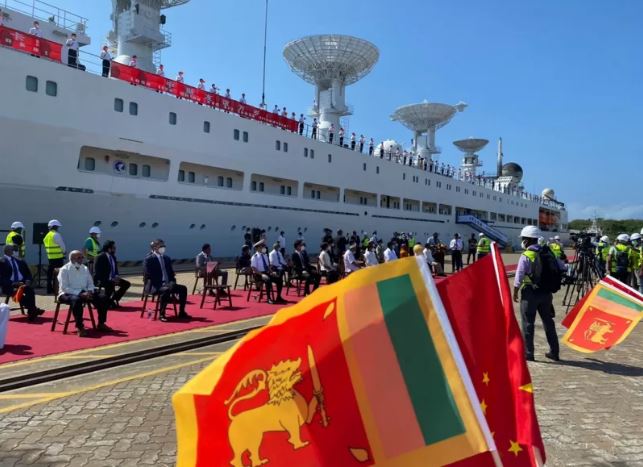
The tender for Sri Lanka’s proposed $4 billion oil refinery in the investment zone near Chinese built Hambantota port will be awarded within three weeks, a state minister said.

China’s Sinopec and Vitol Asia based in Singapore are the two firms shortlisted out of seven companies that responded to an expression of interest early this year.

“We have issued the RFPs (request for proposal) for the two firms shortlisted. They have submitted the RFPs and now we are in the process of reviewing the RFPs,” State Power & Energy Minister D V Chanaka told reporters on Thursday (19).

“There is a process which involves Cabinet approvals and Ministries. Our expectation is to award the tender within a minimum three weeks.”

Sovereign debt defaulted Sri Lanka has been struggling to attract foreign inflows. The refinery is part of a strategy to attract more foreign investments into the bankrupted nation.

Government sources say the refinery is likely to be awarded to Sinopec which has already started retail fuel supply and is competing with LIOC, a fully-owned subsidiary of Indian Oil Corporation.

Sri Lanka received seven responses to an expression of interest (EOI) to build the export-oriented oil refinery in Hambantota, in the island’s Southern coast of Hambantota and next to a Chinese-owned port.

Grant & Shearer Ltd from Nigeria, Sinopec from China, Petrichor Capital from Malaysia, Vitol Group from Singapore, Martin Tejarat from Iran, Dandeniya Engineering Sales and Service Syndicate, a local-based company and Sri Lanka’s Harree Management with UAE’s Marka Invest submitted their expression of interest early thi year.