HRCSL to launch guidelines on protection of human rights defenders

The Human Rights Commission of Sri Lanka (HRCLS) has announced plans to release a set of guidelines and recommendations on the protection of human rights defenders in Sri Lanka.

Issuing a statement, the HRCSL said that it would also engage in a consultative process to finalize these guidelines and recommendations.

The announcement was made during a discussion held last week between the HRCLS members and representatives of civil society organisations in Sri Lanka to discuss the Commission’s current programme and future plans.

The HRCSL said the meeting also provided an opportunity for civil society representatives to share their experiences, concerns, and recommendations with the Commission.

The meeting was chaired by the Chairperson of the Human Rights Commission of Sri Lanka, Justice L.T.B. Dehideniya, and attended by commissioners Prof. Thaiyamuthu Thanaraj, Prof. Farzana Haniffa, Mr. Nimal Punchchihewa, and Dr. Gehan Gunatilleke, and the directors and senior staff of the Commission.

Civil society representatives shared their experiences and concerns at the meeting, including threats to democratic and civic space in Sri Lanka, the harassment and intimidation of human rights defenders in the course of their work, the importance of protecting, promoting and fulfilling economic, social and cultural rights, and challenges faced by persons with disabilities, particularly in the transport sector.

Civil society representatives also expressed their interest in working closely with the Commission through its thematic subcommittees.

They further emphasized the need for the proactive disclosure of information including past inquiry reports and the need for strengthening the Commission’s complaints mechanisms including its hotline.

The HRCSL also assured civil society representatives that the thematic sub-committee system would be re-established along with the participation of civil society experts and a process for constituting these sub-committees would be launched shortly.

The Commission has invited civil society representatives to continue to engage and work closely with the Commission in strengthening the protection, promotion and fulfilment of human rights in Sri Lanka.

Posted in Uncategorized

Expectations from Wickremesinghe’s visit to China By P.K.Balachandran

The Sri Lankan President Ranil Wickremesinghe is currently on his first-ever visit to China since he assumed office as President Sri Lanka in July 2022.

Expectations are high in Sri Lanka as China has promised debt relief measures though without revealing any details.

Geopolitically interested external forces India and the US are watching the proceedings with anxiety as Sri Lanka and China appear to be bridging the gulf created by Colombo’s decision to default on loan repayment and approach India and the IMF for relief, by-passing China, the single largest bilateral creditor.

Much is expected from the visit, though it is not a State Visit. Officially, the Lankan President is to participate in the third Belt and Road Forum for International Cooperation that is to take place in Beijing on October 17 and 18.

Nevertheless, the visit is taking place in an important economic and geopolitical context. Sri Lanka badly needs debt relief from China to pull itself out of the financial woods. It also has to balance its responses to geopolitical pressures from rivals India and China.

Debt Issue

To take the bread and butter issues first: In November 2022, Sri Lanka owed Chinese lenders US$ 7.4 billion – nearly a fifth of its public external debt, according to calculations by the China Africa Research Initiative (CARI).

But despite fervent appeals from Sri Lanka since the beginning of the foreign exchange crunch in 2021, China did not join the international effort to help Sri Lanka by giving financial assurances and offering to take a haircut. China plainly said that it did not believe in this kind of relief and asked Sri Lanka to put its messy financial house in order. It offered further credit and a buyer’s credit totalling about US$ 2 billion instead of giving debt relief.

But other international creditors wanted China to take a haircut in line with them. They would not allow a separate Sino-Lankan deal as that would not be fair.

While the tug of war was going on, China last week, on the eve of the visit of Wickremesinghe, announced that it had reached a ‘tentative’ agreement with Sri Lanka on debt restructuring. The announcement also came on the eve of the IMF/World Bank meeting in Morocco.

According to the Sri Lankan Finance Ministry, it had reached an agreement with the Export-Import Bank of China covering about US$4.2 billion of outstanding debt.

According to Reuters, the EXIM bank deal will help Sri Lanka get past the first review of an International Monetary Fund (IMF) program, and secure a second IMF tranche of about US$ 334 million.

Sri Lanka began negotiating with creditors including China, Japan and India last September parallel to moving forward on a US$ 2.9 billion IMF bailout.

Observers expect to get details of Sri Lanka’s deal with the EXIM bank of China during the visit of the President to Beijing.

According to the former Sri Lankan Ambassador to China, Dr.Palitha Kohona, Wickremesinghe is also expected swing deals to bring Chinese investments to the Chinese-built Colombo Port City, a US$ 1.4 billion project which is still to get any investments from anywhere.

Dr.Kohona said that the China Harbour Engineeing Company, which built the Port City, will itself invest more than a billion dollars in it. China is also expected to build the Central Highway linking Kandy with the north and south of the island.

Meanwhile, China’s flagship but controversial project, the Hambantota International Port (HIP), is beginning to look up. Recently it set a new record for oil and gas throughput. HIP has increased its bunker supplies nearly six times more than its 2022 volumes in the current year.

As of June 2023, the port completed over 500,000 metric tons of oil and gas throughput, successfully achieving the target set for the first half of the year, according to a company release.

With MV Swarna Godavari rom India, recently unloaded 31,500 metric tons of VLSFO in the port’s oil jetty. The total throughput was brought up to 520,000 metric tonnes, surpassing the milestone set by HIP’s Energy Services Department (ENS) and creating a brand new one.

The number was achieved through 143 vessel calls from January to June this year, as opposed to just 50 vessels that called during the corresponding period in 2022.

HIP’s bunkering partner is Sinopec Fuel Oil Lanka (SFOL).

China recently entered the fuel distribution market in Sri Lanka, joining the local Ceypetco and the Lankan Indian Oil Corporation. Australia’s United Petroleum and US-based RM Parks, in collaboration with Shell, are slated to join soon.

Sinopec has been granted a license to operate 150 service stations for 20 years in Sri Lanka, in addition to being able to invest in 50 new locations.

Lanka to Joint RCEP

In an exclusive interview with China Media Group (CMG), on the eve of his departure to China, Wickremesinghe said: “We do what is good for us and stop doing what isn’t. We can benefit from cooperation with China. Indeed, if we could join the RCEP (Regional Comprehensive Economic Partnership), we would have access to the world’s largest market. We once hoped to establish the South Asian Free Trade Area, but it failed to materialise.”

India had earlier refused to join RCEP not being part of a group dominated by China.

Geopolitical Scenario

In the geopolitical sphere stiff competition between China and India is continuing and intensifying. India had taken a lead by giving Sri Lanka US$ 4.5 billion to tide over the financial, food and fuel crisis.

During the visit of President Wickremesinghe to New Delhi in July, agreements were signed on establishing grid connectivity between Madurai in India and Mannar in Sri Lanka. Other agreements were to build a road bridge across the Palk Strait and ply a passenger ferry between Nagapattinam in Tamil Nadu and Kankesanthurai in Jaffna. The first sailing took place last week.

India, Japan and Sri Lanka are expected to jointly develop the Trincomallee habour and its hinterland to compete with the Chinese built and run Hambantota harbour.

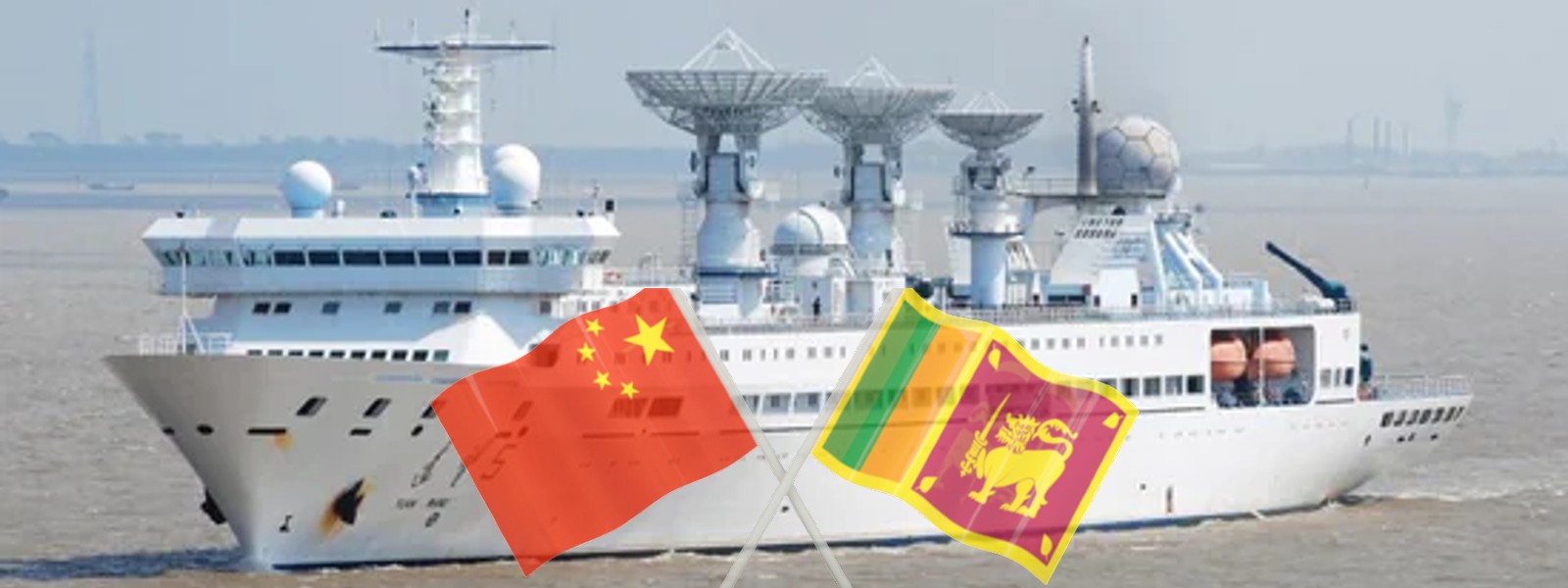
The visits of Chinese survey vessels to Sri Lankan ports have raised the hackles of the security Estabishments in New Delhi and Washington. Some vessels have already docked in Sri Lankan ports despite Indian objections.

The upcoming visit of the research vessel “Shi Yan 6” appears to be particularly problematic as the US too has raised a red flag. The Sri Lankans have been trying to evade criticism by saying that they are preparing a “Standard Operating Procedure” that would apply to all such controversial visits.

The Sri Lankan case is that the “Shi Yan 6” is a vessel that is slated to do joint oceanographic research in collaboration with the Sri Lankan National Aquatic Resources Research and Development Agency (NARA). The Oceanography department of Ruhuna University, which has a collaboration with a Chinese university, will also be involved in joint research. However, for India and the US, these vessels are “spy ships” that will use the data collected for strategic/military purposes.

“Shi Yan 6” is yet to arrive in Sri Lanka. It is expected to dock at the end of October if Colombo and New Delhi agree.

India and the US do not want any non-trade Chinese activity in the Sri Lankan seas or the Indian Ocean as a whole. Recently, the Indian Foreign Minister S.Jaishankar made this clear in his address to the Indian Ocean Rim Association Ministerial (IORA) meeting in Colombo. He portrayed India as the numero uno in the Indian Ocean.

He warned about Chinese machinations in the Indian Ocean Region when he said: “We should be clear where the dangers are, be it in hidden agendas, in unviable projects or in unsustainable debt.”

He urged “the exchange of experiences, sharing of best practices, greater awareness and deeper collaboration” between the 23 IORA members.

Sri Lanka is the current chair of the IORA and India is the Vice-Chair.

Posted in Uncategorized

Wimal Weerawansa to attend BRI summit

MP Wimal Weerawansa is due to represent the National Freedom Front and the Supreme Lanka Council at the Belt and Road Initiative (BRI) summit in Beijing, China.

The two-day global gathering of more than 90 political leaders opens tomorrow (17).

President Ranil Wickremesinghe departed last night to attend this summit.

Tamil Nadu CM seeks Centre’s intervention for release of TN fishermen

Tamil Nadu Chief Minister MK Stalin has written to External Affairs Minister S Jaishankar, requesting the central government to secure the release of Tamil fishermen and their fishing boats detained by Sri Lanka.

“I want to bring to your attention a matter of grave concern that has been affecting the lives and livelihoods of Indian fishermen. It pertains to the arrest of 27 Indian fishermen in two separate instances and the seizure of four fishing boats,” Tamil Nadu CM wrote in his letter on Monday.

On Saturday, as per the letter, the Sri Lankan Navy arrested 23 fishermen from Rameshwaram and seized four boats for allegedly crossing the IMBL. In another Incident, a mechanized fishing boat carrying four fishermen were apprehended by the Sri Lankan Navy. “As I have written to you earlier, these repeated instances of arrest and seizure have struck fear into the hearts of the fishing communities along our coastline. The livelihoods of these fishermen, who are often the sole breadwinners for their families, are at stake,” Stalin wrote.

“The economic implications of these recurrent arrests are profound, as they lead to not only the loss of Income for the fishermen and their families but also jeopardize the food security of countless individuals who depend on their catch,” he wrote, as he requested Jaishankar to take immediate diplomatic steps with the Sri Lankan government to secure those detained fisherfolk. Earlier members of the Fishermen Association of Rameshwaram protested demanding the release of 27 fishermen and five boats allegedly captured by the Sri Lankan Navy.

“On October 14th, more than 400 fishermen from Rameswaram went to sea to catch fish. The Sri Lankan Navy took 27 Rameswaram fishermen along with five boats to Talaimannar port and Kankesanturai port, and handed them over to Talaimannar and Jaffna Maritime Inspectors for further legal action,” N.J. Bose, General Secretary ofthe Tamil Nadu Boat Fishermen’s Welfare Association said while speaking to ANI. The protesting fishermen demanded the government’s intervention for the immediate release of the fishermen.

Earlier, the Sri Lankan Navy had detained 17 fishermen and their three boats on September 13 for allegedly poaching in the territorial waters of the Island Nation. Following the State and Central government intervention, they were released by the Sri Lanka Court on September 27. Later, the fishermen arrived in Chennai on October 14.

(ANI)

Posted in Uncategorized

Anti-China propaganda should be countered – Prof. Vitharana

Progressive forces in Sri Lanka need to unite to create a campaign to counterbalance anti-China propaganda by imperialist forces, Lanka Sama Samaja Party (LSSP) leader Prof. Tissa Vitharana said during a recent discussion on the Belt and Road Initiative (BRI).

Speaking at the event organised by the Asia Progress Forum, a think-tank affiliated with the Communist Party of Sri Lanka (CPSL), Prof. Vithanara said China had become a superpower without resorting to imperialism.

“However, there is a lot of propaganda against China. Despite local and international scholars proving that there is no such thing as a ‘Chinese debt trap,’ those loyal to the west peddle this lie in Sri Lanka. The progressive forces in the country must unite to counter these lies. The government must also take steps to counterbalance these claims,” he said.

Meanwhile, Prof. Samitha Hettige who also addressed the meeting, said Sri Lanka has been irresponsible with loans it has taken from all parties, and given that Sri Lanka has borrowed a lot of money from private lenders, the country must spend such funds on productive endeavours.

“The BRI has opened doors for a lot of investments. We have to take advantage of this transparently,” he said.

Meanwhile, engineer and former chairman of the Ceylon German Technical Training Institute, Vinod Moonesingha said that Free Trade Agreements (FTA) with China and India could attract investors from both countries to Sri Lanka.

“Hambantota can be built as an industrial centre with FTAs with these two major economic superpowers. Chinese will come to Sri Lanka and produce things for the Indian market, and vice versa,” he said.

Posted in Uncategorized

Cardinal goes before Supreme Court against Online Safety Bill

Colombo Archbishop Malcolm Cardinal Ranjith today filed a Special Determination petition in the Supreme Court challenging the constitutionality of the Online Safety Bill.

Cardinal Malcolm Ranjith stated that arbitrary and unreasonable wide-ranging powers have been granted to the President when appointing members to the Online Safety Commission. He stated that these wide-ranging powers are retained by the President concerning the powers to remove the members of the Online Safety Commission under Clause 7, and also with regards to the appointing of the Chairman of the said Commission under Clause 8 of the Online Safety Bill.

The Colombo Archbishop further stated that in terms of Clause 11 and Clause 12 of the Bill the Online Safety Commission would also be vested with a wide range of powers, which would encroach even into the functions of the Judiciary. In this regard, the Petitioner states that the Online Safety Commission would accordingly be empowered to at their own discretion and would be entitled to issue notices or directives against any person, internet service provider or internet intermediaries who is alleged to have communicated a prohibited or false statement.

The petitioner is seeking a declaration that the bill requires the approval by the people at a Referendum in addition to the 2/3 approval of the Parliament.

Wijedasa denies proposing to abolish executive presidency

Justice minister Wijedasa Rajapakshe has denied media reports that he has submitted a paper to the cabinet for the abolition of the executive presidency.

What he had presented was an amendment to the election system, to elect 160 MPs at electoral level and 65 others under proportional representation, he has told ‘Anidda’ newspaper.

Rajapakshe said his proposal is similar to the one previously made by a parliamentary committee headed by premier Dinesh Gunawardena to introduce such a mixed electoral system.

The minister added that he would discuss his proposal with party leaders shortly.

Posted in Uncategorized

Sri Lanka urges China to share debt terms to help other deals – Report

Sri Lanka is urging China to share with other creditors the terms of its recent $4.2 billion bilateral debt deal, a step needed to help the bankrupt nation speed up the process of restoring its finances more than a year after it defaulted.

Sharing the information would ensure transparency and assure other bilateral creditors that they’re getting a comparable deal, Nandalal Weerasinghe, the country’s central bank governor, said on a panel Friday.

The request from Sri Lanka comes as it seeks to finalize a deal with its official creditor committee, co-led by Japan, India and the Paris Club, an informal and influential group of Western lenders. The South Asia nation defaulted in May 2022 and owes more than $12 billion in overseas bonds, according to the government’s quarterly debt bulletin.

Sri Lanka’s debt restructuring is among a few test cases of the IMF-led efforts to develop new guidelines among rich and poor countries to manage defaults. That’s mainly driven by China’s limited experience restructuring distressed loans after its rise over the past decade to become the biggest bilateral lender to emerging markets, as well as a bigger role played by private creditors.

Sri Lanka is asking China to share the deal terms “with all other creditors” as soon as possible to “make it more transparent and ensure comparability so that we can make progress,” Weerasinghe said. “Because this is a bilateral agreement, obviously, we need to have a consensus from the other party to share that information.”

Private creditors are seeking a separate deal. An ad hoc group of bondholders, organized by advisers including Rothschild & Co., recently submitted a proposal to Sri Lanka that includes taking a 20% haircut and issuance of new debt, including a so-called macro-linked bond.

Incorporating China, along with other rising bilateral creditors such as India and Saudi Arabia, into the established order of the Paris Club has been a lengthy process and a main focus of the International Monetary Fund’s annual meetings this week in Morocco.

Beijing made an unexpected announcement earlier this week of a deal between Sri Lanka and the Export-Import Bank of China, which has increased confusion over the process. The IMF and other creditors also weren’t aware of the development, and Weeransinghe on Friday said that the announcement was “a bit of a surprise” to the Sri Lanka government as well.

The issue will likely be in focus next week when Sri Lanka’s President Ranil Wickremesinghe travels to China to participate in the Belt and Road Forum in Beijing. About 40% of its bilateral debt is owed to China and 16% to India, according to estimates from the IMF.

Separately, the IMF is assessing Sri Lanka’s progress toward meeting economic and reform targets under the nation’s $3 billion bailout package. A staff-level agreement is the first step needed in order for a second tranche of $334 million in loans.

Sri Lanka and the IMF are close to reaching such a staff-level agreement following talks in Morocco this week, according to people involved in the discussions, who asked not to be identified because the matter isn’t finalized yet. Only a few outstanding issues remain, one person said, declining to provide more detail.

Source – Bloomberg

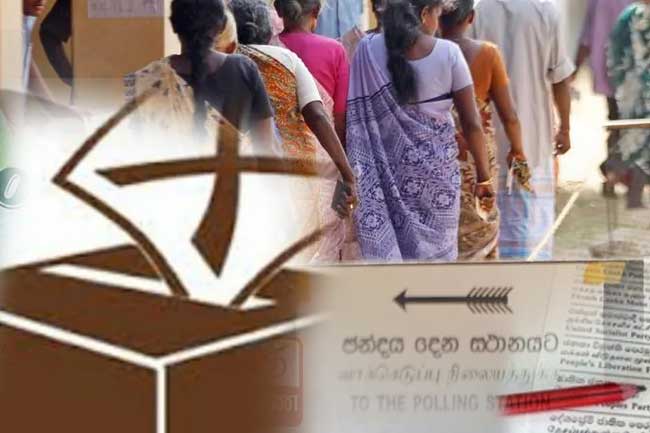
EC in fresh bid to hold local council polls

The Election Commission, in a fresh effort to revive the conduct of the local council elections, has sent a revised schedule to the Treasury requesting money for the polls.
According to the revised schedule, the Commission has said that for the conduct of the polls, it will need only Rs 2.2 billion initially, and the rest could be released within three months.

Election Commissioner R.M.A.L. Ratnayake told the Sunday Times that the fresh initiative had been taken as another effort to ensure that the long-overdue local council elections were conducted soon.

He said they had also taken into consideration that the government’s financial position had improved now and that some of the court rulings related to the local council elections were due.

This is the first major effort by the newly appointed Election Commission to secure funding for the conduct of the elections, which have been postponed multiple times.

According to the breakdown provided to the Treasury by the Elections Commission, the EC has worked out that after the election day is announced, it will require Rs 1.1 billion for the conduct of the poll: Rs. 100 million in the first 15 days after calling for elections, another Rs. 500 million in the next 15 days, and Rs. 500 million in the next 20 days.

In addition, the police will require Rs. 400 million, the Government Printer Rs. 200 million, and the Postal Department Rs. 500 million before the polls are conducted.

Accordingly, only Rs 2.2 billion will be needed until the elections are held, the Commission has said. The remaining Rs 6.8 billion will be required after the elections.

The Commission has given a three-month time frame to pay the rest of the money. In the first month, Rs. 1.9 billion; in the second month, Rs. 1.5 billion; and in the third month, Rs. 1 billion.

In addition, the dues to be paid to the other departments after the elections are as follows: Rs. 1 billion for the police, Rs. 300 million for the Government Printer, Rs. 700 million for the Postal Department and Rs. 400 million for others.

The elections scheduled for earlier this year were postponed on the grounds that Treasury funds were not available.

Petitions allowed against Gotabaya’s pardoning soldier guilty of Mirusuvil killings

The Supreme Court has granted leave to proceed with several petitions that challenge a presidential pardon given to a soldier convicted in the killing of eight Tamils 23 years ago.

The cases were filed in April 2020 by the Centre for Policy Alternatives, its executive director Paikiasothy Saravanamuttu, families of the victims and several other parties.

A three-judges SC panel on 12 October decided to take up on 17 May 2024 the petitions which allege a violation of clause 12 (1) of the constitution by Gotabaya Rajapaksa’s pardoning of Staff Sergeant Sunil Ratnayake.

The court gave both the respondents and the petitioners time to submit objections and counter-objections.

In April 2019, the SC upheld a High Court verdict that Ratnayake was guilty of the killings that occurred on 19 December 2000 in Mirusuvil, Jaffna.