Bar Association of Sri Lanka calls on government to immediately withdraw Anti-Terrorism Bill and Online Safety Bill

The Bar Council of the Bar Association of Sri Lanka (BASL) has called on the government to immediately withdraw the Anti-Terrorism Bill and the Online Safety Bill which were published in the Gazettes issued on 15th and 18th September respectively.

Issuing a statement on Saturday, the BASL called on the government not to proceed with the said Bills as they seriously impinge on the liberty and freedom of the people and will have a serious impact on democracy and the rule of law in the country.

Following is the full statement of the BASL:

The Bar Council of the Bar Association of Sri Lanka (BASL) calls upon the Government to immediately withdraw the Anti-Terrorism Bill and the Online Safety Bill which were published in the Gazettes issued on 15th and 18th September respectively, and not to proceed with the said Bills.

At a meeting of the Bar Council held today, it was unanimously resolved that both Bills seriously impinge on the liberty and freedom of the people and will have a serious impact on democracy and the rule of law in the country.

It is observed that both Bills have been introduced without due consultation with the stakeholders including the BASL. Further, the BASL’s observations on the previous version of the Anti-Terrorism Bill have also not been considered.

The BASL calls upon the government to have a meaningful consultation with the relevant stakeholders including the BASL and to take into consideration their concerns prior to proceeding to Gazette such Bills, which have a serious impact on the community at large.

Posted in Uncategorized

Nation Building is Possible with Full Implementation of 13th Amendment Part 1

Sri Lanka, a multi-ethnic and multi-religious country, has been facing multiple and endless crises for decades. Effective solutions must be found to resolve the political, economic, cultural and relationship issues between the majority and minority groups that have stifled the country’s progress since independence 75 years ago. A fresh look at the failed unitary government and curtailing the powers of the unaccountable executive presidency is essential if the country’s future is to be changed for the better. Devolution of powers to the regions and better checks and balances between the executive, judiciary, and parliament are indispensable.

It is in this broader perspective that this article should be viewed. The class-based issues that fuel the national question will not be addressed here. Suffice it to say that under neo-liberalism, differences in plural societies are exploited to sustain authoritarian capitalist governance systems that are beset with crises.

Nation building

Nation building is an evolutionary and long-term course of action. It needs to evolve and grow through a consensual internal political process; external intervention will not have much positive impact. Institutions that advocate and protect the fundamental rights of all communities, and citizens’ willingness to maintain harmonious co-existence are crucial for achieving socioeconomic prosperity and equitable society. This requires equitable access to education, jobs, housing and health, among others, for the empowerment of all peoples of a country.

For nation building to be successful, we need to recognize the importance of democratic values within the civic sphere that will develop and sustain it in the long run, as opposed to just emphasizing economic development and state building. There is no room for an ethnocentric approach or imposition of policies and practices by coercive means. The reality is we hear merely meaningless platitudes from the political elite who have very little understanding of this critical need.

Decentralization

Decentralization is increasingly seen as a basic principle of democracy. A system of good governance needs people to have the ability to elect their own leaders and representatives to institutions that wield real power to respond to people’s needs. Political decentralization plays an important role in addressing the democratic deficit in centralized decision making. Grassroots movements championing more empowered local and regional governments have emerged. This is not surprising as an overweening central power has repeatedly failed to meet the needs of the people as attested by the current economic crisis.

Greater participation is assumed to lead to better informed decision-making that are more relevant to the plural societies like Sri Lanka. With political decentralization, citizens will come to better know their representatives and in turn their representatives will be more cognisant of the needs and desires of their electorates. Decentralization transfers responsibility for planning, financing and managing certain public duties from the centre and its agencies to regional ones, thus making it more local and accountable. This can be achieved by de-concentration, delegation, and devolution of authority with each of these having their own characteristics.

It should be noted that centralization and decentralization do not need to be an “either-or” scenario. Practical examples around the globe have demonstrated that an appropriate balance of centralization and decentralization can ensure effective and efficient government service delivery. Centres can play a crucial role in promoting and sustaining decentralization efforts. This can be done by developing proper and effective national policies and regulations needed for decentralization, thus creating the necessary enabling environments that allow regional, provincial, and local units to take on more responsibilities for undertaking new functions.

As a whole, genuine efforts at decentralization can cut cumbersome bureaucratic red tape. It can make local and national public servants more sensitive to local conditions and needs. It allows political representation of diverse political, ethnic, religious, and cultural groups in plural societies in decision-making processes, thus contributing to better political stability and national unity. A growing number of countries have adopted federal systems, decentralizing some elements of government responsibility from the centre down to local government as a means of giving different ethnic and regional groups some autonomy and control over their destiny.

The two insurrections in the south and the three decade long armed conflict in the north and east are examples of the fact that if people are excluded from sharing political power, they are more likely to challenge the legitimacy of the existing system. Federalism or devolution is a means of sharing power among diverse political entities irrespective of their ethnic or regional ties. Democracy will survive better if successes and burdens are shared fairly and equitably.

Sri Lanka’s current political system is based on a winner take all system, where one political party or group monopolises all the privileges and economic benefits. Devolution in contrast allows different ethnic and regional groups the ability to determine their own affairs, thus making them feel more secure. They may gain more confidence in, and commitment to the system, and a general sense that the system is fair and inclusive. Several studies show that decentralization can be instrumental in facilitating development and democratic governance, particularly in multi-ethnic societies. And various forms of decentralization are being successfully used around the world.

Devolution

Historically, governments in Sri Lanka have tended to centralize all powers. Yet, the late 20th century witnessed an increasing global tendency to reduce central governmental power, by devolving power to the peripheral governing bodies such as state, regional, provincial and/or local bodies. Many countries in Europe, Asia, Africa and Latin America have adopted diverse devolutionary measures to empower their plural communities. France in the 1980s and the United Kingdom in the late 1990s are the most appropriate examples. France was one of the most centralised states. All major decisions of the regions, departments, and communes, from annual budgets to naming streets and schools, had to be authorized by the central government. Due to the pressure the peripheries exerted on the central government, the François Mitterrand administration (1981-95) removed most of the authorisations needed in policy making matters.

In the UK devolution became a major political issue in the early 1970s, as Scotland and Wales demanded greater control over their own affairs. A referendum was held in 1979 to determine the people’s will for devolution. It needed the electorate to approve it with a two-fifths majority, but voters in Wales and Scotland rejected it. However, in 1999, under Tony Blair’s regime, power was devolved, Scotland had a parliament, and later Wales a Welsh Assembly. The Good Friday Agreement of 1998 provided Northern Ireland with its own parliament.

In Sri Lanka, proponents of devolution have been demanding clearly defined powers that the Provinces can wield. During the constitutional reform process under the previous regime led by President Maithripala Sirisena and Prime Minister Ranil Wickremasinghe, the Chief Ministers of the seven “southern” provinces asked for proper devolution as envisaged under the 13thAmendment. However, nothing came to fruition.

Source:Groundviews

Saga of the takeover of Kandy seen through British eyes By P.K.Balachandran/Daily Mirror

Events leading to the controversial takeover of the Kandyan kingdom by the British in 1815 and the aftermath have been written about both from the British and the Sri Lankan viewpoint. The British view is vividly presented in Ceylon Ancient and Modern published by Chapman and Hall of London in 1876. It is authored by an anonymous former officer of the Ceylon Rifles.

In 1798, the Prime Minister of the Kandyan kingdom, Pilimatalavuva Maha Adikaram (or Pilame as he is referred to in the book) had placed on the throne of Kandy, Sri Wickrama Rajasinha, the 18-year-old nephew of the wife of the deposed King Rajadhi Rajasinha. Pilame wanted to rule Kandy and replace the “Naicker dynasty” by an indigenous “Sinhalese” dynasty with the help of the British, who had replaced the Dutch as the European power in Ceylon in 1796.

When Pilame conveyed his plan to Governor Fredrick North, the latter got excited at the prospect of turning Kandy into a British Protectorate. Kandy had been doggedly defying European attempts to subdue or absorb it. But North disapproved Pilame’s proposal for a British attack on Kandy to put his puppet Mootoo Samey (Muthu Swamy) on the throne. North said he would not object if Pilame himself removed Wickrama Rajasinha, and yet he wanted to protect the king! “The troops’ presence in Kandy will be the only means of preserving the poor man’s life and dignity, which otherwise will be sacrificed to the ambition of his minister,” North wrote.

He also wanted Wickrama Rajasinha to formally agree to the stationing of British troops. And to talk about this, he sent Maj.Gen. Hay MacDowell backed by 2500 troops. But MacDowell was made to wait inordinately for an audience and had to kneel before the King. The annoyed General returned to Colombo. But Pilame would not give up. In 1802, to force the British to take punitive action against the king, he relieved some Moor merchants from the coast of their property and put the blame on the king. Gen.MacDowell proceeded to Kandy on a punitive mission. Wickrama Rajasinha fled but not before setting Kandy on fire. Pilame put Mootoo Samey on the throne and MacDowell left for Colombo leaving a small contingent of troops in Kandy under Major Davie. But the doughty Kandyans put back Wickrema Rajasinha on the throne.

Thus thwarted, Pilame planned to kidnap Governor North during the talks they had at Dambedenia and also attack British garrisons. The timely arrival of Malay troops put paid to his plans. Nevertheless, Kandyans attacked the British troops, most of whom were too sick to fight. Maj. Davie surrendered Mootoo Samey and also his arms. The Kandyans “massacred” all but Davie and Corporal Barnsley, who escaped. The massacre sparked calls for revenge. But North’s plan to send the troops to Kandy did not fructify as the Madras Governor could not send the 3000 men he sought.

Commenting on the misadventure, the author of the book says: “The great fault of all those engaged in this terribly ill-managed Kandyan affair was placing any reliance on the word of an Asiatic, or entering into any negotiations or conventions with them, in which Europeans are sure to be foiled by their superior finesse and want of faith. In dealing with these people there is only one policy to be adopted, a bold, straightforward one, with a firm reliance on one’ own right arm and a good display of physical force –the only argument they understand, or at least are likely to attend to.”

When North took up the massacres with Wickrama Rajasinha, the latter blamed Pilame from whom, he said, he had long since withdrawn his confidence. North suspected that the king was being dismissive and dodgy because he was expecting assistance from the French Adm. Alexandre Durand Linois, who was harassing British shipping in the Indian Ocean.

“Continually disturbed by the plots and insurrections by his chiefs,” Wickrema Rajasinha became a “sanguinary despot.” The crafty Pilame was found plotting to assassinate the king, who beheaded him in 1812. Pilame was succeeded as Adigar by his nephew Eheylapola (Ahalepola). But Eheylapola had inherited his uncle’s disposition for plotting and secretly tried to get Governor Robert Brownrigg’s aid for dethroning Wickrama Rajasinghe and assuming power himself. Brownrigg declined to help.

Meanwhile, the king had discovered Eheylapola’s conspiracy. Eheylapola fled to Colombo. But “the tyrant (Wickrama Rajasinha) wreaked his vengeance on his (Eheleypola’s) wife and family and everyone within his reach. The place of execution in Kandy flowed with blood and the neighbourhood echoed with the shrieks of the victims. Eheylapola’s wife and four children and his brother and wife were either beheaded or drowned, and the mothers were compelled, under the dread of being disgracefully tortured, to pound the decapitated heads of their children in a paddy pounder.”

As a consequence of this outrage, war was proclaimed against Wickrama Rajasinha in January 1815. In a few weeks, Kandy was again in the possession of the British, thanks to the defection of the king’s General Mollegodde ( Molligoda) and the gang up the principal chiefs against the king. The king, who was hiding, was found out by Aheylapola’s men and handed over to the British. Upon capture, a remorseful Wickrama Rajasinha told the British: “Your English governors have one advantage over us kings. They have counsellors near them who never allow them to do anything in passion. But unfortunately for us the offender is dead before our resentment has subsided!”

In the eyes of the British, Wickrama Rajasinha was “not unprepossessing in appearance, except when he was excited, when his eyes gleamed with the fire of a demon, and his face assumed an air or malignant cruelty.”

In March 1815, the Kandyan Convention, by which the kingdom was handed over to the British by the chiefs, was signed. The chiefs were guaranteed their ancient privileges and powers, the impartial administration of justice and the maintenance and protection of Buddhism. However, according to eye witness Dr Marshall, “both the chiefs and the people began to show signs of impatience and openly wished for the departure of the British from Kandy inquiring when they intended to leave the country.”

One of the Kandyans told Marshall: “ You have deposed the king and now nothing more is required. You may leave us now.”

“They showed no dislike to us individually, but as a nation, they abhorred us; they made no complaint of misrule or oppression, simply wishing we should leave the country,” Marshalls adds.

These feelings broke out into an open revolt in 1817, secretly fomented by Eheleypola, “the professed friend of England”. By 1818, the revolt had spread like wildfire. A monk was made a claimant to the Kandy thrown and the tooth relic was taken out from the temple at Kandy and “shown to the people to arouse their fanatical enthusiasm.”

In the 10-month desultory 1880 war, 1000 Indian soldiers fighting in the British army died, which was one-fifth of the entire force deployed.

“The Kandyans never met their enemies openly, gave quarter or showed any mercy to those who fell into their hands, and the army imagined they would eventually be obliged to evacuate the country and fight their way out,” an observer said.

Eventually, the Kandyans submitted due to the destruction of their villages, cattle and crops and the loss of nearly 10,000 people due to famine, fever and war. Disunion had also emerged among the rebellious chiefs. Some submitted and others were executed. Peace was restored after the “accidentally discovered” Tooth Relic (Dalada) was reinstalled at its rightful place in Kandy.

Warning issued over possible bid to postpone presidential election

Civil society activist Sirithunga Jayasuriya Tuesday (26) said that those genuinely concerned about political strategies of the Wickremesinghe-Rajapaksa government should be wary of possible moves to put off the presidential election scheduled for next year.

Pointing out that both Provincial Councils and Local Government polls hadn’t been held in violation of the supreme law of the land, Jayasuriya asserted that the possibility of the government resorting to delaying tactics couldn’t be ruled out.

Jayasuriya said so at a meeting called by PAFFREL at Mandarina Hotel, on Galle Road, to discuss how political parties, represented in Parliament, and outside, could be encouraged to take the process of releasing manifestos seriously instead of deceiving the electorate.

Recently, UNP Chairman Wajira Abeywardena, MP, suggested that the presidential election should be put off as it could undermine ongoing economic recovery measures.

The veteran political activist told the Opposition not to be so sure the Constitution would be a hindrance to the government strategy. Jayasuriya didn’t mince his words when he explained how major political parties brazenly used manifestos to deceive the gullible.

At the onset of the programme, Executive Director of PAFFREL Rohana Hettiarachchi explained how Sri Lanka could benefit from similar exercises in other countries. Several parliamentarians, including Mano Ganesan (SJB), Buddhika Pathirana (SJB), Prof. Charitha Herath (SLPP rebel group) and Tissa Attanayake (SJB) participated in the programme.

One-time head of Election Commission and Chairman of the Delimitation Committee Mahinda Deshapriya was among the invitees. Polls monitoring groups, civil society and the media, too, were represented. The gathering was told how over the years political parties cleverly used election manifestos as a propaganda tool meant to influence the electorate.

National List lawmaker Tissa Attanayake maintained that an SLPP assurance made in the run-up to the last presidential election contributed to the ruination of the national economy that led to the declaration of bankruptcy in April last year.

The former UNP General Secretary quoted the Finance Secretary as having told a parliamentary watchdog committee as the Finance Ministry announced the abolition of a slew of taxes in Nov. 2019 that it was in line with one of the SLPP manifesto pledges. MP Attanayake said that political parties should pay attention to the practicability of proposals made in their respective manifestos.

PAFFREL Chief Hettiarachchi as well as some members of the audience suggested that the Parliamentary Budget Office could play a vital role in clearing proposals made with an eye on the electorate. The Parliament recently endorsed the setting up of the Budget Office meant to clear programmes or action plans submitted by political parties ahead of elections.

Prof. Herath strongly opposed the concept of a Budget Office which the rebel MP claimed was meant to ensure manifestos of all political parties adhered to the thinking of powers that be. One-time Media Ministry Secretary emphasized that this was fundamentally wrong and could cause irreparable damage to the political party system. Prof. Herath said that proposals made by political parties could be simply rejected for want of the approval of the Budget Office. The MP declared that this sort of strategy was counterproductive and had no practice in any part of the world. In fact, lawmakers wouldn’t be in charge of this project, MP Herath said, adding that officials were to decide the practicability of proposals made by political parties.

Prof. Herath said that some propagated the idea that politicians didn’t know anything, but the civil society was much more knowledgeable. Acknowledging the shortcomings and the failures on the part of politicians, Prof. Herath said that there were serious issues at projects run by the civil society and other non-governmental enterprises. The MP cited Sri Lanka Cricket to highlight the growing crisis the non-state sector experienced and serious flaws in the accounting process in civil society projects. “Their balance sheets are not properly scrutinized,” the former COPE (Committee on Public Enterprises) Chairman said.

Prof. Herath alleged that the Budget Office was part of a flawed political strategy. If the Budget Office was in place now President Ranil Wickremesinghe couldn’t have done anything, MP Herath said, asserting that political projects should receive endorsement by the people not that of an Office manned by officials. The SLPP rebel spokesman questioned the validity of the Budget Office though Parliament approved it.

MP Herath stressed that democracy couldn’t be sustained only by conducting elections. According to Prof. Herath, the Budget Office was meant to control political parties that didn’t fall in line with their thinking. Their position with regard to proposals made by political parties could unduly influence the electorate, Prof. Herath alleged.

The gathering was also told that instead of new proposals political parties represented in Parliament and outside and other interested parties, including the civil society should press the powers that be to adhere to the Constitution. Instability caused by taking over of political parties through corrupt means and elected and appointed MPs switching sides particularly for personal rewards et al and deterioration of public faith in the executive, legislature and judiciary undermined the very basis of democracy, the group was told. Reference was made to the formation of the Samagi Jana Balawegaya (SJB) in early 2020 and two members elected from that party forming their own political outfits.

Another issue that received attention was the circumstances of cases pending against sitting lawmakers as well as ex-MPs in certain instances had dragged on for years. The recent imposition of five-year jail term on Senior DIG Lalith Jayasinghe for interfering in the 2015 Kahawatta politics related killing probe against the backdrop of the main accused Premalal Jayasekera (SLPP, Ratnapura) being a State Minister underscored the need for reexamination of the political scene.

Their attention was also drawn to controversial arrangements that threatened the electoral process. The case of three presidential candidates contesting 2010, 2015 and 2019 polls under the symbol of a party that never had an elected member at any level underscored the need to examine the entire setup, the gathering was told.

Politics of Easter investigation in a wriggling economy By Dr Ameer Ali

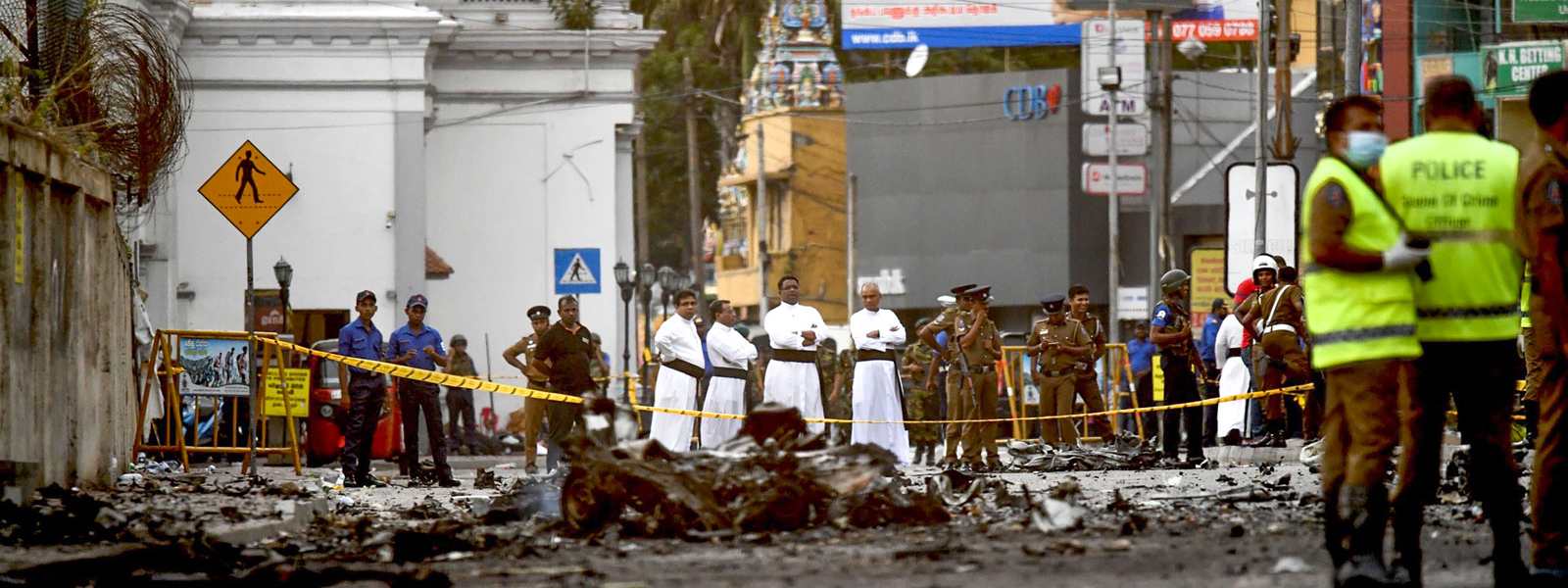
Damning revelations relayed through the British TV Channel 4 by TMVP’s former ally Asad Moulana referring to hidden hands masterminding the macabre killing spree on the day of Easter 2019, carried out by a Muslim fanatical outfit, the National Tawheed Jamaat (NTJ), and accusations and counter accusations levelled against the veracity of those revelations by local political leaders and international groups, has prompted President Ranil Wickremesinghe (RW) to take some action.

It was the Catholic Archbishop, Cardinal Malcolm Ranjith, being dissatisfied with two sets of official findings, one by the CID Investigation Division and another by the Presidential Commission of Inquiry (PCoL) who called for an independent investigation with international involvement. After the new revelations he has also found support from a couple of Opposition party leaders. There is also pressure from international groups. RW, a veteran and shrewd politician with an eye on his presidential election campaign, appointed a three-member committee headed by S.I. Imam, a retired judge of the Supreme Court.

How narrow or broad the terms of reference for this committee are not known. Yet, given the time limit to submit its report by 31 October, not much could be expected from this committee. However, it would be futile to investigate only those matters relating to the allegations levelled by Moulana without revisiting the entire episode. The two previous investigations carried out under two different regimes had left several questions unanswered, but conveniently placed the sole responsibility for the horror on the NTJ. As a result, hundreds of individuals were incarcerated purely on suspicion and they have not yet been produced before a Magistrate. Even Rohan Gunaratna, author of Sri Lanka’s Easter Sunday Massacre (Penguin Books, 2023) who claims to be an expert on Islamic terrorism, starts and ends his analysis on the assumption that it was entirely the NTJ’s masterpiece.

Internationally, there is a preconceived notion accepted uncritically by the anti-Muslim lobby that global terrorism equals Islamism and Muslims. The US has successfully created this political miasma after 2001 without providing any legal definition of the term ‘terrorism’. The fact that the ISIS itself is a creation of the US is conveniently ignored by anti-Muslim propagandists. Gunaratna’s story is no exception to this vicious distortion.

However, even without Moulana’s revelations, anyone who could dispassionately study the upbringing, academic training and intellectual limitations of the leader of the NTJ, Muhammad Zahran Muhammad Hashim or Zahran Hashim alias Abu Ubaida, would realise that he was totally incapable of masterminding and executing such an intricate, coordinated and technically complex multi pronged attack on three different locations. He was not a brilliant but a mediocre and rebellious student at the madrasas where he studied and from which he was thrown out. If one could have taken the trouble to interview his teachers at the madrasas in Kattankudy and Kurunegala, one would have easily grasped this elementary fact.

Merely because he was fluent in Arabic does not make him a scholar in Islamic studies. In short, he was trying to be an autodidact, became an emotional super brat ending finally as a backyard preacher. But he was gifted with a crowd pulling oratorical skill in Tamil. He was in fact influenced by the radical ideas of ISIS and even received funds from foreign sources.

Crucial questions left unanswered by previous inquiries

But it is unbelievable that in the post-2009 security environment where the country had the combined might of highly trained and experienced teams of army, navy, air force and police forces, all equipped with state-of-the-art security paraphernalia, that the NTJ was able to carry on with its clandestine manoeuvres for years completely undetected. Also, why were batches of information relating to the NTJ activities in Zahran’s native Kattankudy left unheeded by officials, and why was intelligence from India ignored? These are crucial questions that previous inquiries left unanswered. It is that gap in the previous inquiries that justifies the demand for another independent inquiry with international participation.

The Foreign Ministry has described the latest allegations as “unfounded, malevolent and poorly substantiated”. How far would RW’s present committee go to uncover the truth depends on the subtle pressures brought upon the committee by RW and his relevant Ministry. There is no doubt that there is politics behind RW’s response. No wonder the Catholic Church continues to show disgust at the latest narrow investigation.

IMF delegation

Meanwhile, the IMF guided economy is about to complete one year of reparation with mixed results. The monetary sector has achieved a degree of stability, the rupee is floating softly, foreign remittances are increasing, tourism has picked up and inflation has fallen to a single digit. Also, domestic debt optimisation (DDO) has been completed with EPF, ETF and other retirement funds bearing the cost of DDO disproportionately amid trade union disgruntlement. Yet, according to Verite Research, of the 100 tractable commitments undertaken by the Government only 35% had been met by July, and the IMF delegates are already in Colombo to investigate the progress made so far before recommending the release of the second tranche. Considering the personal commitment of RW to go all the way with the IMF, his pro-neoliberal philosophic stance, and repositioning of Sri Lanka’s foreign policy to satisfy IMF shareholders, there is a high probability that the delegates would recommend the release.

Budget 2023-4 more challenging

But life under the second tranche is not going to be better than under the first to the majority of ordinary citizens. The 2023-4 budget would be a more challenging one than its immediate predecessor, partly because the earlier one has failed to reach its revenue target and therefore, has to compensate for that failure either with more rigorous tax collection or new taxes, and partly because of an expected slowdown in Sri Lanka’s trading partner economies. Although remittances and tourist income had helped to achieve a modicum of surplus in balance of payments, the all-important balance of trade is in serious deficit. Unless the country grows more and exports more there is no way that trade surplus could be achieved. But exports cannot grow without increasing imports.

International trade is a two-way traffic and sooner or later controls on imports have to be relaxed. When that happens, imported inflation and exchange rate pressures would affect domestic price level and with increasing taxes and levies, life for the vast majority is going to be extremely testing, to say the least. On top of all this is the unfinished issue of foreign debt restructuring. What effect negotiations would have on the economy is yet to be seen. All in all, the wriggling economy doesn’t promise a strong platform for RW to stage his campaign for the presidential election, which is expected to be announced any time next year.

Given that context, findings by this new committee headed by a Muslim could either destroy the popularity and image of one or two of RW’s potential presidential opponents, or, reinforce the status quo and put the blame directly on the NTJ but indirectly on the Muslim community. To RW the Muslim vote bank is crucial.

“Eating biryani and voting UNP” is a cynical aphorism attributed to the politics of the Muslims. Historically, a business community, with trade as the most representative profession in Islam, Muslim leaders approach politics from a profit and loss angle. That behaviour has not changed even after creating their own political parties, the SLMC and the ACMC. RW is well aware of this and would not therefore wish to topple the apple cart of Muslim votes by permitting an international investigation which could reopen old wounds inflicted upon that community after the infamy.

It is surprising that none of the Muslim leaders including those in the ACJU, the so-called apex religious body, has joined the Catholic Cardinal’s call for international involvement in the investigation. Yet, the NTJ’s role in executing the Easter horror should be told in full. The political fallout from this new investigation would determine the fate of RW at the next election.

(The writer is attached to Murdoch Business School, Murdoch University, Western Australia.)

Posted in Uncategorized

“No fixed timeline” for 2nd tranche of $3 bln loan, IMF official says after Sri Lanka’s failure

Sri Lanka’s second tranche of a $3 billion loan from the International Monetary Fund is likely to be delayed as the island nation has failed to meet the programme objective and a global lender’s official said there is no fixed timeline on the disbursement of second tranche.

Sri Lanka’s government revenue is likely to face a 15 percent fall from the target agreed with the IMF, the global lender said, amid poor tax administration and lower collection.

An IMF delegation was in Colombo over a week for the first review of the loan before the global lender’s Executive Board approval for the second tranche.

“There is no fixed timeline,” Peter Breuer, Senior Mission Chief for Sri Lanka at the IMF’s Asia and Pacific Department, told reporters at a media briefing on Wednesday after concluding the first review of the loan.

“We are confident that it will be able to do with a little bit more time,” he said referring to Sri Lanka’s effort to raise revenue.

The IMF in March this year approved a 48-month, $3 billion extended arrangement under the Extended Fund Facility (EFF) to support Sri Lanka’s economic policies and reforms with the main emphasis on increasing the government revenue, boosting the international reserves, and reducing inflation.

Soon after the approval, the island nation which is going through an unprecedented economic crisis received the first tranche of $330 million. The first review is to assess the country’s performance against the IMF programme objective.

Breuer said Sri Lanka is yet to satisfy two key objectives.

“We need two important things to be satisfied. We need to reach agreement on set targets, policies, and reforms that will allow us to go forward… with the understanding that the objective of the programme can be reached,” Breuer said.

“So, now we have discovered there was a little bit of shortfall on one area during this year. So, we are looking to try and find ways to address that shortfall and compensate.

He said working in a direction of having agreement on these policies is an “important prerequisite.”

“Then the other one is in the area of debt,” Breuer said adding that reaching agreement with creditors will help store debt sustainability in Sri Lanka.

“When these two conditions are met, we can go forward. Of course, there is a little bit of administrative process also. It will take some time to write the reports that actually assesses the performance of the first review before steps to be considered by our executive board which will make the final decision on this.”

Posted in Uncategorized

IMF says full economic recovery in Sri Lanka is not yet assured

The International Monetary Fund (IMF) says despite early signs of stabilization, full economic recovery in Sri Lanka is not yet assured.

Growth momentum remains subdued, with real GDP in the second quarter contracting by 3.1 percent on a year-on-year basis and high-frequency economic indicators continuing to provide mixed signals. Reserve accumulation has also slowed in recent months.

An IMF mission team led by Peter Breuer and Ms. Katsiaryna Svirydzenka visited Colombo from September 14 to 27, 2023 to discuss economic and financial policies to support the approval of the First Review of the program under the EFF arrangement.

At the end of the mission, Breuer and Ms. Svirydzenka issued the following statement:

“The people of Sri Lanka have shown remarkable resilience in the face of enormous challenges. Sri Lanka has made commendable progress in implementing difficult but much-needed reforms. These efforts are bearing fruit as the economy is showing tentative signs of stabilization. Inflation is down from a peak of 70 percent in September 2022 to below 2 percent in September 2023, gross international reserves increased by $1.5 billion during March-June this year, and shortages of essentials have eased. Despite early signs of stabilization, full economic recovery is not yet assured. Growth momentum remains subdued, with real GDP in the second quarter contracting by 3.1 percent on a year-on-year basis and high-frequency economic indicators continuing to provide mixed signals. Reserve accumulation has slowed in recent months.

“Sustaining the reform momentum is critical to put the economy on a path towards lasting recovery and stable and inclusive economic growth. The authorities have met the program’s primary balance targets and remain committed to this important pillar of the program so as to support their efforts to restore debt sustainability. However, revenue mobilization gains–while improved relative to last year–are expected to fall short of initial projections by nearly 15 percent by year end, in part due to economic factors. The onus of fiscal adjustment would fall on public expenditure if there were no efforts to recoup this shortfall. This could weaken the government’s ability to provide essential public services; and undermine the path to debt sustainability. To increase revenues and signal better governance, it is important to strengthen tax administration, remove tax exemptions, and actively eliminate tax evasion.

“Against continued uncertainty, it also remains important to rebuild external buffers by strong reserves accumulation. Building on the Central Bank of Sri Lanka’s success in controlling inflation, refraining from monetary financing will help keep inflation in check. Other challenges include maintaining cost recovery of electricity pricing.

“The government has made steady progress on structural reforms. Key legislations passed in Parliament, including the new Central Bank Act and the Anti-Corruption Act, could improve governance if implemented effectively. The IMF Governance Diagnostic report would inform future reform measures to strengthen governance when published. A new welfare benefit payment scheme was enacted with new eligibility criteria that aims to improve targeting, adequacy, and coverage of social safety nets. To ensure financial stability, steps were taken on conducting bank diagnostics, developing a roadmap for addressing banking system capital and liquidity shortfalls, and improving the bank resolution framework.

“The authorities have also made headway on regaining debt sustainability through the execution of the domestic debt restructuring and advancing discussions with external creditors. As Sri Lanka is restructuring its public debt which is in arrears, Executive Board approval of the first program review requires the completion of financing assurances reviews. These financing assurances reviews will focus on whether adequate progress has been made with debt restructuring to give confidence that it will be concluded in a timely manner and in line with the program’s debt targets.

“Discussions are on-going, and the authorities are continuing to make progress on their plans for revenue mobilization targets, anti-corruption efforts, and other important structural reforms.

“The IMF team held meetings with President and Finance Minister Ranil Wickremesinghe, Central Bank of Sri Lanka Governor Dr. P. Nandalal Weerasinghe, State Minister Shehan Semasinghe, Chief of Staff to the President Sagala Ratnayaka, Secretary to the Treasury K M Mahinda Siriwardana, and other senior government and CBSL officials. The IMF team also met with Parliamentarians, representatives from the private sector, civil society organizations, and development partners.

“We would like to thank the authorities for the excellent collaboration during the mission. The team will continue its discussions in the context of the First Review with the goal of reaching a staff-level agreement in the near term. We reaffirm our commitment to support Sri Lanka at this difficult time.

Posted in Uncategorized

US wants to safeguard security in Sri Lanka’s ports, aviation sectors

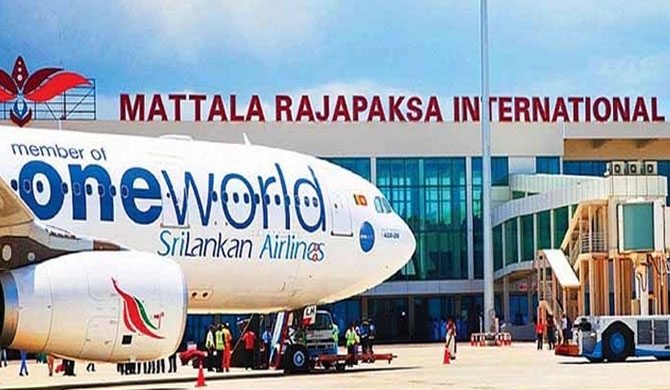
The United States (US) says it is dedicated to safeguarding security in Sri Lanka’s ports and aviation sectors.

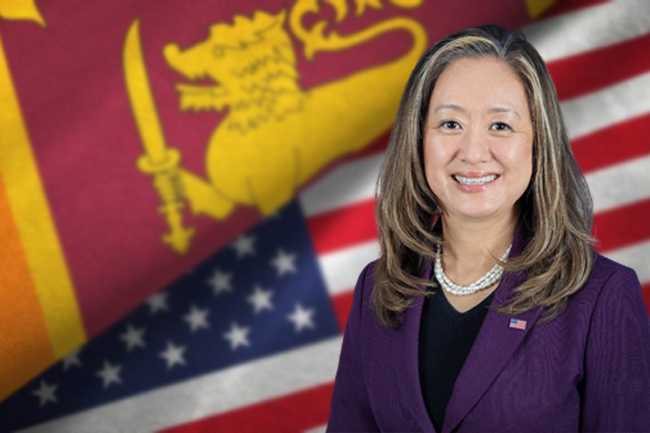
The US Ambassador to Sri Lanka, Julie Chung tweeted saying she met with the Minister of Ports, Shipping and Aviation Nimal Siripala De Silva today (Wednesday).

The Ambassador said that at the meeting they discussed Sri Lanka’s ports and aviation sector developments, which are vital elements of Sri Lanka’s trade and private sector-driven growth.

Julie Chung said the United States remains dedicated to facilitating transparent growth and safeguarding security in Sri Lanka’s ports and aviation sectors, aimed at accommodating the rising influx of maritime and air traffic.

Some Sri Lanka creditors seeking debt restructuring deal without China – Bloomberg

Some members on the committee of Sri Lanka’s official creditors are pushing to reach a deal to restructure the nation’s debt without the participation of China, Bloomberg News reported on Wednesday citing people familiar with the matter.

The members want the group of major creditors, including the US, Japan and India, to sign a memorandum of understanding with Sri Lanka around the time of the International Monetary Fund and World Bank meetings scheduled for next month in Marrakesh, Morocco, said the people, who asked not to be identified as the discussions are private. China, which held about 10% of Sri Lanka’s external debt as of the end of last year, isn’t a part of the group and is pursuing separate bilateral talks.

Before the Marrakesh gathering, key debt holders excluding China are planning on putting together the draft outline and getting Sri Lanka’s consent, the people said, adding that some discord remains within the group.

An official at the Paris Club, one of the largest debt holders, said a timeline for the agreement could not be confirmed. Representatives at the IMF’s Colombo office weren’t immediately available for response.

“All creditors are engaging positively with us,” Shehan Semasinghe, Sri Lanka’s junior finance minister, said by phone when asked about the development.

It remains unclear whether the creditors have lost patience with China or if the move is a negotiating tactic to pressure Beijing to get on board. Although Sri Lanka is a relatively small economy, its debt restructuring is seen as a test case for Chinese participation in sovereign debt overhauls.

Proceeding without China — the world’s largest sovereign creditor — would mark a setback for global efforts to get President Xi Jinping’s government to join a new international system to provide relief to indebted countries that have already dragged on for almost two years. A combination of the debt hangover from the pandemic, a rising dollar and soaring US interest rates has left a growing number of poor countries without the means to pay off what they owe and in need of international help.

How China will react to the deal remains to be seen. In the past China has quietly negotiated its own opaque restructurings with its debtors, often without providing any meaningful long-term relief.

“I would re-emphasize that China supports domestic financial institutions to negotiate a settlement agreement with Sri Lanka,” Chinese Ministry of Foreign Affairs spokesman Wang Wenbin said in Beijing on Tuesday.

Sri Lanka stands to benefit from any deal with creditors, even if China is excluded. The IMF’s first on-site review of the country’s $3 billion bailout program ends Wednesday, and an agreement on debt restructuring would give hope that the South Asian nation’s recovery from an unprecedented economic crisis will get a boost before the multilateral lender gives its conclusion later this year.

Among the creditors, Paris Club members accounted for $4.8 billion, or more than 10% of Sri Lanka’s external debt, according to IMF data as of year end. That’s slightly higher than China, which stands at $4.5 billion, while India is owed $1.8 billion.

The Paris Club is an informal group of official creditors that help coordinate repayments for struggling debtor nations, and is currently comprised of 22 members including France, Japan, the UK and the US.

Depending on how talks with official creditors progress, Sri Lanka could also make headway in its negotiations with private lenders. In July, Foreign Minister Ali Sabry said private creditors had “almost agreed” to a 30% haircut.

A successful restructuring will assist Sri Lanka in regaining a measure of investor confidence after the nation fell into default for the first time in its history last year. It would also help the island nation make its debt more sustainable as envisaged in the IMF bailout secured in March, and enable a flow of funding.

If the IMF’s review is favorable, it should pave the way toward Sri Lanka getting $330 million of disbursement from the IMF, the second installment from the bailout agreement.

Source: Bloomberg

Posted in Uncategorized

Sinopec to make SL’s largest FDI in recent times entering refinery biz

Sinopec China will make what would be Sri Lanka’s largest FDI in recent times when they enter refinery operations in Sri Lanka, said Minister of Power and Energy Kanchana Wijesekera at an event where Sinopec announced its official entry into Sri Lanka’s dynamic fuel retail market in Colombo. A felicitation event for local distributors followed.

He said that this will be announced and an agreement signed in October when President Ranil Wickremesinghe visits the People’s Republic of China. “The refinery operations will also strengthen the energy operation between the two countries, opening up another door to the energy market.”

The Minister said that the entry of foreign players to the local petroleum market has helped Sri Lanka to lower its fuel import bill and it has also led to a positive change of the landscape of local fuel business. The Minister recalled that it was ironic that it was the then Prime Minister and now President Ranil Wickremesinghe that first called to liberalize the petroleum sector inviting foreign players.

“But unfortunately after the change of government in 2004, even though Sinopec was shortlisted to be one of the companies to take part in the petroleum industry they could not take part because of the political changes and other policy changes that followed.However now this has become a reality after 20 years also when Wickremesinghe is President.”

With the entry, Sinopec committed to giving full play to its advantages, providing stable, sustained and high-quality oil products to the country, growing together with the distributors, and contributing significantly to the nation’s economic development and energy stability.

Under the agreement inked between Sinopec and the Ministry of Power and Energy of Sri Lanka, Sinopec has secured a 20-year license to franchise 150 existing filling stations throughout Sri Lanka and invest in an additional 50 filling stations. Sinopec will continue to enhance its ability to serve the whole process of local procurement, storage, distribution, and sales of oil products to empower the people of Sri Lanka for a better life.

Renowned as the world’s largest fuel refining company, boasting an annual production capacity exceeding 250 million tons.