Ex-SIS Chief Nilantha Jayawardena’s Briefing on Easter Attacks Disrupted by Opposition Protests

A planned briefing by former State Intelligence Service (SIS) Chief Senior DIG Nilantha Jayawardena for Members of Parliament regarding the Easter Sunday terror attacks was canceled due to protests by Opposition members at the parliamentary complex.

Chief Opposition Whip and Kandy District SJB MP, Lakshman Kiriella, vehemently opposed the government’s decision to have police officers, who were responsible for not taking preventive action during the Easter Sunday terror attacks, provide instructions to MPs about the ongoing investigations into the incidents.

The Chief Opposition Whip voiced his strong objection when the Speaker announced a meeting scheduled at 2.30 pm in Committee Room I of Parliament, where officials from the Ministry of Public Security, along with senior police investigators, were set to brief MPs on the progress of the investigations into the Easter Sunday attacks.

Kiriella questioned how MPs could attend a meeting led by individuals who had failed to prevent the tragic events of Easter Sunday. He stated, “The Presidential Commission of Inquiry has recommended criminal proceedings against former SIS Chief Senior DIG Nilantha Jayawardena over the Easter Sunday terror attacks. Now, he is coming here to brief us about the investigations into the same matter. What is the logic behind this?”

In response, Speaker Mahinda Yapa Abeywardena clarified that he was merely conveying an announcement.

Chief Government Whip Minister Prasanna Ranatunga chimed in, saying that the notice did not mention the police coming to provide instructions. He encouraged MPs to attend the meeting to discover the truth instead of making misleading statements without full knowledge.

Kiriella contended that the meeting was not aimed at revealing the truth but rather concealing it.

The meeting ultimately took place as scheduled, with Senior DIG Jayawardena replaced by head of the Counter Terrorism Investigation Division SSP Prasanna Alwis and some CID officials conducting the sessions, according to sources within Parliament.

Sri Lankan president calls Aukus ‘a mistake’ and rejects fears over China

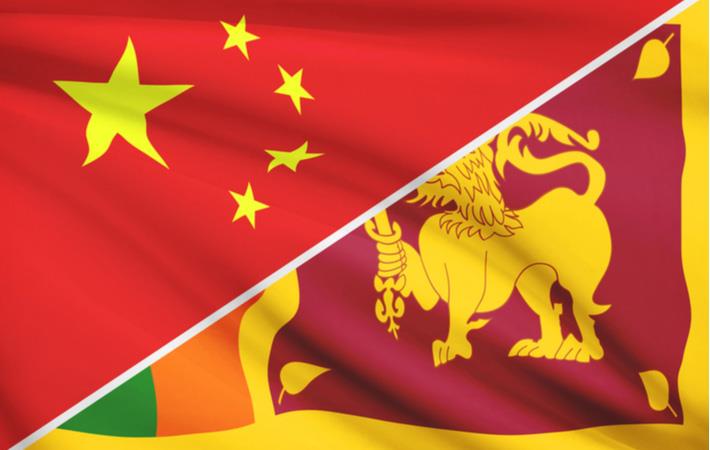
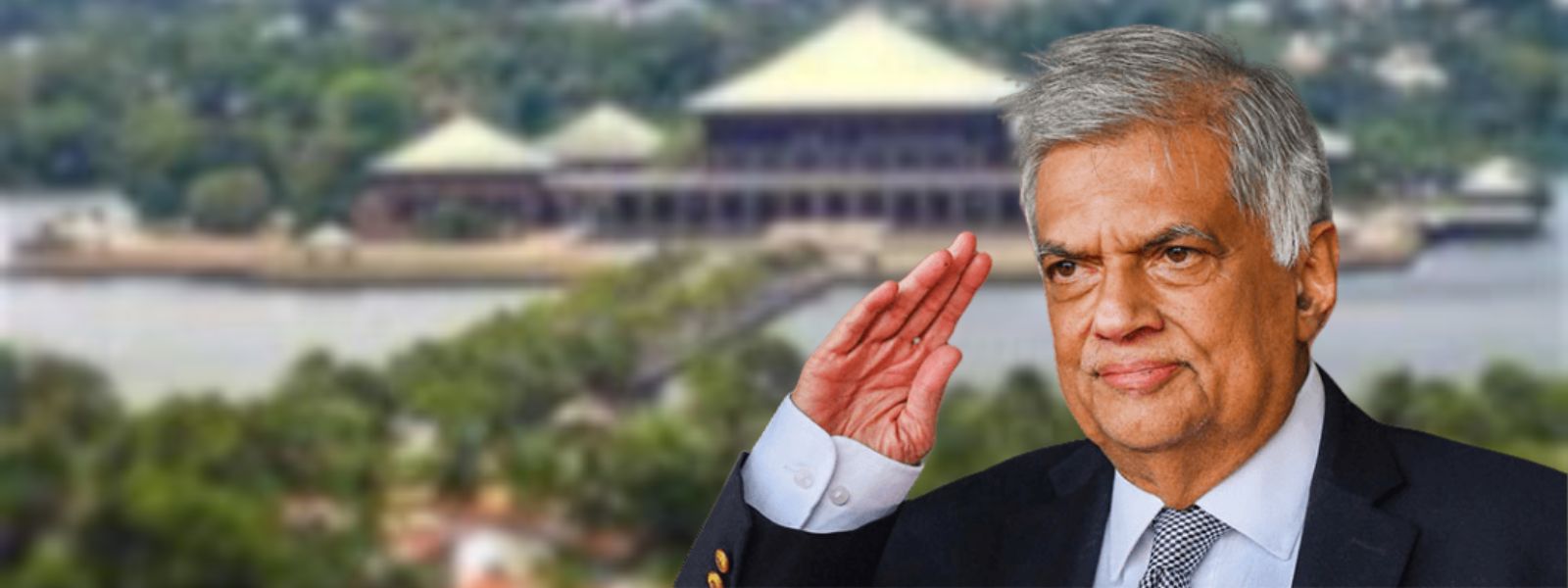
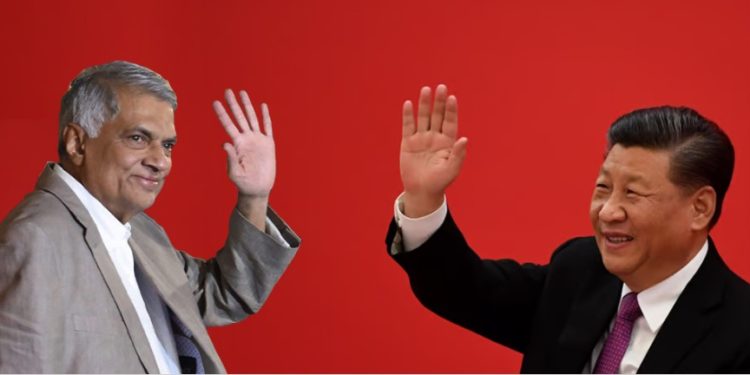
Sri Lankan President Ranil Wickremesinghe on Monday declared the Aukus security pact between Australia, Britain and the US “a mistake” while rejecting any concerns over Beijing’s perceived influence on his debt-ridden island nation.

“It is a military alliance moved against one country – China,” he said at an event hosted by the Carnegie Endowment for International Peace in New York on the sidelines of the United Nations General Assembly.

“I think it’s a strategic misstep. I think they made a mistake,” Wickremesinghe added, describing the alliance as unnecessary. “I don’t think it was needed.”

Created in September 2021, Aukus is described by the governments of its member states as a security partnership involving information and technology sharing on nuclear-powered submarines, artificial intelligence, quantum technologies and additional undersea capabilities.

Wickremesinghe laughed off the term “Indo-Pacific”, calling the recently-coined geostrategic zone an “artificial framework”.

“Nobody knows what’s Indo-Pacific,” he said. “For some people, the Indo-Pacific ends on the western boundary of India, others take it into Africa, and some end up with Western Pacific, others go to South Pacific.”

The Sri Lankan leader said the Sino-US rivalry originated in the Western Pacific but had now spread to both the Indian Ocean and the South Pacific.

“Why we are getting pulled into it? It’s difficult for us to understand,” he said, stressing that he had seen many geopolitical blocs shifting in his decades-long political career.

“The next round of rivalry is going on. And that’s taking place in Asia. It’s the question of China versus the US, on how they are going to divide their region of influence in Asia,” Wickremesinghe said.

On an expected expansion of Nato into Asia, he said “as far as the Indian Ocean is concerned, we don’t want any military activity” and that most countries in the region “will not want Nato anywhere close by”.

Sri Lanka’s Hambatota port has long been cited in discussion around China’s lending practices along with accusations of “debt-trap diplomacy” but in his address on Monday, Wickremesinghe accused the West of having a scant understanding of how the Indian Ocean region operates.

He rejected reports that Colombo was letting Beijing operate a military base in Sri Lanka. He said the Hambantota was a commercial port run by Chinese state-owned China Merchants Group, and that the security of the port lay with the Sri Lanka Navy.

He also countered recent claims made by New Delhi that Beijing was sending ships to Sri Lanka to spy on India.

“There are no spy ships in Sri Lanka. I don’t know if anyone can establish a spy ship,” Wickremesinghe said, describing them as “research vessels” that had been visiting for the past 10 years under an agreement between the Chinese Academy of Sciences and Sri Lanka’s national aquatic research agency.
(South China Morning Post)

Posted in Uncategorized

Chinese spy vessel enters Malacca Strait en route to Colombo

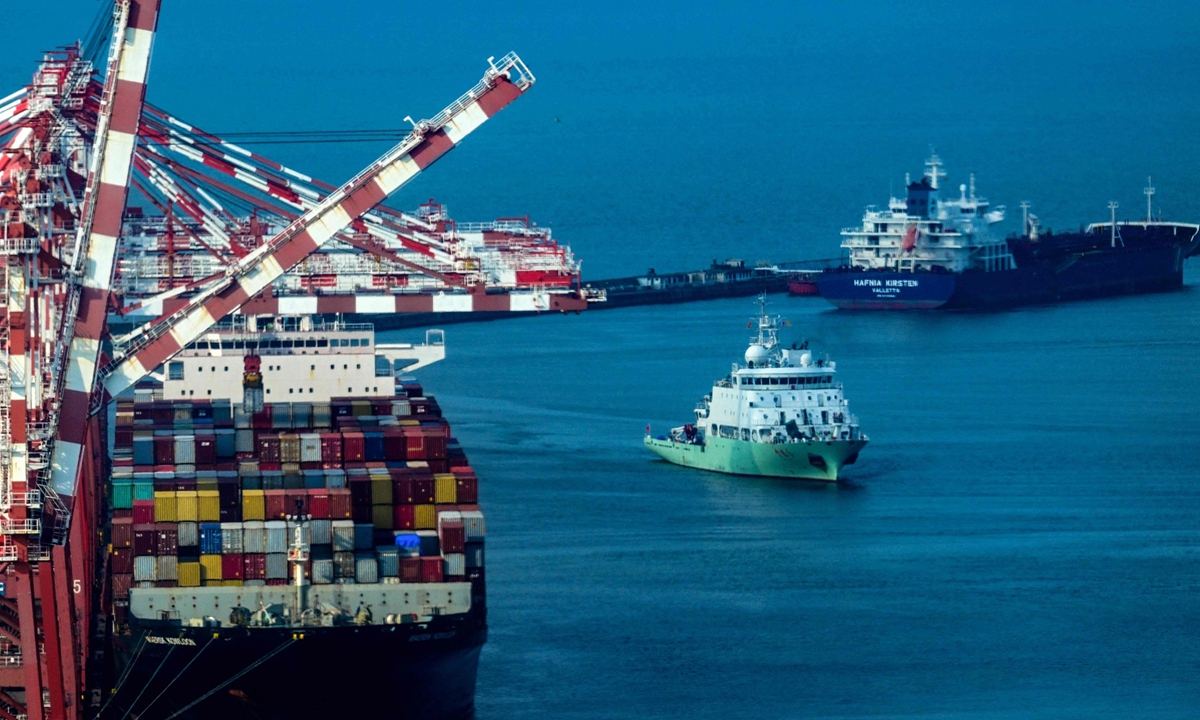
The Chinese spy ship ‘Shi Yan 6’ has entered the Malacca strait, bound for Colombo, amid confusion over whether Sri Lanka has granted access for the spy vessel to dock at Colombo.

According to reports last month, the Sri Lankan Defence Ministry has granted Shi Yan 6 access to dock at Colombo port. However, the Sri Lankan Foreign Ministry spokesperson stated that the request is still under consideration, and approval has not been granted.

“The ministry has not granted permission to the Shi Yan 6 as of last evening,” reiterated Sri Lankan Foreign Ministry Spokesperson Priyanga Wickramasinghe.

Wickramasinghe further added that the dates and territories for the survey are yet to be finalised.

This development comes after Indian Defence Minister Rajnath Singh decided to skip his visit to Sri Lanka, which was scheduled for last month, following reports of the vessel’s approval to dock in Colombo.

The spy ship is scheduled to conduct research activities in collaboration with Sri Lanka’s National Aquatic Resources Research and Development Agency.

According to reports, the Shi Yan 6 is on an 80-day exploration mission, during which it will conduct joint surveys of the waters surrounding the islands, in cooperation with the Sri Lankan Navy.

Just a month ago, another Chinese People’s Liberation Army navy warship, Hai Yang 24 Hao, docked at Colombo for a two-day visit.

It is worth noting that India expressed its concern last year when another Chinese spy vessel, Yuan Wang 5, made a port call in Hambantota, Sri Lanka.

Sri Lanka, facing financial challenges, regards both India and China as pivotal partners in its efforts to restructure external debt. China is one of the primary lenders to Sri Lanka, with the country owing $7.1 billion to bilateral creditors, with a significant portion, $3 billion, attributed to China.

Negotiations for restructuring Sri Lanka’s external and domestic debt must be concluded by the end of September, conforming with the International Monetary Fund’s review of the $2.9 billion bailout granted in March of this year.

In 2022, the island nation faced an unprecedented financial crisis, the most severe since gaining independence from Britain in 1948, primarily stemming from a critical shortage of foreign exchange reserves.

Posted in Uncategorized

Sri Lanka seeks technical assistance from U.S to fight corruption

Sri Lanka has sought technical assistance and training from the U.S in the fight against corruption.

The United States and Sri Lanka marked the fourteenth Trade and Investment Framework Agreement (TIFA) Council Meeting in Colombo today (18), solidifying their commitment to enhancing trade and investment relations.

The technical level meeting, co-chaired by K.J. Weerasinghe of the Government of Sri Lanka and Brendan Lynch, Acting Assistant United States Trade Representative for South and Central Asia, witnessed productive discussions on a wide range of crucial issues.

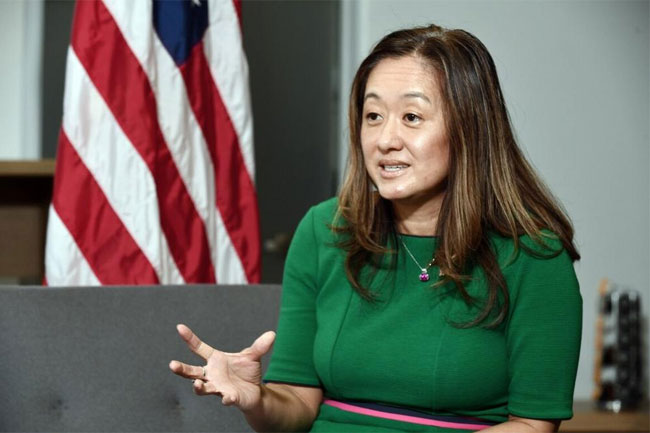
Julie Chung, U.S. Ambassador to Sri Lanka and Chandanie Wijayawardhana, Acting Secretary to the President, set the tone with their opening remarks, acknowledging the 75th anniversary of bilateral relations between the two nations.

During the TIFA Council meeting, both delegations addressed policies impacting the investment climate, recent labour reforms, intellectual property protection and enforcement, customs and trade facilitation, technical barriers to trade and market access for apparel, gem and jewellery and agricultural products.

The discussions also extended to collaboration and technical assistance in areas such as the digital economy, gem and jewellery industry, floriculture, boat building sectors and the Coconut Research Institute’s technology transfer and research commercialization.

Transparency and efficiency in approving foreign direct investment (FDI) were emphasized as key drivers of domestic economic growth and foreign investment attraction.

The United States underscored the importance of adopting robust anti-corruption measures and Sri Lanka provided updates on its proposed anticorruption legislation, seeking technical assistance and training from the U.S. Government.

The Biden-Harris Administration’s commitment to workers’ rights was highlighted and Sri Lanka outlined its ongoing labour law reform efforts. The United States stressed the importance of consulting relevant stakeholders and ensuring public review and comment in the process. Sri Lanka detailed its procedures for labour law reforms, with the United States expressing readiness to support these efforts.

Both nations discussed the reduction of agricultural trade barriers to enhance food security in Sri Lanka. The United States advocated for greater market access for U.S. exports of agricultural products, including animal feed. Biotechnology’s role in sustainable agriculture and food security was also explored.

Intellectual property (IP) protection and enforcement were affirmed as crucial for bilateral trade and innovation. Sri Lanka shared updates on its IP legislative reforms and the United States offered capacity building support.

The meeting concluded with both governments committing to making sustained progress on trade issues, looking ahead to the next TIFA Council Meeting scheduled for 2024. The fourteenth TIFA Council Meeting served as a testament to the United States and Sri Lanka’s dedication to strengthening their economic ties and fostering mutual prosperity.

Posted in Uncategorized

SJB to go to court against new Anti-Terrorism Bill

The Samagi Jana Balawegaya (SJB) has vowed to go to court over the new Anti-Terrorism Bill.

SJB member Ashok Abeysinghe stressed that no matter how the relevant Bill is amended, the main opposition would still oppose it.

He further added that although a gazette notification has been issued pertaining to the Bill, it is yet to be presented before the parliament following its most recent amendments.

“Once it is presented before parliament, there is a period of 14 days for us to go before the Supreme Court [to challenge the Bill]”, he said, emphasising that, “Even if the Bill is amended, we will continue to oppose it. We plan to go to courts.”

Further stressing his point, the SJB MP recalled that when the Anti-Terrorism Bill was initially presented to the parliament, several parties went to court to challenge the legislation, deeming it unsuitable, while many other international organisations, too, raised concerns about it.

In September last year, the Cabinet of Ministers approved the proposed Anti-Terrorism Bill prepared by the legal draftsman to replace the Prevention of Terrorism Act (PTA).

However, the Justice Ministry later revised the original draft bill published in the government gazette and re-drafted it, after taking into account all the opinions and suggestions it received from various interested parties both locally and internationally.

In September 2023, the Cabinet approval was received to publish the Bill which was revised in accordance with the suggestions and opinions received by different parties in the government gazette, and to table the bill in parliament for passing.

Posted in Uncategorized

Six arrested over Tamil MP’s assault

Police arrested six persons yesterday on suspicion of being involved in the assault on Tamil National People’s Front MP Selvarajah Kajendren in Sardhapura, Trincomalee on Sunday while he was taking part in a procession to commemorate the death anniversary of LTTE member Rasaiah Parthipan also known as Thileepan.

Police Spokesman SSP Nihal Thalduwa said the China Bay Police arrested four males and two females after the Thambalagamuwa Police received a complaint from Kajendran. The suspects were presented before the courts and were remanded until 21 September.

Commenting on the procession, SSP Thalduwa said according to Gazettes issued proscribing the LTTE and the Prevention of Terrorism Act, memorials commemorating members of terror outfits are not allowed.

Meanwhile addressing a press conference yesterday, Pivithuru Hela Urumaya (PHU) leader Udaya Gammanpila questioned who granted MP Kajendran permission to travel from the East to the North in a procession carrying an image of Thileepan. He said any official who has granted permission to such a procession has violated the Constitution and worked towards promoting separatism.

He called the procession a conspiracy hatched to incite the Sinhalese in the East who were victimised by the LTTE and give rise to communal tensions. He urged the Government to arrest MP Kajendran under the International Covenant on Civil and Political Rights (ICCPR) Act.

Posted in Uncategorized

RW Govt. under IMF microscope while India sends out strong message to SL at UNHRC

The Ranil Wickremesinghe Government is currently facing the first review of the International Monetary Fund (IMF) financial aid package for Sri Lanka while accelerating the country’s debt restructuring programme.

The IMF commenced the review of Sri Lanka’s Extended Fund Facility (EFF) on Thursday (14) through a meeting with officials from the Presidential Secretariat, with the President out of the country attending the G77 confab in Havana, Cuba and then travelling onwards to the US to attend the UN General Assembly (UNGA) in New York. The IMF review is expected to take place during a two-week period.

The IMF team is led by Senior Mission Chief Peter Breuer and Deputy Mission Chief Katya Svirydzenka.

Meanwhile, in the latest progress update on Sri Lanka’s performance in relation to the IMF programme, Verité Research has stated that Sri Lanka verifiably met 38 of the 57 trackable commitments that were due for completion by end-August in its 17th programme with the IMF.

The end-August update on the programme by ‘IMF Tracker,’ an online platform by Verité Research, has shown that the progress on 11 commitments remains “unknown,” while eight have been classified as “not met”.

As for the debt restructuring programme, Acting Finance Minister Ranjith Siyambalapitiya said last week that the Government was hopeful of finalising the Domestic Debt Optimisation (DDO) programme in the coming week, with headway being made in relation to several key issues.

Meanwhile, the restructuring of bilateral debt continues to show signs of reaching finality around end-October despite President Wickremesinghe’s hopes of having a plan in place before his mid-October visit to China.

It is interesting that amidst the economic battles, the Sri Lankan Government continues to face geopolitical challenges – this time with another Chinese research vessel, the Shi Yan 6, attempting to visit Sri Lanka next month.

It is learnt that the Wickremesinghe Government remains resolute on its stance that the Chinese vessel cannot be permitted to dock in Sri Lanka next month and that the request could be considered for a date in November. However, media reports last week stated that the relevant Chinese vessel had left China and was on its way to the South Asian region.

Nevertheless, the Sri Lankan Government maintains that permission is yet to be granted along with the date on which the Chinese vessel could call in Sri Lanka.

The Sri Lankan Government is in an unenviable position in terms of balancing neighbouring India as well as China, since both are key bilateral creditors of Sri Lanka.

G20 support

Meanwhile, G20 world leaders have expressed commitment to redouble efforts to resolve ongoing debt distress cases like Ghana and Sri Lanka, the US White House has said in a statement.

The White House statement has noted that US President Joe Biden had called on the G20, which met in India last weekend, as leaders in the global economy to provide meaningful debt relief so that low- and middle-income countries can regain their footing as they seek to recover from compounding economic shocks of the last few years and invest in critical development needs.

“Leaders in New Delhi committed to redouble efforts to resolve ongoing debt distress cases – like Ghana and Sri Lanka. President Biden made it clear that the United States expects meaningful progress by the World Bank and IMF Annual Meetings in October,” the White House statement has noted.

The White House has added that the G20 summit in Delhi is a major step forward in providing solutions to the most pressing issues.

Meeting Banerjee

President Wickremesinghe left Sri Lanka on Wednesday (13) morning on an official tour of Cuba and the US, with a transit in Dubai.

During his transit in Dubai, Wickremesinghe had met West Bengal Chief Minister Mamata Banerjee in the lounge. The President had engaged in a friendly chat with the Indian Chief Minister and had asked if she was going to lead the opposition alliance in India.

Wickremesinghe had told Banerjee that he was on his way to Cuba and Banerjee, who was also in transit, had later tweeted that she was pleased to meet President Wickremesinghe.

A video clip of the meeting between Wickremesinghe and Banarjee shows the Sri Lankan President asking if it was okay for him to ask her (Banarjee) a question and when she agrees, he asks if she is going to lead the opposition alliance in India.

The Chief Minister is seen responding saying it will depend on the people.

Wickremesinghe, after sharing a light-hearted moment with the Chief Minister, is seen inviting her to visit Sri Lanka.

SJBer backs off

Meanwhile, main Opposition Samagi Jana Balawegaya (SJB) Parliamentarian from the Monaragala District, W.H.M. Dharmasena, who was due to accompany the President in his delegation to the UNGA, had backed out of the trip to New York at the last minute.

It is learnt that when the final arrangements were being made for the presidential entourage’s visit to the US, the President’s staff had been informed that the SJB MP had backed out of the trip, saying that he did not want to upset his Party Leader (Opposition and SJB Leader Sajith Premadasa).

While the President left the country first to Cuba on Wednesday (13) morning, the President’s delegation to New York had left the country yesterday (16) morning.

Core Group concerns

Meanwhile, the ongoing 54th session of the UN Human Rights Council (UNHRC) in Geneva saw the international community once again expressing concerns over Sri Lanka and the slow progress being made in honouring commitments to the council.

The Core Group on Sri Lanka – Canada, North Macedonia, Malawi, Montenegro, the UK, and the US – has called for effective governance reforms and also noted the arbitrary use of laws to suppress dissent.

The Core Group has said that Sri Lanka has made important recent commitments on land issues and devolution of political authority.

“We encourage Sri Lanka to turn these commitments into meaningful action and deliver long-awaited results. Sri Lanka still has a long way to go to fulfil commitments to justice, accountability, and reconciliation,” the Core Group has told the UNHRC during its 54th session.

The Core Group has also noted preparations for a truth and reconciliation commission and has emphasised on the importance of an inclusive participatory process in the establishment of any mechanisms to advance transitional justice to gain the confidence of all affected communities, in line with international best practices.

The Core Group has further called on Sri Lanka to work with the High Commissioner and his office and remains ready to support Sri Lanka in addressing HRC Resolution 51/1.

India’s strong message

India, however, conveyed a strong message to Sri Lanka at the UNHRC last week, with India’s Permanent Representative to the United Nations and Other International Organisations in Geneva Ambassador Indra Mani Pandey stating that Sri Lanka has been slow in implementing its commitment.

Pandey has noted during the Interactive Dialogue on the Office of the United Nations High Commissioner for Human Rights (OHCHR) report on ‘Promoting reconciliation, accountability and human rights in Sri Lanka’ at the UNHRC that India has taken note of reaffirmation by the Government of Sri Lanka on the implementation of its commitments.

“However, progress on the same is inadequate and we urge the Government of Sri Lanka to work meaningfully towards early implementation of its commitments to ensure that the fundamental freedoms and human rights of all its citizens are fully protected,” he has said.

Pandey has urged the Sri Lankan Government to “work meaningfully” towards early implementation of its commitments to ensure fundamental freedoms and human rights of all its citizens, including Tamils, are fully protected.

“As a close neighbour and friend of Sri Lanka, India has consistently supported Sri Lanka’s efforts towards the relief, rehabilitation, resettlement, and reconstruction process in Sri Lanka since 2009,” he has noted.

India has always been guided by two fundamental principles of support to the aspirations of Tamils for equality, justice, dignity, and peace, as well as unity, territorial integrity, and sovereignty of Sri Lanka, Pandey has further stated.

Pandey has further reiterated India’s desire to see the full implementation of the 13th Amendment to the Constitution.

“We hope that the Government of Sri Lanka will fulfil the aspirations of Tamils for equality, justice and peace and its commitment to implement the 13th Amendment and conduct Provincial Council Elections to ensure a life of respect and dignity for Tamils in Sri Lanka,” he has added.

Govt.’s rejection

However, responding to the OHCHR update, the Sri Lankan Government last week said it has consistently rejected Resolution 46/1 and 51/1 that led to the setting up of the ‘Accountability Project’.

“We also reject the written update, its conclusions and recommendations,” the Government has said.

“We reiterate that it goes beyond the mandate that member states conferred on the council by UNGA Resolution 60/251,” the statement read.

“These resolutions are intrusive and polarising. It is upheld only by a handful of countries for reasons unrelated to human rights, and based on their vote bank domestic politics. Many countries have already raised serious concerns on the budgetary implications of this resolution given its dubious mandate. Sri Lanka has repeatedly pointed out that this is an unproductive and unhelpful drain on the resources of the council and its members. For all the reasons stated above, Sri Lanka will not cooperate with it,” it has noted.

However, the Government has also said Sri Lanka will continue to engage constructively with other mechanisms of the council that have been productive and beneficial to its people, such as the Universal Periodic Review process.

Budget 2024

Meanwhile, on the local front, the Wickremesinghe Government is making arrangements to present its 2024 Budget and is expecting to introduce more proposals to widen the tax base to increase State revenue through next year’s Budget.

State Minister Ranjith Siyambalapitiya has said that the Government intends to implement 65% of the strategies proposed by the committee appointed to recommend revenue-generating strategies by the end of 2023.

He has noted that 25% of the strategies presented to the President to widen the tax base and increase State revenue will be implemented through circulars set to be issued in October, while 40% will be implemented through the upcoming Budget 2024.

According to Siyambalapitiya, the remaining measures mentioned in the strategy report, which was presented to President Wickremesinghe in July, will be implemented as the overall economy starts going forward, as those require amending specific acts related to other Cabinet ministries.

“We don’t expect, under any circumstance, to raise the current tax rates further,” he has added.

Reshuffle issues

Meanwhile, the Wickremesinghe Government is likely to witness some changes prior to the 2024 Budget presentation due in November.

Talk of reshuffling State Ministers by Wickremesinghe upon his return from attending the UNGA has irked a group of State Ministers. Their concern is that reshuffling State Ministers alone will not resolve the issues in the Government, especially with regard to the clashes among Cabinet and State Ministers, without addressing the root causes.

These State Ministers are of the opinion that the failure to assign specific duties to them, failure of senior ministry officials to get State Ministers involved in ministry activities, and corruption among some ministers as well as ministry officials are the issues that need to be addressed, rather than carrying out a reshuffle of State Ministers.

However, members of the Government also believe that the President will proceed with a Cabinet reshuffle, with several ministerial portfolios also facing the likelihood of being reshuffled.

While President Wickremesinghe has the provision to make eight new ministerial appointments in line with the Constitution, reports from some Government sources note that only four new appointments are likely to be made during the upcoming reshuffle.

Meanwhile, the ruling Sri Lanka Podujana Peramuna (SLPP), which had submitted a list of names of its MPs to be appointed to the Cabinet months ago, maintains that there is no truth to such reports as the ruling party has not been informed of any preparations for a Cabinet reshuffle.

Party seniors claim that if there was a move for a Cabinet reshuffle, President Wickremesinghe would have discussed it with the SLPP, which is the ruling party, but there has been no such discussion thus far.

SLPP General Secretary Sagara Kariyawasam noted that the SLPP had sought more portfolios for SLPPers when the President had assumed office, but this had not happened thus far. “However, our request (for more portfolios) is still valid,” he has added.

State Ministers’ woes

Meanwhile, the woes of the disgruntled State Ministers continue, with some of them now having to clash with the secretaries of their respective ministries.

A group of around 35 State Ministers, including Suren Raghavan, D.B. Herath, Chamara Sampath Dasanayake, Arundika Fernando, Shantha Bandara, and Lasantha Alagiyawanna had recently met the President and Prime Minister, where they had complained they were unable to work with the ministry secretaries as well. Some of them had also criticised their subject ministers.

RW meets State Ministers

President Wickremesinghe has also hinted at the gazetting of specific subjects for State Ministers in the coming days.

The State Ministers had first met Prime Minister Dinesh Gunawardena and informed him that they were not willing to work in the current situation as they were being totally neglected by the Cabinet Ministers and have not been entrusted with any authority or responsibility.

The Premier had then taken the State Ministers to meet Wickremesinghe on 4 September, where they had a special discussion with the President.

“When the ministers and State Ministers were appointed by former President Gotabaya Rajapaksa, specific responsibilities were given to the State Ministers and the relevant gazette notifications were published. They had some direct duties. However, what President Wickremesinghe did was to appoint Cabinet Ministers and State Ministers and direct the Cabinet Ministers to gazette what they felt was better for the State Ministers under them. Only Urban Development and Housing Minister Prasanna Ranatunga and Plantation Industries and Industries Minister Dr. Ramesh Pathirana have done it though,” a State Minister who had attended the meeting with the President noted.

The President, at this point, had observed that he would look into the matter and had also informed the State Ministers that their issues would be resolved through a committee comprising the Secretaries to the President and Prime Minister.

RW-Basil talks

Prior to President Wickremesinghe’s departure to Cuba on Tuesday (12), he had a key meeting with SLPP National Organiser Basil Rajapaksa.

While Wickremesinghe and Basil had met on several occasions since the former assumed office, most of the discussions were held on a request made by Basil. However, this time around, it was the President who had invited Basil for a meeting.

President’s Chief of Staff Sagala Ratnayaka had also been present at the meeting, which had lasted for about one hour.

When Basil last met Wickremesinghe in August, the discussion was focused on new appointments to the Cabinet of Ministers, with a focus on SLPPers. Although the issue of elections was also discussed at the meeting, there was no finality on which elections would be held first.

However, it is the issue of appointing more SLPPers to the Cabinet that had caused friction between Wickremesinghe and the SLPP.

It is learnt that the President had indicated his desire to carry out a reshuffle of State Ministers upon his return to the county from the US during this meeting with Basil. However, it is also learnt that Wickremesinghe had refrained from giving out the details of the planned reshuffle and whether new portfolios would be assigned to the SLPPers included in Basil’s list of names of SLPP MPs deserving of Cabinet portfolios.

However, SLPP General Secretary Kariyawasam, when questioned about the meeting between Wickremesinghe and Basil, said that such meetings were very common and frequent since the SLPP was the main coalition partner of the Wickremesinghe Government.

Talk of SLPP candidate

Meanwhile, after hearing about the meeting between the President and Basil, many SLPP ministers and State Ministers had made their way to the Party Headquarters to inquire about the discussion and the matters discussed.

During the meetings between Basil and these senior SLPPers, some SLPPers had asked Basil if the next Presidential Election had been discussed during Wickremesinghe’s meeting and whether the SLPP would back Wickremesinghe during the next Presidential Election.

However, Basil had posed an interesting question to the SLPPers. He had asked what the SLPP members as well as people in their electorates had said around six months ago about the President and the Government. The SLPP ministers had said that the people had said at the time that President Wickremesinghe and his Government should win at the next elections.

Basil had then asked what the same people were saying at present and the SLPP ministers had said that the people were disgruntled with the President and the Government. Afterwards, Basil had observed that the SLPP would have to field its own candidate at the next Presidential Election.

It is this reason that resulted in Basil loyalist, SLPP MP Ranjith Bandara, making an open statement that the party had decided on fielding its own candidate. Bandara reiterated that the candidate would be named at the appropriate time.

EC says no to SLPP

The SLPP, which is on a reforms path, is continuing to push for either the holding of Local Government Elections, nullification of the nominations handed for the polls, or suspension of the circulars that restrict the candidates from engaging in official duties.

However, the Election Commission (EC) has informed that it cannot fulfil a request made by the ruling SLPP to suspend the relevant circulars, which have allegedly caused various difficulties to the candidates who submitted their nominations for the Local Government Elections.

SLPP General Secretary Kariyawasam has told the media that they had been instructed by President Wickremesinghe to write to the Election Commission and convey their concerns regarding the difficulties faced by the Local Government Elections candidates. “We wrote to the Election Commission seeking the suspension of the relevant circulars. They have, however, informed us that there is no possibility to do so,” he has said.

He has further said that they had, on several occasions, informed the President of the difficulties faced by those who had submitted nominations for the Local Government Elections, due to the related election laws and circulars.

“More than 80,000 people, including Government servants, have submitted nominations. They have become helpless now. The Government servants have been transferred to distant areas and their salaries and allowances have been curtailed. There should be some relief for those who came forward in the name of democracy.”

Kariyawasam has also noted that the President must declare a stance on the matter before the presentation of the Budget 2024 later this year.

“We will be able to see if financial allocations will be made in the Budget 2024 to hold the Local Government Elections, but we cannot let these candidates continue to suffer until then. There should be some immediate relief for them. If it is not done, everyone will be reluctant to contest elections in the future. That is a serious threat to democracy.”

Sirisena’s call

Meanwhile, the controversial video of the UK-based Channel 4 on the Easter Sunday attacks continue to dominate the local political scene.

President Wickremesinghe last week appointed a three-member committee headed by retired Supreme Court Justice S.I. Imam to investigate Channel 4 allegations about the Easter attacks. Retired Air Force Commander Jayalath Weerakkody and President’s Counsel Harsha A.J. Soza were appointed as members of the committee.

However, it is no secret that the public has lost any faith in these committees ensuring justice, given the many reports and recommendations related to the 2019 Easter Sunday attacks probe at the hands of the President.

It is in such a backdrop that Sri Lanka Freedom Party (SLFP) Leader, former President Maithripala Sirisena, who is facing litigation over his failure to avoid the attacks, has called for an international probe into the 2019 Easter Sunday attacks. He has made these calls in light of the revelations made by Channel 4.

Sirisena told the media on Wednesday (13) that although several allegations had been made against him in relation to the terror attacks over the last four years, the British television channel’s documentary had shed a different light on those who should be held responsible for the attacks.

“We are also raising our voices and calling for an international probe into the attacks, as proposed by the United Nations. I have been judged with regard to this matter for four years and court orders have also been given. But when you look at the Channel 4 documentary, it is clear that what actually took place is something completely different to what was perceived,” Sirisena has claimed.

Meanwhile, SLPP Parliamentarian Namal Rajapaksa has said that foreign government agencies which deal with terrorism should conduct a fresh investigation into the Easter Sunday attacks.

“Organisations that deal with terrorism from the UK, India, and the US should conduct a fresh probe into the Easter Sunday attacks instead of various TV channels or Non-Government Organisations (NGOs),” Namal has said, noting that the SLPP would support such a move.

He has added that television channels and NGOs do not have the capacity to investigate terror organisations.

Govt. to clarify

Meanwhile, the Government is to clear doubts that have arisen with regard to the appointment of a committee to look into allegations made by Channel 4 in its recent documentary on the 2019 Easter Sunday attacks and the Ministry of Defence’s denial of such during the adjournment debate on the terror attack and national security scheduled for Thursday (21) and Friday (22).

Following the announcement that President and Defence Minister Ranil Wickremesinghe would appoint a committee headed by a retired Supreme Court Judge to investigate the allegations made by Channel 4, the Catholic Church has questioned the basis of the appointment of such a committee when the Defence Ministry, headed by Wickremesinghe, had already denied the exposé made by Channel 4, deeming such ridiculous.

Top-level sources within the Defence Ministry have stated that the Government will respond to all such concerns during the debate to be held on the Channel 4 claims on Thursday and Friday.

SLFP’s new appointment

Meanwhile, the ongoing clash within the SLFP took a new turn with SLFP Parliamentarian Sarathi Dushmantha Mithrapala being appointed as the Acting General Secretary of the party.

The appointment was made by the party’s Central Committee at a meeting on Monday (11).

SLFP Leader Sirisena had suspended the party membership of the party’s General Secretary Dayasiri Jayasekara.

Mithrapala was previously considered a Jayasekara loyalist and was even among the signatories to a letter initiated by Jayasekara, where Sirisena was accused of destroying the party’s identity.

Supporting Dayasiri

However, Jayasekara continues to maintain his stance as an SLFPer and claimed that ‘the father’ (Sirisena) was being misled and was now having a misunderstanding with the son (Jayasekara)’ when he visited his constituency recently.

Meanwhile, members of the Freedom People’s Council (FPC) have signed a letter to SLFP Leader Sirisena in support of Jayasekara.

The decision to send the letter to Sirisena was reached at an Executive Committee meeting of the FPC that was recently held at the Waters Edge hotel in Battaramulla. Jayasekara had also been invited for the meeting.

Seeing Jayasekara at the FPC meeting, it was speculated that he had joined the group of SLPP dissidents. However, Jayasekara reiterated that he would not leave the SLFP.

The FPC meeting was convened by SLFP member Thilanga Sumathipala and was also attended by MPs Prof. G.L. Peiris, Wimal Weerawansa, Udaya Gammanpila, Prof. Charitha Herath, Weerasumana Weerasinghe, and Ven. Athuraliye Rathana Thera.

Posted in Uncategorized

Sri Lanka: Abuses Undercut Proposed ‘Truth Commission’ -HRW

(Geneva) – The Sri Lankan government’s ongoing abuses are undermining the purported goals of its newly proposed truth and reconciliation commission, Human Rights Watch said in a report published today. Victims of past violations, their families, and human rights defenders have rejected the government’s initiative because the government has not consulted them, ignores evidence gathered by past commissions, and it exposes them to security force abuses and retraumatization if they participate.

The 39-page report, “‘If We Raise Our Voice They Arrest Us’: Sri Lanka’s Proposed Truth and Reconciliation Commission,” documents abusive security force surveillance and intimidation of activists and campaigners from minority Tamil families of those who “disappeared” during Sri Lanka’s civil war. The authorities are using draconian counterterrorism laws to silence dissenting voices, including those calling for truth and accountability, while government-backed land grabs target Tamil and Muslim communities and their places of worship.

“Sri Lanka profoundly needs truth and accountability, but a credible process requires the support of victims’ families and an end to government abuses against them and their communities,” said Meenakshi Ganguly, deputy Asia director at Human Rights Watch. “As the government’s own public statements suggest, this latest commission seems to be aimed at deflecting international pressure over continuing impunity, rather than revealing the fate of the disappeared or bringing those responsible to justice.”

The report is based on over 80 interviews in Sri Lanka in June 2023, with relatives of victims of enforced disappearance, other victims of abuses, human rights defenders, activists, and journalists in Sri Lanka’s predominantly Tamil north and east.

The government has not yet published details about the new commission, known as the National Unity and Reconciliation Commission. However, officials have sought the support of foreign governments, including South Africa, Switzerland, and Japan, as well as United Nations agencies. President Ranil Wickremesinghe’s office hopes the initiative will convince governments that there is no need for further scrutiny by the UN Human Rights Council in Geneva, which has established an expert team to collect evidence of international crimes committed in Sri Lanka for use in future prosecutions.

The government’s targeting of those campaigning for justice undermines the credibility of the latest initiative, Human Rights Watch said. “Since my husband was abducted, I lost my freedom to do routine activities,” said a Tamil woman whose husband was forcibly disappeared in 2000. “Even if I go to the market or temple, they [security officers] ask, ‘Where are you going?’”

Thousands of people “disappeared” in state custody during a left-wing insurgency in the late 1980s and a 26-year civil war between the government and successionist Liberation Tigers of Tamil Eelam, which ended in 2009. Government forces and rebel groups committed widespread atrocities including attacks on civilians, extrajudicial executions, torture, and the use of child soldiers.

Successive governments in Sri Lanka have appointed commissions that collected extensive testimony from victims and witnesses but none led to genuine accountability. Instead, the authorities blocked the few criminal investigations into grave abuses that had made some progress in identifying those responsible and initiating prosecutions.

Sri Lankan civil society and victims’ groups have issued several joint statements making it clear that while a process to deliver truth and justice is urgently needed, the current initiative lacks credibility and risks further harm to victims and their families. International law obligates governments to prosecute those responsible for war crimes and other serious international crimes by all sides. Failing to do so fuels further rights violations and undermines prospects for a durable peace, Human Rights Watch said.

The UN high commissioner for human rights, Volker Türk, said in a report on Sri Lanka to the Human Rights Council dated September 6, that for any transitional justice process to succeed, “[t]ruth-seeking alone will not suffice. It must also be accompanied by a clear commitment to accountability and the political will to implement far-reaching change.”

The government should make progress toward achieving credible justice by genuinely engaging with victims and affected communities. It should build on the evidence collected and recommendations made by past commissions. It should support a fair, credible investigation and prosecution of international crimes; immediately end ongoing abuses against past victims, their families, and human rights defenders and activists; and order state agencies to halt “land grabs” targeting minority communities.

Foreign governments, including South Africa, Switzerland, and Japan, should not finance or otherwise endorse a truth and reconciliation commission that victims reject and puts them at risk, Human Rights Watch said. International partners, including the European Union, should continue to press the government to meet its commitments to end violations committed using counterterrorism laws.

“President Wickremesinghe promotes ‘reconciliation’ while his government threatens the victims of past abuses and their families and minority communities,” Ganguly said. “Instead of creating yet another commission to give the appearance of progress, the government should take steps to gain credibility for a genuine truth and justice process that Sri Lanka desperately needs.”

Social media banned for Northern Province health workers

The Provincial Department of Health Services, Northern Province has implemented a ban on the use of social media for health workers including doctors during duty hours.

Speaking to Daily Mirror, Provincial Director of Health Services Northern Province, Dr T. Sathyamoorthy said, “The decision comes after numerous complaints were received, alleging that some health workers were using their mobile phones to browse social media platforms instead of attending to patients seeking treatment,”

However, Dr.Sathyamoorthy stated that the ban specifically applies to social media usage during duty hours and does not restrict the use of mobile phones for legitimate work-related purposes.

“Health workers are still permitted to use their mobile devices for communication, accessing medical resources, and other essential tasks,” he highlighted.

The official further clarified that the ban was not intended to infringe upon the personal lives of health workers, but rather to address the issue of negligence towards patients. It was emphasized that there are no restrictions on the use of mobile phones during non-duty hours, allowing health workers to engage with social media platforms and other personal activities at their leisure.

Channel 4 and aftermath: Steering a deeply-divided nation

The Channel 4 documentary rocked the country on 5 September. The Rajapaksas were pushed back to the corner, but the camp managed the affair, reading the local audience well.

The Channel 4 team used Rupert Murdoch’s The Times of UK to build credibility for the story. A senior foreign correspondent, Catherine Philp, broke the news on 3 September at 00:01 UK time as a precursor to the Channel 4 release.

The initial teaser was a minute clip with Maulana, the whistleblower. However, Channel 4 released the 5:15-minute clip with Cardinal Malcolm Ranjith, adding credibility to the story.

The learned Cardinal is probably the most politically savvy religious leader in post-independence Sri Lanka. He understands the political narrative well and is not afraid to speak up differently based on the circumstances.

These Machiavellian tactics could cater well for some, but others could see through some of the statements, especially post-21 April 2019.

On digital platforms, the Rajapaksas were roasted, and within 10 hours on 5 September, three million views were recorded on identified Facebook pages, Twitter handles, and YouTube channels.

We monitored approximately 17,000 unprompted responses, and 90% of the reactions sought justice and were against the Rajapaksas. The regular Rajapaksa fans did not step up to defend the family.

While the political landscape in the country is highly unsettled, it is also deeply divided. Almost all conventional polling data suggests no party starts with over 25% of the votes.

Deeply divided

Throughout my lifetime, Sri Lanka was never united. We are deeply divided by religion, caste, creed, and local geography. Politics divides us further.

In the past 20 years, we have had golden opportunities to rise as a nation. The first was the tsunami in 2004. The second was the defeat of LTTE and the end of a 30-year civil war. The third was the 2015 Presidential Election, where most citizens stood for good governance, transparency, and integrity. We all know how it ended up electing a man unfit to hold any serious position, anywhere. The fourth was the 2019 Easter attacks.

We never learned from the Sirisena election. In 2019, most voted for someone who proved unfit to be the country’s chief executive. Sixty years ago, the great Lee Kuan Yew (LKY) wanted Singapore to be a Ceylon. I believe this was said in a private conversation to J.R. Jayewardene, who went on to become Sri Lanka’s first Executive President. The rest is history.

Singapore is a First World country and Sri Lanka is bankrupt. Many local political leaders see Singapore as a model for Sri Lanka. This is blindness. No Sri Lankan leader wants to do what LKY did and most Sri Lankans don’t want to go through what most Singaporeans did under LKY.

As a country, we have a history of saying one thing and doing the right opposite. People are asking for a system change, but we don’t have a system to begin with.

Race for the presidency

The race for the presidency has begun. If a person like Sirisena can become the president, I don’t find a fault in anyone aspiring to contest and win. The country has had a history of going into hibernation one year before a Presidential Election. Nothing moves forward.

President Wickremesinghe’s challenge is delivering, especially economic prosperity, when everything else moves in the wrong direction. He is always the man for the crisis, but deeply-divided politics will be too much of a task for any human being on top of the economic woes.

The next Presidential Election will be fought and decided on who can steer the economy. Taxes are hurting corporations and especially middle- and high-income professionals. Enterprises are struggling and a mass migration of professionals is no joke.

I have not seen any political leader discussing solutions to resurrect the economy, generate jobs, combat the migration of professionals, and look after the welfare of the needy and poorest in the country.

Parliament speeches are a waste of time; press conferences are even worse. The media is happy to air gossip and even Sirisena expelling his General Secretary was the most pressing issue of the press for three long days.

Ticking time bomb

One of the leading research agencies in the country, PepperCube, this month released a survey. Based on Central Bank of Sri Lanka data, PepperCube suggests that tourism income has increased by 57% to $ 1.3 billion. Foreign remittances were up by 74% to $ 3.9 billion. Export income is down by 10% to $ 6.9 billion, whilst import expenditures are down by 16% to $ 9.5 billion.

There are silver linings based on the above data. Except for significant, negative growth in export income, the other three metrics are commendable.

However, the irony is based on the all-island sample of 500 per month: 67% of people feel there will be a downfall in economic development, while 74% of the people think that development programmes will be stopped. Also, 78% feel the cost of living will increase in the next 12 months. This is a ticking time bomb for any presidential aspirant.

Does Anura Kumara Dissanayake or Sajith Premadasa have solutions to these pressing issues?

What is President Wickremesinghe’s path to solving this misery?

Can President Wickremesinghe seduce the masses and give them hope? Or will any other candidate have an alternative strategy?

Will geopolitical power centres endorse a particular candidate?

Can any candidate cross the magical 50% plus one vote?

Will sanity prevail?

A deeply-divided nation is what we have now; political instability is a catastrophe. Can Sri Lankan politicians agree on a standard minimum programme to resurrect the country before an election? It has never happened before, and, indeed, it will not happen soon. I will be the happiest to be wrong if that ever takes place.

Given that over 70% of the country’s population is Buddhist, Sri Lanka should have been the happiest place on earth. Temples, churches, mosques, and kovils are everywhere, but people have become so gullible. Anger, jealousy, and illusion are deep-rooted, and there is no clarity on what we do.

A happy-go-lucky nation, triumphing individualism, is set to make another blunder. The youth are worried. I see it on digital platforms and in conversations. Leaders should not take the youth of this country for granted. They are different from their parents.

I hope sanity prevails.

(The writer, an alumni of Harvard Kennedy School, is a serial entrepreneur and a former senior corporate executive with nearly 30 years of experience covering the Asia Pacific and the Middle East. With an academic background in public leadership, public policy, marketing, and digital economy, he has advised many senior political and business leaders over the last 12 years. He can be reached via email at saliya.weerakoon@gmail.com)

Posted in Uncategorized