Lack of accountability costs SL more than corruption – PAFFREL

An artificial shortage of medicinal drugs had been created in government hospitals to enable emergency drug purchases, Sri Lanka Medical Association (SLMA) President Dr. Vinya Ariyaratne said recently, testifying before the parliamentary Sectoral Oversight Committee on an Open and Accountable Government.

Dr. Ariyaratne also said that carcinogenic foods had flooded the market without any regulations, and action had to be taken to protect the public.

“We must stop the practice of emergency purchases,” the SLMA President said.

Health sector trade unions have blamed the Health Ministry officials for emergency procurement of substandard drugs and equipment.When a committee official asked Dr. Ariyaratne what the country could do about drug shortages, he said the Minister of Health and his officials were responsible for sorting them out.

A great deal of public money was wasted due to the absence of accountability in the state sector, Rohana Hettiarachchi, Executive Director of People’s Action for Free & Fair Elections (PAFFREL) said in his testimony before the Sectoral Oversight Committee.

“Look at the sheer number of state-owned buildings that have remained closed in strategic locations. The heads of the institutions they belong to don’t care at all about the loss of income or the underutilisation of those precious assets,” Hettiarachchi said, adding that the losses incurred by the state due to lack of accountability could be greater than those caused by bribery and corruption.

“The heads of the state institutions don’t care about waste.State enterprises don’t always have to make profits. Sometimes they make losses, but waste can’t be tolerated on any grounds,” Hettiarachchi said, calling for action to prevent it.

The Oversight Committee consists of: Jagath Kumara Sumithraarachchi, Mohomad Muzammil, Gunathilaka Rajapaksha, W. D. J. Seneviratne, Wajira Abeywardana, J. C. Alawathuwala, Chaminda Wijesiri, Sanjeeva Edirimanna,Udayana Kirindigoda, Rohana Bandara, Sanjeeva Edirimanna

Lanza faction meets Fonseka, Ranawaka

The SLPP breakaway faction led by Nimal Lanza and Anura Yapa has met Samagi Jana Balawegaya chairman Sarath Fonseka and United Republican Party leader Patali Champika Ranawaka.

Both meetings took place at the parliamentary complex last week, where the upcoming elections were discussed at length.

A spokesman for the Lanza camp said they would reach an arrangement with SLFP leader Maithripala Sirisena as well.

However, no SLFP MP would be allowed individually into their fold, he stressed.

The Lanza faction intends to support incumbent Ranil Wickremesinghe at the next presidential polls.

Sinhala Mob attacks rally held in remembrance of LTTE member Thileepan

Sinhala Mobs in presence of the police in Trincomalee Today attacked a rally held in remembrance of LTTE member Thileepan.

Vehicles transporting an image of Thileepan came under attack after they were surrounded by a Sinhala mob.

Tamil National People’s Front MP Selvarasa Gajendran led the rally and was on a truck carrying a picture of Thileepan.

A Police officer at the location was seen telling the vehicles to turn back while the mob attacked them using poles and stones.

The mob also attacked MP Selvarasa Gajendran and threatened policemen who attempted to stop the attack.

Rasaiah Parthipan, known as Thileepan, was a Tamil Eelam revolutionary and member of the LTTE.

Thileepan began a hunger strike on 15 September 1987 in front of the Nallur Kandaswamy Temple.

After refusing food or water for 12 days, Thileepan died on 26 September 1987.

After a “martyr’s funeral” in Jaffna, Thileepan’s body was handed over to the University of Jaffna’s medical faculty.

Posted in Uncategorized

08th South China Sea Buddhist Shenzhen Roundtable to be held in Sri Lanka

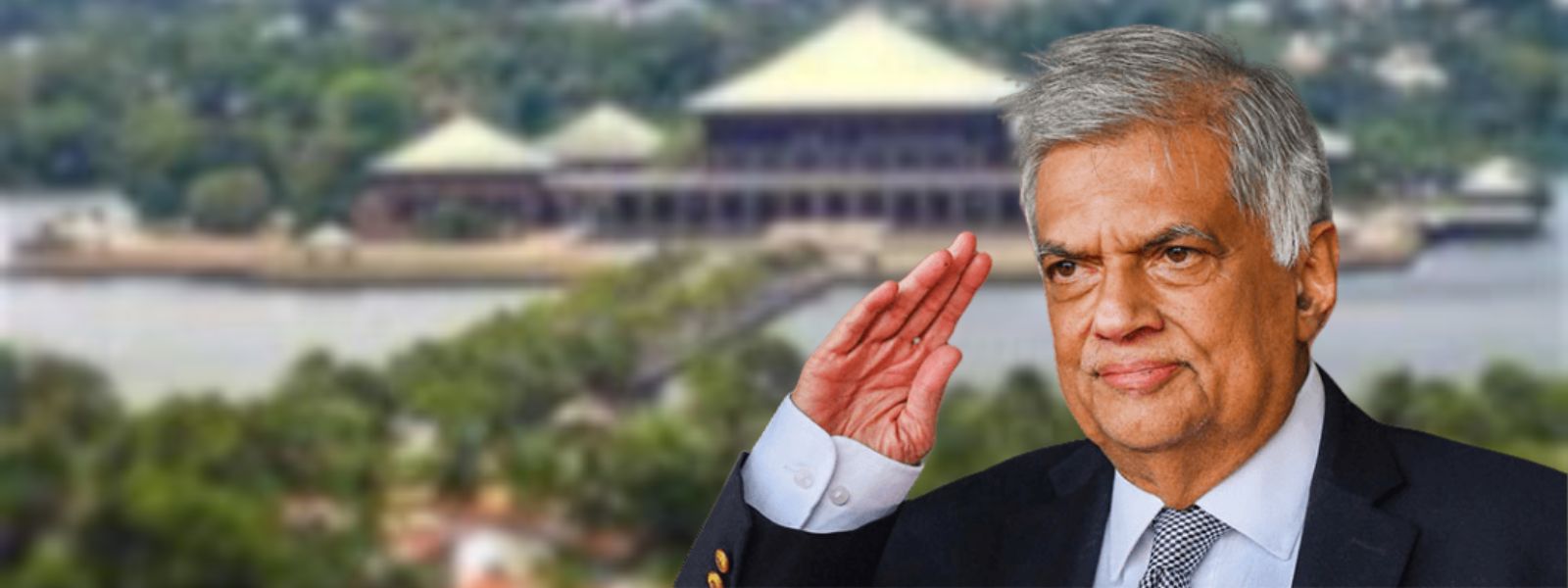
The 08th South China Sea Buddhist Shenzhen Roundtable is scheduled to take place in Sri Lanka from October 24 to 26th, the President’s Media Division (PMD) reported.

This event will be hosted by the Hunupitiya Gangarama Temple in Colombo.

The opening ceremony, chaired by President Ranil Wickremesinghe, will be held on October 24 at the Bandaranaike International Conference Hall in Colombo. A preliminary discussion regarding the organizational aspects of this Buddhist roundtable was conducted at the President’s Office.

Senior Advisor to the President on National Security and Chief of the Presidential Staff, Sagala Ratnayaka presided over this session.

The Buddhist Shenzhen Roundtable in the South China Sea region has been organized by the Hongfa Temple in Shenzhen, China, since 2016.

It serves as an annual international platform for discourse, emphasizing the theme of “Walk Together in Harmony and Gather the Wisdom of the Silk Road.” Notably, this year’s event will be hosted in Sri Lanka, with the participation of representatives from 22 countries, focusing on the Silk Road theme. During the discussion, the potential roles of relevant government institutions in ensuring the success of this conference were also deliberated upon.

Participants included the Minister of Buddhasasana, Religious and Cultural Affairs Mr. Vidura Wickramanayake, President’s Secretary Mr. Saman Ekanayake, the Secretary of the Minister of Buddhasasana, Religious and Cultural Affairs, as well as officials from relevant government departments and organizations.

Sri Lanka’s overall money laundering & terrorism financing risk rated as “medium”

Sri Lanka’s overall money laundering and terrorism financing risk has been rated as “medium” as per the national assessment done by the Financial Intelligence Unit of the Central Bank of Sri Lanka.

This was revealed by the Financial Intelligence Unit of the Central Bank of Sri Lanka (CBSL) via the publication of the sanitized report of the 2021/2022 National risk Assessment on Money Laundering and Terrorism Financing.

The CBSL published the sanitized report of the 2021/22 National Risk Assessment on Money Laundering and Terrorist Financing which was developed based on the assessment conducted by its Financial Intelligence, together with public and private sector stakeholders.

The National Risk Assessment identified drug trafficking, bribery and corruption, customs related offences including laundering of trade-based proceeds, as the most prevalent predicate offences, where the money laundering threat was rated as medium high.

Fraud, robbery, environmental and natural resource crimes were reported to have a medium level money laundering threat.

Human smuggling or trafficking, tax offences, illegal, unreported and unregulated fishing related unlawful activities were assessed as having a medium low money laundering threat while lower threat was observed for counterfeiting of currency.

Further, the assessment identified the money laundering risk of the financial and designated non-financial businesses and professions.

Accordingly in the Informal Money Remitting sector the risk is high.

In the Real Estate sector, Banking sector and Finance Companies, the risk is medium high.

Money Value Transfer Services Providers, Stockbrokers, Primary Dealers, Casinos, Dealers in Precious Metals and Stones, Notaries and Lawyers were reported to have a medium-level threat.

Meanwhile, Accountants, Trust and Company Service Providers and Insurance service providers were observed to have a medium low-level threat of money laundering.

The Finance Intelligence Unit said, a strong political commitment is critical to address the national Anti- Money Laundering and Counter Financial Terrorism plan.

It was also stated that, by better understanding the current risk environment, respective stakeholders, from now onwards can effectively allocate more resources to the high-risk areas to safeguard the integrity of Sri Lanka’s financial system.

Posted in Uncategorized

China’s Shi Yan 6: SL’s permission pending

The Chinese geophysical and seismic scientific research vessel Shi Yan 6 (IMO: 9904247) has commenced its 80-day expedition into the Indian Ocean and was enroute to the Malacca Strait yesterday (16) evening, despite Colombo not yet having granted diplomatic permission for the vessel to call port or carry out a planned joint survey in the waters surrounding the island, The Sunday Morning learns.

According to Foreign Ministry Spokesperson Priyanga Wickramasinghe, the ministry has not granted the Shi Yan 6 permission as of last evening.

Wickramasinghe added that the dates and territories for the survey were yet to be finalised.

Last week, Minister of Foreign Affairs Ali Sabry, responding to a question, confirmed that Sri Lanka had not granted permission and that the request was being processed.

Last month, the Ministry of Defence told The Sunday Morning that permission for the Shi Yan 6 to call port in Colombo had been granted. However, the Ministry of Foreign Affairs disputed the statement, stressing that Sri Lanka had not granted permission and was processing the request.

China has made the request seeking clearance for the mission in April this year, with the vessel planned to visit the island in October.

The Sunday Morning also reported that the Shi Yan 6’s request for a wide range coastal survey had been resisted by top defence officials, with recommendations made that the survey should be limited to the southern coast of the island.

The vessel’s planned arrival in Sri Lanka stokes controversy one year after the controversial visit of Chinese satellite tracking ship, the Yuan Wang 5, to Hambantota Port, which drew strong concerns from India and the US.

The Shi Yan 6 is expected to undertake a joint research with the National Aquatic Resources Research and Development Agency (NARA) as part of an agreement between the parties in 2014 to locate the wrecks of vessels from historic Chinese navigator Admiral Zheng He’s fleet off the southern coast.

According to Chinese media reports, the Shi Yan 6, which is operated by the South China Sea Institute of Oceanology (SCSIO), is heading to the East Indian Ocean on an 80-day-long expedition, departing from Guangzhou in South China’s Guangdong Province.

The vessel, one of the latest in China’s growing scientific fleet, is entering the expedition with 28 scientific research projects from 13 research teams onboard and is expected to cover a range of more than 12,000 nautical miles, reports indicate.

“The voyage, based on multidisciplinary observations, aims to obtain a large amount of basic data for revealing the mechanisms by which dynamic processes affect biogeochemical cycles, ecosystems, and sedimentary processes in that region, clarifying the geographical pattern of biodiversity in the study area, uncovering the response and indicative role of biological communities to physical processes, as well as understanding paleoclimate changes, Wang Weiqing, Chief Scientist of the expedition, said. An observation system will be deployed in the key observation area to study the current system in the local topographic evolution and its relationship with seabed sediments and geology,” the Chinese broadcaster CGTN said.

The online ship tracking organisation Marinetraffic.com on Friday (15) indicated that the vessel had departed, making 10.4 knots, passing the coast of Vietnam and heading to the Malacca Strait, through which ships transit to the Indian Ocean.

Posted in Uncategorized

France contributes 500,000 Euros via UNICEF to fight malnutrition in Sri Lanka

France has contributed Euros 500,000 through UNICEF to support Sri Lanka’s efforts to prevent and treat malnutrition among children in the country.

The contribution enables UNICEF, working in collaboration with the Ministry of Health, to provide children under two years of age with the required nutrition services. Parents and caregivers will also be educated on the correct practices to prevent and treat acute malnutrition and ensure the healthy growth and development of their children.

Malnutrition, if not urgently treated, can kill or damage a child’s physical and cognitive development, especially during the first two years of a child’s life, but often also negatively affect opportunities for the rest of their lives.

Hardships brought about by Sri Lanka’s economic situation continue to stalk families, especially the poor and most vulnerable households. Access to a regular and adequate nutritious diet remains out of reach for many young children and their families, putting them at risk of malnutrition.

This contribution enables UNICEF and its partners to among others, to treat 1,500 children who suffer from severe acute malnutrition through provision of therapeutic food.

To provide 120,000 children between 6-23 months with micronutrients to address deficiencies and prevent malnutrition.

To reach 200,000 parents/caretakers with accurate information on proper practices to prevent and treat malnutrition among their children.

“Contributions such as this from France boost our joint efforts to scale up our ongoing response to children in urgent need of treatment for malnutrition as well as help undertake prevention measures”, said Christian Skoog, UNICEF Sri Lanka Representative, while adding, “Every contribution represents a chance for a child to grow up healthy and develop to the productive citizen that Sri Lanka needs”.

UNICEF has remained agile in its work to address the needs of children in Sri Lanka and ensuring that the most vulnerable and their families are cushioned from the worst effects of poverty, COVID-19 and now the economic difficulties.

“The Government of France has a long-standing partnership with Sri Lanka and this contribution through UNICEF is just one demonstration of our shared vision for children and the people of Sri Lanka”, said Jean-François PACTET, Ambassador of France to Sri Lanka and the Maldives.

This contribution is in line with France’s International Strategy for Food Security, Nutrition and Sustainable Agriculture (2019-2024) and its commitment to the “Nutrition for Growth” (N4G) initiative, to ensure healthy, nutritional and sufficient food for all and enable populations to regain their food autonomy. France will host the next N4G Summit in 2024 and is hoping to bring together the main nutrition players for ambitious commitments to combat malnutrition.

Posted in Uncategorized

Will Channel Four play a pivotal role and be a deciding factor in the next elections? BY KASSAPA

The damage to the SLPP has already been done. It has been proven that the SLPP is a corrupt cabal, a government of the Rajapaksas, by the Rajapaksas, for the Rajapaksas

After all the hype, the much-awaited Channel 4 documentary has seen the light of day and raised a storm of protest in Sri Lanka, but what, if any, are its implications on the country’s volatile political landscape?

In a nutshell, the documentary alleges that the Rajapaksas, through high-ranking Army officer Suresh Sally, conceived the 2019 Easter terror attacks in the country, so that it would create a climate of fear that would then propel Gotabaya Rajapaksa to the Presidency. This was done through the mediation of Sivanesathurai Chandrakanthan, better known as Pillayan, a former member of the Liberation Tigers of Tamil Eelam, now turned politician and state minister, it is alleged.

The fallout from the documentary has been predictable. Rajapaksa, Sallay and Chandrakanthan have all vehemently denied the claims that have been made and so has the Ministry of Defence, in an official statement. On the other hand, the collective opposition has gone to town, lambasting the Rajapaksas and calling for an international investigation, a call supported by the Catholic Church.

In response, President Ranil Wickremesinghe has done what he always does: appoint a committee. This time, he will be appointing two: one, an inquiry by a former judge of the Supreme Court and the second, yet another Parliamentary Select Committee.

The public will view the appointment of these committees with a pinch of salt. The Easter bombings have already seen the appointment of a Committee of Inquiry and a Presidential Commission of Inquiry by then President Maithripala Sirisena, a Parliamentary Select Committee of Inquiry and a Supreme Court verdict in response to fundamental rights applications filed by aggrieved citizens.

While all these inquiries have shed some light into the blatant negligence that contributed to the attacks, we are no closer to the truth as to who masterminded the attacks. What benefit another two inquiries will add to the already completed four probes is a reasonable question, especially when one of them will be a Parliamentary Select Committee dominated presumably by members of the Sri Lanka Podujana Peramuna (SLPP) which is led by the Rajapaksas, the virtual accused in this instance.

The more pertinent question would be the public’s response to the Channel 4 documentary. In much the same way that the 2019 Easter attacks propelled the SLPP to power at the 2019 presidential election, will the latest revelations plunge the ‘pohottuwa’ party out of public favour because of the monstrous allegations that are being made? Or, paradoxically, will this again work in the SLPP’s favour because the Rajapaksa can claim (again!) that they are being persecuted by western interests for trying to save the Sinhala race and the nation?

While the jury is still out on whether the Rajapaksas in fact orchestrated the Easter attacks as alleged in the documentary, it is a fact that they certainly capitalised on it. On the Friday after that deadly Easter Sunday Gotabaya Rajapaksa announced that, having saved the country once from Tamil extremists, he was ready to do so again to save it from Muslim extremists and was therefore running for President.

What followed was a seven-month long campaign based on anti-Muslim sentiment raising fears of annihilation of the Sinhala race and Muslim extremism taking hold in the country. There were concerted efforts to compel Sinhalese to boycott Muslim establishments. There was talk of a Muslim doctor sterilising Sinhalese mothers by manipulating their organs, a feat that is medically impossible.

A majority of the voting public fell for this strategy, hook, line and sinker, giving Gotabaya Rajapaksa an unprecedented mandate. Contributing to that mandate significantly were Catholic voters, angry as they were after the Easter attacks. The so-called ‘Catholic belt’ North of Colombo, traditionally a stronghold of the United National Party (UNP), opted to endorse Rajapaksa.

Now, the shoe is on the other foot. Voters are being told that the Easter attacks were a drama staged, at the cost of over 250 lives, merely to bring the Rajapaksas to power again. The Catholic Church and its head, Cardinal Malcolm Ranjith who endorsed Gotabaya Rajapaksa in 2019, leads the calls for an international investigation and lambasts the Rajapaksas whenever he is able to.

Besides, the SLPP is not what it was in 2019, when it was a virgin political party albeit under the banner of the ageing Rajapaksas. Whatever the Rajapaksas were thought to be guilty of in 2015 that deserved them to be banished into the political wilderness was forgiven in the face of this perceived threat of Muslim extremism.

Today it is not so. The SLPP stands accused and virtually convicted of spiralling the country into an economic abyss of no return. Its hero who was supposed to save the country from Islamic terrorism, Gotabaya Rajapaksa, couldn’t save himself from mobs at his front gates and had to flee through the backdoor of President’s House.

The damage to the SLPP has already been done. It has been proven that the SLPP is a corrupt cabal, a government of the Rajapaksas, by the Rajapaksas for the Rajapaksas. That is why, Ranil Wickremesinghe has been careful not to include any Rajapaksa in his Cabinet.

In such a context, the allegations made about the Easter attacks in the Channel 4 documentary will resonate with most voters. Just as much as they did not need evidence that a ‘snake king’ indeed emerged from the Kelani river to herald the arrival of a new King, they will not need evidence to condemn and convict the Rajapaksas for the Easter atrocities in the court of public opinion.

Therefore, the Channel 4 documentary will form an important part of the next presidential election campaign. This is an issue that Wickremesinghe, who is banking on the support of the SLPP to deliver him the next Presidency in a playing field where the opposition id divided, needs to be wary of. By aligning himself with the Rajapaksas, he too may be found guilty by association.

The Channel 4 documentary will not be a turning point in the next national election- but it will be a stark reminder that those who use fake nationalism for their political advantage can equally become victims of their own actions.

Posted in Uncategorized

Who is Hanzeer Azad Maulana the Whistleblower on Channel 4? By D.B.S Jeyraj

Britain’s Channel 4 TV aired the documentary Sri Lanka’s Easter Bombings in its Dispatches programme on Tuesday, September 5, 2023, at 11. 05 p.m.

Prior to the telecast, Channel 4 Dispatches stated that the documentary has “exclusive interviews with high-placed whistleblowers, who allege that some Sri Lankan Government officials were complicit in the bombings.

The Channel 4 documentary featured three ‘whistleblowers’.

One was Hanzeer Azad Maulana the former aide of Tamil Makkal Viduthalaip Puligal (TMVP) leader and Batticaloa District MP Sivanesathurai Chanthirakanthan alias Pillaiyaan, who is currently the State Minister. for Rural Road Transport.

The second was Ex-Police officer Nishantha Silva, the Police sleuth who probed the murder of Lasantha Wickrematunge, and who in the process of doing so, interrogated Gotabaya Rajapaksa intensively.

The third was another top Sri Lankan Govt official, who remained anonymous without his image being shown. Both Azad Maulana and Nishantha Silva are reportedly living in Europe now.

Although three whistleblowers were featured in the documentary, the star among them was Hanzeer Azad Maulana. The allegations levelled by him against persons such as Gotabaya Rajapaksa, Suresh Sallay and Pillaiyan helped the documentary filmmakers to make out their case.

The importance of Maulana’s role in the documentary was acknowledged by Gotabaya Rajapaksa himself. He said in a statement Hanzeer Azad Maulana that the central allegation in the documentary “Hinges on claims made by one Hanzeer Azad Maulana, an applicant for political asylum in Europe.”

It is against this backdrop that this column focuses on whistleblower Hanzeer Azad Moulana.
Who is this former aide to TMVP leader and State minister Sivanesathurai Chandrakantha alias Pillaiyan and why has he dared to take this bold step of blowing the whistle?

Although three whistleblowers were featured in the documentary, the star among them was Hanzeer Azad Maulana. The allegations levelled by him against persons such as Gotabaya Rajapaksa, Suresh Sallay and Pillaiyan helped the documentary filmmakers to make out their case

Maruthamunai

The man known as Hanzeer Azad Maulana hails from Maruthamunai in the Eastern Province. Maruthamunai is a predominantly Muslim coastal area about 360 km from Colombo.
It is part of the Kalmunai Electoral Division within the Amparai District. Hanzeer’s father was Mohammed Aliyar Mohammed Mihilar. Hanzeer’s given name is Mohammed Milhilar Mohammed Hanzeer. Azad Maulana is not his real name. It was a nom de guerre he adopted after joining the Thamil Makkal Viduthalap Puligal(TMVP).
Hanzeer’s father Mihilar was Left-oriented in his political thinking. He also got along well with members of the Tamil community especially those from the adjacent Tamil village Paandiruppu.
The Tamil militant organization Eelam People’s Revolutionary Liberation Front (EPRLF) had a strong presence in Paandiruppu. This led to Mihilar becoming a member of the EPRLF even before the 1983 July anti-Tamil pogrom.

Mihilar

After Black July Mihilar received arms training at the EPRLF camp in Kumbakonam in Tamil Nadu.
Thereafter he worked for the EPRLF in the Amparai District and was appointed to the Central Committee. The Indo-Lanka accord of 1987 brought about the Provincial Councils scheme through the 13th Constitutional Amendment.

Unlike the Liberation Tigers of Tamil Eelam (LTTE) the EPRLF backed the Indo– Lanka accord and cooperated fully with India to hold Provincial elections in the Northern and Eastern Provinces.
The EPRLF contested the first elections to the Northeastern Provincial Council comprising both the Northern and Eastern Provinces.

Mihilar himself was a candidate. He also campaigned actively for the EPRLF. The EPRLF along with the newly created Eelam National Democratic Liberation Front (ENDLF) formed the first administration of the merged Northeast Provincial Council.

Mihilar however was not elected to the first and only NE PC.

Annamalai Varatharajapperumal became the first Chief Minister of the Northeastern Provincial Council. Mihilar went to Trincomalee and worked as an official at the Provincial Council office.
Things changed after the Indian Army was withdrawn in 1990 March. Fearing a massacre at the hands of the LTTE, most of the EPRLF front liners fled to India. Mihilar was one of them

Padmanabha

Kanthasamy Padmanabha, the amiable Secretary-General of the EPRLF along with many cadres moved to the Orissa (Now Odisha) State.

Mihilar too went to Odisha and served as one of Padmanabha’s bodyguards. The EPRLF continued to maintain its main office at Choolaimedu in Kodambakkam, Chennai.

On June 19th 1990, Padmanabha came to Chennai (then Madras). Mihilar too accompanied him. Padmanabha was at a flat in Zachariah Colony near the EPRLF office in Choolaimedu with some visiting EPRLF stalwarts from Sri Lanka, when the LTTE struck.

A tiger squad led by Kiruban and one-eyed Sivarasan burst in and fired away. Padmanabha and 12 others were killed. Among those killed was Padmanabha’s bodyguard Mohammed Mihilar.

Mihilar had four children, two girls and two boys. Eldest son Hanzeer born in 1983 was only seven when he lost his father. The family was in dire straits. The EPRLF in those days had a trust fund from which it helped the families of members killed by the armed forces or other militant groups like the LTTE. This financial aid was of great help to the family then. Subsequently, Hanzeer’s mother married again.

Douglas Devananda

Mohammed Hanzeer studied at the Maruthamunai Shams Madhya Maha Vidyalaya. He was a bright student who entered Peradeniya University in 2003 to do a Bachelor’s degree course in Agriculture.
Having financial difficulties in pursuing higher studies, Hanzeer turned to Douglas Devananda for help. Douglas who had broken away from the EPRLF, was the leader of the Eelam Peoples Democratic Party (EPDP).

However, Devananda had been the commander of the EPRLF’s military wing known as the Peoples Liberation Army, when he was in the EPRLF. Hanzeer’s father Mihilar was closely associated with Douglas. So, when Mihilar’s son sought his help, the EPDP Leader felt he had to help the son of his erstwhile comrade at arms.

Thinamurasu

The EPDP was then running a weekly paper called the Thinamurasu. Douglas gave Hanzeer a job at Thinamurasu.

Hanzeer Mohammed was fluent in Tamil and English. He was well-read and was a very good writer in Tamil. He was also capable of translating from English to Tamil. So, Mohammed Hanzeer began to work at Thinamurasu, while pursuing his higher education at Peradeniya.

Since he had lectures for only four days a week, Hanzeer would spend three days in Colombo working for Thinamurasu. He wrote political articles under pseudonyms and also translated news and articles from English into Tamil.

Some months later in 2004 Hanzeer dropped out of Varsity and requested Douglas for a job. Devananda was then a Cabinet Minister. The Sri Lanka Cashew Corporation came under his purview.
Former Amparai District MP Markandu Gunasekaran alias Shankar was the Chairman of Cashew Corporation. Hanzeer was appointed as the Chairman’s Secretary.

After some months Hanzeer resumed his studies again and eventually graduated.

The meeting went well. Both Karuna and Pillaiyan took an instant liking to Hanzeer. It was arranged that a monthly stipend would be paid for services rendered. The amount agreed upon was in five figures. This was how Mohammed Hanzeer teamed up with the TMVP

LTTE Split

Meanwhile, the LTTE underwent a major split in 2004 when its Eastern regional commander Vinayagamoorthy Muraleetharan alias Col. Karuna revolted against LTTE Supremo Veluppillai Prabhakaran’s leadership.

The breakaway group known for a long time as the LTTE Karuna faction, aligned itself with the Sri Lankan Govt and its armed forces and intelligence services.

The Karuna faction with State backing took on the LTTE in the East. Karuna’s deputy Pillaiyan (Sivanesathurai Chandrakanthan ) based himself in Batticaloa as field commander.

A political party known as the Thamil Eelam Makkal Viduthalaip Puligal (TEMVP) was also formed.
Later the name was changed to Thamil Makkal Viduthalaip Puligal. (TMVP).

After Mahinda Rajapaksa became President in 2005 November, he appointed his brother Gotabaya Rajapaksa as Defence Secretary. The new Defence Secretary utilised the TMVP in a big way in the war against the LTTE. The TMVP was given the green light to function openly as a politico-military outfit.

TMVP

It was at this point that Mohammed Hanzeer’s life changed. He was summoned by Douglas Devananda for a meeting in April 2006. Douglas told Hanzeer about the TMVP going to function independently as a political party. According to Douglas, Karuna’s group had come out of the LTTE and was now trying to proceed on the democratic path.

The EPDP leader told Hanzeer that they must encourage the Karuna Group and said that the TMVP required the support and help of people like Hanzeer. Hanzeer was asked whether he would help the TMVP.

Hanzeer hated the LTTE which murdered his father in Madras.

He also regarded the LTTE which massacred Muslims in cold blood at various places in the east and chased away the Northern Muslims at gunpoint, as a Fascist entity. Since the TMVP had split from the LTTE and was combatting it, Hanzeer agreed to work with the TMVP. This was his way of seeking vengeance for his father

Thereafter a meeting was arranged by Devananda, in which Hanzeer met TMVP leader Karuna and deputy leader Pillayan.

The meeting went well. Both Karuna and Pillaiyan took an instant liking to Hanzeer. It was arranged that a monthly stipend would be paid for services rendered. The amount agreed upon was in five figures. This was how Mohammed Hanzeer teamed up with the TMVP.

Nom de Guerre

Initially, Hanzeer had to adopt a nom de guerre. He was asked to choose a name for himself Hanzeer chose the name Azad Maulana. The name Maulana (some spell it as Moulana or Mowlana) means ‘our master’ and also refers to those regarded as descendants of the Prophet.

In practice, however, those who are not descendants of the prophet also tend to use the name. Many add the name Seyyed or Zeyyed to it as a prefix.

In Sri Lanka, there have been quite a few Muslim politicians with the name Maulana like former Minister Alavi Moulana, former Batticaloa MP Ali Zaheer Moulana and ex-Senator Mashoor Moulana, who, like Hanzeer, is from Maruthamunai.

In Hanzeer’s case, his choice of Azad Maulana was inspired by the great Indian educationist and freedom fighter Maulana Abul Kalam Azad, who was generally known as Maulana Azad or Azad Maulana. Azad opposed the creation of Pakistan and was a symbol of Hindu-Muslim unity.

Spokesperson

Mohammed Hanzeer now known as Azad Maulana’s duties in the TMVP were three-fold. He had to work as a journalist on the Tamil fortnightly Thamil Alai. He had to teach young members of the TMVP the political history of Sri Lanka with particular emphasis on the ethnic crisis. Most importantly he was appointed the accredited spokesperson of the TMVP. Hanzeer was proficient in Tamil and English and reasonably fluent in Sinhala.

Soon, Azad Maulana became a public figure giving media interviews and conducting press conferences.

He was also the public face of the TMVP. As time went on TMVP leader Karuna began to use Azad Maulana as an interpreter in dealings with the Government, Govt officials, members of the armed forces and Intelligence Service personnel Azad Maulana’s influence and importance grew and he became almost indispensable to the TMVP.

The TMVP asked him to move from his residence in Panadura to the two-storeyed TMVP office premises in Narahenpita. Apart from an increase in his monthly stipend, Azad Maulana was given two cell phones and a motorcycle for his use by the TMVP.

Also, he was absorbed into the TMVP party hierarchy and made a Central Committee Member.

Mohammed Hanzeer now known as Azad Maulana’s duties in the TMVP were three-fold. He had to work as a journalist on the Tamil fortnightly Thamil Alai. He had to teach young members of the TMVP the political history of Sri Lanka with particular emphasis on the ethnic crisis. Most importantly he was appointed the accredited spokesperson of the TMVP. Hanzeer was proficient in Tamil and English and reasonably fluent in Sinhala

Coordinating Secretary

In 2007 there was an internal coup in the TMVP resulting in Karuna being ousted. Pillaiyan became the new leader.

Azad Maulana latched on to Pillaiyan, who also needed Azad. In 2008, elections were held for the Eastern Provincial Council, The TMVP contested as part of the United Peoples’ Freedom Alliance (UPFA).

In an unexpected move, Pillaiyan became the first Chief Minister of the Eastern Province. Pillaiyan appointed Azad Maulana as his Coordinating Secretary in addition to being the TMVP Spokesperson.

Everything seemed hunky-dory for Mohammed Hanzeer alias Azad Maulana. What happened thereafter will be related in the second part of this article next week.

D.B.S. Jeyaraj can be reached at dbsjeyaraj@yahoo.com

Rameswaram fishermen go on strike demanding release of fishers arrested by Sri Lanka

Fishermen in Rameswaram went on a strike on Saturday demanding the release of eight Rameswaram fishers arrested by the Sri Lankan authorities.

All the 800 odd fishing vessels were moored at the fishing jetty and fishermen did not collect the fishing tokens.

The Sri Lankan navy on Wednesday night detained 17 fishermen — eight Rameswaram fishermen and nine fishers from Pudukkottai district — on charges of poaching in the territorial waters of the island nation. The Sri Lanka navy seized the three fishing boats from them.

The fishermen were produced before a Lankan court in Jaffna and lodged in prison after the court remanded them in judicial custody till September 27.

Condemning the repeated arrests of fishermen by the Sri Lankan navy, the fishermen associations called for a strike on Saturday. “The state government and the Centre should expedite diplomatic measures to release our fishermen and the fishing vessels confiscated by Sri Lanka,” said fishermen leader P Jesuraja from Rameswaram.

Sri Lanka navy has seized 17 trawlers and apprehended 110 Indian fishermen so far in 2023. While the Lankan courts usually release the fishermen on conditional bail that they should never return to Sri Lanka for fishing, the fishing crafts are not returned to the boat owners.

Source: The Times of India