Gazette issued declaring railway services as essential service

An Extraordinary Gazette notification has been issued on the directive of President Ranil Wickremesinghe, declaring railway services as essential services.

Accordingly, the public transport services for passengers or goods and the provision and maintenance of facilities for transport services by railway lines have been declared as essential service with immediate effect under the Essential Public Service Act.

Earlier today, Minister of Transport Bandula Gunawardane said that he would request the President to declare the railway services as an essential service from midnight today (Sep. 12), and issue a Gazette notification accordingly, in order to safeguard the law and peace and the public security of the country.

However, Gunawardena mentioned that “a country that has fallen into trouble due to ‘trade union terrorism’, and is unable to recover, will not survive further if this situation continues”.

At least 20 scheduled train services were cancelled this morning due to the strike action launched by the Locomotive Operating Engineers’ Union since midnight yesterday (Sept. 11).

As a result of the trade union action, passengers were seen train surfing due to overcrowding, and many others were left stranded at railway stations, whereas a fatal incident of a 20-year-old falling off the train roof after knocking against the roof of the Horape railway station was also reported.

According to reports, the critically injured youth has died on the spot.

Posted in Uncategorized

UNHRC tells Sri Lanka to get its act together

Accountability is central to secure Sri Lanka’s present and future, said Nada Al-Nashif, the United Nations Deputy High Commissioner for Human Rights on Monday (11).

“While it remains the obligation of the Sri Lankan authorities to acknowledge past violations and undertake credible accountability measures, this Council and the Member States can play an important and complementary role in advancing accountability,” she said during the 54th session of UN Human Rights Council in Geneva.

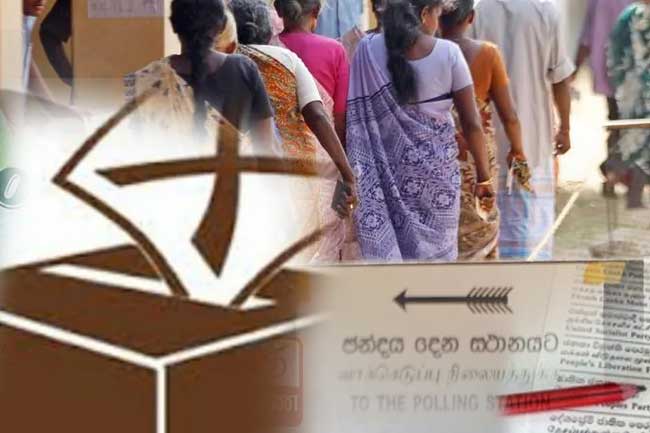
She said that delays in holding local government elections and in reconstituting Provincial Councils under the 13th amendment have limited people’s right to political participation and the free expression of voters.

She said that the Government economic recovery policies should be guided by its obligations under the International Covenant on Economic, Social and Cultural Rights to protect the most vulnerable.

The international community, including international financial institutions, should keep supporting Sri Lanka in its recovery, in line with obligations around international cooperation and assistance, by providing the fiscal space needed while pressing for genuine progress in governance, transparency and accountability, she said.

She went on to note that the measures restricting the right to protest will only generate more tension in the country as they prevent people from expressing their grievances and engaging in critical debate.

Truth-seeking alone will not be sufficient and must be accompanied by a clear commitment to accountability, including through an independent ad hoc special court, she said.

She said that the High Commissioner has repeatedly recommended the Government of Sri Lanka to establish a follow-up, independent and transparent investigation into the Easter Sunday attacks with international assistance and the full participation of victims and their representatives.

“The report provides an analysis of concerns with some forthcoming legislation, in particular the proposed Anti-Terrorism Bill that will replace the Prevention of Terrorism Act (PTA) and the new law to regulate media broadcasting. It urges a moratorium on the use of the PTA in the meantime, and for the review of long-standing PTA cases to be expedited,” she added.

UN HRC54: UK Statement on Sri Lanka

Statement on report of OHCHR on promoting reconciliation, accountability & human rights in Sri Lanka. Delivered by UK Ambassador to the WTO & UN Simon Manley.

Thank you Madam Vice President,

Deputy-High Commissioner, let me thank you for your report and update.

The UK welcomes Sri Lanka’s initial commitments to implement devolution in line with the constitution, to address land issues, and to advance governance legislation. It is important that these commitments are matched by tangible progress on the ground.

We also note longstanding commitments to replace the Prevention of Terrorism Act, and urge the Government to ensure terrorism legislation is consistent with Sri Lanka’s international obligations. We encourage too the further release of long-term detainees.

We call on Sri Lanka to safeguard the rights to freedom of peaceful assembly and association, and to freedom of expression. The right to freedom of religion or belief must be respected, and communities must be allowed to remember their loved ones.

The discovery of another mass grave [in Mullaitivu] highlights the urgent need for an adequately resourced, independent, and transparent approach to dealing with the past.

Justice, accountability, and reconciliation are at the heart of our approach and we hope in Sri Lankans. We acknowledge commitments to make progress in transitional justice and urge Sri Lanka to ensure any process carries the support of victim communities, builds upon past recommendations, and meets international standards.

Thank you.

Published 11 September 2023

UN human rights office approached for information on 10 Sri Lankans

The UN human rights office has been approached by State authorities from various countries for information on 10 Sri Lankans accused of committing human rights abuses.

While noting the Government’s rejection of resolutions 46/1 and 51/1, United Nations Deputy High Commissioner for Human Rights Nada Al-Nashif noted that an accountability project was established by her Office to collect, consolidate, analyze, and preserve relevant information and evidence and provide support to relevant judicial and other proceedings, including those in Member States, with competent jurisdiction.

She told the UN Human Rights Council today that the project is receiving a steady increase in requests from competent State authorities, including in relation to 10 named individuals to date.

“The project has made significant progress in developing a repository of information and evidence and based on identified gaps and priorities for further investigations. It is also actively engaging with civil society, including victims’ representatives,” she told the Council as it commenced its 54th Session in Geneva today.

The Deputy High Commissioner said that accountability is central to secure Sri Lanka’s present and future.

“While it remains the obligation of the Sri Lankan authorities to acknowledge past violations and undertake credible accountability measures, this Council and Member States can play an important and complementary role in advancing accountability,” she added.

The Deputy High Commissioner said that her office remains committed to supporting the Government and people of Sri Lanka in advancing reconciliation, and accountability as well as the full enjoyment of human rights.

She also noted that the economic hardship, tensions around economic and structural reform policies and the delay of local elections continue to give rise to protests. Land acquisition in the north and east for expansion of military installations, Buddhist heritage conservation at Hindu or Muslim sites, and forestry protection has also escalated tensions.

“Our Office continues to receive cases of misuse of tear gas and water cannons during demonstrations, affecting protestors and media personnel. Initiatives by victims to memorialise their loved ones have also been obstructed,” she said.

The Deputy High Commissioner said that the measures restricting the right to protest will only generate more tension in the country as they prevent people from expressing their grievances and engaging in critical debate.

Sri Lanka says UN human rights report a ‘grave distortion and misinterpretation’ of reality

Responding to the oral report on Sri Lanka at the first meeting of the 54th Regular Session of the Human Rights Council in Geneva on Monday, Sri Lanka has rejected the report and its recommendations, claiming that is does not reflect the actual situation in Sri Lanka, and instead gravely distorted and misinterpreted the ground situation within the country.

Speaking further in this regard, the Permanent Representative of Sri Lanka to the United Nations in Geneva, Himalee Arunatilaka noted that it is “regrettable” that the Office of the Human Commissioner of Human Rights (OCHCR) has “chosen to ignore the democratic resilience of the country and its institutions demonstrated in the past year”.

She stated that Sri Lanka remains deeply concerned about the ever-increasing mandate of the OCHCR, in making sweeping and intrusive comments on all aspects of economic, financial, political, electoral, domestic, budgetary and development policies, adding that the nation strongly objects to “pronouncements on policy matters that are essentially domestic for any sovereign country and are outside the framework of this council”.

Albeit the UN report’s claims that Sri Lanka’s economic recovery is yet to materialize one year after the country’s turbulent anti-government protests and its most severe economic crisis, Arunatilaka highlighted that those who are mandated and possess the required expertise, both domestically and internationally, remain confident in Sri Lanka’s prospects.

Commenting on the report’s references to targeted sanctions, the diplomat stated that Sri Lanka rejects all such references, which are “based on incorrect and unsubstantiated sources, contravening the process of natural justice of universality, impartiality objectivity and non-selectivity”, emphasising Sri Lanka’s commitment towards pursuing tangible mechanisms on human rights through our domestic institutions, having made significant progress in this regard.

Speaking further on these said mechanisms, she pointed out that certain independent domestic mechanisms have made tangible progress, citing the Office on Missing Persons, Office for Repatriations and the Office for National Unity and Reconciliation as examples of this said progress.

Moreover, the Permanent Representative of Sri Lanka highlighted other such examples, including the Anti-Corruption Act which strengthened the financial and functional independence of the Commission to Investigate Allegations of Corruption or Bribery (CIABOC), and the ongoing deliberations pertaining to the Anti-Terrorism Bill with the aim of bringing it in line with international standards.

Thus, rejecting all recommendations and conclusions put forward by the UN report in concern, Sri Lanka urged that the written observations submitted countering the report also be given “equal visibility” as the OHCHR report.

Meanwhile, commenting on UN Resolutions 46/1 and 51/1, which have repeatedly been rejected by Sri Lanka, Arunatilaka asserted that the nation vehemently refuses to cooperate with the resolution in question, deeming them ‘intrusive and polarising’.

“We recall that the majority of member states either opposed or abstained from voting on these resolutions in fundamental disagreement with their unacceptable content, in particular the so-called evidence gathering mechanism, the establishment of which remains unprecedented”, the diplomat said in this regard.

Speaking further on Resolutions 46/1 and 51/1, Arunatilaka characterized them to be ‘intrusive and polarizing’, adding that they are upheld only by a handful of countries for reasons “unrelated to human rights and based on their vote-bank domestic politics”.

Highlighting that Sri Lanka has repeatedly pointed out that this is an “unproductive and unhelpful drain on the resources of the council and its member,” she stated that Sri Lanka will not cooperate with it.

Arunatilaka noted, however, that the nation will continue to engage constructively with other mechanisms of the council which have proved productive to the people of Sri Lanka, such as the Universal Periodic Review (UPR) process.

Posted in Uncategorized

EU demands concrete actions from Sri Lanka

The European Union (EU) has called for concrete actions by Sri Lanka while taking note of plans for reconciliation mechanisms.

In a statement delivered at the 54th Session of the UN Human Rights Council, the EU reaffirmed its commitment to Human Rights, reconciliation and accountability in Sri Lanka.

“While the EU recognizes the challenges Sri Lanka has been facing due to the economic and financial crisis throughout last year, we underline the need for upholding all human rights, including the rights to freedom of opinion, expression and assembly, as well as the effective and equal fulfilment of economic, social and cultural rights of all persons in Sri Lanka, including persons in vulnerable and marginalized situations,” the EU said.

Recognizing the positive course of action over the past months, leading the country towards economic stabilisation, the EU continued its call for reconciliation, accountability and resolving the many cases of enforced disappearances.

“We take note of plans for reconciliation mechanisms, and the President’s dialogue with Tamil political parties as well the promise to stop land acquisitions for archaeological, forestry or security purposes. However, these still need to be turned into concrete actions,” the EU said.

The EU also called on Sri Lanka to enable the right of peaceful assembly and refrain from any use of force against peaceful demonstrators.

“We call upon Sri Lanka to suspend the Prevention of Terrorism Act until it is in full compliance with international human rights law and standards, and also call for accountability and immediate action to end impunity,” the EU said.

The EU encouraged the Government of Sri Lanka to remain engaged with the UN and international partners, and to fully cooperate with the High Commissioner.

The EU said it will continue to support Sri Lanka’s efforts towards a fully inclusive dialogue on governance, rule of law, democratic renewal, as well as human rights.

Posted in Uncategorized

Ransomware Attack Hits Sri Lankan Government Offices, Leading to Severe Data Loss

The Information and Communication Technology Agency of Sri Lanka (ICTA) has revealed that a ransomware attack between May 17 and August 26, 2023, has impacted several government offices falling under the purview of the President’s Office, Cabinet Office, Ministry of Education, and Ministry of Health.

Sampath de Silva, the Director of Strategic Communications at ICTA, confirmed the severity of the data loss incident, particularly affecting government entities using the “gov.lk” email domain. This breach has raised significant concerns regarding the security of crucial government information exchanged via the Lanka Government Network (LGN) and its “mail@gov.lk” email domain.

According to de Silva, approximately 5,000 email addresses may have been affected by the ransomware attack, highlighting the vulnerability of the government’s digital infrastructure. Shockingly, there was no offline backup for the critical two-and-a-half-month data period, exacerbating the damage caused by the cyberattack.

Even the online backup system was compromised, leading to the loss of vital emails and sensitive information during this extensive timeframe. The incident underscores the pressing need for enhanced cybersecurity measures within government agencies.

In response to this security breach, Sampath de Silva announced that two crucial measures are being urgently implemented to prevent future data loss. Firstly, daily offline backup processes are being initiated to ensure the preservation of essential data even in the face of cyber threats. Secondly, there are plans to upgrade the relevant applications to the latest versions equipped with enhanced defenses against virus attacks.

Posted in Uncategorized

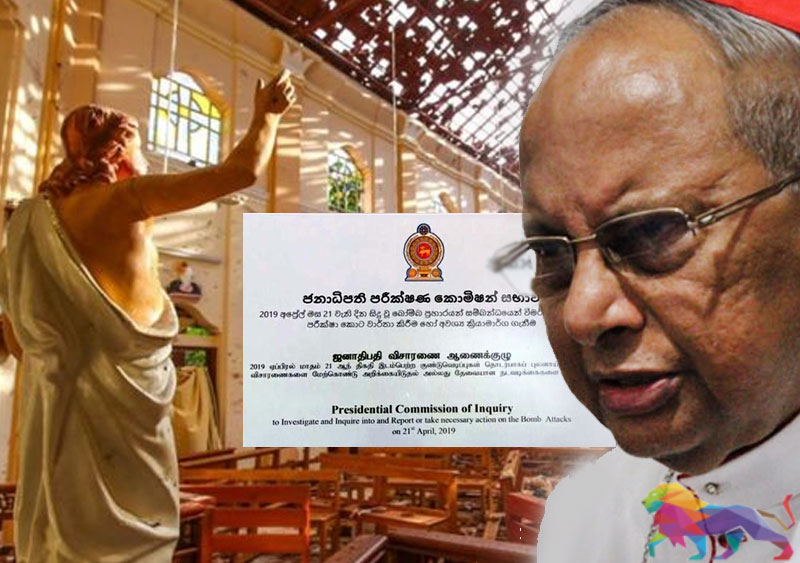
Perpetrators behind Easter Sunday attacks can be forgiven: Cardinal

Archbishop of Colombo Cardinal Malcolm Ranjith over the weekend stressed that the perpetrators behind the Easter Sunday bomb attacks can be forgiven if they accept responsibility and repent.

“We are ready to forgive the perpetrators of the Easter Sunday attacks if they accept responsibility and repent. Following the Truth and Reconciliation Commission in South Africa, those who were involved in racial riots came and repented their wrong doings. The then President of South Africa Nelson Mandela forgave all wrong doers after they repented. We are also willing to forgive the perpetrators of the Easter Sunday attacks if they repent,” Cardinal Ranjith said during a church service.

“Those who have alledged to have engineered the Easter Sunday bomb attacks should display their honesty by resigning from the post they are holding. Honesty is not hiding behind politicians. One should not be afraid to embrace the truth,” he added.

He said the Church only wants to know the truth.

Reports on Easter attack investigations to be submitted to Parliament – President

The reports pertaining to the two investigations into the Easter Sunday terror attacks in 2019 will be presented to the parliament before any final decisions are made, President Ranil Wickremesinghe said.

Accordingly, upon completion of the two investigations into the series of bombings, the reports from the Parliamentary Select Committee and the Presidential Commission of Inquiry will be presented to parliament before any final decisions are made, the President’s Media Division (PMD) reported.

Meanwhile, the Head of State has decided to appoint a committee chaired by a retired Supreme Court judge to inquire into the recent allegations made by UK’s Channel 4 in their recent exposé on the Easter Sunday bombings.

The PMD further noted that the government also intends to appoint a Parliamentary Select Committee to investigate the allegation levelled by a former Attorney General, claiming that there is a mastermind behind the attacks.

Posted in Uncategorized

China’s BYD Auto to set up electric car facility here

BYD Auto, one of the largest manufacturer of electric cars in the world, and a subsidiary of Chinese conglomerate BYD Co. Ltd, is likely to set up an electric car manufacturing facility in the south of the country, according to a highly placed political source.

The publicly listed company is headquartered in Shenzhen, Guangdong, China. BYD Co. Ltd. will very likely finalise this deal when President Ranil Wickremesinghe visits China next month, the source told the Business Times on Thursday.

BYD Co. Ltd (Build Your Dreams) founded by Wang Chuanfu in February 1995 is the largest electric car manufacturing company in the world and the world’s second-biggest behind Tesla. BYD is the first automaker in the world to have full expertise and intellectual property in the three core technologies of electrical vehicles—batteries, electric motors and electronic controls.

The source also added that the plant will most possibly be set up in Hambantota as it will be easy for them to ship the cars out for export.

In the recent months many Indian and Chinese films are looking at Sri Lanka for potential investments, sources added.

Already India’s Reliance Industries is tying up with a biscuit manufacturer to export biscuits. Industry sources said that it will be contract manufacturing by the Sri Lankan biscuit manufacturing facility for India’s Reliance Industries.

Some Indian funds are also looking at renewable energy projects largetly in the solar energy sector. Renewable industry officials said that two teams from India are expected to arrive to discuss on this sector. Officials also said that the education sector is another interest area for both Indian and Chinese investors.