Rajapaksa officials ‘linked to Easter Sunday Sri Lanka bombs’: Report

Sri Lankan officials loyal to the Rajapaksa family were complicit in the 2019 Easter Sunday bombings that killed more than 250 people, including eight British tourists, whistleblowers have alleged.

One highly placed insider claims in an interview with Dispatches, to be aired in the UK on Channel 4 tomorrow, that he set up a 2018 meeting between a senior military intelligence official, Suresh Salley, and Islamic State-affiliated bombers to hatch a plot to destabilise Sri Lanka and facilitate the Rajapaksas’ return to power, according to the Times UK

“The meeting finished, Suresh Salley came to me and told me the Rajapaksas need an unsafe situation in Sri Lanka, that’s the only way for Gotabaya to become president,” Hanzeer Azad Maulana, the whistleblower, claims. “The attack was not a plan made in just one or two days, the plan was two, three years in the making.”

Salley was promoted to head of military intelligence when Gotabaya Rajapaksa won power on a promise to restore security six months after the Easter Sunday attack.

He previously served as defence minister under his brother, the former president Mahinda Rajapaksa. They were jointly credited with crushing the Tamil Tiger insurgency but lost power in 2015, and later faced investigations into extra-judicial killings, human rights abuses and large-scale corruption during their time in government.

The alleged involvement of the powerful Rajapaksa family in the attacks has long been rumoured in Sri Lanka but the documentary, made by Basement Films, founded by the former Channel 4 News editor Ben de Pear, marks the first time high-level whistleblowers have spoken about the alleged connections with the bombers. Gotabaya was forced from power last year amid a popular uprising over Sri Lanka’s economic collapse.

Maulana fled Sri Lanka last year and has presented his testimony to European intelligence agencies and the United Nations. They are treating his claims as credible and investigating.

Of the Easter Sunday dead, 43 were foreign tourists, including many children. A British man, Ben Nicholson, survived but lost his wife and two children. Anders Holch Povlsen, the Danish billionaire who owns a majority share in the clothing giant Asos and is the UK’s largest private landowner, and his wife, Anne, lost three of their four children.

A second whistleblower, an unnamed senior government official, backed Maulana’s account of Salley’s ties to the bombers and claimed that military intelligence repeatedly thwarted police investigations, before and after the bombings. “When this regime came to power in 2019, all officers connected to the investigation were transferred out, the investigation was completely sabotaged,” the official says.

Documents obtained by Channel 4 also appear to show several false leads presented by military intelligence to throw police off the Isis cell’s trail before the bombings. Other documents show that Indian intelligence warned Sri Lanka two weeks before the bombings that the Isis cell was planning to attack Catholic churches. The warning was not acted upon.

When a presidential report into the bombings was concluded in 2021 Gotabaya Rajapaksa, the president at the time, refused to release it.

The Archbishop of Colombo, Cardinal Malcolm Ranjith, appealed to the Pope, who called last year for an independent investigation into the attacks.

Maulana’s testimony is particularly striking because of claims to have connected the bombers with Salley. Lawyers who have brought legal action in London for the families of the victims said his account would be of interest to anyone seeking redress in jurisdictions outside Sri Lanka as well as within.

Maulana served for years as an aide to Pillayan, a politician loyal to the Rajapaksas, who met the bombers while he was in prison facing charges of the murder of a political opponent. Maulana claimed Pillayan immediately saw the utility of extremists only interested in “death, death, death”.

Maulana claims Pillayan and Salley engineered their release from prison before he arranged for Salley to meet them. “We can use them, they are not interested in anything in the world,” Maulana quoted Pillayan as saying.

Maulana also claimed to receive a call from Salley on the morning of the bombings asking him to go to the Taj Samudra hotel in Colombo and collect one of the men, but he was unable to do so. CCTV shows one of the bombers receiving a call inside the Indian-owned hotel before leaving suddenly. Hours later, he detonated explosives inside a smaller Colombo hotel.

In a letter to Channel 4, Salley called the allegations “outright false” and denied any contact with the individuals who spoke to the film-makers. He said he was not in Sri Lanka on the dates the alleged contact with the bombers was made. “I have no connection whatsoever in the Easter Bombing,” he wrote.

Neither Pillayan nor the Rajapaksa family responded to Channel 4’s requests for comment.

Source:Daily Mirror

Posted in Uncategorized

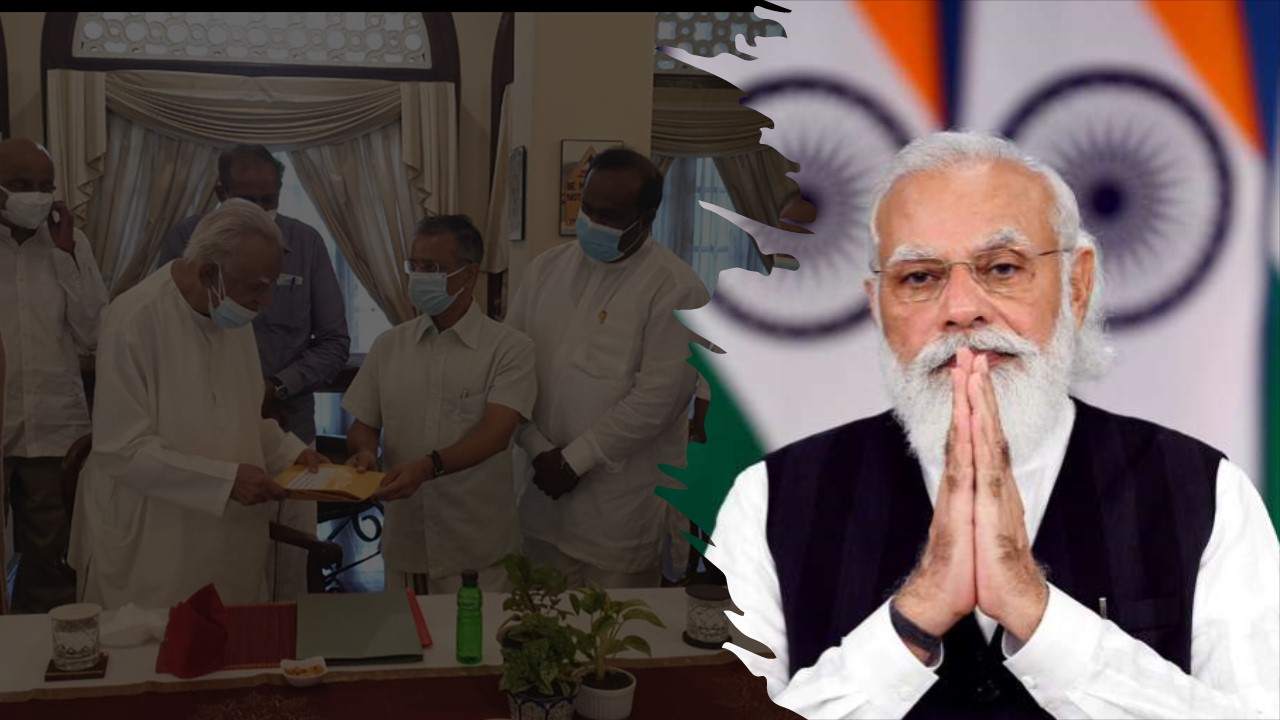
India has been greatly sensitive to the needs of Sri Lanka – Modi

Indian Prime Minister Narendra Modi stated that the India has been greatly sensitive to the needs of Sri Lanka, during the tough times faced by the island nation.

“We have also been greatly sensitive to the needs of our valued neighbour, Sri Lanka, during their tough times,” he said, during an interview with the Indian news agency ‘PTI’.

Meanwhile, the Indian PM also pointed out that the debt crisis is a matter of great concern for the world, especially developing countries, as India looks at building consensus at the upcoming G20 summit to evolve a tangible framework to help the debt-ridden low income economies.

In an exclusive interview to PTI late last week, Modi said India’s G20 presidency has placed a significant emphasis on addressing the global challenges posed by debt vulnerabilities, especially for nations in the Global South.

“The debt crisis is indeed a matter of great concern for the world, especially developing countries. Citizens from different countries are keenly following the decisions being taken by governments in this regard. There are some appreciable results too,” Modi said.

“First, countries that are going through debt crisis or have gone through it, have begun to give greater importance to financial discipline,” Modi said.

“Second, others who have seen some countries facing tough times due to the debt crisis are conscious of avoiding the same missteps,” Modi said.

Under its G20 presidency, India has been consistently highlighting the need for a framework on debt restructuring to help countries facing mounting debt problems.

China, considered to be the world’s largest sovereign creditor, has been showing reluctance to certain proposals on debt restructuring although an increasing number of G20 member countries are pitching for helping the low-income nations deal with the crisis.

According to estimates, over 70 low-income countries are reeling under a collective debt burden of $326 billion.

“The G20 finance ministers and Central Bank Governors have acknowledged the good progress in debt treatment of common framework countries and beyond the common framework too,” Modi said.

“We have also been greatly sensitive to the needs of our valued neighbour, Sri Lanka, during their tough times,” he said.

“To accelerate global debt restructuring efforts, the Global Sovereign Debt Roundtable, a joint initiative of the IMF, World Bank and the G20 Presidency was launched earlier this year. This will strengthen communication among key stakeholders and facilitate effective debt treatment,” he added.

Modi hoped that rising awareness among the people of different countries on the problem will ensure that such situations don’t recur often.

“While a lot is being done to address these issues, as I said earlier, I am positive that rising awareness among the people of different countries will ensure that such situations don’t recur often,” he said.

In July, IMF Chief Kristalina Georgieva pitched for a speedier debt restructuring process for vulnerable countries.

India is hosting the G20 summit on September 9 and 10 in its capacity as the current chair of the grouping.

The G20 member countries represent around 85 percent of the global GDP, over 75 per cent of the global trade, and about two-thirds of the world population.

The grouping comprises Argentina, Australia, Brazil, Canada, China, France, Germany, India, Indonesia, Italy, Japan, the Republic of Korea, Mexico, Russia, Saudi Arabia, South Africa, Turkey, the UK, the US and the European Union (EU).

Posted in Uncategorized

UN: Food Insecurity in Sri Lanka Worsens

Resident Representative of the United Nations Development Programme Sri Lanka Azusa Kubota says over 6 Million people in Sri Lanka are food insecure.

She expressed her views at the launch of the policy report titled ‘Understanding Multidimensional Vulnerabilities: Impact on People of Sri Lanka’ which was held in Colombo on Friday.

“Will hold elections in the future,” a guarantee from the Election Commission

Chairman of the National Election Commission R.M.A.L. Rathnayake says that steps are being taken to ensure that all elections due to be held in the future will be conducted properly.

He made this statement while attending an event to declare open a new building of the National Election Commission in Jaffna. Rathnayake highlighted that the main power vested in the National Election Commission through the constitution is the power to hold elections.

The Chairman acknowledged that the local government election that was supposed to be held was not held for reasons outside the control of the Election Commission, adding that, however, the Election Commission will ensure that the elections will be held as soon as possible.

Meanwhile, Member of the National Election Commission Amir Faiz, also speaking at the event, cautioned against any attempts to compromise the independence of independent commissions, which were established in response to the people’s needs.

Posted in Uncategorized

Sajith Premadasa to contest at next presidential poll

Opposition leader Sajith Premadasa has expressed confidence about his participation at the next presidential election.

The Opposition Leader was responding to claims about his participation at the election, against the backdrop of the participation of Ranil Wickremesinghe.

“Some factions of the government are spreading news that if Ranil Wickremesinghe is contesting the presidential election, Sajith will not contest. The same people who are saying this conspired with Gotabaya Rajapaksa during the last presidential election to prevent me from winning. All I have to say is that I will definitely contest in the next presidential election,” he said.

The Opposition Leader expressed these views during an event to renovate the right canal of the Kirindi Oya movement which was carried out by the Samagi Jana Balawegaya.

The canal was renovated after 40 years.

Posted in Uncategorized

UK television to reveal shocking details on Easter attacks in Sri Lanka

A British television station is to reveal shocking details over the Easter Sunday attacks in Sri Lanka, which it says alleges complicity by officials inside the Government.

Channel 4 television announced it will broadcast the program, ‘Sri Lanka’s Easter Bombings – Dispatches’ on Tuesday 5th September based on information from highly-placed whistleblowers.

Just last year Colombo Gazette and Daily Mirror had reported that a whistleblower had shared sensitive information related to the Easter Sunday attacks to diplomatic missions in Colombo.

That whistleblower was later revealed to be a close aide of the leader of the Tamil Makkal Viduthalai Pullikal (TMVP) and current State Minister for Rural Road Development Sivanesathurai Chandrakanthan alias Pillayan.

The informant of the TMVP, the breakaway faction of the LTTE, had made explosive revelations to the United Nations (UN) in Geneva.

According to foreign media, it implicates ex-president Gotabaya Rajapaksa, the attorney general, state intelligence chief Maj. Gen. Suresh Salley and several other top government figures.

Diplomatic sources had told Daily Mirror last year that the informant had revealed sensitive information related to the Easter Sunday attacks and a number of murders and enforced disappearances.

The informant had written to some key diplomatic missions in Colombo and overseas giving brief details of the information in his possession.

He had then fled the country and sought refuge overseas fearing for his life.

Pillayan later told Daily Mirror that the allegations were baseless.

The MP told Daily Mirror that anyone can leave Sri Lanka and seek asylum by making false allegations.

Sinopec to begin islandwide operations by September end

Sinopec fuel company has assured that its islandwide operations will begin by the end of September, Minister of Power and Energy Kanchana Wijesekara said.

The minister has held a discussion with the officials of Sinopec Fuel and Refinery Operations at the Ministry of Power and Energy this morning (03).

Wijesekara tweeted that the progress of retail operations, signing of agreements with dealerships, branding and commencement of islandwide operations were taken up during the discussion.

Furthermore, Sinopec Refinery officials have assured their commitment to establishing a new refinery in Hambantota and that they will submit the RFP (Request for proposal) before the deadline next week, the minister said.

Posted in Uncategorized

Battle rages between cabinet and state ministers

A ‘mini war’ has broken out between Cabinet Ministers and State Ministers in the execution of their duties.

The State Ministers have complained to President Ranil Wickremesinghe that they have no functions to discharge allegedly due to their ministerial colleagues usurping them. In addition, they have also complained that they have not been issued with good vehicles or other facilities they are entitled to.

The issue has reached serious proportions prompting President Wickremesinghe to summon a meeting tomorrow afternoon (4 p.m.) at the Presidential Secretariat. He will call upon State Ministers to identify their problems.

There are a multitude of reasons confronting the State Ministers. The main one appears to be the absence of any select government institutions under their control, a practice that was previously followed. This was after such bodies were gazetted under the state minister. Consequently, there is also no State Secretary for their ministries. There is only one Secretary for each ministry. State Ministers complain that no minister had been good enough to voluntarily cede any institution under him or her.

Ministers concede that at present, state ministers are not bound by a directive to divest any of their functions as in the past. One angry minister, who did not wish to be named for obvious reasons, said there have been instances where state ministers have shown interest in tenders for projects and other matters involving finances. However, he said, they could not get involved officially. A state minister, who also spoke anonymously, said even ministers resorted to such practices and cited a deal where state land, amounting to 80 acres, had been given by a minister through an irregular practice. True the process has involved Cabinet approval, but irregularities existed, he claimed.

Besides their monthly salaries, both ministers and state ministers are entitled to several perks. Ministers are entitled to two vehicles for their use with the option of picking their own drivers. Both categories are entitled to five different secretaries (a private secretary, a Public Relations Officer, Two Co-ordinating Secretaries, and a Media Officer). Each minister is entitled to 12 security guards, a vehicle for his or her use and a bungalow in Colombo.

There is added significance to tomorrow’s meeting. The Sunday Times learns that President Wickremesinghe is to affect a minor cabinet re-shuffle anytime in the coming weeks. The idea, a government source said, is to replace or shift ministers who have been found wanting in their ministries. This is particularly after reports that their non-performance had caused the public great hardships and led to an unprecedented deterioration of work carried out by their ministries.

Already a vote of no confidence is being moved by the opposition parties against Health Minister Keheliya Rambukwella. Among other matters, they have accused him of “not duly appointing the Board of Directors to the National Medicines Regulatory Authority, importing low quality drugs, importing drugs deviating from the tender procedure, importing drugs at exorbitant prices, being responsible for the scarcity of essential drugs and shortage of laboratory equipment in the hospital system and purchasing of unregistered drugs on the pretext of emergency purchases thereby resulting in deaths and impairments due to their use”. The motion will be debated in Parliament on September 6,7 and 8. There has been widespread criticism about the shortage of medicinal drugs, exodus of specialist doctors and the deteriorating service at public hospitals amidst allegations of mounting bribery and corruption.

With a majority in its favour, the ruling SLPP government led by President Wickremesinghe is sure to have the motion defeated. Its parliamentarians have been told not to undertake overseas visits until the debate is over. Nevertheless, there are a considerable number of SLPP parliamentarians, not to mention their opposition colleagues, who are disenchanted.

How patients are harassed and undergo severe hardships in public hospitals is illustrated by a recent incident. A cancer patient warded at the Teldeniya government hospital required an urgent CT scan before surgery. Hospital staff learnt that the machine at the Kandy General Hospital was not working. So, the staff at Teldeniya arranged an ambulance to take him to the Matale government hospital. When the patient arrived there, it was found that the machine there too was not working. The patient returned to Teldeniya and was discharged with the advice that he should return in a week. A week later, he admitted himself again. He was discharged the next day with the news that there was no CT scan available. Teldeniya Hospital staff telephoned him later and asked that he admit himself again. He was admitted for one day and discharge with the same reason – the CT scans are not working.

Rising gun violence

Another area of public concern, besides the deteriorating health services, has been the worrying law and order situation. Hardly a day passes without a murder being reported to Police Headquarters. In almost all instances, such murders have been carried out with the use of automatic weapons. Other than making pronouncements about persons being arrested, the Police as a whole have not been able to either prevent these incidents or nab those using illegal firearms. To make matters worse, some police top brasses have linked some of the murders to internecine battles between drug cartels. That only confirms that there has been a marked increase in drug abuse. Other than small quantities, there have not been major find of any drug hoards. This has led to allegations, yet to be proved, that drug warlords were in cahoots with some police personnel. Another cause is said to be the tug of war at higher levels where some senior officers are vying with each other to be the head of the Police.

According to a retired senior Police officer, territorial policing which is an essential part of maintaining law and order has come to a virtual standstill. “Particularly during nights, other than traffic policemen, crime prevention activity is much less or literally non-existent,” he pointed out. He said matters took a turn for the worse after last years’ protests (aragalaya) where the vast volume of Police personnel was deployed for static duty guarding fuel stations and other establishments. With that over, the old practices slowed down.

The Presidential Media Division arranged for Public Security Minister Tiran Alles to speak at a news conference. He claimed that the “Police Department is working on a non-political agenda” and argued that “there is no room for underworld activities inside the country.” A PMD statement said: “Minister of Public Security Tiran Alles emphasised that necessary measures have been taken as a responsible government to stop hindrances to the lives of the people. He further stated that the programme to suppress the underworld has already been implemented under the instructions given by President Ranil Wickremesinghe.

The Minister also pointed out that the police department is working on a non-political agenda and is always committed to protecting the law and order of the country at the highest level….

“He added, currently, the Police Department is working on a non-political agenda. All the necessary facilities have been provided. It has been about a year since the current government took office, so not everything can be accomplished within a year. However, the Police Department has undertaken a significant amount of work. The Police Department currently comprises around 85,000 officers. The ministry has developed a special programme to eradicate narcotic drugs from the country. Underworld activities in the South have been on the rise consistently.

Due to this, the Special Task Force, the police, and other security forces jointly started special operations in such areas. As a result, it has been possible to eliminate to some extent the underworld activities in the Southern Province. At present, there are several reports of shootings between groups of underworld gangs. They murder each other. Necessary measures have already been taken to stop such activities of the underworld gangs. Security forces have also been instructed to shoot if necessary. As a responsible government, no activity that harms the lives of the people will be tolerated….”

Minister Alles’ remarks raise more questions than answers. If, as he claims, underworld gangs are shooting each other, how did they obtain their weapons? Just a few years ago, there were fewer than the present, over 600 Police stations. They maintained law and order without the help of the security forces. Despite a so-called special programme to curb drug abuse, there has been a marked proliferation. Another malaise, it has come to light, is the increasing use of political influence and even financial inducements on the police to use their influence to punish people. There has been many instances where courts had to issue orders to arrest police personnel when matters came to light. The latest incident is the alleged killing of a domestic who worked in a Colombo seven household. She died in custody of the Borella Police. The Magistrate’s Court ordered the arrest of those allegedly involved. A Sub Inspector of Police was first arrested. Later, two police constables and a sergeant were arrested, again on the orders of the Magistrate.

There were shocks as living costs showed signs of a further increase. This is the result of this week’s fuel price rise and increase in bus fares. This, no doubt, is an issue that the government would have to address before an election.

OHCHR report on Lanka

On the external front, a matter of importance is next week’s 54th sessions of the United Nations Human Rights Council in Geneva. The report of the Office of the High Commissioner for Human Rights (OHCHR) will come up for interactive dialogue in the forenoon and afternoon of September 11 when the sessions begin. Diplomatic sources said that a copy of the draft OHCHR report has already been forwarded to the government (Foreign Ministry). A formal response from it is due at the OHCHR in Geneva on Tuesday (September 5) with its inputs. That is expected to outline a string of measures that have been adopted, including the ethnic reconciliation process, the implementation of the 13th Amendment to the Constitution, the setting up of the Truth and Reconciliation Commission and the strengthening of the Provincial Councils, land reforms, PTA reforms, prisoner releases, and the introduction of the anti-corruption law.

One of the key areas the OHCHR report will deal with, the same sources said, was its “serious concern” over the shrinking of “democratic space” in Sri Lanka. Reference is being made to curbs on meetings and restrictions on freedom of assembly. It is not immediately clear whether there would be references to the Sri Lanka Accountability Project (SLAP) which is now fully funded and staffed. However, it will be inevitable for the High Commissioner not to report on progress of this most controversial of projects.

Former High Commissioner Michele Bachelet in September 2022 in her written report made several observations and highlighted concerns. Some of the salient points were;

The High Commissioner hopes that the new administration will respond to the popular demand for accountability for economic crimes, including corruption, and abuse of power with a renewed commitment to end impunity. As noted above, the report of the national Consultation Task Force appointed by President Wickremesinghe (when he was Prime Minister in 2016) provides important recommendations for advancing accountability at the national level which remain an equally relevant starting point to this day.
The Human Rights Council should continue to monitor developments closely, and in the absence of tangible results at the national level that ensure justice for Sri Lankan people, Member States should continue to pursue complementary international strategies for justice and accountability for human rights violations, corruption, and abuse of power. The Office of the High Commissioner for Human Rights will continue to accompany the people of Sri Lanka in this vital journey.
Support Sri Lanka in the investigation of economic crimes that impact on human rights and the tracing and recovery of stolen assets.
Of the 42 paragraphs in that resolution, 14 were new inclusions and have been inserted for the first time. Highlighted in the resolution are four new preambular paragraphs introduced for the first time. Among them:

(PP6) Recognising the severe economic crisis which deteriorated in Sri Lanka since late 2021 and the profound impact that this has had on the people of Sri Lanka.
(PP7) Underscoring the importance of addressing underlying governance factors and root causes which have contributed to this crisis including deepening militarisation, lack of accountability in governance and impunity for serious human rights violations and abuses.
(PP8) Recognising the recent efforts of the Government of Sri Lanka to address the ongoing economic crisis and welcoming the staff-level agreement reached between the Government of Sri Lanka and the International Monetary Fund.
Last year’s resolution also drew attention to the protests that culminated with then President Gotabaya Rajapaksa fleeing the country. He later returned. The resolution added five new operative clauses. They are:

Expresses concern at the human rights impacts of the economic crisis, including as result of increased food insecurity, severe shortages in fuel, shortages in essential medicines and reductions in household incomes, whilst stressing the need to promote and protect the rights of the most marginalized and disadvantaged individuals, including daily wage earners, children, older persons, and persons with disabilities.
Remains concerned at continued militarisation of civilian government functions; the erosion of the independence of the judiciary and key institutions responsible for the promotion and protection of human rights; lack of progress in addressing longstanding grievances and demands of Tamil and Muslim populations, surveillance, intimidation, and harassment of journalists, human rights defenders, families of the disappeared and persons involved in memorialisation initiatives, and sexual and gender based violence.
Notes the persistent lack of independence, impartiality and transparency of domestic mechanisms, and that emblematic human rights cases have been undermined through delays and the granting of Presidential pardon to those accused or convicted of crimes relating to grave violations of human rights.
Calls upon the Government of Sri Lanka to address the ongoing economic crisis and help ensure it does not happen again, including by investigating and, where warranted, prosecuting corruption, including by public and former public officials, and stands ready to assist and support independent, impartial, and transparent efforts in this regard

The most controversial provision in resolution 51/L.1/Rev.1 (Operative Paragraph 6), relates to the evidence gathering mechanism under the Human Rights High Commissioner, tasked to a separate secretariat with special funding (now listed as OP8), has been revised to make it stronger. It now says: “Recognises the importance of preserving and analysing evidence relating to violations and abuses of human rights and related crimes in Sri Lanka with a view to advancing accountability, and decides to extend and reinforce the capacity of the Office of the High Commissioner to collect, consolidate, analyse and preserve information and evidence and to develop possible strategies for future accountability processes for gross violations of human rights or serious violations of international humanitarian law in Sri Lanka, to advocate for victims and survivors, and to support relevant judicial and other proceedings, including in Member States, with competent jurisdiction.”

In essence, the 54th UNHRC sessions in Geneva will be a review of last year’s resolution and how the country has performed. Despite apprehensions in some quarters, the outcome is not likely to be of alarming proportions. However, the strength of the High Commissioner’s written report and the seriousness of concerns raised will have significant impact on how and what the UNHRC will do in Sept 2024. Will Sri Lanka remain in the agenda or not will be decided then.

Tamil speaking Muslim lady is Project Director of India’s mission to the Sun

Women’s power at the Indian space agency is slowly coming to the fore and that too in the interplanetary missions. The latest is Nigar Shaji, Project Director for Aditya-L1 mission, India’s mission to the Sun.

A native of Shengottai in Tamil Nadu, the 59-year-old Shaji did her schooling in a government school there.

A bright student, she stood district first in her 10th standard and school first in her 12th standard. Shaji obtained an engineering degree in electronics and communications from Madurai Kamaraj University and did her masters in electronics at Birla Institute of Technology, Ranchi.

She joined the Indian Space Research Organisation (ISRO)’s Satellite Centre, now U R Rao Satellite Centre, in 1987.

At ISRO Nigar went on to make significant contributions to the Indian Remote Sensing, communication, and interplanetary satellite programmes while serving in various positions.

Over the years she was involved in various projects and assumed responsibility for Aditya-L1, the sun probe, eight years back.

“I have been heading this complex project for eight years. It was a challenging project. To place the spacecraft in the halo orbit itself is a major challenge. Further, the payloads were also first of its kind,” Shaji told IANS.

She said her husband, a mechanical engineer, is working in Dubai, a son who has a PhD, is working in Netherlands as a scientist and the daughter is a doctor doing her post-graduation.

Nigar Shaji has served as the Associate Project Director of Resourcesat-2A, the Indian Remote Sensing Satellite for National Resource Monitoring and Management. At present, she is the Project Director of Aditya-L1 mission.

Shaji has published papers in system engineering, image compression, and space internetworking.

Anura Yapa to head new alliance?

MP Anura Priyadarshana Yapa has been given the responsibility of heading the new alliance, which has been initiated by MP Nimal Lanza, sources close to MP Lanza said.

The proposal to hand over all responsibilities to MP Yapa including the power of carrying out discussions with various parties was made by MP Lanza and Minister Susil Premajayantha according to sources.

Mr. Yapa was appointed when the group of MPs representing the new alliance met in the Parliamentary complex recently. It was reported that Minister Nalin Fernando has remarked that the leadership of the new alliance had gone to North Western Province.

It is expected that some local politicians from Colombo, Puttalam and other districts will join the alliance.

It was also revealed that SLPP General Secretary Sagara Kariyawasam has rejected the idea of going for a TV debate with Mr. Lanza.

The new alliance has also planned to form its own Bhikkhu organization soon.