Sri Lanka Minister: won’t allow Indian funded digital ID project to access personal data

Sri Lanka’s digital identity card project funded by India will not be allowed to access personal data by any other country, Public Security Minister Tiran Alles said.

The decision to award the tender to print digital ID cards for an Indian firm has raised concerns over data privacy of Sri Lankan citizens and protection of personal data.

India has already given an advance aid of 450 million Indian rupees to President Wickremesinghe’s government to fund its digital identity project, which aims to collect biographic and biometric information, including facial, iris, and fingerprint data.

The Department of Personal Registration comes under the purview of Alles’ Ministry of Public Security.

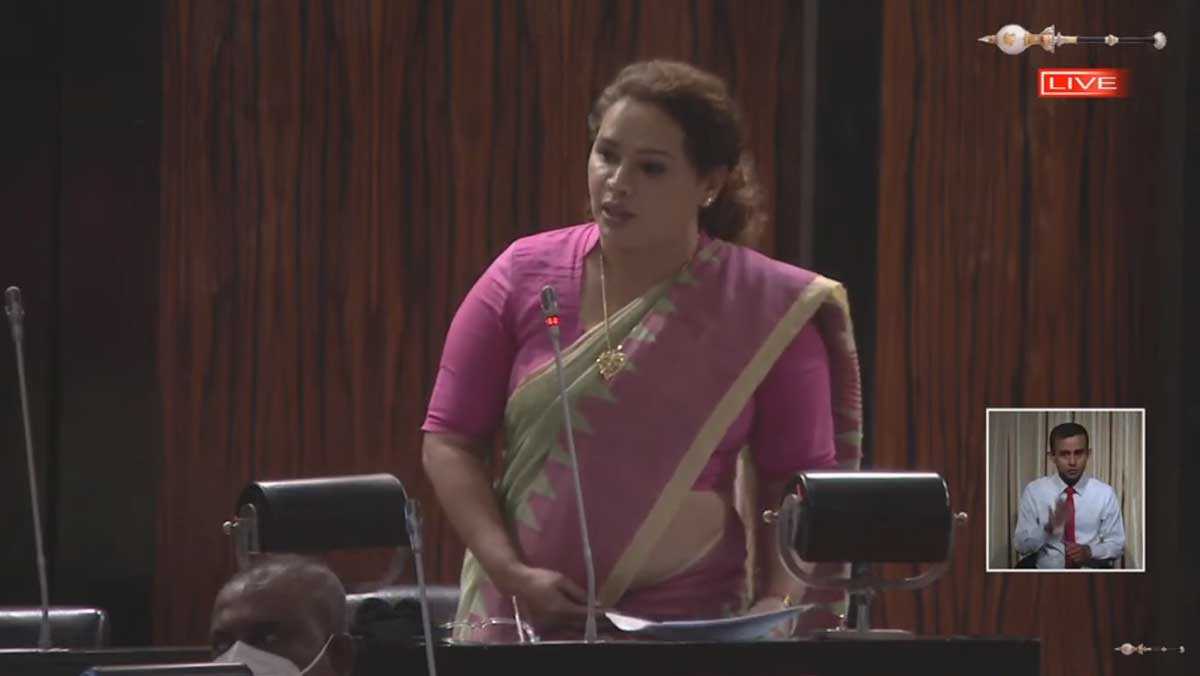
“I don’t know exactly because it is not under my ministry. It is done by the Ministry of Technology. They will go through and finally it will come to us,” Alles told reporters in Colombo when he was questioned over the project.

“I have told only one thing and I have told this to the president as well that I will never ever agree to a system which could be used by another country to access our personal data.”

“We can’t allow that to happen. If that happens anybody can see even your blood group. This will be looked into.”

The project is expected to store the personal data of every individual in a centralised system to issue identification cards as per the standards set by the International Civil Aviation Organisation (ICAO), government officials have said, to effective and efficient delivery of government services, financial inclusion, and poverty reduction.

An Indo-Sri Lanka Joint Project Monitoring Committee (JPMC) has already been appointed to oversee the progress of the project.

Wajira Abeywardena, a legislator and close ally of President Wickremesinghe last week said the project would not pose a threat to national security despite the implementation being done by an Indian company.

Posted in Uncategorized

Cardinal wants Referendum on Indo-Lanka roadway

While stressing that Indo-Lanka ties should be confined to trade and economy, Archbishop of Colombo Cardinal Malcolm Ranjith said the proposed bridge between the two countries should be approved by the Sri Lankan people through a Referendum.

Speaking at a healing service at the Thewatte Basilica church in Fagama over the weekend, Cardinal Ranjith said it was the rulers who had betrayed Sri Lanka in the past.

“Construction of a road between Sri Lanka and India has been proposed now. It is the rulers who come up with such proposals and betray our nation. All can remember the air dropping of dhal and how the Indian army was sent to Sri Lanka in the past. Ancient kings confined their relationships with India to trade and economy. Therefore the proposal to set up a road between India and Sri Lanka should be approved by the people in Sri Lanka at a referendum,” Cardinal Ranjith said.

“Pakistan and Bangladesh have been parts of India in the past but Sri Lanka has always been a separate country,” he added.

“We have seen some political leaders showing their faces in religious programmes in temples and church feasts. These political leaders should not use these religious programmes to enhance their images,” he also said.

He said it is the open economy that was introduced in 1977 that led to the economic crisis which the nation is facing today.

“Around 80 per cent of Sri Lanka’s resources are enjoyed by 20 per cent of the population while the remaining 80 percent of the population are left with 20 per cent of the resources. “This vicious system should be changed,” he said.

Posted in Uncategorized

Promotion of economic ties will be the centrepiece of Santosh Jha’s diplomacy in Sri Lanka

Santosh Jha, who is tipped to be India’s envoy in Sri Lanka in place of the incumbent Gopal Baglay, is likely to vigorously pursue India’s economic goals in Sri Lanka, given his strong background in economic diplomacy.

Jha was Counsellor at the Indian High Commission in Colombo in charge of economic affairs, during the reconstruction of war-devastated Northern Sri Lanka after the cessation of hostilities in 2009. He was also involved in the negotiations to enter into a Comprehensive Economic Partnership Agreement (CEPA) with Sri Lanka. As Ambassador to the European Union in Brussels, he was part of the negotiations for an India-EU Bilateral Trade and Investment Agreement.

Given India’s ongoing deep involvement in Sri Lanka’s economic recovery from a crippling foreign exchange crisis with a financial package of US$ 4.5 billion, Jha will be implementing India-Lanka agreements on a wide range of high-value infrastructure and energy projects agreed upon during Lankan President Ranil Wickremesinghe’s State Visit to India in July.

Complicating the scenario, the projects proposed in the “Vision Statement” issued at the end of Wickremesinghe’s visit, are to be implemented in the face of stiff competition from China.

Beijing is also wooing Sri Lanka vigorously, for more projects for itself though, in contrast to India’s generosity, it is still dragging its feet on debt restructuring or extending emergency financial aid to help Sri Lanka overcome the forex crisis.

Onerous Task

Jha will have a tall order to meet in Sri Lanka as the “Vision Statement” issued by Indian Prime Minister Narendra Modi and Sri Lankan President Ranil Wickremesinghe in New Delhi on July 21, is ambitious.

Here are some of the key infrastructure projects envisaged:

Development of ports and logistics infrastructure at Colombo, Trincomalee and Kankesanthurai;

Exploration of “land connectivity” between India, and the ports of Colombo and Trincomalee with a bridge across the Palk Strait;

Cooperation in developing renewable energy enabling Sri Lanka to achieve its target of generating 70% of power requirements from renewable energy sources by 2030;

Establishing a high-capacity power grid interconnection between India and Sri Lanka to enable bidirectional electricity trade between Sri Lanka and other regional countries, including the BBIN countries comprising Bangladesh, Bhutan, India, Nepal, which has the potential to not only bring down the costs of electricity in Sri Lanka but also help create a valuable and dependable source of foreign exchange for it;

Expediting implementation of understanding reached on Sampur Solar power project and LNG infrastructure,

Cooperation in green hydrogen and green ammonia through use of innovative technologies with an aim to increase renewable energy mix in power generation of Sri Lanka;

Developing the Trincomalee Tank Farms and other developmental projects in the Trincomalee area;

Constructing a multi-product petroleum pipeline from the Southern part of India to Sri Lanka with an aim to ensure affordable and reliable supply of energy resources to Sri Lanka; to undertake mutually agreed joint exploration and production of hydrocarbons in Sri Lanka’s offshore basins with an aim to develop Sri Lanka’s upstream petroleum sector;

Facilitate investments from India in the divestment of Sri Lankan State-owned Enterprises and in manufacturing/economic zones in various sectors in Sri Lanka;

Hold discussions on an Economic and Technology Cooperation Agreement (ECTA) with an aim to comprehensively enhance bilateral trade and investments in new and priority areas;

Implement the decision to make the Indian Rupee a currency for trade settlements between the two countries;

Operationalising an UPI-based digital payments for further enhancing trade and transactions between businesses and common people;

Leveraging India’s Digital Public Infrastructure in accordance with Sri Lanka’s requirements and priorities towards effective and efficient delivery of citizen-centric services to the people of Sri Lanka.

Geopolitical Issues

Complicating the scenario, these projects have to be implemented in a challenging geopolitical context, namely, in the face of stiff competition from China. Beijing is also wooing Sri Lanka vigorously, for more projects for itself though, in contrast to India’s generosity, it is still dragging its feet on debt restructuring or extending emergency financial aid to help Sri Lanka overcome the forex crisis.

Jha will be involved in countering China’s powerful geopolitical influence in Sri Lanka and seeing that Sri Lanka remains irrevocably within India’s sphere of influence.

This is a no-mean task, given Sri Lanka’s tendency to dodge India in both economic and geopolitical matters. As Hindustan Times says, Sri Lanka is “yet to respond positively to India’s strategic concerns vis-à-vis China and has hosted Chinese surveillance ships and ballistic missile tracking ships in Colombo and Hambantota.”

According Sunday Morning, Sri Lanka is working on a Standard Operating Procedure (SOP) for foreign military ships wanting to call at Si Lankan ports. According to it, relevant Sri Lankan officials will board the vessels to ensure that nothing is done to jeopardise India’s security.

And again in the context of China’s geopolitical challenge to India, Indian Defence Minister Rajnath Singh is to visit Trincomalee according to Daily Mirror shortly.

Source: Counterpoint

No letter from SLPP to Election Commission over LG polls

The Election Commission has denied receiving a letter from the Sri Lanka Podujana Peramuna (SLPP) with a call to hold local government polls without any further delay.

A commission official said on condition of anonymity that they had not received any such letter.

He also said that voters well know, although the SLPP seems to have forgotten, that non-allocation of funds by its regime has caused the indefinite postponement of the election.

Media quoted SLPP general secretary Sagara Kariyawasam as claiming to have sent a letter to election authorities.

(Anidda)

Posted in Uncategorized

Defense Ministry gives green light for Shi Yan 6 to conduct research in Sea of Sri Lanka

The Ministry of Defence has given the green light for the Chinese Research/Survey Vessel Shi Yan 6 to dock at the ports of Sri Lanka.

The approval was granted following a request made by the Ministry of Foreign Affairs and the National Aquatic Resources Research and Development Agency, also known as NARA.

Chinese Research/Survey Vessel Shi Yan 6 will reach Sri Lanka on October 25, and will be involved in research operations in the Sea of Sri Lanka for a period of 17 days.

Sri Lanka Navy said that the Shi Yan 6 will be reaching Sri Lanka for joint research operations with the National Aquatic Resources Research and Development Agency, also known as NARA.

However NARA said the vessels’ arrival is part of an agreement reached with the Ruhuna University of Sri Lanka.

This is not the first time that the Chinese Research/Survey Vessel Shi Yan 6 will be visiting Sri Lanka.

The Shi Yan 6, Research and Survey Vessel had previously visited Sri Lanka on the 20th of April 2022, and remained in the Sea of Sri Lanka for a total of ten days.

Over a past few years, a large number of vessels had reached Sri Lankan ports, and a majority of them are Chinese research and survey vessels.

These vessels include the Shi Yan 6, Shi Yan 1, Shi Yan 3, Xiang Yang Hong 3, Xiang Yang Hong 18, Xiang Yang Hong 1, Xiang Yang Hong 6, and Xiang Yang Hong 19.

Posted in Uncategorized

Sri Lanka minister calls for solution to 800,000 landless non-workers in plantations

A legislator has called for support from politicians of both sides of the house to solve the issue of landless non-workers living in commercial plantations, after an incident involving the dismantling of a make-shift dwelling in an estate in Matale.

Plantations officials had ordered the dwelling to be dismantled amid protests and to the sounds of crying children, in a video footage shared over social media, that drew a sympathetic response.

Subsequently Jeevan Thondaman a Minister of Water Supply and Estate Infrastructure Development, Jeevan Thondaman was involved in an altercation with company officials after he visited the estate.

According to Plantations Companies there are 987,000 living in estates based on officially available data. Of that only about 115,000 were workers. The rest were not workers but are allowed to stay since they had been their for generations.

About 65,000 stand alone houses had been built since the plantations were privatized in 1991 for company workers.

Each family was given 7 perches of land and some money to start building a house. The rest of the money came from NGOs and other donors through a Plantations Housing Development Trust.

On average there were about 2.1 workers per family. In addition, 116,000 older dwellings were upgraded, according to plantations companies.

The problem remained over non-workers.

“There are about 200,000 people in the estates who are workers and another 800,000 of their family members who are not given any rights, and not even recognized,” Thondaman said.

“We have spoken to President Ranil Wickremesinghe, Prime Minister Dinesh Gunawardnana.

“It was Minister Ramesh Pathirana who started this move. Along with Minister Harin Fernando we will be submitting a cabinet paper very shortly to grant these people 10 perches. That is about 200,000 families.”

Thondaman told parliament that an Assistant Manager at Ratwatte Estate at Elkaduwa Plantations had been removed.

The Planters Association representing estate managers protested what it called was the abuse of officials who were trying to stop an illegal encroachment of state land on lease.

Minister Thondaman “used abusive language and threatened the senior management of Ratwatte Estate, belonging to Elkaduwa Plantations. The Planters’ Association of Ceylon vehemently condemns this verbal attack and calls for an impartial investigation. ”

“After reporting the matter to the police, the management exercised their authority to protect the state property as custodians of the land, in accordance with the law.

“The land of Ratwatte Estate belongs to the government with Elkaduwa Plantations having been awarded the management contract for it.”

“If the assistant manager had an issue of the non-worker who encroached or illegally built a structure, there are legal ways in which it can be addressed,” Thondaman told parliament, justifying his intervention.

However he said no legal action can be taken against company officials.

“Mr Velukumar, I explained at the start that it was an illegal encroachment,” Thondaman responded to an opposition legislator.

“You are talking on humanitarian grounds. I am talking about legality. There is a difference. That difference being when someone has illegally encroached on that land they have no say over that land.

“The assistant manager has been removed immediately. And the second thing I believe the minister has also agreed is that 11 people who were there who were not workers will be given land and they will be given houses.

“You are saying take legal action on an illegal issue. That is not possible. You are trying to make politics out of this issue. The source of this issue is that people do not have rights over land.”

He called on parliamentarians to get together to solve the problem.

“Then we have this issue, a non-worker, a human being was subject to such inhuman treatment. I am sure all of you have seen the video. I do not want to separate and create divisions among ourselves. We are here in black attire and protesting, I understand all of that.

“I think we should understand that if all of us were to come together, we can get a solution collectively. The problem is we are not looking at this in a positive manner. We are looking at how we can use this community as a vote bank.”

Thondaman said the estate Tamil community had been mistreated by successive Sri Lanka governments and they were denied citizenship for over 30 years.

Sri Lanka’s government had given state land (or so-called Crown land dating from the British period) in various irrigation schemes, where freehold ownership, a concept that originally emerged in Britain (see also fee simple), is also not complete.

In most free countries people who are born in the country are considered citizens, especially when their parents were also born in the country. Estate workers migrated to Sri Lanka during British rule from India.

However, Sri Lanka enacted a nationalist citizenship law soon after getting independence from British rule and blocked naturalization, according to critics.

During the time of ancient kings also the migrations took place for various professions, including for soldiery, but there was no European style nationalist citizenship law to block naturalization, according to students of history.

Along with developments in Europe, the British had already started to tighten migration, especially of persons outside the British possessions, several decades before independence.

Meanwhile there is a migration of young people away from plantations into cities, who are looking for jobs in retail and in the service sector while some are migrating abroad. In areas with better quality education, young people find it easier to get jobs.

Sri Lanka was a net importer of labour before a central bank was built in 1950, allowing ‘macro-economists’ to create forex shortages and balance of payments deficits in the Harvard-Cambridge inflationist tradition and permanently depreciate the rupee after US inflationists busted the Bretton Woods system.

British rulers enacted several laws to make it more difficult to migrate out of the island including Foreign Recruiting Ordinance of 1874.

Many other Sri Lankans are also leaving the country after inflationist ‘macro-economists’ destroyed real wages by busting the rupee, in their latest escapade involving the 2020-2021 macro-economic policy to target an output gap.

Plantations workers themselves had seen their wages fall after output gap targeting.

Setback for SJB’s alliance moves, as Dullas woos Wimal’s group and JVP

Two parliamentarians – Nalin Bandara Jayamaha (Kurunegala District) and Wasantha Yapa Bandara (Kandy District) – were suspended for the day’s sittings from Parliament on Tuesday by Speaker Mahinda Yapa Abeywardena.
It fell on the Serjeant-at-arms, Narendra Fernando, who is tasked to carry out the orders of the Speaker, to make sure they left the precincts of Parliament. He was walking with them out of the chamber and had to pass a location where the MPs were usually served Kola Kenda (a traditional herbal congee). The duo wanted to savour the health drink. He waited till they finished before escorting them out of the premises.

Other than that, a more serious event on Friday was the decision to place before the House Ethics and Privileges Committee the matter concerning Puttalam District MP, Ali Sabri Raheem. As exclusively revealed in these columns last week, an official report from Customs Director General P.B.S.C. Nonis to the Speaker has prompted the move. (See story on this page).

For opposition political parties represented in Parliament, the preoccupation appears to be preparing for a parliamentary election. Though there is no formal indication from President Ranil Wickremesinghe, their leaders do not want to take any chances. That it would take months rather than weeks is clear from President Wickremesinghe’s decision to implement the 13th Amendment to the Constitution. Except for the Janatha Vimukthi Peramuna (JVP), all other political parties have made proposals. They are now being tabulated at the Presidential Secretariat for scrutiny by the cabinet of ministers. It will thereafter be presented in Parliament for all political parties to agree on a common format.

The 13th Amendment which deals with Provincial Councils came about due to India’s intervention in July 1987 as a solution to the ethnic conflict. Thus, the principal beneficiaries in the north and east were the Tamil political parties. On August 15, parliamentarian C.V. Wigneswaran, a former Supreme Court Judge, told a meeting chaired by President Wickremesinghe: “I have already made available to His Excellency a letter signed by the Leaders of seven of the 13 registered parties in the North and East asking for the full implementation of the 13th Amendment for the moment. Of the six remaining, a party in Government has supported our efforts but declined to sign on a protocol basis. The Tamil Congress feels two in the bush is better than one in hand. The other four registered parties have refused to sign the document for reasons best known to them.” He noted that the Provincial Council elections have not been held for the past ten years.

The latest round of talks came between the Freedom People’s Congress (FPC) led by Dullas Allahapperuma and the Uttara Lanka Sabhagaya (ULS) led by Wimal Weerawansa. The two sides met at the Communist Party office to discuss whether they could reach common ground. That was not good news for the Samagi Jana Balavegaya (SJB) which had hoped to wrap up an alliance with the FPC, as revealed in these columns last week.

The two sides reached a broader understanding on holding a further round of talks. They will centre on economic policy, foreign policy including regional power balance, political reforms including the proposed implementation of the 13th Amendment to the Constitution and the creation of a social democratic structure. Representing the FPC were G.L. Peiris, Dilan Perera, Nalaka Godahewa, Charitha Herath and Channa Jayasumana. The Uttara Lanka Sabhagaya team was led by Wimal Weerawansa and included Udaya Gammanpila, D.E.W. Gunasekera, Vasudeva Nanayakkara, G. Weerasinghe (General Secretary of the Communist Party) and Gevindu Kumarasinghe. The two sides are yet to agree on a date for the next round of talks.

Wooing JVP

The same FPC delegation had talks with the JVP at its office in Battaramulla on Friday. They are not seeking a tie-up but exploring the prospects of the two sides joining together on a common platform on key issues. JVP leader Anura Kumara Dissanayake, Vijitha Herath and K.D. Lalkantha attended the talks.

A sizeable section of the FPC are opposed to an early tie-up with the main opposition SJB. It came to light this week that they want to first end their dialogue with all opposition political parties before reaching finality. A key member who is opposed to an early tie-up with the SJB spoke on grounds of anonymity. He said, “They want to rope us in early for two main reasons. One is the support they will receive for the candidature of their leader Sajith Premadasa. The other is by doing so, they want to prevent a possible erosion of their ranks to the United National Party.”

The same member said that one of the major stumbling blocks for an early tie-up with the SJB was its economic policy. The SJB came out earlier with a blueprint that was authored by Harsha de Silva. Now, it has improved on this same programme which makes clear that its policies are no different to those of the UNP or albeit the ruling disposition, the member said. “We will want the SJB to agree on a new economic policy if we are to support it,” the member said.

Highlights of the Executive Summary of the SJB blueprint:

“Sri Lanka’s economic crisis is not unexpected. Decades of short-sighted policies and half-hearted reforms weakened our foundation. Sudden global crises pushed us to the brink. Appalling mismanagement took us over the edge. Today, the state is bankrupt, inflation is rampant, the economy is faltering, and our socio-political order is in crisis. Yet we can still recover, we can regain our ground, reform our economy, and rebuild our country.

“Blueprint 2.0 tells us how. Anti-corruption and transparency laws are the bedrock of true, lasting change; and their rigorous implementation is essential to build a society that is just, equitable, and free from corruption. We must obtain bridge financing for our debt crisis and productively engage with the International Monetary Fund while restructuring our debt. We must maintain financial system stability as we do so. Carefully floating the exchange rate to market levels and raising interest rates will control inflation and restore the economy’s international competitiveness.

“Monetary policy reform will ensure that we do not backslide into crisis. Fiscal reform, including sustainable tax revenue increase, expenditure rationalisation, and reform of state-owned enterprises, is also critical. As we stabilise, we must also grow. It is essential that we promote trade, industry, agriculture, and services by unshackling markets, increasing competitiveness and productivity, promoting exports and investment, and integrating with global production networks. Transforming the public sector into a productive, efficient, digitally enabled workforce that serves the needs of Sri Lanka’s citizens, is also vital for growth. Reforms in the energy and utilities sectors are particularly important.

“Land and labour market reform will enable and amplify this growth.

“Targeted, means-tested cash transfers within a strong, transparent, effective social safety net must safeguard those who need it most. These reforms will enable more citizens to access the opportunities stemming from growth. This will not be an easy path, but it is our only route out of debt and towards sustainable inclusive development.

“This document is prepared by Harsha de Silva, a member of the Samagi Jana Balawegaya (SJB)’s Economic Policy Unit consisting of the author, Kabir

Hashim, MP and Eran Wickremeratna, MP; and is endorsed by SJB Leader Sajith Premadasa, MP. Valuable advice and commentary from Professor Premachandra Athukorala and several economists are acknowledged with gratitude.

“This document also incorporates, in tables, the short-medium term action plan detailed in the ‘Common Minimum Programme’ compiled mid-2022 by the

National Movement for Social Justice (NMSJ) using proposals from Advocata Institute, Bar Association of Sri Lanka (BASL), Elle Gunawansa Thera, independent economists’ group,

“This document focuses solely on economic stabilization and growth: it does not include in-depth views of the author, the SJB, or any others on reforms in

critical areas such as education, health, justice, reconciliation, environment, or any other aspects. It is not a comprehensive manifesto.”

Clues in President’s plans

However, the opposition political parties are still not sure when President Wickremesinghe will call for either presidential or parliamentary elections. Consequently, they are surmising every step he takes as a possible prelude to a poll. Upon his return from a short visit to Singapore, Wickremesinghe pitched camp in Trincomalee to direct a string of development projects. This was much like what he did earlier when he operated on from Nuwara Eliya. From Trincomalee, he travelled to Arugam Bay in the Ampara District. His Media Division said:

“Reflecting on the previous year, our nation faced an economic collapse that led us into a state of indebtedness. Thanks to well-executed government initiatives, we managed to avert bankruptcy this year, but the responsibility of repaying these debts remains. Additionally, foreign exchange is pivotal for propelling the country’s progress. Hence, maintaining a favourable trade balance is imperative; otherwise, we risk encountering another economic crisis in a decade due to escalating debt. To counter this potential scenario, we have devised a novel programme. Notably, substantial focus has been directed towards the Eastern Province, with a particular emphasis on the Trincomalee district’s development. In this endeavor, we have secured support from India for advancing the Trincomalee district.

“Our plan encompasses harnessing the land portion of the left bank of the Mahaweli zone to facilitate development activities. This includes the establishment of a sizable investment zone spanning approximately a thousand acres. It’s crucial to highlight that, concurrent with the tourism industry’s advancement, an agricultural modernization scheme and a development project for the fishing industry are being formulated to elevate these industries’ prospects. Moreover, a primary objective is to enhance the living standards of the people in the Ampara district, a region inhabited by poor people. This has been a key focus, driving the modernization of both the fishing and agricultural sectors in Ampara. The target of achieving a rice yield of at least 7 to 8 metric tons per hectare is set, with corresponding initiatives in animal husbandry being enacted in the province as well.

“In the forthcoming decade, a concerted effort is being directed towards elevating the annual tourist influx from 2.5 million to 5 million initially, followed by a subsequent surge to 10 million In line with this, a robust initiative seeks to attract no less than 10-20 million tourists annually to this region. The formulation of a comprehensive strategy to levy fees of $300 or $500 per day per tourist is in progress, aimed at materializing this goal within the Eastern Province.

Presently, the landscape of tourism exhibits distinctive features. A segment of tourists gravitates towards these provinces. Nurturing activities such as water skiing, which holds substantial tourist allure, becomes pivotal…..”

It is the breakaway groups from the Sri Lanka Podujana Peramuna (SLPP) that are keen to forge tie-ups with other opposition political parties. That it has emaciated the SLPP is no secret. Fresh moves are now being made to widen their support base among MPs. This is by being critical of the implementation of the 13A. The SJB which remains less than active but confident of victory at the polls is keen to shore up its support base. It is no easy task for it. It is known that the SJB’s key members have formulated their own publicity machinery in the absence of a voice from the party. The result has been a campaign by media promoters of SJB leader, Sajith Premadasa, to have his lengthy speeches in Parliament publicised. Other than that, the absence of cohesive media machinery has prevented the SJB from speaking out in one voice over national issues. That may cost the grouping considerably though some of its stalwarts keep complaining that they do not have the funds for a full-fledged media operation. Their woes will continue.

Posted in Uncategorized

Your move to implement 13 as an interim arrangement is correct – US Ambassador praises Tamil parties

“While the new constitution you are expecting is unlikely to come now, your move to demand the full implementation of the 13th Amendment is right” – this is what US Ambassador to Sri Lanka Julie Sang said in person to the leaders of the Tamil parties who met her in Jaffna on Wednesday.

The meeting took place at the guest house in Kokuvil. Selvam Adhikalanathan, President of Tamil Eelam Liberation Organization(TELO), President of Tamil Eelam People’s Liberation Organization (PLOT) Th. Siddharthan, Sri Lankan Federal Party (ITAK) Senior Vice President C. V. K. Shivanjanam were present in this meeting.

The party leaders said that the American ambassador who has arrived in Jaffna after about a year showed interest in knowing the political affairs cantered on the North and She also heard the opinions of the parties regarding the chances of winning the presidential election. She also heard about the usurpation of land in the north and the invasion of Buddhism. She also inquired about the activities of a group led by Buddhist monks at Kurundurmalai.

At the meeting, the US Ambassador asked if there were Buddhists in the North.

She also inquired about the current status of land release and release of political prisoners. In addition, in this meeting, issues including the issue of holding the Provincial Assembly elections and the new Anti-Terrorism Act were also discussed. She also heard about Tamil youth leaving the country in large numbers. It was also reported that She asked in detail about the pros and cons of this.

UK to provide grants for health support and fellowships to Sri Lanka

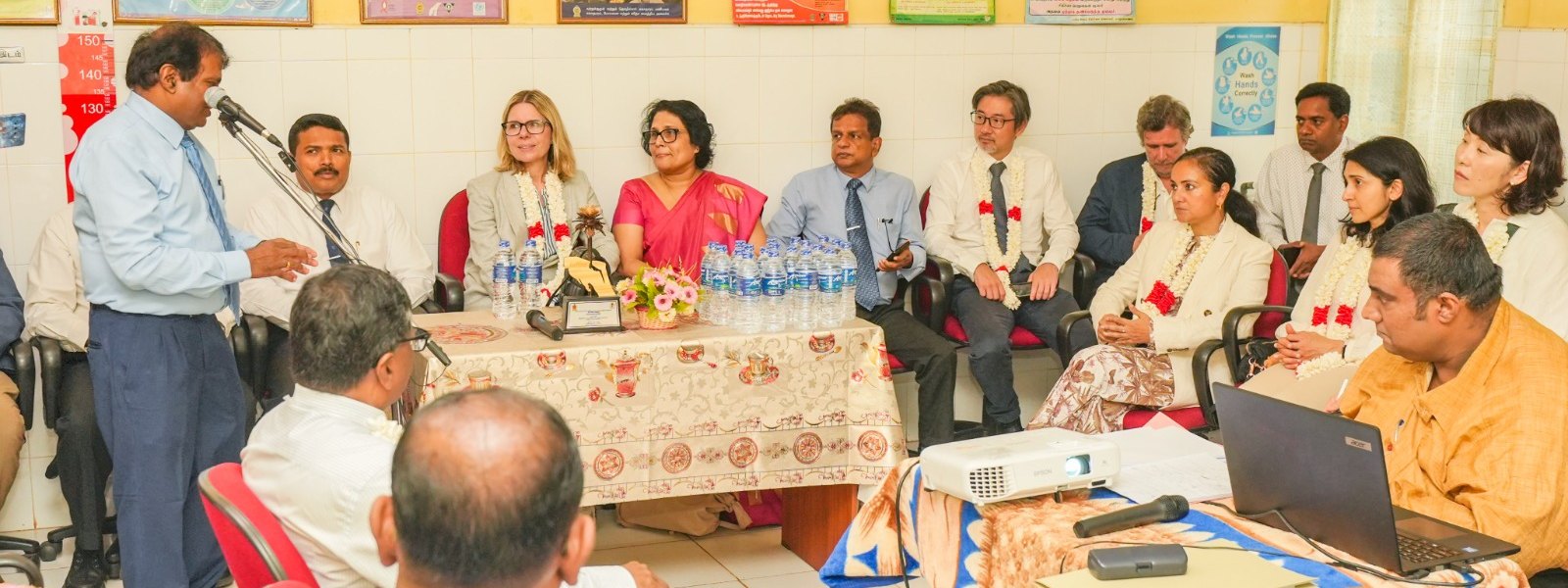
British Deputy High Commissioner Lisa Whanstall has called on Prime Minister Dinesh Gunawardena to discuss the commencement of the 2nd phase of UK aid programme to Sri Lanka.

Whanstall visited the prime minister at the Temple Trees in Colombo earlier this week, accompanied by a delegation from Fleming Fund of UK Department of Health and Social Care.

She said the healthcare grants programme, which was halted for the last couple of years due to Covid-19 pandemic, will be resumed in January 2024.

Under this grant assistance will be provided to support to generate, share and use antimicrobial resistance data to reduce drug resistance.

It will support public health surveillance to help improve patient health, inform national health policies and warn emerging threats.

The grant programme will be implemented with the assistance of the Ministry of Health, World Health Organization and other agencies. Under this programme training fellowships will be provided to health sector staff.

The Prime minister thanked the United Kingdom for selecting Sri Lanka as a recipient of this health care programme, which will be immensely useful to advance the health system in the country. He pointed out that Sri Lanka health service is based on the British system and there will not be any difficulty in implementing such health care programmes.

British Council’s Country Director Orlando Edwards presented a set of publications on English language training methods of the Council to the Prime Minister.

Prime Minister Gunawardena urged the Acting High Commission and the British Council to introduce English Language education to youths in rural areas.

Dr Jessica Wallis and Dr Neha Gulati of UK Fleming Fund, Andrew Price of British High Commission and Additional Secretary to the Prime Minister, Deepa Liyanage also took part in the discussion.

Operation Fonny: Shameful Arrest of Ex-Army Chief Fonseka by the Army

Sri Lanka’s one and only Field Marshall Sarath Fonseka is very much in the news lately. The Gampaha District MP and Samagi Jana Balawegaya (SJB) Chairman launched a People’s Revolution protest campaign against waste, corruption, irregularities and mismanagementon August 11, 2023. This has led to strong speculation that the former Army Commander and ex-chief of Defence staff will act independently and throw his hat into the forthcoming Presidential Election ring.
The possibility of Sarath Fonseka being a presidential contender has revived memories of the 2010 Presidential Election. It may be recalled that Gardihewa Sarath Chandralal Fonseka then a four-star General retired from the Army and challenged the then incumbent President Mahendra Percy Rajapaksa at the 2010 Presidential poll as the common opposition candidate.

After a hectic election campaign marred by allegations of fraudulence, abuse of state resources and violence, the poll was held on January 26th 2010. Mahinda Rajapaksa came first with 6,015,934 or 57.88% of the vote Sarath Fonseka came second with 4,173,185 votes, or 40.15%. Mahinda Rajapaksa assumed office again as executive president.

Barely two weeks later on the night of February 8, 2010, the former Army Commander was arrested by members of the very same Army he had led only a few months ago.
When Sarath Fonseka was arrested there was very little media publicity about the manner and mode in which he was arrested.
Though information was scanty at the time of the arrest, this writer was then the first to report the circumstances of the ex-army chief’s arrest in English. This irritated the powers that be and their acolytes very much then. It is against this backdrop therefore that I am revisiting in this week’s column – with the aid of earlier writings – the arrest of Sarath Fonseka 13 years ago.

February 8, 2010

On that fateful night of February 8, 2010, the defeated presidential candidate Sarath Fonseka was in his political office at 1/3 Rajakeeya Mawatte (Formerly Reid Avenue) near Royal College in Colombo 7 discussing political strategies and campaign tactics for the forthcoming Parliamentary polls with a group of political allies.

Among those participating in the discussions were Sri Lanka Muslim Congress (SLMC) leader and MP Rauff Hakeem, Democratic People’s Front (DPF) leader and MP Mano Ganesan, Janatha Vimukthi Peramuna (JVP) leader Somawansa Amerasinghe and JVP Parliamentarian Sunil Handunnetti.
Fonseka’s Media Secretary S.H. A. Silva aka Shah Silva was also a participant. Senaka (SHA) Silva is a former major of the Sri Lanka Army.

The highly confidential discussions were conducted behind closed doors in Gen. Fonseka’s boardroom on the first floor of the two-storyed building.
The security personnel in charge of personal security for Parliamentarians like Hakeem, Ganesan and Handunnetti were waiting below on the ground floor and also in an outer enclosure at the entrance.
Even as these discussions were going on soldiers were preparing to launch a special operation targeting their former commander.
The operation was codenamed facetiously as “Operation Fonny” because Fonseka was nicknamed ‘Fonny’ in the Army. ‘Operation Fonny’s’ objective was taking into custody General Sarath Fonseka RWP, RSP, VSV, USP, RCDS, PSC.

World’s Best Military Commander

Rudiments of the operation to arrest Fonseka were planned by Brigadier Jagath Wijesiri, the then Army Provost Marshall of the military police and the then Colombo Operations Commander Major General Sumith Manawaduge. The top secret operation was sanctioned by the then Defence Secretary Gotabaya Rajapaksa who once described Fonny as the “world’s best military commander”.
It was at 9 p.m. on February 8 that Operation Fonny got underway.

A contingent of over 200 men comprising military personnel from the Military Police Corps and Colombo Operations Command were deployed. The launching pad was the Sri Lanka Corps of Military Police Headquarters at Polhengoda. A team of sleuths from the Police CID also accompanied the soldiers to provide a “non-military veneer” to the exercise.

Soldiers travelling in four buses and eight other vehicles arrived at the Thunmulla Munidasa Kumaratunga Mawatha – Sir Ernest de Silva Mawatha – Rajakeeya Mawatha, three-cornered junction.
Dressed in battle fatigues and adorned with green berets the arms-wielding soldiers spread out rapidly in the area and sealed off all the roads. All vehicular traffic was blocked at vital points. Rajakeeya Mawatha was saturated with military personnel. Fonseka’s political office was cordoned off.

Rajakeeya Mawatha

The time was about 9.40 p.m. when a squad consisting of military police, and military and police CID personnel entered the Rajakeeya Mawatha office premises. A contingent of military personnel swooped down on the premises in a commando-type manoeuvre.

Scores of soldiers took up positions around and inside the building. The gates were locked from the inside.
The Ministerial Security Division(MSD) officers entrusted with the task of ensuring security for opposition parliamentarians were all rounded up and forcibly disarmed. Two officers attempting to run upstairs were ordered to climb down at gunpoint. All of them were herded into two corners and detained. The CCTV cameras were switched off and recording equipment was removed. Some members of the special squad led by Brig. Wijesiri and Maj-Gen Manawaduge proceeded upstairs.

Provost-Marshal

Initially, military police led by Brig. Wijesiru burst into the room where the meeting was going on. Upon entering the room the Provost-Marshal Brigadier Wijesiri introduced himself and asked the politicians to leave the room as the army had been instructed to detain and question General Fonseka and Senaka Silva. The politicians had objected to this high-handed action and politely refused to vacate the room and leave the General to the tender mercies of his erstwhile military subordinates.

At this point, General Fonseka said that if he was to be arrested for questioning then it had to be done in the proper way. He said that the Army could not arrest him as he was no longer in the Army and that only the Police could arrest him.

Fonseka’s media secretary Senaka Shah Silva also spoke in support of the General’s position and emphasised that he too could not be arrested by the Military Police as he was a retired major.
Provost Marshall Brigadier Wijesiri then said that the General had to be taken into custody by the military police for interrogation about certain offences committed by him while wearing the military uniform. Since they were military offences it was the Military Police that was entitled to arrest him, emphasised the Provost Marshall.
A Military Police Officer then rapidly read out his orders outlining the reasons for taking Sarath Fonseka into custody. The charges under which Fonseka was to be interrogated included-
a) Politicking whilst in uniform.
b) Conspiring against the Commander-in-Chief whilst in Service.
c) Harbouring more than 1,500 deserters whilst on service.
d) Corrupt practices relating to military procurements.
Sarath Fonseka then protested vehemently and asserted that he would not leave the office unless and until the Police took him into custody and that the Military Police had no authority to arrest him as he was now a civilian out of uniform.
The Military Police Officers seemed hesitant to proceed further in the face of the defiant stance adopted by Sarath Fonseka who reiterated that he was willing to submit to arrest by the Police but not to the Military Police.

Sumith Manawaduge

Suddenly a fresh group of military personnel entered the room. They were led by Major-General Sumith Manawaduge, commanding officer of Colombo district operations in the army. Gen Manawaduge addressed Fonseka as Sir and told him I am only carrying out orders. Please come with us.
Fonseka reiterated that he was a civilian and could not be arrested by the Military Police. He said he was prepared to surrender to the Police.

Manawaduge then said the Police CID were downstairs and asked him to come. Fonseka retorted:
“Ask them to come up and show proof of their identity”.

At this point, Gen. Manawaduge lost his cool and replied harshly. This led to a heated exchange of words between Manawaduge and his former commander. Both gave as good as they got in the choicest Billingsgate lingo.

Major General Sumith Manawaduge then ordered the soldiers to seize the General and take him into custody. When the military personnel moved towards Fonseka, the ex-army chief shouted out Magey anghata atha thiyanna epa, (Don’t lay hands on my body).

Manawaduge then barked out orders to the military personnel to take hold of Fonseka. At one point he bellowed to hesitating soldiers “Ai balagana inne. Bellen allaganda” (Why are you just watching and waiting, grasp his neck).

Egged on by their commanding officer the soldiers then seized their former commander and tried to pull him out. But Fonseka held on to a table refusing to accompany them. He kept on shouting “Let the Police come. I will come then”.

The ex-army Commander who had experienced many clashes on the battlefront now struggled to prevent his forcible arrest at the hands of soldiers who were under his command only eight months earlier.

He ripped off the name tag of an officer trying to grasp him. Chairs were overturned in the melee. Teacups and saucers and a tray of short eats fell to the floor during the tussle.

Senaka Silva

When Senaka Silva began protesting, Maj-Gen Manawaduge ordered his men to arrest Silva and hand him over to the Police for further questioning. Senaka Silva was taken away separately and reportedly handed over to the police for questioning.
Sumith Manawaduge then ordered soldiers to drag the General (Adagena Yande). The soldiers then grasped the hands and legs of Sarath Fonseka and tried to forcibly drag him along.
The politicians witnessing this disgusting spectacle of an ex-army chief being humiliated in this way remonstrated with the army officers but to no avail as Maj-Gen Manawaduge simply ignored them saying he had his orders.
At one stage some soldiers moved menacingly towards Rauff Hakeem when he was arguing. Rauff Hakeem then told Gen Manawaduge to tell his men not to touch him. “There will be consequences if you touch me”, warned Hakeem. Manawaduge then scolded the soldiers and told them to move away from the parliamentarians.

Forcibly Dragged

The soldiers got hold of their former commander by his hands and legs and dragged him along the floor. Sarath Fonseka kept on shouting and struggling as he was forcibly dragged down the steps from the first floor.

Some of the soldiers dragging the General were seen hitting their former commander in a bid to restrain him. One soldier was seen delivering a powerful punch to the back of Sarath Fonseka’s head.

When the soldiers assaulted him the General retorted through colourful expressions and choice epithets in both the Sinhala and English languages. The battle-scarred General who had survived an LTTE suicide bomb attempt on his life in April 2006 was manhandled roughly by the soldiers.
At one point the struggling Fonseka’s flailing legs smashed into a window cracking the glass panes. After reaching ground level the General was handcuffed and then bodily carried towards a vehicle.

Walked Without Struggling

Fonseka then asked the soldiers to put him down saying he would walk without struggling. Thereafter, a handcuffed Fonseka walked a very short distance to the bullet-proof Land Rover jeep in which he was taken to Navy headquarters. The General was wearing brown trousers and a white shirt at the time of the arrest. He was detained in a chalet within the naval headquarters premises.

Source:D.B.S.Jeyaraj can be reached at dbsjeyaraj@yahoo.com