ITAK Leader Sampanthan worried about extremism

ITAK Leader R. Sampanthan raised concerns over the escalating incidents of ethnic and religious extremism in the country, especially in the Northern and Eastern Provinces.

Sampanthan also said that a lasting solution to the burning political issues of the Tamil people is in the hands of President Ranil Wickremesinghe and he is wholeheartedly willing to end the ethnic crisis that has been going on for decades.

Sampanthan, responding to questions raised by journalists on the current political situation, said that many issues, in terms of ethnicity and religion are suddenly on the rise in the country, in particular in the Northern and Eastern provinces. The TNA is always of the stance that a lasting and sustainable peace between all communities must be ushered in.

“We, as a Party never want to witness another war in Sri Lanka. Therefore, President Wickremesinghe must come forward with a lasting solution and address the political issues of Tamil community,” Sampanthan added.

Indian Intelligence Warns of Ethnic Conflict Tensions in Sri Lanka: Tamil Newspaper Editorial

In a recent development, Indian intelligence agencies have issued a stark warning about the potential for ethnic conflict in Sri Lanka. This comes in the wake of rising tensions and concerns over cultural and ethnic clashes in the island nation.

Tamil language newspaper Tamil Mirror’s editorial notes shed light on the troubling events that have led to this dire prediction. Leading up to the final presidential election, Sri Lanka witnessed a wave of anti-Muslim sentiment, marked by false accusations against Muslim individuals and establishments.

The editorial also says;

“These baseless allegations not only sowed mistrust among the Sinhalese population but were later revealed to have been fabricated for political gain, further deepening the divide.

Another significant point of contention has been the installation of Buddha statues and temples in the traditional Tamil provinces of the Northern and Eastern regions. These actions have raised eyebrows and ignited fears of cultural and ethnic provocations, as they are seen by some as a deliberate attempt to incite tensions.

The Indian Intelligence Service’s warning echoes concerns raised about the involvement of the Archaeological Department in facilitating the establishment of temples, which has led to heightened tensions among the Tamil community.

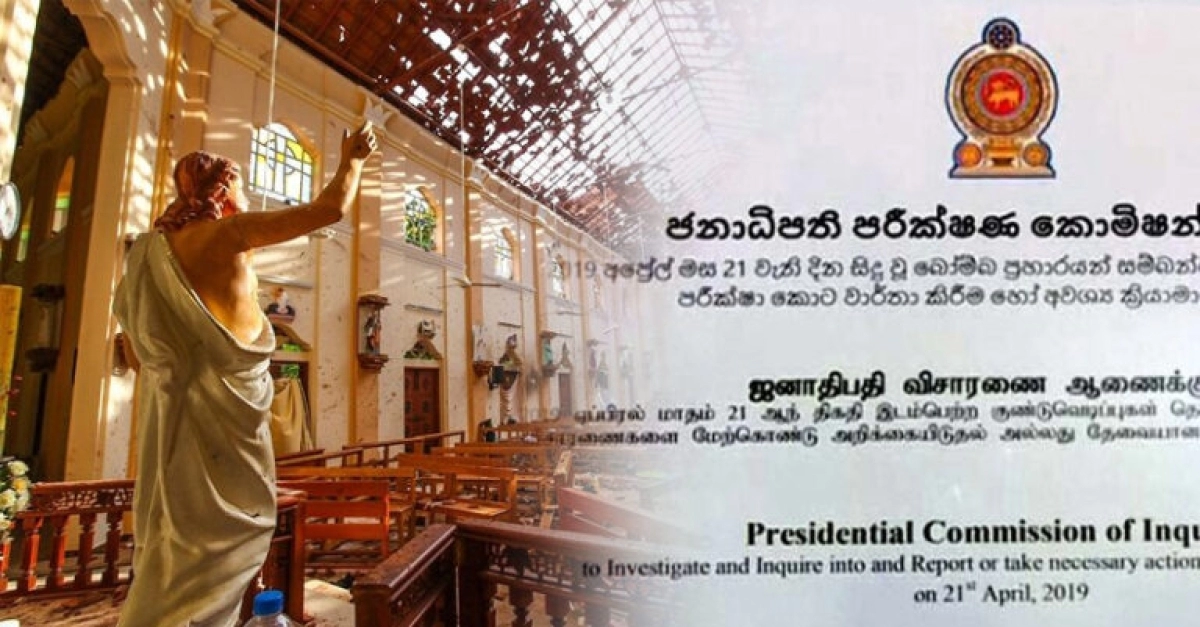
It is essential to note that the Indian Intelligence Service’s previous warnings about the April 2019 Easter bombings in Sri Lanka were tragically accurate, underscoring the gravity of the current situation.

As these tensions continue to escalate in Sri Lanka, it is becoming increasingly vital for the nation to heed these warnings and prioritize unity. Fostering unity will be crucial not only for the stability of Sri Lanka but also for its future prosperity.“

Posted in Uncategorized

India-Sri Lanka ferry service will revive historical maritime ties: TN Minister

The ferry service between India and Sri Lanka will revive historical maritime ties between the two countries, said Tamil Nadu Minister for Public Works and Minor Ports E. V. Velu.

Speaking at the meeting of coastal states development committee held at Kevadia in Gujarat on Saturday, Velu said the Nagapattinam port in Tamil Nadu was getting ready to offer the ferry service to Sri Lanka.

“To connect India with the world, the external affairs ministry has given green signal for launching a ferry service to Sri Lanka from Tamil Nadu. The ferry service will nurture the cultural ties between the two countries. Apart from increasing the domestic and international tourism, the service will also increase the trade,” Velu said.

While Nagapattinam port is getting ready for the ferry service to Kankesanthurai, discussions to commence a ferry service between Rameswaram and Thalaimannar were also underway, he said.

“The service will revive the historical maritime ties between the two countries that existed till 1980,” he said. Velu then said that a port will be developed in Cuddalore.

Source : Times of India

Posted in Uncategorized

The Katchatheevu controversy explained By T. Ramakrishnan/The Hindu

Tamil Nadu Chief Minister M.K.Stalin, on Friday, revived the debate over Katchatheevu, an uninhabited and barren 285 acre islet about 14 nautical miles off Rameswaram, by reiterating the demand for its retrieval from Sri Lanka.According to him, that would put an end to the problems of fishermen of the State.

Addressing a fishermen’s conference in Mandapam in Ramanathapuram district, Mr.Stalin pointed out that following his letters to Prime Minister Narendra Modi, fishermen arrested by the Sri Lankan authorities, were released but the boats and fishing nets, essential for the livelihood of the fishermen, had not been returned.

This was not the first time that Mr Stalin or, for that matter, his predecessors, had raised the matter. Last month, ahead of the visit of Sri Lanka’s President, Ranil Wickremesinghe, to New Delhi, the Chief Minister urged Mr Modi to raise the issue with the visiting dignitary.

When did Katchatheevu become a part of Sri Lanka?

In June 1974, the then Prime Ministers of India and Sri Lanka, Indira Gandhi and Sirima R.D. Bandaranaike, signed an agreement to demarcate the boundary between the two countries in the historic waters from Palk Strait to Adam’s Bridge.

A joint statement issued on June 28, 1974, stated that a boundary had been defined “in conformity with the historical evidence, legal international principles and precedents.” It also pointed out that “this boundary falls one mile off the west coast of the uninhabited” Katchatheevu.

The pact brought to a close the talks held between the two sides since October 1921. Initially, the negotiations were held between the governments of the then Madras and Ceylon.

How important has been Kachatheevu to the fisherfolk?

Fisherfolk of the two countries have been traditionally using the islet for fishing. Though this feature was acknowledged in the 1974 agreement, the supplemental pact in March 1976 made it clear that fishing vessels and fishermen of the two countries “shall not engage” in fishing in the historic waters, territorial sea and exclusive zone or exclusive economic zone of either of the countries “without the express permission of Sri Lanka or India.”

St. Anthony’s Church there holds an annual festival, either in February or March, drawing devotees from both sides of the Palk Bay, a tradition which has been going on.

What triggered the negotiations between India and Sri Lanka?

Sri Lanka claimed sovereignty over Katchatheevu on the grounds that the Portuguese who had occupied the island during 1505-1658 CE had exercised jurisdiction over the islet. India’s contention was that the erstwhile Raja of Ramnad [Ramanathapuram] had possession of it as part of his Zamin. According to a news item published by The Hindu on March 6, 1968 which was based on the interview of the erstwhile Raja Ramanatha Sethupathi, Kachatheevu was under the jurisdiction of the Zamin “from time immemorial” and it was the “last post’ of the Ramnad Estate. He added that the Zamin had been collecting taxes till 1947 when it was taken over by the State government following the Zamindari Abolition Act.

However, replying to the debate on the matter in the Lok Sabha in July 1974, the then External Affairs Minister Swaran Singh asserted that the decision to recognize Sri Lanka’s sovereignty over the island had been taken after “exhaustive research of historical and other records” on the islet.

How was the 1974 agreement received?

The current demand for Katchatheevu’s retrieval traces its origin to the opposition that the pact generated in 1974.

During the debates in both Houses of Parliament in July 1974, most of the Opposition including the DMK, AIADMK, Jan Sangh, Swatantara and the Socialist Party, staged walk-outs in the two Houses.

Former Prime Minister Atal Bihari Vajpayee, who was the Jan Sangh’s leader, had contended that the decision to transfer the islet had been taken “behind the back” of the people and Parliament. He was supported by Madhu Limaye, veteran Socialist leader.

The then Chief Minister M.Karunanidhi, even in 1973 when the talk of the islet transfer had been doing rounds, had urged Indira Gandhi that the popular feeling was in favour of retaining Katchatheevu which “belonged to India and not to Tamil Nadu alone,” according to a report published by The Hindu on October 17, 1973.

Three months later, he wrote a letter reiterating the stand, a copy of which was released a day after the 1974 agreement was signed.

M. G. Ramachandran, founder of the AIADMK, which was a fledgling party then, had criticised Karunanidhi for “his failure to guide the Centre properly” on the issue and sought his resignation.

When did the issue get a fresh lease of life?

After remaining low nearly for over 15 years, the Katchatheevu issue was revived in August 1991 with the then Chief Minister Jayalalithaa demanding retrieval during her Independence Day address. She later modified her demand to one of getting back the islet through “a lease in perpetuity.”

The Tamil Nadu Assembly had witnessed a number of debates on the matter. In the last 15 years, both Jayalalithaa and Karunanidhi had approached the Supreme Court on the matter.

What has been the stand of the Union government on the issue?

In August 2013, the Union government told the Supreme Court that the question of retrieval of Kachchatheevu from Sri Lanka did not arise as no territory belonging to India was ceded to Sri Lanka. It contended that the islet was a matter of dispute between British India and Ceylon (now Sri Lanka) and there was no agreed boundary, a matter which was settled through 1974 and 1976 agreements.

In December 2022, the Union government, while referring to the two agreements, pointed out in its reply in the Rajya Sabha that Katchatheevu “lies on the Sri Lankan side of the India-Sri Lanka International Maritime Boundary Line.” It added that the matter was sub-judice in the Supreme Court.

Posted in Uncategorized

Mainstream parties not in agreement with devolving powers

Mainstream political parties are not in agreement for an extensive devolution of powers by enforcing the 13th amendment to the constitution.

Written submissions with regard to the 13A by 20 parties received so far by the Presidential Secretariat indicate this.

At the all-party conference, president Ranil Wickremesinghe asked the participating parties to submit their views by 15 August.

SLPP general secretary Sagara Kariyawasam said his party insisted that devolving powers should not be taken up at a time when the country was in financial crisis.

He added that they would vehemently oppose any move to merge the northern and eastern provinces.

Religious leaders, national organizations and intellectual groups should be consulted before deciding if the 13A should be implemented hastily, something the previous seven presidents did not took up, he also said.

SJB general secretary Ranjith Madduma Bandara said it was pointless for the government to seek opinions of other parties, without presenting its own itself.

Before considering other parties, the government should have consensus among its partners, the SJB informed the Presidential Secretariat in writing, he added.

Posted in Uncategorized

President meets Provincial Governors

President Ranil Wickremesinghe announced the development of a novel approach aimed at optimizing the operations of the Local Council, Provincial Council, and Central Government sectors, all geared towards curbing financial inefficiencies. The President directed officials to devise this new mechanism, placing a distinct emphasis on the efficacy of these three entities.

Furthermore, President Wickremesinghe instructed officials to collaborate with Provincial Governors and Chief Secretaries in order to draft a comprehensive report on this matter within a month. These consultations are intended to ensure a well-rounded perspective before formulating the new approach.

These assertions were made during a recent meeting at the Presidential Secretariat, where President Wickremesinghe engaged with Provincial Governors and Chief Secretaries. The purpose of this assembly, held yesterday (17) afternoon, was to deliberate on the forthcoming administrative procedures associated with the provincial council system.

Expressing his views further, the President said;

Today, I’ve gathered all of you to engage in a discussion about the governance framework associated with the empowerment of Provincial Councils. Our focus needs to be on how to progress in this direction while also considering the administrative structure of the central government.

In certain instances, identical services are delivered by the three different tiers of administration: the Local Council, the Provincial Council, and the Central Government. Take, for instance, tasks like drain maintenance, electric pole installation, and road construction. Unfortunately, this redundancy results in significant financial wastage. If this is indeed the case, it becomes imperative to establish a fresh mechanism that centres around the coordination of these three entities.

I have recommended the formulation of a novel system within a month’s time, following consultations with the Provincial Chief Secretaries. This step is crucial since the provincial councils are presently non-operational and bereft of ministers. Consequently, you, the Provincial Governors, hold complete governing authority within the current provincial council system.

The previous year posed considerable challenges for us, an experience I believe we need not relive. As we strive to tackle the economic predicaments of the nation, our efforts must also encompass the restoration of the country’s governance structure.

Of notable significance is that grassroots services are overseen by the provincial councils, while district-level services fall under the purview of the central government. It’s essential that these undertakings progress harmoniously, without competing with each other, as we endeavour to offer these services jointly.

The food security program has now been successfully rolled out across the entire nation. As a result, we are optimistic about a bountiful harvest in the upcoming season. Despite a decrease in the prevalence of malnutrition among the population compared to last year, we mustn’t become complacent.

It’s worth noting that the Aswasuma program played a pivotal role in reducing malnutrition among the citizens of our country. The advantages stemming from the Aswasuma initiative extend beyond mere prosperity.

Given that the parliamentary session will continue until the close of the next year, it’s essential to extend the opportunity for parliamentarians to engage in local government matters. Additionally, plans are underway to establish a dedicated advisory committee that will collaborate closely with the governor.

Simultaneously, we are also addressing the powers of provincial councils as outlined in the 13th Amendment of the constitution. Notably, a special emphasis has been placed on enhancing education, professional training endeavours, and the establishment of new universities in each respective province.

To bolster the growth of the tourism industry, there are intentions to establish tourism boards at the provincial level. It’s also pertinent to mention that numerous programs aimed at incentivizing investors and entrepreneurs are anticipated to be implemented at the provincial level in the future.

Mr. Saman Ekanayake, the Secretary to the President, expressed his anticipation for the backing of the Presidential secretariat in addressing the challenges confronted by Provincial Councils in their interactions with the Central Government.

During the discourse, the provincial governors in attendance conveyed to the President the urgent requirement to promptly fill teacher vacancies within their respective provincial council jurisdictions. They noted the presence of surplus teachers in certain schools, juxtaposed with teacher shortages in others. In response, they sought the implementation of a teacher exchange program to rectify this imbalance.

Highlighting the issue of incomplete two-story buildings constructed under the “the best school is the nearest school” concept, the governors emphasized instances of building deterioration and appealed for the formulation of a suitable program to address this concern.

The governors also drew attention to stalled development projects for which allocations had been designated. Regrettably, the funds for some of these projects were still pending.

In addition to these matters, the Provincial Governors made a request to the President to facilitate opportunities for advancing the tourism industry at the provincial level.

Posted in Uncategorized

Sri Lanka notes battle for supremacy between US and China

Sri Lanka says a contest for supremacy is unfolding between the United States and China across the expanses of the Pacific Ocean.

President Ranil Wickremesinghe said that a power struggle is also emerging between Western nations and Russia in the context of Ukraine.

“Undoubtedly, the Indian Ocean hosts the world’s pivotal trade routes, making Sri Lanka an integral player at this stage. As we navigate these waters, it is imperative that we chart a course devoid of entanglement in these international rivalries, maintaining an impartial stance. Our foremost concern must be the safeguarding of our security within this sphere,” the President said.

He expressed these views during an address at the Presidential Colours Awarding Ceremony at the Navy Volunteer Force Advance Naval Training Centre in Boossa.

The President said that considering the evolving global landscape Sri Lanka’s security apparatus will undergo a comprehensive review.

He said that the review is poised to adopt a forward-looking perspective, intricately tied to emerging economic trends and the pressing issue of climate change.

The President said the recalibration of focus is paramount to effectively respond to the multifaceted challenges that lie ahead.

“Upon the compilation of this review report, a blueprint for modernized security policies of the National Security Council will ensue. The task of orchestrating this critical endeavour has been entrusted to Defence 2030, which has diligently appointed an adept review team. This distinguished team, under the adept guidance of former Major General Channa Gunathilake, is dedicated to the preparation of this pivotal report. In support of these efforts, a dedicated office has been established, reaffirming our unwavering commitment to ensuring the comprehensive security of our nation,” the President said.

The President said that the challenges that lie ahead extend far beyond the confines of weaponry or monetary considerations.

“Our paramount concern remains the welfare and prosperous future of our citizens, encompassing both those in active military service and those who will transition beyond it. Your dedication has not gone unnoticed, and we are committed to integrating your insights and perspectives into this new security review,” the President said at the Navy event.

The President said that the dynamics of today’s landscape witness the encroachment of global power struggles into the Indian Ocean’s realm.

Posted in Uncategorized

China and Sri Lanka to cooperate in tea trade and promotion

Prime Minister Dinesh Gunawardena visited the Yunnan Xiaguan Tuocha (Group) Co., Ltd., China’s premier tea enterprise integrating research and development, production and sales of tea in Dali in Yunnan Province on August 18.

He held detailed discussions with the Chief Executive and top tea researchers about the possibilities of further strengthening the cooperation between tea research in Sri Lanka and Xiaguan Tuocha, which is known for its large production scale, excellent quality and technology, good brand reputation, complete sales network, and international reputation.

The Xiaguan Tuocha brand was created in 1902 and has a history over 110 years. The company’s predecessor was the Kangzang Tea Factory founded in 1941. After privatization reform in 2004 and several generations of hard work, it has become a group company with deep historical heritage, the CEO explained to the Prime Minister.

“With the theme, ‘integrity management, quality first’, it is known for high-quality tea products and services to the world”, he said. The Yunnan Xiaguan Tuocha has already exchange data and expertise with Tea Research Center in Thalawakele and it has expressed willingness to assist research and development undertaken by tea industry in Sri Lanka.

It has a reputation as the national frontier tea designated production enterprise and raw material reserve enterprise, the national tea processing technology research and development center, the national key leading enterprise of agricultural industrialization.

The officials pointed out that the company produces more than 200 varieties of five major teas, mainly Pu-erh tea and it has won several international awards.The products are sold nationwide and are mainly sold to more than 30 provinces and cities in China, and exported to more than 10 countries including the European Union, Russia, Japan, South Korea and Malaysia. It has been listed as authorized vendor in Vancouver, Canada. “Our focus is to provide you high-quality tea from Xiaguan Tuocha and we will extend support to the tea research and development in Sri Lanka,” the official assured the Prime Minister.

The Prime Minister invited the Xiaguan Tuocha to send a team to Sri Lanka to further discussions on cooperation in tea research.

State Minister Janaka Wakkumbura, Governor of Eastern Province Senthil Thondaman, Yadamini Gunawardena MP and Secretary to the Prime Minister Anura Dissanyake were also present on this occasion.

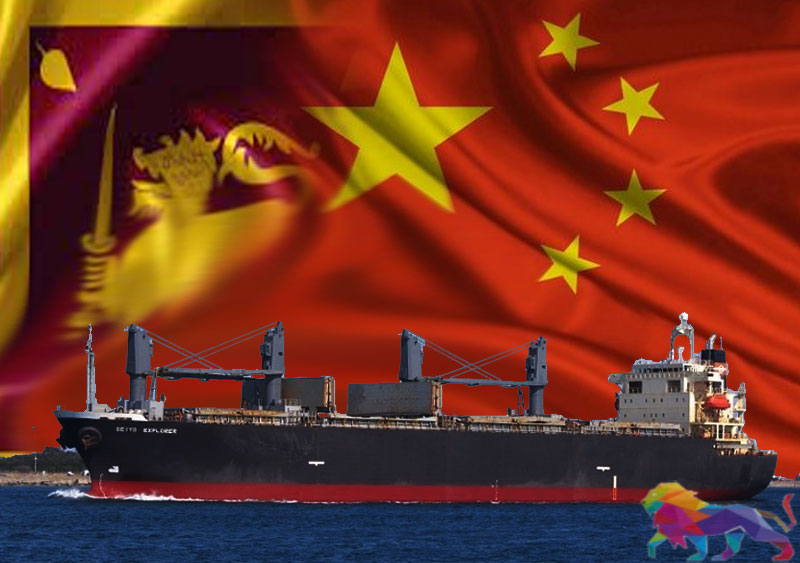
AidData report warns of a Chinese naval base in Lanka’s Hambantota Port

A recent report by AidData, a research lab at the College of William and Mary in Williamsburg, Virginia, claimed that China might establish a naval base in Sri Lanka’s Hambantota Port in the next two to five years. This can be expected to increase Indian concerns over Chinese presence so close to its southern coastline.

The AidData report, titled “Harboring Global Ambitions: China’s Ports Footprint and Implications for Future Overseas Naval Bases,” identified eight locations where China might establish naval bases in the next two to five years. Sri Lanka’s Hambantota Port was number one on the list – meaning the likelihood of a Chinese base here is the highest. The others on the list are Bata, Equatorial Guinea; Gwadar, Pakistan; Kribi, Cameroon; Ream, Cambodia; Vanuatu; Nacala, Mozambique; and Nouakchott, Mauritania.

Between 2001 and 2021, China implemented 123 seaport projects worth $29.9 billion worldwide and funded the construction or expansion of 78 ports in 46 countries, the report said. Of these investments, Hambantota is China’s largest investment in a port project.

The scale of China’s development financing, the strategic value and location of Hambantota, China’s strong relationships with Sri Lankan elites, Colombo’s voting alignment with China in the United Nations General Assembly, and port characteristics suitable for supporting naval fleets were the reasons why the authors of the report picked Hambantota as the number one choice of the Chinese for a naval base.

In recent years, there has been much speculation over China’s use of Hambantota Port for military purposes. The AidData report will provide food for further speculation.

It will particularly deepen Indian apprehensions, Uditha Devapriya, head of International Relations at the Colombo-based independent think tank Factum, told The Diplomat.

Noted Sri Lankan geopolitical analyst Asanga Abeyagoonasekera, who is a senior fellow at The Millennium Project, told The Diplomat that India has been observing with concern, Sri Lanka’s increasing rapprochement with China since Mahinda Rajapaksa became Sri Lankan president in 2005.

India was alarmed when Sri Lanka allowed a Chinese submarine and a warship to dock at its port in the capital Colombo in 2014, Abeyagoonasekera recalled, adding that Indian concerns over the Port of Hambantota grew exponentially after Sri Lanka leased it to China Merchants Port Holdings Company Limited for 99 years for $1.12 billion in 2017.

Abeyagoonasekera said that several of India’s neighbors have failed to communicate their dealings with China effectively and transparently with the wide world.

According to Abeyagoonasekera, the establishment of overseas naval bases is a logical next step in China’s expanding global interests as naval bases are also key to safeguarding shipping routes and promoting trade and diplomacy. Currently, China has just one official overseas naval base — a facility in Djibouti — that is adjacent to a commercial port funded, constructed, and operated by China.

China has emerged as a major maritime nation in recent years. Its navy has grown from a force capable of only coastal operations to a blue-water navy. Many experts and policymakers believe that this signifies China’s ambitions for global power projection.

In the 2020 edition of The Science of Military Strategy, published by China’s National Defense University, China states that there “will be an increasing number of naval missions in overseas military operations and the expansion of the scope of operations, the requirements for logistics and equipment support are getting higher and higher,” Abeyagoonasekera said.

While China may be keen to safeguard its interests by building naval bases, establishing and running these bases may not be feasible.

As the AidData report points out, China is not in a position to defend any of the eight ports.

Additionally, China would be crossing a red line by setting up a naval base in Hambantota, Devapriya said. India and China do a lot of business together and despite the fierce media speculations, it is unlikely that China would establish a naval base in Hambantota, he said.

India has always been concerned about foreign powers establishing a foothold in Sri Lanka, given the proximity of the island to its southern coast and its location in the Indian Ocean.

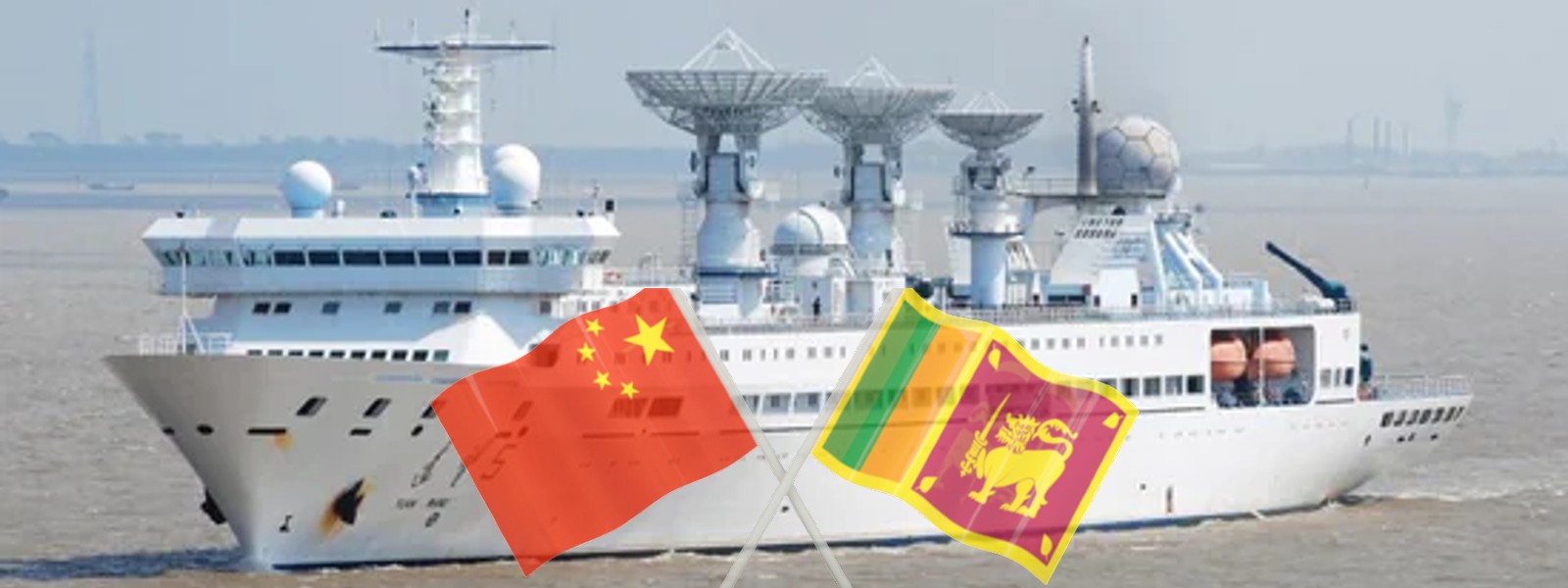
Given the history and current strategic competition between India and China and the increasing divergence in the capabilities between the two nations, India has been aggressive in expressing its displeasure over any sign of warming ties between Colombo and Beijing. In 2022, for instance, India objected when a Chinese research vessel docked in Hambantota Port. Reports in the Indian media have speculated over China building a radar facility at Matara, about 50 kilometers from Hambantota.

Sri Lanka’s strategic geographical position has attracted the attention of numerous major global players, including China, India, and the United States – all seeking to establish a presence in the region. Despite Sri Lanka’s desire to remain untangled in international complexities, past administrations have struggled to effectively convey their commitment to a nonaligned foreign policy to these influential nations.

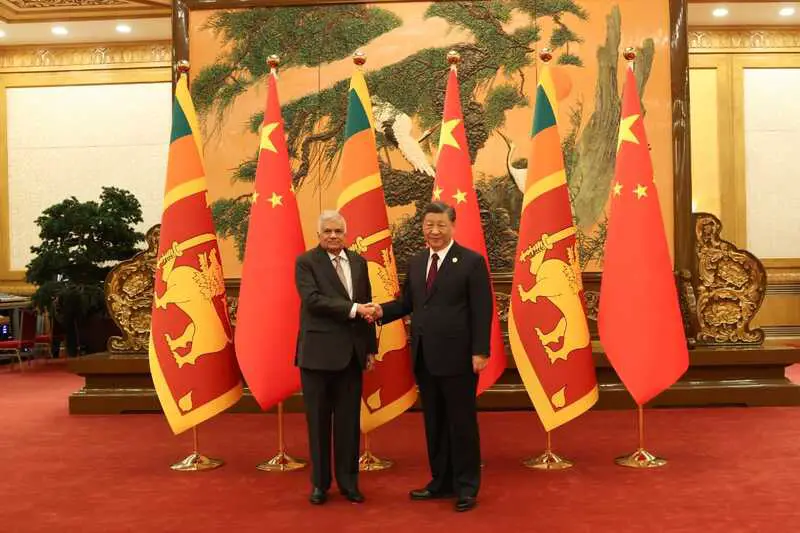
Devapriya said that Sri Lanka needs to do better in assuaging the concerns of India. Sri Lankan President Ranil Wickremesinghe just concluded a successful visit to India and the good relationships he forged there can be used to communicate Sri Lanka’s good intentions, Devapriya said. Wickremesinghe “can do the same when he visits China in a few months,” he added.

Source:The Island

UNP and SJB hold separate talks to form new alliances for polls

Major political parties are re-positioning to gear themselves for parliamentary elections though when such an event would take place is uncertain. Prompting the exercise are developments in each other’s backyard.
Days earlier, Samagi Jana Balavegaya (SJB) leader Sajith Premadasa held an important round of talks with the Sri Lanka Podujana Peramuna’s (SLPP) breakaway faction led by Dullas Allahapperuma and G.L. Peiris among others. The SJB is on the verge of forming an alliance with the 13-member breakaway group. For the SLPP breakaway faction, the major gain will be the support it is expected to extend for Premadasa’s candidature at a presidential election. In return, the immediate benefit for the 13 would be their ability to contest on the SJB ticket. Both will oppose the SLPP. The SJB has also won over Chandima Weerakkody, a former Deputy Speaker, by making him the organiser for the Habaraduwa electorate in the Galle District.

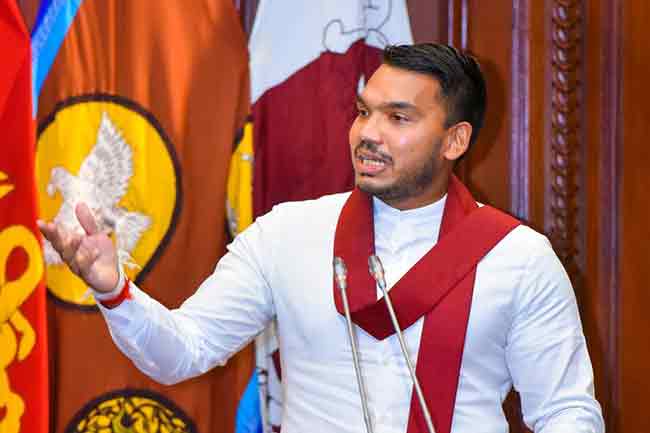
Another alliance is also being formed by the United National Party (UNP) whose leader Ranil Wickremesinghe is the head of the SLPP government. This week, Nimal Lanza, Negombo District parliamentarian, named the grouping as Alliance number one. It has its office at Lake Road, Rajagiriya. Lanza is now on a two-week trip to Australia. The aim of this alliance is for a tie-up with the UNP and like-minded parties. Before his departure, Lanza said that matters relating to the alliance would be handled by four persons during his absence. They are Susil Premjayantha, Anura Priyadarshana Yapa, Nalin Fernando and Lasantha Alagiyawanna. He claims that over 40 parliamentarians are backing the new alliance and more would join. They too are opposed to the SLPP. If the assertions of numbers are correct, then the enlarged SJB and the UNP-Lanza group tie-up would become the two formidable factions at a future election.

Even if it is not hectic, the UNP is also making its own arrangements. On Thursday, its Working Committee, the main policy-making body, met at the party headquarters, Sri Kotha. Party General Secretary Palitha Range Bandara said it was decided to hold the 56th annual convention on September 10. The venue has now been changed to the large parking lot at D.R. Wijewardene Mawatha near Lake House. He said that a draft of the party’s new constitution was also presented at the meeting and was approved. Final approval will come at the annual convention. The new party constitution, he explained, would take into consideration the system changes sought by the party members and even during last year’s protests (aragalaya) would be factored in. Among other matters, the constitution will spell out how to appoint members to the Working Committee, the Executive Committee and the powers vested in them. Another significant feature will be the provision to enable the conduct of meetings online.

Though the SLPP has remained a strong group, the advent of President Ranil Wickremesinghe has now seen a significant section including Cabinet ministers supporting him. The SLPP founder Basil Rajapaksa, who had the majority backing, has seen the numbers dwindle with insiders saying it is now not more than 21 at the most. Further rivalry manifested after it became known that President Wickremesinghe was preparing to enforce the 13th Amendment to the Constitution and adopting measures to further strengthen it. The SJB-Allahapperuma talks, sources with the former said, are to be “concluded soon.” “We propose to have the signing of an accord within four to five weeks, the sources added.

Of course, there are other critical issues that must be resolved. That would include the wish expressed by the 13-member group that their leader Dullas Allahapperuma be appointed Prime Minister and the number of ministerial positions the group would receive if they won a majority at a parliamentary poll. On the minus side for the group of 13 has been their inability to form a new political party.

Those talks, no doubt, would be tough for both sides. One is reminded of the election of a President by Parliament on July 20 last year. Premadasa was a frontline candidate together with Ranil Wickremesinghe, Dullas Allahapperuma and Janatha Vimukthi Peramuna’s (JVP) Anura Kumara Dissanayake. Just ahead of the vote, Premadasa withdrew his candidature in favour of Allahapperuma. On Thursday, SJB parliamentarian S.M. Marikkar told a news conference that his grouping would be broadened to make it stronger but did not give details. Other than this aspect, the prospects of an unknown number of SJB parliamentarians re-joining the UNP is also not being ruled out.

The Dullas Allahapperuma group comprises G.L. Peiris, Dilan Perera, Dr. Nalaka Godahewa, Charitha Herath, Channa Jayasumana, K. P. S. Kumarasiri, Dr. Gunapala Ratnasekara, Udayana Kirindigoda, Dr. Upul Galappatti, Dr. Thilak Rajapaksa, Wasantha Yapa, and Lalith Ellawala.

Posted in Uncategorized