Second Round of IMF Talks Set for September

The second round of discussions with the International Monetary Fund (IMF) is scheduled to take place from September 11 to 19.

State Minister of Finance Ranjith Siyambalapitiya, confirmed that a delegation from the International Monetary Fund will be visiting the country during this period to engage in these crucial discussions.

This initiative is being led by the Ministry of Finance.

State Minister Siyambalapitiya further highlighted that approximately 80% of the stipulated conditions set by the International Monetary Fund have already been fulfilled.

New Delhi raises concerns with Colombo over Chinese research vessel

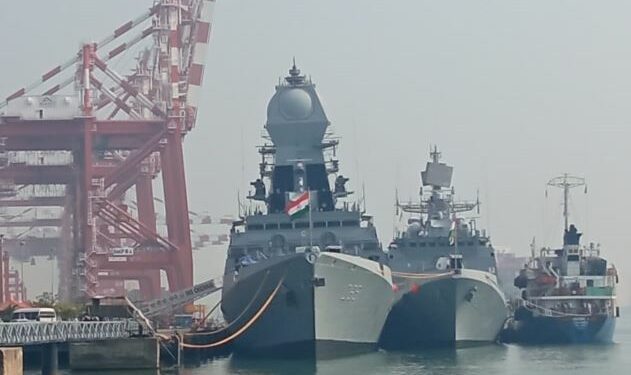
New Delhi has informed Colombo that it is seriously concerned about the Chinese research vessel Shi Yan 6 docking at the Colombo and Hambantota ports in October, the Hindustan Times reported.

Virtually a month after Sri Lankan President Ranil Wickremesinghe assured Prime Minister Narendra Modi that his country will be sensitive to security and strategic concerns of India, a Chinese marine research vessel, Shi Yan 6, is expected to dock at Colombo and Hambantota deep sea ports late October and stay till November 2023.

As of now, Sri Lanka government is still to give clearance to the maritime research vessel.

Already PLA warship Hai Yang 24 Hao with a crew of 138 with Commander Jin Xin as captain docked at the Colombo port for what has been described as a formal port call.

According to reports from Colombo, the 3999 ton Shi Yan 6, based in Guangzhou, is currently in South China Sea and moving towards the south. It is learnt that scientists of Sri Lanka’s National Aquatic Resources Research and Development Agency aka NARA will embark on Shi Yan 6 to conduct survey of the exclusive economic zone (EEZ) of the island nation and in the south Indian Ocean.

The vessel will be docking at both Colombo and Hambantota ports and carrying out surveys for nearly a month with one part of survey being without Sri Lankan Scientists.

While South Block is tight-lipped about the development, it is learnt that India has taken up the issue at the highest diplomatic levels and it is now up to Wickremesinghe government to address Indian concerns.

Last August, Chinese ballistic missile tracker Yuan Wang 5 docked at Hambantota port, leased to Beijing for 99 years when Wickremesinghe was the Prime Minister under Rajapaksa regime, despite India raising serious concerns about the survey ship.

With the PLA Navy expanding rapidly and having open global ambitions, the larger question is how long will the Modi government allow countries in the Indian sub-continent remain impervious to India’s strategic interests. The question is particularly pertinent to those countries with whom India has stood up for in thick and thin—from humanitarian disaster, vaccine supply to economic support.

Even though China provided high interest aid for white elephant projects during the past Beijing friendly Rajapaksa regime, Sri Lanka hosting Chinese research vessels shows that it is rather apathetic or indifferent to New Delhi’s concerns. It is now an open secret that China is mapping the Indo-Pacific for future nuclear submarine operations to counter the QUAD and other ASEAN powers.

Over the years, Chinese research vessels are entering the Indian Ocean through Ombi-Wetar straits in Indonesia and proceeding towards the South Indian Ocean via the 90 degree ridge. The sea route via Malacca, Sunda and Lombok straits is not viable for submarines as they have to surface, thus giving away their location. This is not the case if the sub-surface combatant goes through Ombi-Wetar strait.

The mapping of ocean floor, salinity content and sub-surface temperatures in the Indian Ocean is part of the larger strategic exercise to check the potency and accuracy of submarine fired missiles in equatorial waters. Due to the difference between the surface and sub-surface temperatures, a phenomenon called lateral inversion occurs in equatorial waters, making it nearly impossible to detect attack submarines in deep waters and the only option available is to detect nuclear reactor noise.

While the Indian Navy’s diesel attack submarines pose a serious challenge to any Chinese vessel in the Indian Ocean as unlike the nuclear submarine, the diesel engine can be shut down and make it impossible for the enemy to detect the Indian sub-surface vessel.

However, the Indian Navy knows that it is only a matter of time when PLA vessels will start long range patrols in the south Indian Ocean using carrier strike force. The survey of south Indian Ocean waters is also to chart new sea routes away from Indian dominance and faster access to Beijing’s client states on Africa’s eastern and western seaboard.

Source:Hindustan Times

SLFP warns of potential democratic crisis due to 13A

Condemning all political decisions made by President Ranil Wickremesinghe with regard to the 13th Amendment to the Constitution, Senior Deputy Chairman of the Sri Lanka Freedom Party (SLFP) Prof. Rohana Lakshman Piyadasa warned that Sri Lanka is heading towards a democratic crisis.

Also speaking on the President’s ongoing efforts towards the devolution of powers, MP Udaya Gammanpila explained that each time President Ranil Wickremesinghe lost his power, it was due to his attempts to devolve powers.

Despite these remarks, however, United National Party (UNP) Deputy Leader Ruwan Wijewardene stated that in order for the country to move forward, solutions need to be provided for certain issues faced by those in the Northern and Eastern provinces.

Meanwhile, speaking at a event held on Saturday (12 August) commemorating the 70th anniversary of the 1953 Hartal, MP Dullas Alahapperuma claimed that despite all the riots, protests and hartals that have taken place in Sri Lanka thus far, parties are yet to ‘learn their lessons’, adding that all sectors are currently in crisis.

Posted in Uncategorized

Sri Lanka risks facing bankruptcy again within a decade unless steps taken promptly – President

President Ranil Wickremesinghe underscored the imperative to fortify the nation’s economy, ensuring that forthcoming generations are spared from enduring the unfortunate period that both the country and its people have weathered in the past two years.

These remarks were made during his participation in the 150th Anniversary celebration of St. Thomas College in Matale today (13 Aug).

President Wickremesinghe highlighted that resolving the country’s economic challenges goes beyond the success of the debt optimization programme, and emphasised the need to promptly initiate an economy-building strategy guided by sound decisions.

He cautioned that failure to proactively adopt a new program would inevitably result in the country facing another economic hurdle within a decade.

The President expressed his vision of propelling the country forward through comprehensive modernization. To achieve this, he announced the establishment of the Technology Promotion Council and the Digital Transformation Commission, aimed at accelerating the nation’s digital evolution.

In an unprecedented event, President Wickremesinghe visited St. Thomas College in Matale, unveiling a commemorative plaque that marked the institution’s 150th Anniversary. He also graciously posed for a group photograph with the Alumni Association.

During the same occasion, the President also conferred certificates upon students who secured the top position in the district during the general education certificate examination.

Following is the speech delivered by President Ranil Wickremesinghe at this event;

It has been a century and a half since the inception of St. Thomas College in Matale. During its establishment, the country relied on a plantation-based economy with a significant focus on coffee cultivation. However, within a few years, the coffee industry collapsed, causing a severe economic downturn and depriving the government of its revenue stream. The economy struggled until the introduction of tea and rubber cultivation, which revitalized the nation’s financial standing.

As the 150th Anniversary of St. Thomas College in Matale is commemorated today, the country finds itself grappling with an ongoing economic crisis. The previous year’s economic turmoil left deep impacts on the nation’s economic, social, and political landscapes. During that period, the prospect of recovery seemed bleak. A poignant example of this was the lack of volunteers to assume the role of Prime Minister after Mr. Mahinda Rajapaksa’s resignation. Typically, such vacancies are eagerly pursued, but in this case, no one stepped forward.

Taking up the mantle of the presidency, I assumed responsibility, formed a cabinet, and embarked on finding both short-term and long-term solutions to address the economic crisis. Through decisive actions, we managed to eliminate the prevalent queues that had become emblematic of the nation’s struggles. The outcomes of our government’s decisions in September, January, and April of the previous year have been embraced positively by the populace.

As this year draws to a close, we hold the belief that our nation can overcome bankruptcy by successfully executing the credit appreciation program. Achieving this necessitates stringent control over public expenditures and a shift toward a more productive economy. We have already begun implementing these measures. However, it is essential to recognize that while our current endeavours may alleviate the “bankrupt” label unless further steps are taken promptly, we risk facing the same fate within a decade.

Consequently, the government’s course must be charted anew, underpinned by a revamped system. Sound financial discipline should guide our governance approach, extracting maximal benefits from each government institution. Initiatives to trim superfluous expenses within ministries are in the pipeline. Moreover, an inventory of government-owned land, buildings, and vehicles is being compiled under the Prime Minister’s Secretary’s leadership, with expectations of its completion by year-end.

The proposed measures for domestic debt optimization have been successfully passed in the Parliament, despite attempts to hinder the process through legal channels.

The EPF has introduced a draft law aimed at providing a 9% interest rate to all members, and this initiative is currently in progress. Consequently, there are no grounds to impede the advancement of this program. As stipulated in Article 04 of the Constitution, financial authority rests with the Parliament, thereby vesting it with the responsibility and competence to execute these actions. All legal cases related to this matter have been dismissed by the Supreme Court.
Upon the completion of the debt optimization endeavour, our focus should shift to the effective implementation of the subsequent economic program. Presently, there is a significant exodus of individuals from our nation. The departure of skilled experts and professionals has created a substantial void that cannot be easily filled. It is essential to reaffirm our commitment to establishing a robust economic foundation conducive to the well-being of all citizens.

Challenges confront our country today, primarily driven by insufficient government revenue and a trade imbalance skewed towards higher import costs relative to exports. A reliance on daily credit is not a sustainable solution.

Once the debt consolidation process concludes, the same question emerges anew. We must proactively address this concern by bolstering our Gross Domestic Product (GDP) at a rapid pace, as an increased GDP directly translates to heightened national income.

Parallelly, we must intensify our efforts in the realm of exports. A comprehensive strategy for this endeavour should be formulated within the next decade.

In the current landscape, conventional political slogans have lost their relevance, even within both ruling and opposition parties. Instead, it is imperative to assess the country’s challenges and forge ahead with practical solutions. If the proposed solutions fail to gain traction, alternatives should be presented to address the issues at hand.

To propel the nation’s economic development, an annual influx of at least one billion dollars in foreign exchange is essential. The initial step toward achieving this goal involves augmenting foreign exchange inflows from existing sectors.

Our primary income sources are foreign employment and export earnings. Unfortunately, the economic situation in countries like Europe and America, particularly affecting the garment industry, has shown regression. Consequently, we shouldn’t anticipate substantial revenue from these sectors this year. Thus, our attention must pivot to tourism. Accordingly, we have devised comprehensive plans to significantly enhance our country’s tourism sector throughout this year and the following year.

Additionally, there is a pressing need to double our export revenue. To achieve this, attracting investors and providing them with the requisite facilities is essential. New initiatives such as the development of the port city have been set in motion.

Furthermore, advancing rapidly over the next decade with technologies like artificial intelligence is paramount; our success or failure hinges on our ability to maintain this momentum.

In line with these objectives, plans are underway to establish several government and private universities. A subsidized loan program for students entering these institutions is also on the horizon. Our aim is to annually produce a minimum of 10,000 engineers and 7,500 doctors from Sri Lankan universities. The demand for IT expertise is also substantial, necessitating consistent efforts to meet these requirements.

Our aspiration is to construct a prosperous future for generations to come. It is our collective responsibility to fortify the economy to prevent a recurrence of last year’s adversities.

The government has undertaken numerous novel measures in pursuit of this goal.

However, anticipated outcomes from the Board of Investment and the Export Board have fallen short. To address this, we have established an economic commission tasked with centralizing relevant powers. This will streamline the investment approval process, eliminating the need to navigate various ministries for clearance, and consolidating all procedures in one location.

Drawing inspiration from Mr. J.R. Jayawardena’s establishment of the Greater Colombo Economic Commission in 1978, we also aim to create a dedicated board to provide the necessary infrastructure for investments.

In tandem, we aspire to double the annual influx of tourists to our country from 2.5 million to 5 million. The Matale district possesses immense potential to contribute significantly to the burgeoning tourism industry.

Within the next two months, we intend to unveil an agricultural modernization program. Our current agricultural output, whether in terms of rice or other crops, falls short. It is imperative to promote the cultivation of these products.

Furthermore, we are in the process of establishing a Technology Promotion Council with the aim of acquiring the necessary technical expertise for our nation. Concurrently, a Digital Transformation Commission will be formed to propel digitization across the country. Envisioning comprehensive modernization across all sectors, our objective is to shape a developed Sri Lanka by the year 2048.

The event was attended by a multitude of individuals, including Education Minister Dr. Susil Premajayantha, Prime Minister’s Secretary Anura Dissanayake, Central Province Governor Lalith Y. Gamage, Ministry of Education Secretary Nihal Ranasinghe, former judge and Chairman of the Human Rights Commission M.P.B. Dehideniya, Professor Chaminda Ratnayake, Vice Chancellor of NSBM Green University, General Shavendra Silva, Chief of Staff of the Tri forces, Kaushalya Navaratne, President of the Sri Lanka Bar Association Dhammika Hewawasam, Principal of St. Thomas College in Matale, and a substantial gathering of faculty members, parents, and alumni.

13th Amendment: Power devolution and beyond BY Ameen Izzadeen

To rekindle the devolution-debate fire in a country that has still not come out of the economic bankruptcy may appear to be out of sync. Since devolution of power is linked to political stability, which in turn is linked to economic revival, the topic requires urgent attention with a view to finding a solution that has eluded Sri Lanka for seven long decades.

On Wednesday, President Ranil Wickremesinghe made a special address to Parliament, calling for a step-by-step process to effect meaningful devolution to Sri Lanka’s nine provinces in terms of the 13th Amendment to the Constitution.

A mini-debate followed his address, highlighting the incendiary nature of the topic. For every president who has taken up the devolution problem with the intention of solving it or resorting to skullduggery to navigate through a path of political and geopolitical landmines, the issue has been like carrying burning embers in his or her hand.

Despite a costly separatist war, very little has changed in the attitude of the proponents and opponents of power devolution since it was first mooted in the late 1940s by minority Tamil leaders who had little trust in the post-independence Sinhala leaders. They were dissatisfied with the 1947 Soulbury Constitution and believed that the Sinhala leaders would not treat the Tamils as equal citizens of this country. Their fears were not without foundation.

When the second State Council was formed in 1936 under the Donoughmore Constitution, the Sinhala members arithmetically manipulated the executive committee system to prevent Tamil members from being elected as heads of any of the seven executive committees and becoming ministers.

Adding to their fears was the 1948 Citizenship Act, which deprived many plantation Tamils of Indian origin of citizenship and voting rights.

The Federal Party headed by S.J.V. Chelvanayakam proposed an extreme solution: maximum power devolution within a federal set-up so that the Tamils of the North and East would enjoy self-rule. As the crisis aggravated with regular ethnic clashes throughout the country, attempts were made to solve what is now known as Sri Lanka’s national question.

First came the 1957 pact between Federal Party leader Chelvanayakam and Prime Minister SWRD Bandaranaike. Bandaranaike had come to office by whipping up Sinhala nationalism, and he had enacted the Sinhala Only Act, his election promise, as soon as he had ensconced himself in office.
Seven years after protests forced Bandaranaike to tear up the agreement, the Dudley Senanayake-Chelvanayakam Pact was signed in 1965. This deal was also not implemented due to protests from ultra-nationalists.

These two agreements dealt with power devolution to regional and district councils, making Tamil an administrative and official language, and development and resettlement issues.
The failure to devolve power eventually led to a 30-year separatist war, which ended in 2009 at the cost of impoverishing and indebting the country.

If today’s leaders and parliamentarians fail to resolve the national question by working out a power-devolution package acceptable to all communities, will the separatist war erupt again, if not in the coming years, in the not-so-distant AI-dominated world?

There is no doubt about the Sri Lankan state’s ability to militarily crush any armed rebellion. But future warfare will be different. Cyberwarfare is fast adopting Artificial Intelligence. In AI warfare, states facing internal or external threats will not be able to defeat the enemy with military firepower. Even a small rebel group, if armed with AI technology, will be able to cause serious harm to the State. The rebels or terrorists, as the case may be, do not need to be present in the theatre of conflict. They can operate from safe havens in foreign countries sympathetic to their cause.

Such a scenario would make Sri Lanka economically far worse off than it is today—a non-entity, a non-state, and a non-power incapable of asserting its sovereignty. Sri Lanka’s national interests would become more vulnerable than they are today to end up as offerings at the altar of any nation that is ready to cast a few million dollars before it and take back chunks of its land at strategic locations. That is all the more reason why a solution is necessary.

But the solution is caught in the crossfire of ideological warfare between two extremist viewpoints, one calling for maximum power devolution under a federal setup and the other, deriving its legitimacy from ultranationalism, often bordering on supremacism, insisting that any devolution will be a stepping stone to separatism. The struggle to strike the golden mean is the task at hand.

Complicating the power-sharing arrangement is geopolitics, with governments being seen to be pushing it due to pressure from India rather than any willingness to redress historical wrongs that have widened the divide between the majority and minority communities in this country.
India’s insistence that Sri Lanka should take forward the process of national reconciliation to meet the aspirations of the Tamil community for equality, justice, peace, and dignity has more to do with geopolitical undercurrents than with any altruistic objective or a humanistic approach to help minorities. The contradiction is that in India itself, minorities are feeling more insecure than ever under Prime Minister Narendra Modi’s Hindutva policies.

However, the fears that were expressed in 1987 when the 13th Amendment was adopted under pressure from India as a solution to the national question and throughout the devolution debate since then still prevail, as was evident in the views expressed in Parliament on Wednesday.

In 1987, the SLFP petitioned the Supreme Court, claiming that devolution of power as envisaged in the 13th Amendment not only endangered the unitary status of the Constitution but would also result in destroying Buddhism and Buddhist institutions in the North and East. “The virtual handing over of these places of historic and religious importance to persons culturally alienated from Buddhism is an abrogation of the duty… to protect and foster the Buddha Sasana,” the petition claimed.

President Gotabaya Rajapaksa, in an interview with The Hindu during a visit to India in the first few weeks of assuming office in 2019, said: “We can discuss political issues, but for 70-odd years, successive leaders have promised one single thing: devolution, devolution, devolution. But ultimately, nothing happened. I also believe that you can’t do anything against the wishes and feelings of the majority community.”

On Wednesday, an opposition Parliamentarian elected from the Sri Lanka Podujana Peramuna, which owed much of its success in the 2019 and 2020 elections to a dangerous form of far-right nationalism, expressed similar sentiments in response to President Wickremesinghe’s call for a parliamentary process to devolve power other than police powers to the provinces.
The national question remains a Gordian knot. This is not solely due to the failure to devolve political and administrative power to the provinces, regions, or districts. Rather, it is because of our leaders’ lack of statesmanship and foresight.

They have failed to make this country a liberal, secular meritocracy where there will be no room for distrust between communities or any complaints of discrimination based on a citizen’s ethnicity, caste, religion, or language. Perhaps the solution also lies in empowering the Sri Lankan identity, enabling it to supersede all other micro-identities.

Posted in Uncategorized

Alleged theft of KKS iron: State Minister Chamara Sampath Dasanayake willing to surrender

Following a complaint made against State Minister of Primary Industries Chamara Sampath Dasanayake regarding the alleged theft of 22 million iron ore from the Kankesanthurai (KKS) cement factory within a period of two months and recognising the necessity for an immediate investigation regarding the same, Dasanayake told the Parliament yesterday (10) that he is willing to surrender if he is implicated in the iron-selling scheme at the mentioned factory.

Speaking in Parliament, Dasanayake said that he intends to go to the Criminal Investigations Department (CID) and therefore, the Police can arrest him if they wish. He further mentioned that he would also request Deputy Speaker of the Parliament Ajith Rajapakse to grant permission to the Police Department to arrest him, as such approval is needed to arrest a parliamentarian. In response to Dasanayake, Rajapakse who was the Chair, said that the Police can arrest him any time now in light of Dasanayake expressing his willingness to surrender. “Police has the permission to arrest Dasanayake as he is willing to give himself up,” he said.

Former Sri Lanka Cement Corporation Chairman attorney Gamini Ekanayake, on Wednesday (9), complained to the CID that Dasanayake should be held responsible for the theft of 22 million iron ore from the Kankesanthurai cement factory within a period of two months, stating that an immediate investigation should commence into the same.

Filing the complaint, he had stated that a technical committee had made an evaluation regarding the amount of iron, worth billions of Sri Lankan rupees, scattered on the cement factory site. He further said that he had taken all steps to implement the decision to sell the scrap metal on this land, per the tender procedure, in accordance with the Cabinet of Ministers’ decision to rebuild the factory. “But, instead of implementing the Cabinet decision, Dasanayake had first removed the army personnel guarding the factory premises and left only a limited number, thus rendering the factory premises unsafe,” he alleged. Ekanayake also claimed that there is a clear connection between the recruitment of seven persons from Badulla to this factory and the alleged theft of 22 million iron in two months after the Army was withdrawn and the area was made unsafe.

Several attempts made by The Daily Morning to contact Cement Corporation Chairman Jagath Dharmapriya and Acting Police Media Spokesman Senior Superintendent of Police attorney Ruwan Gunasekera proved futile.

Posted in Uncategorized

SriLankan Airlines seeks potential Gulf buyers

SriLankan Airlines should be a target for takeover by carriers in the Gulf once it is privatised, after making an operating profit for the first time in 15 years, its chief executive Richard Nuttall told UAE Media, The National.

Nuttall also suggested that Gulf operators could substantially benefit from the airline’s easy access to its Asian neighbour. “The big prize for everybody is India,” he said.

He suggested that Emirates, which previously owned 40 per cent of SriLankan, might be among those carriers who respond to the Colombo government’s wish to privatise the airline.

It was part-owned by Emirates for 10 years until the Sri Lankan government bought all the airline’s shares in 2008. In that year SriLankan made a profit of nearly $30 million but under government administration over the next seven years it lost $875 million.

Asked if the Dubai-based airline was among likely bidders Mr Nuttall said he could not “speak for either Emirates or anybody else in the Gulf” but the government’s plan was “to look for expressions of interest in the coming months and they want to do that fast”.

SriLankan has been severely impacted by a triple hit: the collapse in tourism during the Covid-19 pandemic, the 2019 Isis-co-ordinated Easter suicide bombings and last year’s financial ructions.

Despite the turmoil Nuttall, who has worked for eight airlines, has taken the company into an operating profit that could have been significant if not for the large debts he inherited.

“Essentially, on a $1 billion turnover the business made $100 million profit,” he said. “But we then had to pay almost all our profit on finance charges. But the essential thing that we’ve got here is an airline that works and over time should definitely make money.”

The profit means that for the first time since it was managed by Emirates in 2008 it has not been in the red.

Income could be further enhanced with an ambition to double the fleet from 23 aircraft to 40 in the next three to five years.

Significant rewards then await with the India market a vastly untapped resource, argued the 57-year-old chief executive from Yorkshire, England.

“The big prize for everybody is India,” he said speaking at his office in Colombo. “If you work with us then you start being relevant to the Indian market in all directions. So, I think that’s the big interest for the Gulf carriers.”

Despite being the world’s most populous nation of 1.4 billion, India has just 0.5 commercial aircraft per million people whereas China has three and American 30.

With the wait for new commercial aircraft stretching to five years, having a partnership with a major airline would bring significant benefits to help exploit the vast India market.

“We are right next door to the most populous country in the world,” Mr Nuttal said. “If we get an airline investment then that can help us with buying power or assistance with expertise in certain areas.”

While Gulf buyers are a possibility, Indian media have also reported that the major industrial conglomerate Tata Enterprises is a potential investor after its recent purchase of Indian Airlines.

Nuttall, who has previously worked for Saudi Airlines and Royal Jordanian, suggested the alliance could be a useful fit given Sri Lanka’s proximity to India and its understanding of its culture. The airline also serves 14 Indian cities.

He said Sri Lanka, with its vast unspoilt shoreline, was “the closest international friendly beach to India by a long way”.

The airline would also offer a Gulf carrier a significant hub in southern Asia for onward flights to China, Australia and south-east Asia.

Nuttall pointed out that customers in India who wish to fly east currently have to “backhaul” three or four hours to the major hubs of Mumbai or Delhi on the west coast before heading eastward again.

“Essentially we give you a hub in the south-east so you become more relevant in more directions for more cities.”

Last year Sri Lanka’s newly appointed prime minister Ranil Wickremesinghe pledged to privatise the airline as it was still making a loss.

“Even if we privatise SriLankan Airlines, this is a loss that we must bear, even by the poor people of this country who have never stepped on an aeroplane,” he said.

However, in a meeting this year SriLankan Airlines chairman Ashok Pathirage said in the past three years “we have not received any money from the Treasury, we did not take even one dollar”.

It is understood that the government will decide on privatisation steps in the coming year.

The main revenue sources for SriLankan are the country’s significant diaspora in the UK, Australia and the Middle East, as well as the Indian market.

It also has the major attraction that the airline’s host country is as a tourist destination unspoilt by major development and with a very welcoming population.

“I’ve never had anywhere where so many people have said, ‘Wow, the best holiday I ever had was in Sri Lanka,’” said Mr Nuttall, who is married with two teenage children. “The people here are interested, they smile, making it so much more personable with much more human interaction that elsewhere.”

The new Sri Lankan government wants him to regrow the airline to pre-Covid levels “and then see what a potential buyer might want beyond that”.

While it flies to 126 destinations in 61 countries, including direct routes to Melbourne, London and Dubai, Mr Nuttall is looking to have three daily flights to top Gulf and European destinations.

Part of the expansion plans are also to build a new terminal in Colombo, allowing the airport to double passenger numbers.

“If we have more frequency, then we’re a stronger product and we can stimulate more tourism,” Mr Nuttall said.

This he hopes could get the country back to its 2018 numbers of three million visitors a year.

Emirates airlines declined to comment.

Posted in Uncategorized

JMSDF eyes Colombo Dockyard for future repairs

The Colombo Dockyard PLC was selected as an afloat repair service provider to the Japanese Maritime Self-Defence Forces (JMSDF) at the Colombo Port, recently.

Every summer, the Japanese Maritime Self-Defense Force (JMSDF) deploys a fleet of ships across the Indo-Pacific region to conduct joint training, visit ports and invite locals aboard. This year, that engagement deepened.

One of the destroyers from the fleet, JS Samidare, has been making port calls that signal a greater commitment to the region.

They include maintenance work at a Sri Lankan shipyard.

This is the first time for JMSDF to repair one of their vessels at a foreign shipyard, and Colombo Dockyard PLC WAS selected as the first shipyard in a foreign country to offer the repair facilities.

The afloat repair was successfully carried out from 21st to 25th July 2023 at the port of Colombo.

According to Nikkei Asia, a spokesperson for the JMSDF said that the aim was to verify whether Colombo Dockyard was fit to service Japanese ships.

Japanese shipbuilder Onomichi Dockyard took over Colombo Dockyard from a state-owned enterprise in 1993.

Sources: Nikkei Asia / Marine Navigator

Posted in Uncategorized

India keeping an eye on Chinese warship in Colombo

India is keeping an eye on the Chinese warship which docked at the Colombo Port this week.

The Indian External Affairs Ministry spokesperson Arindam Bagchi said that India carefully monitors any development that bears on the country’s security interests.

He also said that India takes all necessary measures to defend its security interests.

“I am not sure whether it is a warship or not. Having seen these reports, I would emphasise that the government carefully monitors any development having a bearing on the country’s security interests and takes all necessary measures to defend them,” Bagchi said in his weekly press briefing.

The Chinese warship HAI YANG 24 HAO docked at the port on August 10 and will leave on August 12.

Earlier, a Chinese ballistic missile and satellite tracking ship, ‘Yuan Wang 5’, had docked at the southern Sri Lankan port of Hambantota as well, raising strong reactions from India.

Indira Gandhi government gave Katchatheevu Island to Sri Lanka: PM Modi

Prime Minister Narendra Modi on Thursday blamed the Congress for the partition of India and also said it was the Indira Gandhi government which gave the Katchatheevu Island to Sri Lanka in 1974.

The island, located between Rameswaram (India) and Sri Lanka, was traditionally used by both Sri Lankan and Indian fishermen. In 1974, then Prime minister Indira Gandhi accepted Katchatheevu as Sri Lankan territory under the “Indo-Sri Lankan Maritime Agreement”.

“These people divided mother India into three parts for politics..,” the prime minister said in Lok Sabha, launching a blistering attack on the Congress during his reply to a debate on a no-confidence motion.

The prime minister said the DMK government in Tamil Nadu keeps writing to him urging to bring Katchatheevu back to India.

“Katchatheevu is an island between Tamil Nadu and Sri Lanka. Somebody gave it to another country. It happened under the leadership of Indira Gandhi,” he said.

“Wasn’t that part of Maa Bharati there?” Modi asked in an apparent response to Congress leader Rahul Gandhi’s remark during the debate on Wednesday.(PTI)